
















Phuket Smart Bus: how to get from the airport and how to pay the fare
Finding the bus at Phuket Airport is easier than it seems. Blue vehicles marked Phuket Smart Bus wait at the domestic terminal and run along the west coast to Rawai. The fare is 100 baht per trip on the route regardless of distance (operator's official website, as of 09/2026).
Taxis on the island keep prices high, and until recently tourists had almost no alternatives. The bus breaks this monopoly, but it has its limits. Departures are infrequent, there is only one stop per resort, and the last bus leaves well before evening.
We have put together everything you need to know before boarding: the route, stops, fares, payment methods, and cases when the bus won't work for you.
Ad: this article contains affiliate links. We earn a commission if you book through them, at no extra cost to you.
What Phuket Smart Bus is
💡 In short:
- The blue bus connects Phuket Airport with Patong, Karon, Kata, and Rawai.
- The fare on the route from the airport is 100 baht (fares page, as of 09/2026).
- Pay on board: bank card, QR code, or cash, no app needed.
- Prices and operating hours: 09/2026, verified on the official website
Phuket Smart Bus operates like a regular city bus, just with a single line along the west coast. The operator is Phuket City Development Co., Ltd. The goal is simple: give the island cheap transport instead of expensive taxis.
The operator currently runs three lines (operator's lines, as of 09/2026). The main one connects the airport with Patong, Karon, Kata, and Rawai. The second runs from Bus Terminal 2 to Patong Beach and costs 50 baht (line fares, as of 09/2026). The third operates as a free city shuttle called Dragon Line between Central Festival, the Old Town, and OTOP Market.
The project started as a private initiative. It is backed by small companies and shop owners who were tired of the taxi monopoly on airport transfers. The operator promises to expand the stop network and add routes, but competition with local transport operators is tough, and broad island coverage is still a long way off.
The buses are new, Mercedes models. The cabin has air conditioning, cameras, and Wi-Fi. The low floor makes boarding with a suitcase easier. The operator's website has a live tracker, so you can see where the bus you need is right now.
Phuket Smart Bus routes and stops
There are still few stops, and this is the service's main weakness. In each resort the bus makes just one stop in the center (route map, as of 09/2026). If your accommodation is far from it, you will need to get there by tuk-tuk or taxi.
At the airport. The bus waits in front of the domestic terminal building, under a large billboard. It is easy to recognize by its white and blue livery and the lettering on the side.
List of stops on the airport to Rawai route:
- Phuket, Domestic Terminal;
- Thalang, Public Health Office;
- Cherng Talay, Wittayakom School;
- Surin, Surin Beach Sign;
- Kamala, Phuket Fantasea;
- Kamala, Big C;
- Patong, Provincial Electricity Authority;
- Karon, Karon Circle;
- Kata, Kata Night Plaza;
- Rawai, Rawai Bakery.
Each stop serves its own stretch of coast, and the names make it clear where you end up. Thalang and Cherng Talay cover the northern beaches of Bang Tao and Layan, Surin and Kamala sit closer to the northern part of the west coast, and Patong, Karon, Kata, and Rawai stretch further south almost to the end of the coastal road.
The stop at Phuket Fantasea is closest to the Sunprime Kamala Beach hotel. From here you can get to the airport without a taxi: check prices on Trip.com.
On the return trip, some stops shift to the other side of the road. The most noticeable example is Patong, where the bus to the airport leaves right from the beach, opposite Bangla Road. Keep this in mind when heading back, and don't wait for the bus on the same side where you got off in the morning.
The bus does not wait long at stops, and the driver does not wait for late passengers. Arrive five minutes before departure, especially if you are carrying suitcases and looking for the right stop for the first time.
Officially, the bus does not stop on request: you cannot get off between stops. In practice, buses sometimes pull over at the roadside, but you should not rely on this. For the airport, it is safer to wait at the stop and not risk your flight.
Why there is only one stop in each resort, the operator does not explain.
Schedule and travel time
Buses run once an hour. From the airport, the first departure is at 06:30 and the last at 17:30. From Rawai in the opposite direction, the interval is the same: from 06:00 to 17:00 (schedule, as of 09/2026).
The schedule is approximate. The operator itself warns that departure times shift due to traffic on the west coast. So don't plan a tight connection and get to the stop early, so you don't end up chasing the bus along the shoulder.
If you arrive in the evening, the bus won't help. After the last departure from the airport, you can only get there by taxi or a pre-booked transfer (last departures, as of 09/2026).
Early departures work well for morning flights. From Rawai, the bus leaves among the first, and you'll reach the airport with time to spare if you set off early in the day and didn't build in long stops along the way.
Travel time depends on traffic. The road to Patong is shorter than to southern Kata and Rawai. Along the beachfront stretch, traffic is dense almost all day, so the same distance on the map easily turns into different travel times.
The tracker on the website deserves special attention. It shows the bus's position on the map, so you step out to the stop just as it arrives instead of standing in the heat for an extra half hour. The operator's contacts are also listed there: phone 086 306 1257 and LINE messenger (@pksb) (operator contacts, as of 09/2026).
In the morning and after lunch, the bus fills unevenly. At peak times there are fewer free seats than photos suggest, so with luggage it's better to board at the start of the route, where the bus is still empty.
How much the fare costs
The fare doesn't depend on distance within the route. You pay once when boarding, and the price stays the same no matter how many stops you ride (current fares, as of 09/2026).
Route | Fare |
|---|---|
Airport, Patong, Karon, Kata, Rawai | 100 baht |
Bus Terminal 2 and Patong Beach | 50 baht |
Dragon Line, city shuttle | free |
Children under six ride free if accompanied by an adult with a ticket (child fare rules, as of 09/2026). There's no separate tourist fare: locals and visitors pay the same. The same price applies in both directions.
You can use the bus as island transport between beaches. You board in Patong and get off in Karon, Kata, or Rawai, paying for one ride without buying a separate ticket for each segment.
For comparison, keep local prices for short trips in mind. A taxi from the airport to Patong costs noticeably more than a bus ticket, and a short tuk-tuk ride within the resort sometimes eats up almost a third of that difference. On price, the bus beats any local carrier, and it only loses on schedule flexibility.
If you're planning three or more trips a day, check out the Day Pass on the operator's website (Day Pass details, as of 09/2026). For short hops between beaches, the bus works, although the hourly interval makes such trips inconvenient and requires patience.
How to pay for the ride
Payment happens right on the bus. You don't need an app or an account, you just pay when you board (payment methods, as of 09/2026). Three methods work, and all of them take less than a minute.
The first method: a contactless bank card. Visa, Mastercard, and JCB work, including Apple Pay and Google Pay. You tap your card or phone on the terminal, and the ride is paid without cash and without talking to the driver.
The second method: a QR code. You scan the code inside the bus with a banking app. For a tourist this option works, but it requires a Thai app, which is inconvenient on a short trip and with weak internet on the island.
The third method: cash. The operator asks you to have exact change, because the driver doesn't give change. This matters if you only have large bills and no small money for the ticket.
You can ask the driver for a receipt, and it's convenient to photograph the confirmation amount from the terminal screen (payment page, as of 09/2026).
The Rabbit Card is a separate story. On the payment page, the operator currently lists only three methods: contactless card, QR code, and cash, and the Rabbit Card is not on that list (payment methods, as of 09/2026). Check with the driver before boarding whether this card is accepted. The same card works on the BTS line in Bangkok and on part of Chiang Mai's city transport, and it's also accepted at select shops.
It wasn't always like this. At first, the bus accepted only this card; cash and bank cards didn't work. Later, cash was added at the airport exit, and then at all stops. The hard tie to the card was the main passenger complaint in the service's early years.
Buying a Rabbit Card only makes sense if you're staying on the island for a long time and riding regularly, and even then only if it's actually accepted on the bus. For a single trip from the airport, it's easier to tap a bank card or hand over cash.
Card service points are scattered around the island, and some of them operate as regular shops. If you plan to use the card, check the list of locations with the operator in advance.
How to get from the airport and back
Boarding starts at the domestic terminal. Look for the bus at the exit from the arrivals area, under the ad board. The spot is visible, and you won't pick the wrong vehicle, even if it's your first time arriving and you don't read Thai.
Besides the Smart Bus, a bus to Phuket Bus Terminal 2 also leaves from the airport (bus to the bus terminal, as of 09/2026). From there, the operator's second line takes you to Patong for 50 baht (fare from the bus terminal, as of 09/2026). The transfer option is cheaper, but slower and requires time to cross the city.
The P3 express route is not on the operator's current list (current route list, as of 09/2026). If you need to get to Patong quickly, compare travel time with a taxi: in light traffic the difference is small, and in heavy traffic the bus loses exactly by the waiting time.
During the day, the bus to Karon, Kata, and Rawai takes the same road as a taxi, so you don't lose time on detours. The difference only shows up at stops and in the sparse schedule.
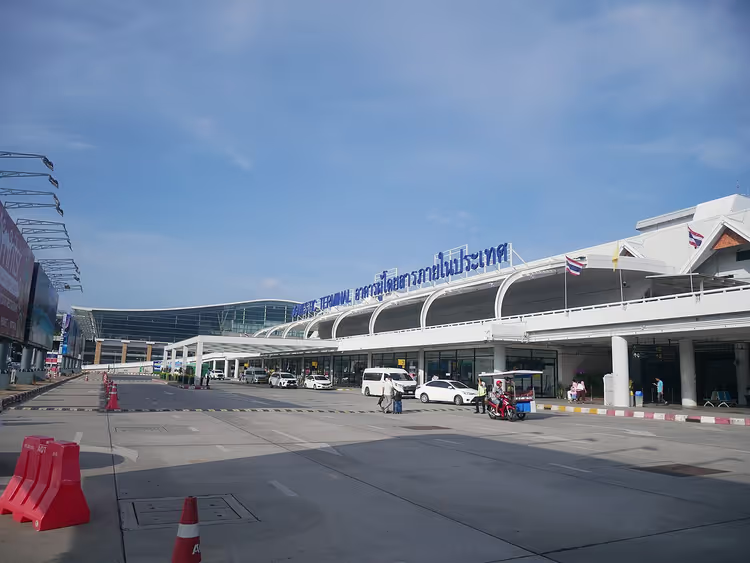 © กสิณธร ราชโอรส · CC BY-SAPhoto: กสิณธร ราชโอรส, CC BY-SA (https://creativecommons.org/licenses/by-sa/4.0), Wikimedia Commons
Back from the resorts, the bus runs from 06:00 to 17:00 (return trip hours, as of 09/2026). For an evening flight this is inconvenient: for a late departure you need a separate transfer. Plan the trip in advance, because taxis get more expensive at rush hour, and there may be no available cars at the terminal.
Baggage is usually not a problem; there's space for suitcases inside. Stack your bags so they don't block the exit, because passengers with beach gear and strollers get off at every stop.
If your hotel is far from the stop, a short tuk-tuk ride within the resort can cost almost as much as a ticket to the airport. That's an honest catch of this setup, and it's worth factoring in when choosing accommodation, especially if you plan to take the bus every day.
Tours and tickets in Phuket
Guided tours, skip-the-line tickets and activities — most offers can be cancelled free of charge.
See offers on KiwitaxiThe widget loads once you give your consent.
For late arrivals and large groups with suitcases, a transfer remains the only stress-free option. The bus isn't a competitor in that case, and it doesn't have to be.
Who Phuket Smart Bus is good for
- Price. Low and predictable, no haggling with the driver.
- Schedule. Enough during the day, none in the evening.
- Stop network. Sparse, one per resort.
- Travel time. Comparable to a taxi because of traffic.
- Comfort. Air conditioning, Wi-Fi, cameras, low floor.
- Payment. Card, QR code, and cash.
The bus is convenient if you're staying in central Patong, Karon, Kata, or Rawai and the stop is nearby. It also suits people who return to Phuket regularly: the route is easy to remember, and transport costs drop dramatically compared to daily taxi rides.
On your first visit to the island, the bus can be confusing. Unfamiliar stop names, infrequent service, and one stop per resort easily turn into an extra hour in the heat. With a large suitcase and accommodation far from the center, it's easier to take a transfer and not depend on the schedule.
Evening flights are a separate story. The last bus leaves during the day, so it doesn't cover late arrivals and departures at all, and on those days you'll have to find another way to the hotel or terminal.
For now, the bus wins on price and loses on coverage, and it beats a taxi on money on any part of the route.
⁉️🤔 Frequently asked questions
How much does a Phuket Smart Bus ride cost?
The trip along the route from the airport to Patong, Karon, Kata, or Rawai costs 100 baht (fare table, as of 09/2026). The price is fixed and does not depend on where you get off. The route from the bus terminal to Patong is cheaper, and the Dragon Line city shuttle is free.
Where does the bus stop at Phuket airport?
The stop is in front of the Domestic Terminal building, under a large billboard (stop map, as of 09/2026). The bus is white and blue, with lettering on the side. Look for it right at the exit from the arrivals area so you don't have to walk around the terminal with your suitcases.
Do I need a Rabbit card for the trip?
No, the card is not required. You can pay with a contactless bank card, QR code, or cash (payment options, as of 09/2026). Rabbit Card is not listed in the operator's current payment methods on the website, so you shouldn't count on it in advance.
Does the bus run in the evening?
No. The last departure from the airport is at 5:30 PM, and from Rawai at 5:00 PM (evening departures, as of 09/2026). For an evening arrival or late departure, you'll need a transfer or taxi. During the day, buses run about once an hour, and the schedule is easy to remember.
Can I take the bus from one beach to another?
Yes, that's a workable option. You board in Patong and get off in Karon, Kata, or Rawai, paying once (cost of travel between beaches, as of 09/2026). The interval between departures is about an hour, so short hops take more time than the actual ride.
In short: what's worth booking
If you arrive during the day and are staying in central Patong, Karon, Kata, or Rawai, take the 100 baht bus (fares on the operator's website, as of 09/2026). If your arrival is late or you have a lot of luggage, book a transfer in advance. If you need a hotel near a stop, look at options along the route: see hotels near stops on Trip.com.
The bus doesn't fully replace a taxi, but it covers the main need. It gets you from the airport to the coast for a small fixed amount.

A small editorial team writing guides for independent travel. We travel ourselves, but we haven’t been everywhere, so we check prices, opening hours and how to get there against official sources.