
















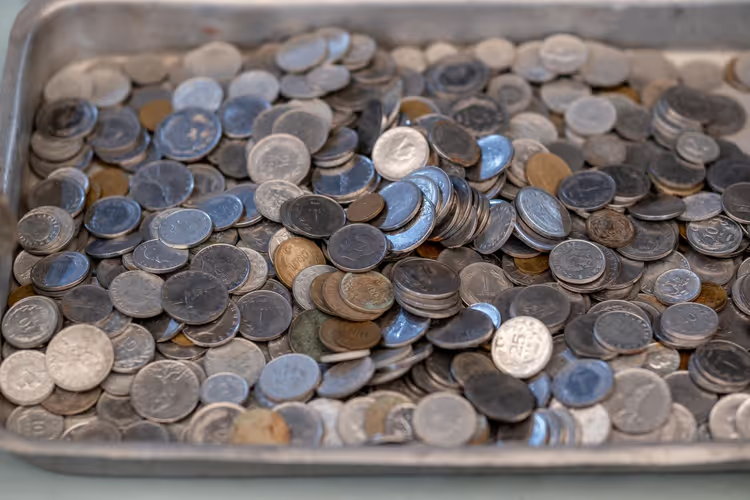
Coins of France: 6 eras from the livre tournois to the euro
The monetary system of France changed more often than its borders. Before the euro we know today, the livre, écu, louis d'or, and franc all circulated at different times. Making sense of these names is not easy: some are familiar only from old books and coins found in a family box.
One rule explains a lot. Before 1795, the French did not count in coins but in units of account: they kept accounts in livres tournois, sous, and deniers (as of 09/2026, French Wikipedia). The actual coins looked different and had different names. Below we examine each era of French money, from the livre to the euro, and show what to look for in each coin.
How the French monetary system works
💡 In short:
- Accounting rested on three units: one livre equaled 20 sous, or 240 deniers (according to French Wikipedia).
- Coins were minted in other denominations: écu, louis d'or, napoléon d'or, franc.
- Coin dates, weights, and metals: verified on 15.09.2026 using French Wikipedia data.
Old money works in a way that is unfamiliar to us. People counted in livres but never held a livre in their hand: it was only a measure of value.
1. Livre tournois: the main unit of account
The livre was not a coin in the usual sense. It was a unit of account: one livre tournois contained 20 sous, or 240 deniers (as of 09/2026, French Wikipedia). Taxes, debts, and wages were counted in livres, while payments were made with coins of other denominations.
The name came from the city of Tours. In 1203, Touraine became part of the royal domain, and the livre tournois displaced the livre parisis. The reforms of Louis IX (Saint Louis) around 1262 extended it to the entire kingdom (according to French Wikipedia).
The livre parisis held on for a surprisingly long time: it was finally displaced only in 1667. The livre tournois itself was abolished in 1795, when the Revolution introduced the franc. For nearly six centuries it remained the measure of French money.
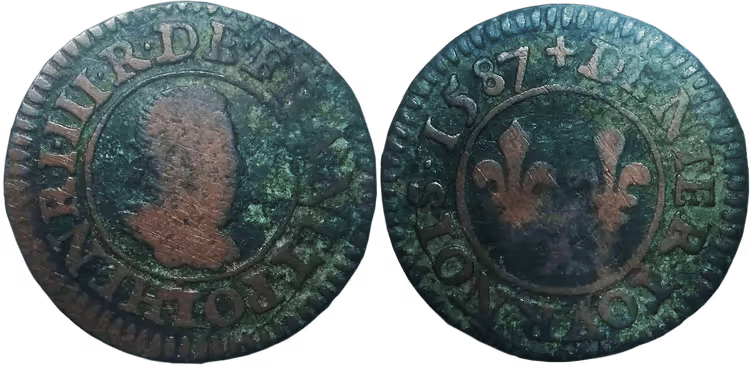
The denier was the smallest coin in the system. It was convenient for paying for bread or a night's lodging, but large sums were still counted in livres.
2. The écu: a shield on gold and silver
The écu appeared under Louis IX around 1263. It weighed on average about four grams of gold and was worth 10 sous (according to French Wikipedia). The name comes from the word "shield": the coin featured the coat of arms of France on a shield.
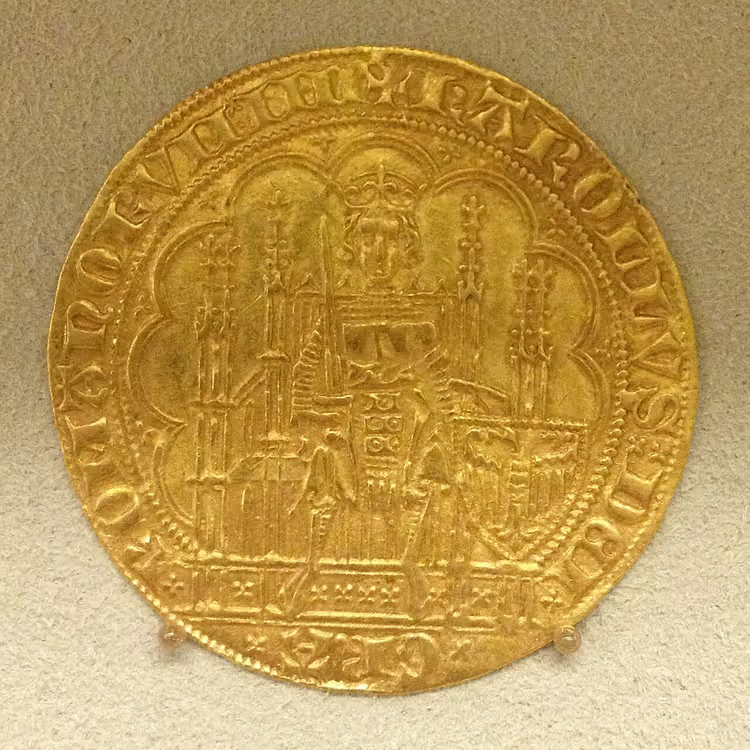
The name proved durable. Later the écu returned as a gold coin under Philip VI, and from 1640 the name was applied to a large silver coin, the écu blanc. In the 18th century the value of this silver coin rose to six livres.
The name survived longest on the five-franc silver coin. It was minted until 1878, and in colloquial speech people kept calling it an écu even later (according to French Wikipedia).
3. The louis d'or: gold of Louis XIII
In 1640 Louis XIII overhauled the kingdom's monetary system. The main gold coin became the louis d'or: 6.75 grams of metal, equal to ten livres tournois (according to French Wikipedia). The name came from the king, "louis d'or" means "golden Louis".
The same reform produced the silver écu blanc. The louis d'or and the écu divided the roles: gold served large transactions, silver suited everyday payments (according to French Wikipedia).
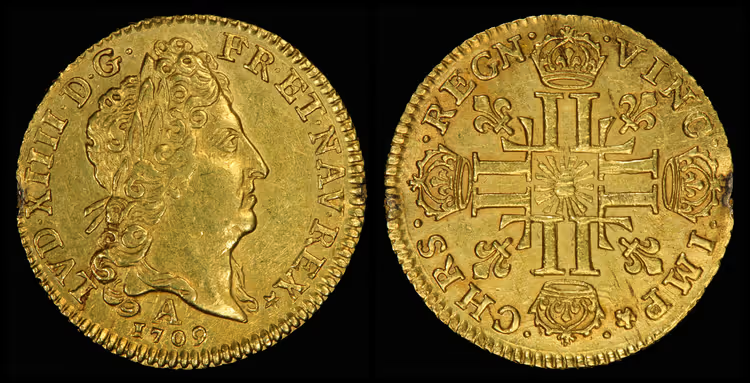
The coin clearly shows both the king's profile and the shield with fleurs-de-lis. That is what French-minted louis d'or looked like, and different mints put their own marks on the coin.
4. The napoléon: gold of the empire
The revolution abolished both the king and the louis d'or. Yet gold did not disappear: under Napoleon, the gold franc appeared, along with it a 20-franc coin that was called the napoleon d'or (according to French Wikipedia).
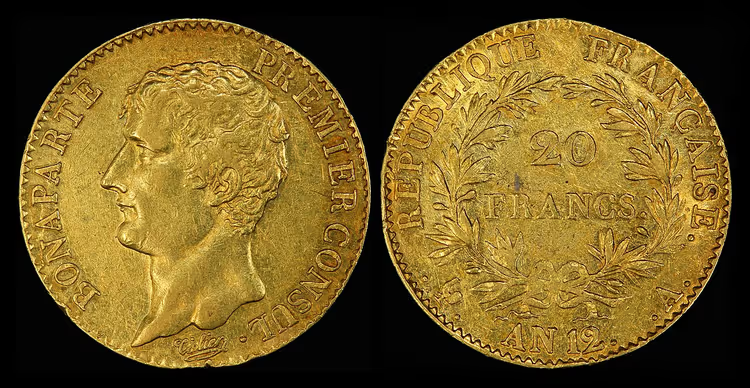
Its name came from the emperor's profile. For many French people, such a coin was not so much small change for everyday payments as a way to store savings: a large gold denomination is convenient to accumulate rather than spend.
That is why the napoleon d'or outlived both the empire and the regimes that followed. Such gold coins were minted even after Napoleon's fall, under other rulers.
5. The franc: money that survived until 2002
The word "franc" itself appeared long before the revolution. It was the name of a gold coin of John II the Good, issued in 1360: the inscription Francorum Rex meant "king of the Franks," and the coin was used to pay the king's ransom from English captivity (according to French Wikipedia).
 © http://cgb.fr/ · CC BY-SAPhoto: http://cgb.fr/, CC BY-SA (https://creativecommons.org/licenses/by-sa/3.0), Wikimedia Commons
The franc became the official unit only in 1795. The revolutionary government abandoned the livre, which was too reminiscent of royal power, and introduced a decimal system: one franc was divided into 100 centimes (according to French Wikipedia).
At first, the franc was a large sum. Then inflation ate away at its value: in 1960, the "new franc" was introduced, and one hundred old francs became one new franc (as of 09/2026, French Wikipedia). That made the franc everyday money again.
The franc survived until the end of the 20th century. It was replaced by the euro: the exchange rate was fixed on January 1, 1999, and euro cash appeared on January 1, 2002. One euro was worth 6.55957 francs (as of 09/2026, French Wikipedia).
6. The euro: Marianne, the Sower, and the tree
French coins kept the old motifs familiar from previous money.
 © Mark Morgan from Trinidad · CC BYPhoto: Mark Morgan from Trinidad, CC BY (https://creativecommons.org/licenses/by/2.0), Wikimedia Commons
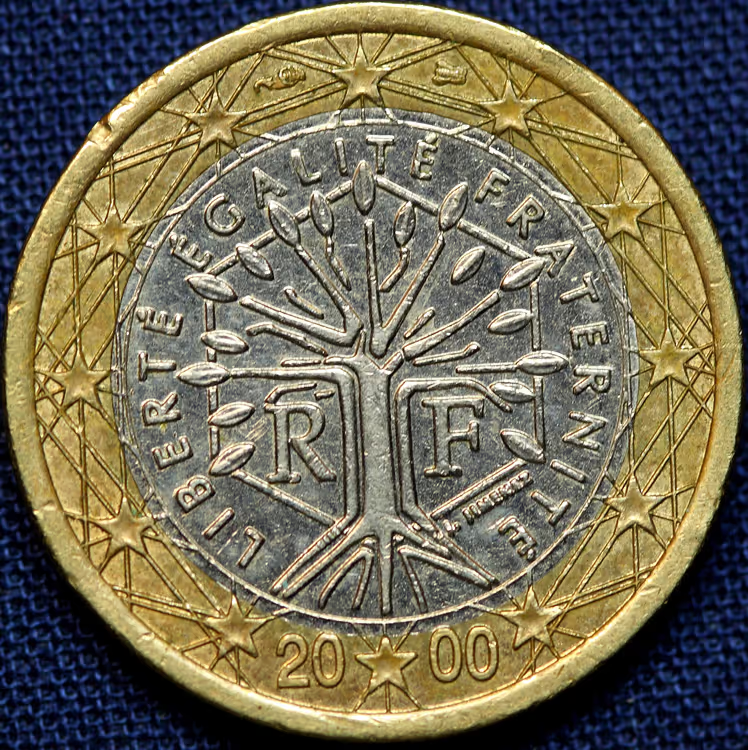
On the 1, 2 and 5 cent coins you see Marianne, the symbol of the French Republic. On the 10, 20 and 50 cent coins there is the Sower (Semeuse), familiar to the French from the silver coins of the last century. And on the 1 and 2 euro coins there is a stylized tree (according to the ECB).
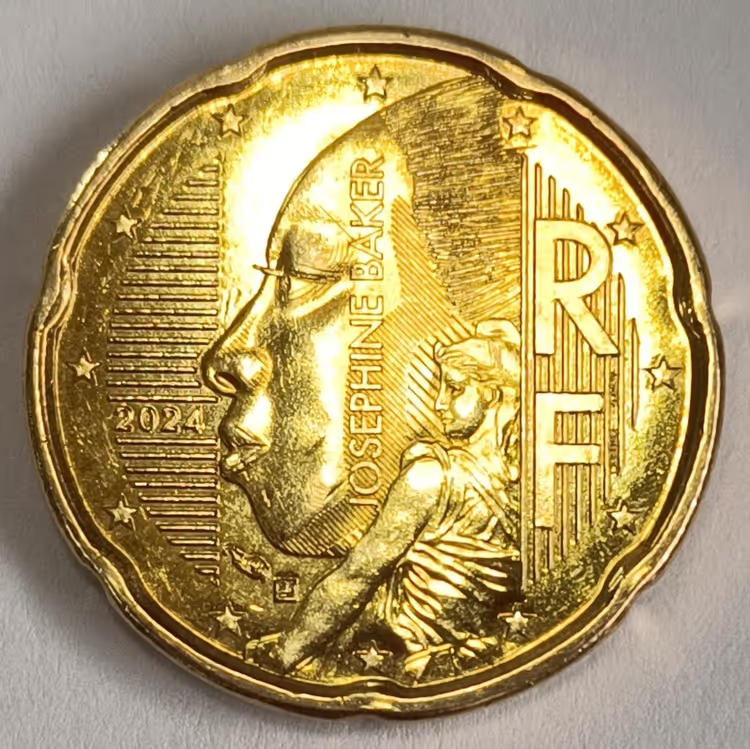
The common side is the same throughout the eurozone: the denomination, a map of Europe and 12 stars (as of 09/2026, ECB). It is designed for all countries at once, while each country chooses its own national side.
That is why French euro coins are easy to recognize at a glance. Your wallet holds several eras of French history at once.
Comparing French coins by era
Coin | Metal | When | What to remember |
|---|---|---|---|
Livre tournois | unit of account | debts and taxes were counted in livres | |
Écu | gold, later silver | the coat of arms of France on a shield | |
Louis d'or | gold | gold for large transactions | |
Napoléon d'or | gold | the gold denomination of the Napoleonic era | |
Franc | silver and paper | decimal counting and centimes | |
Euro | copper, steel, bimetallic | Marianne, the Sower, the tree |
For a first introduction, the livre tournois and the franc are the best choices. They show the most interesting part: how a unit of account survived kings, revolution and gold circulation.
⁉️🤔 Frequently asked questions
Why did the livre tournois last so long?
The livre was a convenient unit of account. Taxes and debts were counted in it, and nobody intended to carry it in their pocket. Changing a unit of account is more expensive than minting new coins, so the livre survived dozens of kings and several reforms.
How does the louis d'or differ from the napoléon d'or?
Both coins are gold, but they belong to different eras. The louis d'or was minted by kings, starting with Louis XIII. The napoléon d'or began to be minted under Napoleon; it is a gold coin of 20 francs (according to French Wikipedia). Telling them apart is easy: look at the ruler's profile.
What is depicted on French euro coins?
Three old motifs: Marianne, the Sower and a stylized tree.
Why was the écu called both a gold and a silver coin?
The name came from the shield with the coat of arms of France, not from the metal. The first écu was gold. Later the name was used for a large silver coin, and then for a silver five-franc coin.
How many francs did you get for one euro?
The rate was fixed in advance: one euro was worth 6.55957 francs. Since then francs are no longer accepted in shops.
In short: what is worth reserving
For a collector, the logic is simple. If you are interested in history: look for silver francs and coins with the Sower, they are easy to identify by date and metal. If you are drawn to gold: look at Louis XIII louis d'or and napoleons, they are more expensive and more prominent in a collection. If you need a single reference point as a keepsake: take the livre tournois, it kept the French account for almost six centuries.
Start with what is already lying around at home. Sort old coins by date and metal, and you will quickly see where the franc is and where the euro is.

A small editorial team writing guides for independent travel. We travel ourselves, but we haven’t been everywhere, so we check prices, opening hours and how to get there against official sources.