
















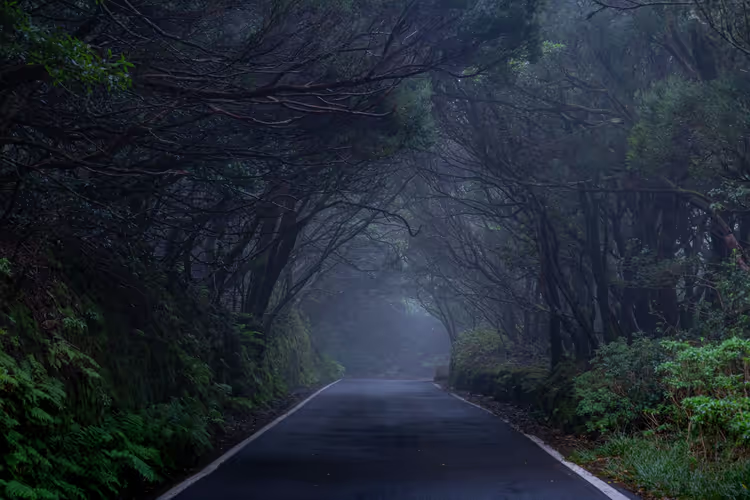
Garajonay on La Gomera: laurel forest, trails and ferry from Tenerife
The laurel forests of Garajonay grew in Europe even before the Ice Age. Today only a few isolated pockets remain, and the main one hides in the center of La Gomera.
Garajonay National Park covers the mountainous center of the island and more than a tenth of its total area. In 1986, UNESCO added it to the World Heritage List, and the laurel forest covers about 70% of the territory (as of 09/2026, UNESCO).
Below is everything you need for your trip: what to see in the park, when the Juego de Bolas center is open, how much the ferry from Tenerife costs, and how to get to the trails.
Ad: this article contains affiliate links. We earn a commission if you book through them, at no extra cost to you.
Why Garajonay was added to the UNESCO list
💡 In short:
- The park is free: you only pay for the ferry and the bus.
- See the laurel forest, viewpoints, and the Juego de Bolas center.
- Arrive before 11:00, while the fog hasn't lifted and the light in the forest is soft.
- Entrance and opening hours of the center: 09/2026, verified on the official national parks portal.
Garajonay became a national park in 1981, and five years later it received World Heritage status. The reason is simple: this is where laurisilva survived, a laurel forest that covered southern Europe and northern Africa in the Tertiary period. After the Ice Age, such forests almost disappeared, and the Canary Islands remain one of the few places where you can see them in person.
The park covers about 4,000 hectares, more than a tenth of La Gomera (as of 09/2026, site listing on the UNESCO website). Its highest point, Alto de Garajonay, rises almost one and a half kilometers above sea level.
The island is volcanic, but there are no active volcanoes on its territory. However, there are plenty of endemic species: some plants and animals are found only on La Gomera and neighboring islands. It is precisely this isolation that UNESCO valued so highly.
The legend of Gara and Jonay
 © Stefan Koehler MD · CC BY-SAPhoto: Stefan Koehler MD, CC BY-SA (https://creativecommons.org/licenses/by-sa/4.0), Wikimedia Commons
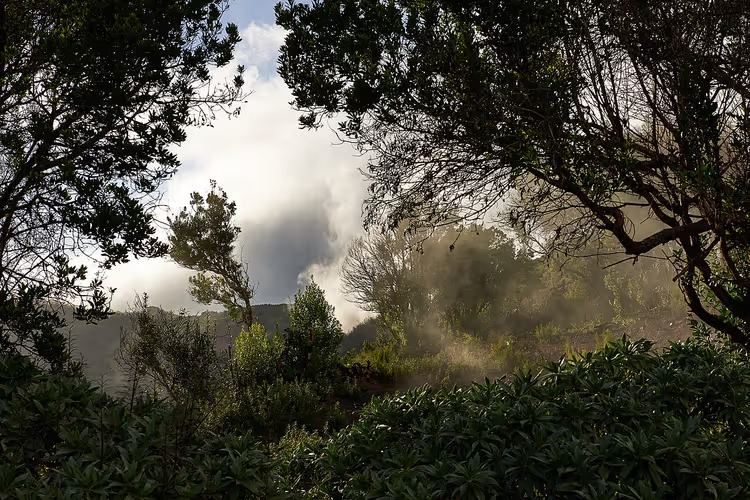
The name Garajonay sounds unusual even for Spain. According to legend, it combines the names of two lovers: Princess Gara and Prince Jonay. Both of their fathers were warned of disaster, and the wedding was called off. In one version, the lovers died together; in another, they were separated by an awakening volcano. The story always ends sadly.
La Gomera entered world history once again thanks to Columbus. It was from its shores that the navigator set sail for the New World on his first voyage. In San Sebastián there is an old church, from whose well, according to tradition, he drew water before setting out into the ocean. You can see it while exploring the island's capital.
What to see in Garajonay National Park
 © Jesus De Diego · CC BYPhoto: Jesus De Diego, CC BY (https://creativecommons.org/licenses/by/3.0), Wikimedia Commons
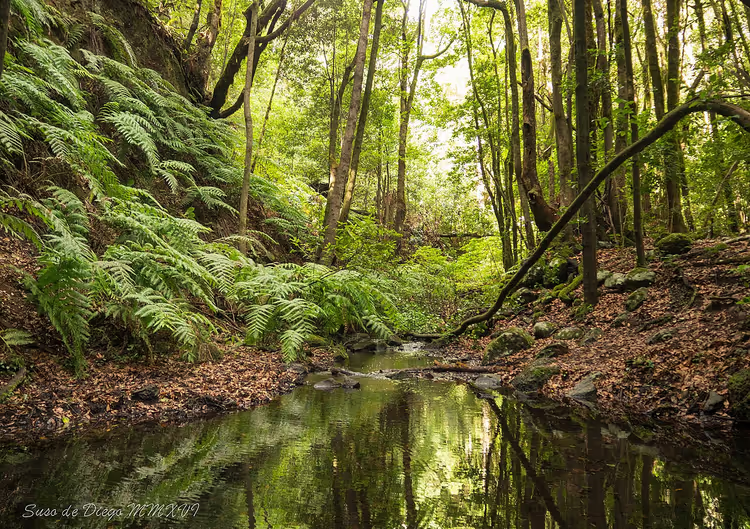
The park consists of a mountain ridge and laurel forest. Rocky outcrops are covered with bright vegetation, and below them begin the dark forests that barely let the sun through. Most tourists come here for the scenery: from above, you get views of the Atlantic and the neighboring islands of the archipelago.
Don't confuse Garajonay with another protected corner of the island, Puntallana Park. Garajonay is more popular, and naturalists come here for the plants, not just the views.
The trees here grow in constant humidity: rain and fog are regular, and temperatures stay moderate. The crowns of the laurel trees close high above the ground and create the twilight that has earned the park its reputation as a living fossil and a museum of laurel forests.
Besides laurel, there are many other species here. You'll encounter tree heath Erica arborea, wax myrtle Myrica, Persea indica, and stinkwood Ocotea foetens. Some of the plants are endemic and found nowhere else on the planet.
Marked trails and viewpoints run through the forest. Stick to the marked routes: the slopes are steep, and fog rolls in quickly. Locals like to say that spirits live deep in the forest. You're unlikely to verify that, but you still shouldn't wander far from the trail.
The picture is completed by streams that feed into a branching water system. The fauna here is also special: rare species of birds, insects, and reptiles. Some of them were long thought to be extinct by scientists, and some never even made it into old zoology reference books.
Practical info: opening hours and the Juego de Bolas center
 © Bybbisch94, Christian Gebhardt · CC BY-SAPhoto: Bybbisch94, Christian Gebhardt, CC BY-SA (https://creativecommons.org/licenses/by-sa/4.0), Wikimedia Commons
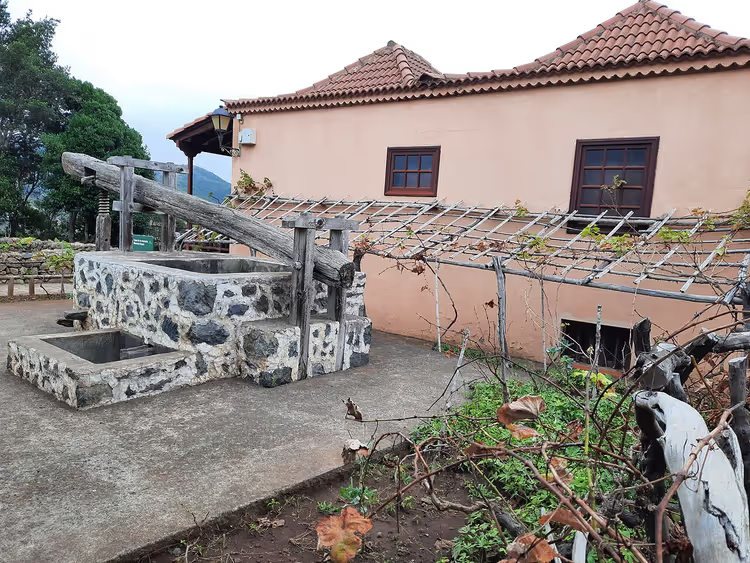
Entry to the park and the visitor center is free. The Juego de Bolas center is located in La Palmita (Agulo), 3 km from the park boundary: it has a permanent exhibition about Macaronesia and La Gomera, a garden with local flora, the Casa de la Memoria memorial house, and viewpoints. Opening hours: Monday to Sunday 9:30-16:30, closed on December 25 (verified 15.09.2026, guide to park centers).
This is the best place to start: you'll get a trail map, learn about closed sections, and get advice on where visibility is best right now. After visiting the center, you'll know where to go and how much time to allow for your route.
Tours and tickets in La Gomera
Guided tours, skip-the-line tickets and activities — most offers can be cancelled free of charge.
See offers on GetYourGuideThe widget loads once you give your consent.
If you don't want to plan on your own, a guided island tour takes care of the logistics: transfers, short stops at viewpoints, and guidance along the trails. Organized trips are available for half a day or a full day.
How to get to Garajonay National Park
 © Raenmaen · CC BYPhoto: Raenmaen, CC BY (https://creativecommons.org/licenses/by/3.0), Wikimedia Commons
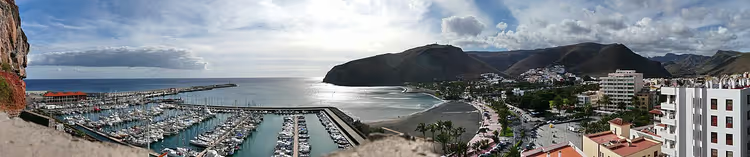
The park lies in the center of La Gomera, about 15 km from the capital, San Sebastián (on the map). The island itself is separated from Tenerife by water, so the route always starts with a ferry.
The Fred. Olsen fast ferry runs from Los Cristianos on Tenerife to San Sebastián in 50 minutes (as of 09/2026, Fred. Olsen Express). Tickets start at around €40 one way per adult (as of 09/2026, route comparison on Ferryhopper).
At the port, you transfer to a bus or rent a car. The island has eight bus lines, with services from San Sebastián to Valle Gran Rey, toward Vallehermoso, and to the airport. Check schedules and fares on GuaguaGomera; the operator updates them every season.
By car, the roads are good but narrow and winding. Allow more time than your navigation app suggests: on the climb to the park, you'll be driving slowly. One day on the island is usually not enough, so many people stay overnight.
⁉️🤔 Frequently asked questions
Do I need to buy a ticket for Garajonay National Park?
Entry to the park and the Juego de Bolas visitor center is free, no payment needed. Costs start with the ferry between Tenerife and La Gomera and with the bus or car rental on the island. Guided tours cost extra. If you arrive in your own vehicle, add fuel and parking.
How much time should I allow for Garajonay?
The Juego de Bolas center takes about an hour, and a short trail to the viewpoints takes another two to three hours. Getting to know the park, including the drive from San Sebastián, takes a full day. If you want to do several routes at once, stay overnight on La Gomera.
How do I get to Garajonay without a car?
From Tenerife, you take the ferry from Los Cristianos to San Sebastián, a 50-minute crossing. Then transfer to a GuaguaGomera bus: services from the capital connect the island with resorts and villages near the park. Schedules change by season, so check them before your trip on the operator's website.
When is the best time to visit the park?
In spring and autumn, the laurel forest is mild, and the fog doesn't linger all day. In summer, the coast is hot, but the park is several degrees cooler. Arrive at opening time: before noon there's more light and fewer groups. In winter, it can be windy and damp at altitude, so bring a jacket.
What should I bring?
Comfortable shoes and layered clothing, plus a rain jacket. The park has high humidity and frequent fog, and trails can be slippery. Bring water and snacks: the only restaurant in the park is at Laguna Grande. Other food options are near the villages. Check the weather at altitude before heading out.
In short: what to book
You don't need to book tickets for the park itself; it's free. Your money and time go into getting there.
- If you're coming for a day from Tenerife: book the ferry in advance and the bus to Agulo.
- If you have a car: spend two to three days on the island and add other trails.
- If you want to skip the logistics: take a day tour with a guide and transfers.
Book La Gomera tours in advance: see tours on GetYourGuide.

A small editorial team writing guides for independent travel. We travel ourselves, but we haven’t been everywhere, so we check prices, opening hours and how to get there against official sources.