
















Jenny lake in Grand Teton: how to get there and what to see
Jenny Lake lies at the foot of the highest peaks of the Teton Range. It is part of Grand Teton National Park in Wyoming, USA. In summer it gets crowded, in winter the roads are covered with snow, and park entry is paid. Let's figure out how to plan a visit without unnecessary expenses.
We've gathered facts about the lake for you: depth and elevation, the story behind its name, trails, the boat shuttle, and current entry fees. You'll understand when to go, how much to budget, and what to see first.
The lake sits at an elevation of 6,781 ft (2,067 m), covers about 1,190 acres (482 ha), and reaches a maximum depth of roughly 423 ft (129 m).
Ad: this article contains affiliate links, we earn a commission if you book through them, at no extra cost to you.
Jenny Lake: what you need to know
💡 In short:
- Budget $35 per car: that's the cost of a 7-day Grand Teton entry pass (as of 09/2026, park fees).
- Arrive when the parking lot opens, otherwise in summer you'll spend a long time circling near the south shore.
- Set aside half a day for the trail to Hidden Falls and Inspiration Point.
- Prices and hours: 09/2026, verified on the official website.
 © Carsten Steger · CC BY-SAPhoto: Carsten Steger, CC BY-SA (https://creativecommons.org/licenses/by-sa/4.0), Wikimedia Commons
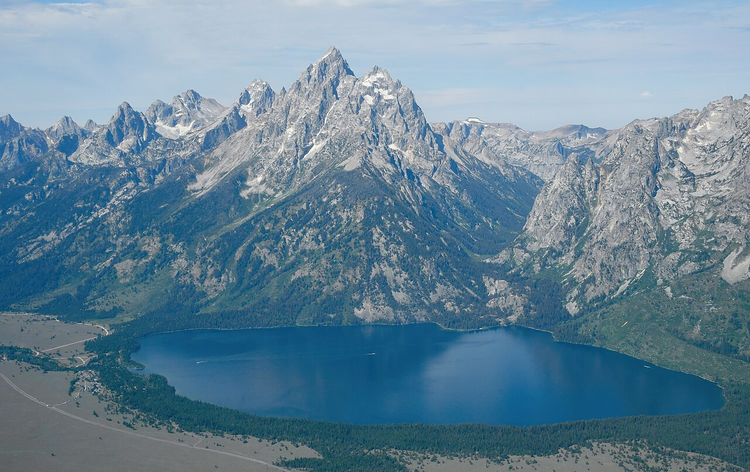
The lake formed roughly 12,000 years ago. A glacier advanced through Cascade Canyon and left behind a moraine that dammed the meltwater. That's where the color comes from: clean water and a rocky bottom produce a deep turquoise hue.
Jenny lies in the center of the park, surrounded by mountains. Trails run along both shores, and a boat shuttle crosses the water. This is the starting point for routes to the highest peaks of the Teton Range.
Why the lake is called Jenny
The lake was named after a Shoshone woman. She married an Englishman named Richard Leigh, known in these parts as Beaver Dick. Jenny helped her husband with explorations and translated conversations with local tribes.
In 1876, Jenny and six of her children died of smallpox. The lake remains as a memory of her. The story is told to every visitor, and you'll hear it from the guide on a boat tour.
Fishing on the lake
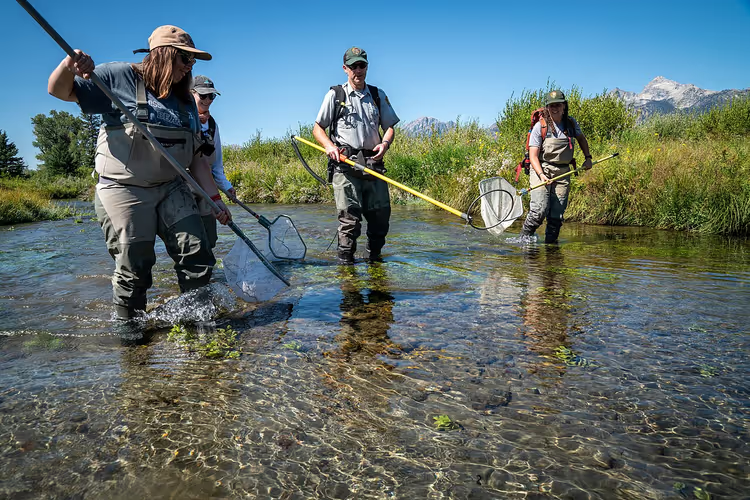
Cold water and clarity make the lake well suited for fishing. Trout live here, and bites are possible right from the shore. You can fish from a boat or from the bank, but bring your own gear. Fishing in Wyoming requires a license, which you should get in advance.
Bring a rod if you want a quiet morning. Early in the season the water is still cold, but the shore is nearly empty.
Wildlife: bears, moose, and wolves
Wild animals are encountered around every corner here. Black bears and grizzlies live near the trails, along with cougars, lynx, and wolves. Among large ungulates you'll see moose, bison, and elk.
Keep your distance and don't feed the animals. Carry bear spray, which is sold in Jackson. Bears come out near trails most often in the morning and at dusk, so make noise as you move and stay on the trail.
Climbing in the Teton Range
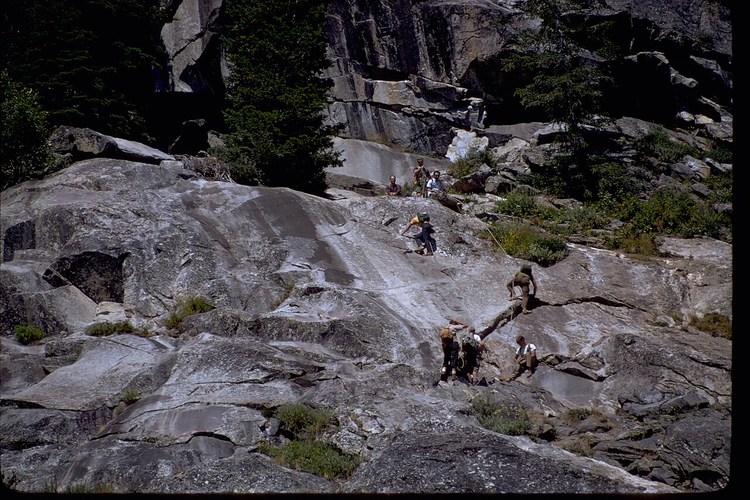
Wyoming has long been tied to mountaineering. The Teton Range is loved for its granite walls and long routes. Over the past century, dozens of lines have been established here, from easy rock climbs to multi-day big wall ascents.
Beginners usually start from the lake, while experienced climbers head higher. If you're not ready to climb, just watch groups set out on routes from early morning.
East shore scenery
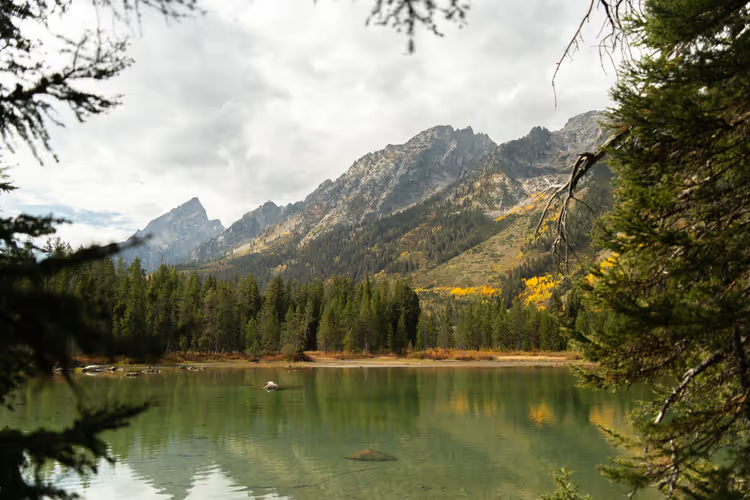
Head north along the east shore, and views open up one after another. The colored rocks on the bottom seem alive under the sunlight. White clouds settle on the peaks and reflect in the water like a mirror.
Dark green pines stand all around, and huge boulders lie near the water. In places you can see charred trunks from an old fire, adding a rugged feel to the landscape. The blue sky reflects in the water, and it seems to be both above and below.
Boat rides and Cascade Falls
In the south, Cottonwood Creek flows out of the lake. A footbridge crosses the channel. A boat dock stands nearby.
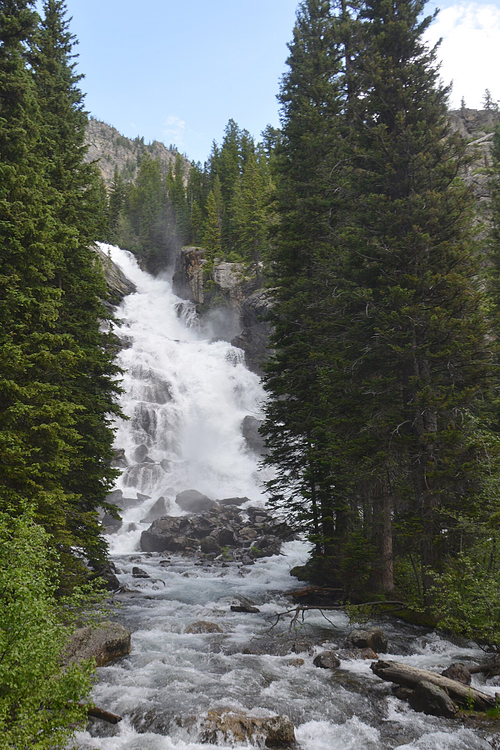
Jenny and Jackson are the only lakes in the park where motorboats are allowed. This way you can see the mountains from the middle of the water without spending energy walking around. At the end of the route, a waterfall on Cascade Creek awaits, which flows into the lake from the west.
The boat shuttle runs from May 15 to September 30 (as of 09/2026, Jenny Lake Boating). A guided lake tour lasts about an hour.
 © G. Edward Johnson · CC BYPhoto: G. Edward Johnson, CC BY (https://creativecommons.org/licenses/by/3.0), Wikimedia Commons
Hiking and Hidden Falls
The west shore demands more effort: the trail goes over hills and in places across rocky ledges. But from there you'll see the lake from above and the mountains among the pines.
 © Miguel Hermoso Cuesta · CC BY-SAPhoto: Miguel Hermoso Cuesta, CC BY-SA (https://creativecommons.org/licenses/by-sa/4.0), Wikimedia Commons
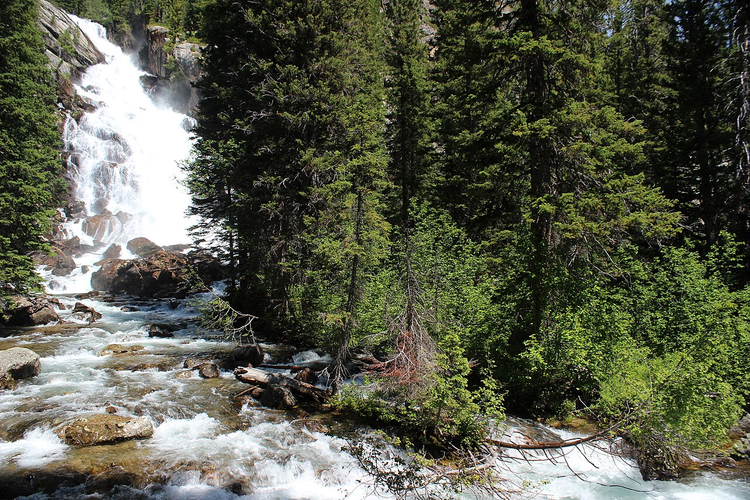
Further on, the route reaches Hidden Falls, and a whole cascade runs through Cascade Canyon. The loop trail around the lake is 7.1 miles (11.4 km) with 689 ft (210 m) of elevation gain. Bring hiking boots and water.
The overlook and Hanging Canyon
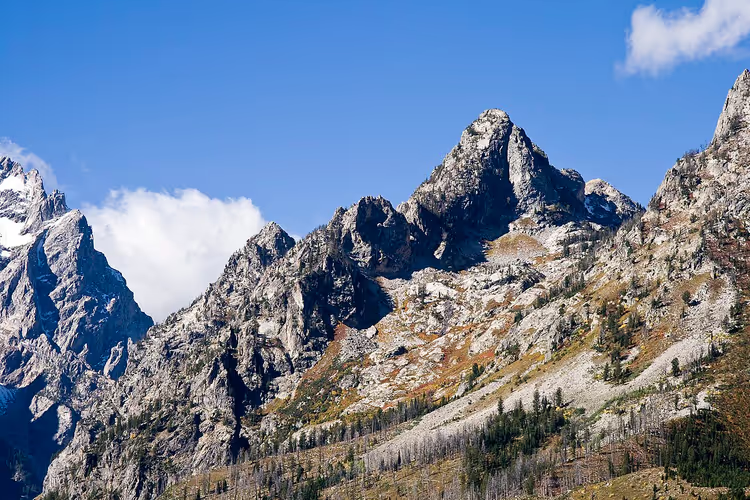
Climbing south along the ridge, you come to an overlook. From here you can see not only the lake and mountains but also Hanging Canyon. It's another pocket of wilderness near Jenny.
The forest here is untouched, and meadows bloom in summer. The only intrusions are stone paths for visitors. Come on a clear day, otherwise the peaks will hide in the clouds.
 © Acroterion · CC BY-SAPhoto: Acroterion, CC BY-SA (https://creativecommons.org/licenses/by-sa/4.0), Wikimedia Commons
Best time to visit
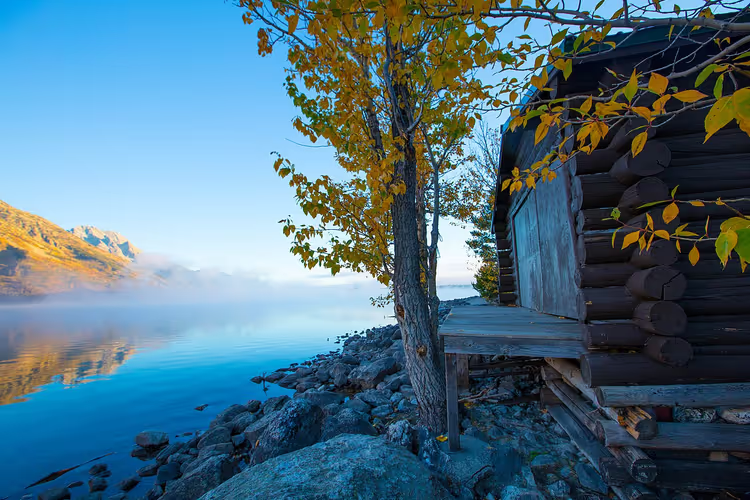
Autumn is especially beautiful here. The deep blue sky reflects in the water, and the forest turns gold and crimson. Red bushes stand out among the evergreen pines, and the air is already cold but clear.
In winter, the lake is covered with thick ice, and everything around turns white. The scenery doesn't suffer: ski trails and snowmobile routes are open. Moose migrate through these areas, and they're easier to spot than in summer.
Climate and seasons
The climate in Grand Teton is harsh. Winter lasts a long time, and nighttime temperatures differ sharply from daytime. As you gain elevation, the air gets colder, so bring a warm jacket in the mountains even in July.
Passes remain under snow until midsummer. Thunderstorms are common in the mountains, especially early in the season. Check the forecast in the morning and plan your outing for the first half of the day.
Park entry, getting there, and where to stay
Entry is paid, and payment is card only. For a passenger car you pay $35 for 7 days (as of 09/2026, park rates). Entry on foot or by bicycle costs $20 per person.
Important for travelers from Europe: visitors from outside the US over age 16 pay an additional $100 per person if they don't have an annual pass (as of 09/2026, payment rules). The annual America the Beautiful pass for non-residents costs $250 as of 2026. It's worth considering if you're visiting multiple parks.
The lake is easy to reach by car from Jackson, about a half-hour drive. The nearest airport, Jackson Hole, is also close by. Choose lodging in Jackson, Teton Village, or at park campgrounds.
If you want to put together a guided itinerary in advance, compare Grand Teton tours on GetYourGuide.
Jenny Lake on the map
Look for the boat dock on the south shore and the overlook on the west shore. That way you'll know in advance where to leave your car.
⁉️🤔 Frequently asked questions
Can you swim in Jenny Lake?
Swimming in the lake is allowed, but the water is cold even in the height of summer. Most visitors stick to a walk along the shore or a boat crossing. If you do decide to get in the water, stay in the shallows near the south shore and don't swim far out.
Do you need to book the boat shuttle in advance?
No, the lake crossing operates without advance booking. You buy your ticket at the dock at South Jenny. Panoramic guided tours can be booked ahead, but the regular crossing cannot: boats depart as they fill up, so be prepared to wait in high season.
How much does park entry cost for visitors from Europe?
In addition to the $35 per car, visitors over 16 from outside the US pay $100 per person. The annual America the Beautiful pass for non-residents costs $250. It's worth considering if you're planning to visit multiple parks.
Is it realistic to see a bear at the lake?
Yes, bears are common here, but encounters are random. Don't leave food unattended; the rest of the rules are described in the wildlife section.
When are there the fewest people at the lake?
The park has the fewest visitors in late spring and autumn. In summer, the south shore parking lot fills up by morning, and you'll spend time looking for a spot. If you want quiet, come on a weekday or at opening and head to the farther sections of the trails.
In short: what's worth booking
If you have one day, take a car and arrive at opening. If you want to see the waterfall without a long climb, take the boat shuttle across the lake. If you're visiting multiple parks, get the annual America the Beautiful pass.
For a self-guided itinerary, compare car rentals in the US and book your car in advance.

A small editorial team writing guides for independent travel. We travel ourselves, but we haven’t been everywhere, so we check prices, opening hours and how to get there against official sources.