
















Everglades national park in Florida: tickets and what to see
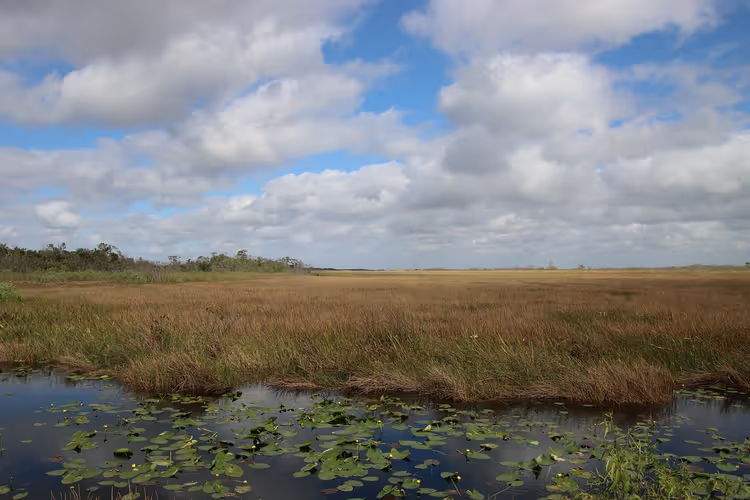
Everglades starts an hour’s drive from Miami. Many tourists turn around within the first kilometer: all around is swamp, tall grass, and not a single sign pointing to an "attraction." That’s a mistake. The entrance ticket is valid for seven days (as of 09/2026, National Park Service pricing). In that time you can see an alligator by the trail, a crocodile in the mangrove channels, and sunrise over the "river of grass."
Ad: this article contains affiliate links, we earn a commission if you book through them, at no extra cost to you.
What to see in Everglades
💡 In short:
- Alligators and herons are easier to find at sunrise.
- Tickets and hours: 09/2026, verified on the park’s official website
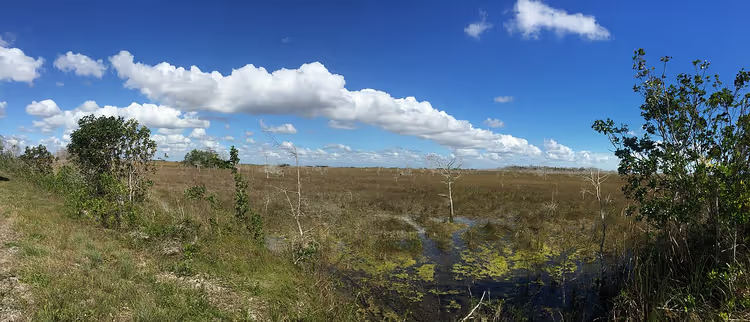
Everglades is called a "river of grass." Slow water flows from north to south, from Lake Okeechobee to Florida Bay, spreading across the lowlands along the way. The park covers the southern part of the peninsula. There are no towns or farms inside, just three entrances and a few trails.
Alligators, American crocodiles, turtles, and dozens of bird species live here. It’s one of the few places on the planet where alligators and crocodiles live side by side.
 © Judy Gallagher · CC BYPhoto: Judy Gallagher, CC BY (https://creativecommons.org/licenses/by/2.0), Wikimedia Commons
Alligators like the shade right next to the trail, so a reptile in the middle of a walking path is common here. Warning signs are posted in dangerous areas. If you’re driving, slow down: animals often crawl onto the asphalt and block the road completely.
About 1 million people visit the park each year (according to National Park Service statistics). Most come for the reptiles and leave with photos of birds.
Great blue herons are everywhere. They’ve long grown used to people and barely react to a camera. Keep your distance and stay quiet, and the bird will keep hunting right in front of you.
What exactly you’ll see depends on the entrance. Pick from the table and don’t try to cover the whole park in one go.
Entrance | What’s nearby | Best time |
|---|---|---|
Homestead | Royal Palm, Flamingo | sunrise |
Shark Valley | observation tower, tram | morning |
Gulf Coast | mangroves, boats | low tide |
Tickets and hours
The park is open 24 hours a day, including all holidays (as of 09/2026, park page on hours). Gates operate on different schedules, so check your entrance.
Entrance | Hours | Admission |
|---|---|---|
Homestead (main) | 24 hours | $35 per car (vehicle fees) |
Shark Valley | daily 8:30 AM, 6:00 PM | separate fee for tram and bicycle (Shark Valley schedule) |
Gulf Coast | 24 hours | separate fee for boats and canoes (entrance schedule) |
Motorcycles get in for $30, pedestrians and cyclists pay $20 per person (as of 09/2026, NPS rates). The ticket is valid for seven days at all three entrances. Cash is not accepted anywhere; you need a card or a digital ticket purchased in advance.
Guests from outside the US over 16 years old pay an additional $100 per person on top of the standard entrance fee (as of 09/2026, fees page). That is a significant amount for a family, so budget for it in advance.
Overnight camping, the tram, boat tours, and canoe rentals are paid separately from the entrance ticket.
Water tours and walking tours are easy to compare in advance: Everglades tours on GetYourGuide.
Tours and tickets in Everglades
Guided tours, skip-the-line tickets and activities — most offers can be cancelled free of charge.
See offers on GetYourGuideThe widget loads once you give your consent.
How to get to the park
The park has three entrances, and they are not connected to each other (as of 09/2026, entrances page on the NPS website). Homestead opens the road to Royal Palm and Flamingo. Miami Entrance leads to Shark Valley. Gulf Coast starts in Everglades City and is open furthest to the west.
From Miami, a toll road leads to the main entrance, and there is no direct bus to the gate. Rent a car or take a tour, so you are not tied to a schedule.
Once there, follow the signs: they lead to parking lots, trails, and visitor centers. The centers are open seasonally: in summer usually from 9 to 5, in winter from 8 to 5 (as of 09/2026, seasonal hours).
Activities: boat, canoe, and bicycle
There are few hiking and driving options for a park like this, so take a boat or a bicycle. Rentals operate right on the grounds (as of 09/2026, park services).
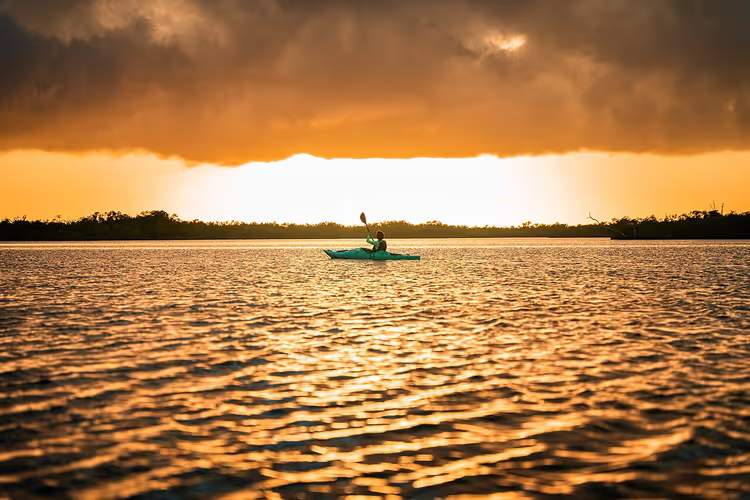
On a boat, you will travel across open water and through mangrove channels. With a canoe or kayak, you choose the route yourself, but keep wind and current in mind.
A bike is convenient in Shark Valley: there are separate bike routes and rentals (as of 09/2026, route descriptions). Sunrise and sunset are best enjoyed by the water, so allow extra time and bring a flashlight.
Where to stay: camping in the park
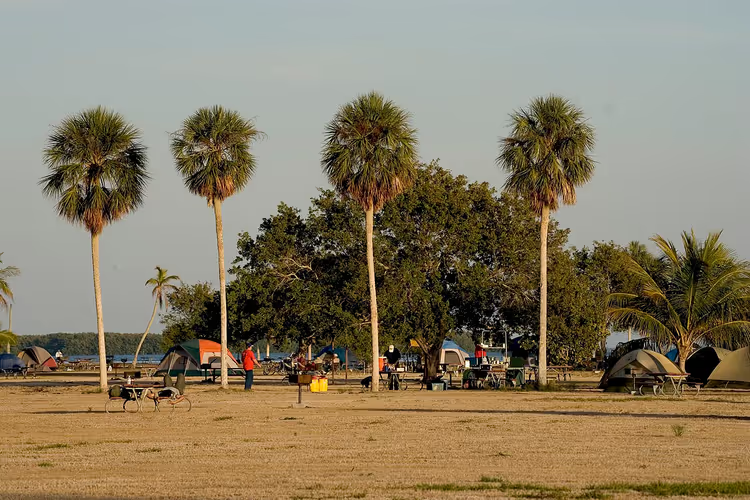
There is a campground inside the park where you can spend the night among the swamps. Camping is paid separately from the entrance fee.
Most visitors stay outside the gates. Homestead is right at the entrance, and you can drive in from Miami every day.
Park history: from drainage to UNESCO
For centuries, Native American tribes lived in southern Florida. They settled along the shores and left the swamps largely untouched. Then colonists arrived and began draining water for farmland.
In the early 20th century, water was diverted through canals (according to the official park chronicle). Drainage opened up land for farms and cities, but it took a serious toll on the ecosystem.
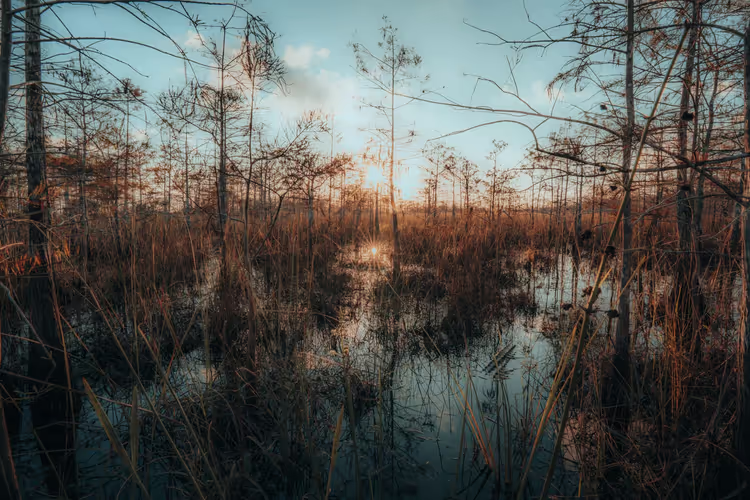
The national park was established in 1947 to stop the drainage (according to NPS on the park's creation). Writer Marjory Stoneman Douglas, author of a book about the "river of grass," campaigned to preserve the wetlands.
In 1979, the park was added to the UNESCO World Heritage list (as of 09/2026, NPS). The rationale: limestone geology and the coexistence of temperate and subtropical species.
The park's museum collection includes more than 2.8 million objects, documents, and specimens (according to the NPS museum archive).
Thousands of plant species grow here, from mangroves to pines. Some species are found only a handful of times, and the Everglades remains the only home for some of them.
Points of interest: Shark River
Shark River deserves special attention. It is thick with sawgrass, and mammals are rare visitors here. Alligators and crocodiles live in these waters.
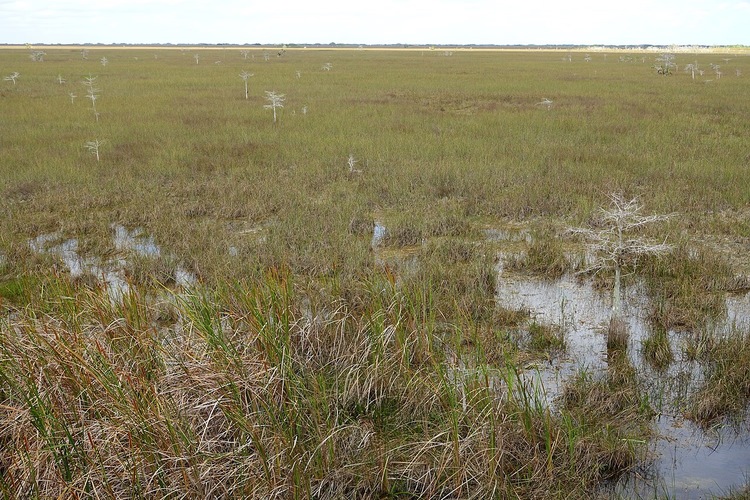
Feeding or hunting reptiles in the park is prohibited. Stay on the trail and you have nothing to worry about. Some of the largest alligators in the world have been found right here in the Everglades.
The park's second distinctive feature is its changing landscape. In the rainy season, the water spreads wider, and in the dry season it visibly recedes. Tropical trees grow alongside conifers, so in a single trip you can see several natural zones at once.
The park today: what has changed
Today the Everglades welcomes visitors from around the world and remains one of the most visited wetland parks in the US.
Not long ago, some Florida politicians and business leaders proposed draining the swamps and turning the land over to agriculture. The park's protected status keeps large-scale projects at bay.
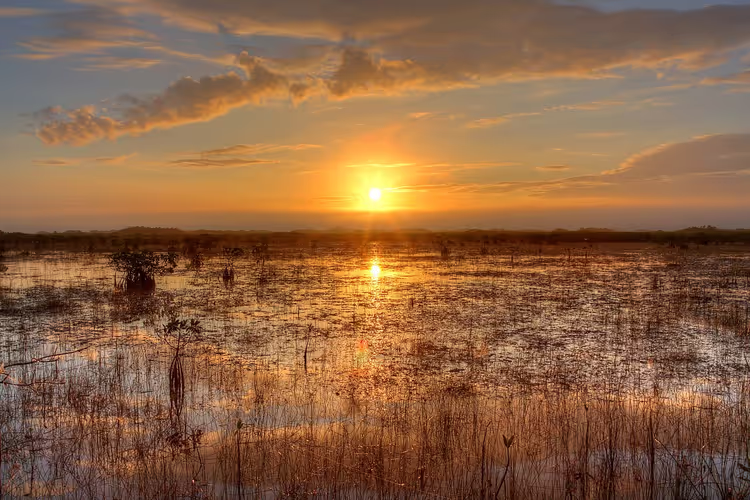
Problems remain: water pollution, environmental degradation, and overall warming. Government programs and private foundations are helping restore the park.
One day or a full weekend will both work. In one day you can drive the main road and hike to the observation tower. Over a weekend, add a boat trip, canoeing, fishing, and a night at a campground.
We cover Glacier, a US national park, in a separate article: what to see in Glacier.
⁉️🤔 Frequently asked questions
How much does it cost to enter the Everglades?
A car with passengers costs $35, a motorcycle costs $30, and pedestrians pay $20 per person. The ticket is valid for seven days at any entrance (as of 09/2026, current pricing). There is an additional fee for visitors from outside the US, so budget accordingly in advance.
The dry season runs from November through March: fewer mosquitoes, animals stay near the water, and visitor centers open at 8 a.m. (according to the park's NPS page). From April through October it rains and gets hot, but there are fewer people and lodging near the gates is cheaper.
Where can you be sure to see an alligator?
Near the water at dawn. The reptiles bask in the sun along the trails, so watch your step and don't get too close. The classic spot for finding alligators is the Anhinga Trail near the main entrance. Feeding the animals is prohibited, and hunting is also banned.
Can you manage without your own car?
Yes, if you take a tour from Miami or Homestead. There is no direct bus to the gates, and the entrances are far apart. Public transit will only get you to the nearest towns; after that you'll have to walk or catch a taxi.
How much time do you need for the park?
Half a day is enough for the main road and one trail. A comfortable option is a full day with breakfast on the road. If you want a boat, canoe, and a night at a campground, plan for a weekend: you won't be able to fit everything into one day.
In short: what to book
If you have one day: go with the main entrance in Homestead, a morning trail, and an observation deck. If you have a weekend: add the Gulf Coast mangroves, a canoe, and a night at a campground.
Buy your ticket online, and book the boat and tram in advance: morning slots go first. You can compare options here: find an Everglades tour.

A small editorial team writing guides for independent travel. We travel ourselves, but we haven’t been everywhere, so we check prices, opening hours and how to get there against official sources.