
















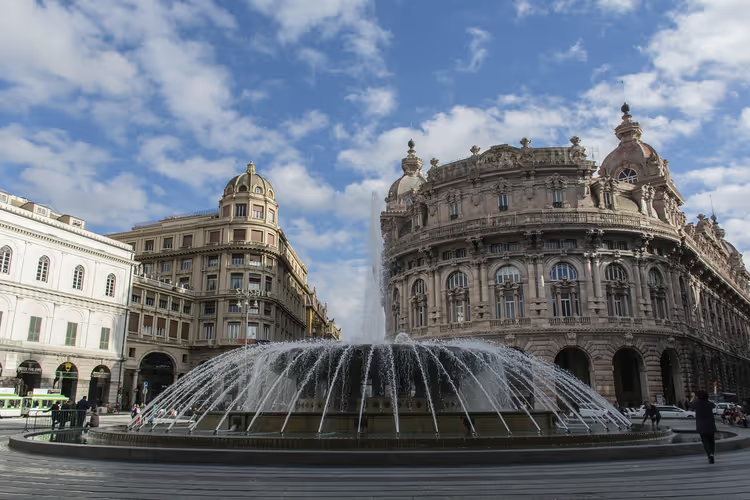
Genoa travel guide: transport, hotels, focaccia and main attractions
Genoa grew up around its port and still lives by the sea. This city of half a million people in northwestern Italy is the birthplace of Christopher Columbus and Niccolò Paganini. The old town covers one of the largest medieval areas in Europe, and it is easy to explore on foot.
From Genova Piazza Principe station you can walk to the Old Port in 20 minutes (see map). Below is all the practical information for your trip: transport, accommodation, local cuisine, and the main sights with prices and opening hours.
Ad: this article contains affiliate links, we earn a commission if you book through them, at no extra cost to you.
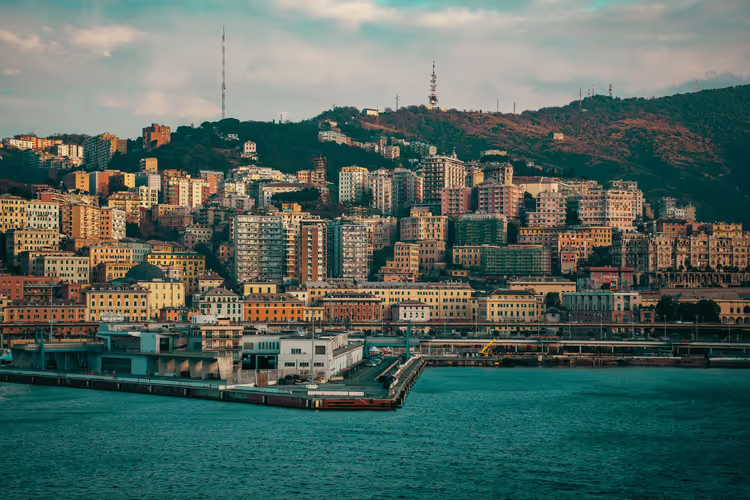
How to get to Genoa
💡 In short:
- Christopher Columbus Airport is right next to the center, with a shuttle to Genova Brignole station.
- Trains from Milan and Turin take a couple of hours, while the journey from Rome takes longer.
Christopher Columbus International Airport receives flights from major European cities. It is only 6 km from the center (see map), so getting to your hotel will not eat up half a day. A shuttle bus runs from the terminal to Genova Brignole station, and a taxi will get you there faster but costs more. If you are flying in the evening, check the time of the last service in advance.
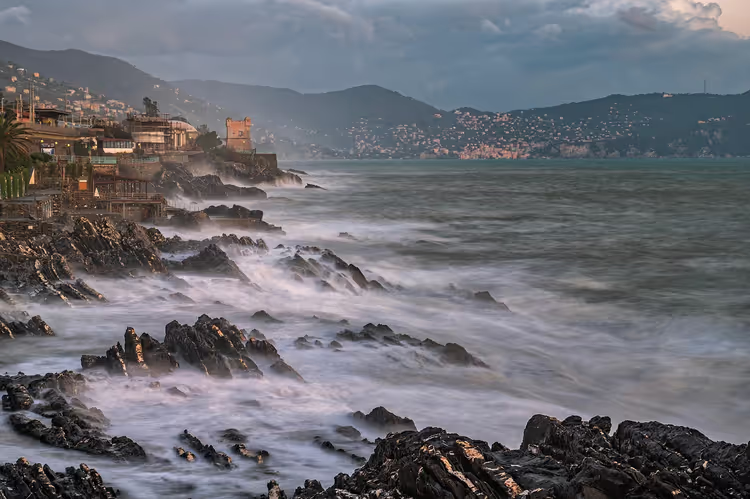
Genoa sits on the main line between Milan and Rome, so the train is often more convenient than flying. Trains from Milan and Turin take a couple of hours, while the journey from Rome is longer. Check timetables and buy tickets on the Trenitalia website, and you will arrive at one of two stations: Genova Piazza Principe or Genova Brignole.
You will get around central Genoa on foot. The caruggi alleys are so narrow that a car only gets in the way. The city has a single metro line, but it connects the center, the stations, and residential neighborhoods. The heights are accessible too: the Zecca-Righi funicular takes you from the center up the hill, where a park and views over the port await (according to the Genoa tourist office).
Where to stay in Genoa
The most logical choice is to stay in the historic center: then Piazza De Ferrari and the Old Port will be within walking distance. A city classic, Hotel Bristol Palace on Via XX Settembre, stands right next to the main square. The hotel has 133 rooms, antique furniture, and a spiral staircase in the lobby (as of 09/2026, official website). Check prices for your dates on Trip.com.
Besides large hotels, the center also has apartments and small guesthouses. If you are traveling with suitcases, choose accommodation between Piazza Principe station and the port. That way you can reach the main sights without a bus and walk back in the evening.
What to try in Genoa
The local cuisine grew out of the sea and the mountains. It blends the traditions of Ligurian fishermen, sailors, and monks, so a single menu can feature seafood alongside unleavened flatbreads made from flour. Start with focaccia and finish with gelato.
You will find focaccia on every corner in Genoa, and everyone bakes it their own way: with cheese, olives, tomatoes, or meat. Stop by Pan Per Focaccia Genova or any bakery with the word focaccia on the sign. Want to try several dishes in one evening? Book a food tour of Genoa on GetYourGuide.
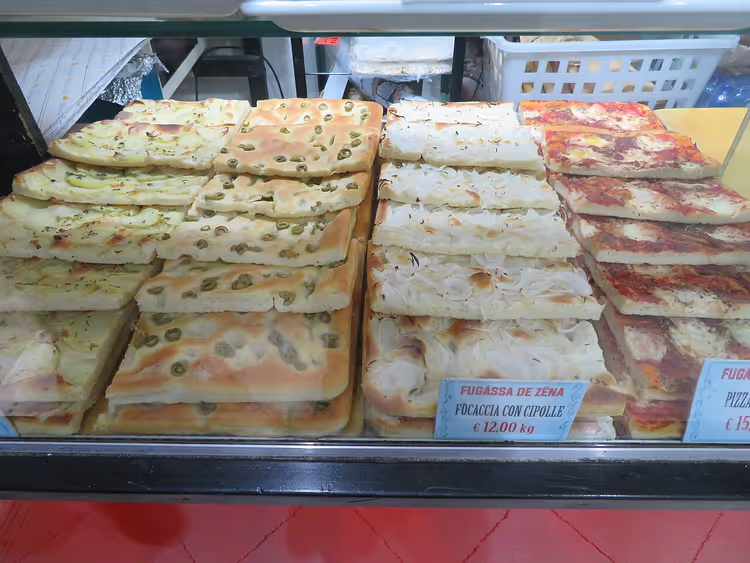 © User:Rachel Dalby photographer · CC BY-SAPhoto: User:Rachel Dalby photographer, CC BY-SA (https://creativecommons.org/licenses/by-sa/4.0), Wikimedia Commons
The second must-try dish, farinata, is made from chickpea flour. This thin flatbread once saved local sailors from hunger. Try it at Farinata Santa Zita, where you can also get other snacks.
Seafood is a must in a port city. Fresh fish, shrimp, and squid are deep-fried here, added to pasta, or simply grilled. Look for small restaurants by the sea, such as I Cuochi.
For dessert, save room for panna cotta, tiramisu, and gelato. For the most interesting flavors, head to Romeo Viganotti: the confectionery has been operating since 1866 and stocks more than 150 types of pralines (as of 09/2026, official website).
What to see in Genoa
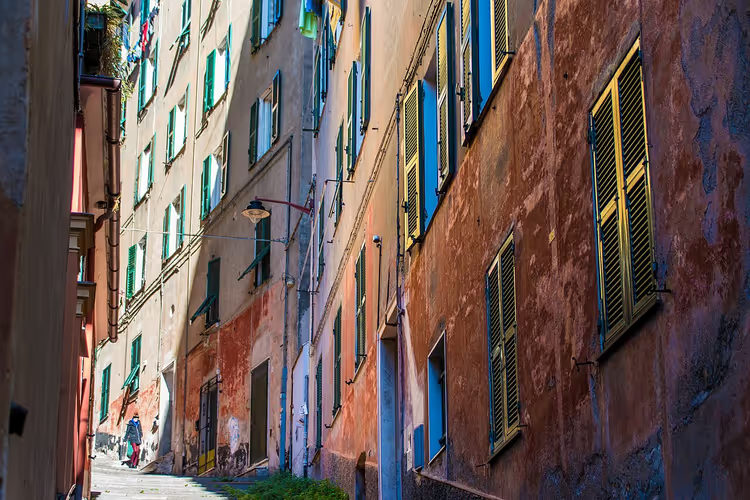
Genoa grew up as a port city, and you can see it in every neighborhood. The narrow caruggi alleys sit side by side with tall palaces, and any road eventually leads to the port. Don't take a map: just walk and look into every archway and open courtyard.
 © Ralf Steinberger from Milan, Berlin + Munich, Italy + Germany · CC BYPhoto: Ralf Steinberger from Milan, Berlin + Munich, Italy + Germany, CC BY (https://creativecommons.org/licenses/by/2.0), Wikimedia Commons
Opening hours and admission for the city's main sights:
Sight | Admission | Hours and closed days |
|---|---|---|
Aquarium of Genoa | dated ticket, online | daily 09:00-20:00, last entry 18:00 (as of 09/2026, official website) |
Lanterna lighthouse | paid, tickets online | weekends, schedule on the complex website |
Doge's Palace | depends on the exhibition | daily, tickets on the palace website |
Royal Palace | combined Musei di Genova ticket | check hours at museidigenova.it |
San Lorenzo Cathedral | free | open morning and evening, no ticket office |
Piazza Ferrari and the doge's palace
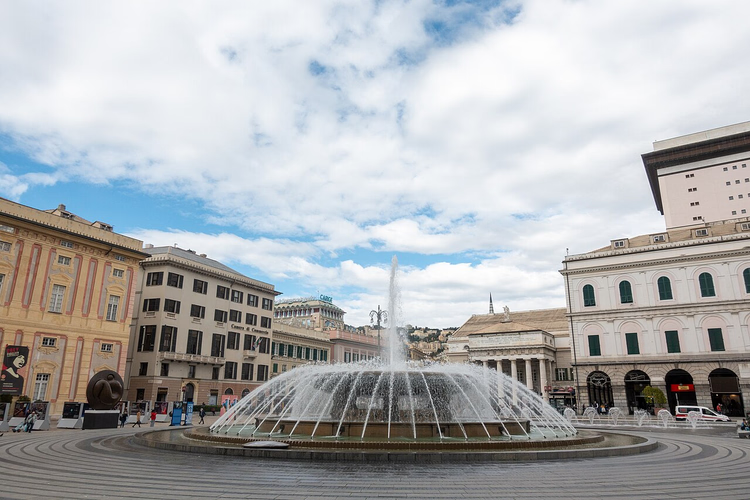
Piazza Ferrari serves as Genoa's main square. The facades of the Doge's Palace, the Church of Gesù, the stock exchange palace, the Carlo Felice Theater, and the Ligurian Academy of Fine Arts museum all face the square, and a fountain plays in the center. It's a convenient place to start your walk: streets fan out from here to all parts of the center.
 © Kent Wang from Barcelona, Spain · CC BY-SAPhoto: Kent Wang from Barcelona, Spain, CC BY-SA (https://creativecommons.org/licenses/by-sa/2.0), Wikimedia Commons
The Doge's Palace, also known as Palazzo Ducale, was begun in 1298, and the medieval section is well preserved. Today it's the city's cultural center: you'll likely catch an exhibition, concert, or lecture. The palace is open daily, and the ticket depends on the specific exhibition (as of 09/2026, official website).
Piazza della Vittoria
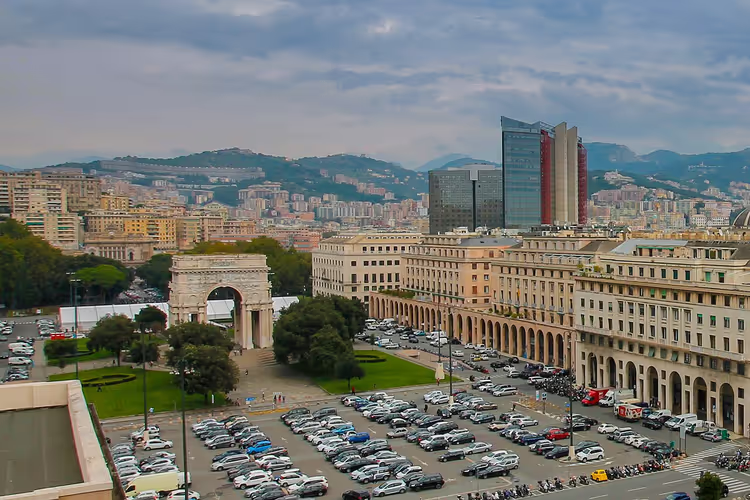
From Piazza Ferrari, Via XX Settembre leads east, and you'll come out at Piazza della Vittoria. In the center of the square stands a triumphal arch erected after World War I in memory of the fallen. The statues and bas-reliefs on it take longer to study than the square itself.
 © Agneszka Swieton · CC BY-SAPhoto: Agneszka Swieton, CC BY-SA (https://creativecommons.org/licenses/by-sa/3.0), Wikimedia Commons
Via Garibaldi and the Palazzi dei Rolli
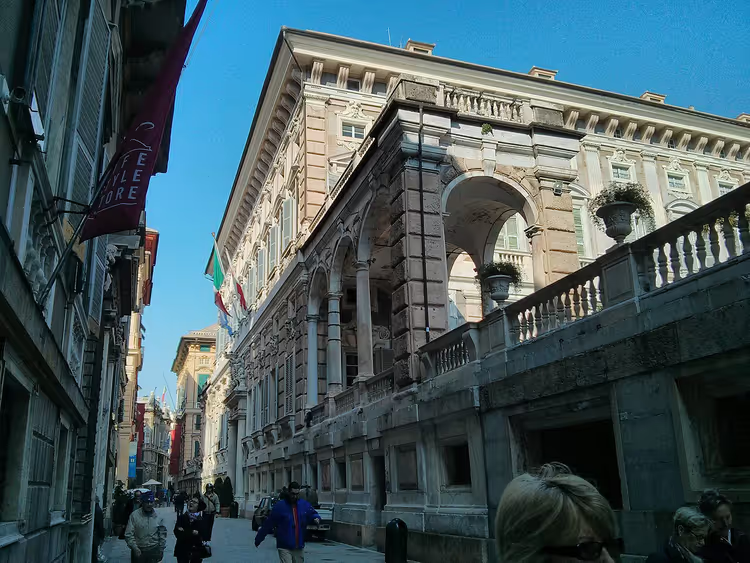
Via Garibaldi, which the Genoese call Strada Nuova, stretches just 250 meters. Its palaces are listed by UNESCO as part of the Palazzi dei Rolli, and there are 42 such buildings in Genoa in total. Go inside: many palazzi have museums and inner courtyards open to visitors (as of 09/2026, city guide).
 © Emanuela Meme Giudic… · CC BYPhoto: Emanuela Meme Giudic…, CC BY (https://creativecommons.org/licenses/by/3.0), Wikimedia Commons
Royal palace
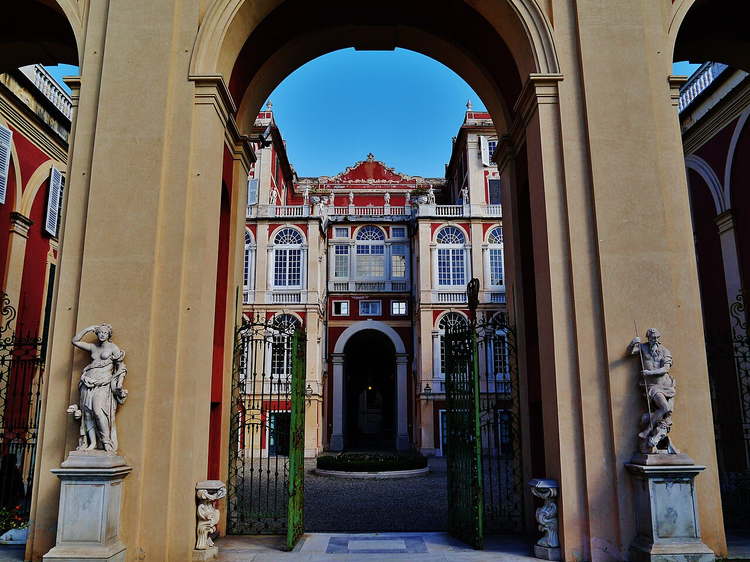
The Royal Palace, Palazzo Reale, is considered the most luxurious in the city. The building was constructed in the 17th century on Via Balbi for a noble family and later passed to the Savoy kings. Today it houses a museum with paintings, sculptures, and antique furniture (as of 09/2026, Musei di Genova).
 © Zairon · CC BY-SAPhoto: Zairon, CC BY-SA (https://creativecommons.org/licenses/by-sa/4.0), Wikimedia Commons
San Lorenzo Cathedral
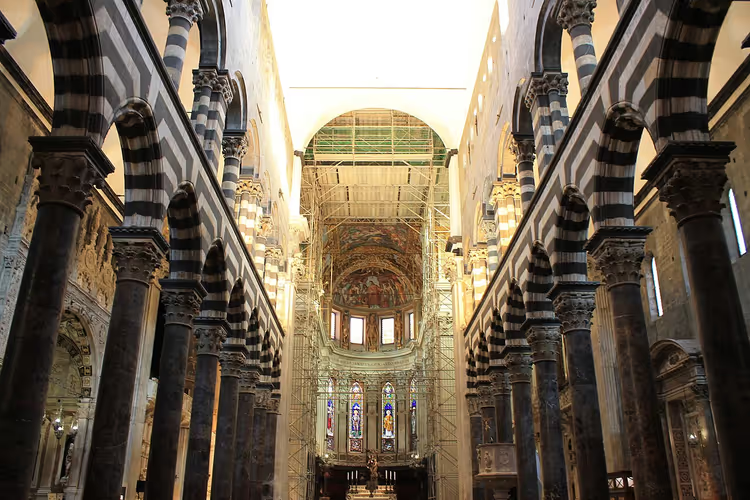
The cathedral of San Lorenzo is recognizable by its black-and-white facade and the stone lions at the entrance. No ticket is needed, admission is free. Inside, be sure to see the treasury with relics that have been kept here for centuries.
 © John Samuel · CC BY-SAPhoto: John Samuel, CC BY-SA (https://creativecommons.org/licenses/by-sa/4.0), Wikimedia Commons
San Matteo Church and the Basilica of the Annunciation
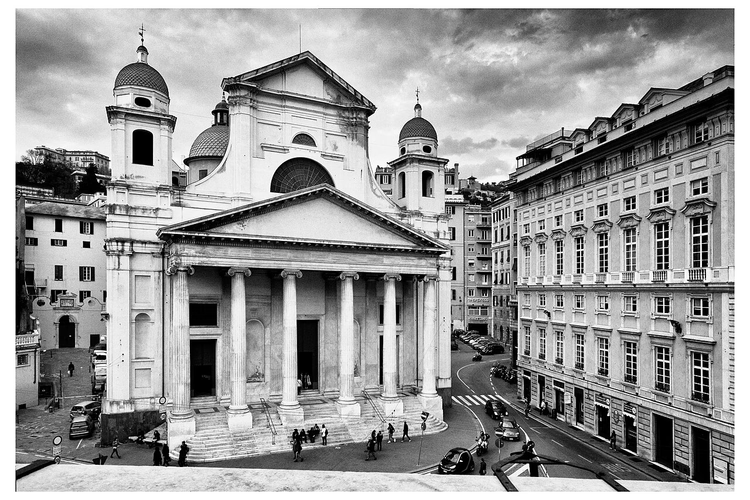
You will find the striped two-tone Church of San Matteo on the square of the same name. It was built by the influential Doria family in the early 12th century (according to the church guide). The most ornate interior in the city belongs to the Basilica of the Annunciation (Basilica della Santissima Annunziata del Vastato): baroque, gilding, columns, stucco, and frescoes.
 © Sergiovannini · CC BY-SAPhoto: Sergiovannini, CC BY-SA (https://creativecommons.org/licenses/by-sa/4.0), Wikimedia Commons
Columbus House and the Barbarossa Walls
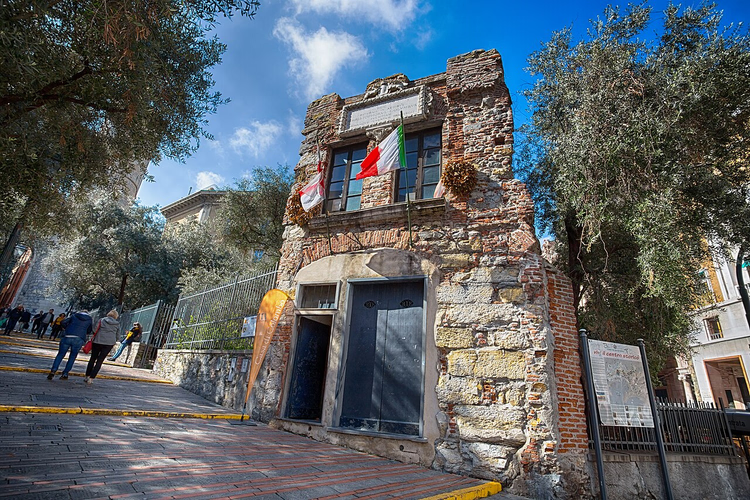
Columbus House in the Old Town marks the spot where the navigator spent his childhood. Only the foundation remains from the original, everything above it was rebuilt. Nearby you will find the 12th-century Barbarossa Walls and Porta Soprano with its two gate towers. Another reminder of a prominent citizen, the Embriaci family tower, has survived in its original dimensions (as of 09/2026, Genoa tourist office).
 © Faber1893 · CC BY-SAPhoto: Faber1893, CC BY-SA (https://creativecommons.org/licenses/by-sa/4.0), Wikimedia Commons
Castello d'Albertis and Museo delle Culture del Mondo
Closer to the port stands the neo-Gothic Castello d'Albertis. It was built in the late 19th century by a sea captain who brought back unusual objects from his voyages. Inside, the Museo delle Culture del Mondo displays this collection, and the castle terrace offers a view of the water (as of 09/2026, city museums website).
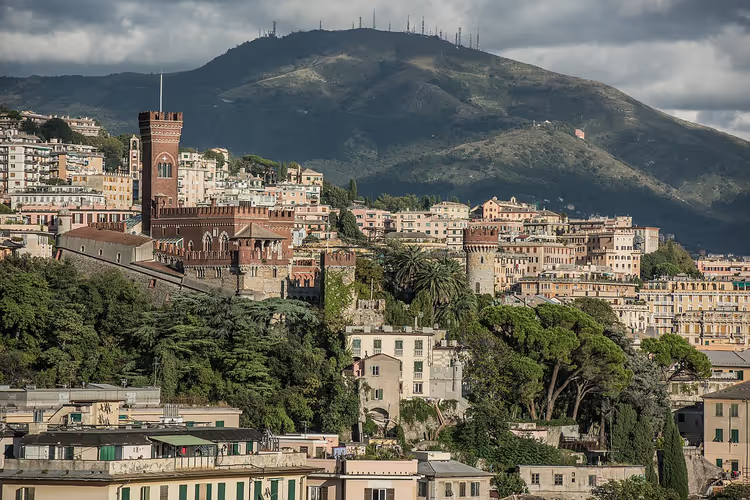 © Alex2015Genova · CC BY-SAPhoto: Alex2015Genova, CC BY-SA (https://creativecommons.org/licenses/by-sa/4.0), Wikimedia Commons
Old port and Genoa aquarium
The old port, Porto Antico, is considered the historic part of the Genoa harbor. The commercial port of Genoa itself is among the largest on the Mediterranean. Today people come here with families and visit museums. The Genoa Aquarium showcases different marine ecosystems and is one of the largest in Europe. Opening hours are listed in the table above, and date-specific tickets are sold on the official website.
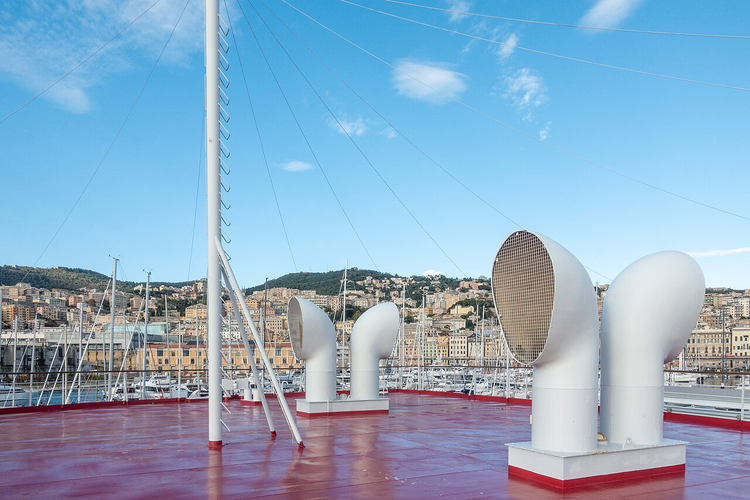 © Kent Wang from Barcelona, Spain · CC BY-SAPhoto: Kent Wang from Barcelona, Spain, CC BY-SA (https://creativecommons.org/licenses/by-sa/2.0), Wikimedia Commons
At Galata Museo del Mare you will walk through the entire history of seafaring, from wooden galleys to submarines. A large sailing ship built for the filming of "Pirates" is moored nearby. Book timed museum tickets online in advance on Tiqets.
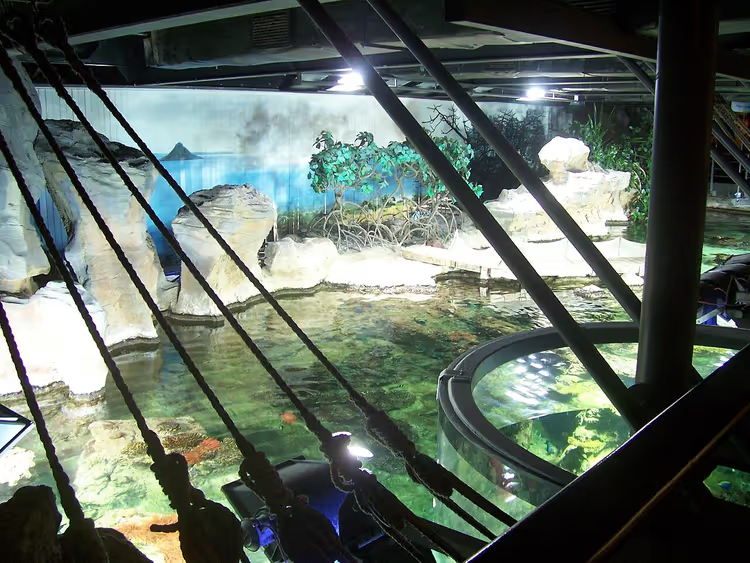 © Emanuela Meme Giudic… · CC BYPhoto: Emanuela Meme Giudic…, CC BY (https://creativecommons.org/licenses/by/3.0), Wikimedia Commons
Lanterna lighthouse
The Lanterna lighthouse is visible from many points in the city, and its height reaches 117 meters above sea level. The only open terrace is reached by 172 steps, and its optics reach 57 kilometers (as of 09/2026, Lanterna complex page). The climb is paid, tickets are sold online, and the schedule depends on the day of the week. Check it before your trip on the complex website.
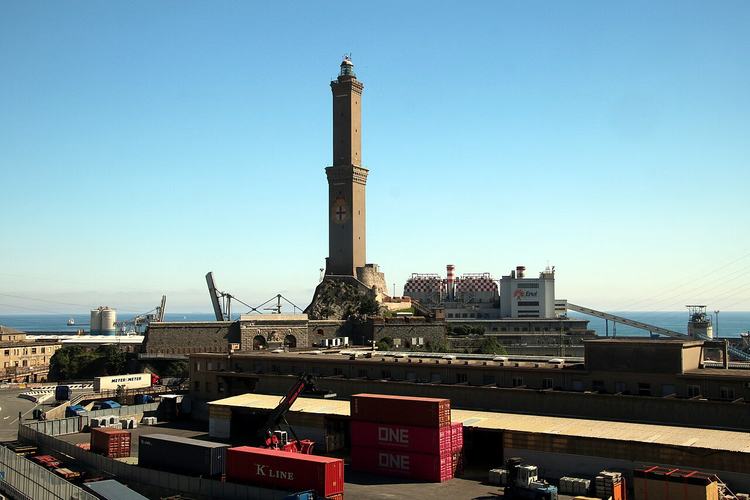 © Mongolo1984 · CC BY-SAPhoto: Mongolo1984, CC BY-SA (https://creativecommons.org/licenses/by-sa/4.0), Wikimedia Commons
If you are short on time, start with Via Garibaldi and the old port: these two places give the fullest picture of Genoa. You can add the other spots on your next trip.
Tours and tickets in Genoa
Guided tours, skip-the-line tickets and activities — most offers can be cancelled free of charge.
See offers on GetYourGuideThe widget loads once you give your consent.
⁉️🤔 Frequently asked questions
How many days do you need for Genoa?
Two or three days are enough for the palaces and the old town. Spend the first day on Via Garibaldi, Piazza Ferrari, and the San Lorenzo Cathedral, and on the second day go to the old port with the aquarium and to the Lanterna lighthouse. If you want to add boat trips and excursions around Liguria, plan for four days or more.
How to get from the airport to the center?
A shuttle bus runs to Genova Brignole station, a taxi will get you there faster and cost more. From there you can take the metro or walk: the center is compact, and Piazza Principe station is quite close to the port.
What does the Genova City Pass give you?
Guests staying in Genoa for at least three nights at a participating hotel receive a "Rubens 72 ore" City Pass from the tourist office. It gives access to the city's main museums and discounts at select venues. The list of participants and terms change, so check them on the tourist office website.
What can you see for free?
San Lorenzo Cathedral, Piazza Ferrari, and Piazza della Vittoria don't require tickets. Walking along Via Garibaldi from the outside is also free, you only pay to enter the inner palaces and museums. The Old Port is open around the clock, but the aquarium and Galata Museo del Mare require tickets.
When is the best time to visit Genoa?
The best months to visit are May, June, and September. In summer the old town is stuffy and crowded, and lines form at Liguria's sea beaches. In spring and fall, lines at the aquarium and the lighthouse are shorter, and the weather stays warm. If you're going in July, book accommodation and tickets well in advance.
In short: what to book
Genoa works well for a short trip: palaces and squares in the center, the port nearby, and the sea is an easy train ride away. If you have two free days, base yourself in the historic center and buy tickets in advance. In high season, book accommodation a couple of months ahead, otherwise your options will shrink to the outskirts. Families will enjoy the aquarium and the Old Port, groups of friends will love focaccia and Via Garibaldi, and on a first trip you'll definitely appreciate the Doge's Palace, San Lorenzo Cathedral, and the Lanterna lighthouse. Accommodation in the center is easy to find on Trip.com.

A small editorial team writing guides for independent travel. We travel ourselves, but we haven’t been everywhere, so we check prices, opening hours and how to get there against official sources.