
















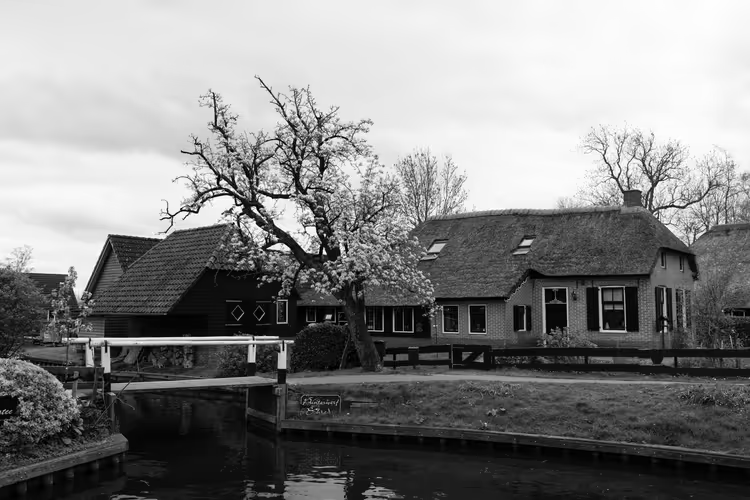
How a trip to Giethoorn works: boat, parking and museum ticket
Giethoorn sits on water, not on roads. The village center has no streets for cars: you leave your vehicle in the parking lot at the entrance. From there you walk, ride a bike, or go by boat.
Below is a practical breakdown: how to get there from Amsterdam, how much a boat and the museum cost, and where to stay overnight in season.
Entering the village itself is free, since Giethoorn remains a residential settlement, not an amusement park.
Ad: this article contains affiliate links. We earn a commission if you book through them, at no extra cost to you.
Giethoorn: a village without roads
💡 In short:
- Boat: renting a quiet electric boat starts at about 35 € for two hours (as of 09/2026, Bootverhuur Giethoorn).
- Prices and opening hours: 09/2026, checked on the official museum website and on the boat rental page.
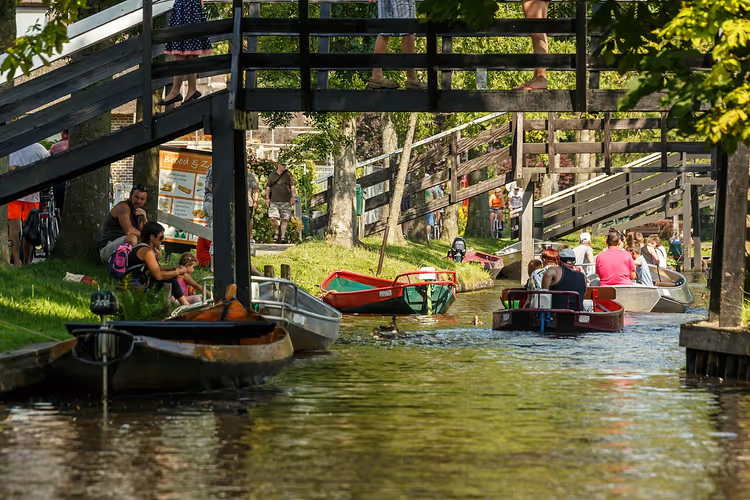
The village is located in the province of Overijssel, in the northern part of the Netherlands. There are more canals here than streets. Instead of asphalt, water runs between the houses, and every yard lives on its own island. Hundreds of humpbacked wooden bridges connect these islands: the bridges are built high so boats can pass freely underneath, and a path for cyclists and pedestrians runs along the canals through the entire village.
The reason for this layout is simple: farmers dug peat right in front of their houses, the pits filled with water, and the neighboring yard gradually turned into a separate island reachable only by water. That is how the canals appeared, which today have become the village's main attraction.
 © Berthold Kleine-Vorholt · CC BY-SAPhoto: Berthold Kleine-Vorholt, CC BY-SA (https://creativecommons.org/licenses/by-sa/4.0), Wikimedia Commons
Boats instead of cars
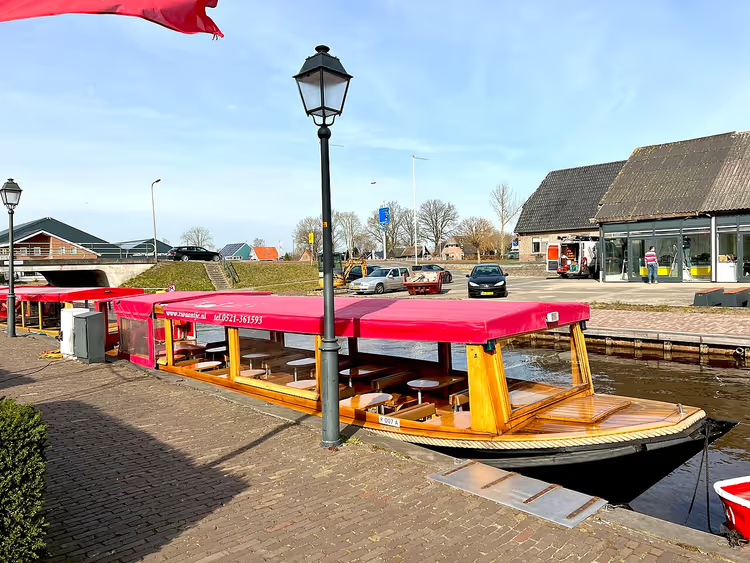
Here a boat replaces a car. Every house has at least one, and most often it is a quiet electric boat. Gasoline and diesel engines are banned in the village, so the canals are almost silent, and locals call these boats fluisterboot, meaning "whispering boats."
Rental points operate for visitors. They offer rowboats, canoes, small motorboats, and launches. No license is required to operate them. Follow the traffic rules: the canals have signs and even traffic lights.
Nearby begins the De Wieden nature park with lakes and reed beds. People go there by boat too.
 © CEphoto, Uwe Aranas · CC BY-SAPhoto: CEphoto, Uwe Aranas, CC BY-SA (https://creativecommons.org/licenses/by-sa/3.0), Wikimedia Commons
History and name of the village
The first settlers came to this place around 1230 (according to Dutch Wikipedia). The name Giethoorn translates as "goat horns." According to legend, the first settlers found many goat horns on the land, left by a herd that perished in the flood of 1170. You can still spot them on house walls, fences, and roofs today, and visitors happily take photos against such backdrops.
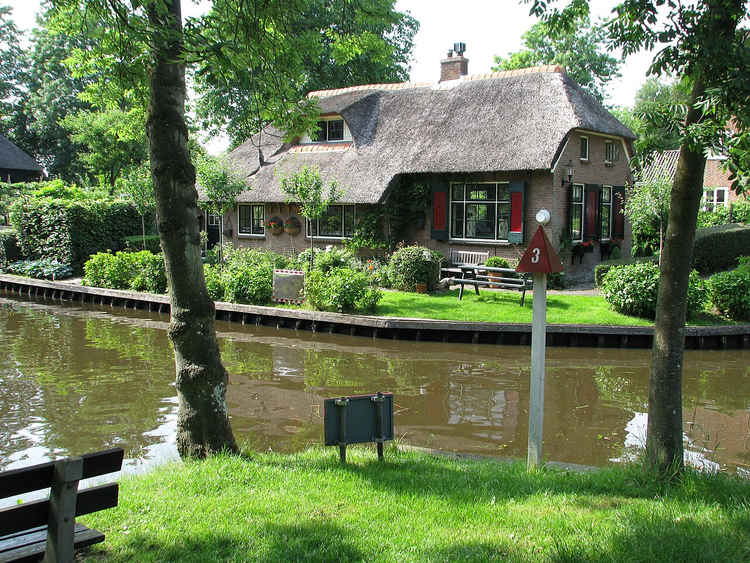
Thatched roofs are also part of local history. Reed was a cheap material, while roof tiles were something only wealthy families could afford. Today a house under thatch costs more than an ordinary one, because it is considered a classic of the Dutch countryside. The village became famous after the comedy Fanfare: Bert Haanstra filmed it here in 1958 (according to the free encyclopedia).
Where to stay in Giethoorn
The village stretches for about six kilometers along the canals. There are around ten hotels here, and most of them sit right on the water. Book a room with a canal view in advance, because in summer there are almost no vacancies left, and high-season prices stay at the level of central districts in Dutch cities.
For an overnight stay, a guesthouse on the water or a small hotel by the main canal works well. If you are only here for one evening, staying in a neighboring town is cheaper, but the village in the morning is worth staying for.
Check hotel prices in Giethoorn on Trip.com
What to do in Giethoorn
The main activity here revolves around water. Rent a boat for two or three hours and see the village from the water: that way you will pass all the bridges and side channels. Boats are available for rent right in the center.
Anglers need a license. You buy a permit from the local authorities, and catch limits here are strict. In the evening, small family-run restaurants and bars with Dutch and Belgian cuisine open up, and they welcome guests until late.
A bicycle also comes in handy: paths along the canals lead to the neighboring lakes and to De Wieden park, which is easier to reach by water in summer than by the narrow road. The village is very popular, so at midday the main canal gets crowded. Come in the morning if you want a quiet stroll.
Tours and tickets in Giethoorn
Guided tours, skip-the-line tickets and activities — most offers can be cancelled free of charge.
See offers on GetYourGuideThe widget loads once you give your consent.
Giethoorn Museum: tickets and opening hours
Museum Giethoorn 't Olde Maat Uus shows what village life was like before tourists arrived. Inside, a farmhouse, a fisherman's hut, and a boat shed have been restored.
 © Hojjat (aka Huji) · CC BYPhoto: Hojjat (aka Huji), CC BY (https://creativecommons.org/licenses/by/2.0), Wikimedia Commons
An adult ticket costs €7.50, a child aged 4-12 costs €2.50, and children under three enter free (as of 09/2026, museum's official website). These rates are valid until December 31, 2026, so check them right before your trip.
In summer, from April 1 to October 31, the museum is open every day from 11:00 to 17:00 (as of 09/2026, opening hours). In winter it is open only on Friday, Saturday, Sunday, and Monday, from 11:00 to 16:00.
How to get there from Amsterdam
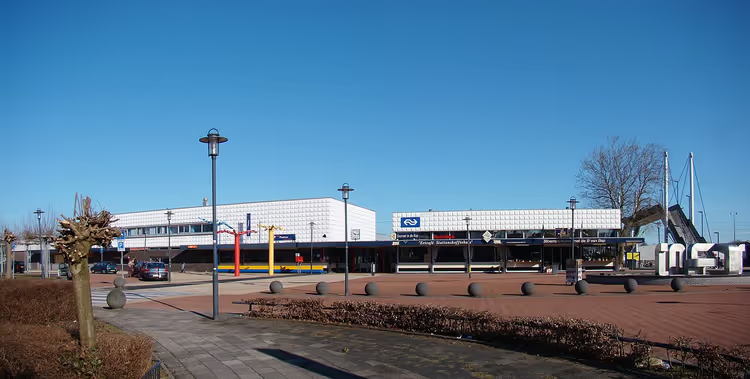
A train from Amsterdam goes to Steenwijk station, and from there you take a bus or taxi. The journey takes more than two hours, and you usually need a transfer. Check the exact time and number of transfers on the Nederlandse Spoorwegen website: schedules change by season.
By car you leave your vehicle in the parking lot at the entrance: there is no access to the village center. Locals park there too and then walk in. Entry to Giethoorn is free, and you only pay for the boat, the museum, and accommodation.
For a short trip, public transport is enough. Renting a car makes sense if you want to add the neighboring towns of Overijssel to your visit. Compare car rental prices in advance: on weekends the choice of cars is smaller.
Buying a house and rules for visitors
Many guests ask whether you can buy a house here. Yes, property in the village is for sale. Some of the canal houses are rented out to guests for short stays.
The village remains residential. Ordinary families live here, not just tourists, so respect the private areas around houses and docks, and your trip will be enjoyable for both you and the owners.
Giethoorn on the map
The map shows how the village stretches along the canals and where the parking lot at the entrance is located. Open the map on your phone if you are planning your route in advance.
Giethoorn — the village without roads
Places on the map
- Giethoorn The village without roads: canals instead of streets, boats instead of cars
⁉️🤔 Frequently asked questions
How much does it cost to enter Giethoorn?
Entering the village is free. You pay for the boat, the museum, and accommodation. Renting a quiet electric boat starts at around 35 € for two hours (as of 09/2026, Bootverhuur Giethoorn rates). A ticket to Museum Giethoorn costs 7.50 € for adults and 2.50 € for children aged four to twelve (as of 09/2026, official museum website).
How do I get to Giethoorn without a car?
Take the train to Steenwijk station, then a bus or taxi. From Amsterdam, the trip takes more than two hours and usually requires a transfer. Check the exact schedule before you travel: services change by season. A local bus runs from the station to the village, and a taxi costs noticeably more.
Do I need a license to rent a boat?
No, you don't need a license. Most boats at local rental shops are designed for beginners (as of 09/2026, Giethoorn rental terms). Rent a boat for two to three hours: that's enough for the main canal, the side channels, and reaching the lake. In hot weather, bring water and sunscreen, as there is little shade on the water.
When is the best time to visit Giethoorn?
From May to September the weather is warmest, and that's also when the village is busiest. Arrive at opening time: the central canal is calmer before noon. In winter the village runs quietly, but the museum is open only four days a week (as of 09/2026, Museum Giethoorn).
Can you buy a house in Giethoorn?
Yes, property in Giethoorn is for sale. A thatched-roof house costs more than an ordinary one because it's considered a classic of the Dutch countryside. If you're looking for real estate in the Netherlands, also check the neighboring towns of Overijssel.
Video about Giethoorn
A short video helps you grasp the scale of the village: the canals, bridges, and boats can be seen in full. Watch it before your trip to plan your route on the water.
In short: what to book
Giethoorn is easy to cover in one day, but a night on the water changes the trip. In the morning you go through the main canal without the crowds, and in the evening you see the village in silence and without tour boats.
If you have one day: rent a boat for two hours and make it to the museum before closing. If you're traveling with family: plan an overnight stay at a guesthouse by the canal. If you want to see more: add a guided canal tour. Book a canal tour on GetYourGuide

A small editorial team writing guides for independent travel. We travel ourselves, but we haven’t been everywhere, so we check prices, opening hours and how to get there against official sources.