

















What to bring from Greece: 16 souvenirs that will make it home
A gift from Greece is one market trip away. The problem is different: half the shops in tourist areas sell the same goods at inflated prices. The difference in selection and price becomes obvious just two blocks from the waterfront.
We put together sixteen categories of souvenirs worth bringing home. According to the official Greek tourism office, olive oil, honey, cheese, and herbs remain the country's top gastronomic gifts. Below, each category in order: where to buy, how one product differs from its shelf neighbor, and what can ruin a gift in transit.
Important: buy olive oil, honey, and saffron at producer shops and monasteries, look for leather and fur coats in Kastoria, Katerini, and on Rhodes, and check markets for sweets and spices.
1. Natural fur coats
💡 In short:
- Set your budget and season: previous collections get cheaper after mid-January.
- Look at leather and fur in workshops, not in shops attached to hotels.
- Prices and selection: 09/2026, verified on the Visit Greece website
 AIIllustrative image: AI-generated
Kastoria and Katerini, two northern cities where fur workshops line the central streets. Winters are cold in Kastoria, and local factories have been sewing furs for export for years.
The main event of the year in Kastoria is the international fur fair, Kastoria International Fur Fair. The older generation knows it as EDIKA. Dates for the next season are published on the official website, and it's convenient to plan a trip around them.
Sales of previous collections start in the second half of January. Prices drop noticeably, and the size range still holds up. If you live outside the EU, bring your passport: without it you can't process a tax free refund on departure.
- Where to buy: salons and workshops in Kastoria, Katerini, and Athens.
- Who it's for: those ready for a major purchase and wanting something that will last for years.
- What to check: natural fur, lining quality, and the receipt for a refund.
2. Alcoholic beverages
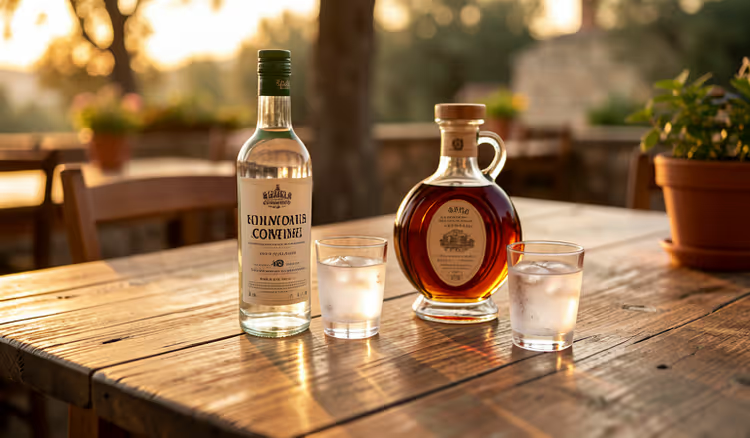 AIIllustrative image: AI-generated
Metaxa, a Greek brandy, has been known since the late 19th century. The grape distillate is infused with herbs, and aging time directly affects the price. The smooth taste appeals even to those who rarely drink spirits, but the alcohol content here is honest.
Ouzo, an anise-flavored spirit, is the second most recognizable after the brandy. Greeks dilute it with water: it turns cloudy and the taste becomes softer. Cocktails with orange or tomato juice are also common.
Retsina, a dry wine with pine resin, puts off tourists with its flavor and attracts connoisseurs. The resin protected wine from spoiling many centuries ago, and today the aroma has become part of the style. You either love this wine or you don't.
On Corfu they make a kumquat liqueur, and across the country they distill raki, a grape pomace spirit. Raki is served in tavernas as an aperitif, and it's bought as a gift more often than you'd think.
- Where to buy: supermarkets and wine shops, not hotel shops.
- Who it's for: colleagues and relatives who appreciate strong drinks.
- What to keep in mind: check alcohol in your luggage and wrap the bottle in film.
3. Olives
The olive tree grows for centuries, and Greeks treat it as sacred. Kalamata olives, which you'll see at any market, are not marinated but salt-cured. That's why they're very salty, and before serving they're soaked in water for several hours.
A good olive is shiny and has thin skin. At the market, olives are sold by weight, and you can taste several varieties before buying. That's the easiest way to avoid bringing home a jar nobody will appreciate.
For a gift, choose glass packaging: the product in it is pasteurized and looks neat. Plastic packaging travels worse, although the taste barely changes in transit.
- Where to buy: markets, producer shops, grocery stores.
- The catch: olives are salty, and you can't serve them to guests without soaking.
4. Olive oil
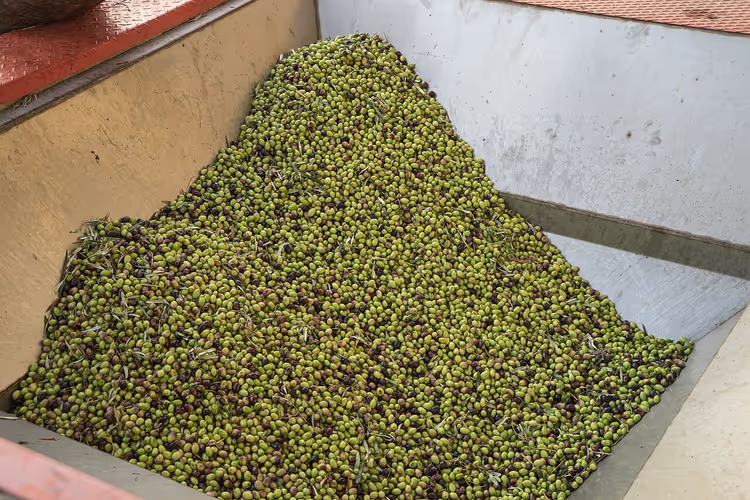
Greece is among the largest olive oil producers, and locally it costs less than at home. Check the label: Extra Virgin means cold-pressed, while Pomace is extracted from the pulp using heat.
Buy oil in dark glass. Light and heat kill the flavor within a couple of months, so clear plastic in the sun ruins the product fastest. Small bottles and sets with balsamic vinegar make convenient gifts.
The expiration date matters more than the brand. Expired oil turns bitter and ruins a dish, so pay closer attention to the bottling date than to a pretty label. Buy oil-based cosmetics at the pharmacy: the ingredients there are more honest than in a shop by the port.
- Where to buy: cooperatives, supermarkets, producer shops.
- Who it's for: anyone who cooks at home and appreciates simple sauces.
- The catch: in hot weather oil oxidizes faster, so don't keep the bottle in a sun-baked trunk.
5. Cheese
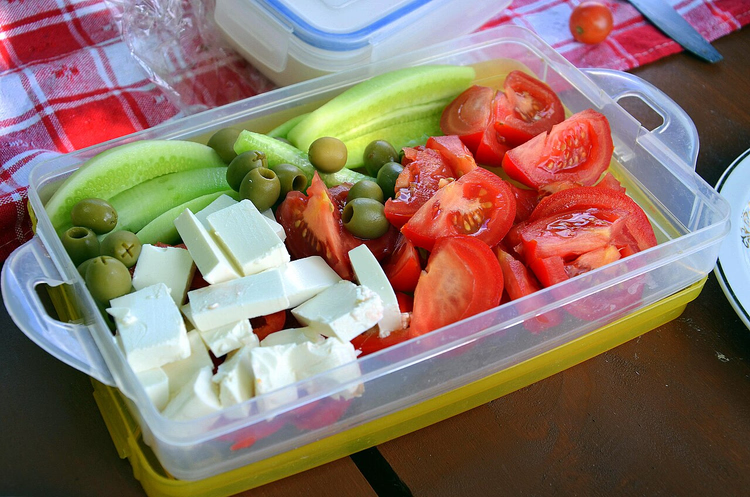 © Silar · CC BY-SAPhoto: Silar, CC BY-SA (https://creativecommons.org/licenses/by-sa/3.0), Wikimedia Commons
Feta, the most recognizable Greek cheese, is made from sheep's or goat's milk. It's stored in strong brine and sold in almost every supermarket. Feta tastes similar to brined white cheese but is saltier and firmer.
Hard cheeses deserve just as much attention. Graviera is slightly sweet, with a caramel note; kefalotyri is sharper and served as a snack with ouzo. Soft manouri has a citrus aroma and is sold in large cones.
The main risk for this gift is the journey. In summer, vacuum-packed cheese survives a flight worse than in winter, so buy it on the last day and keep it in a cooler bag. At home, leave feta in brine, otherwise it dries out within a couple of days.
- Where to buy: supermarkets, cheese shops, by weight at the market.
- Who it's for: gourmets and those who make Greek salad.
- Not for: those flying home in July heat with a long layover.
6. Honey
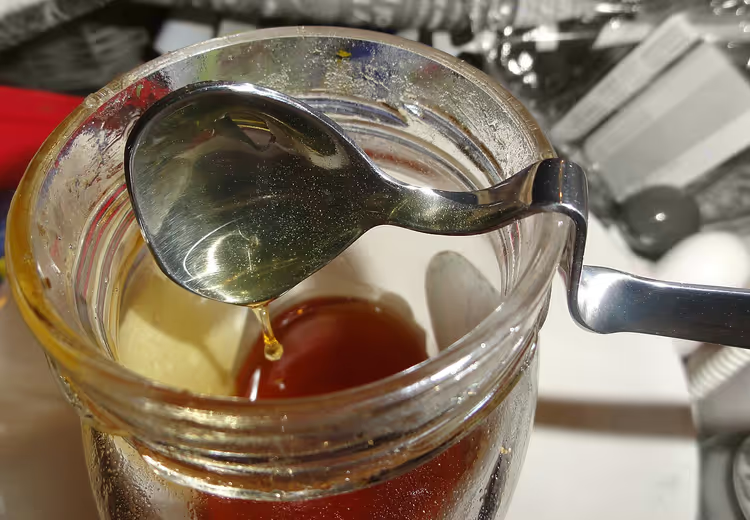 © Fæ · CC BY-SAPhoto: Fæ, CC BY-SA (https://creativecommons.org/licenses/by-sa/3.0), Wikimedia Commons
Honey in Greece is not a duty-free souvenir, it's a full-fledged product with regions and varieties. Crete, Rhodes and Thasos are known for pine and thyme honey, and the best jars are sold in monasteries and villages.
Apiaries sit high in the mountains, and the flavor changes from slope to slope. Monastery honey is bought right during a tour, and counterfeits are almost never found there. Small glass jars with nuts inside are easy to bring as a small gift.
A separate reason to visit Rhodes is the Bee Museum, the only bee museum in Greece (according to the museum's official website). The museum shop has a wider selection than a beach kiosk.
- Where to buy: monastery shops, markets, apiaries on tours.
- Who it's for: those bringing a gift for a grandmother or a colleague with kids.
7. Sweets
 © Nicole Bratt from Seattle, WA, USA · CC BY-SAPhoto: Nicole Bratt from Seattle, WA, USA, CC BY-SA (https://creativecommons.org/licenses/by-sa/2.0), Wikimedia Commons
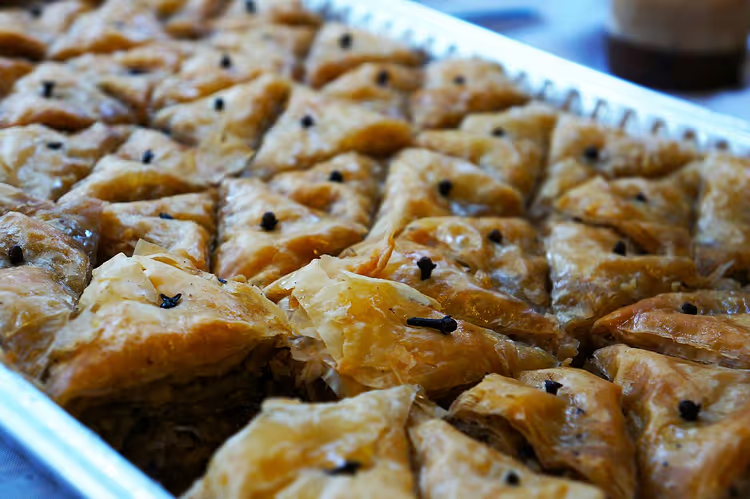
Halva, baklava and Turkish delight are sold by weight and in souvenir boxes. Local baklava, a layered pastry with nuts, raisins and syrup, is made from several dozen layers of dough. Nuts, spices and natural syrup go inside.
By weight is usually more expensive, but the taste is noticeably better: pre-packaged sweets often sit in warehouses for months. Try before you buy, because syrup is made differently in each confectionery.
Turkish delight is made from starch and sugar. The shape and filling vary: whole, cubed, sliced. Gozinaki are made from nuts with sesame and honey syrup, and chocoladaki resemble something between a candy and a pastry.
For a gift, take two or three boxes of different sizes. Sweets are heavier than they look, and suitcase space runs out quickly.
- Where to buy: confectioneries and markets, not station kiosks.
- Keep in mind: sugar and honey melt in the heat, so keep the boxes in your carry-on.
8. Spices
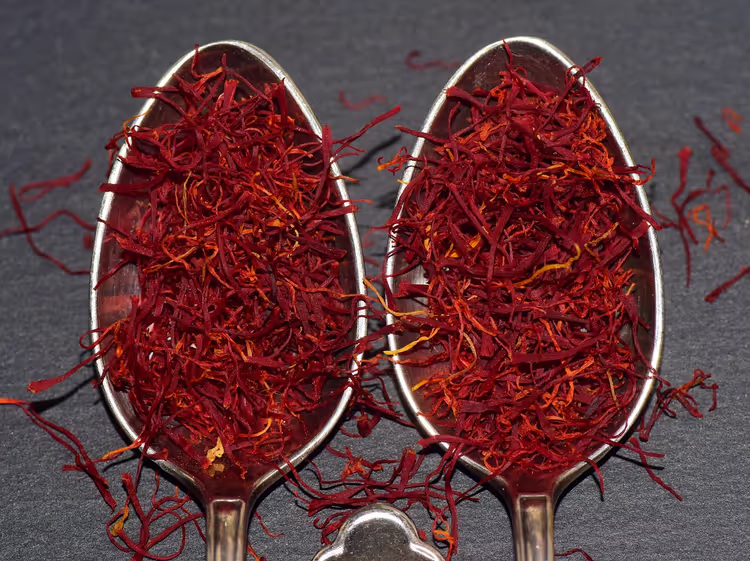
Spices are sold in every shop in Greece, but one of them is worth a special trip. Krokos Kozanis saffron is grown near the town of Kozani and protected by PDO status (according to the producers' cooperative).
The harvest takes place in late October: the flowers are picked by hand at dawn, before the sun opens the petals. That is exactly why the spice is so expensive. Saffron is used to make tea and is added to rice and soups.
Besides saffron, pick up herb blends for specific dishes: they come in packets, and the packaging tells you what they go with. Store spices in a sealed jar away from the stove, otherwise the aroma fades within a couple of months.
- Where to buy: markets, spice shops, the cooperative in Kozani.
- Who it's for: people who cook a lot at home and enjoy herbal tea.
- Important: saffron is counterfeited, so check the packaging and the protected name.
9. Orthodox symbols

Greece remains an Orthodox country, so monastery shops sell items you won't find in a regular store. Icons, oil lamps, wax candles, and crosses are made by the monks themselves, and part of the proceeds goes to maintaining the monastery.
An icon can be bought both cheaply and for a lot of money. Simple handmade icons with a saint's name work well for friends, while a hand-painted icon from Mount Athos is brought back as a serious gift. Byzantine icons are painted according to canon, so the technique and colors remain recognizable.
For a believer, the object itself is not the only thing that matters. In monasteries, icons are touched to the relics of saints, and you can ask a monk or attendant to do this. Check the rules in advance: some monasteries do not allow photography, and the dress code is strict.
Wrap glass oil lamps in clothing and carry them in your hand luggage. Keep wax candles away from heat.
- Where to buy: monastery shops and shops at churches.
- Who it's for: believers and as a gift for older relatives.
- What to keep in mind: active monasteries have a dress code and photography restrictions.
10. Ceramics
 © Zde · CC BY-SAPhoto: Zde, CC BY-SA (https://creativecommons.org/licenses/by-sa/4.0), Wikimedia Commons
Greece has a lot of ceramics, and they vary widely. On Crete, workshops make pottery with local ornamentation, and the largest selection awaits you in Athens, at the foot of the Acropolis. Painted plates, mugs, and inexpensive little vases are sold there too.
Amphorae are a separate story. Modern copies resemble ancient ones so closely that customs sometimes asks for a certificate stating that the item has no artistic value. Ask the seller for the document before paying.
Buy ceramics with a receipt and wrap them in clothing. Hand-painted pieces do not like being shaken around or plastic bags.
- Where to buy: workshops on Crete and the market at the Acropolis in Athens.
- The catch: heavy ceramics eat through your baggage allowance faster than you expect.
11. Jewelry
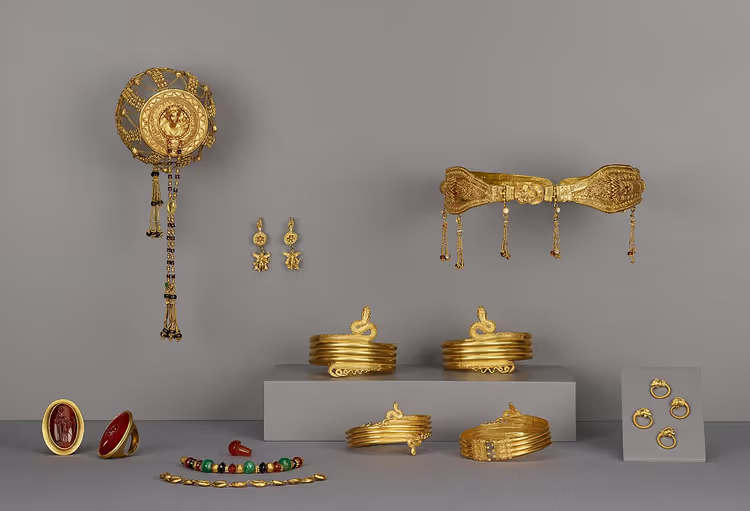
Gold and silver are cheaper in Greece than in Western Europe, and the jewelry-making tradition goes back to Byzantium. In large cities the selection is wide: from simple chains to pieces with pearls and gemstones.
The most recognizable work comes from Thasos and Crete. Thasos artisans favor botanical motifs, while Cretan jewelers often repeat the shape of a bee. These handmade earrings and bracelets are moderately priced, and they more than hold up as gifts.
One money-saving rule: buy a finished piece rather than metal by the gram. You pay a fixed price for the work, and the total comes out cheaper.
- Where to buy: jewelry stores and workshops, not beach stalls.
- Who it's for: those bringing a gift for a wife or mother.
- What to look for: the hallmark, the clasp, and the receipt.
12. Clothing and shoes
Local brands in Greece are stronger than they seem from the outside. City boutiques sell scarves, shawls, and sweaters with ornamentation that you won't find in chain stores. These are often handmade, and you can order them in your size.
The sale season starts in the second half of July and lasts several weeks. If your trip falls during this period, you can buy the summer collection at reduced prices in the same stores.
For shoes, look at local manufacturers: NAK Shoes, Haris Kazakos, Boxer, Haralas, Migato. This is the mid-price segment with quality leather that holds its shape for more than one season.
Large chains like Zara and H&M are present in Athens and other big cities, but there is no reason to fly to Greece for them. Souvenir T-shirts are inexpensive, but the quality is usually modest, so buy them only as a joke gift.
- Where to buy: boutiques and local brands; look for chains in Athens shopping malls.
- Who it's for: those who want something they can't get at home.
- The catch: T-shirts from tourist shops quickly lose their shape; they are not made for long-term wear.
13. Home textiles
 © Jessamyn · CC BY-SAPhoto: Jessamyn, CC BY-SA (https://creativecommons.org/licenses/by-sa/4.0), Wikimedia Commons
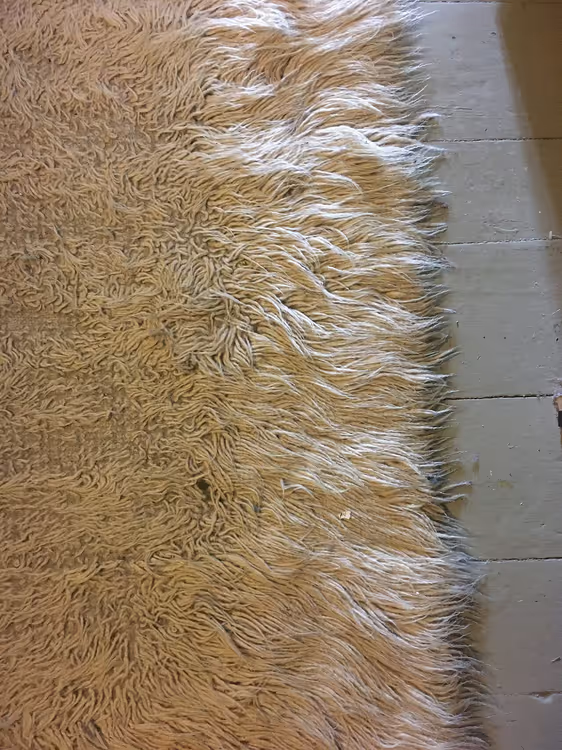
Home textiles are brought back by people who want to bring an item rather than food. Flokati rugs are made from sheep's wool with a thick pile, and they look striking in an interior.
On Crete, weaving is done on a large scale: bedspreads, throws, blankets, and covers are sold both in shops and in workshops. Some items are made by hand and sold right where they were woven, so you can see everything with your own eyes.
Thin flokati rugs made from knitted fur are lighter and cheaper than classic ones, but they last less. Check the composition: pure wool holds its shape for years, while blends pill faster.
- Where to buy: workshops and textile shops on Crete.
- Who it's for: as a gift for people setting up their home.
- What to keep in mind: check the weight; a wool rug takes up a lot of space in your luggage.
14. Leather goods
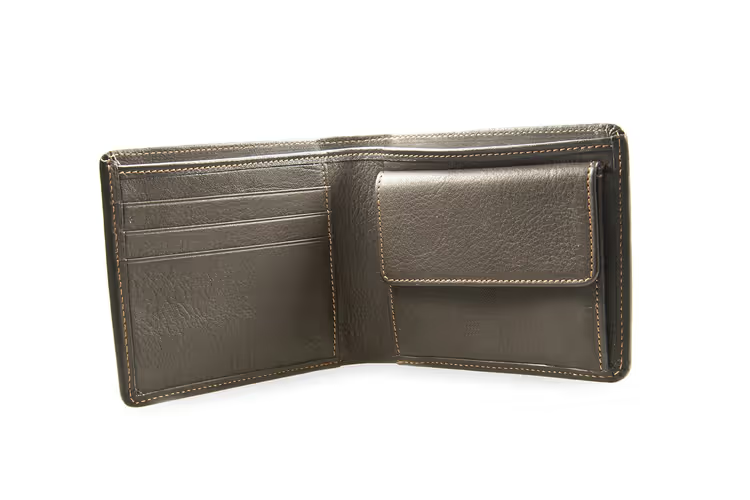
Leather shoes and bags are one of the few categories where Greece has held its standard for many years. Sandals, moccasins, belts, and jackets are made in workshops, and every city has a large selection.
Buy from specialized stores and get a receipt. With a receipt you can return or exchange the item if you find a defect at home. Markets also have plenty of leather goods, but there are fewer guarantees there.
A separate option for older relatives: orthopedic shoes. These models are sold in pharmacies: a soft insole and arch support inside, a decent look outside.
- Where to buy: leather stores and workshops, not beach stalls.
- Who it's for: those who need a practical everyday gift.
- What to look for: the stitching, the lining, and the receipt for returns.
15. Cosmetics
The main ingredient in Greek cosmetics is olive oil. Soap based on it is sold by the bar, by weight, and in sets, with natural sea sponges lying nearby.
Creams, scrubs, and shampoos cost more in a pharmacy than in a shop, but the ingredients are more predictable there. Well-known local brands include Aphrodite, Olivelia Macrovita, Olive Way, and Mastic Spa. The latter works with mastic from Chios, which is protected by PDO status (according to the producers' union).
Mastic is the resin of a tree that grows only on Chios. It is added to chewing gum, toothpaste, and creams, so a set with it looks like a ready-made gift.
Small soap sets and samples are convenient for gifts. This kind of souvenir takes up little space and lasts for months.
- Where to buy: pharmacies, natural cosmetics shops, supermarkets.
- Who it's for: female friends, mothers, and colleagues.
- The catch: a set in glass packaging is heavier than it looks.
16. Souvenir items
 © Niki triple · CC BY-SAPhoto: Niki triple, CC BY-SA (https://creativecommons.org/licenses/by-sa/4.0), Wikimedia Commons
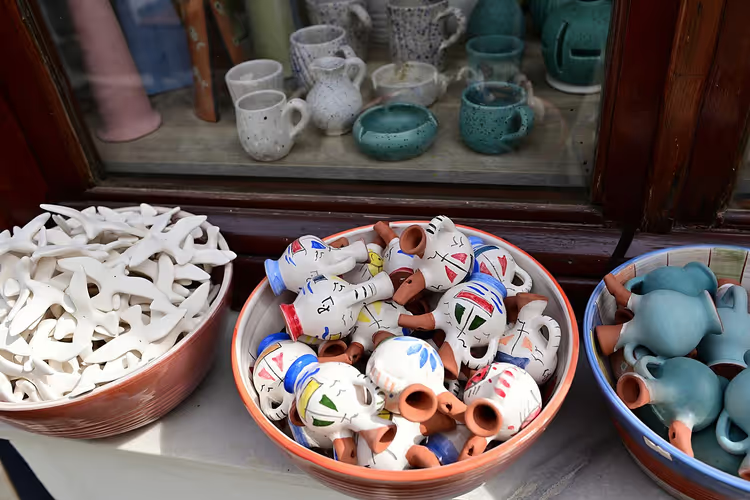
The cheapest items on this list: figurines, magnets, small ceramics, and seashells. They are sold in any shop and at street markets, and there are no issues taking them out of the country. It's easy to pick up gifts for the whole office here and stay within a reasonable budget.
Prices in shops near the port are usually higher than at the city market, and the selection is poorer. Walk a couple of blocks inland and you'll see the difference.
Paintings are bought by those who want to hang a piece of Greece on their wall. Markets sell hand-painted oil and watercolor canvases with local views. The price depends on the technique, size, and the artist's name, and the frame is often priced separately.
Men sometimes receive komboloi, bead worry beads. In Greece, people turn them in their hand to calm down, and you can also see them in the hands of monks. A good gift option for a boss who doesn't drink.
What to bring next depends on the region. In Delphi and Ioannina, silver jewelry has been made for a long time, and Ioannina craftsmen are considered among the best in the country.
Rhodes is known for ceramics featuring the Colossus of Rhodes, as well as leather bags and belts. On Santorini, the selection of gold is above the national average, and jewelry is often handmade. Athens remains the main market for expensive items and rugs by renowned craftsmen.
Crete adds handmade rugs and leather goods to the list. Fans of ancient culture find figurines of gods and heroes of Olympus in Athens. Even if you're not buying anything serious, the market is worth walking through entirely: in an hour you'll understand local prices and won't overpay at the shop near your hotel.
Rhodes wool products are made for cold winters, so they make good gifts for relatives from northern regions.
- Where to buy: markets and shops away from the waterfront.
- Who it's for: those bringing gifts for colleagues and acquaintances.
- What to keep in mind: wrap fragile items in clothing and keep them in your carry-on.
⁉️🤔 Frequently asked questions
How much money should you budget for gifts from Greece?
Think in categories. For colleagues, sweets, soap, and spices are enough; for family, get oil, honey, and cheese; and plan big items like a fur coat or jewelry as a separate expense. Markets are always cheaper than waterfront shops, so you'll save part of your budget on the spot.
Which souvenir should you choose for a child?
Children usually receive sweets, small ceramic figurines, and magnets. Baklava and lokum appeal to almost everyone, and fragile figurines are best wrapped right away. Also take a look at textiles with local patterns: blankets and bedspreads last for years and never get old.
What will definitely make it home?
Oil, honey, spices, soap, and textiles handle travel best. Sweets shouldn't be kept in checked luggage in the heat, and cheese requires a cooler bag and a short flight. Wrap fragile ceramics and glass in clothing and keep them in your carry-on, and the gift will arrive intact.
Where is it cheapest to buy?
In city supermarkets, markets, and producer shops. In neighborhoods near the port and in hotel shops, prices are higher and the selection is narrower. In larger cities, the choice is wider, so serious purchases are best postponed until Athens or Thessaloniki.
Should you take a fur coat and leather items in your carry-on?
No, such purchases take up a lot of space and weigh a fair amount. Fur coats and jackets are usually checked in, while leather shoes are simply placed between layers of clothing. Keep the receipt with you: you'll need it to exchange the item at home. Residents of non-EU countries will also need it for a tax free refund on departure.
If you prefer watching to reading, check out this review of Greek souvenirs and gifts from a travel blogger.
In short: what's worth booking
If the gift is for a colleague, get ouzo, an olive oil set, or a box of sweets. For family, bring honey, cheese, and textiles; for parents, an icon or orthopedic shoes work well. For those who want something that lasts for years, leather bags, flokati rugs, and jewelry are good choices.
Make your list in advance and buy in the last days of the trip: that way you won't have to carry bags around the island and you'll have time to compare prices at the market.

A small editorial team writing guides for independent travel. We travel ourselves, but we haven’t been everywhere, so we check prices, opening hours and how to get there against official sources.