
















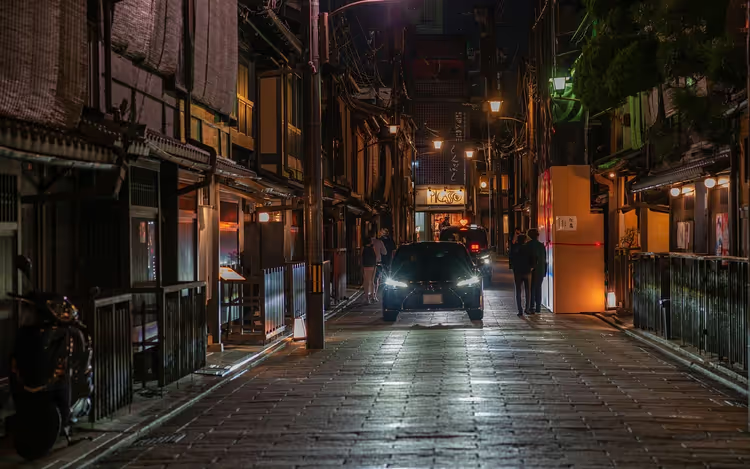
Gion Matsuri in Kyoto: when to watch the float parades and where to stand
Huge wooden floats as tall as a three-story building roll through the streets of Kyoto. This is the Gion Matsuri, the city's main summer festival. It lasts the entire month of July. The climax comes with two Yamahoko Junko parades, on July 17 and 24. Watching the procession from the sidewalk is free.
The festival is large and spread across many dates, so it's easy to arrive on the wrong day or stand in the wrong spot. Below you'll find the key dates, the parade route, the Yoiyama evening celebrations, and what's worth booking in advance.
Ad: this article contains affiliate links, we earn a commission if you book through them, the price for you stays the same.
Gion Matsuri essentials in a minute
💡 In short:
- Dates: the festival runs all July, with Yamahoko Junko parades on July 17 and 24.
- Parade times: July 17 from 9:00, July 24 from 9:30.
- Where: Shijo, Kawaramachi and Oike streets in central Kyoto, a route of about three kilometers.
- Admission: watching from the street is free; paid grandstands along the route can be booked in advance.
- Dates, times and grandstand tickets: 09/2026, verified on the Kyoto City Tourism website.
Gion Matsuri is not a single day but a whole month of rituals, rehearsals and street celebrations. Most visitors care about four dates: the two parades and the two Yoiyama evening light periods before them. Planning just one day? Build it around the July 17 parade: it's bigger and features more floats.
History: a prayer against an epidemic
The festival was born from disaster. In 869, an epidemic swept through Kyoto, and residents looked for a way to stop it. By order of the court, 66 hoko spears were set up in the sacred garden of Shinsenen, one for each of Japan's provinces at the time. A portable mikoshi shrine was carried to Yasaka Shrine (Yasaka-jinja), and prayers were offered for deliverance from the disease (according to Yasaka Shrine).
The ritual took root. The festival has been held annually since 970, the floats appeared around 999, and the tradition is now more than 1,150 years old. The Gion district was known back then for its proximity to the shrine, not for teahouses and geisha as it is today. The prayer for the city's health is the very meaning behind everything you see on the streets today.
Yamahoko Junko: the parades on July 17 and 24
The festival's climax is the two float processions. The first parade, Saki Matsuri, takes place on July 17 and starts around 9:00. The second, Ato Matsuri, runs on July 24 from 9:30 (according to the Kyoto tourism office). A total of 34 floats of two types take part.
Hoko floats are multi-ton towers on wooden wheels, each pulled by dozens of men. Yama floats are smaller, decorated with pines, figures and scenes from Japanese and Chinese history and mythology. Some floats are covered with Persian and European carpets that reached Japan in the Edo period, mostly through trade in Nagasaki. For its decoration and ritual, the procession is inscribed on the UNESCO intangible heritage list.
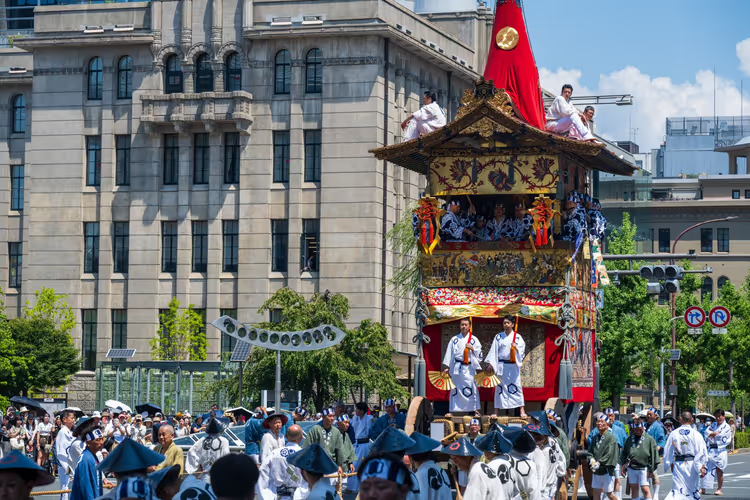
The route runs along Shijo, Kawaramachi and Oike streets, about three kilometers long. Spectators are allowed along the entire course, so there's always a spot. The biggest crowds gather for the float turns at intersections: the heavy tower is slowly rotated by hand on wet bamboo slats. Want to see this moment? Arrive early at the Shijo and Kawaramachi turn.
Yoiyama: the evenings before the parades
Before each parade, central Kyoto lives the festival for three evenings. Yoiyama before the first procession runs July 14-16. Before the second parade, the evenings take place July 21-23. After dark, the floats are lit with paper lanterns, and traditional Gion-bayashi music fills the air.
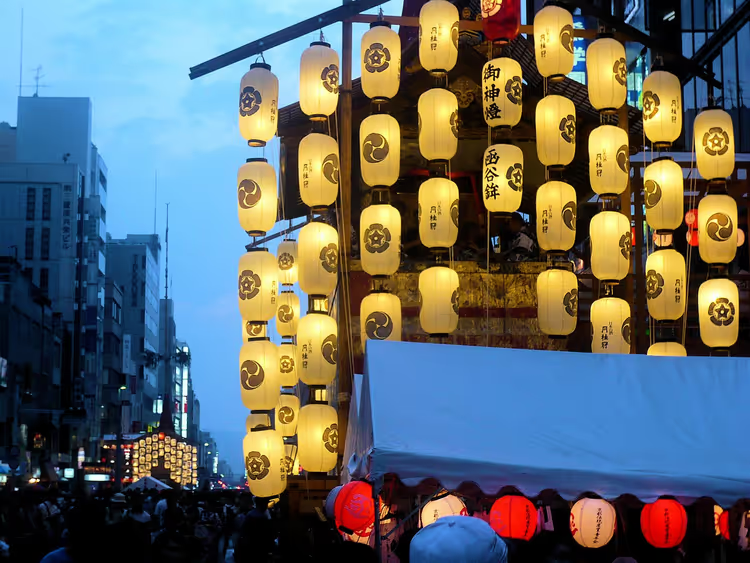 © Stéfan · CC BY-SAPhoto: Stéfan, CC BY-SA (https://creativecommons.org/licenses/by-sa/2.0), Wikimedia Commons
The streets around Shijo and Karasuma are closed to cars and turn into a pedestrian zone with hundreds of yatai food stalls. Here you can try street food, buy amulets at the floats and examine the antique carpets up close (according to japan-guide). The evenings are hot and very crowded. Bring water and light clothing, and with small children stay near the edge of the crowd.
Where to watch and how to book a seat
Watching the parade from the sidewalk is free. It's the simplest option: claim a spot along Shijo or Oike an hour before the start; closer to the intersections the view is better. In July, shade matters, so look for the side of the street with awnings.
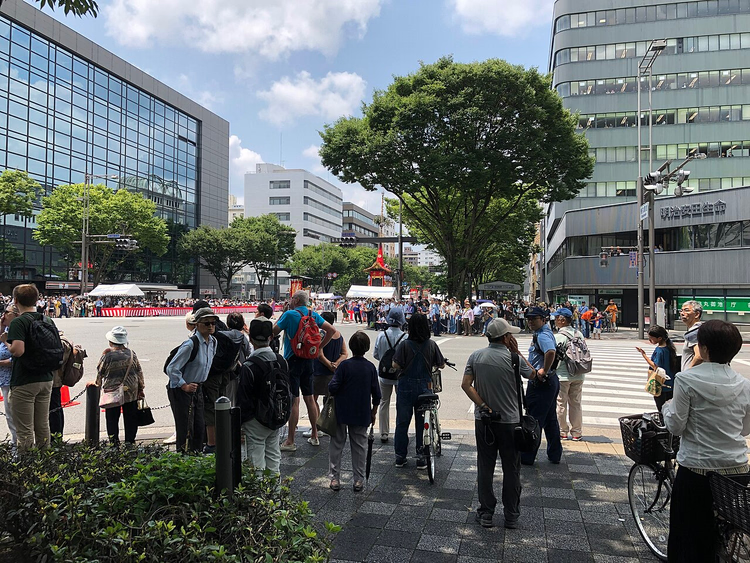 © Ominae · CC BY-SAPhoto: Ominae, CC BY-SA (https://creativecommons.org/licenses/by-sa/4.0), Wikimedia Commons
If you don't want to stand in the crowd, paid grandstands with numbered seats are set up along the route. They are booked in advance through the Kyoto City Tourism Association; in 2026, sales opened on June 1 (as of 09/2026, on the official Kyoto City Tourism website). There are several seat categories, and they sell out months ahead. Check the price and availability on the official website; tickets are sold online and at Japanese convenience stores.
Getting there is easy from Yasaka Shrine or central stations: the route runs along the main shopping streets. Want to understand the symbolism of the floats and not get lost in the crowd? It makes sense to take a guided tour. Kyoto tours and walks on GetYourGuide will help you plan your day around the parade.
Tours and tickets in Kyoto
Guided tours, skip-the-line tickets and activities — most offers can be cancelled free of charge.
See offers on GetYourGuideThe widget loads once you give your consent.
When to go: weather and crowds
July in Kyoto is hot and humid, with intense mugginess during the day. Plan an early start. Arrive rested for the 9:00 parade, and hide from the heat after midday. From our experience traveling at this time, a hat, water and extra time for getting around are essential, because some streets are closed off.
Book accommodation for the festival days several months in advance. In July, Kyoto is packed, and hotel prices are noticeably higher than usual. Choose a hotel near the center and subway lines. That way you can easily walk to the route and back.
⁉️🤔 Frequently asked questions
When do the Yamahoko Junko parades take place in 2026?
Two processions: July 17 from 9:00 and July 24 from 9:30 (as of 09/2026). The dates are fixed and do not depend on the day of the week.
How much does it cost to watch Gion Matsuri?
Watching the parade from the street is free. Seats on the paid grandstands are booked in advance; check the price on the official website.
Where is the best place to stand to see the float turns?
The most spectacular moments happen at intersections, where the heavy hoko towers are turned by hand. Claim a spot at the Shijo and Kawaramachi turn an hour before the start. Closer to the corners the view is better, but the crowds are bigger too. Along Oike street it's usually less crowded than on Shijo.
What is Yoiyama and is it worth going?
Yoiyama is the evenings before the parades: July 14-16 before the first and July 21-23 before the second. The floats are lit with lanterns, streets are closed to cars, and hundreds of food stalls operate. It's more atmospheric than the parade itself, but very crowded. Come at sunset and bring water.
When should I book accommodation in Kyoto for the festival?
Several months in advance. For the parade days, hotels near the center sell out first.
In short: what's worth booking
Gion Matsuri is a rare chance to see a living tradition that is more than 1,150 years old. Build your day around the parade: arrive an hour before the start, claim a spot at the Shijo turn, and spend the evening before at Yoiyama. You can watch all of this for free; you only pay for comfort and accommodation.
If you're short on time: pick one parade on July 17 and one Yoiyama evening the night before. If you're traveling with children or don't handle heat well: choose a paid grandstand in the shade and accommodation near the center. For a guided tour and a day plan, check out GetYourGuide.

A small editorial team writing guides for independent travel. We travel ourselves, but we haven’t been everywhere, so we check prices, opening hours and how to get there against official sources.