
















Digital nomad visa: income thresholds and documents in 12 countries
A Schengen visa gives you 90 days out of 180. For remote work, that is not enough. A work visa is not the answer either: it requires a local employer. That is why, since 2020, a separate status has existed for people who earn from foreign clients. Below are 12 countries with such programs, their income thresholds, fees, and official websites where the rules are updated every year. EU, EEA, and Swiss citizens do not need these permits in EU countries. The programs are designed for third-country nationals.
Ad: this article contains affiliate links, we earn a commission if you book through them, at no extra cost to you.
Who digital nomads are
Digital nomads are remote workers and freelancers who live in one country and earn income in another. The office is no longer mandatory, and companies have shifted to distributed teams. Governments saw a benefit in this: a guest pays for housing, food, and services but does not take a job from a local resident.
That is exactly why visas for remote workers have become an economic tool, not just a tourism one. You get legal status for a year or longer, the country gets your spending and taxes. The program benefits both sides.
💡 In short:
- The program works if you have a steady remote income from abroad.
- The permit is issued for a year or more, but the entry visa is applied for separately.
What a digital nomad visa gives you
A digital nomad visa is a residence permit tied to remote work. It does not involve a local company as your employer: your income must come from abroad. In return, you get a length of stay without the 90 days out of 180 rule and the right not to leave every three months.
Program durations vary. Portugal issues a document for one year with renewal, Greece for up to two years, Spain immediately issues a card for three years, Croatia limits it to one year with no renewal. After the first term, some countries allow you to switch to another type of residence permit or extend your status without leaving.
Family members cannot join everywhere. Spain, Portugal, Cyprus, Croatia, and Greece accept applications for a spouse and children with a higher income requirement. Hungary does not offer this option. Along with rights come obligations: tax residency, health insurance for the entire period, and address registration.
How a nomad visa differs from a Schengen visa and a work visa
The difference comes down to three points: duration, employer, and purpose of travel. A Schengen visa does not allow you to work. A work visa ties you to a local company. A nomad permit keeps your income source abroad.
Permit type | Duration | Local employer | Remote work |
|---|---|---|---|
Schengen tourist visa | 90 days out of 180 | not required | not allowed |
Work visa | contract term | required | only under contract |
Digital nomad visa | one year or more | not required | only for foreign clients |
How to get a digital nomad visa
The application process is almost the same everywhere; only the list of documents differs. Follow these steps:
- Check whether the country has a program and what income it requires.
- Gather proof of income: bank statements for six months, a contract, or a tax return.
- Get health insurance for the entire period and book accommodation.
- Submit documents to the consulate or online and pay the fee.
- After arrival, obtain a residence permit and register your address.
Document translations often require notarization. Check this in advance so you do not have to redo the whole package. Prepare bank statements in the country's language or in English.
How many countries already issue such visas
Programs now operate in more than fifty countries. In Europe, permits are issued by Portugal, Spain, Italy, Croatia, Malta, Greece, Cyprus, Estonia, Hungary, Czechia, Romania, Latvia, Albania, Montenegro, Slovenia, Georgia, and Armenia. Germany and Norway take a different path: they issue visas for self-employed people and specialists.
Outside Europe, similar statuses exist in the UAE, Barbados, Costa Rica, Mexico, Brazil, Malaysia, Colombia, and Thailand. Choose not by a picture from social media, but by time zone, language, and tax rules.
Two main criteria: income and stable work
The first condition concerns monthly income. The threshold is set by the government itself and reviewed every year. The range is wide, so compare not programs but your own bank statements from recent months.
Income is confirmed with bank statements for six months, an employment contract, or a tax return. The second condition relates to stability: the country wants to be sure you will not look for work with local companies and join the ranks of the unemployed.
Next comes health insurance and a housing contract. For initial scouting, a regular two-week booking will do. If you plan to stay long-term, it is worth comparing insurance options for extended stays.
What conditions apply in European countries
We checked the income thresholds and fees below on September 13, 2026 on official government websites. The amounts are tied to salaries and recalculated, so double-check the figure on the agency's website before applying.
The document package is assembled the same way in all countries. You need proof of identity, proof of income, proof of housing, and health insurance. After that, the agency adds its own items: a criminal record certificate, a diploma, a rental agreement, or a blood test result.
Income is most often confirmed with a bank statement from the last six months. The second option is an income certificate or an employment contract with a foreign employer. The third is a tax return from the previous year. Sometimes the agency requires a notarized translation.
Check your passport validity in advance. Many countries require the document to be valid for several more months after the permit expires. Malta asks for scans of all pages, including blank ones.
Order the criminal record certificate last. It comes from your country of citizenship and is valid for a limited time. Otherwise you will have to get it again.
Health insurance is arranged for the entire period of the status, not just for the first trip. The policy must cover treatment, and in some countries also repatriation.
Housing is confirmed with a rental agreement, a booking, or an invitation from acquaintances. Hungary even accepts staying with relatives. Portugal additionally asks for a tax residency document.
There are two types of application. The external one goes through a consulate or embassy; the internal one is allowed once you are already in the country and often gives a longer term. Cyprus, Spain, and Greece accept applications internally; Croatia and Czechia require you to visit a representative office.
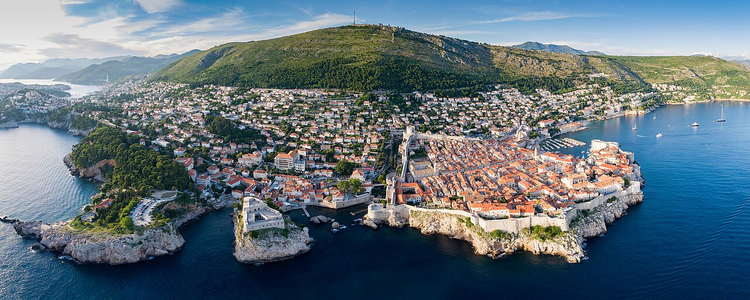
Croatia: a one-year permit with no renewal
Croatia launched its program among the first in the European Union. The permit is available to citizens of countries outside the EU and EEA who work for foreign clients. The rules on duration are the strictest here.
 © Chensiyuan Edit by: Bammesk · CC BY-SAPhoto: Chensiyuan Edit by: Bammesk, CC BY-SA (https://creativecommons.org/licenses/by-sa/4.0), Wikimedia Commons
- Duration: one year with no renewal; you can reapply six months after the previous permit expires (as of 09/2026, Croatian Ministry of the Interior portal)
- Income: at least 2.5 times the national average net salary, around €3,620 per month in 2026 (as of 09/2026, digitalnomadscroatia.mup.hr)
- Documents: passport, proof of income, criminal record certificate, health insurance, accommodation booking, application form 1a.
- Fee: around €100 (as of 09/2026, same portal)
- Where to apply: in person at a Croatian diplomatic mission.
- The catch: you cannot extend the status.
The Croatia package is compact but picky. Bank statements must show payments from foreign clients, not a one-off transfer. Accommodation bookings are accepted as a contract with a Croatian landlord or a confirmed hotel booking for the entire period.
Health insurance must cover the entire stay in the country. The criminal record certificate is obtained in your country of citizenship, and the translation must be notarized.
Family members apply together with you, and for each family member you add around €90 per month to the bank statement (as of 09/2026, permit issuance rules). The authority reviews the amount every year.
A tourist trip does not replace the permit. A Schengen visa does not give you the right to work, even if the work is remote and the clients are abroad. Arrange the status before you move, not after.
Foreign income is not subject to local tax in Croatia. In a year you have time to settle in on the coast and figure out whether it is worth coming back.
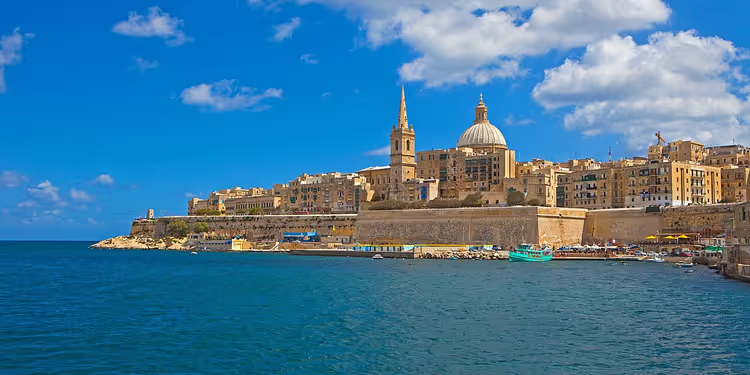
Malta: a status for employees of foreign companies
Malta issues the Nomad Residence Permit, and applications are accepted online. Renewal is possible if you continue to meet the program requirements.
 © Bengt Nyman · CC BYPhoto: Bengt Nyman, CC BY (https://creativecommons.org/licenses/by/3.0), Wikimedia Commons
- Duration: one year, renewable through the agency (as of 09/2026, Residency Malta Agency)
- Income: at least €2,700 per month (as of 09/2026, official agency website)
- Documents: passport with two blank pages, forms N1, N2 and N4, service contract, CV, health insurance, rental agreement, six months of bank statements, health certificate.
- Fee: €300 (as of 09/2026, Residency Malta)
- Where to apply: you send the application by mail to the agency, then travel to the island for the residence permit.
- The catch: you have to scan every page of your passport, including blank ones, and you confirm accommodation at your own expense.
Employees of foreign companies, partners and consultants with contracts outside Malta are eligible. Income brought to the island is taxed at a flat rate; check the details with the agency.
The application is assembled into one package. In addition to form N1, you need a form for your spouse (N2) and a data protection declaration (N4). This is a European Union requirement, not a local quirk.
The cover letter is written in your own words. State why you chose Malta, the planned duration, your address and your field of work. The agency reads the letter before inviting you to the island.
Attach diplomas, certificates and proof of experience to your CV. If you are married, add the marriage certificate. For cohabitation without marriage, a rental agreement with both names or a joint bank account will work.
Processing happens in two stages. First the agency reviews the letter and documents, then invites you to Malta for biometrics and card issuance.
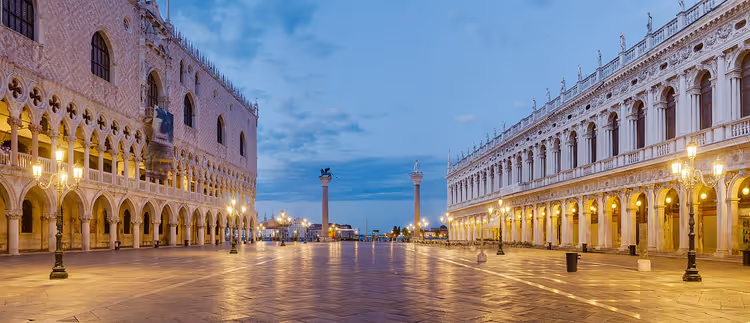
Italy: a €28,000 annual threshold
The Italian program launched in 2024 and is aimed at highly qualified professionals. The main bottleneck here is not money, but police clearance.
- Duration: one year, renewable (as of 09/2026, Italian visa portal)
- Income: at least €28,000 per year, about €2,333 per month (as of 09/2026, vistoperitalia.esteri.it)
- Documents: passport and a copy, application form, photo, nulla osta authorization, employment contract, diploma, proof of accommodation, criminal record certificate, insurance.
- Fee: €116 (as of 09/2026, same service)
- Where to apply: the nulla osta request is submitted to the police headquarters of the region where you plan to live.
- The catch: you need a trusted representative in Italy or a personal trip to get the authorization, and after entering the country you have eight days to file the residence permit paperwork.
The residence permit application is sent through a post office with a Sportello Amico counter. They also schedule the biometrics appointment there.
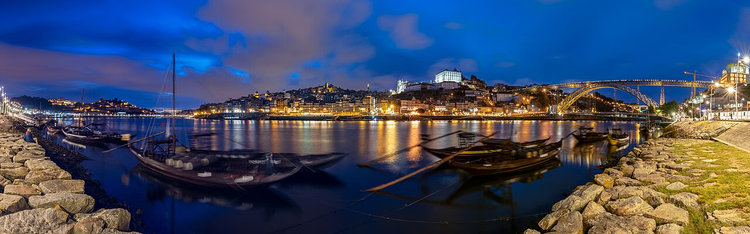
Portugal: D8 visa and AIMA
The D8 visa has been in effect since October 2022 and does not replace the D7 visa. First you get an entry document, and then you apply for the residence permit once you are in the country.
 © Diego Delso · CC BY-SAPhoto: Diego Delso, CC BY-SA (https://creativecommons.org/licenses/by-sa/4.0), Wikimedia Commons
- Duration: one year, renewable.
- Income: four Portuguese minimum wages, about €3,680 per month (as of 09/2026, Portuguese visa portal)
- Documents: application, passport, two photos, criminal record certificate, employment contract or proof of orders, tax residency document, accommodation documents, health insurance.
- Fee: €180 (as of 09/2026, vistos.mne.gov.pt)
- Where to apply: at a Portuguese consulate, and the residence permit application is handled by AIMA instead of the former SEF: that is also where you book your biometrics appointment (as of 09/2026, Portuguese visa services portal).
- The catch: the queue for the card is long, and you have to find housing in advance with no guarantees.
The entry visa is issued for four months. During that time you arrive in the country and submit your residence permit documents. The same rule applies to your spouse and children.
It is best to book your AIMA appointment right after you land.
Look for housing in advance and with a cancellation option. Portuguese portals often require a guarantor or several months of prepayment, and without a confirmed address your application will not be accepted.
The old tax regime for new residents has been replaced with a different one. The conditions are tied to your type of activity, so calculate your taxes before you move, not after.
Get your tax residency document in the country where you currently pay taxes. Without it your application will not be accepted, and getting the paper retroactively is difficult.
For the first weeks it is convenient to live near the area you need, so you can check hotels in Lisbon on Trip.com in advance. Naturalization timelines changed in 2025 and 2026, so check the AIMA website for current conditions.
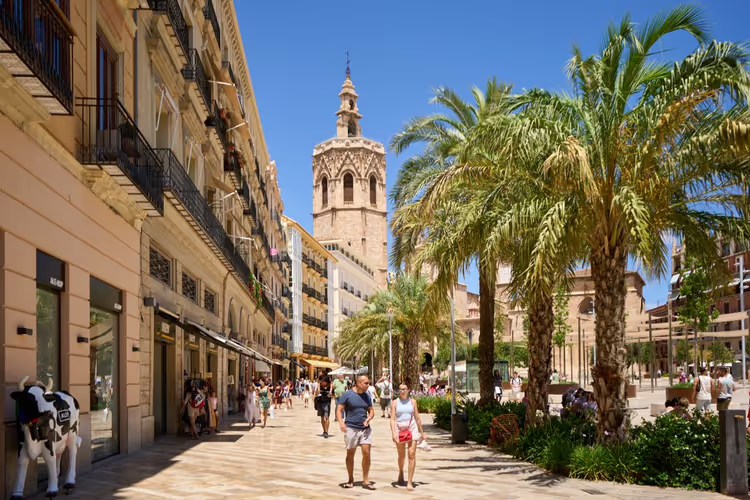
Spain: remote worker visa
Spain has been issuing a permit for remote workers since 2023. You can apply at a consulate or from inside the country through the ministry.
- Duration: up to three years when applying inside the country, up to one year at a consulate.
- Income: twice Spain's minimum wage, around €2,850 per month (as of 09/2026, Spanish ministry)
- Documents: contract, employer letter confirming remote work, proof of experience, criminal record certificate, health insurance, photos, proof of qualifications.
- Fee: €180 (as of 09/2026, inclusion.gob.es)
- Where to apply: a Spanish consulate or the Ministry of Inclusion inside the country.
- The catch: the income requirement increases for a spouse and children, and taxes are calculated under Spanish rules.
The permit can be extended for another two years if your income has remained stable.
The document package is built around the employer. You need a contract, a letter confirming remote work, proof that the company has been operating for more than a year, and proof of your qualifications. Spanish authorities also check your professional experience.
Spouses and children require separate applications. The income requirement adds a share of the minimum wage for each family member, so a family needs a buffer in their bank statements.
The application date is the date of your appointment at the consulate or ministry. If you entered as a tourist, some applications are accepted inside the country, but not all visa types qualify.
For initial housing, a rental agreement for a few months is enough. A long-term contract will be required when renewing the card.
Some new tax residents pay a flat rate, but not everyone qualifies. If you are going to scout a neighborhood for renting, you can browse apartments in Valencia on Trip.com in advance.
Germany: self-employment visas instead of a nomad visa
Germany has no dedicated digital nomad visa. Instead, there is a self-employment permit under §21 AufenthG, and its logic is different.
 © Jörg Braukmann · CC BY-SAPhoto: Jörg Braukmann, CC BY-SA (https://creativecommons.org/licenses/by-sa/4.0), Wikimedia Commons
- Duration: up to three years with extension.
- Who it suits: freelancers whose work benefits the economy or culture. The list includes artists, writers, translators, architects, and language teachers.
- Documents: passport, one 35x45 mm photo, application form, proof of regular income, CV, insurance, rental agreement or proof of home ownership, pension plan for applicants aged 45 and older.
- Where to apply: the document package for Berlin is described on service.berlin.de; in other states, check the list with the local authority.
- The catch: you need to prove the benefit to Germany, and remote work for a foreign client is not considered an argument on its own.
Company founders, sole proprietors, and managers apply through a different branch of the same program. For a pure remote worker, this path is longer and more expensive than nomad visas.
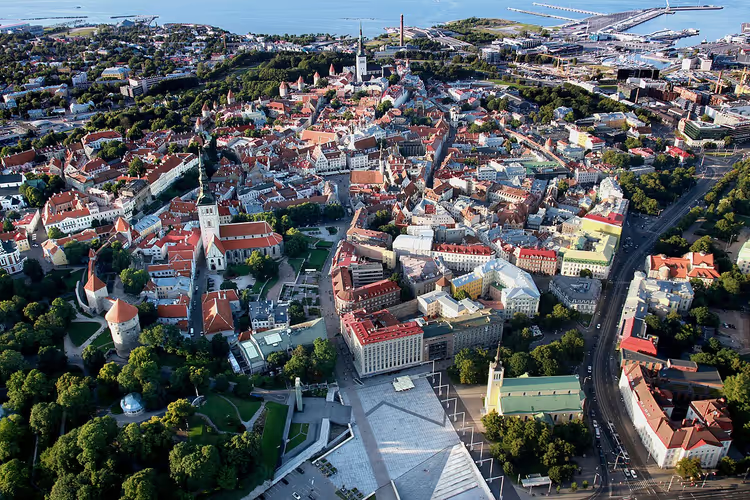
Estonia: the very first program
Estonia introduced the world's first digital nomad visa in 2020. The status grants temporary residence, but not permanent residency.
- Duration: one year, extension only for six months.
- Income: around €4,500 per month; the amount is tied to the country's average salary and is revised (as of 09/2026, e-Residency, nomad visa)
- Documents: passport, application form, bank statement, contract with a foreign employer and a letter confirming remote work, proof of housing, insurance, criminal record certificate, diploma.
- Fee: €80 (as of 09/2026, official website)
- Where to apply: at the nearest Estonian embassy, processing takes up to 30 days.
- The catch: the income threshold is the highest in Europe, and the status does not give you the right to work for a local company.
A six-month extension does not help much when relocating with the whole family. Calculate the full budget in advance, including rent and insurance.
 © Hiiumaamudeliklubi · CC BY-SAPhoto: Hiiumaamudeliklubi, CC BY-SA (https://creativecommons.org/licenses/by-sa/4.0), Wikimedia Commons
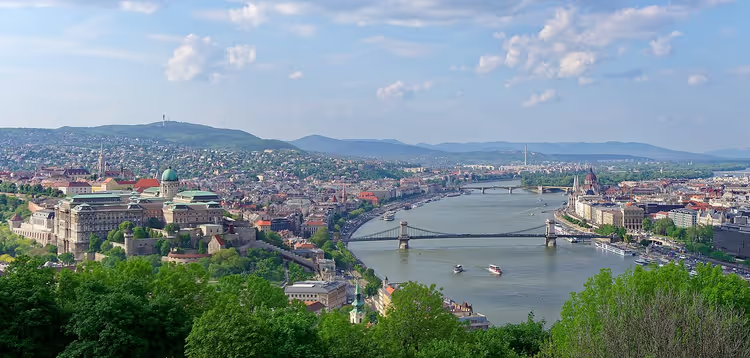
Hungary: the White Card
Hungary issues the White Card under its program for self-employed guests. Applications are processed quickly, but family applications are not provided for.
 © Jakub Hałun · CC BY-SAPhoto: Jakub Hałun, CC BY-SA (https://creativecommons.org/licenses/by-sa/4.0), Wikimedia Commons
- Term: one year, extendable up to two years.
- Income: about €2,000 per month after taxes (as of 09/2026, Enter Hungary)
- Documents: passport, documents from your employer, proof of income, health insurance, proof of accommodation, proof of departure from the country.
- Fee: €110 (as of 09/2026, enterhungary.gov.hu)
- Where to apply: at a Hungarian embassy or consulate; some applications are accepted within the country.
- The catch: spouses and children cannot apply under this program, and time spent on a White Card does not count toward permanent residency.
You can confirm accommodation even with friends; a separate booking is not required. A decision usually comes within one and a half to two months after applying.
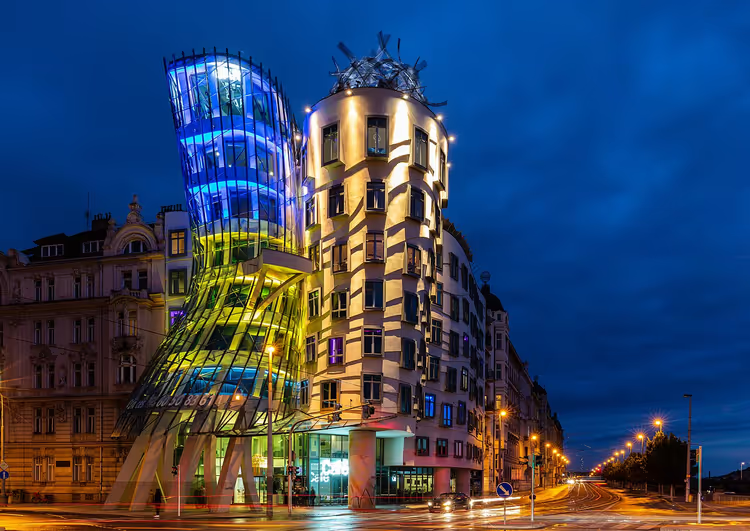
Czechia: živnostenský list trade license
There is no dedicated digital nomad visa in Czechia. The only work route is a živnostenský list trade license (a sole proprietor permit) for non-EU citizens.
 © Diego Delso · CC BY-SAPhoto: Diego Delso, CC BY-SA (https://creativecommons.org/licenses/by-sa/4.0), Wikimedia Commons
- Term: one year, renewable.
- Income: proof of about €5,000 in a bank account (as of 09/2026, Czech Ministry of Foreign Affairs, information for foreigners)
- Documents: application, passport, two photos, trade license, insurance, criminal record certificate, accommodation documents.
- Fee: €200 (as of 09/2026, mzv.cz)
- Where to apply: in person at a Czech embassy.
- The catch: the license is tied to a specific profession, and accommodation must be booked for at least a year.
Before applying, think about how you will prove experience or qualifications in your field. A diploma is not always enough; sometimes you need a portfolio and references.
Greece: two years and a tax discount
Greece has been issuing residence permits for remote workers since 2021. You can first visit as a tourist and see whether the country suits you.
- Term: up to two years, renewable without limits.
- Income: €3,500 per month; add 20% for a spouse and 15% for a child (as of 09/2026, digital nomad visa page, Greek Ministry of Foreign Affairs)
- Documents: passport, two photos, health insurance, criminal record certificate, accommodation documents, documents from your employer.
- Fee: €75 for processing and €1,000 state fee (as of 09/2026, mfa.gr)
- Where to apply: at a Greek embassy or consulate, sometimes within the country.
- The catch: you cannot get a passport through this program, and accommodation must be confirmed for a full year in advance.
For the first few years, income tax is cut in half, so this option is attractive for those who earn above average. You can combine a scouting trip with a vacation: browse tours on GetYourGuide.
 © Alicembasli · CC BYPhoto: Alicembasli, CC BY (https://creativecommons.org/licenses/by/4.0), Wikimedia Commons
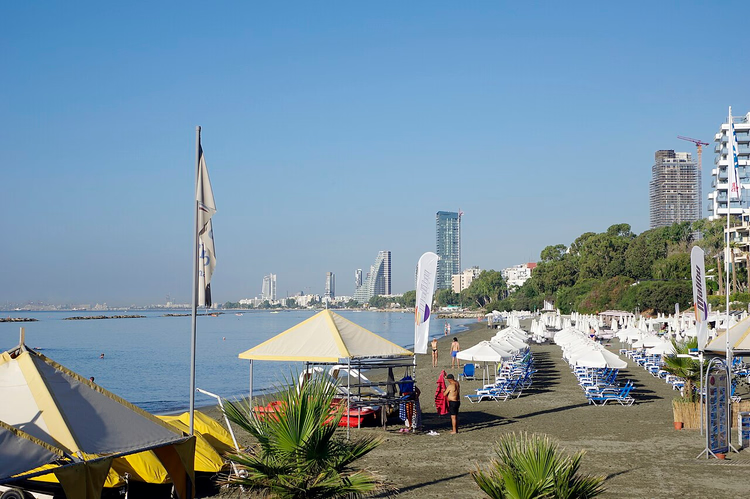
Cyprus: status for the whole family at once
Cyprus accepts applications for the applicant and their family at the same time. Your spouse and children get status together with you.
 © Berthold Werner · CC BY-SAPhoto: Berthold Werner, CC BY-SA (https://creativecommons.org/licenses/by-sa/4.0), Wikimedia Commons
- Term: one year, then renewal for two years.
- Income: the threshold is the same as in Greece, with a fifth of the amount added for a spouse and slightly less for a child.
- Documents: passport, two photos, CV, health insurance, criminal record certificate, accommodation documents, employment contract, company registration certificate, blood test results. Some certificates come from your country of citizenship, so start gathering the package early.
- Fee: about seventy euros plus the same amount for registration in the aliens register at the first application.
- Where to apply: applications are accepted within the country.
- The catch: after renewal, neither you nor your family members can work for local organizations.
You can prove income with an employment or civil law contract; passive income is sometimes accepted, and a decision usually takes five to seven weeks.
UAE: a year of life in Dubai
In the Emirates, remote work is formalized through the Remote Work visa. You start the application online and complete the process once you are in the country.
- Duration: one year; after approval you have 60 days to enter (as of 09/2026, Dubai residency authority)
- Income: $3,500 per month (as of 09/2026, GDRFAD)
- Documents: passport, health insurance, a one-year employment contract or proof of company ownership, proof of remote work.
- Fee: $611 (as of 09/2026, gdrfad.gov.ae)
- Where to apply: online through GDRFAD or within the country.
- The catch: the status depends on foreign income, and you cannot take local employment on this visa.
Housing in Dubai should be booked in advance; prices depend heavily on the season. If you arrive in the off-season, you can save a little: browse Dubai hotels on Trip.com.

⁉️🤔 Frequently asked questions
Which countries outside Europe issue a digital nomad visa?
The list of countries outside Europe is given above in the section on the number of programs. When choosing, consider the time zone. If your clients are in Europe, a six-hour difference will eat up half of your working day.
Do I need a separate visa to enter the country?
Yes, a residence permit does not replace an entry document; you apply for it separately. Entry rules for Schengen are currently changing: the EES border control system is already being rolled out in stages, and ETIAS will launch after it is fully in place (as of 09/2026, official EU portal). Check the date before buying tickets.
Is there a digital nomad visa in Poland?
There is no dedicated program. Instead, you can get a freelancer visa for up to two years, but you will need to prove work with Polish clients. There is a separate program for IT professionals and startup founders: the requirements and document list are available on the Polish government website (as of 09/2026).
Can I work for a local employer on this visa?
No. Cyprus and Croatia explicitly prohibit local employment, and in other countries the status is tied to foreign income. This is how governments protect their own labor markets. If you want to work in the country, you need a different type of permit, usually through a local employer.
What taxes do digital nomads pay?
It depends on the country and on how many days you spend there. Croatia does not tax foreign income, Malta charges a flat rate on money brought into the country, and Greece cuts the tax in half for the first few years. Before moving, check your status with a tax advisor.
In short: what to book
Choose a country by income, not by climate. If your earnings are close to the minimum threshold, look at Hungary, Italy, Malta, and Spain. If you earn well above average, go for Estonia, Portugal, Croatia, or Greece. If you need your family with you, then Cyprus and Spain. If you need tax benefits, then Croatia and Greece. If you need a fast decision, then Estonia and Cyprus.
Before applying, settle three things: housing for the first month, insurance, and tickets. A hotel for the first week is easy to choose on Trip.com, and tickets for distant dates are better compared in advance.
Connectivity for working from a new country should be sorted out before you fly: a local SIM card requires passport registration, while a eSIM for Europe arrives already activated.

A small editorial team writing guides for independent travel. We travel ourselves, but we haven’t been everywhere, so we check prices, opening hours and how to get there against official sources.