




How to go to Malaysia: visa, rainy season, prices and laws
Malaysia lets you in visa-free for almost three months. But before departure you still need an online arrival card, and at the Kuala Lumpur airport there is a separate line for automated gates.
We gathered what most often comes up once you are already on the road: two monsoons, costs, vaccinations, transport between islands, and laws that nobody in Europe prepares you for.
There is little time to get ready: the arrival card is accepted only within three days before entry (as of 09/2026, GOV.UK).
Ad: this article contains affiliate links, we earn a commission if you book through them, at no extra cost to you.
What to know before departure
💡 In short:
- Citizens of Germany, Austria, and Switzerland do not need a visa, and the MDAC arrival card is filled out in the last three days before departure.
- Plan your route around the season: the west and east coasts of the peninsula get rain in different months.
Visas and entry rules
A tourist trip does not require a visa: citizens of Germany, Austria, and Switzerland enter with a passport, and the standard visa-free period is up to 90 days (as of 09/2026, GOV.UK). We recommend checking your passport validity in advance: at the border they look at how much time is left before it expires.
There is one mandatory step before departure. Fill out the Malaysia Digital Arrival Card (MDAC) in the last three days before entry (as of 09/2026, GOV.UK). The form is free and submitted online, so do not pay intermediaries for the same thing. We checked the details on 08.09.2026 on the official immigration service website.
At passport control in KLIA, automated gates are available, and Germany is on the list of countries that can use them. If the machine does not work, go to the regular line.
Borneo is more complicated. When flying from the peninsula to Sabah or Sarawak, you will get an additional entry stamp, so keep your passport handy and allow time for a separate line.
Large amounts of cash in foreign currency must be declared at customs. Ringgit above the set limit cannot be taken out without permission from a local bank, so keep your spending on a card and carry a small amount for markets.
On one street here, three cuisines and four religions coexist peacefully.
How to get to Malaysia
From Europe you either fly with one stopover or take direct flights to Kuala Lumpur. Tickets are cheaper if you buy them several months before departure: compare flight prices on Kiwi.com.
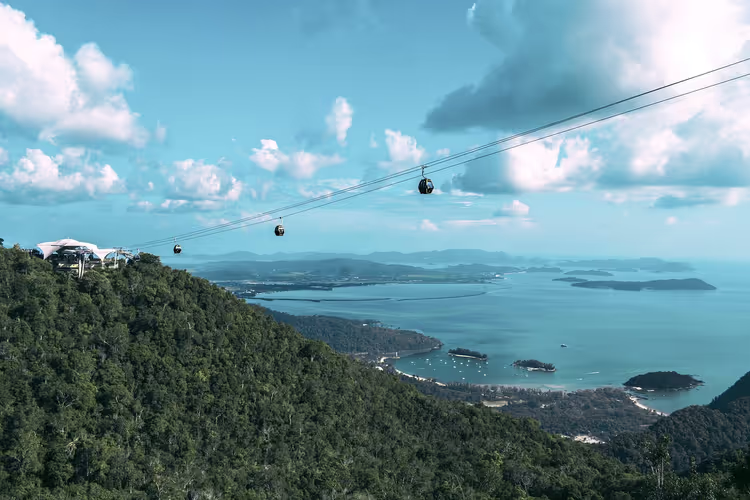
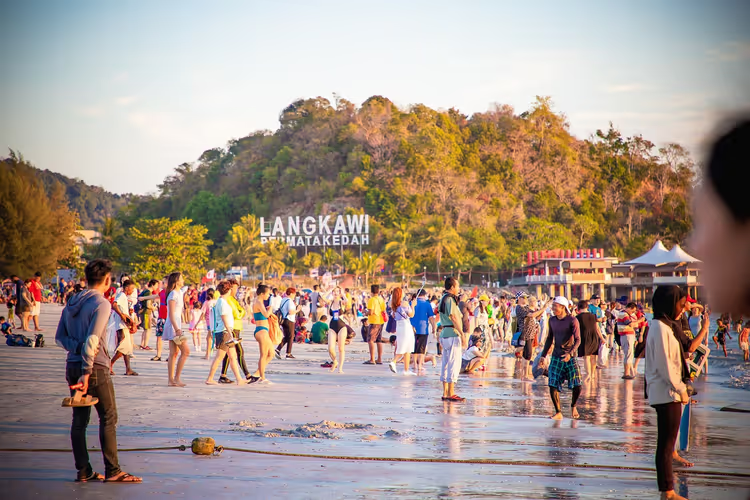
Within Asia, the country is also connected overland. Buses, trains, and ferries run from Singapore and Thailand. Getting to Langkawi and Penang by ferry is convenient and often cheaper than a short flight.
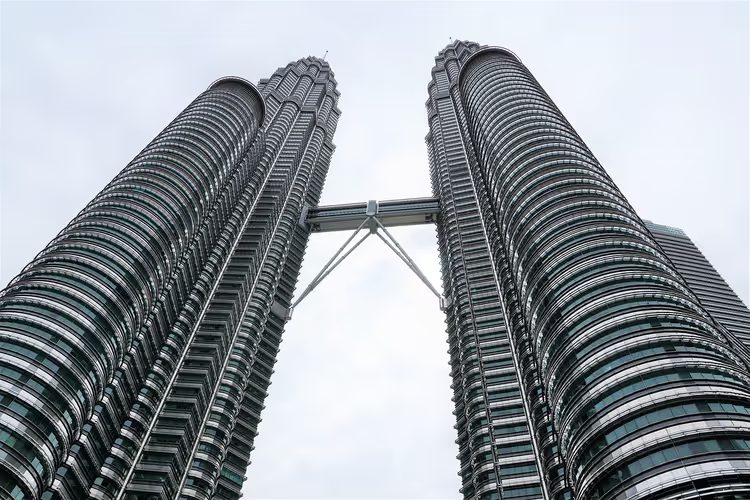
The country's main air hub is the Kuala Lumpur capital hub. The KLIA terminal handles long-haul flights, while KLIA2 mostly serves low-cost carriers like AirAsia.
Rainy season: when to go
Malaysia is split by two monsoons, and they follow different calendars. The west coast of the peninsula is in high season from December to February, when the east coast gets its heaviest rain (according to Lonely Planet, 09/2026).
Region | Rainy season | Best time | Source |
|---|---|---|---|
West coast: Kuala Lumpur, Penang, Langkawi | April-May and September-October | December-February | |
East coast: Tioman, Perhentian, Terengganu | October-March | May-September | |
Borneo, southwest: Kuching | October-February | March-September | |
Borneo, northwest: Kota Kinabalu | June-November | December-May | |
South of the peninsula: Malacca, Johor | November-January | February-October |
The exact weeks shift every year, so the table gives you a window, not a guarantee. Plan islands around their dry season, while peninsula cities can be visited almost year-round. Rain usually comes down hard for an hour or two, then the sun comes back out.
Regions: what to choose for your trip
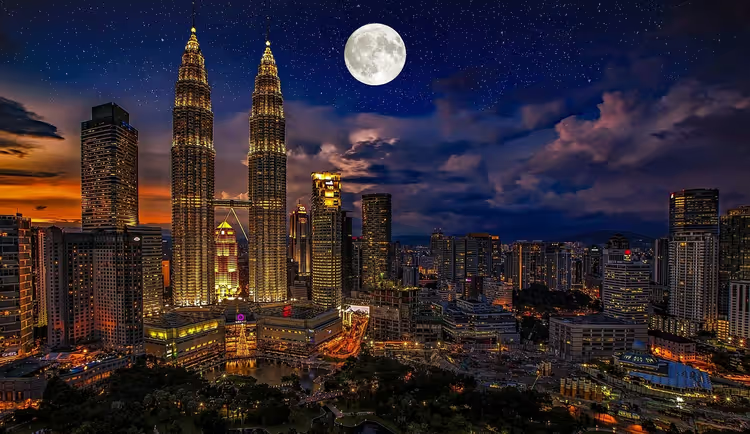
Almost everyone builds their first trip around the capital. Kuala Lumpur suits first-timers in Asia: plenty of food, a metro, short distances between neighborhoods. From there the route continues along the western peninsula.
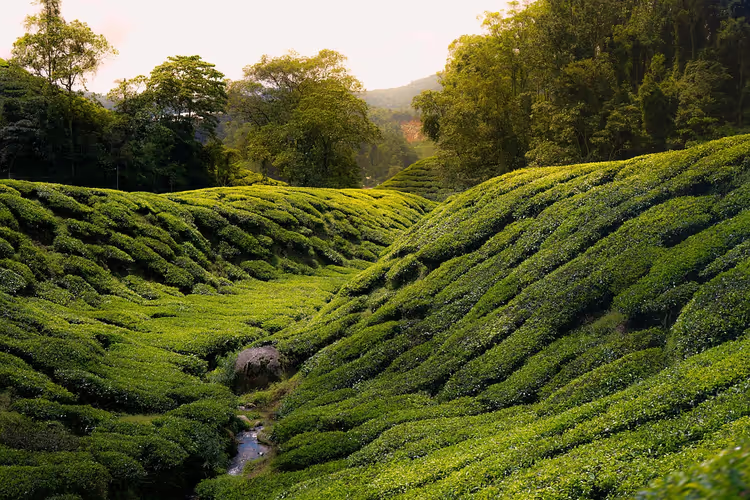
The standard lineup looks like this: Langkawi, Penang with Georgetown, the cool Cameron Highlands, Malacca south of the capital, and the islands of Tioman or Perhentian. It all forms a loop with a stop in Singapore.
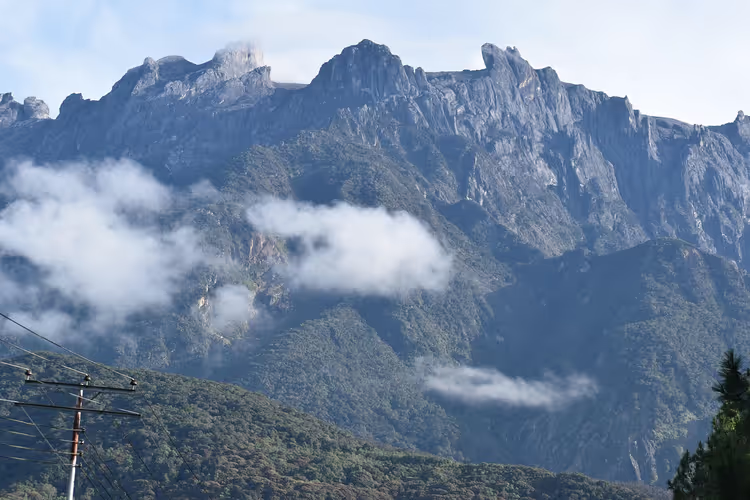
Borneo is chosen for nature. Here you can climb Kinabalu, dive at Sipadan, explore the jungles of Sarawak, and visit the Semenggoh reserve near Kuching, where orangutans live in wild forest.
Malaysia's cities are densely covered with murals and street art.
How much a trip to Malaysia costs
Malaysia is cheaper than Europe, but not the cheapest country in Southeast Asia. The main savings come from food, while decent accommodation costs noticeably more.
Item | Ballpark figure |
|---|---|
Lunch at a street market | a few euros per portion |
Dinner at a mid-range restaurant | tens of euros for two |
Mid-range hotel | from tens of euros per night, more on islands in high season |
Grab ride across the city | cheaper than a European taxi |
Scooter rental per day | a few euros |
National park entry | moderate, check on site |
We recommend carrying cash: cards are accepted in hotels and shopping malls, but markets and small cafes may not have a terminal. Check the exchange rate in your banking app rather than changing your entire budget at the airport.
Where to stay
Accommodation is available in every category, from hostels to five-star resorts. In cities, pick a hotel near a metro or LRT station; on islands, look at the actual walk to the beach, not the straight-line distance.
Hotels in Malaysia on Trip.com
Find hotels in Kuala Lumpur
Compare prices across booking sites and filter for rooms with free cancellation.
Compare prices on Trip.comThe widget loads once you give your consent.
During high season on Langkawi and the east coast, prices go up, so book in advance. Hostels and guesthouses are often cheaper without intermediaries, but air conditioning and hot water sometimes cost extra.
Vaccinations and first aid kit
There are no mandatory vaccinations for entry. A yellow fever vaccination certificate is only required for travelers arriving from a country with a risk of transmission (according to WHO, 09/2026).
Standard vaccinations are worth updating before the trip, and decisions about rabies and Japanese encephalitis should be made together with your doctor. Rabies vaccination sometimes requires several doses, so start a month in advance, not a week.
Pack repellent, anti-diarrhea medication, and sunburn treatment in your first aid kit. Get medical insurance with treatment and evacuation coverage in advance: compare insurance options.
Medical care
Healthcare in Malaysia is good, especially in Kuala Lumpur and George Town. There are modern private clinics with English-speaking doctors.
Outside major cities, options are limited: a serious case is best taken to the state capital. Keep this in mind if you are planning trekking in Borneo or a trip into the interior of the peninsula. Save your insurance number somewhere visible and find out in advance whether it works with local clinics directly.
Safety during the trip
Malaysia is a calm country, and most of the trip goes smoothly. The usual rules still apply: do not leave your bag open in tourist areas and do not walk through deserted alleys at night.
In Kuala Lumpur, it is cheaper and safer to return to your hotel by Grab than to hail a car on the street. Keep your documents in the safe and store copies separately.
A special case: the east coast of Sabah. Additional security measures are in place there, and some sea excursions are canceled due to weather and conditions. Before traveling to Borneo, check the travel advisories from your country's foreign affairs department.
Laws and taboos
Malaysia punishes drug offenses harshly: even a small amount can lead to years in prison. Weapons, smuggling, and insulting the royal family also carry serious sentences.
Alcohol is sold only to non-Muslims, and you will not find beer in an ordinary cafe. Chinese restaurants and neighborhoods, however, pour freely. Drinking on the street is not accepted.
Relationships that go beyond local norms are taboo here. Same-sex relationships are punishable by law, and even heterosexual couples should avoid kissing and holding hands in public. Signs in parks remind you of this.
Language, money, and connectivity
The official language is Malay, but almost everyone understands English here: at the hotel, cafe, taxi, and train station you will get by without any problems. A few Malay words earn noticeable goodwill.
National currency: the ringgit (MYR). Mobile service is more expensive than in Europe only when roaming, so buy an eSIM for Malaysia in advance so you do not have to hunt for a SIM card at the airport.
Getting around the country
Long distances are covered by plane, train, or bus. Check tickets and schedules in one place: trains and buses on Trip.com.
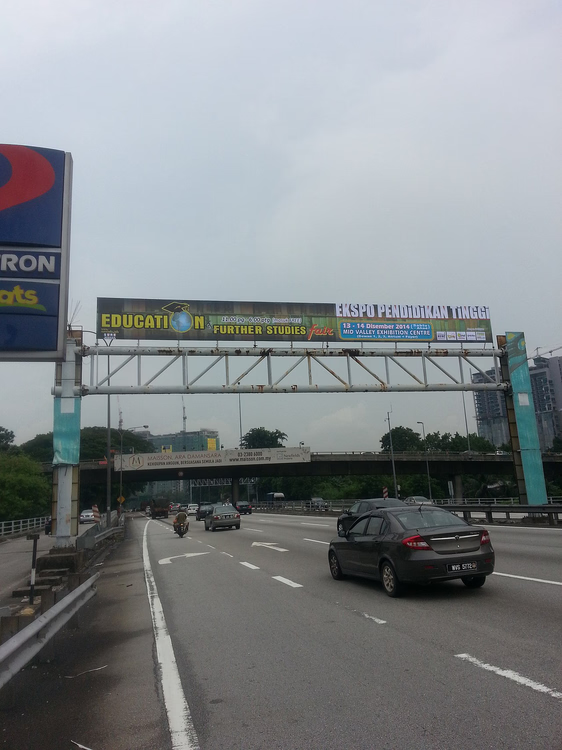 © Jerry Lim · CC BY-SAPhoto: Jerry Lim, CC BY-SA (https://creativecommons.org/licenses/by-sa/3.0), Wikimedia Commons
Option | Where it works | Plus | The catch |
|---|---|---|---|
Plane | between the peninsula and Borneo, to Langkawi | fastest | budget airlines charge extra for baggage |
Train | Kuala Lumpur, Ipoh, Penang, Malacca | convenient and predictable | network only on the peninsula |
Bus | almost everywhere | cheap | the cabin is freezing cold |
Grab | cities and resorts | price shown upfront | few cars in remote areas |
Buses run frequently, but bring a sweater: the air conditioning in the cabin runs at full blast.
For renting a car, your national driver's license is enough. Traffic drives on the left, roads are in good condition, but you are better off not looking for parking in central Kuala Lumpur during rush hour.
Food: what you must try
Malaysian cuisine grew out of a mix of Malay, Chinese, and Indian traditions. You will find coconut rice, noodle soup, and spicy curries here, and vegetarians have the easiest time in Indian establishments.
Malay food is heavy: lots of fried and deep-fried dishes. Start with Nasi Lemak, Roti Canai, and satay on bamboo skewers. A separate story: durian, which Malaysians consider a delicacy.
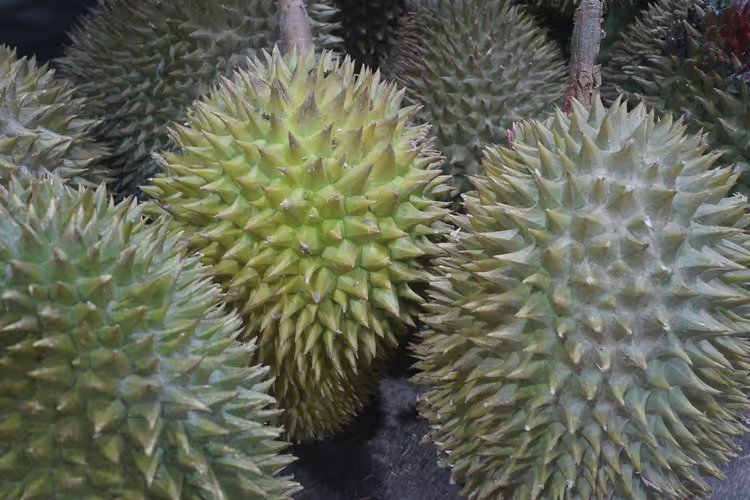
Durian is sold at markets as a delicacy, but you will remember the smell for a long time.
The best place for dinner: street stalls and markets. Food is cooked in front of you, a portion costs pennies, and the lines of locals speak for themselves. Order what the people next to you are ordering.
Beaches, diving, and nature
Malaysia's beaches are found on the islands and on Borneo, and they are genuinely diverse. Tioman and the Perhentians are good for calm swimming, Sipadan is famous for its dive sites, and Pangkor is great for a short break between cities.
Pangkor: calm water, few people, and simple bungalows right nearby.
The honest catch: a lot of trash. Popular beaches get cleaned, wild ones are left as they are, so bring a bag for your own waste. In season, jellyfish appear on some stretches; ask locals before swimming.
The wildlife is richer than you expect: monkeys, lizards, orangutans. On Borneo you can add the rare rafflesia, the largest flower in the world.
The hornbill is easy to recognize by its huge beak with a horn on top.
Temples and religion
The state religion is Islam. According to the 2020 census, Muslims make up 63.5% of the population (as of: Department of Statistics Malaysia, 09/2026).
At the same time, the country is multi-religious. In the morning you step into a Hindu temple, an hour later you walk past a mosque, and in the evening you see Chinese altars in shops. Guests are welcomed warmly almost everywhere.
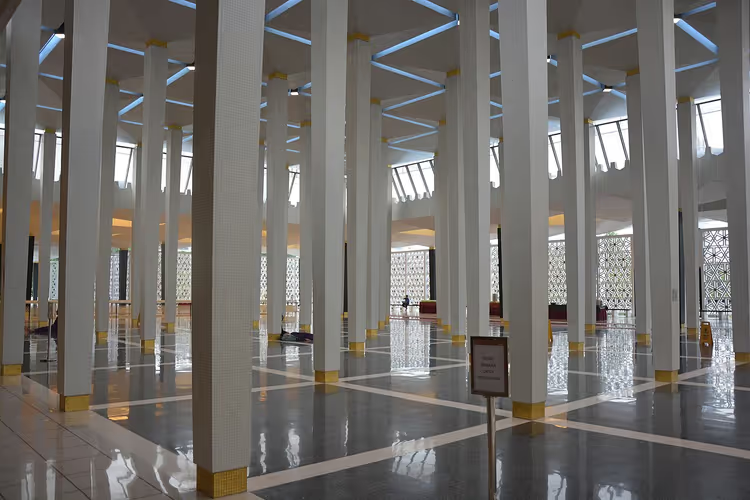 © Jonashtand · CC BY-SAPhoto: Jonashtand, CC BY-SA (https://creativecommons.org/licenses/by-sa/4.0), Wikimedia Commons
A mosque and a pagoda right next to each other: such proximity is ordinary here.
Malaysia with kids
Children are welcome everywhere here. On the bus, in a restaurant, or on the street, people treat them calmly and kindly, not as a nuisance. For a family, the trip turns out to be easy.
It is also a convenient opportunity to show your child other religions and traditions. Plan short transfers and choose islands with a gentle entry into the water.
Children in Malaysia are part of everyday life, not a separate world.
Etiquette: rules of conduct
The country is conservative, and you will have to set aside some habits. Here is what to keep in mind.
Take off your shoes before entering a temple or mosque.
Cover your knees and shoulders; some places require a headscarf or a long robe.
Do not point with your hands or feet at deities or people.
Do not disturb prayer; put the camera away during ceremonies.
Dress more modestly in villages and when visiting someone's home.
Do not bring up politics, sexuality, or criticism of the royal family.
Accept gifts and food with your right hand.
Hospitality here is genuine. People smile at you, ask where you are from, and happily tell you about their country, so respond in kind and do not be afraid of questions. Before the trip, double-check the seasons for your route: the monsoon shifts its timing every year.
⁉️🤔 Frequently asked questions
Do I need a visa for Malaysia?
Citizens of Germany, Austria, and Switzerland do not need a visa: tourist entry is allowed for up to 90 days. Separately, fill out the MDAC arrival card in the last three days before departure; it is free. Check your passport in advance so its validity covers the trip.
When is the best time to visit Malaysia?
It depends on the coast. The western peninsula is dry from December to February, while the east coast gets flooded at that time, and its season starts in May. On Borneo, Kuching is best visited from March to September, and Kota Kinabalu from December to May. Choose the region based on your dates, not the other way around.
How much money should I budget for the trip?
Malaysia is cheaper than Europe. The main expense is accommodation, while food at markets costs a few euros. A scooter or Grab for a day costs less than a taxi in Europe.
Is it safe to travel with kids?
Yes, the country is calm and well suited for families. Children are welcome everywhere, and transfers between cities are short. On the islands, choose a beach with a gentle entry and watch out for jellyfish in season; ask locals about them.
What should you not do in Malaysia?
Stay away from drugs: the punishment is severe even for a small amount. Do not criticize the royal family or religion. Do not drink alcohol on the street. Public displays of affection are considered taboo, and same-sex relationships are prohibited by law.
In short: what to book
If it is your first trip and you have two weeks: go for Kuala Lumpur, Penang, and Langkawi. If the sea and diving are the priority: look at the east coast from May to September. If you want nature: Borneo with Kinabalu, Sipadan, and Kuching. If you are traveling with kids: islands and cities on the peninsula with short transfers.

A small editorial team writing guides for independent travel. We travel ourselves, but we haven’t been everywhere, so we check prices, opening hours and how to get there against official sources.