












Portugal 2026: what changed at the border and how much a holiday costs
Portugal has long required no complicated preparation. But starting in 2026, entering the Schengen Area has changed. From October 12, 2025, the EES system was rolled out gradually across 29 European countries, and from April 10, 2026, it is fully operational (according to the European Commission). Passport stamps are no longer issued: entry and exit are recorded digitally, with a photo and fingerprints.
EES does not apply to EU and Swiss citizens. For tourists from third countries, it means extra minutes at the counter. At the same time, ETIAS, which many were already expecting, is not yet operational. So the usual set of documents remains the same; what changes is the procedure at the border.
Below is everything worth sorting out before departure: documents and customs, cards and ATMs, what makes up the budget, connectivity, and the time difference. We verify every figure against an official source and note the date of verification.
Ad: this article contains affiliate links, we earn a commission if you book through them, at no extra cost to you.
Entering Portugal: documents and new rules
💡 In short:
- Bring an ID card or passport with a validity buffer: border checks are now more thorough than before.
- If you are from a third country, allow extra minutes at the counter: EES takes a photo and records entry data.
- ETIAS is not required yet, applications are not being accepted, and you should not buy it through intermediaries.
- Goods for personal use within the EU travel without duties or declaration.
- Entry, EES, and ETIAS: 09/2026, verified on the official EU portal
 © DgOlsen · CC BY-SAPhoto: DgOlsen, CC BY-SA (https://creativecommons.org/licenses/by-sa/4.0), Wikimedia Commons
Documents and visas
Portugal is part of the Schengen Area, so for EU and Swiss citizens, a national ID card or passport is sufficient. No visa is needed, no invitation is needed, and no registration upon arrival is needed either. Keep your document handy until you leave the airport.
For tourists from third countries, the rules are stricter. The passport must have been issued no more than ten years ago and be valid for at least three months after leaving the Schengen Area. Visa-free entry is usually limited to 90 days within a six-month period; a visa must be arranged in advance at a consulate. Check the current requirements for your country on the visa portal of the Portuguese Ministry of Foreign Affairs before buying tickets.
The EES system and when to expect ETIAS
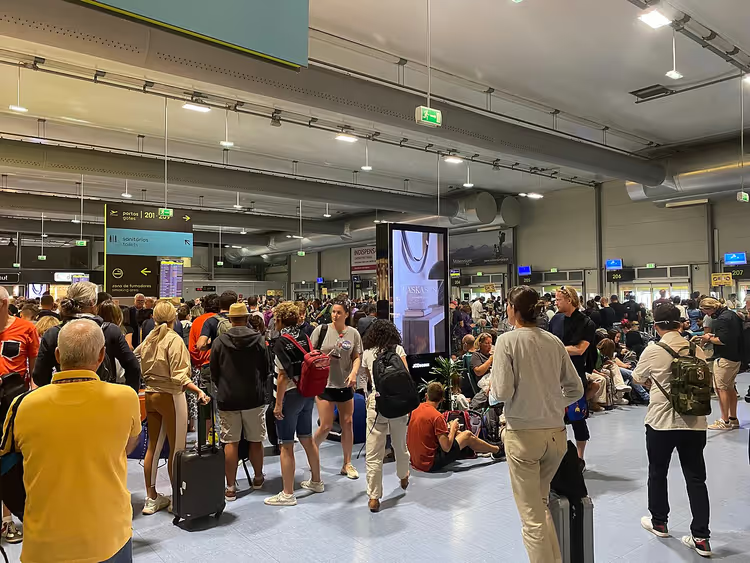
EES has replaced passport stamps with a digital record. For tourists from third countries, on the first trip, fingerprints and a photo are taken at the counter; after that, the system recognizes you by your document. Queues at entry in Lisbon and Porto grew in the summer precisely because of this, so do not book a tight connection.
ETIAS, the authorization for visa-exempt travelers, is still not launched as of 09/2026: applications are not being accepted, and any website selling such a "permit" is operating outside the system. According to the European Commission, the launch is expected at the end of 2026, and the exact date will be announced in advance. There is nothing to pay for right now.
Customs and tax refunds
Within the EU, goods for personal use move freely: tobacco, alcohol, and souvenirs travel without duties or declaration. The distinction is simple: if the goods are clearly for your personal consumption, there will be no questions at the border.
 © Mister No · CC BYPhoto: Mister No, CC BY (https://creativecommons.org/licenses/by/3.0), Wikimedia Commons
For guests from third countries, the Tax Free system applies: purchases in a single store on a single receipt can be processed for an IVA refund. The threshold in Portugal is one of the lowest in the EU, so a refund is realistic even from a single large purchase. Ask for the e-Tax Free form at the checkout, validate it when leaving, and receive the money to your card.
Money: cards, cash, and ATMs
Portugal uses the euro, so you do not need exchange offices or a currency calculator. Cards are accepted almost everywhere: in supermarkets, museums, cafes, gas stations, and taxis. Visa and Mastercard are accepted without issue; American Express and Diners are less common.

Cash is still useful. Keep a small amount for the first day: coffee, taxi, tips, parking meter. In villages in Alentejo and at markets, card payment is sometimes not possible, and there may be only one ATM for several streets.
ATMs in Portugal are part of the Multibanco network, and the interface is available in English almost everywhere. Withdrawals are often subject to a fee, and the ATM will offer conversion into your currency. Decline it: conversion at the ATM's rate is usually more expensive than a charge at your bank's rate. Check your bank's terms for withdrawals abroad before the trip.

Medical care in public clinics for EU citizens is provided through the EHIC card. It does not cover private clinics, dental care, or repatriation, so take out a separate policy for your trip. Compare options in advance, not at the airport.
How much a vacation costs: what makes up the budget
Portugal remains one of the most affordable countries in Western Europe, but the season makes a big difference. In July and August, accommodation in Lisbon, the Algarve, and Madeira gets noticeably more expensive; in May and October, the same rooms cost less. Accommodation will take the biggest share of your money, followed by transport and food.
It is more convenient to pay for transport in Lisbon with a single card than with single tickets: rides are deducted from your balance, and transfers within one hour are not charged again.
Expense item | Reference point (as of 09/2026) |
|---|---|
Navegante monthly pass | €40, price unchanged for seven consecutive years (AML) |
Single ride | more expensive than a card deduction |
Taxi and Bolt | available in Lisbon, Porto, and the Algarve; Bolt is usually cheaper than a taxi |
Toll roads | electronic toll collection; confirm the transponder in your rental car when booking |
Parking in the center | paid almost everywhere; look for free zones in the suburbs |
Lunch from the daily menu, prato do dia, at a snack bar cafe costs less than an à la carte dinner at the same place. In the tourist districts of Lisbon, Porto, and Albufeira, prices are higher than two blocks away: walk a couple of streets and the bill will change.
Important: the bread, olives, butter, and cheese that the waiter puts on the table before you order are not free. This is the couvert, and it goes on the bill. If you do not want to pay for it, send the plate back right away, before ordering, and the matter is settled.
Tipping: how much to leave
The bill does not include a tip; you leave it on top. At a restaurant with good service, it is customary to leave about a tenth of the total; at a cafe, people often just round up to a whole number. In a taxi, the fare is usually rounded up, and a hotel housekeeper gets a coin or two per day.
For the Algarve, Alentejo, and wineries, you need a car: trains run infrequently there. Compare car rental prices before you fly; on the spot, the selection is smaller and the airport counter surcharge is higher. Factor in fuel along the way and parking in cities.
Connectivity, internet, and time
Within the EU, roaming is abolished: your SIM card from Germany or Austria works in Portugal at your home rate. Just check the data allowance in your plan: maps, videos, and photo uploads eat through it quickly, and buying extra gigabytes while roaming is expensive.
 AIIllustrative image: AI-generated
If you are staying longer than a couple of months, you need a local number. MEO, NOS, and Vodafone require a Portuguese tax number, NIF, for a contract: without it, they will not sign you up. For a regular trip, it is easier to get an eSIM for Portugal and avoid hunting for a store on your first day.
Time in Portugal
Mainland Portugal and Madeira use Western European Time: it is one hour behind Berlin, Vienna, or Zurich. On the Azores, the difference is two hours. Set your watch right after landing, otherwise you will be late for a tour or for the car rental desk.
Portugal switches to daylight saving time together with the rest of Europe, so the difference with Germany stays the same all year round. Plan overnight journeys with a buffer: train and bus schedules are already in local time when you check them.
 © Cpintoleite · CC BY-SAPhoto: Cpintoleite, CC BY-SA (https://creativecommons.org/licenses/by-sa/4.0), Wikimedia Commons
⁉️🤔 Frequently asked questions
Does ETIAS work in 2026?
No. As of 09/2026, ETIAS has not launched, applications are not being accepted, and any website selling an "entry permit" is operating outside the system. The European Commission promises a launch in late 2026 and will announce the exact date in advance (according to travel-europe.europa.eu). For now, the usual set of documents is enough for entry, plus a visa if your country requires one.
What should I do about toll roads in a rental car?
On Portugal's highways, tolls are electronic, with no barriers. A rental car almost always has a transponder, so confirm this when booking, otherwise the fine will arrive after you get home. If there is no transponder, buy a toll payment card at a gas station or post office before getting on the highway.
In short: what to book
Portugal forgives improvisation, but not in high season. Put your package together in advance: accommodation, insurance, a car or transit pass, cash for the first day. May and October are the most relaxed: prices then are lower than in July.
- If you are going to Lisbon for a week: book a hotel near a metro line and get a navegante card.
- If you are going to the Algarve: book accommodation with parking and rent a car before your flight.
- If you are going to Madeira or the Azores in winter: get a policy with adventure sports coverage.

A small editorial team writing guides for independent travel. We travel ourselves, but we haven’t been everywhere, so we check prices, opening hours and how to get there against official sources.