

















Hainan: when to go, what to try and how to get around the island
Hainan is often called China's Hawaii. This tropical island in southern China offers beaches, coral reefs, and cuisine far from the smog of megacities. For tourists from Germany, Austria, and Switzerland, a visa is usually not required: the island allows visa-free entry for up to 30 days (as of 08/2026, official website of Hainan Province).
We've put together a practical guide to the island: when to go, what to try from the local cuisine, how to get around, and what to do. Below you'll find only verified facts, honest catches, and working links to help you plan your trip yourself.
Ad: this article contains affiliate links, we earn a commission if you book through them, at no extra cost to you.
When to go and how to prepare
💡 In short:
- For a beach vacation, choose late fall or spring.
- For sightseeing, plan for December through March.
Plan your trip for late fall or spring. From December to March, the island is dry and warm, making this period ideal for sightseeing and exploring the region. August and September, however, bring typhoons and sudden weather changes, so a beach vacation in those months can easily be ruined.
The sun shines on Hainan year-round, so bring high-SPF sunscreen and a hat, even if you're visiting in winter.
Sort out money in advance: exchange currency and arrive with yuan, because the euro exchange rate on the island is often unfavorable, cards aren't accepted everywhere, and cash will come in handy at markets and small cafes.
Take care of connectivity separately: Chinese authorities restrict access to some foreign resources, so download a VPN in advance, not on arrival. For stable internet, get an eSIM: it works immediately after activation, and you won't have to look for a local SIM card.
Install an offline translator and offline maps of the region. On the streets, in cafes, and on public transport, it's hard without the language: you show a phrase on your phone, and the seller responds with a gesture. Maps help where the internet drops out and keep you from hitting a dead end on an unfamiliar route.
What to try: Hainan cuisine
Hainan cuisine combines Chinese classics with local ingredients. The diet is based on noodles and rice, and the island adds coconut, tropical fruits, and fresh seafood. Cooks don't skimp on spices, so spicy dishes are the norm here.
Portions are large, and there's plenty of oil too, so check the price on the menu: restaurants list the cost of the whole dish or a portion by weight, and without this you can easily overpay. The offline translator comes in handy here again.
Seafood is available in almost every cafe and restaurant. Local chefs prepare not only shrimp and fish but also sea urchins. Coconut is considered the island's gastronomic symbol, and for dessert, go for papaya and bananas.
What to try first:
Dish | What it is |
|---|---|
Wenchang chicken | Braised chicken, the island's signature dish |
Jiaji duck | Duck prepared according to the town of Jiaji's recipe |
Hele crab | Crab baked with spices |
Hainanese chicken rice | Rice cooked in chicken broth, served with chicken |
Pumpkin rice | A simple side dish with pumpkin |
Dongshan lamb | Braised lamb with herbs |
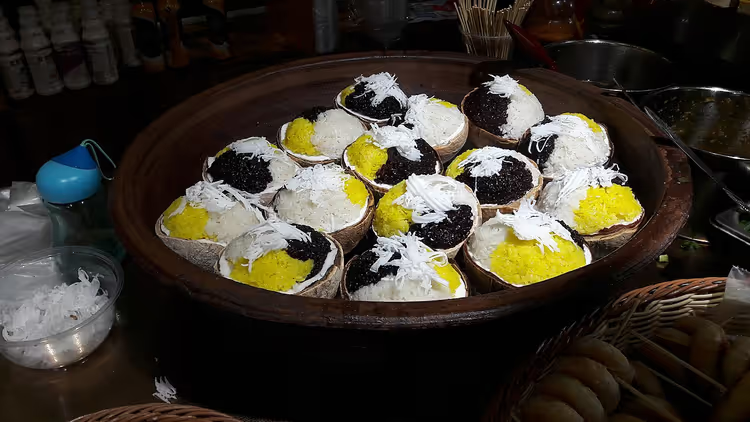 © Popolon · CC BY-SAPhoto: Popolon, CC BY-SA (https://creativecommons.org/licenses/by-sa/4.0), Wikimedia Commons
Where to eat: restaurants, markets, and quick bites
For an evening out, the island has some strong options. The underwater Ossiano Underwater Restaurant & Bar impresses with its aquarium view, while Bread Street Kitchen & Bar by Gordon Ramsay and Barbacoa suit a high-end dinner. Crab Kitchen focuses on seafood, and Hilton Haikou Meilan serves you right in your room.
There are plenty of budget options too. Fast food has reached China: KFC and McDonald's operate on the island. After them come chifankas, small eateries where a generous portion of food costs just a few yuan. Supermarkets sell ready-made food by weight.
Shopping malls solve two problems at once: shopping and lunch. Food courts have pictures of dishes, and in tourist areas, vendors sometimes understand English. For a budget food tour, head to the markets: they sell fresh fish, fruits, and vegetables and cook with local ingredients.
The first floor of the First Market in Sanya deserves its own spot on your itinerary. Here they prepare Peking duck and various seafood, including dried shrimp. The quality rivals restaurants, and the bill is noticeably lower.
How to get to the island
Two main airports serve Hainan: Sanya Phoenix and Haikou Meilan. The first is closer to the beach resorts of the south, while the second is convenient for the north of the island and flights via Haikou. Both airports are on the list of ports where visa-free entry applies (as of 08/2026, visa-free entry rules).
Book flights in advance: during the high season in December and March, prices rise fastest. Comparing flights is easy on Kiwi.com.
From the airport to your hotel, a taxi or a pre-booked transfer will get you there. Drivers often wait at exits and near major hotels, so you'll find a car quickly.
How to get around the island
You can get around the island by train, bus, taxi, scooter, and bicycle. The choice depends on distance and budget.
Trains
The railway network covers the island, and comfortable modern trains run in a loop, letting you circle Hainan in half a day. Tickets come in first and second class, and sometimes standing room only. Train tickets around the island are sold at station ticket offices and through terminals. Without Chinese, bring a translator or use an app.
Buses
Buses run from early morning until late at night. Find your route in an app with offline maps, such as maps.me. Payment depends on distance, and coins are dropped into a box as you board. The system doesn't give change, so don't spend your small coins right away.
Taxis
Taxis remain the most popular transport among tourists because they're cheap, and the authorities strictly control operations: cars have meters and cash registers. You can hail a car on the street or order one by phone. Drivers often wait near hotels, airports, and shopping centers. For a long trip, agree on a fixed price in advance.
 © Tanya Dedyukhina · CC BYPhoto: Tanya Dedyukhina, CC BY (https://creativecommons.org/licenses/by/3.0), Wikimedia Commons
Scooters
People rent scooters on the island regardless of age or status. Gas-powered or electric scooters are rented by the day. Before renting, ask the rental shop what kind of license you need to operate one. Don't be surprised by a person in a business suit on a scooter: it's a common sight.
Bicycles
Bicycles are rented at street stations, and unlocking one requires WeChat and a QR code. You can leave the bike anywhere, and payment is charged after the ride. The app shows the final amount.
Comparing options is easy in the table:
Transport | Where it's useful | Payment |
|---|---|---|
Train | Long trips across the island | Ticket at the office or terminal |
Bus | City and suburbs | By distance, with coins |
Taxi | Airport, hotel, evening trips | By meter |
Scooter | Short outings along the coast | Daily rental |
Bicycle | Rides by the sea | Via QR code in the app |
What to do on Hainan
The island's main experiences revolve around nature, Buddhist architecture, and traditional medicine. Below are five directions tourists choose most often.
Wellness centers
Hainan is known for its treatment centers and traditional Chinese medicine. The centers here are not hospitals but prevention centers, where people go even without complaints. The program includes massage, acupuncture, aroma and mud therapy, and the process is accompanied by music and incense. Local healers work with restoring energy rather than treating a specific organ.
Nanshan Park and the Guanyin statue
The Buddhist park at Nanshan Mountain stretches along the sea. The park is home to a 108-meter statue of the goddess Guanyin (as of 09/2026, Sanya Tourism Board). Before your visit, think of your cherished wishes: it's customary here to approach the statue and ask for what you want. Temples and themed gardens operate nearby, and the waterfront promenades are pleasant for walking.
 © Qa003qa003 · CC BY-SAPhoto: Qa003qa003, CC BY-SA (https://creativecommons.org/licenses/by-sa/4.0), Wikimedia Commons
Dongtian Taoist Park
Dongtian Taoist Park, also called the "Heavenly Grottoes," is over a thousand years old. It's on the list of the island's oldest attractions. Sacred trees and grottoes were considered gates to another world for centuries, and Taoist followers revere this place as the Dragon Temple. From the park's southern mountain, wide views of the surroundings open up.
 © 江上清风1961 · CC BYPhoto: 江上清风1961, CC BY (https://creativecommons.org/licenses/by/3.0), Wikimedia Commons
Monkey Island
Monkey Island, also known as Nanwan Monkey Island, is called a reserve where macaques live in their natural environment, roam the grounds, and climb trees. Greenery covers almost the entire island, and juicy fruits and berries grow here in abundance, so the animals don't go hungry.
 © Lucius Kwok · CC BY-SAPhoto: Lucius Kwok, CC BY-SA (https://creativecommons.org/licenses/by-sa/2.0), Wikimedia Commons
- Who it's for: those traveling with children and animal lovers.
- The catch: monkeys grab anything shiny, so leave jewelry and valuables at the hotel.
Hainan Museum
The Hainan Museum presents the island's history at a relaxed pace. The exhibition includes Chinese porcelain, silk and jade items, sculptures, and paintings. Some exhibits are over a thousand years old.

Book island tours and tickets online: this way you skip the line at the entrance and secure spots at convenient times. You can browse Hainan tours on GetYourGuide in advance and build your day-by-day itinerary once you're there.
Tours and tickets
Guided tours, skip-the-line tickets and activities — most offers can be cancelled free of charge.
See offers on GetYourGuideThe widget loads once you give your consent.
⁉️🤔 Frequently asked questions
Do I need a visa for Hainan?
Citizens of 61 countries, including Germany, Austria, and Switzerland, do not need a visa: stays of up to 30 days are allowed on the island (as of 08/2026, Hainan Province data). The rule applies when entering through open ports, such as the Sanya and Haikou airports. Before your trip, check your passport against the list of countries.
When is the best time to visit Hainan?
Late fall and spring are the most comfortable. From December to March, the island is dry and warm, and the weather suits sightseeing and beaches. During the high season in December and March, hotels get more expensive, so book in advance.
How much does a trip to Hainan cost?
The budget depends on your travel style. Taxis, buses, and chifankas are cheap, and food at Sanya's markets is inexpensive. High-end restaurants like Ossiano and Barbacoa remain pricey. Budget for food, transport, and tours in advance so you don't have to count money on the spot.
What should I definitely try on Hainan?
Go for Hainanese chicken rice, Wenchang chicken, Jiaji duck, and Hele crab. Add local seafood, coconut, papaya, and bananas. Portions are large, so for tasting it's better to order dishes to share.
How do I get around the island without Chinese?
Download an offline translator and offline maps in advance so you don't depend on mobile internet. Trains and buses are convenient for long trips, taxis are cheap and run by meter. Scooters and bicycles are good for short rides. A bicycle requires WeChat. At the train station, an app or translator will help you buy a ticket.
In short: what to book
Hainan suits both a beach vacation and a trip with a packed itinerary. Decide on the season in advance, get an eSIM, and download offline maps. Book tours and tickets online, and you'll save time on the ground and depend less on the language.
- If it's your first trip: book ready-made Hainan tours.
- If you're going for nature: plan Nanshan Park and Monkey Island.
- If budget matters: stay closer to markets and travel by bus.
- If you love comfort: choose high-end restaurants and an airport transfer.

A small editorial team writing guides for independent travel. We travel ourselves, but we haven’t been everywhere, so we check prices, opening hours and how to get there against official sources.