
















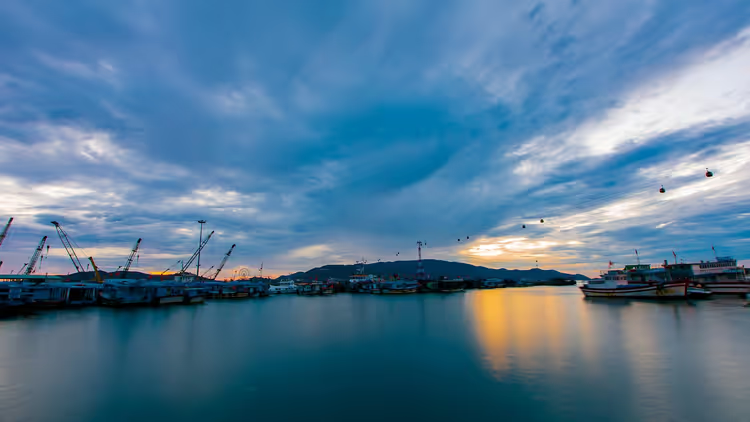
Nha Trang: when to go, what to see and where to stay by the sea
Nha Trang wakes up to honking and the roar of scooters. Vietnam's beach capital is noisy around the clock, and that is part of its character. From the outside, the city looks like a collection of hotels, bars, and construction sites, but behind the promenade you will find Cham towers, pagodas, mud springs, and islands with the country's largest amusement park.
The best beach season here runs from February to May: the air warms up to +30 °C, humidity is low, and the sea is calm (according to Vietnam's national tourism office, 09/2026). Below, we break down what to see, where to stay, and how much admission to the main sights costs. If you want to see more of the country, start with our guide to the best places in Vietnam.
Ad: this article contains affiliate links. We earn a commission if you book through them, at no extra cost to you.
When to visit Nha Trang
💡 In short:
- Beach season runs from February to May: warm, dry, calm sea.
- Rainy season falls in October, November, and December.
- Weather, seasons, and water: 09/2026, verified on the Vietnam tourism office website
The local climate is divided into two seasons. From February to May, the weather is dry and warm: the air stays around +30 °C, the bay water is warm, and humidity is low (according to the Vietnam tourism office). During these months, you will have time to sunbathe and explore the city without stifling heat or sudden downpours.
The rainy season starts in October and ends in December. In November, about 360 mm of precipitation falls, so you will spend some days under an umbrella, and island boat trips are sometimes canceled due to waves (according to Vietnam's tourism authority, 09/2026). The downpours are short: it rains for an hour or two, then the sun comes out again.
Peak tourist season falls in July and August. It is hot and humid then, hotel prices are higher, and the beach is crowded. Divers, on the other hand, wait for June and September, when underwater visibility reaches 15-25 meters (according to the country's official tourism office).
June is also suitable for a trip, but the air warms up to +35 °C and humidity rises (as of: 09/2026, Vietnam tourism office statistics). If you are planning a beach vacation, book your tickets for the period from February to May. For diving, choose June or September.
1. Tram huong tower (tháp trầm hương)
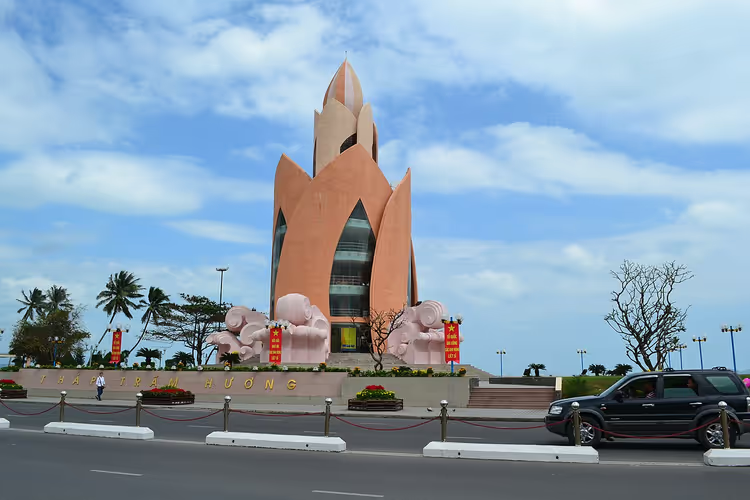
On the Nha Trang waterfront, you will see a lotus-shaped structure. Tram Huong Tower was built in the early 2000s and quickly became a symbol of the city. The pink bud made of concrete and glass functions as an exhibition center: city exhibitions are held inside.
 © Dinh Ngoc Binh · CC BY-SAPhoto: Dinh Ngoc Binh, CC BY-SA (https://creativecommons.org/licenses/by-sa/3.0), Wikimedia Commons
You do not need to go inside. The main draw here is the facade and the evening lighting, so a walk along the promenade is enough.
2. Cho dam night market
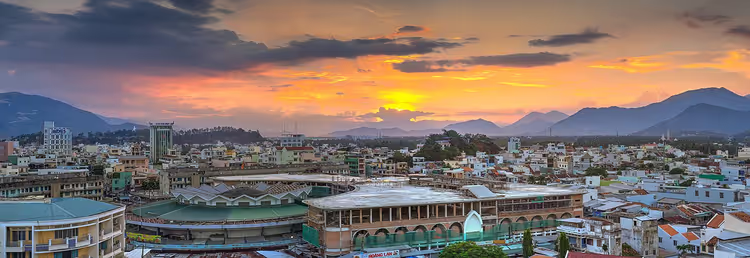
Across the street from the "lotus" begins the European Quarter with restaurants, bars, nightclubs, and shops. Cho Dam Market stands at the entrance to the tourist center and operates during the day under a roof. Nha Trang's night market is in a different location.
Here you will immerse yourself in Vietnamese local color: buy souvenirs, try local street food, and haggle over prices.
 © Makarenko Sasha · CC BY-SAPhoto: Makarenko Sasha, CC BY-SA (https://creativecommons.org/licenses/by-sa/3.0), Wikimedia Commons
3. Nha trang cathedral (nhà thờ núi)
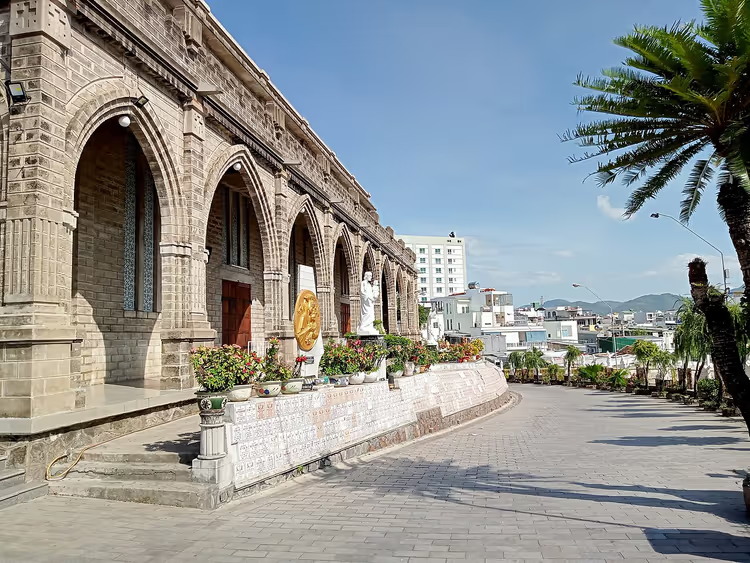
St. Mary's Church stands on a hill, so it is visible from almost anywhere in the area. The Catholic cathedral was built in the 1930s and became the city's main church with the bishop's residence.
Inside, you will find stained glass windows and a vaulted nave, while the courtyard features statues of Jesus and the Virgin Mary. Most of Vietnam is Buddhist, but Nha Trang has a large Catholic community, so it gets crowded here on Sundays. Come on a weekday morning: the light through the stained glass is brightest at that time.
 © Baoothersks · CC BY-SAPhoto: Baoothersks, CC BY-SA (https://creativecommons.org/licenses/by-sa/4.0), Wikimedia Commons
4. Long Son Pagoda (Chùa Long Sơn)
Long Son is considered the main Buddhist temple in the province. The pagoda was built in the late nineteenth century, and its name translates as "flying dragon." The temple walls are decorated with dragon mosaics, and the climb begins with a long staircase of about one and a half hundred steps.
Walk up to see the seated Buddha statue and the reclining Buddha at the top of the hill. Nearby there is a small garden with a view of the city. Bring water and take your time: in the sun, the climb takes longer than it seems.
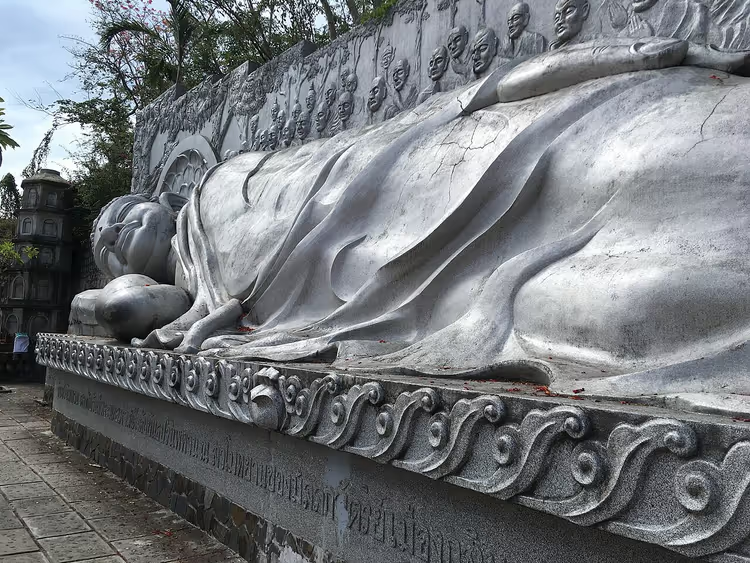 © Christophe95 · CC BY-SAPhoto: Christophe95, CC BY-SA (https://creativecommons.org/licenses/by-sa/4.0), Wikimedia Commons
5. Po Nagar Cham Towers (Tháp Bà Po Nagar)
The complex stands across the Cai River, on Cu Lao Hill. The towers honoring Hindu gods were first built during the Champa principalities, hence the word in the name. Four structures have survived to this day, each more than a thousand years old.
The main tower is dedicated to the goddess Po Nagar, who, according to legend, created the earth and taught people agriculture. Locals consider this place sacred and still hold ceremonies and rituals here. The upper terrace offers a view of the river, the sea, and the city.
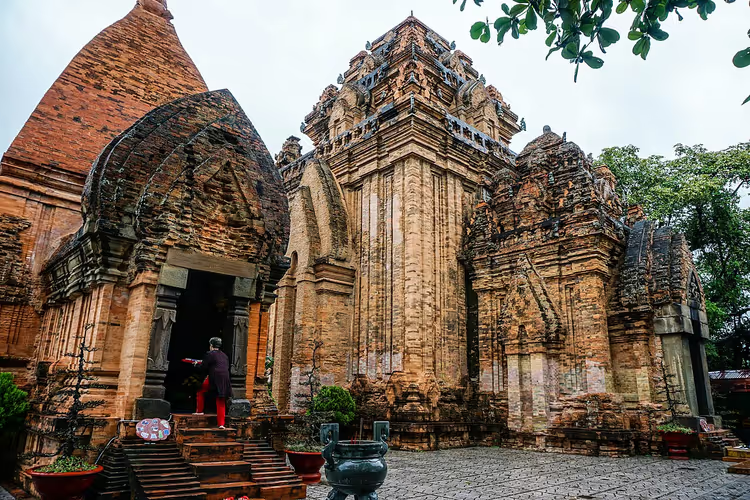 © katiebordner · CC BYPhoto: katiebordner, CC BY (https://creativecommons.org/licenses/by/2.0), Wikimedia Commons
Admission costs about 30,000 dong, and the complex is open from 6:00 to 18:00 (as of 09/2026, Khanh Hoa province portal). Come at opening time or after three in the afternoon: in the middle of the day, the towers are hot and crowded.
The Tháp Bà mud bath spa is nearby, and it is covered in the next section. City tour tickets are convenient to book in advance if you want to come with a guide and avoid figuring out transportation.
6. Tháp Bà Mud Bath Spa
About seven kilometers north of the center, next to the Cham towers, hot springs rise from the ground. A whole spa complex has grown up around them, with mineral, thermal, and mud baths, pools, and relaxation areas.
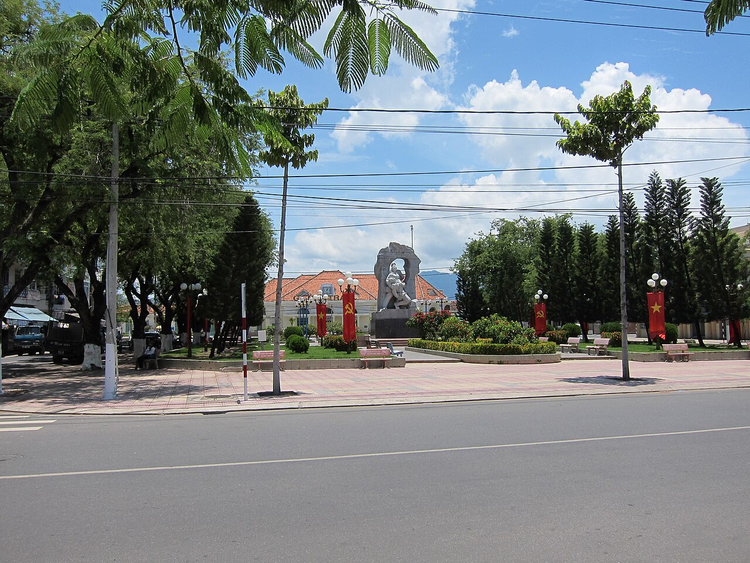 © Kaz Ish · CC BY-SAPhoto: Kaz Ish, CC BY-SA (https://creativecommons.org/licenses/by-sa/3.0), Wikimedia Commons
The grounds are surrounded by tropical vegetation and a eucalyptus grove, so the air here is fresher than in the city. The mud relieves joint pain, helps with thyroid issues, relaxes muscles, and cares for the skin.
A visible effect comes from a course of several sessions, while a single visit will mostly give you relaxation. Bring a swimsuit and a towel: you will spend about half an hour in the mud bath.
7. VinWonders on Hon Tre Island
From the outskirts of Nha Trang, a cable car more than three kilometers long leads to Hon Tre Island. The pylons resemble Eiffel Towers, they are lit up in the evening, and the cabins rise dozens of meters above the sea. The ride over the bay alone is worth the ticket price.
VinWonders, the largest amusement park in Vietnam, operates on the island. Here you will find rides, a water park, an aquarium, a circus, one of the largest wave pools in Asia, and beaches with loungers. You can also reach the island by water if the cable car is closed due to wind.
An adult ticket costs 1,050,000 dong, a child ticket and a ticket for visitors over sixty costs 800,000 dong, and a ticket after 16:00 costs from 550,000 to 700,000 dong (as of 09/2026, official VinWonders website). In the evening, the island hosts light and music fountain shows, so do not leave right after sunset.
For tickets to Nha Trang attractions and parks, get them on Tiqets: in high season, entrance lines form by ten in the morning.
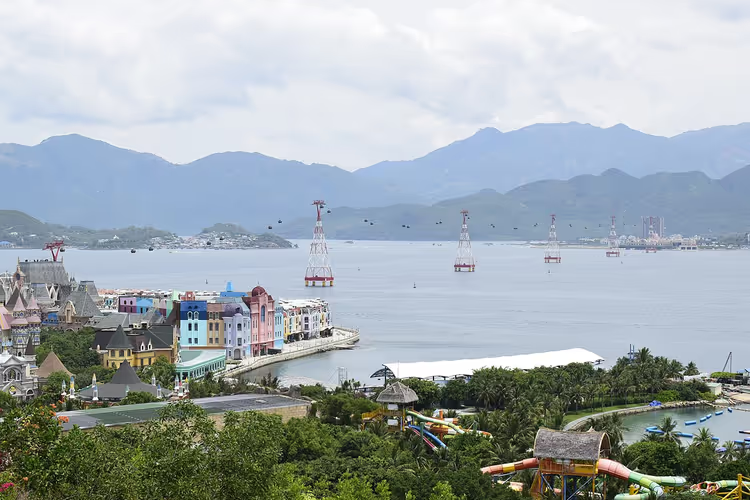 © Rayrayokocha · CC BYPhoto: Rayrayokocha, CC BY (https://creativecommons.org/licenses/by/4.0), Wikimedia Commons
8. Tri Nguyen Aquarium
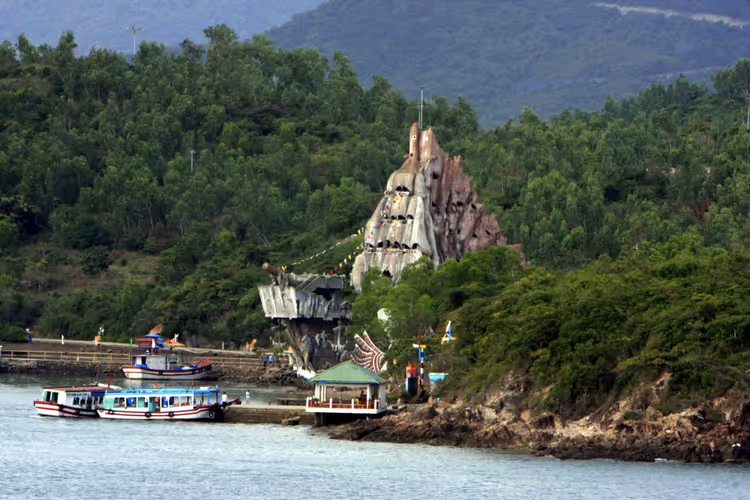
From the same pier where boats leave for the park, you can get to Hon Mieu Island. Here stands a building that looks like a ship that spent years lying on the ocean floor. In its holds and on its decks you will see aquariums with rare fish, and the museum houses the remains of prehistoric sea creatures.
The surrounding grounds are just as impressive as the exhibit itself: statues of sea animals and mushrooms, ponds with fish and large turtles. On the other side of the island there is a beach with loungers and umbrellas; the bottom is rocky, but the water is clear.
You can eat on site, so plan a full-day trip. Bring a snorkeling mask: near the shore it is more interesting to look down than straight ahead.
 © Bruce Tuten · CC BYPhoto: Bruce Tuten, CC BY (https://creativecommons.org/licenses/by/2.0), Wikimedia Commons
9. Hon Lao Monkey Island (Đảo Khỉ)
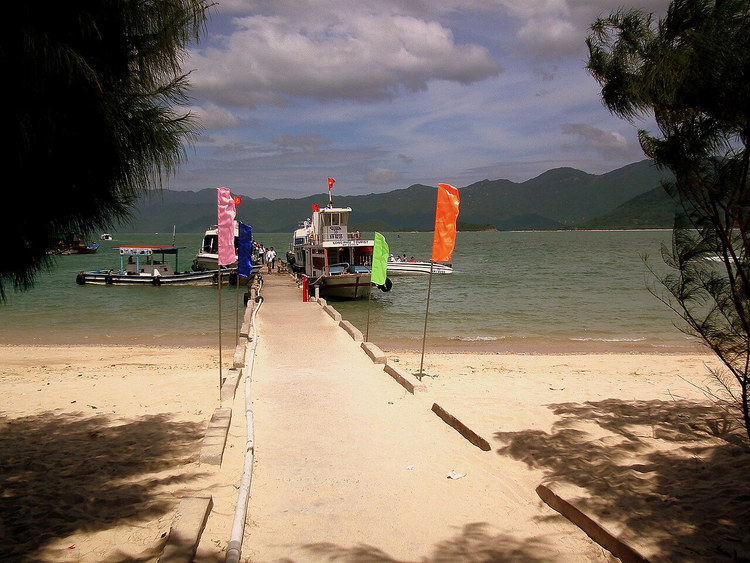
About twenty kilometers from Nha Trang lies Hon Lao Island, home to around fifteen hundred monkeys. The monkeys have long grown used to tourists: they come up close, beg for food, and reach into bags.
A walk through the coconut forest here is combined with swimming, and the island also has a circus, ostrich races, water attractions, and a seafood market. Do not leave your belongings unattended and do not show food in an open bag.
 © calflier001 · CC BY-SAPhoto: calflier001, CC BY-SA (https://creativecommons.org/licenses/by-sa/2.0), Wikimedia Commons
How to get to Nha Trang
Nha Trang receives flights at Cam Ranh Airport, which sits on the coast south of the city. You can reach the center via the coastal highway: by taxi, bus, or pre-booked transfer.
In high season, drivers outside the terminal ask for noticeably more, and not all carriers include toll roads and luggage in the fare. Book your ride in advance, and the driver will meet you with a sign and take you to your hotel.
Tours and tickets in Nha Trang
Guided tours, skip-the-line tickets and activities — most offers can be cancelled free of charge.
See offers on KiwitaxiThe widget loads once you give your consent.
Where to stay in Nha Trang
Nha Trang is almost constantly under construction. Before booking, ask the hotel whether there is construction near your windows: a view of concrete slabs and workers ruins a vacation more than street noise.
Hotels in the center are usually two or three blocks from the beach, and many have a rooftop pool and a breakfast buffet. The loudest strip runs along the street by the sea: cars honk, buses and scooters flow in a steady stream, and crossing the road here is uncomfortable. If you sleep poorly with noise, choose blocks in the second row back from the promenade.
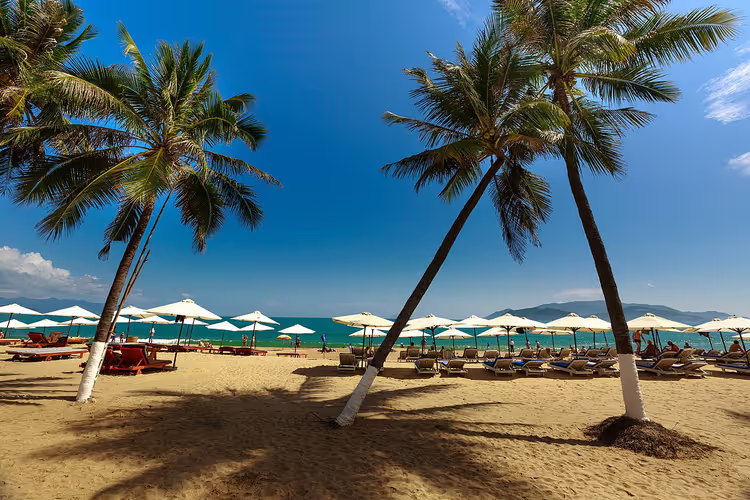
There is no accommodation right on the shore in the city center. The first line exists only on the outskirts, where it is quieter and more secluded. For a calm stay, look toward Bai Dai or Ninh Van, where there is less city noise.
Comparing hotels in Nha Trang is easier to do in advance: in season, prices in the center rise faster than on the outskirts. Star ratings here are approximate, so read reviews from recent months rather than just looking at scores.
⁉️🤔 Frequently asked questions
When is the best time to go to Nha Trang?
The best time for the beach runs from February to May: air around +30 °C, low humidity, calm sea (according to the Vietnam national tourism office, 09/2026). Summer is hotter and more humid, and in June and September underwater visibility reaches 15-25 meters. The rainy season falls in October, November, and December.
How much does a ticket to VinWonders Nha Trang cost?
An adult ticket costs 1,050,000 dong, a child ticket and one for guests over sixty costs 800,000 dong, and a ticket after 4:00 PM will run from 550,000 to 700,000 dong (as of 09/2026, VinWonders fare page). The price includes the cable car both ways and almost all park attractions.
How much time do you need for the Po Nagar Cham Towers?
Set aside one and a half to two hours for the four towers, the museum, and the view from the hill. Admission costs about 30,000 dong, and the complex is open from 6:00 AM to 6:00 PM (as of 09/2026, Khanh Hoa tourism portal). Come at opening or after three in the afternoon, when the heat subsides and tour groups leave.
Is it noisy to stay near the beach in Nha Trang?
Yes, the street along the beachfront is loud: cars honk, buses and scooters flow in a steady stream day and evening. If you need quiet sleep, take a hotel in the second row back from the sea or on the outskirts. Before booking, ask about construction nearby: the city builds almost constantly.
How to get from Cam Ranh Airport to Nha Trang?
Cam Ranh Airport sits south of the city; to reach the center you travel along the coastal highway by taxi, bus, or pre-booked transfer. Cars at the terminal ask for more in season, so it is better to book the ride in advance. Then the driver will meet you with a sign and take you to your hotel.
In short: what to book
Nha Trang works for both a beach vacation and a packed sightseeing itinerary. The season decides half of the experience: from February to May you get sun and a calm sea, while in autumn you have to work around the rains.
If you want the city and the beach nearby: take a hotel two or three blocks from the promenade.
If you are traveling with kids: plan a day at VinWonders and the Tri Nguyen Aquarium.
If you want quiet: look at the outskirts of Nha Trang, such as Bai Dai or Ninh Van.
It is easier to find a hotel in Nha Trang in advance, and park tickets should be bought for a specific date.

A small editorial team writing guides for independent travel. We travel ourselves, but we haven’t been everywhere, so we check prices, opening hours and how to get there against official sources.