

















Where to go from Tokyo: 25 routes for 4 hours, a day, and out of town
Tokyo seems like a city without a plan. Districts are scattered, the subway drops four levels underground, and getting from a temple to a skyscraper can easily take an hour and a half. A ready-made tour removes the hassle: you pay for a guided route, not for figuring out transfers.
Below are 25 routes. There are short four-hour walks, full-day trips, and excursions outside the city to Kamakura, Nikko, or Mount Fuji. Tickets to the Ghibli Museum can only be bought in advance. We've sorted the options by duration, group size, and price so you can choose in a couple of minutes.
Ad: this article contains affiliate links, we earn a commission if you book through them, at no extra cost to you.
How to choose a tour in Tokyo
💡 In short:
- Half a day is enough for Asakusa and Odaiba; for Kamakura, Nikko, or Mount Takao, take a full day.
- Private walks have no group, but entrance fees and transport are usually on you.
- Ghibli Museum tickets go on sale on the 10th of the previous month; you can't buy them on site.
- Prices and opening hours: as of 09/2026, verified on the official Ghibli Museum website.
The choice comes down to two things: how much time you have and whether you're willing to leave the city. On your first visit, take an overview route through the center. On your second visit, add day trips. Below, the options are arranged by increasing complexity.
Route | Duration | Who it suits |
|---|---|---|
Tokyo in four hours | Four hours | First visit, little time |
The city for a full day | Eight hours | You want the center and a spa |
Kamakura and Yokohama | One day | History and the sea |
Keep cash on you. Cards are accepted almost everywhere, but small temples, markets, and old shops only take yen. There are few exchange offices in tourist areas, and ATMs aren't on every corner. A few thousand yen will be enough for one day.
A separate note about the guide. On private tours, you usually pay for the guide's transport and entrance tickets. Clarify this point when booking, otherwise the final total will be higher than expected.
1. Tokyo in four hours
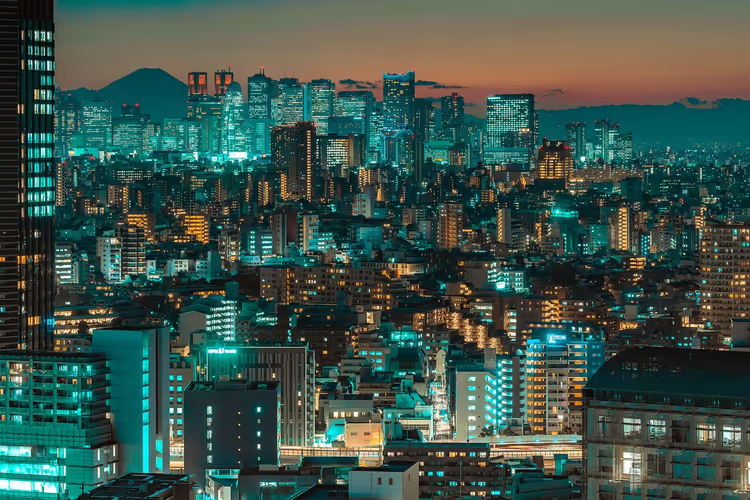
A short walk through the city using public transport. In four hours, you get to see two different eras of the capital.
The route starts in the subway. The information boards are huge, but figuring them out on the first try is hard. If a guide leads your first trip, you don't waste time on transfers. Then the group heads to Asakusa, the old district with the Buddhist temple Senso-ji and the Nakamise-dori souvenir street.
The second half takes you to the sea, to the man-made island of Odaiba. It was built on a landfill site and connected to the city by the Rainbow Bridge. You can get there by monorail or by a sightseeing boat that looks like a spaceship. On the island, you'll find the titanium sphere of the Fuji TV tower, a Ferris wheel, a replica of the Statue of Liberty, and the Aqua City shopping center.
- Duration: four hours on foot and by transport.
- Price: when booking through the website, you pay part of the cost, and the rest goes to the guide on site.
- The catch: you pay for the guide's transport around the city, which adds to the price.
Want to compare short walks? find a 4-hour tour on GetYourGuide.
2. The city for a full day
A full-day walk through several districts at once. This format suits those who want to see both the business center and old traditions in a single trip.
The start is at the observation deck of Shinjuku's first skyscrapers, next to the city hall. From here, the whole city opens up, and the guide explains how Japan builds high-rises in an earthquake zone. Then you head to Yoyogi Park and the Shinto shrine Meiji Jingu. It's surrounded by the "Eternal Forest," and within a couple of minutes the noise of the metropolis disappears.
Along the way, the group stops at the Hachiko dog statue in Shibuya, then walks to a Buddhist temple with a pagoda. The finale of the day awaits you on the man-made island, at a thermal complex with massage and spa. You can also have lunch there.
- Who it's for: those who have only one full day in Tokyo.
- Price: entrance to the thermal complex and lunch are paid separately.
Similar routes: book a full-day walk.
3. Diverse Tokyo in five hours
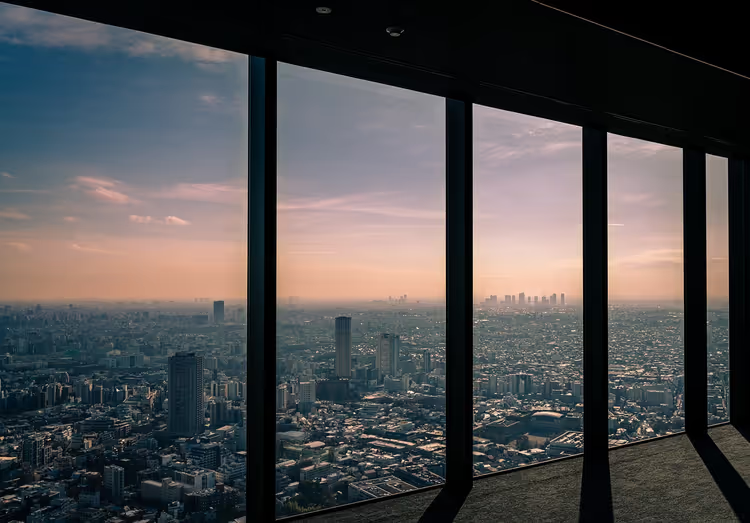
A five-hour trip on public transport. You get a general sense of the city and its contrasts.
Transport and attraction tickets are not included in the price. Early in the route, you visit the Imperial Palace and Meiji Jingu shrine. The guide talks about the cult of Emperor Meiji and how the country became a strong power within a single generation.
Then the city shows its modern face: arcade games, shopping centers, neon entertainment districts. Tokyo has cafes with owls, hedgehogs, and foxes; entry is paid. A separate stop on the route is Takeshita-dori in Harajuku, where the "kawaii" youth style was born. Boutiques and print museums operate here, and guests are sometimes allowed to try on a geisha or maiko outfit. The walk ends in the Ginza district.
- Duration: five hours.
- Price: transport and entrance tickets are paid separately.
- Who it's for: those who want to see both old temples and youthful Tokyo.
4. Traditional gardens and temples
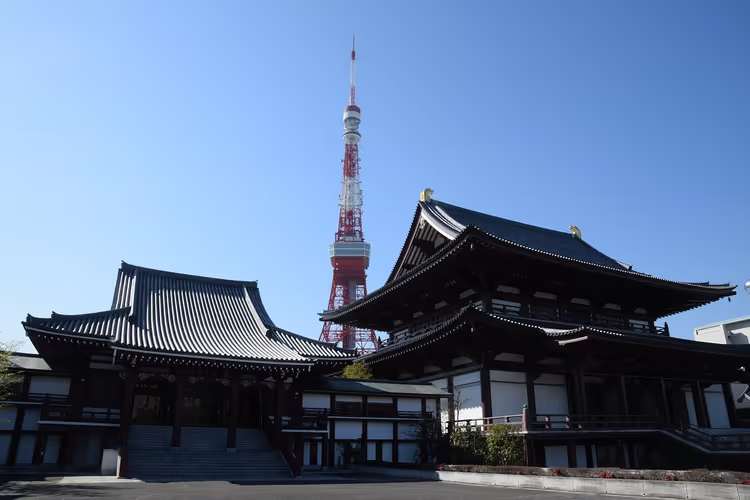
Japan is hard to imagine without gardens. It's a separate art form that evolved over centuries.
The principles of garden design originated with Buddhist monks and took shape roughly between the 8th and 18th centuries. Walking through Happo-en garden, you'll hear how water, stone, and plants are connected. Every element here has meaning.
Cherry blossoms, wisteria, and azaleas sit alongside small ponds and winding paths. Decorative stones and rare tree species add depth to the picture. Time is set aside for lunch at a small cafe.
- Duration: about half a day.
- Price: lunch at the cafe is paid separately.
5. Ghibli Museum in Mitaka
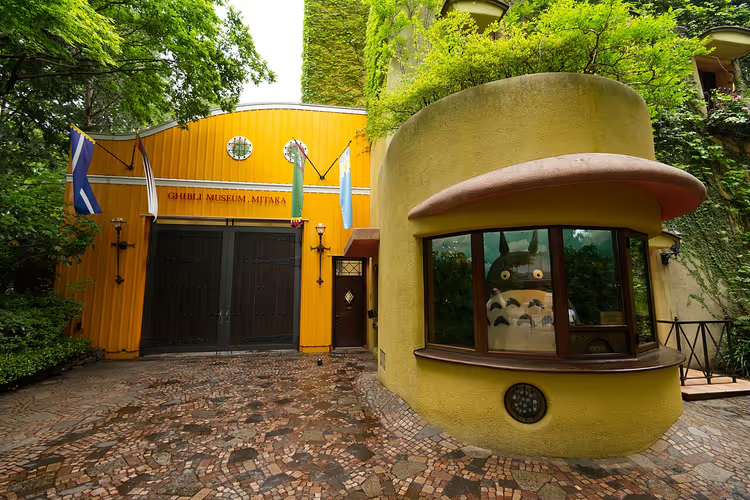 © Maarten Heerlien from Voorschoten, The Netherlands · CC BYPhoto: Maarten Heerlien from Voorschoten, The Netherlands, CC BY (https://creativecommons.org/licenses/by/2.0), Wikimedia Commons
The world of Hayao Miyazaki's animation in one building. Families from all over the world come here.
Tickets are sold only by advance reservation; you can't buy them on site. Sales open on the 10th of the previous month at 10:00 Japan time (as of 09/2026, official museum website). The museum is closed on Tuesdays and open from 10:00 to 18:00. Prices: 1,000 ¥ for adults, 700 ¥ for ages 13-18, 400 ¥ for ages 7-12, and 100 ¥ for children ages 4-6 (as of 09/2026, official Ghibli Museum website).
The third floor houses a real artist's studio. It displays sketches and drafts of Miyazaki's characters. Kids love running through the secret staircases and looking for hidden doors, while adults recognize scenes from "My Neighbor Totoro," "Spirited Away," and "Princess Mononoke."
- Who it's for: families with children and anime fans.
- The catch: you can't buy a ticket without booking in advance.
find a tour of Tokyo's museums.
6. Tokyo and the sea
Life in the Japanese capital is closely tied to the sea. The shortage of land forced construction directly in the bay.
Reclaiming the sea began back in the Meiji era. Residential districts, the port, warehouses, and industrial zones pushed the water out. That's how skyscrapers on reclaimed land and the man-made island of Odaiba, which grew on the site of a massive landfill, came to be.
The walk starts at Tokyo Tower and goes through the park by the Rainbow Bridge. The itinerary includes museums of science and technology, the city sewer system, and the history of the automotive industry. Further on, arcade games at a large entertainment center and a Ferris wheel await you. In the evening, the figure of the giant Gundam robot lights up by the Rainbow Bridge.
- Price: museum and attraction admission is paid separately.
- Who it's for: those who want to see modern Tokyo by the water.
7. Ueno Zoo
 © Daniel Ramirez · CC BYPhoto: Daniel Ramirez, CC BY (https://creativecommons.org/licenses/by/2.0), Wikimedia Commons
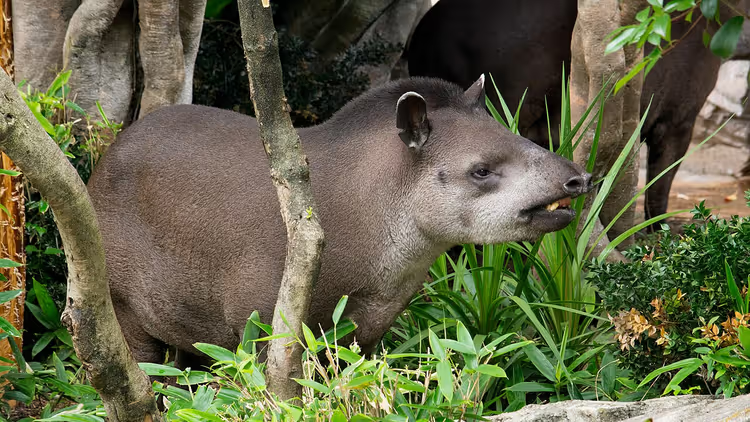
Tokyo's oldest zoo opened more than a century ago. It occupies part of Ueno Park in the city center.
An adult ticket costs 600 ¥, children under 12 enter free (as of 09/2026, zoo ticket page). The zoo is closed on Mondays unless Monday is a public holiday. There are no more pandas here: the last two, twins Xiao Xiao and Lei Lei, returned to China in late January 2026 (as of 09/2026, zoo blog).
The spacious enclosures are home to African and Indian lions, giraffes, elephants, and rare aye-aye lemurs. After the war, a monument to the animals that died was erected on the grounds. Because of frequent earthquakes, staff regularly run animal rescue drills.
- Who it's for: families with children, the visit takes about two hours.
- The catch: closed on Mondays, and there are no more pandas at the zoo.
8. Ginza food tour
 © 663highland · CC BY-SAPhoto: 663highland, CC BY-SA (https://creativecommons.org/licenses/by-sa/4.0), Wikimedia Commons
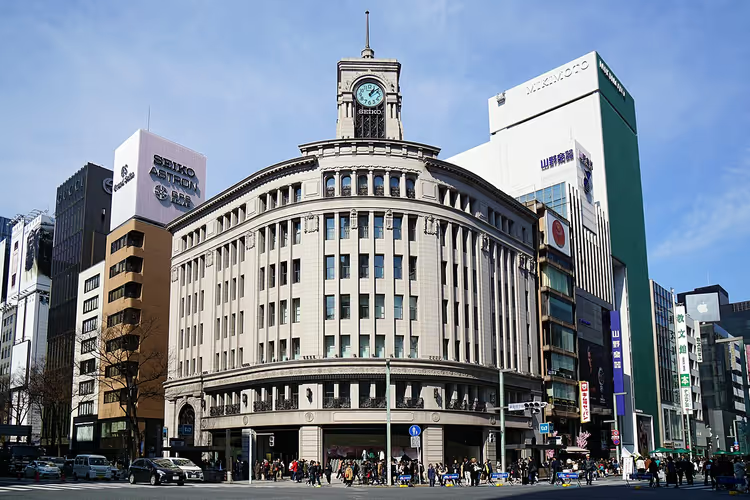
A culinary journey through Tokyo's most expensive district. You sample Japanese cuisine with a guide.
The route is built around sushi. At a good restaurant, you'll hear the story of a dish that dates back to the Edo period. Ingredients are seasonal, so the set of dishes changes from month to month. A special tea is usually added to the meal and paid for separately.
Those who want can try Kyoto-style dishes: lots of vegetables, thinly sliced fish and meat, rice. If you don't have time for lunch, a similar set of ingredients and chopsticks is sold at any large department store in the district.
- Who it's for: those who want to understand Japanese cuisine.
- Price: lunch here is noticeably more expensive than the city average.
- The catch: tea and drinks are often billed separately.
9. Day trip to Kamakura and Yokohama
 © Takuro1202 · CC BY-SAPhoto: Takuro1202, CC BY-SA (https://creativecommons.org/licenses/by-sa/3.0), Wikimedia Commons
Two coastal cities in one day. This is where a picture of samurai-era Japan comes together. Kamakura was the first capital of the military rulers.
The city is home to its main shrine, Tsurugaoka Hachimangu. The guide explains how the samurai class emerged, how land was divided between the emperor and the shogun, and how the wars of ancient Japan unfolded.
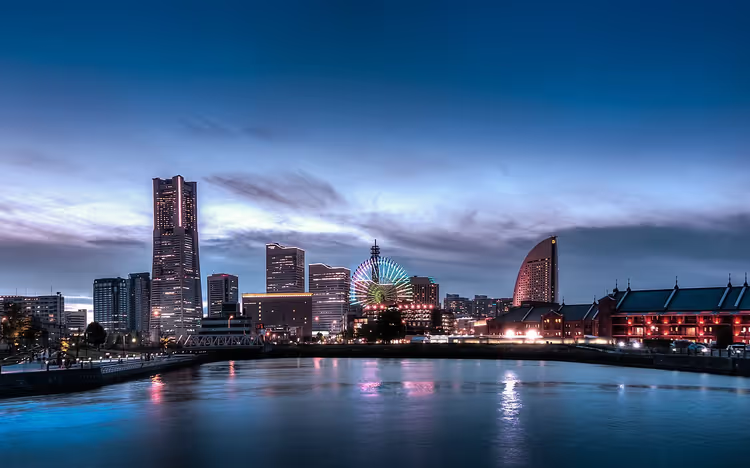
In Kamakura you'll also see the Hasedera temple complex and the Great Buddha statue. The bronze figure was cast in 1252, and entry to the Kotoku-in temple grounds costs 300 ¥ (as of 09/2026, official website). The road then leads to Yokohama, to the Sankeien garden park. The day ends at the Landmark Tower observation deck with a panoramic view of the port and dinner in Chinatown.
- Duration: a full day.
- Price: transport, entry tickets, and lunch are paid separately.
- Who it's for: those interested in history and wanting to see the sea.
10. Day trip to Nikko
 © Koichi Sato · CC BY-SAPhoto: Koichi Sato, CC BY-SA (https://creativecommons.org/licenses/by-sa/4.0), Wikimedia Commons
A day among mountains and temples not far from Tokyo. Nikko is worth seeing if you have more than one free day in Tokyo.
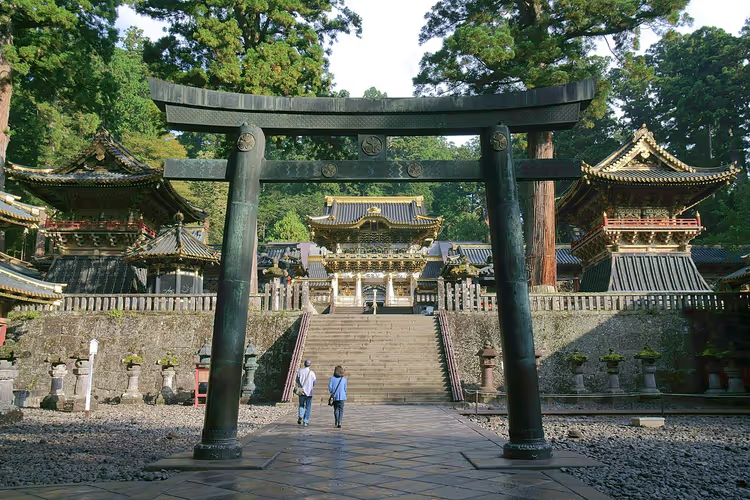
The journey starts by train, then continues on a local bus. It climbs up a winding mountain road high into the hills. Around you are a mountain lake, dormant volcanoes, waterfalls, and hot springs. The town itself dates back to the 8th century.
The main stop on the route is the Shinto shrine Toshogu. Over the course of the day you'll also hear about the Futarasan, Taiyuin, and Rinnoji temples, which are on the World Heritage list. On the way back, you can soak in the hot springs at a local hotel. The shinkansen is a convenient way to return home.
- Duration: a full day.
- Price: round-trip transport, entry tickets, and lunch are paid separately.
- Not for: those with only one free day in Tokyo.
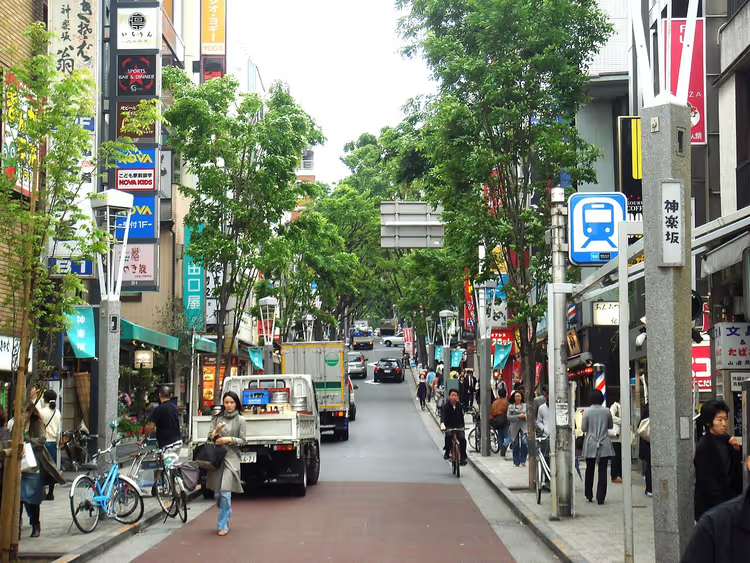
11. Kagurazaka: food tour with lunch and shopping
 © PHGCOM · CC BY-SAPhoto: PHGCOM, CC BY-SA (https://creativecommons.org/licenses/by-sa/4.0), Wikimedia Commons
A private walk through a district that has kept the spirit of old Edo. It runs on weekdays and Saturdays, by advance request only.
Without a reservation, it's hard to get into a well-known kaiseki-ryori restaurant. This is a meal with frequent changes of dishes, once served at tea ceremonies. Chefs cook according to the season and use unusual ingredient combinations, including wagashi sweets.
Small portions are served on special tableware and look like works of art. Without a guide's explanations, it's easy to get lost in the order of serving. Before ordering, you'll be asked about the ages of your party: many restaurants don't allow small children. The guide tells the history of the district: in the Edo period it was a privileged samurai area, later it was called the "geisha quarter," and over time it became the city's culinary center.
- Duration: about three and a half hours.
- Price: one of the most expensive walks in this selection, check the exact price when booking.
- Not for: families with small children, many restaurants don't allow them.
- The catch: without a request in advance, you can't get into the restaurant.
12. Tokyo: history and modernity
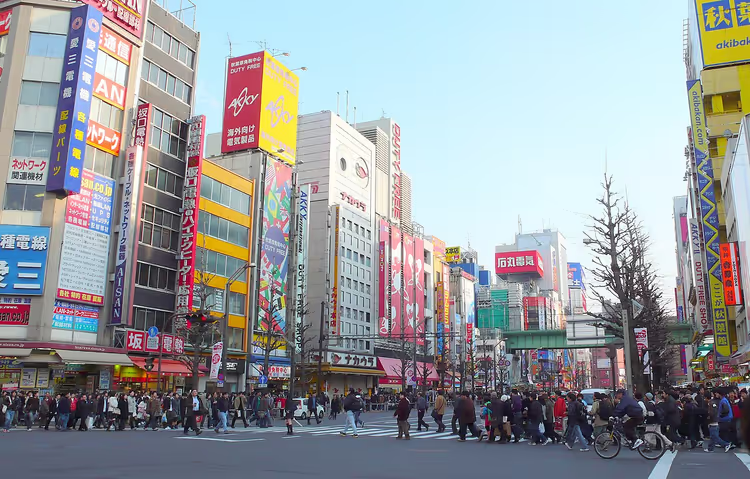
The first day in the city is often disorienting. The pace, scale, and distances between districts require a plan. A guide helps you get your bearings and shows the key sights.
The route starts in Shinjuku, a business district with skyscrapers and an unusual city hall building. During the day it's full of thousands of office workers; in the evening the district lights up.
Next you walk through Ginza, which is called the "silver mint." Designer shops operate here, and the Imperial Palace stands nearby. Senso-ji Temple is in a different district, in Asakusa. The walk continues on Odaiba, a man-made island of the future with unusual architecture and waterfronts. A Ferris wheel operates there, and a giant Gundam robot stands nearby.
- Duration: half a day or more.
- Price: expensive, and entrance tickets are not included.
- Who it's for: first-time visitors to Tokyo.
13. Cherry blossoms in greater Tokyo
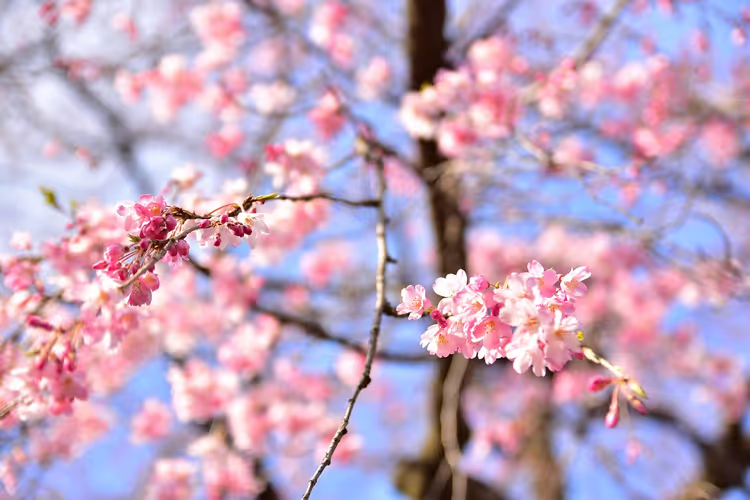
The ancient festival of hanami comes from the depths of time. It is tied to admiring cherry blossoms in bloom. The flower's five petals are associated with five wishes: longevity, joy, peace, luck, and prosperity.
Japan has a special blossom forecast that helps you plan a trip. Blooming lasts about three weeks, so it's better to check the dates in advance.
During the walk, the guide shows small gardens hidden in residential neighborhoods. On the waterfront, the trees are lit up at night, and that's a separate spectacle. You can admire cherry blossoms not only in the center but also in the city's outskirts.
Hanami doesn't last long, so locals try to catch every clear night. In parks and on waterfronts, people lay out food under the trees and turn on the lights in the evening. During the day, groups gather at popular spots, and finding a free spot by the water becomes difficult. Come early in the morning, before tours start: then you'll have time to take photos without crowds and walk along the canal to the old quarters. On the other hand, the evening lighting turns an ordinary alley into the district's main attraction.
- Who it's for: those visiting in spring.
- The catch: exact blooming dates change every year, check the forecast before your trip.
14. Mount Takao hike
 © Antilovsky · CC BY-SAPhoto: Antilovsky, CC BY-SA (https://creativecommons.org/licenses/by-sa/4.0), Wikimedia Commons
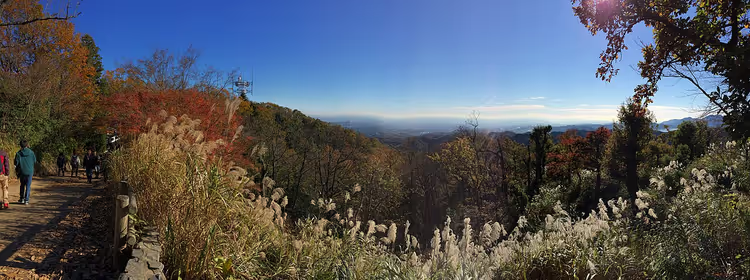
A day trip to Mount Takao and its temples. Here the city gives way to forest within an hour of travel.
Trails lead through pristine forest. According to legend, tengu, long-nosed mountain creatures, once lived here. The Yakuo-in temple complex is dedicated to them and stands among mountain paths, next to octopus cedars whose roots jut out of the ground. Sometimes yamabushi monks appear along the way.
From the summit, a panorama of Mount Fuji opens up. It's better to bring lunch with you: the local restaurant always has a line. Going down by funicular is convenient for an extra fee, while the train ride to the mountain is included in the price.
- Duration: a full day.
- Price: the funicular down is paid separately.
- Who it's for: those who want to get away from the city and walk.
15. Walk through the lower city
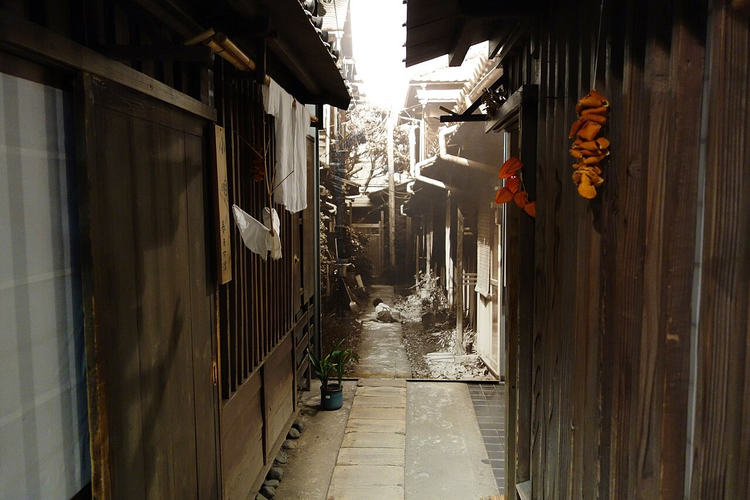
The historic Shitamachi district is older than the capital itself. The old spirit of Japan has been preserved here.
Artisans and merchants settled here, while wealthy homes, offices, and shopping centers were built in the Upper City. The district suffered heavily during the war, and reinforced concrete buildings rose in place of wooden houses. Narrow streets turned into wide avenues.
Amid the concrete city, the Japanese have preserved quiet corners: shrines, chapels, pagodas, and Ueno Park. You will see Kan'ei-ji Temple and the Toshogu Shrine dedicated to Ieyasu Tokugawa. The ensemble is decorated with carvings and gold leaf. The guide will also tell you about Benten-do Temple, which stands on an island in Shinobazu Pond in honor of the goddess of water and wisdom. You can continue at the Tokyo Skytree tower and in Japanese baths.
- Price: transportation and lunch are paid separately.
- Who it's for: those who have already seen the center and want old Tokyo.
16. Kamakura: temples and sea breeze
 © Daniel M. Dobkin · CC BY-SAPhoto: Daniel M. Dobkin, CC BY-SA (https://creativecommons.org/licenses/by-sa/4.0), Wikimedia Commons
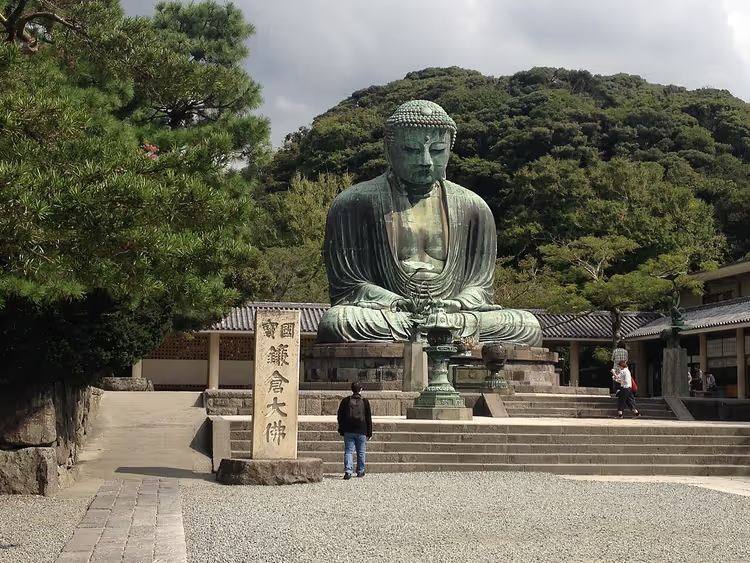
A trip to the first capital of the military rulers. The city of temples stands by the ocean and is suited for a relaxed day. You step into the atmosphere of 13th-century Japan.
At Hasedera Temple, a garden rises in tiers, with a pond and the Kannon Hall with a statue of the deity below. The upper tier is filled with the "hydrangea path," cherry blossoms, lilies, and daffodils. The Great Buddha Daibutsu stands nearby.
At the main Shinto shrine Tsurugaoka Hachimangu, the history of the Kamakura shogunate era is told. A cherry blossom avenue leads to the shrine. The walk involves a lot of walking and is not suitable for everyone.
- Duration: full day.
- Price: transportation and lunch are not included.
- Not for: parents with elementary school-age children, the route is difficult and long.
- The catch: a lot of walking and information in one day.
17. Safari and orangutans at Tama Zoo
 © Dddeco at Japanese Wikipedia · CC BY-SAPhoto: Dddeco at Japanese Wikipedia, CC BY-SA (http://creativecommons.org/licenses/by-sa/3.0/), Wikimedia Commons
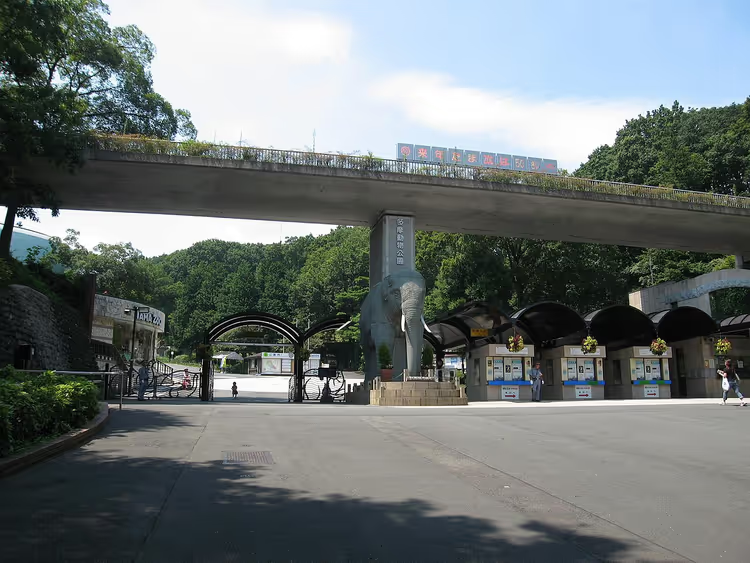
A park in the town of Hino, about an hour's drive from Tokyo. For more than half a century it has operated as a "paradise for animals."
The territory is divided into four zones: African, Asian, Australian, and the insect zone. The boundaries between enclosures are almost invisible, creating the feeling of traveling through the wild. Especially when riding the Lion bus safari vehicle.
In the African zone you can see lions and zebras, and kangaroos live in the Australian zone. Nearby live koalas, red pandas, snow leopards, Tasmanian devils, and Asian elephants. In the Asian zone, orangutans walk above visitors' heads on a ropeway, an attraction called "Sky Walk." In the Insect House, rare butterflies fly, and in August there are nighttime walks through the park.
- Who it's for: families with small children, there are many places to rest and eat.
- Price: transportation is not included.
- The catch: the guided walk takes almost the whole day.
18. Kawagoe: a journey to ancient Japan
 © 江戸村のとくぞう · CC BY-SAPhoto: 江戸村のとくぞう, CC BY-SA (https://creativecommons.org/licenses/by-sa/4.0), Wikimedia Commons
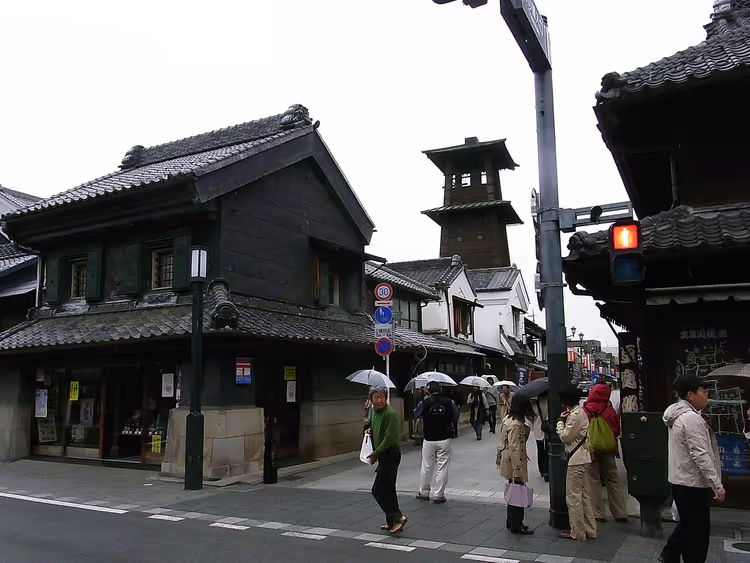
A town called "little Edo." It was spared by earthquakes and wars, so the old buildings have been preserved.
The streets are lined with kura merchant houses with special fire protection. At the Toki-no-Kane bell tower, an old bell rings several times a day, and it has long become a symbol of the city. There are many Shinto shrines, Buddhist temples, and castle ruins here.
At the Kita-in temple complex, a museum operates where you can try on samurai clothing. A Japanese garden is laid out nearby, and monks perform a fire-lighting ritual for granting wishes. At the end of the walk, you stop at shops for souvenirs and tea. The town is easily reached by train from Shinjuku Station.
- Duration: full day.
- Price: train ticket is paid separately.
- Who it's for: those who want to see wooden Japan.
19. Tokyo sightseeing tour
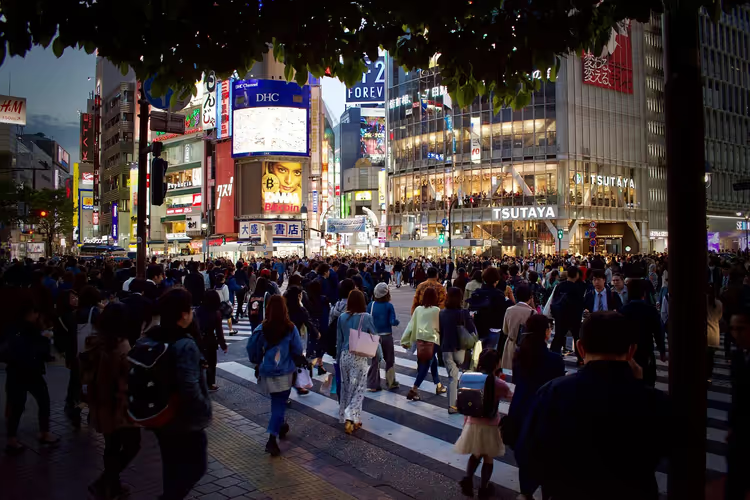
Getting to know the city in one walk through several districts. The guide will show you the highlights in one day.
The basic version of the route includes the main points:
- Senso-ji, the oldest Buddhist temple with huge lanterns at the "Thunder Gate."
- Tokyo Skytree tower with the city's highest observation deck.
- Tokyo Tower and the Shibuya district, the center of fashion.
- Shinjuku with the world's busiest railway station.
- Tsukiji Market and Akihabara, the largest electronics district.
- A traditional Japanese garden, Ginza, Odaiba, and the Ghibli Museum.
The walk ends in the Ueno district with temples, museums, and the famous cherry blossom avenue.
- Duration: from half a day to a full day, depending on the program.
- Price: entrance tickets and transportation are paid separately.
- Who it's for: first-time visitors to the city.
20. Around the Yamanote Line loop
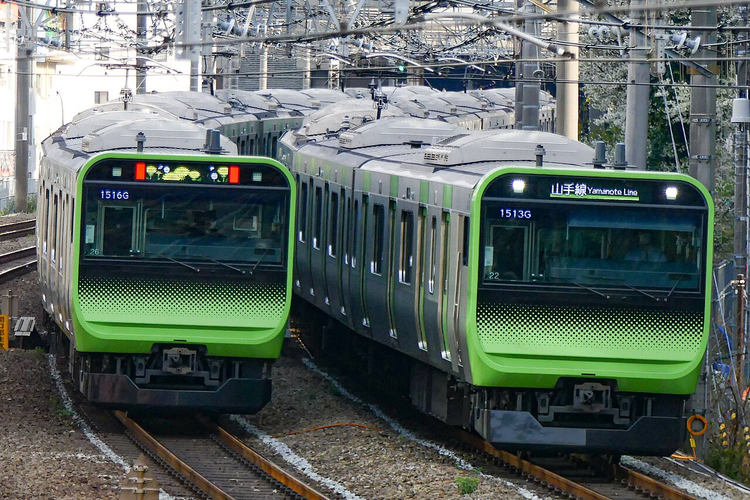 © MaedaAkihiko · CC BY-SAPhoto: MaedaAkihiko, CC BY-SA (https://creativecommons.org/licenses/by-sa/4.0), Wikimedia Commons
A sightseeing ride on the JR loop line. This is a convenient way to build your own route around the city.
There are many famous places along the loop. In Shinjuku City, the metropolitan government building has an observation deck with a city panorama, and Kenzo Tange sculptures stand in the building. At Meiji Jingu Shrine, you will be told about Emperor Meiji's role in the country's reforms. Further along the loop are Tokyo Station, the Imperial Palace, and Ueno.
Ueno Park is considered the country's first public park, opened more than a century and a half ago. It preserves a samurai grave with a monument to the fallen, Benzaiten and Toshogu shrines. In summer, lotuses bloom on the ponds. The route ends on the Ameyoko shopping street.
- Price: transportation and lunch are paid on your own.
- Who it's for: those who want to ride around the city and get off wherever they like.
21. The sacred bridge and Nikko
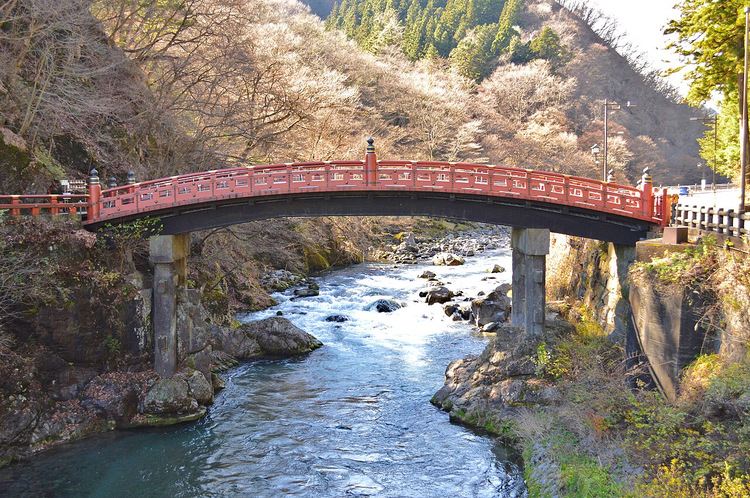
A trip to the city of pilgrims is considered almost mandatory. It is beautiful here at any time of year.
Nikko's main landmark is the red "Sacred Bridge" Shinkyo. According to an ancient legend, it was created by two snakes, and the gleaming lacquer on its railings became a symbol of the city. At the start of the walk you will see the bridge and the river below it, and then the climb to the temples begins.
- Who it's for: those who want to see one of the country's symbols.
- Price: temple admission and transportation are paid separately.
22. The Tokyo you've been waiting for
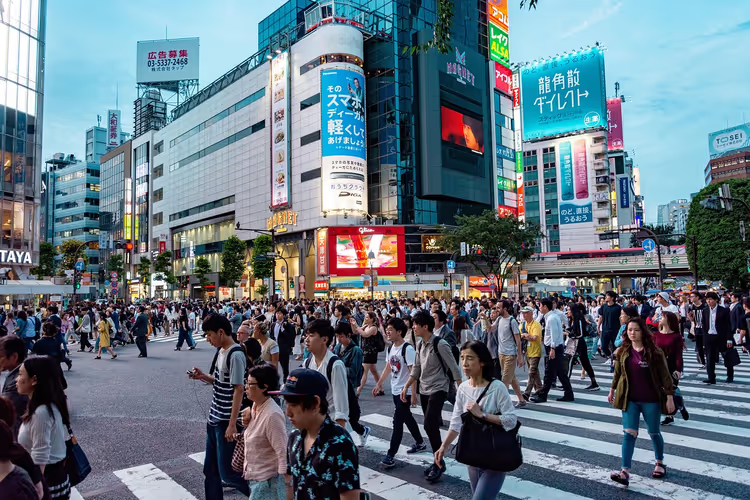
Your first impression of the country forms before the trip even begins. Here you can see it come to life.
The walk starts in Ginza, one of the most expensive streets in the world. It once sold luxurious kimonos, and now it is home to boutiques and restaurants with glittering storefronts. Colorful lamps glow in the windows of the Kabuki-za theater, one of Japan's most beautiful buildings.
You can take in the city and Tokyo Bay from the Rainbow Bridge and from the Ferris wheel on Odaiba. Transportation, museum tickets, and cafe visits are paid separately.
- Who it's for: those who want to feel the city's rhythm with a guide.
- Price: transportation and admission tickets are not included.
23. Fuji-Hakone-Izu National Park
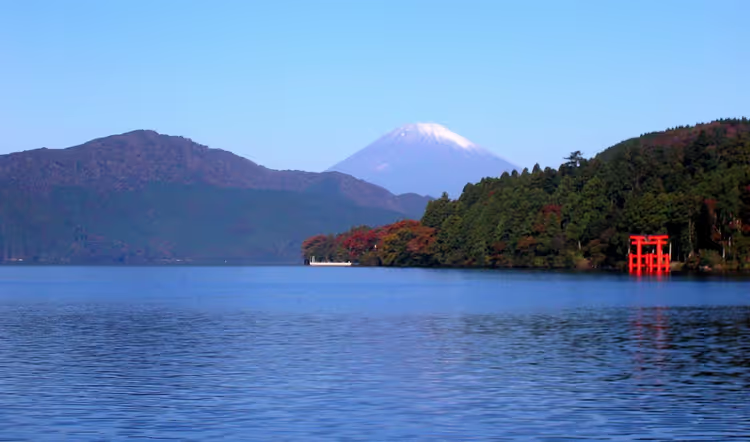 © Unknown author · CC BY-SAPhoto: Unknown author, CC BY-SA (http://creativecommons.org/licenses/by-sa/3.0/), Wikimedia Commons
A day in the national park around Mount Fuji. The volcano's perfect shape is visible in clear weather.
Ancient cedars are reflected in the clear mountain lakes. In the Owakudani valley, hot springs rise to the surface, and steam hangs over the slopes. The trip shows a side of the country with untouched nature right next to the metropolis.
Tickets for observation decks and the ropeway are purchased on site, as is lunch at a cafe. The start is usually from the town nearest to the park, and the meeting point is agreed in advance.
- Duration: a full day.
- Price: tickets for observation decks, the ropeway, and lunch are paid on site.
- Who it's for: those who want to see Fuji and nature.
24. Following the places of the Nichiren-shu school
A route through Buddhist sites connected with the teachings of Nichiren. This teaching is based on nonviolence and equality.
The preacher's final resting place is on the way to the hot springs, in the Ikegami Honmonji, Ota-ku, and Shinagawa areas. These temples have preserved the ancient traditions of the school.
The road to them is decorated with numerous statues of Nichiren, thousands of lanterns, and altars with figures of sacred foxes. You will hear the history of the Temple of Five Buddhas and the story of the enlightened one's life. This kind of introduction helps you understand the traditions and experience of the people who built a strong country.
The walk takes several hours and goes through quiet neighborhoods where tour buses rarely reach. Wear comfortable shoes: you'll have to walk a lot between temples, and part of the route goes along ordinary residential streets. In return, you'll see Japanese religion without crowds and souvenir shops.
- Duration: several hours.
- Price: transportation and entrance tickets are not included.
- Who it's for: those interested in the religion and history of Japan.
25. Tokyo photo walk
A guided walk through the city's best viewpoints. Useful for those who want to bring home striking photos.
The route introduces you to the Tokyo Photographic Art Museum and the work of Japanese masters who photographed the country from unusual angles. The program includes a Japanese garden, an old alley with graffiti-covered walls, observation decks, blooming sakura, and lotuses.
At the end, you can have tea and try Japanese dishes at a photo cafe. There are many albums and textbooks on photography here. A memorable photo session with a photographer is available on request; discuss the cost on site.
- Who it's for: those who love photography.
- Price: the photo session is paid separately.
Tours and tickets in Tokyo
Guided tours, skip-the-line tickets and activities — most offers can be cancelled free of charge.
See offers on GetYourGuideThe widget loads once you give your consent.
⁉️🤔 Frequently asked questions
How many hours do you need for one Tokyo tour?
Short walks take about four hours, and during that time you can cover Asakusa and Odaiba. Sightseeing routes across several districts run from five to eight hours. For trips to Kamakura, Nikko, Mount Takao, or Fuji Park, set aside a full day, because travel time eats up a noticeable chunk of the day.
Are museum admission and lunch included in the tour price?
Almost always no. On private walks, you pay separately for transportation, entrance tickets, and lunch, as well as the guide's travel. Package tours can be an exception. Check the list of inclusions when booking so the final total doesn't come as a surprise on the spot.
How do I buy a Ghibli Museum ticket in advance?
Only in advance and online. Tickets are not sold on site; sales open on the 10th of the previous month at 10:00 Japan time (as of 09/2026, ticket sales page). The museum is closed on Tuesdays.
Is Ueno Zoo open and are there pandas there?
The zoo is open Tuesday through Sunday and closed on Mondays unless it's a holiday. There are no more pandas at Ueno: the last two returned to China in January 2026.
Can you fit two tours into one day?
Usually no. Routes overlap in time and districts, and getting between points in Tokyo takes a lot of time. A realistic plan is this: a sightseeing walk through the center on day one and one out-of-town trip on day two. Don't try to squeeze both Kamakura and Nikko into a single day.
In short: what to book
In Tokyo, it's easy to burn a day on transit. A ready-made route with a guide saves time and explains context that isn't on the signs. Choose by time: a short walk for the first day, a full day for Kamakura or Nikko, a separate outing for Mount Takao and Fuji Park.
If you have one day in the city, take a sightseeing tour of the center. If you have two, add Asakusa and Odaiba in the morning and leave the evening for a spa. For families with children, the Ghibli Museum and Ueno and Tama zoos are a good fit. For history, choose Kamakura and Kawagoe; for nature, Mount Takao and Fuji Park.
Before your trip, check opening hours and prices on official websites: they change. find a Tokyo tour on GetYourGuide.

A small editorial team writing guides for independent travel. We travel ourselves, but we haven’t been everywhere, so we check prices, opening hours and how to get there against official sources.