
















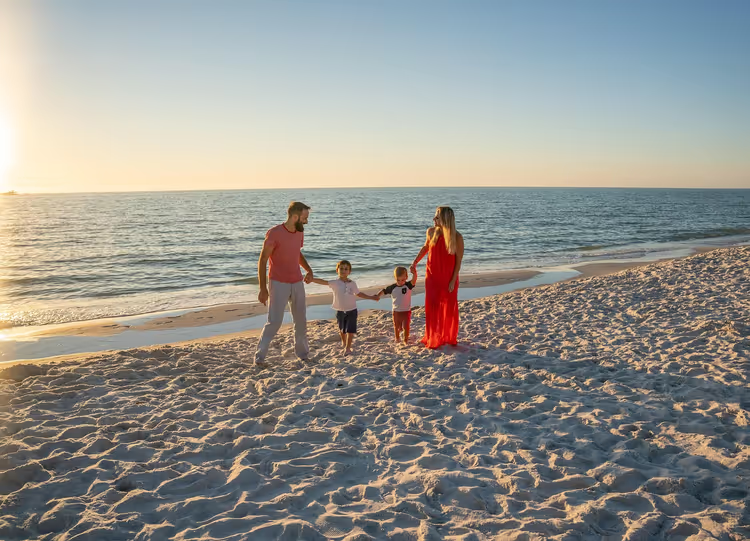
Seaside vacation with kids: how to plan a stress-free trip
A vacation with kids is rarely relaxing. A long trip, heat, unfamiliar food: a child gets tired faster than you can grab the water bottle.
The seaside is no exception. Children's skin is thinner and reacts more sharply to UV rays, and their immune system is still developing. According to the WHO, excess sun exposure in childhood increases the risk of skin cancer later in life, and protection is needed starting at a UV index of 3 or higher.
A trip can be planned in advance, and then it goes smoothly. Below is a practical plan. We'll cover when to go, how to choose a location, and what to pack.
Ad: this article contains affiliate links. We earn a commission if you book through them, at no extra cost to you.
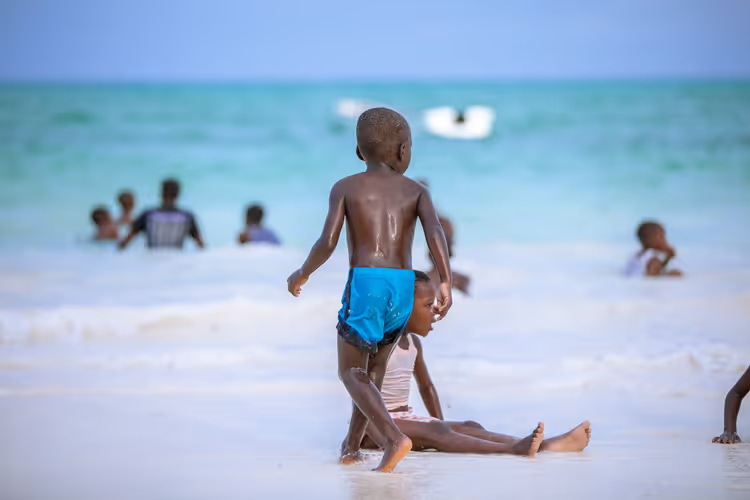
Seaside vacation: what to consider with kids
💡 In short:
- Plan your trip for late August or September: the heat eases off and there are fewer people.
- Bring sunscreen with SPF 30 or higher, a sun hat, and a long-sleeve shirt.
- Keep your child in the shade during hot hours and offer water more often than at home.
- Sun protection tips are aligned with WHO recommendations (as of 09/2026, source).
A beach vacation seems like the easiest option for a family. Anyone can sunbathe and swim. But what works for an adult often doesn't suit a child. Kids tire faster, handle stuffy heat less well, and react more sharply to climate changes.
A child's skin is thinner than an adult's. That's why sunburn happens faster, and the damage accumulates for years. Doctors advise protecting children from direct sun rather than chasing an even tan. According to the World Health Organization, simple protection works better than any after-sun cream. Shade, a hat, and clothing cover more than a single tube of sunscreen.
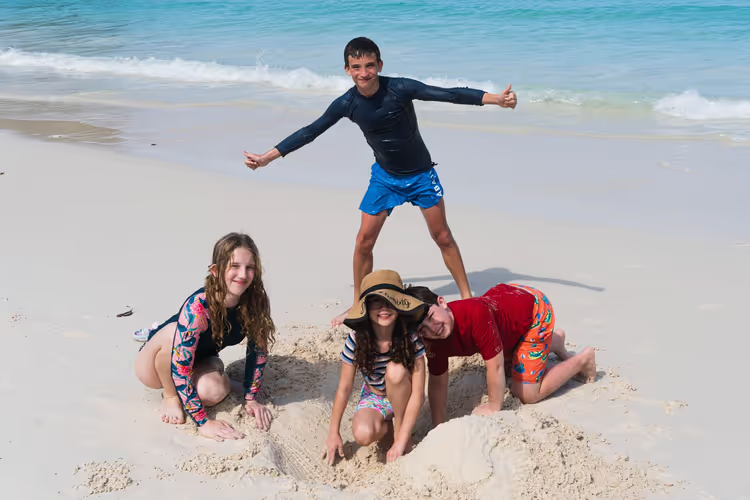
One more thing. At the seaside, a child is constantly on the move. They run on the sand, swallow water, and touch everything in sight. That's part of the vacation, but it needs supervision. A towel, a spare shirt, and wet wipes in your bag solve half the problems.
The sea is good for you, but it doesn't replace attention. Check shade, water, and your child's mood every half hour.
How to choose a location and time for your trip
The best time to go to the seaside with kids is the velvet season. It runs from late August through September. During these months, the sun no longer scorches the sand, while the water stays warm enough for swimming near the shore.
There's a second advantage. At the end of the season, there are noticeably fewer vacationers. On a half-empty beach, it's easier to keep an eye on your child, and the risk of catching an infection is lower. There are almost no lines at cafes either.

July is less suitable for a family trip. These are the hottest weeks, and the beach is packed to the limit. The water near the shore quickly turns murky because dozens of people are swimming in it at once. That kind of vacation exhausts both you and your child.
Now about the location. The choice is yours here. Look at three things: a gentle slope into the water, shade from trees or umbrellas, and a playground nearby. If you're going for the first time, pick a quiet resort without loud parties.
A toddler needs shade constantly. That's why a hotel with a pool and a garden is more convenient than a cramped room right at the water's edge. You're always close to your child and to cool shade. You can find a family hotel on Trip.com in advance.
Good accommodation saves your energy. It handles shade, water, and rest for you, leaving you free to just walk and swim.
Vacation with a young child: age and travel
There's no single age at which a child is allowed to go to the seaside. The decision should be made with a pediatrician, because a lot depends on the child's health and temperament. But long trips are hard on young children.
With an infant, a long-distance trip is almost always stressful. A plane or bus, a change of climate and time zone disrupt the usual routine. The child sleeps poorly and cries more. Instead of resting, you end up solving new problems.
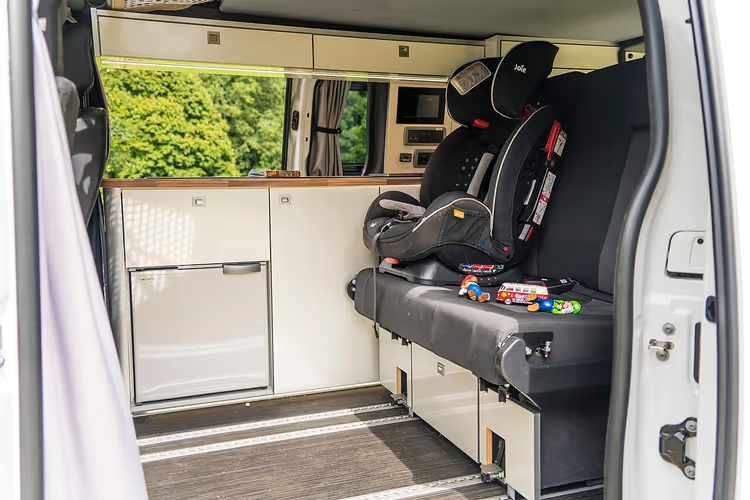 © CruiseAmerica · CC BY-SAPhoto: CruiseAmerica, CC BY-SA (https://creativecommons.org/licenses/by-sa/4.0), Wikimedia Commons
The journey itself is tiring. Bring water, light snacks, and a favorite toy to keep your little one occupied on the way. You need internet both on the road and at your destination, to open a map or call a doctor. It's worth setting up an eSIM in advance.
A separate note on acclimatization. A child's body needs time to adjust to a new climate. On a short vacation, they just start adapting and then immediately head home. Plan the trip with extra time and don't rush through excursions in the first days.
Leave the first days open. Swim in the morning and evening, and rest in the shade at midday. This way your child adjusts to the heat more gently, and you avoid tears and tantrums. Short walks are better than long outings. Your little one will show you when they've had enough.
Routine, food, and a children's first aid kit
Any change is hard for a child. So don't stage a revolution in diet and daily routine on vacation. Keep the usual sleep times and familiar meals. Rebuilding daily life from scratch in an unfamiliar city is harder than maintaining what your child is used to at home.
If your child is used to napping after lunch, give them that opportunity. A shifted routine leads to tantrums and a ruined evening. You yourself feel calmer when your child is well rested.
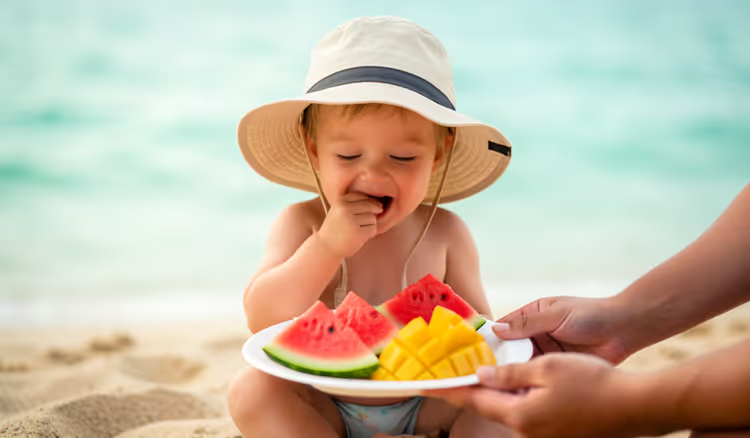 AIIllustrative image: AI-generated
Sweets are sold everywhere on the beach. Vendors advertise ice cream so persuasively that it's hard to resist. You have the right to say no. Uncontrolled sweets kill appetite and hit the stomach. The same goes for soda, which doesn't replace water.
Prepare at least some of the food yourself. Broth, fresh vegetables, and fruit from the market are cheaper and safer than three restaurant meals a day. Your child eats familiar food and fusses less at the table.
Pack a first aid kit in advance, while still at home. Bring age-appropriate fever medicine, anti-diarrhea medication, band-aids, antiseptic, and after-sun cream. Take prescription drugs only on a doctor's advice. It's easier to complete the list at home than to search for a pharmacy in an unfamiliar city. Check expiration dates and dosages. It takes five minutes before departure.
Vacation with a teenager: how not to get in the way
With a teenager it's more complicated, and that's normal. During adolescence, new interests, friends, and first crushes appear. They've outgrown the role of a child being watched on the beach.
The main rule is simple. Don't restrict their freedom. Give your teenager personal space and time to spend with friends. It benefits both them and your relationship.
Parents often feel anxious, and that's understandable. Agree on simple boundaries: where they'll be, when they'll be back, and how they'll stay in touch. Such rules provide freedom without chaos and prevent unnecessary arguments.
If you give a teenager a choice, they're more likely to find time for family too. A shared outing or a dinner by the sea then becomes their decision, not an obligation.
Considerations for children with health issues
Before packing, honestly assess your child's health. There are conditions for which a seaside vacation is contraindicated. This should be discussed with a doctor, not decided by guesswork.
Let's talk separately about allergies. You don't need to skip the seaside, but timing matters. The travel dates should be chosen based on the type of allergy, together with a doctor. By late August, meadow grasses have finished blooming, but in Europe this is the peak season for ragweed. For a child allergic to ragweed, late August and September are less suitable.

For a trip with a child with health issues, compare insurance options in advance. A policy with illness coverage should be purchased while still at home: not every plan covers treatment abroad. It's easier to arrange documents at home than to call the insurance company from vacation.
Even a healthy child needs a gentle pace. Don't rush through excursions, watch for overheating, and drink water. Excess sun and dehydration ruin a vacation faster than any cold.
Children's camp as an alternative to the seaside
Sometimes a vacation gets postponed, and your child is already looking forward to the trip. In that situation, a children's camp comes to the rescue. The only question is whether it suits your child.
Camp isn't for everyone. If your child easily gets along with peers and doesn't need constant supervision, it's a good option. If they're shy or attached to home, the trip may end in tears.
Take the choice seriously. Look at the program, food, medical support, and daily schedule. A good camp combines rest, sports, and health-focused activities. Popular sessions sell out early, so it's better to book a spot in the spring.
Ask your child about their interests. Recreation, sports, arts, or languages: this determines whether they'll go happily or not. A boring session will be remembered for a long time, and not in a good way.
For parents, it's also a break. During the session, you can close out work tasks, and by the time your child returns, you'll be able to give them more attention. The main thing is that camp brings joy, not just fills the vacation time.
⁉️🤔 Frequently asked questions
At what age can a child go to the seaside?
There's no single age; the decision is made together with a pediatrician. For a healthy preschooler, the seaside is usually fine. Start with a short trip and a quiet location.
Which season should I choose for a vacation with kids?
The best time runs from late August through September: that's the velvet season. The heat eases off, the water stays warm, and there are fewer vacationers. July is worth skipping, because these are the hottest weeks and peak crowds on the beaches. In early summer, the risk of overheating is higher for a child.
How do I protect my child from the sun?
Shade, a hat, and clothing protect better than sunscreen alone. Read more about protection in the section "Seaside vacation: what to consider with kids".
What should I put in a children's first aid kit?
The basic list is in the section "Routine, food, and a children's first aid kit". It's worth adding motion sickness medication.
How long should a trip with a child last?
A vacation that's too short doesn't give the body time to adjust to a new climate. How to spend the first days is described in the section "Vacation with a young child: age and travel".
Where can I send my child if the vacation didn't happen?
Consider a children's camp if your child is sociable and doesn't need constant supervision. A shy child would do better with a stay near home or a short weekend trip.
In short: what to book
A seaside vacation with kids works when it's planned. Choose the velvet season, a quiet location with a gentle slope and shade, keep your home routine, and don't forget sun protection.
If you have a toddler: pick a hotel with a pool and a garden, so you can be near your room during the day.
If you have a teenager: look for accommodation near activities for their age.
If you're going for the first time: start with a short trip and a quiet resort.
Find a family hotel on Trip.com for your destination and dates.
Take vacation time with a buffer. A calm child is your real rest.

A small editorial team writing guides for independent travel. We travel ourselves, but we haven’t been everywhere, so we check prices, opening hours and how to get there against official sources.