
















Glacier National Park: trails, glaciers and entry in 2026
The glaciers in Glacier National Park are melting rapidly.
In the mid-19th century there were about 150 of them; today 26 remain (as of 09/2026, National Park Service). The park covers 1,012,837 acres, with 175 mountains and 762 lakes.
Starting in 2026, the entry rules changed. Vehicle reservations were eliminated (as of 09/2026, National Park Service). Below we break down entry, routes, and overnight stays so you don't lose a day at a closed gate.
Ad: this article contains affiliate links. We earn a commission if you book through them, at no extra cost to you.
What to know before your trip
💡 In short:
- Vehicle entry: $35 in summer and $25 from November 1 through April 30, the pass is valid for 7 days (as of 09/2026, park fees page).
- No entry reservation is required in 2026, but parking at Logan Pass has a three-hour limit (as of 09/2026, 2026 entry rules).
- Going-to-the-Sun Road is open along its full length as of June 22, 2026 (as of 09/2026, road opening announcement).
- Prices and hours of operation: 09/2026, verified on the official website.
Two details tourists only learn about at the entrance. The park does not accept cash, so keep a card handy (as of: 09/2026, park fees). Visitors from outside the US over 16 pay an additional $100 per person if they don't have an annual pass or America the Beautiful (as of: 09/2026, park fees page).
A bit of history
The first people settled these valleys several thousand years ago. Native American tribes called the local ranges the "Backbone of the World."
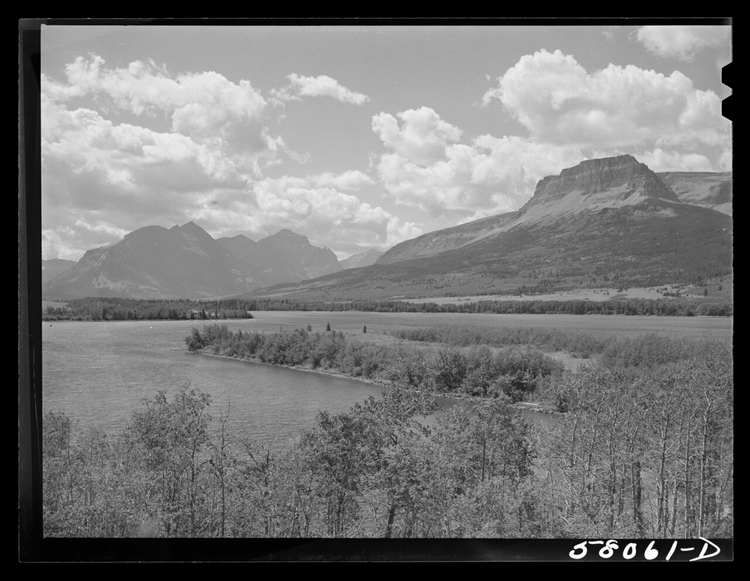
In the early 19th century, the Lewis and Clark Expedition passed through the area. Later, a trading fort appeared here, where travelers exchanged goods with Native Americans.
The national park was established on May 11, 1910 (as of: 09/2026, official park fact sheet). The Going-to-the-Sun Road was completed in 1932, and that same year the park was joined with Canada's Waterton Lakes to form the first international peace park.
In 1976, UNESCO designated Glacier a biosphere reserve, and in 1995 it was added to the World Heritage List (as of: 09/2026, National Park Service). So you're walking through an area with the highest conservation status there is.
Nature: lakes, glaciers, and wild animals
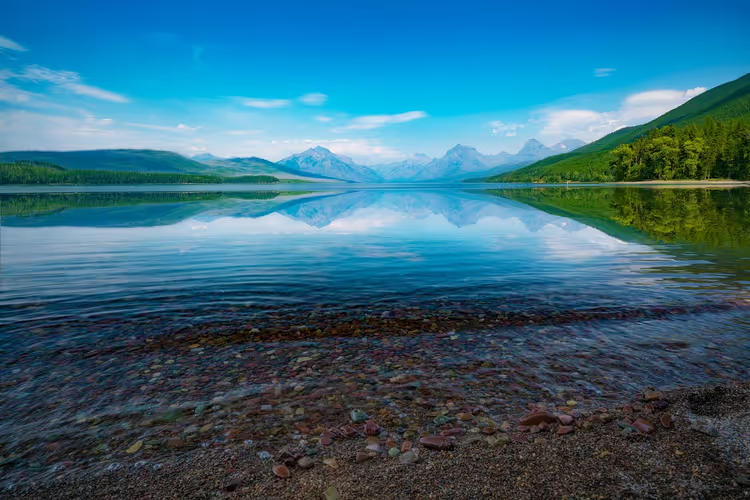
The park's largest lake is named McDonald. It stretches 15 kilometers in length and reaches depths of up to 141 meters (as of: 09/2026, park lake data). It's the most popular spot in Glacier, and it's always crowded here in summer.
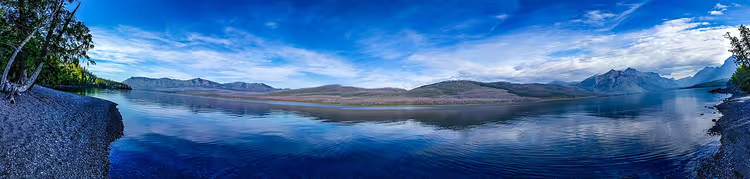 © Tony Webster · CC BYPhoto: Tony Webster, CC BY (https://creativecommons.org/licenses/by/2.0), Wikimedia Commons
Smaller lakes sit in glacial cirques, depressions on the slopes. Their water is light turquoise because of the rock flour left behind by glaciers. In total, the park has 762 lakes and 563 streams (as of: 09/2026, National Park Service).
Waterfalls come alive in June when the snow melts, and some of them dry up during the dry months. The most famous are Swiftcurrent, Bird Woman, and the falls at Lake McDonald.
Glaciers draw the most attention, and every one of them is shrinking (as of: 09/2026, park service glacier data). Scientists don't promise they'll survive in their current form, so it's worth visiting in the coming years.
Besides the landscapes, you will see real wild animals. The park is home to 71 mammal species and 276 bird species (as of 09/2026, National Park Service). Grizzlies, black bears, moose, wolves, bighorn sheep, and wolverines live here. The park's symbol, the mountain goat, is most often spotted on the rocks near Logan Pass.
There are also plenty of plants here: 1,132 vascular species and 858 non-vascular species (as of 09/2026, park vegetation data). In summer, the slopes are covered in wildflowers, which draw botanists and photographers.
For local tribes, the Glacier valleys were sacred land. Today the park is often compared to the Alps: the same ridges, glaciers, and turquoise lakes. The difference is that there are almost no large cities nearby.
Climate and when to go
Glacier has a mountain climate, and the weather can change within an hour. The higher you climb, the colder it gets. At Logan Pass, it is windy even in July, and snow can fall in any month.
The most stable season runs from late June through the first half of September. That is the window when the entire Going-to-the-Sun Road is open and most trails are clear of snow (as of 09/2026, season opening announcement).
In summer, daytime temperatures at the passes are cool and nights are cold. Bring a warm jacket, a hat, and shoes with good tread, even if you are leaving the city in hot weather.
The air in the park is clean: there are no large cities or factories nearby. That is why the lake water is clear, and at night you can see the Milky Way without urban light pollution.
Going-to-the-Sun Road and routes
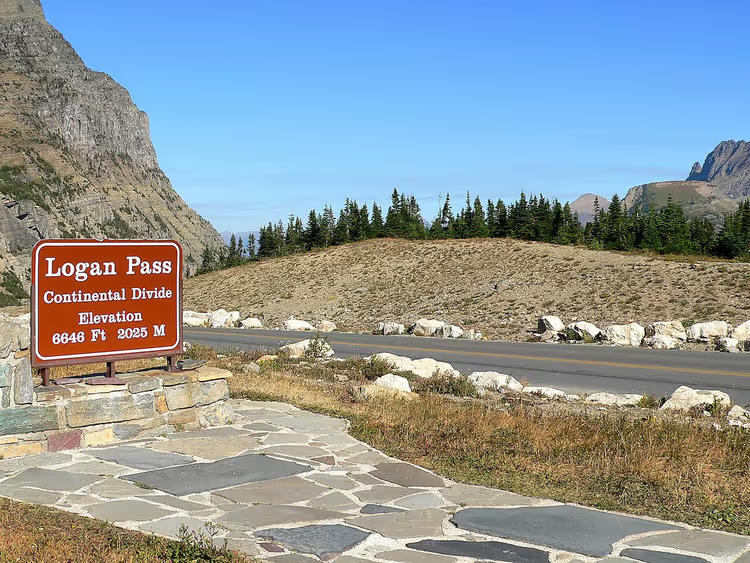
Going-to-the-Sun Road (Going-to-the-Sun Road) runs 50 miles across the entire park (as of 09/2026, Going-to-the-Sun Road status). It starts in the valleys and climbs to Logan Pass at an elevation of 2,025 meters (as of 09/2026, Logan Pass information).
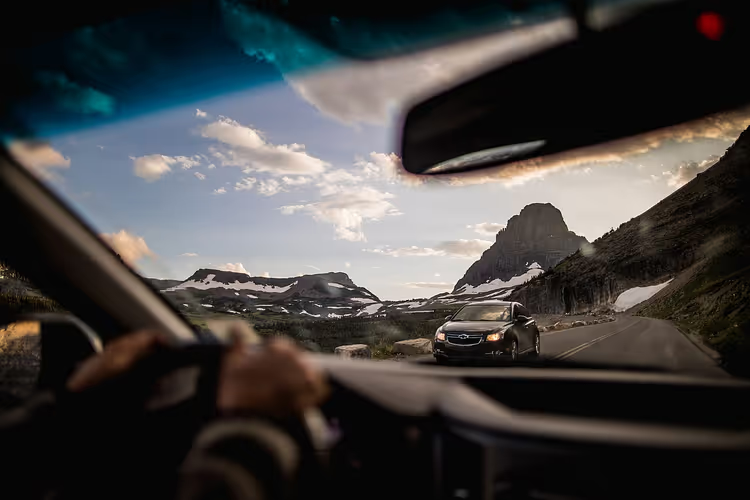
The full drive takes about two hours without stops, but you will definitely linger at the overlooks. Along the way you will see coniferous forests, wildflower meadows, snowy peaks, and glacial lakes.
The road was built in 1932, and today it is considered a feat of engineering (as of 09/2026, history of Going-to-the-Sun Road).
Besides driving, there is a shuttle. In 2026, it operates on a ticket system (as of 09/2026, parking rules page). If you want to hike the trail at the pass without crowds, leave your car at the bottom.
The park is also viewed from the air: local companies fly tourists on planes and helicopters. It's a fast way to see the glaciers from above. Look for ready-made Glacier tours on GetYourGuide.
Boat tours operate in the Many Glacier and Two Medicine areas. It's a relaxed way to see the mountains and valleys from the water.
The most scenic views are found along hiking trails. The park has 158 trails totaling about 746 miles (as of 09/2026, park trail data). Beginners will find the easy walks near Lake McDonald sufficient.
Tours and tickets in Glacier National Park
Guided tours, skip-the-line tickets and activities — most offers can be cancelled free of charge.
See offers on GetYourGuideThe widget loads once you give your consent.
Where to stay near Glacier
Lodging options inside the park are limited. Historic hotels and 13 campgrounds with 1,004 sites operate here (as of 09/2026, campground information). In summer they get booked up months in advance, so reserve as soon as the season opens.
Most visitors stay overnight in the surrounding towns: West Glacier, Whitefish, Kalispell, and St. Mary. From there it's less than an hour's drive to the entrance.
Hotels in Whitefish and Kalispell are more expensive than campgrounds, but restaurants, shops, and gas stations are nearby. You can compare hotel prices near the park on Trip.com in advance and without rushing.
Glacier Park on the map
Glacier lies in northwestern Montana, right up against the Canadian border. The main entrances are West Glacier to the west and St. Mary to the east. You can open the map below and build a route to either of them.
⁉️🤔 Frequently asked questions
Do I need a reservation to enter Glacier in 2026?
No. The National Park Service has canceled the reservation system for the entire 2026 season, including Going-to-the-Sun Road (as of 09/2026, official park announcement). You only need to pay the entrance fee.
How much does entry cost and what do foreign visitors pay extra?
A car with passengers costs $35 in summer and $25 from November 1 through April 30 (as of 09/2026, official park pricing). Guests from outside the US over 16 pay an additional $100 per person.
When is the best time to visit Glacier?
From late June through the first half of September, when the entire Going-to-the-Sun Road is open (as of 09/2026, park press release).
How many glaciers are left in the park?
Glacier currently has 26 glaciers, and all of them are shrinking (as of 09/2026, park glacier data). It is worth seeing them in the coming years.
Can you see the park without a car?
Yes. A shuttle runs along the Going-to-the-Sun Road; in 2026, riding it requires a ticket (as of 09/2026, shuttle information). The bus connects West Glacier, Lake McDonald, and Logan Pass. This way you avoid parking hassles, but check the schedule before your trip.
In short: what to book
A trip to Glacier benefits from early planning. Here is a simple matrix for your situation.
- If it is your first visit: stay overnight in West Glacier and drive the Going-to-the-Sun Road end to end.
- If you want to see glaciers: add a scenic flight or a boat tour.
- If you are without a car: build your day around the shuttle and Lake McDonald.
- If you are camping: book your campsite in advance, there are only 1,004 sites inside the park (as of 09/2026, park camping figures).
The rest is up to you: browse hotels near the entrance on Trip.com.

A small editorial team writing guides for independent travel. We travel ourselves, but we haven’t been everywhere, so we check prices, opening hours and how to get there against official sources.