
















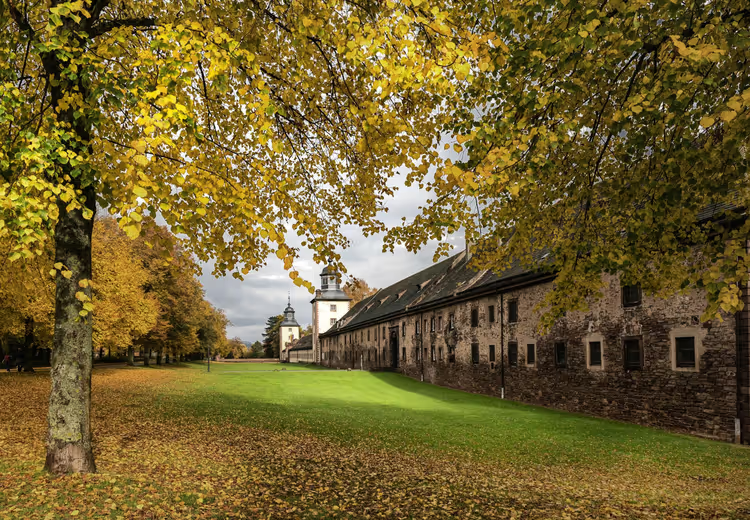
Golden autumn in Europe: 7 destinations to visit in October
Golden autumn in Europe starts earlier than you think. In Finnish Lapland, the foliage bursts into color as early as the beginning of September, while the vineyards of Tuscany hold their color until early November (as of 09/2026, Visit Finland). For years, blogs have been sending people to New England for "Indian Summer," even though brilliant forests lie just two hours by plane from Munich.
We've put together seven regions where autumn colors last for weeks, and we've checked the dates against official websites. For each destination, you'll find the best time to go, a short plan, and practical details: where to leave the car, how much a transit pass costs, what to do in the rain.
Ad: this article contains affiliate links. We earn a commission if you book through them, at no extra cost to you.
When golden autumn begins in Europe
💡 In short:
- September: northern Finland. October: the Alps, the Stockholm archipelago, Tuscany, and in the second half of the month, the Scottish glens.
- Above 1,500 m, larches shed their needles by mid-October; below 800 m, the foliage lasts longer.
- Dates, prices, and events: 09/2026, verified on each region's official tourism website, for example on the South Tyrol website.
The difference between regions can be as much as three weeks, so you should choose your destination based on your travel dates. If you're going in late September, head north. In mid-October, the Alps and the Mediterranean look their most vivid, and by November the colors remain only around vineyards and olive groves.
1. South Tyrol: Törggelen and Almabtrieb
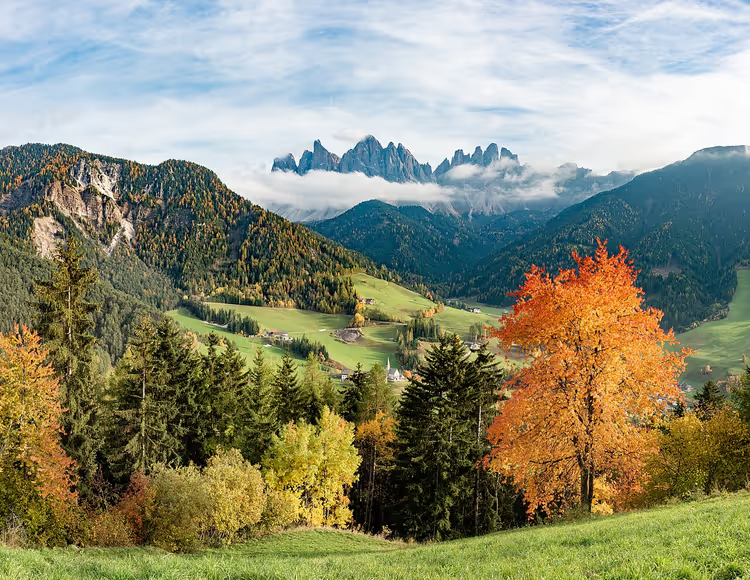
Autumn in South Tyrol revolves around two traditions. Almabtrieb marks the safe return of cattle from high mountain pastures, and Törggelen begins as soon as the vineyard foliage turns golden and the harvest is in (as of 09/2026, South Tyrol website). At a Törggelehof, you'll be served young wine, roasted chestnuts, speck, and homemade bread.
 © This Photo was taken by Wolfgang Moroder . Feel free to use my photos, but please mention me as the author and send me a · CC BY-SAPhoto: This Photo was taken by Wolfgang Moroder . Feel free to use my photos, but please mention me as the author and send me a, CC BY-SA (https://creativecommons.org/licenses/by-sa/4.0), Wikimedia Commons
The best color comes not only from the vineyards but also from the larch forests on slopes above 1,200 m. A hike of 8-12 km ends with dinner at an Almhütte, and you'll spend the night with a view of the valley. Cable cars and buses still run in October, but some mountain huts close after the middle of the month.
- How to get there: by car or by plane to Bolzano, Venice, Verona, Treviso, or Innsbruck.
- Who it's for: for those who want to combine hiking with wine and local cuisine.
- The catch: Almabtrieb dates vary from valley to valley, so check the event calendar in advance (as of 09/2026, South Tyrol website).
- Hotels: hotel prices in South Tyrol on Trip.com.
2. Scotland: glens, whisky, and rain
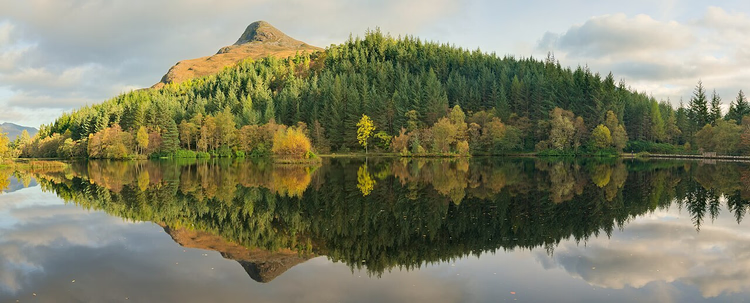
A Scottish October delights with color and tests your patience at the same time. A day can start with sunshine, continue with wind, and end with snow on the summits, so a good waterproof shell matters more than a nice sweater. The foliage looks most vivid in the glens and woodlands around Perthshire: in Pitlochry, autumn colors unfold right from the town streets (as of 09/2026, VisitScotland).
There are more hiking trails here than days in a vacation, and the network is well signposted. After a walk, you settle in by the fireplace in a pub, and a glass of whisky from a local distillery explains half of Scottish cuisine. By Loch Ness, in the village of Drumnadrochit, there's a pub called Fiddler's: they serve whisky and local fish, and it's best to book a table. Nearby, Loch Ness Glamping offers unusual Armadillas cabins.
- Getting there: fly to Edinburgh, Inverness, or Glasgow.
- Who it's for: people who love hiking and don't mind rain.
- The catch: the weather changes within an hour, so bring a rain jacket and spare socks.
- Hotels: hotels in Edinburgh and Inverness on Trip.com.
 © Daniel Kraft · CC BY-SAPhoto: Daniel Kraft, CC BY-SA (https://creativecommons.org/licenses/by-sa/3.0), Wikimedia Commons
3. Stockholm's skerries without the summer crowds
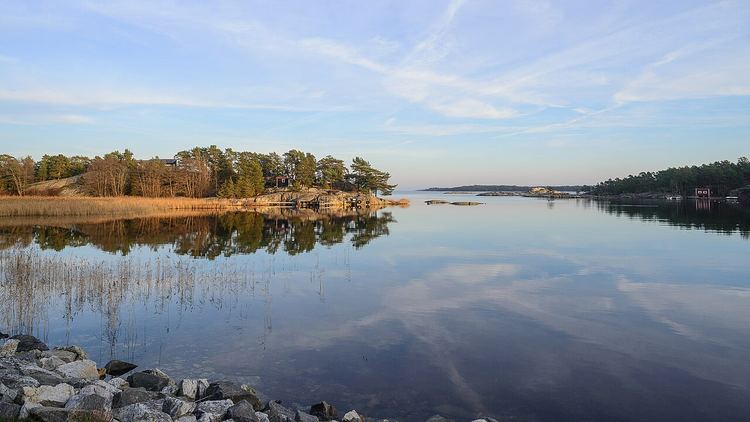
In summer the archipelago islands are packed, but in October the ferries run half-empty. You'll get walks, a bike, a kayak, or a sailboat, and in the evening you'll come back to a red Swedish cottage with a water view. If you're lucky with mushrooms and berries, you'll get a double win: chanterelles and lingonberries grow right along the trails, if you're willing to look.
 © Arild Vågen · CC BY-SAPhoto: Arild Vågen, CC BY-SA (https://creativecommons.org/licenses/by-sa/4.0), Wikimedia Commons
The most convenient way to move between islands is with a Waxholmsbolaget pass. A 5-day ticket costs 595 SEK (as of 09/2026, Waxholmsbolaget), and it's sold only on board and loaded onto an SL card. The islands are connected by a ferry network, so you can adjust your plan based on the weather.
- Getting there: fly to Stockholm, then take a ferry from the city piers.
- Who it's for: people who want quiet and an active day without a car.
- The catch: without a car you depend on the ferries, and your day is built around their schedule.
- Accommodation: accommodation in the skerries on Trip.com.
4. Lapland and Finnish ruska
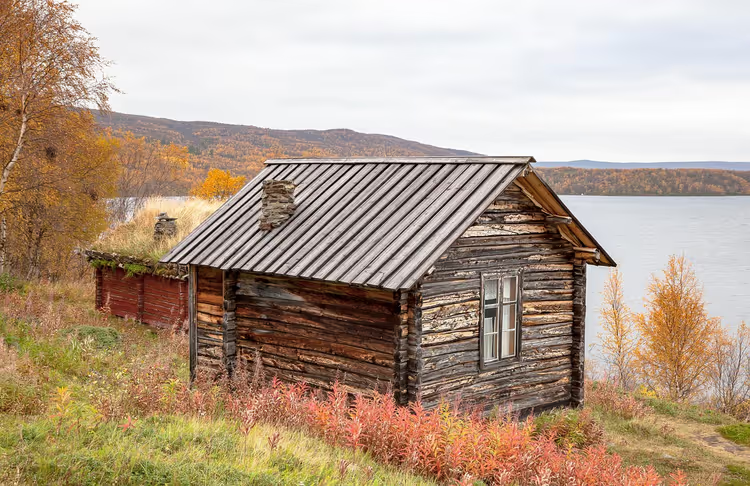
Finns call the autumn season ruska, and in Lapland it starts in early September (as of 09/2026, Visit Finland's page about ruska). The color front moves from north to south at roughly 500 km over a couple of weeks, so it's easy to miss it. Trees and shrubs take on brown, red, yellow, and orange shades.
 © Ximonic (Simo Räsänen) · CC BY-SAPhoto: Ximonic (Simo Räsänen), CC BY-SA (https://creativecommons.org/licenses/by-sa/4.0), Wikimedia Commons
You pick lingonberries and cloudberries, walk through the forest all day, and in the evening you go to the sauna and jump into a cold lake. From late August, the northern lights season begins, so in September your chances of seeing them are decent. A night in a forest cabin with a wood-fired sauna costs less here than a hotel in Helsinki, and that's a noticeable saving.
- Getting there: by plane to airports in Finnish and Swedish Lapland.
- Who it's for: those who want sauna, silence, and long walks without crowds.
- The catch: the ruska window is short, about two weeks at each latitude.
- Hotels: hotels in Finnish Lapland on Trip.com.
5. Switzerland: larches and Alpabzug
Turquoise lakes, golden larches, and already snow-covered peaks come together in a single frame. At the end of September, cattle are brought down from alpine pastures, and in Appenzell this is marked by Viehschauen cattle shows, where the most beautiful and productive cows are chosen (as of 09/2026, Schweiz Tourismus). Besides livestock festivals, you can also enjoy harvest festivals and chestnut festivals.
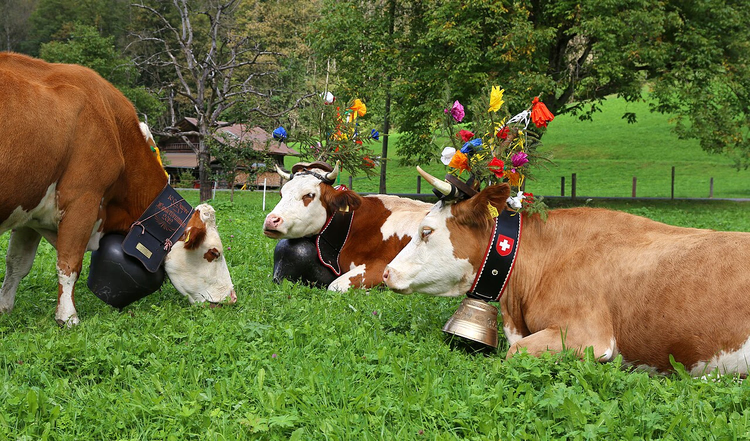 © Evelyscher · CC BY-SAPhoto: Evelyscher, CC BY-SA (https://creativecommons.org/licenses/by-sa/4.0), Wikimedia Commons
The country is easy to get around by train: the Swiss Federal Railways network is dense and punctual, and the panoramic routes are worth the ticket on their own. Marked trails, mountain bike routes, and cable cars open up valleys you cannot reach by car.
A mountain hut is worth staying in overnight: the morning light on the slopes is completely different here. Swiss cheeses and raclette taste especially good after a cold walk in the fresh air, so do not put off dinner at the hut.
- Getting there: by train, check tickets and routes on the carrier's website.
- Who it's for: those who want panoramic trains and clear trails without renting a car.
- The catch: snow already lies on the peaks, check high-altitude trails before setting out.
- Hotels: hotels in the Swiss Alps on Trip.com.
6. Tuscany: grape harvest and truffles
After the summer heat, the hills of Tuscany calm down, and accommodation prices drop. Autumn here revolves around wine, olives, and truffles: grapes are harvested, olive oil is pressed, truffles are hunted, and harvest festivals are held. Warm days, golden light, and the yellow-copper color of grape leaves make October the best month for a trip to the countryside.
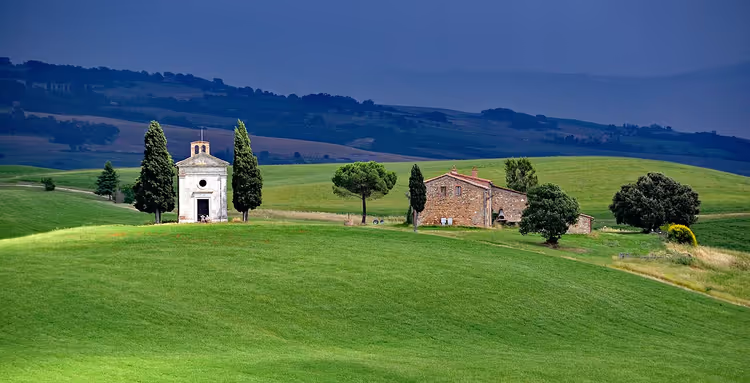 © Hervé Simon · CC BY-SAPhoto: Hervé Simon, CC BY-SA (https://creativecommons.org/licenses/by-sa/2.0), Wikimedia Commons
The most vibrant foliage is hidden not in the vineyards but in the Apennine mountains. Foreste Casentinesi National Park was established in 1993 and lies between Florence, Arezzo, and Forlì-Cesena (as of 09/2026, national park website), and in October the Casentino valley and the Pratomagno massif burn with every shade. The best way to see all of this: stay at an agriturismo, where a farm with rooms gives you direct access to wine, oil, and cuisine.
- Getting there: by car or by plane to Florence or Pisa.
- Who it's for: those who want wine country and autumn colors without rushing.
- The catch: the most vibrant forest is found in the mountains, not among the vineyards.
- Accommodation: agriturismos in Tuscany on Trip.com.
7. Slovenia between the Alps and the sea
Slovenia connects Austria, the Mediterranean and the Balkans, and you can see it not only in the cuisine but also in the landscape. In a single day you can drive from vineyard-covered hills to high mountains, and by evening find yourself on the coast. In autumn, the colorful forests are joined by wine and food events, as well as the thermal springs the country is known for.
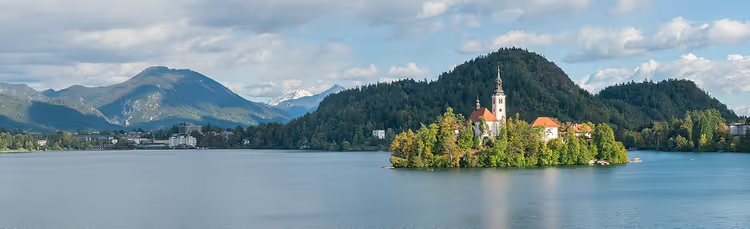 © Krzysztof Golik · CC BY-SAPhoto: Krzysztof Golik, CC BY-SA (https://creativecommons.org/licenses/by-sa/4.0), Wikimedia Commons
The wine regions in the east of the country hold tastings and harvest festivals, while the thermal resorts in the northeast operate year-round. If you are planning three days, split the trip between two regions and don't try to cover everything at once. Many people only see Slovenia in transit on the way to Croatia, and that's a missed opportunity.
- How to get there: by car or by plane to Ljubljana or Venice.
- Who it's for: for those who want mountains, wine and the sea in one short trip.
- Hotels: hotels in Ljubljana and on the coast on Trip.com.
Other regions for golden autumn
If seven destinations aren't enough for you, add Germany and its neighbors to the list. The Mecklenburg Lake District and Spreewald offer water and foliage without the crowds, the Harz, Palatinate, Sauerland, Eifel and Moselle promise vineyards and gorges, and the Swabian Jura, Lake Constance and the Bavarian Forest round out the south of the country.
In the Alps, look at Königssee, Ahornboden in Karwendel, the Tannheimer Tal valley, Dachstein and the Ammergau Alps. Standing apart are Glarus in Switzerland and Masuria in Poland: autumn arrives later there and lasts longer. Any of these places can be combined with the main route.
⁉️🤔 Frequently asked questions
When is the peak of golden autumn in Europe?
The peak depends on latitude and altitude. In Finnish Lapland the foliage bursts into color in early September (as of 09/2026, Visit Finland data), in Scotland it is at its brightest in the second half of October, and in Tuscany the vineyards hold their color until early November. Plan by date: north earlier, south later.
Where to go in October if you don't want to rent a car?
Look at Switzerland and Slovenia: trains run on schedule, and from Ljubljana it's easy to reach the Alps and the coast. In the Stockholm archipelago you can get around with Waxholmsbolaget ferries, and in Scotland some routes start right from the train stations in Edinburgh and Inverness.
What is Törggelen and how long does it last?
It's an autumn tradition in South Tyrol. The season opens after the grape harvest, when the foliage turns golden, and runs until the end of autumn (as of 09/2026, page about Törggelen). Book a table at popular farmsteads in advance.
Where does autumn arrive earliest?
The colors appear earliest in Finnish Lapland, in early September. The color front moves south at roughly 500 km every two weeks (as of 09/2026, official ruska forecast). By the end of the month the color reaches southern Finland, while the larches in the Alps turn golden only in October.
How many days do you need for the Stockholm archipelago?
Five days is enough for three or four islands and one long walk. If you only have two days, pick one island and don't waste time on transfers.
In short: what's worth booking
If you have a week in October, go for Scotland: glens, whisky and pubs with fireplaces. If you have just three days and a car, South Tyrol will give you both larches and Törggelen. For quiet and water, head to the Stockholm archipelago; for color and the northern lights, to Finnish Lapland.
- For walking: Switzerland and Scotland.
- For wine and food: South Tyrol and Tuscany.
- For water and islands: the Stockholm archipelago.
- For the northern lights: Finnish Lapland.
- For a short trip: Slovenia.
Compare your options and book accommodation in advance: in October prices are lower than in summer, and the choice is wider.

A small editorial team writing guides for independent travel. We travel ourselves, but we haven’t been everywhere, so we check prices, opening hours and how to get there against official sources.