






Kemer and surroundings: beaches, canyons and ancient cities of Antalya
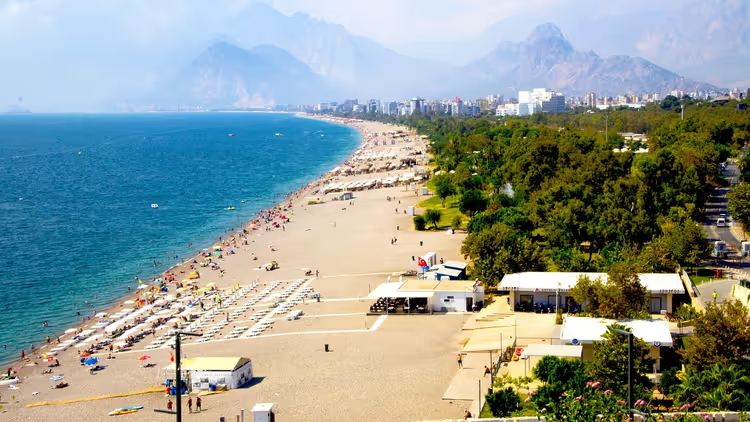
Kemer lies on the Mediterranean coast, about an hour's drive from Antalya Airport. The resort stretches along bays between the sea and the Taurus Mountains. By day it's all about the sea and beaches; by evening, the promenade, bars, and restaurants.
Many people come for two weeks and barely leave their hotel. Yet close to Kemer there's an ancient city with three beaches, a canyon with ziplines, and a cable car up a two-thousand-meter peak. You can see a new place every day without changing hotels.
Below we've broken the region down piece by piece: how to get there, when to go, where to swim, and what to see. Prices, opening hours, and distances were checked against official sources.
Ad: this article contains affiliate links, we earn a commission if you book through them, at no extra cost to you.
Kemer: where it is and what makes it different
💡 In short:
- Kemer belongs to Antalya Province and lies west of its center, between the sea and the Taurus Mountains.
- Around the resort: ancient Phaselis, Göynük Canyon, the cable car to Tahtalı, and the village of Çıralı.
- Prices and opening hours: 09/2026, verified on the official website of Turkey's museums.
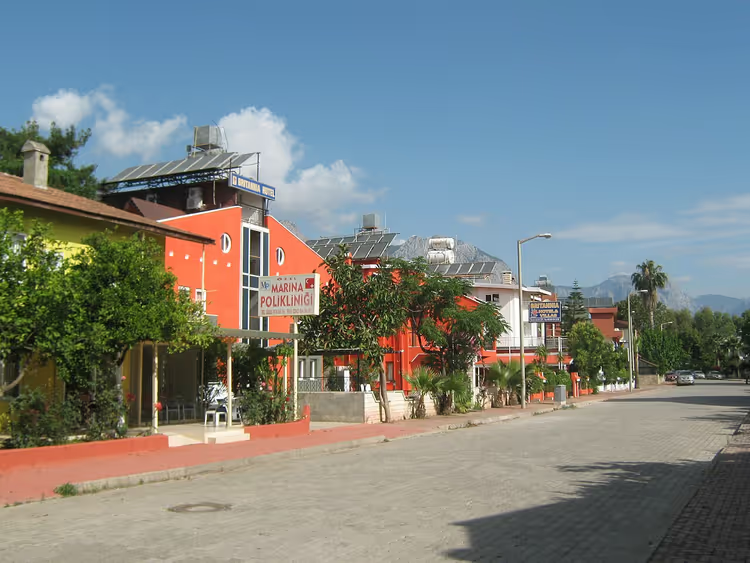
Kemer is nothing like bustling Antalya. It's a compact town with a regular street grid, shops, bars, and restaurants for every taste. The center is low-rise, and the main life unfolds along the sea.
The town's name is tied to water. Before the War of Independence, the settlement was called Eskiköy, meaning "old village." Streams from the Taurus Mountains regularly flooded homes, so locals built a wall along the riverbed. The current name comes from the Turkish word for "wall."
For decades, people here made their living from fishing. When mass tourism arrived in Turkey, fishing villages quickly turned into resort areas. Today Kemer and the surrounding settlements live entirely off tourism: Beldibi, Göynük, Çamyuva, Tekirova, and Çıralı.
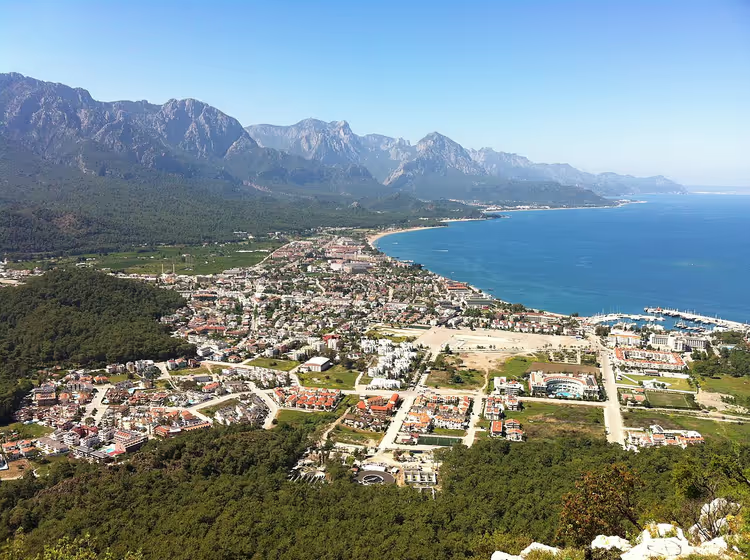 © Emin Başar ÖZDEMİR · CC BYPhoto: Emin Başar ÖZDEMİR, CC BY (https://creativecommons.org/licenses/by/3.0), Wikimedia Commons
A typical day here revolves around the sea. In the morning you head to the beach, at midday you have lunch in the center, and in the evening you return to the promenade. This rhythm holds for almost the whole season, and it suits families and couples because the sea is calm and the center is easy to reach on foot.
How to get there from Antalya Airport
The most convenient option is to fly into Antalya Airport (AYT). Flights operate year-round, and the drive to Kemer takes about an hour. From the terminal you can take a taxi, book a transfer in advance, or leave by bus.
By bus from other Turkish cities, you first arrive at Antalya's bus station, the otogar, and from there take a service to Kemer. Within the region, dolmuş minibuses run along the coast with frequent stops and cost less than a taxi.
By car, Kemer sits on the D400 highway, which runs along the entire southern coast. The road itself is scenic: sea on the right, mountains on the left. Rent a car in advance, because in summer rental cars get snapped up quickly.
If you arrive by yacht, the Turkiz marina in central Kemer welcomes you. From the dock you can walk to hotels and the promenade. In winter, some sea routes don't operate, so check the schedule with the carrier.
Tours and tickets in Kemer
Guided tours, skip-the-line tickets and activities — most offers can be cancelled free of charge.
See offers on KiwitaxiThe widget loads once you give your consent.
When to go: season and weather
The season in Kemer runs from May to October. In July and August the sea is warmest, but the heat is also at its most intense. If you don't handle extreme heat well, choose June or September: the water is still warm, and the air is milder.
From November to April, tourist life quiets down. Some hotels close, and excursions become fewer. January and February are often rainy, but the region is empty and prices are lower.
For walks and exploring ancient sites, pick May, June, or October. In these months you can comfortably hike the canyon and the ruins of Phaselis without midday heat. For a beach holiday, any month from May to October works, but book accommodation in advance, because in peak season available hotels are scarce.
Beaches of Kemer and the surrounding area
The coastline here is long and varied: sand, pebbles, and small bays alternate with one another. Each area has its own character, so it's worth choosing your swimming spot in advance.
Beldibi is closest to Antalya. The area is green and quiet, with a long pebble beach. Göynük is known for its wide stretch of waterfront and water sports. Çamyuva is quieter and better suited to a leisurely holiday. In central Kemer, the beaches are urban, with sun loungers and cafés nearby. Tekirova stretches along a pine-covered shore and is almost always calmer than the center.
Most beaches are pebbly, so bring water shoes. The entry into the sea is steep in places, and large pebbles lie near the shore. For children, choose beaches with a sandy entry, such as the southern bay of Phaselis.
Çıralı and Olympos: turtles and ancient ruins
Çıralı lies inside a pine-covered national park and remains a quiet village. The beach here stretches for about 3.5 kilometers and is shared with Olympos (as of 09/2026, Medgulets). On this same sand, Caretta caretta sea turtles lay their eggs, and the nests have been protected here since 1994.
 © Figure · CC BY-SAPhoto: Figure, CC BY-SA (https://creativecommons.org/licenses/by-sa/3.0), Wikimedia Commons
Because of this, Çıralı has almost no high-rise buildings or nighttime noise. In the evening, lighting near the beach is restricted so that hatchlings don't lose their way to the sea. If you visit during nesting season, don't touch the nests and don't light fires on the sand.
Olympos lies nearby, a little deeper into the valley. People come here for budget "treehouse" accommodations favored by backpackers. Besides lodging, there are genuine ancient ruins right in the forest: an old temple, a sarcophagus, remains of churches and restored houses.
The easiest way to reach Çıralı from Kemer is by dolmuş or by car along the D400 highway. The beach has simple cafés and sun loungers, but there are no large hotels due to environmental protection rules.
Göynük: beach, canyon, and amusement park
Göynük sits between Antalya and central Kemer and grows more popular every year. The reasons are clear: green scenery, good hotels, and a long beach with paragliding and jet skis. Many waterfront hotels maintain their own stretch of shore, so you step out of your room almost directly onto the sea.
 © Mustafa değirmenci · CC BY-SAPhoto: Mustafa değirmenci, CC BY-SA (https://creativecommons.org/licenses/by-sa/3.0), Wikimedia Commons
A separate reason to come here: Göynük Canyon. Entry to the national park is paid, the base ticket covers access to the gorge, and activities inside are paid separately. From the entrance to the activity area there is a walking trail along the water.
The canyon offers ziplines, canyoning, body rafting, and rope courses. Instructors provide equipment and run a safety briefing, no prior experience needed. Nearby are Eco Fun Adventure Park and Dinopark with large dinosaur figures: these are convenient to visit with kids.
Bring water shoes and a waterproof phone case. In the morning the gorge is cooler and less crowded, while by midday the trail gets hot and busy.
Phaselis: an ancient city with three beaches
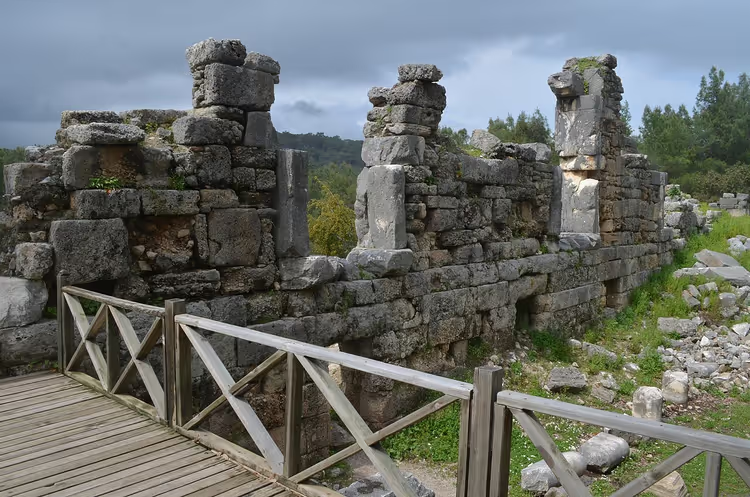
Phaselis is about 15 kilometers from Kemer, near Tekirova (as of 09/2026, Antalya Experiences). The city was founded in the 7th century BC as an ancient port with three harbors. Alexander the Great wintered here, and the city itself was abandoned only in the early 13th century.
 © 1089hruskapetr · CC BYPhoto: 1089hruskapetr, CC BY (https://creativecommons.org/licenses/by/3.0), Wikimedia Commons
The main reason people come here: the combination of history and sea. The ruins are scattered right among the pine trees: a Roman theater, a paved main street, two baths, and an aqueduct that brought water from Tahtalı. Between the ruins there are coves where you can swim after exploring.
Opening hours confirmed on the official website of Turkey's museums: from 08:00 to 20:00 daily, the ticket office closes at 19:30 (checked 12.09.2026, official website). Entry in 2026 costs about €10 (as of 09/2026, Antalya Experiences), and MuseKart holders enter free.
There are no sun loungers or umbrellas on site. If you want to spend half a day here, bring a mat, an umbrella, and water. Arrive at opening time, because from midday tour groups and buses start arriving, and the coves get crowded.
Tahtalı cable car
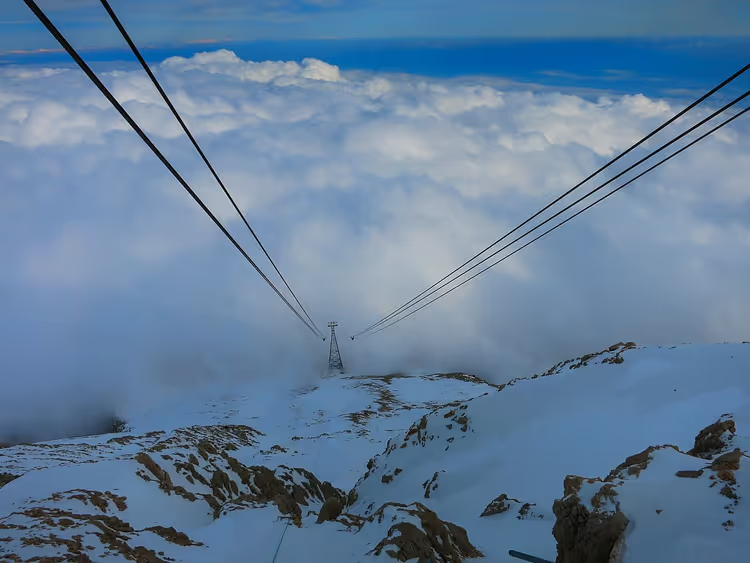
The Olympos Teleferik cable car to Tahtalı starts near Tekirova. The mountain rises to 2,365 meters above sea level (as of 09/2026, Antalya Cable Car). The cabin takes about ten minutes to reach the top, and along the way you get a 360-degree view of the Taurus Mountains and the entire coastline.
 © Maasaak · CC BY-SAPhoto: Maasaak, CC BY-SA (https://creativecommons.org/licenses/by-sa/4.0), Wikimedia Commons
A round-trip ticket in 2026 costs about €41 for an adult (as of 09/2026, Antalya Cable Car). At the top there is a viewing platform, a cafe, and a restaurant. You can go up, have lunch with a sea view, and ride back down in the cabin.
If you want some adrenaline, paragliding flights down to the coast are offered from here. Check the current schedule on the official Olympos Teleferik website. On windy days the cable car is stopped, so plan your ascent for the morning and allow extra time.
Yanartaş: the eternal flame near Çıralı
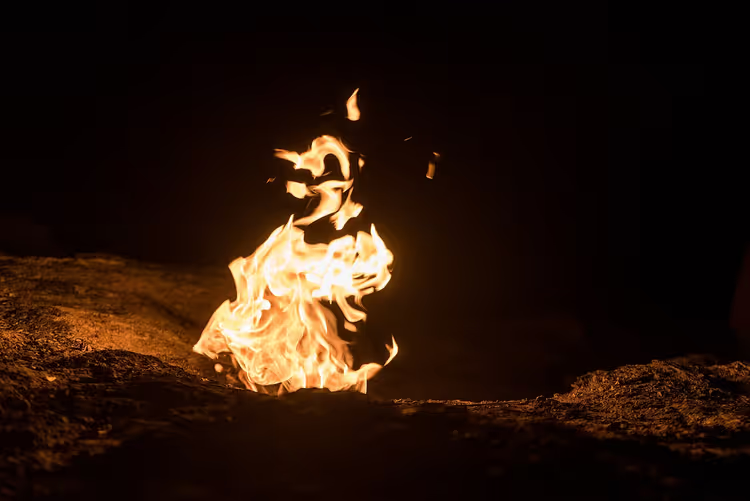
Yanartaş, also known as the Chimaera, is famous as a place where natural gas seeps directly out of the rocks and burns around the clock. The fire does not go out in rain or wind. The site lies near Çıralı, and you will get the best view of the flames after sunset.
 © Alexey Komarov · CC BY-SAPhoto: Alexey Komarov, CC BY-SA (https://creativecommons.org/licenses/by-sa/4.0), Wikimedia Commons
The climb to the flames goes uphill on foot, and parts of the trail are steep. Bring water, a warm sweater, and a flashlight: at night the slope is cool and dark. Wear comfortable shoes, because flip-flops slip on the rocks.
In antiquity this place was considered the entrance to the underworld and was associated with Hephaestus, the god of fire. Some visitors go up with a guide, while others walk on their own along the marked trail. For people with bad knees or heart conditions, the route may be too demanding.
What to see in Antalya
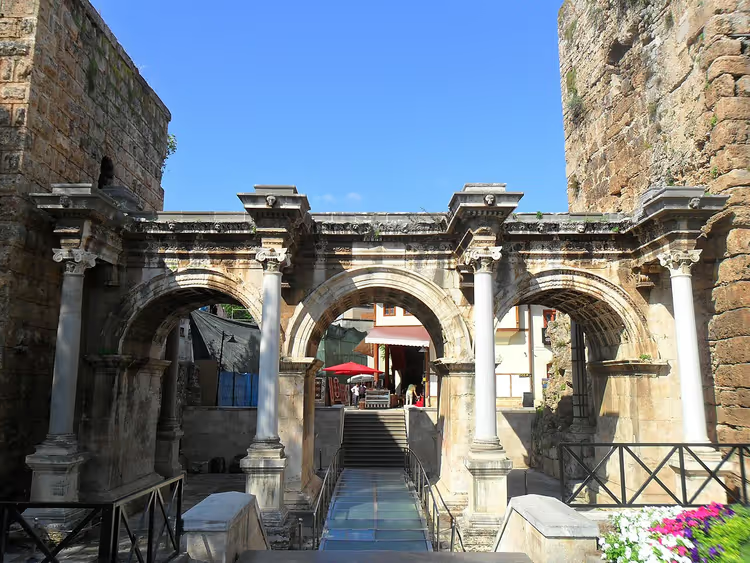
From Kemer it is easy to take a day trip to Antalya itself. The bus runs along the coast, and driving on the D400 highway is also convenient. In the old town you will be greeted by Hadrian's Gate, the entrance to the Kaleiçi quarter.
The narrow cobbled streets of Kaleiçi are pleasant to explore on foot. Ottoman-era buildings, small boutiques, and cafes have been preserved here. Find the clock tower and the old mosque, and for lunch head down to the harbor.
You can then expand your itinerary: the Antalya Archaeological Museum, the aquarium, the Düden Waterfalls, and Konyaaltı Beach. The waterfalls and the beach are easy to see in one day, while the museum is best planned for the morning before it gets hot.
If you are booking excursions in the region, check out boat trips and tours on GetYourGuide. It is also convenient for booking canyoning, diving, and boat trips along the bays.
⁉️🤔 Frequently asked questions
How many days should I spend in Kemer?
For a beach holiday, one week is usually enough. But to see Phaselis, Göynük Canyon, Tahtalı, and Çıralı, allow more time. Otherwise you will be making trips around the area every day without a break, and the beach will take a back seat.
When is the best time to visit Kemer?
The best months to visit are June and September. For more on seasons and weather, see the "When to go" section.
How much does it cost to enter Phaselis?
In 2026 the ticket costs about €10 (as of 09/2026, Antalya Experiences), and MuseKart holders enter free. One ticket covers both the ruins and the three beaches on the site. Opening hours and visiting tips are in the Phaselis section.
Where in Kemer can I swim with children?
Choose beaches with a sandy entry, such as the southern bay of Phaselis. For more on beaches, see the Kemer beaches section.
Is it worth going to the Tahtalı cable car?
Yes, if you want to see the coast from above. The ascent depends on the wind, details are in the cable car section. A ticket in 2026 costs about €41 per adult (as of 09/2026, Antalya Cable Car), so check the forecast in advance.
In short: what to book
Kemer is convenient because you have one base, but the programs are different every day. In one trip you can fit in the sea, the canyon, the cable car, and the ancient cities. So decide in advance what you cannot decide on the spot: airport transfer, accommodation in season, and excursions for peak days.
If you are short on time: choose Phaselis and Tahtalı.
If you are traveling with children: add Göynük Canyon and Dinopark.
If you are looking for peace and quiet: go to Çıralı and the turtle beach.
We have collected excursions and boat trips in the region on GetYourGuide.

A small editorial team writing guides for independent travel. We travel ourselves, but we haven’t been everywhere, so we check prices, opening hours and how to get there against official sources.