
















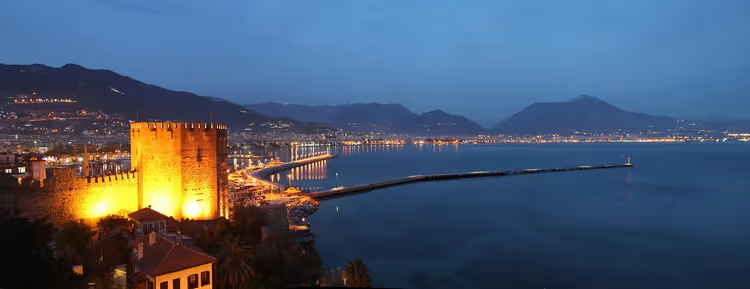
What to see in Antalya: 25 places from Kaleici to canyons
In Antalya you can spend a week between the beach and the buffet and never actually see the city. But it is worth seeing: the Archaeological Museum alone holds about 5,000 exhibits across 7,000 m². The Tünektepe cable car takes you 605 meters above the bay. We have put together 25 places in Antalya itself and around it.
Below you will find Roman arches, canyons, and ancient theaters. Some spots are a two-minute walk from your hotel, others require a half-day trip. We have noted where you need a ticket and how much time to allow. Check distances on the map and confirm opening hours before you set out.
Ad: this article contains affiliate links, we earn a commission if you book through them, at no extra cost to you.
What to see in Antalya
💡 In short:
- In the center everything is close: Kaleiçi, the Old Harbor, Hadrian's Gate, Hıdırlık Tower, and Karaalioğlu Park make up a half-day walking route.
- Nature awaits outside the city: Düden Waterfalls, Kurşunlu Waterfall, Göynük Canyon, Köprülü, and the Tünektepe cable car.
- For ancient history, go to Perge, Aspendos, and Termessos; allow at least half a day for each city.
- Prices and opening hours change, so check them on the official Turkish museums portal before you go.
1. Antalya Archaeological Museum
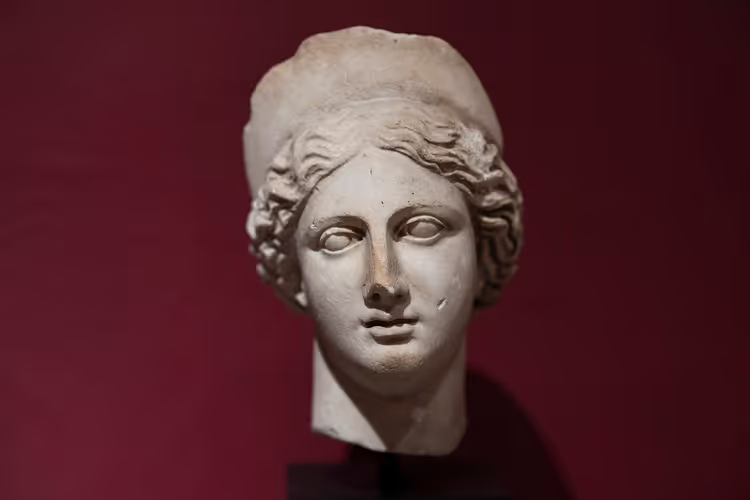
The museum covers 7,000 m² and holds about 5,000 exhibits. The collection grew out of finds made after 1919, when Italian troops occupied the city. Today the museum ranks among the strongest in the Mediterranean.
Its thirty halls are rarely empty. Look for marble statues of mythological heroes, busts of Roman emperors, and sarcophagi with bas-reliefs. One hall is dedicated to old Orthodox icons, another is ethnographic: national costumes, carpets, household items. All rooms are air-conditioned, and in the heat you will appreciate that.
- Cost: paid entry; the current rate is published on the museum's official website.
- Hours: daily except Monday, from morning to early evening; check the exact schedule on the website.
- Getting there: Konyaaltı Caddesi; trams and buses run from Kaleiçi.
- Who it's for / Not for: for those who want to understand the region's history in a couple of hours; young children will be bored.
2. Hadrian's Gate
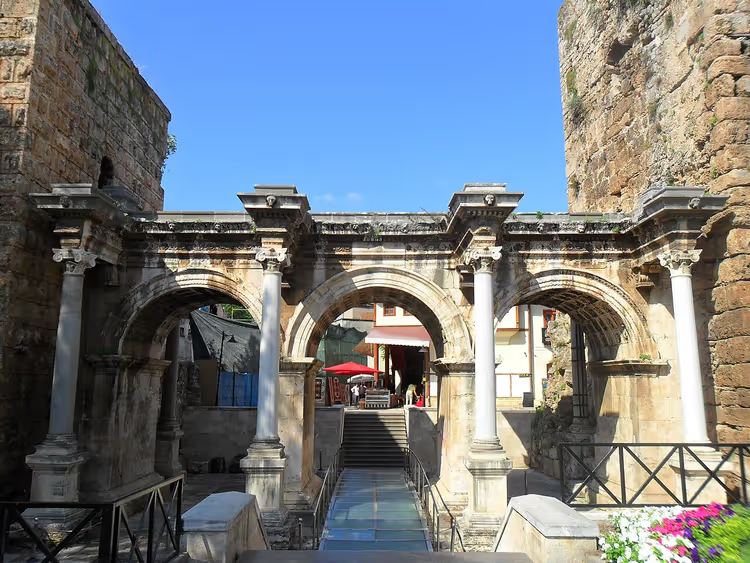
Hadrian's Gate was built in 130 AD for the arrival of the Roman emperor. The arch has survived almost entirely intact, and it is the best entrance to the old town.
The three-arched portal, about 8 meters high, is decorated with bas-reliefs and marble columns with capitals. Massive crenellated towers stand on either side, and the archway has a coffered ceiling. Beneath the gate, an ancient pavement survives, with deep grooves worn into the stones by cart wheels.
- Hours: the arch stands right on the street and is open at any time; no ticket needed.
- Getting there: the arch stands at the entrance to Kaleiçi, a couple of minutes' walk from the tram stop.
- Who it's for / Not for: for anyone strolling through the old town; the gate does not require a separate trip.
3. Karaalioğlu Park
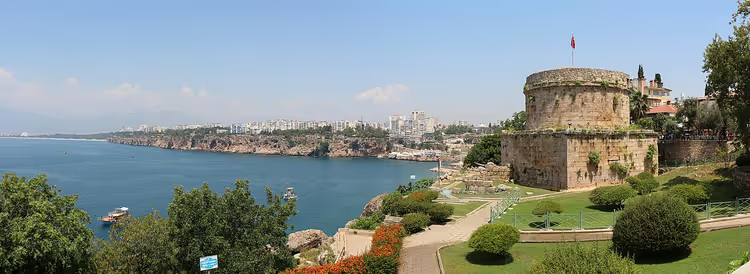 © Bernard Gagnon · CC BY-SAPhoto: Bernard Gagnon, CC BY-SA (https://creativecommons.org/licenses/by-sa/3.0), Wikimedia Commons
Karaalioğlu Park spreads along the rocky shore high above the sea. From here you can see the mountains, the turquoise bay, and the city panorama. You come here for the view, and you stay for the shade.
The grounds feature mandarin, orange, pine, and palm groves, flower beds, lawns, fountains, and sculptural compositions. The walkways are wide, so you can stroll on foot or by bike, and there are playgrounds with swings for children. Benches are set in the shade of the trees, and restaurants and cafes operate nearby. In the eastern part of the park you will find the city theater, the municipality building, and Hıdırlık Tower.
- Cost: park entry is free.
- Getting there: on foot from Kaleiçi along the shore.
- Who it's for / Not for: for a relaxed walk and sunset photos; for thrills, head out of town.
4. Kaleiçi Old Town
 © Arif miletli · CC BY-SAPhoto: Arif miletli, CC BY-SA (https://creativecommons.org/licenses/by-sa/4.0), Wikimedia Commons
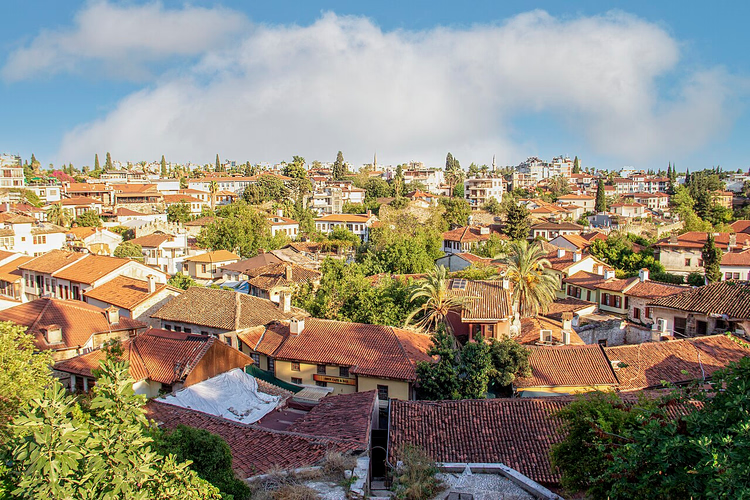
In the southern part of the city, on the seafront, lies Kaleiçi, the historic center of Antalya. The quarter is built up with stone houses with tiled roofs; many have been restored and turned into hotels, restaurants, and souvenir shops.
The streets are narrow and cobbled, and the courtyards are lush with greenery. As you wander the lanes, you keep coming across mosques, hammams, towers, and thousand-year-old ruins. The Roman, Byzantine, and Ottoman eras are mixed together within a single quarter.
- Getting there: from Hadrian's Gate and the Old Harbor; the whole quarter is walkable.
- Who it's for / Not for: for lovers of atmospheric streets and dinners in courtyards; dragging a suitcase over the cobblestones is awkward.
5. Old Harbor
 © Ray Swi-hymn from Sijhih-Taipei, Taiwan · CC BY-SAPhoto: Ray Swi-hymn from Sijhih-Taipei, Taiwan, CC BY-SA (https://creativecommons.org/licenses/by-sa/2.0), Wikimedia Commons
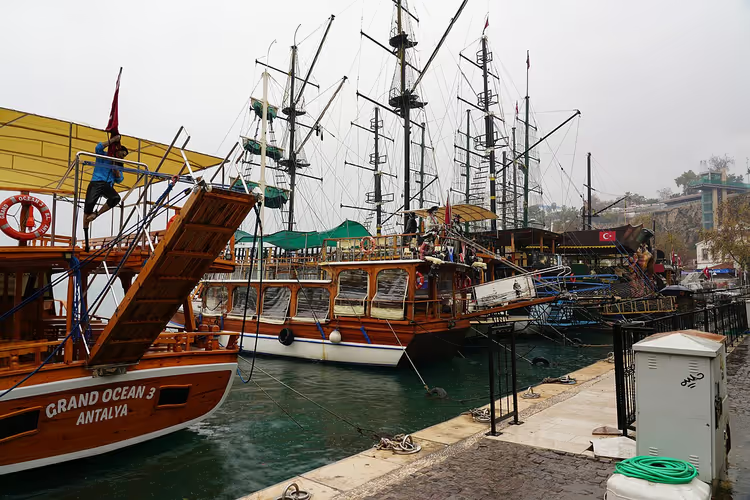
The old port was founded more than 2,000 years ago, and ships carrying olive oil once departed from here. A medieval crenellated wall and cannons along the shore set the mood.
White yachts and boats line the quay, and the water in the bay is azure. You can stroll along the waterfront and sit in a seaside cafe, and nearby there is a lighthouse and an observation deck overlooking the harbor. If you want to get out on the water, take a boat trip.
- Cost: free to enter, boat trips are paid.
- How to get there: below Kaleiçi, walk down the streets toward the water.
- Who it's for / Not for: for an evening stroll; the waterfront gets crowded in season.
6. Hıdırlık Tower
 © Ingo Mehling · CC BY-SAPhoto: Ingo Mehling, CC BY-SA (https://creativecommons.org/licenses/by-sa/3.0), Wikimedia Commons
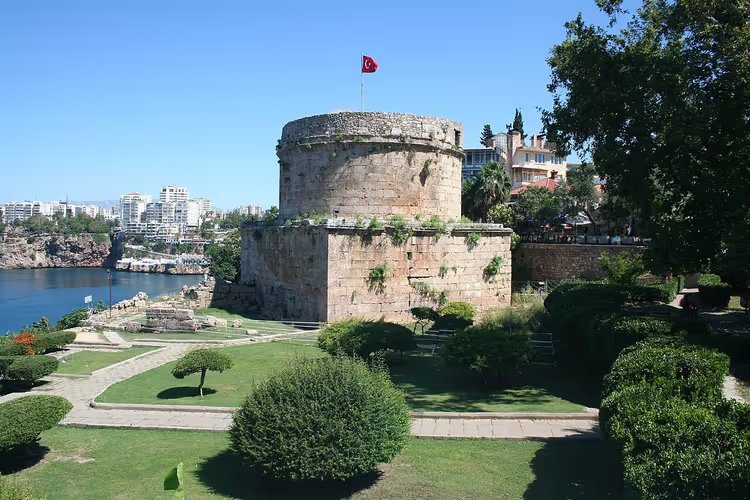
Hıdırlık Tower rises above Karaalioğlu Park. It dates to the 2nd century AD, the Roman period. It stands 13.5 meters tall, with a square base and walls built of brick and stone blocks.
Debate about its purpose continues to this day. Some consider the tower a lighthouse because of its location on the edge of the shore, while others see it as a fortification or the tomb of a Roman official. Fragments of frescoes were found on the interior walls, which points to a religious role in the Byzantine period.
- Cost: the tower is viewed from outside, no ticket needed.
- How to get there: on the eastern edge of Karaalioğlu Park.
- Who it's for / Not for: for those already walking through the park; it is not worth a special trip.
7. Düden Waterfalls
 © Cobija · CC BY-SAPhoto: Cobija, CC BY-SA (https://creativecommons.org/licenses/by-sa/4.0), Wikimedia Commons
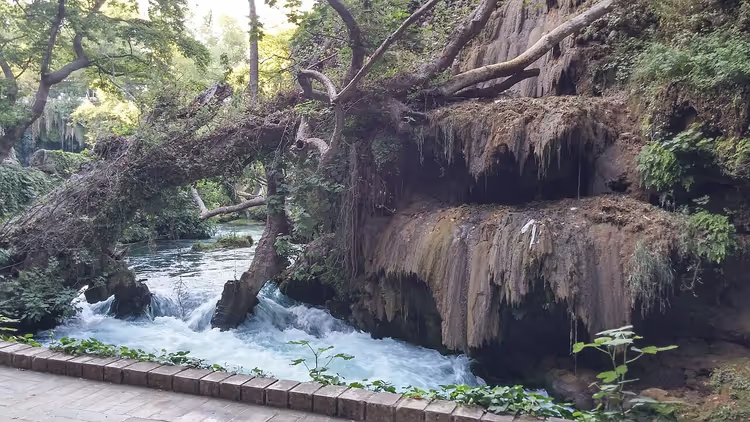
The Düden Waterfalls are divided into upper and lower. The Düden River emerges from two karst springs, flows underground for about 14 kilometers, then bursts to the surface. The sight is worth a dedicated trip.
The lower waterfall plunges into the bay from a cliff up to 50 meters high, and a rainbow often appears above it. The upper waterfall lies in a national park among deciduous and coniferous trees, with a cave hidden behind the streams. The park has paths, pavilions, bridges and viewing platforms, and a local plane tree is more than 700 years old.
- Cost: entry to the lower waterfall is paid, check the price on site (as of 09/2026).
- How to get there: both waterfalls are outside the center, the lower one closer to the sea, the upper one further upstream.
- Who it's for / Not for: for those who want nature without a long journey; swimming near the waterfall is not recommended.
8. Kurşunlu Waterfall
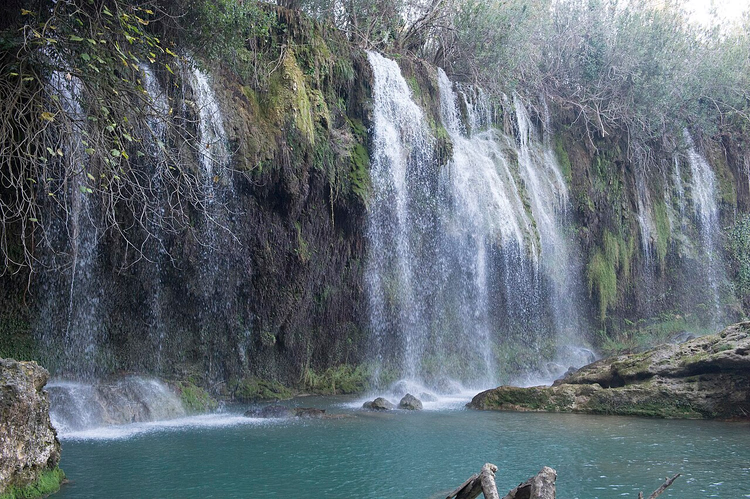 © Dosseman · CC BY-SAPhoto: Dosseman, CC BY-SA (https://creativecommons.org/licenses/by-sa/4.0), Wikimedia Commons
In the Kurşunlu nature park, a rushing stream bursts from a cliff face and falls into a freshwater lake of emerald color, surrounded by a wall of subtropical forest.
Walking here is easy: there are trails, bridges and picnic areas, and the trees provide dense shade. Wild boars, hares, foxes and turtles live in the reserve. Many visitors pass through the veil of water to catch the spray, and winding paths lead to grottoes where the water mist shimmers with rainbows.
- Cost: entry is paid, check the price on site (as of 09/2026).
- How to get there: the reserve is east of the center, easiest by car or taxi.
- Who it's for / Not for: for families and forest lovers; the lake water is cold almost all year.
9. Yivli Minaret
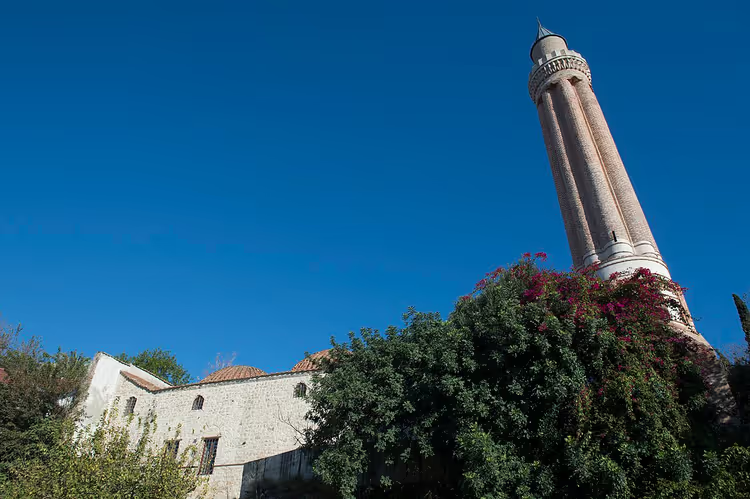 © Dosseman · CC BY-SAPhoto: Dosseman, CC BY-SA (https://creativecommons.org/licenses/by-sa/4.0), Wikimedia Commons
The 38-meter Yivli Minaret was built in the early 13th century. It is one of the symbols of Antalya and stands on a square in Kaleiçi.
Its shape is rare: the shaft appears to be cut into eight vertical half-cylinders with brick mosaic, hence the nickname Fluted. The tower is crowned with a conical roof covered in lead. Fragments of cobalt glass mosaic survive in the niches, and inside, 90 steps of a spiral staircase lead to a balcony with a stone balustrade.
- Cost: viewing from outside is free, entry inside depends on the mosque's schedule.
- How to get there: Kalekapısı Square in the very center of the city.
- Who it's for / Not for: for a walk through the center; climbing to the balcony is not for everyone.
10. Kesik Minare
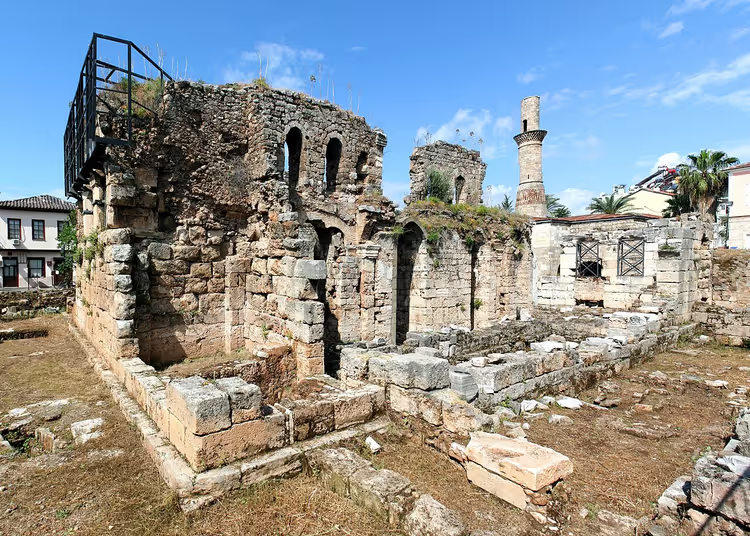 © Ingo Mehling · CC BY-SAPhoto: Ingo Mehling, CC BY-SA (https://creativecommons.org/licenses/by-sa/3.0), Wikimedia Commons
The Kesik Minare stands in Kaleiçi and is popularly called the Truncated Minaret because of its cut-off top. Historians still argue about why the tower looks this way: the popular version says it was struck by lightning, after which the upper part collapsed.
Nearby you will see the ruins of the ancient Church of St. Peter with marble columns and bas-reliefs. Byzantine and Arab features are visible in its appearance. An arched gate leads to the minaret, a favorite photo spot for visitors to the city.
- Cost: viewing from outside is free.
- Getting there: on foot through the old town, near other Kaleiçi sights.
- Who it's for / Not for: for a short stop during a walk.
11. Atatürk House Museum
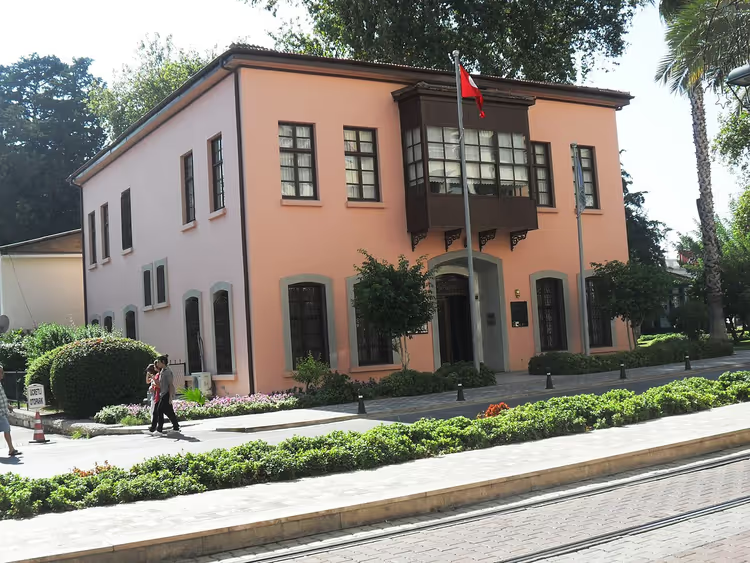
The Atatürk House Museum is dedicated to the founder of the Republic of Türkiye. Mustafa Kemal Atatürk stayed here during official visits, and the two-story pink mansion has been preserved almost in its original condition.
The museum's collection includes about 3,000 exhibits. The rooms contain antique wooden furniture from the 1930s, old telephones and gramophones are on display, and the floors are covered with Turkish carpets. You will see the president's personal belongings, documents, newspaper clippings, and photographs. Coins, banknotes, and postage stamps are shown separately, and two working offices have been recreated on the second floor.
- Cost: paid entry; the current rate is published in the catalog of museums in Türkiye.
- Hours: daily except Monday, during the day; check the schedule on site.
- Who it's for / Not for: for those interested in the 20th-century history of Türkiye.
12. Sandland sand sculpture museum

Sandland operates as an open-air sand sculpture exhibition on one of the resort's best stretches of coastline. Every season, artists come here and sculpt huge figures from sand and water.
Across the roughly 7,000 m² site, you will recognize characters from famous films and cartoons, heroes of legends and warriors, rulers, and mythical creatures. At dusk the sculptures are lit up and look completely different. Sand sculpting workshops are offered for visitors.
- Cost: paid entry; check the price on site (as of 09/2026).
- Getting there: on the coast, easiest by car or taxi.
- Who it's for / Not for: for families with children; art historians will find it simple and fun.
13. Toy Museum
 © smallkaa · CC BYPhoto: smallkaa, CC BY (https://creativecommons.org/licenses/by/2.0/), Flickr
The Toy Museum (Antalya Oyuncak Müzesi) occupies a historic building in Kaleiçi that looks like a gingerbread house. Ten halls hold about 8,000 toys from different eras.
The exhibits are displayed behind glass and grouped by country, theme, and year of production. Turkish, American, Japanese, and German toys attract particular interest, as do wooden, clay, and porcelain dolls. You will find teddy bears, matryoshka dolls, model cars and airplanes, and a model railway. A separate hall is devoted to Barbie dolls of all races and professions.
- Cost: paid entry, rate in the lower range (as of 09/2026).
- Getting there: in the old town, on foot from Hadrian's Gate.
- Who it's for / Not for: for families and adults who love vintage items.
14. Minicity Miniature Park
Minicity shows Türkiye in miniature. Among the greenery are scale models of palaces, mausoleums, theaters, mosques, towers, and monasteries at a 1:25 scale.
Craftsmen have recreated the architectural masterpieces of Asia Minor down to the smallest details. You will see structures from Troy, Ephesus, Cappadocia, Istanbul, and Aspendos on a single site. Paths and bridges over an artificial stream run between the models, benches are placed throughout, and miniature car and boat races are held nearby.
- Cost: paid entry; check the price on site (as of 09/2026).
- Getting there: outside the center, easiest by car.
- Who it's for / Not for: for those who don't have time to travel the whole country; for real architecture, go to Perge.
15. Antalya Zoo

Antalya Zoo lies a few kilometers from the center, in a shady pine forest at the foot of a mountain range. The grounds cover about 330 hectares.
Spacious enclosures with greenery, sandy areas, and rocks are home to ungulates, big cats, birds, amphibians, and primates. Bears, tigers, hyenas, zebras, deer, monkeys, lions, crocodiles, parrots, and camels live here. Paths run alongside the enclosures, and lakes with fountains and waterfalls add a cooling touch.
- Cost: paid entry; check the price on site (as of 09/2026).
- Getting there: outside the city, easiest by car or taxi.
- Who it's for / Not for: for families with children; allow half a day for the full walk around.
16. Aktur park amusement park
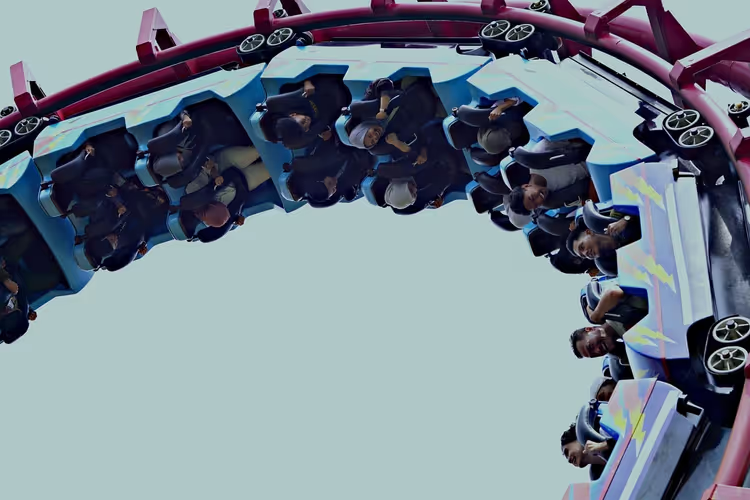
Aktur Park suits both adults and children. The entrance is designed as a fairytale castle with towers, and pirate and Viking figures greet you beyond the gates.
You can start the entertainment program with the Ferris wheel and carousels styled after Disney cartoons. Adrenaline lovers can head for the roller coasters, giant swinging panels, centrifuges, and a pendulum shaped like a pirate schooner. In addition to traditional rides, there is go-karting, dance floors, shooting galleries, an arcade, and funhouse mirror rooms.
- Cost: entry is free, rides are paid separately.
- Getting there: within the city limits, easy to reach by taxi.
- Who it's for / Not for: for teenagers and active families.
17. Aquarium
 © МаратД · CC BY-SAPhoto: МаратД, CC BY-SA (https://creativecommons.org/licenses/by-sa/4.0), Wikimedia Commons
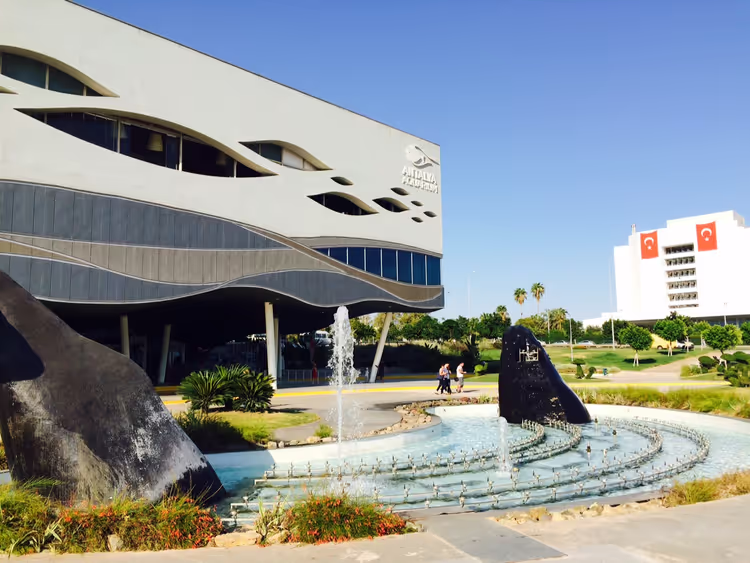
Antalya Aquarium stands in the central district of the resort and occupies a huge complex. In themed aquariums you will see inhabitants of oceans, seas, and rivers against decorative backdrops.
A 131-meter glass panoramic tunnel runs through the entire complex. Inside, you view the underwater world from below and from all sides: sharks, seahorses, turtles, octopuses, rays, jellyfish, and moray eels swim past. Each aquarium has its own setting, with statues, sunken ships, palace ruins, pyramids, and treasure chests lying underwater.
- Cost: paid entry; check the price on site (as of 09/2026).
- Getting there: central district, a good option for a rainy day.
- Who it's for / Not for: for families with children; people come here for the tunnel, not just the fish.
18. Dinopark
 © Polzovatel24 · CC BYPhoto: Polzovatel24, CC BY (https://creativecommons.org/licenses/by/4.0), Wikimedia Commons
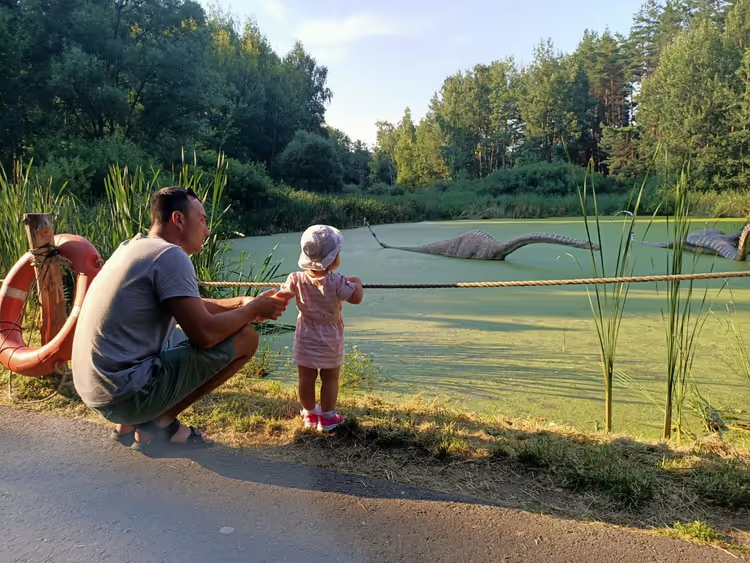
Dinopark covers about 30,000 m² in a pine forest. Life-size dinosaur figures stand in the shade of the conifers.
The models are equipped with motion sensors and react when a person approaches: they move their heads and tails, snap their jaws, and let out a loud roar. This can be a little frightening for children. The park is not limited to dinosaurs: there is a movie theater, pools, a planetarium, a climbing wall, trampolines, and playgrounds, and for the brave there is a horror room with zombies.
- Cost: paid entry, check the price on site (as of 09/2026).
- Getting there: in a pine forest outside the city, easier by car.
- Who it's for / Not for: for children and parents; toddlers may not like the roaring figures.
19. Aqualand Water Park
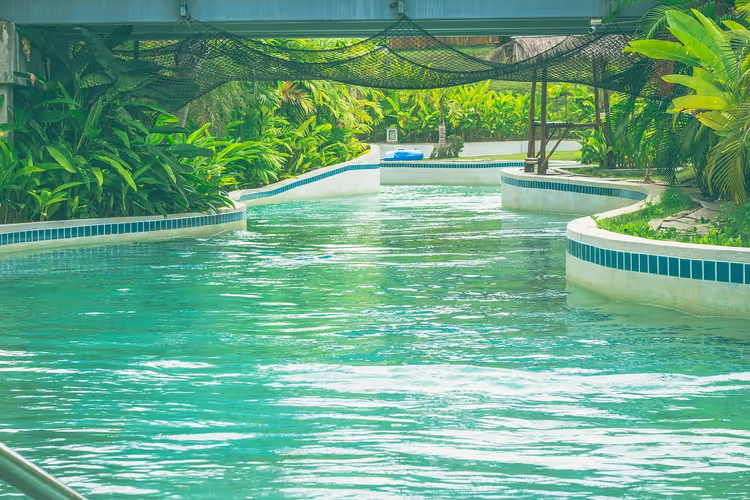
Aqualand has welcomed visitors since 1996 and covers about 40,000 m². The water slides here are designed for different ages and levels of bravery.
Among the main attractions, the wave pool, the high-speed spiral slide, the lazy river ride, and the spiral vortex stand out. Greenery, flowers, artificial ponds, islands, and bridges create a pleasant setting. Cafes and restaurants are available, and there are lockers, changing rooms, and showers. A dolphinarium adds to the attractions, and the steep slides create a free-fall effect.
- Cost: paid entry, check the price on site (as of 09/2026).
- Getting there: within the resort, in summer it is better to arrive at opening time.
- Who it's for / Not for: for a hot day with the whole family; some slides are not accessible to small children.
20. Ancient city of Perge
 © Saffron Blaze · CC BY-SAPhoto: Saffron Blaze, CC BY-SA (https://creativecommons.org/licenses/by-sa/3.0), Wikimedia Commons
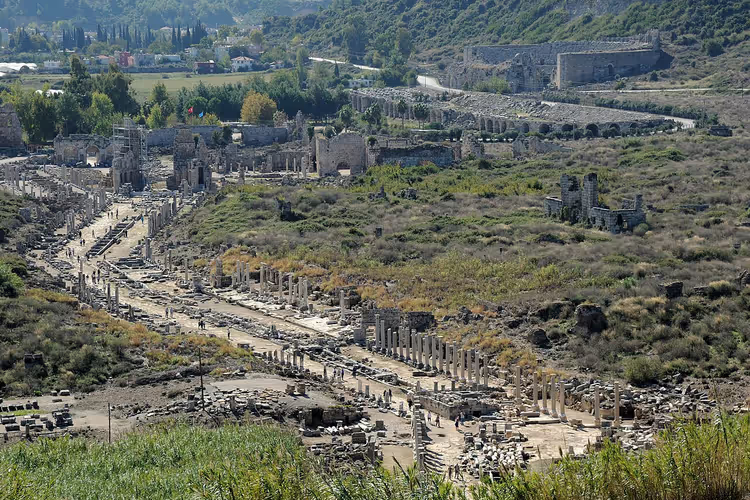
Perge lies 18 kilometers from Antalya and is one of the most interesting archaeological sites in Turkey. The city was founded in the 12th century BC and lived through various kingdoms, reaching its peak under the Romans.
At the beginning of the Common Era, Perge became a center for the spread of Christianity, and it was from here that the Apostle Paul began his missionary journey through Asia Minor. An open-air museum awaits you: towers, basilicas, city gates, an agora, bath complexes, a stadium, and a theater have survived. The main street with its rows of columns and a cascading water channel down the middle is impressive on its own.
- Cost: paid entry; check the current rate on the museum portal: registry of ancient cities.
- Hours: open daily during daylight hours; bring water and a hat in summer.
- Getting there: 18 km from the city; easier by car or as part of a tour.
- Who it's for / Not for: for lovers of antiquity; it will be tough without an interest in history.
21. Ruins of the ancient city of Termessos
 © Anna Stavenskaya · CC BY-SAPhoto: Anna Stavenskaya, CC BY-SA (https://creativecommons.org/licenses/by-sa/4.0), Wikimedia Commons
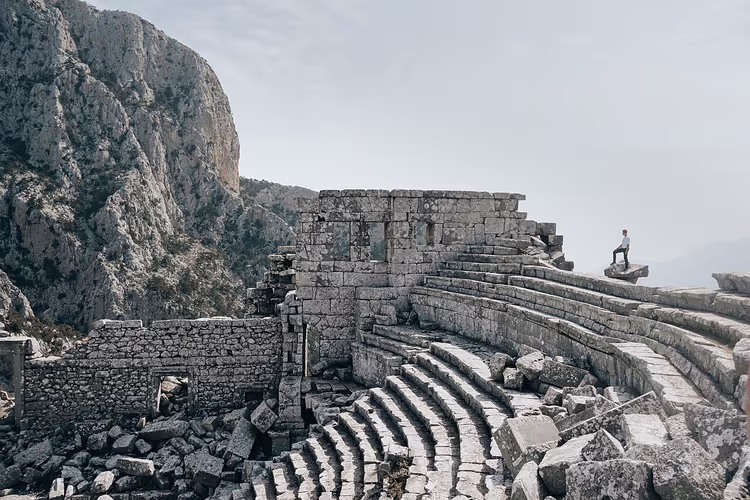
Surrounded by the Taurus Mountains at an altitude of 1,050 meters above sea level lie the ruins of Termessos. The first mention of the city dates back to 334 BC, when Alexander the Great attempted to capture it. He was unable to take Termessos.
The city was protected by mountain ridges, dense forest, and powerful walls, and it withstood a long siege. After a series of earthquakes, only ruins remained, but no excavations or reconstructions have been carried out here, so the stones lie as the last catastrophe left them. You will see temples and a theater, a colonnaded street, the city council building, a gymnasium, baths, a necropolis, and a marketplace.
- Cost: paid entry (as of 09/2026, museum administration website).
- Getting there: in the mountains outside the city; the drive takes over an hour, better by car with a driver.
- Who it's for / Not for: for those ready for the climb and the heat; it will be difficult with small children.
22. Ancient city of Aspendos
 © Saffron Blaze · CC BY-SAPhoto: Saffron Blaze, CC BY-SA (https://creativecommons.org/licenses/by-sa/3.0), Wikimedia Commons
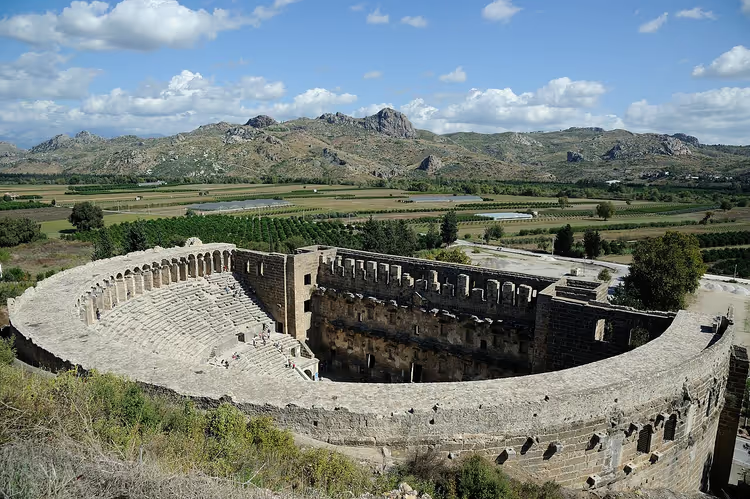
Aspendos was part of the Roman Empire and in its best years was famous for its vineyards, olive groves, and the market for the empire's finest horses. It minted its own coin, which speaks to the city's former power.
Most tourists are drawn to the amphitheater, built in the 2nd century AD. It has survived almost entirely intact and still operates today: in summer, concerts and festivals are held on its stage. The acoustics are such that a whisper from the stage can be heard in the back rows, and the theater seats up to 17,000 spectators. An arched gallery runs above the seating.
Also worth seeing are the ruins of the aqueduct, stadium, and basilica, as well as fragments of the city council building walls. You can walk through the central square, where people once traded and held political assemblies.
- Cost: paid entry (as of 09/2026, official museum data).
- Hours: daily during daylight hours; there is almost no shade here in summer.
- Getting there: not far from Side; easier by car or with a tour.
- Who it's for / Not for: for those who want to see a working ancient theater.
23. Köprülü Canyon
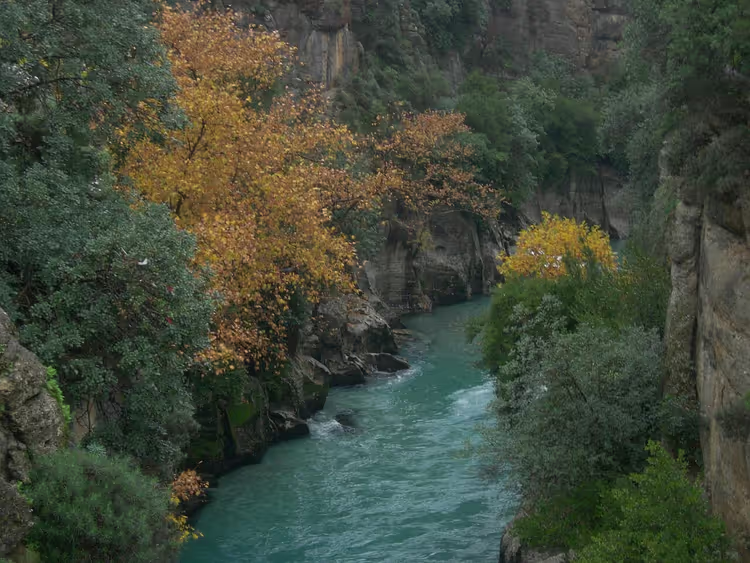
Köprülü Canyon stretches along vertical rocky walls and is part of a national reserve. The area is known for its rich flora and fauna.
The park is home to more than five hundred species of trees: cypresses, eucalyptuses, junipers, and firs. Deer, bears, foxes, wolves, rabbits, and many birds live here. People raft down the rushing mountain river, and the water is refreshing on a scorching day. A hike through the forest thicket is also worthwhile, and horseback riding is available for equestrian enthusiasts. Don't miss the karst cave with its labyrinth of tunnels and an underground lake.
- Cost: paid entry to the reserve; check the price on site (as of 09/2026).
- Getting there: in the mountains outside the city; easier by car or with a tour.
- Who it's for / Not for: for an active day on the water; those who dislike rafting and heights will be uncomfortable.
24. Göynük Canyon
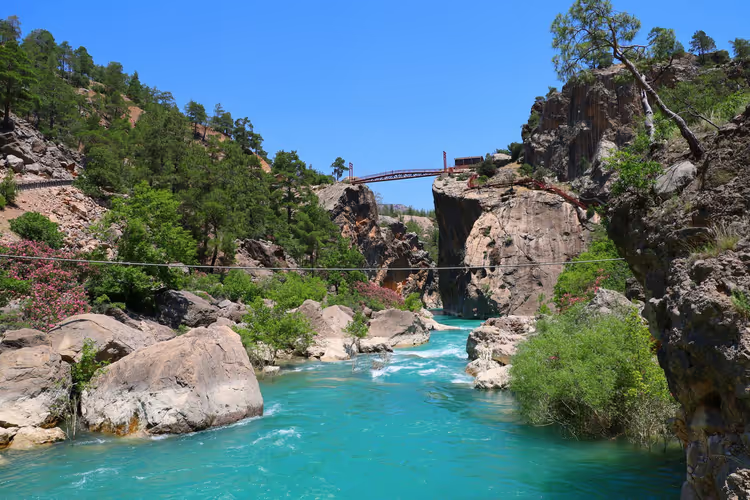
Göynük Canyon formed over millions of years and is a gorge about 6 meters wide and up to 350 meters high. Sheer cliffs and dense greenery on the slopes await you here.
The gorge walls range in color from white to reddish hues, and the boulders on the bottom are polished to a shine by the water. Visitors can walk along the mountain trails of the national reserve, take a boat ride, swim in the river, or fly over the gorge on a zipline. Hiking along the riverbed requires rubber boots, a wetsuit, a helmet, and a life vest.
Along the route you'll encounter rushing streams, pine forest, waterfalls, caves, and pools of turquoise water.
- Cost: paid entry; check the price on site (as of 09/2026).
- Getting there: not far from the village of Göynük; easier by car.
- Who it's for / Not for: for those willing to get wet; with small children, it's better to skip part of the route.
25. Tünektepe cable car
 © Haciaksoy · CC BY-SAPhoto: Haciaksoy, CC BY-SA (https://creativecommons.org/licenses/by-sa/4.0), Wikimedia Commons
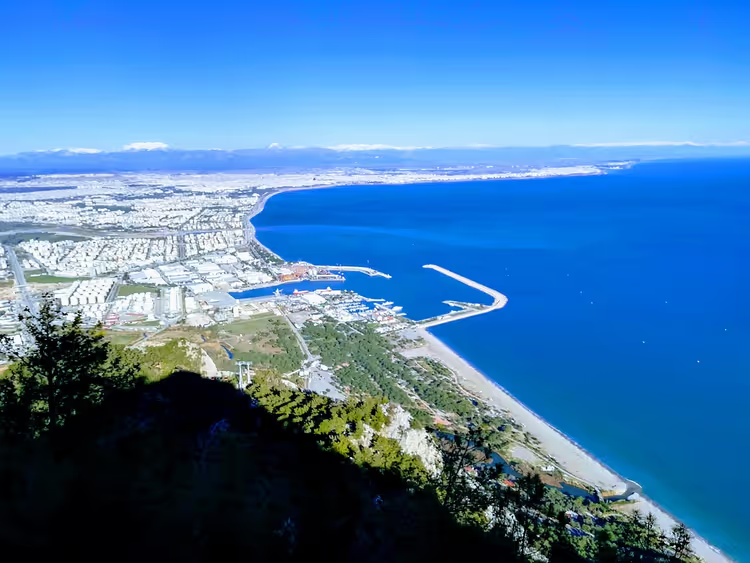
The Tünektepe cable car takes you up to an altitude of 605 meters. The modern cabins seat four people, and the length of the suspended track is 1,706 meters.
During the ascent, you'll see views of the azure bay, mountains, rocky slopes, and coniferous forests. At the top there are observation decks, binoculars, and cafes and restaurants with open terraces. You'll easily find a secluded spot to quietly look at the city from above.
- Cost: paid ticket; check the price on site (as of 09/2026).
- Getting there: the station is on the outskirts of the city; easier by taxi.
- Who it's for / Not for: for panoramas and sunset; the ascent may be closed in windy weather.
Before your trip, double-check schedules: in summer, some sites change their hours. If you don't want to plan the route yourself, check out ready-made Antalya tours on GetYourGuide.
Tours and tickets in Antalya
Guided tours, skip-the-line tickets and activities — most offers can be cancelled free of charge.
See offers on GetYourGuideThe widget loads once you give your consent.
Antalya attractions on the map
All 25 spots are collected on the map below. It makes it easy to split your sightseeing by day and see what's near your hotel.
⁉️🤔 Frequently asked questions
How many days should I plan for Antalya?
Two days are enough for the center: Kaleiçi, the Old Harbor, Hadrian's Gate, Hıdırlık Tower, and Karaalioğlu Park are all walkable. For nature and ancient sites, add three or four more days: Düden Waterfalls, Göynük Canyon, Perge, and Aspendos each deserve a separate trip.
What can I see without a car?
The entire center and Kaleiçi are walkable, and the tram goes to the Archaeological Museum. Düden Waterfalls and Kurşunlu Waterfall are reachable by taxi or bus. But Perge, Aspendos, the canyons, and Termessos are easier to reach by car or with an organized tour.
When is the best time to visit Antalya?
Spring and autumn are the most comfortable, when it's warm during the day but not oppressively hot. In summer, exploring ancient cities and canyons is tough, so bring water, a hat, and head out early in the morning. In winter, some boat trips and the water park are closed.
What should I choose with kids?
Dinopark with its roaring dinosaur figures and Aqualand with its slides fill a whole day. Antalya Aquarium and the glass tunnel work even in heat or rain. The zoo and Aktur Park amusement park add another family day.
Should I book tours or go on my own?
You don't need a tour for the center, everything is close together. But for Perge, Aspendos, Termessos, and the canyons, an organized tour is often a better deal: the price includes transport, entrance tickets, and a guide. For Göynük Canyon, people also book tours for the equipment.
In short: what's worth booking
It's best to build your route around your hotel and the weather. If you only have a couple of days: take a walking tour of Kaleiçi, Hadrian's Gate, and an evening in the Old Harbor. If you're traveling with kids: spend the day at Dinopark, Aqualand, and Antalya Aquarium. If you want ancient history: Perge and Aspendos, and save Termessos for those ready to climb into the mountains.
For hotels in Antalya, it's better to arrive with a booking already made, especially in summer and October. Check available hotel options in Antalya on Trip.com and compare prices for your route in advance.

A small editorial team writing guides for independent travel. We travel ourselves, but we haven’t been everywhere, so we check prices, opening hours and how to get there against official sources.