
















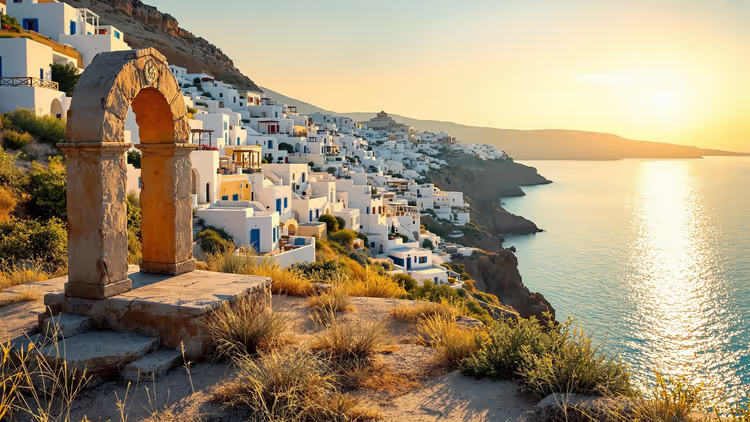
 AIIllustrative image: AI-generated
What to see on Kos: Asklepion, Nisyros volcano and beaches
Kos is called the island of Hippocrates: the father of medicine was born here. He studied healing at the local Asclepieion (according to the official Kos tourism portal, 09/2026).
It is the third largest island in the Dodecanese, and it lies right off the coast of Turkey, across from Bodrum (according to Visit Greece, 09/2026). It is easy to fly here, and there are plenty of places to stay for every taste.
Below we cover how to get there, visas, the season, and five places worth seeing. You will know where to go first.
Ad: this article contains affiliate links, we earn a commission if you book through them, at no extra cost to you.
How to get to Kos
💡 In short:
- Fly direct to Kos Airport (Hippocrates): one hour from Athens, about an hour and a half from Thessaloniki (according to Visit Greece materials, 09/2026).
- In summer, charters from Germany are added, and a ferry runs across the strait from Bodrum.
- Route and season: 09/2026, according to the Visit Greece guide and the Kos tourist office.
Hippocrates Airport receives direct flights from Athens and Thessaloniki, and in high season charters fly here from Germany and other EU countries. We checked flight information on 13.09.2026 on the official Visit Greece page. You can get to Kos town by bus or taxi, and it is convenient to rent a car right at the airport.
The second route goes through Turkey, and it is good because it lets you combine two countries in one trip. You fly to Bodrum, then take a ferry across the strait. In season, services run every day, so fitting your trip around them is easy.
Tours and tickets in Kos
Guided tours, skip-the-line tickets and activities — most offers can be cancelled free of charge.
See offers on KiwitaxiThe widget loads once you give your consent.
Do you need a visa for Kos
Kos is part of the Schengen Area, and entry rules here are the same as in the rest of Greece. EU and Swiss citizens do not need a visa: a passport or ID card is enough. Citizens of other countries do not always need a visa. Check whether your country has a visa-free agreement with Schengen.
Do not put off your paperwork until May. In summer, consulates are busy, and appointment slots can shift by several weeks. Submit your documents early, and you can buy tickets and book a hotel without stress.
When is the best time to visit Kos
The swimming season runs from April to October. May and late September are good because the sea is warm and there are fewer people. In July and August, the island has the highest temperatures and the highest prices.
If you do not like heat, choose May or October. The sun is milder, lines are shorter, and accommodation is cheaper. June suits families with children: the water is already warm, but the peak season has not yet arrived.
What to see on Kos
Five places from our list are scattered across the island. You'll see some of them by car, and some on a boat tour. Renting a car on DiscoverCars gives you freedom and lets you reach remote bays.
Visit the Asklepieion
The Asklepieion is a sanctuary of Asclepius, the god of medicine, on a hillside in the center of the island (according to the official Kos website, 09/2026). For centuries, patients from all over the Mediterranean came here, and today visitors walk among the ruins of temples and terraces.
See the upper terrace first, then walk down past the altar to the gate. It's best to plan your visit for the morning: the light is softer and there are fewer tour groups.
How to get there: The Asklepieion is located near Kos Town; it's easy to reach by car or bus.
The catch: the site sits on a slope, and you'll have to climb a lot of stairs.
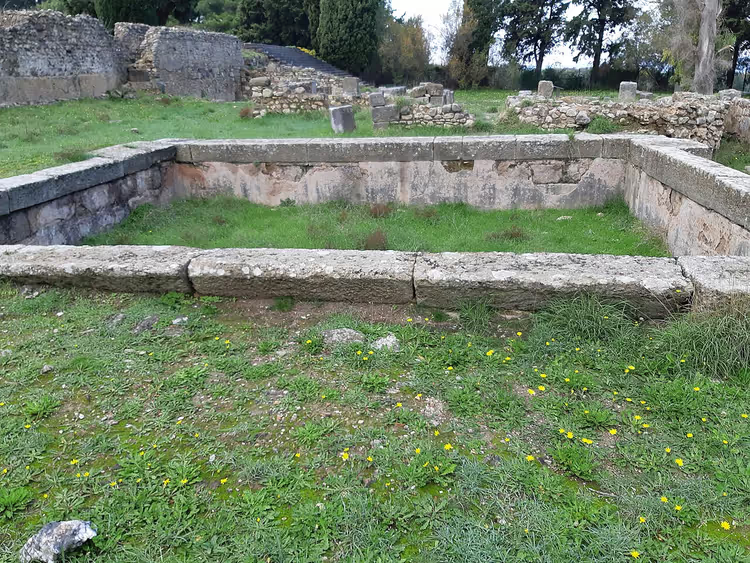 © Rikki Mitterer · CC BY-SAPhoto: Rikki Mitterer, CC BY-SA (https://creativecommons.org/licenses/by-sa/4.0), Wikimedia Commons
Descend into a volcano crater
Near Kos lies the island of Nisyros, and its volcano is considered one of the active ones in Europe (according to Visit Greece, 09/2026). The caldera has several craters, and the largest is named Stefanos. You walk along its rim, and a gray lunar landscape opens up around you.
You can get there by sea: boats depart from Kardamena and neighboring ports. Book a Nisyros tour on GetYourGuide in advance, because trips depend on the weather.
- The catch: the crater smells of sulfur and has almost no shade, so bring water and a hat.
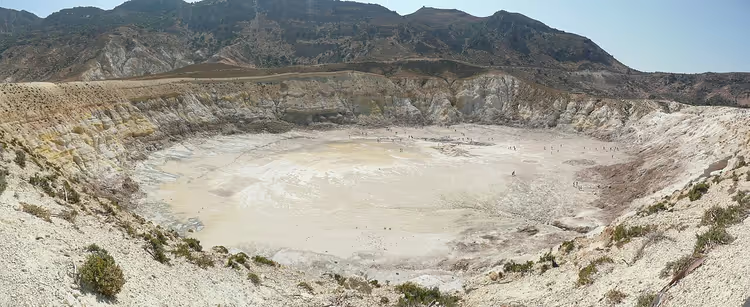 © de:Benutzer:ch ivk · CC BYPhoto: de:Benutzer:ch ivk, CC BY (https://creativecommons.org/licenses/by/3.0), Wikimedia Commons
Take a thermal bath at Cape Agios Fokas
On the peninsula at Cape Agios Fokas, hot springs bubble up right by the sea. The water is rich in sulfur, magnesium, and calcium, so bathing here is considered good for the skin and joints. The water stays warm even on cool days.
To get here, you drive to the beach and then walk along a rocky path. Wear comfortable shoes that are easy to walk in over stones.
- The catch: the bathing spot is easily hit by waves, so don't leave your belongings right at the water's edge.
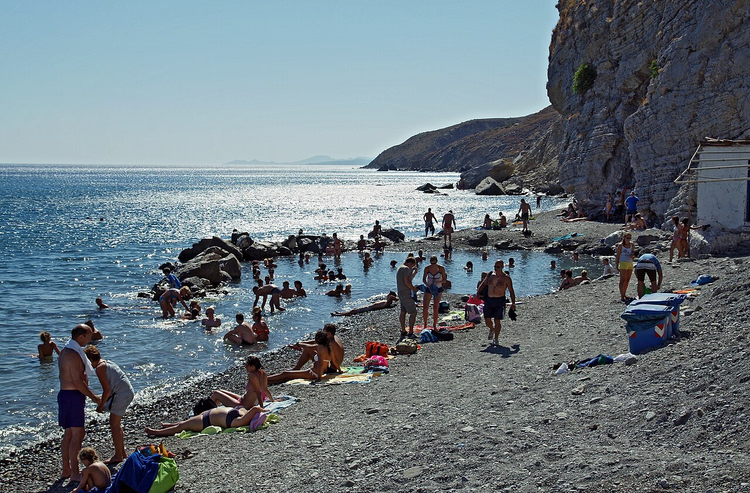 © kallerna · CC BY-SAPhoto: kallerna, CC BY-SA (https://creativecommons.org/licenses/by-sa/3.0), Wikimedia Commons
Relax on Agios Stefanos beach
Agios Stefanos beach lies near the town of Kefalos, far from the island's capital. It's known for its mix of sand and pebbles, and right by the water you can see the ruins of the early Christian basilica of Agios Stefanos. You get both the sea and history in one place.
Old villages and ruins are scattered around, so a walk will add more ancient sites to your route.
Who it's for: those who want to combine swimming and archaeology in a single day.
The catch: the beach is far from Kos Town, and getting there without a car or a tour takes a long time.
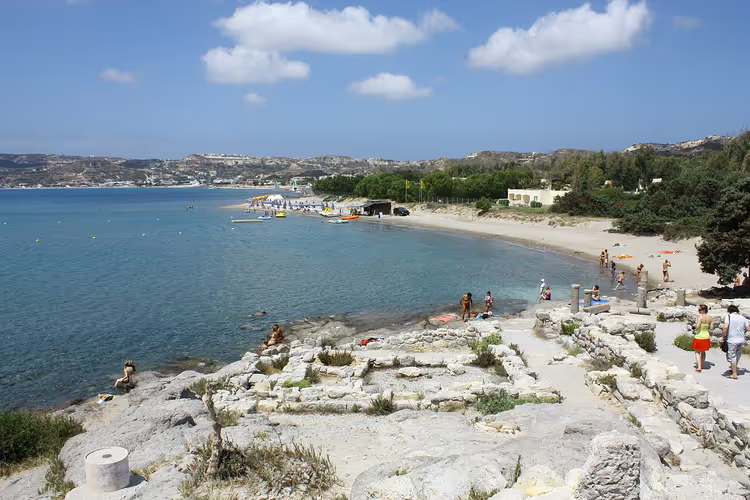 © Ellibah · CC BY-SAPhoto: Ellibah, CC BY-SA (https://creativecommons.org/licenses/by-sa/4.0), Wikimedia Commons
Find the Altar of Dionysus
The Altar of Dionysus is located in Kos Town, near the old town. It served as a sanctuary of the god of winemaking. Offerings were made to Dionysus here, and today only ruins remain of the structure. For archaeologists it's an important find; for a tourist, it's a short stop along the way.
Stop by here while exploring the old town, so you don't have to set aside a separate day.
- The catch: these are ruins, so don't expect a striking photo opportunity here.
⁉️🤔 Frequently asked questions
Do I need a visa to travel to Kos?
Kos follows the general Schengen rules. If your country doesn't have visa-free access, apply for a visa several weeks before your trip.
When is the best time to visit Kos?
May, June, and September are the most comfortable months. The sea is already warm then, and the beaches aren't overcrowded. July and August mean peak heat and high prices, but more boat tours operate then. If you don't like crowds, go in late September.
How much does it cost to enter the Asklepieion?
Check the exact ticket price on site. Entry to the archaeological site is paid, and tickets are bought at the entrance. In summer, arrive at opening time so you can see the terraces before the heat and before the tour groups.
How do I get to the Nisyros volcano?
Boats to Nisyros run from Kos, most often from Kardamena. The journey takes about an hour by sea. Trips depend on the weather, so book your spot in advance and confirm the time the day before so you don't get stranded on shore.
Are there free beaches on Kos?
Yes, most public beaches are free. You only pay for a sunbed and umbrella. The thermal springs at Cape Agios Fokas are also open to everyone, but getting there is easier by car.
In short: what to book
Kos suits both history lovers and those who just want to lie by the sea. Choose accommodation that matches your pace and decide in advance which tours you need.
For a relaxing stay: book a hotel in Kefalos or Kardamena.
For history lovers: set aside a day for the Asklepieion and the old town.
For nature lovers: take a boat tour to Nisyros.
For families with children: choose June and Agios Stefanos beach.
Book your hotel in advance and compare options for your dates: see Kos hotels on Trip.com.

A small editorial team writing guides for independent travel. We travel ourselves, but we haven’t been everywhere, so we check prices, opening hours and how to get there against official sources.