
















10 Dishes of Luxembourg: pork neck, kachkéis and crémant
Luxembourg is easy to drive around in one day. But the cuisine of the small duchy deserves a separate trip. Across just a few hundred square kilometers, German heartiness, French presentation, and local recipes all come together here.
Many tourists leave without ever trying smoked pork neck with broad beans or the local crémant. We have rounded up the dishes and drinks worth looking for on menus, and we will point you to places that prepare them especially well.
In short: the country's signature dish is called Judd mat Gaardebounen, smoked pork neck with broad beans. Next come cold-smoked Ardennes ham, melted cheese kachkéis, freshwater trout, and potato fritters gromperekichelcher. For drinks, go for the white wines of the Moselle valley and sparkling crémant; for dessert, the plum tart quetschentaart.
Ad: this article contains affiliate links, we earn a commission if you book through them, at no extra cost to you.
Features of Luxembourg cuisine
💡 In short:
- The cuisine combines German portions with French presentation.
- Main dishes: Judd mat Gaardebounen, Ardennes ham, kachkéis.
- Dishes and food spots: as of 09/2026, according to the official Luxembourg portal.
The duchy's traditions developed under the influence of France, Belgium, and Germany. Generous portions and careful presentation both came from its neighbors. Most everyday dishes have peasant origins, but you would not call them simple.
A local saying goes: in Germany people eat a lot, in France they eat beautifully. In Luxembourg, you get both hearty and beautiful. Portions here are indeed large, and the presentation is thought through down to the smallest detail.
The country loves freshwater fish and crayfish. Luxembourgers have a serious sweet tooth: they value chocolate no less than the Belgians, and they make pastries and desserts with local liqueurs. A particular pride of local apiaries is honey, which is added to sauces, dressings, and desserts.
Among dairy products, kachkéis, a melted cheese, stands out. The cheese is considered a national specialty, although a similar product is also popular in France. Beurre Rose butter is also popular in Luxembourg.
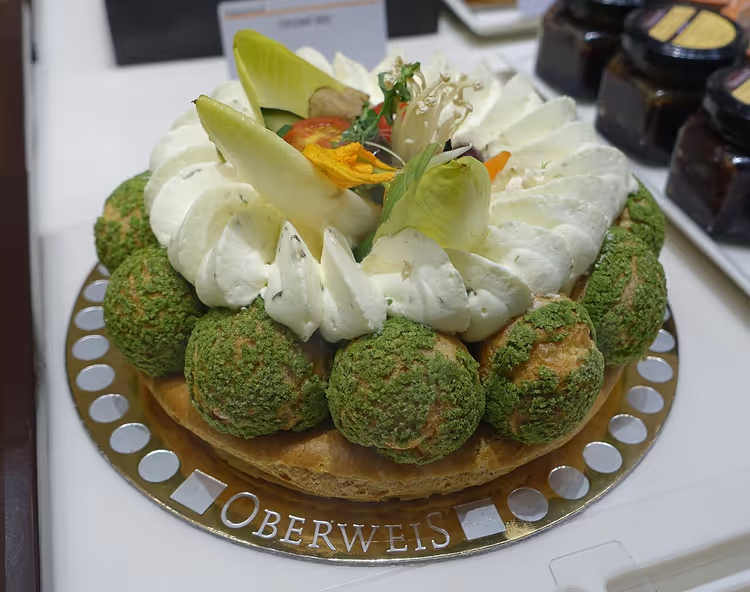
Smoked pork is often on the table. Calf's heart, liver dumplings, and small pies with jellied meat are also popular. Many of these dishes will be familiar to you from neighboring countries, but the preparation methods differ noticeably.
Further on you will find plum tarts, jellied suckling pigs, blood sausage, potato pancakes, pea soup, hare stew, green bean soup, and meat pâté. Among drinks, white wines and berry and fruit liqueurs are prized.
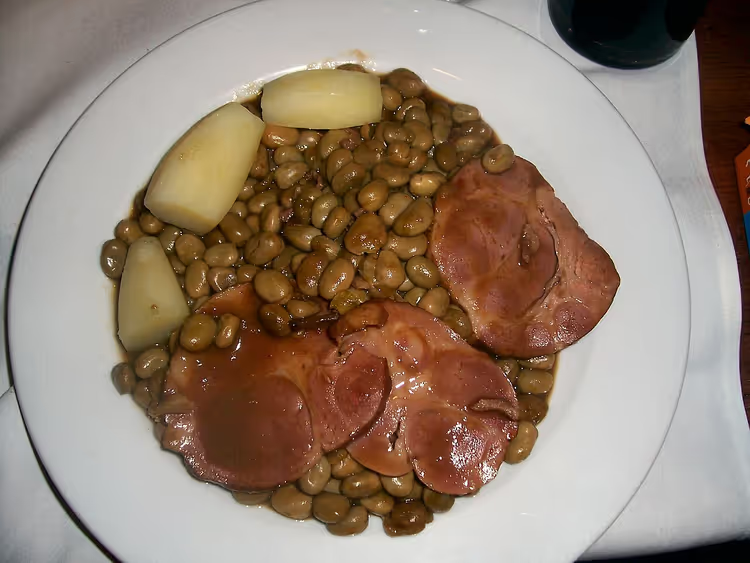
1. Judd mat Gaardebounen: pork neck with broad beans
Luxembourg's national dish is made from smoked pork neck and broad beans. The meat is braised with onions, carrots, and herbs, sometimes with white wine added. It is served with potatoes and mustard. The portion is hearty and rich, but it gives you energy for the whole day. You will find the dish on the menu of almost any tavern. Wikipedia has more about it.
- The catch: after a heavy lunch, a long walk around the city becomes harder.
 © UnorthodoxY · CC BY-SAPhoto: UnorthodoxY, CC BY-SA (https://creativecommons.org/licenses/by-sa/2.0), Wikimedia Commons
2. Jambon d'Ardenne: Ardennes ham
One of the main components of the local cuisine. Marinated pork is cold-smoked, so the taste is reminiscent of jamón but remains distinct. The ham is eaten as a standalone appetizer, but more often it serves as an ingredient: it is used to stuff fish and is served with other meats. A month would not be enough to try all the variations, so pick a couple of the most interesting ones.
 © Streppel · CC BY-SAPhoto: Streppel, CC BY-SA (http://creativecommons.org/licenses/by-sa/3.0/), Wikimedia Commons
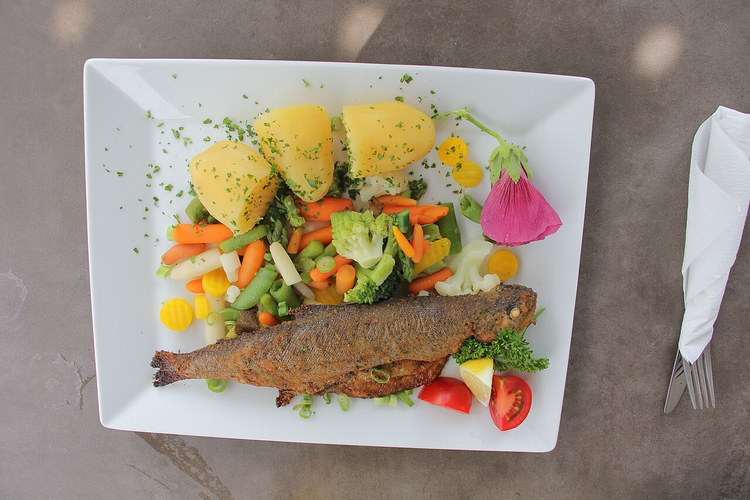
3. Freshwater trout
Luxembourgers love river fish no less than sea fish. Trout is often stuffed with ham and served with local white wine. You can have dinner at a riverside restaurant near the village of Schengen. This is where the agreement to abolish border controls in Europe was signed.
 © Karl Gruber · CC BY-SAPhoto: Karl Gruber, CC BY-SA (https://creativecommons.org/licenses/by-sa/4.0), Wikimedia Commons
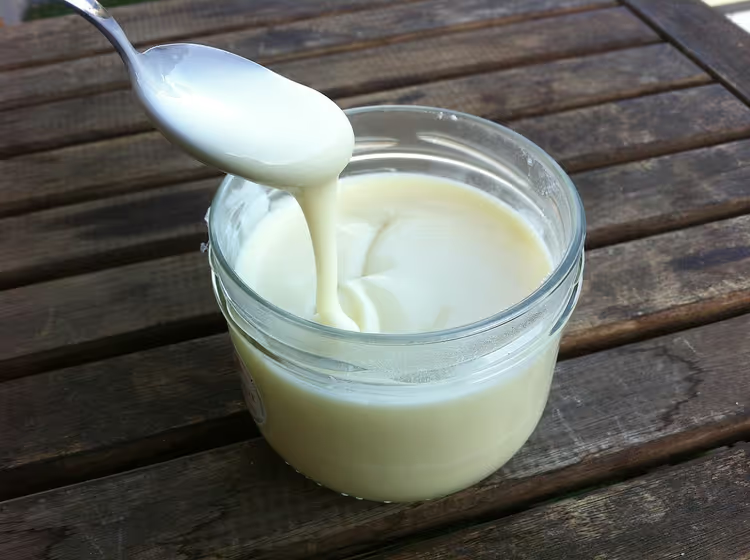
4. Kachkéis: melted cheese
Kachkéis is made from melted local cheeses, and its consistency is closer to sour cream. The taste is slightly sharp, with milky and creamy notes. Spread the cheese on bread or serve it with potatoes. Try it at the hotel breakfast to get a sense of the local taste.
5. Gromperekichelcher: potato fritters
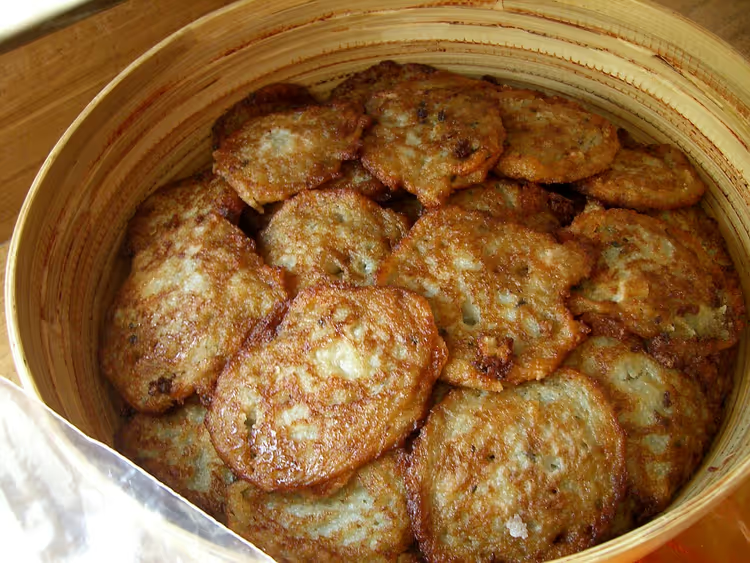
Crispy fritters made from grated potatoes with onion and parsley. They are sold at fairs and street stalls. Get them straight from the pan, sprinkled with salt. Essentially local potato pancakes, but with their own size and presentation.
 © Photo made by Daniel Spils and uploaded to flickr.com · CC BY-SAPhoto: Photo made by Daniel Spils and uploaded to flickr.com, CC BY-SA (https://creativecommons.org/licenses/by-sa/2.0), Wikimedia Commons
6. Blood sausage and meat pate
Blood sausage is eaten with potatoes and apples, and meat pate is served with rye bread. Both dishes are rustic and very filling. If you like hearty home-style cooking, you will enjoy them.
 © Tristan Schmurr from Luxembourg, Luxembourg · CC BYPhoto: Tristan Schmurr from Luxembourg, Luxembourg, CC BY (https://creativecommons.org/licenses/by/2.0), Wikimedia Commons
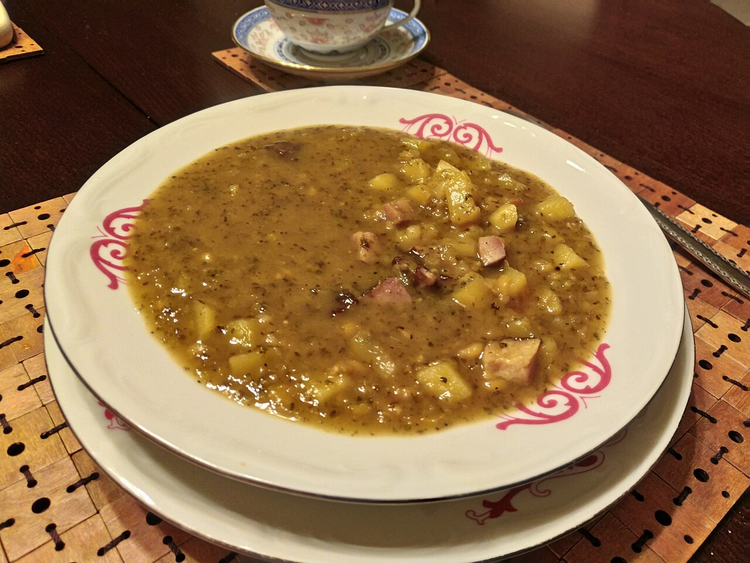
7. Soups: green beans and peas
Green bean soup is made with broth, potatoes, and bacon. Pea soup turns out thick, almost like a stew. In winter, these soups are great for warming up after a walk and are inexpensive.
 © MichalPL · CC BY-SAPhoto: MichalPL, CC BY-SA (https://creativecommons.org/licenses/by-sa/4.0), Wikimedia Commons
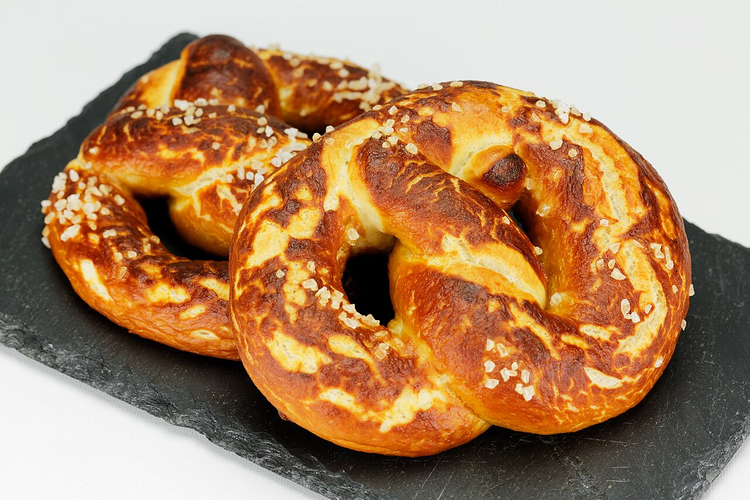
8. Baked goods: quetschentaart and pretzel
Baking in Luxembourg is almost a family craft: some bakeries have kept the tradition going for generations. Apple turnovers, pretzels, small sugar-coated donuts, and open tarts with various fillings are all popular. In season, be sure to get quetschentaart with plums. Stop by a local bakery in the morning, everything is fresh then.
 © Thesupermat · CC BY-SAPhoto: Thesupermat, CC BY-SA (https://creativecommons.org/licenses/by-sa/4.0), Wikimedia Commons
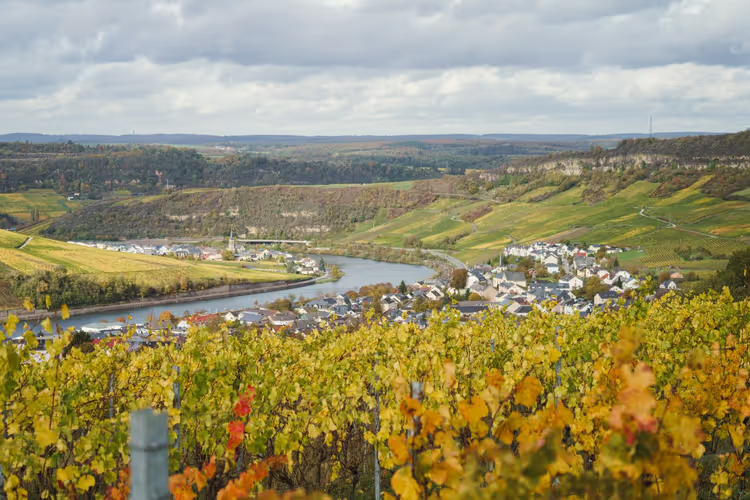
9. Moselle wines and Crémant de Luxembourg
White wines from the Moselle valley are little known outside the country, although their quality is on par with their neighbors. They are usually dry and fully fermented. Sparkling Crémant de Luxembourg has been made from local grapes since 1991 (as of 09/2026, official portal of Luxembourg). The local label is protected by the Moselle Luxembourgeoise designation, as described by the winegrowers' council.
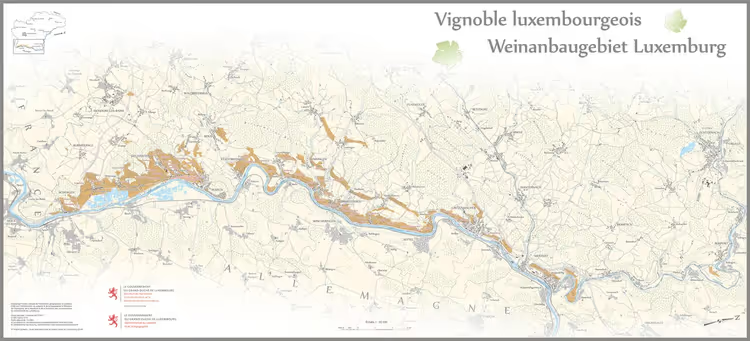
In fall, the country hosts wine festivals. The wine museum in the town of Ehnen shows how the cellars are built, and Beaufort Castle produces the Cassero liqueur made from blackcurrants. The Chiggeri restaurant in Luxembourg City holds the world record for the largest wine list: 1,746 labels, according to the Guinness World Records (measured on December 31, 2008). If you want to see the cellars with a guide, book wine tours and tastings in advance.
10. Quetsch and Kirsch liqueurs, Luxembourg honey
Plums, apples, and pears are used here to make strong fruit liqueurs, and cherries are turned into Kirsch. Local honey is high quality and undergoes strict certification; it is added to sauces and desserts. A small bottle of liqueur or a jar of honey makes a great gift to bring home from your trip.
⁉️🤔 Frequently asked questions
What should you definitely try in Luxembourg on your first visit?
Start with Judd mat Gaardebounen, smoked pork neck with broad beans. Then move on to Ardennes ham, kachkéis, and trout. For dessert, have quetschentaart, and for drinks, try Moselle white wine or crémant. In one day you can cover the country's key flavors.
Is it true that Luxembourg makes good wine?
Yes, mostly white. The grapes grow in the Moselle Valley, and the Crémant label is produced from local grapes using the traditional method.
What is kachkéis and what do you eat it with?
Kachkéis is made from melted local cheeses, resulting in a soft spread with a slightly tangy taste. Spread it on bread, serve it with potatoes, or add it to hot dishes. Try it for breakfast.
How does the local cuisine differ from German and French?
The portions here are German, while the presentation is French. Hearty peasant meat dishes and soups came from Germany; sauces and attention to plating came from France. At the same time, the country has its own recipes that its neighbors don't have. Pork neck with beans and Ardennes ham will immediately show you the difference.
Where can I try local dishes if I don't have much time?
Put together a short route through the taverns in central Luxembourg City, where the menus are simpler and prices are lower. Stop by Chiggeri for the wine list or a bakery for quetschentaart. The wine museum in Ehnen and the Beaufort cellars work well if you have half a day. In fall, the easiest way to try many dishes is at the wine festivals.
In short: what to book
- If you have one evening: pick a tavern in the center and the pork neck with beans.
- If you have a car: add the Moselle Valley, Ehnen, and Beaufort Castle.
- If you are traveling in the fall: time your dates around the wine festival.
Hotels in Luxembourg are easy to compare through the selection on Trip.com, and tours and tastings can be found on GetYourGuide.

A small editorial team writing guides for independent travel. We travel ourselves, but we haven’t been everywhere, so we check prices, opening hours and how to get there against official sources.