
















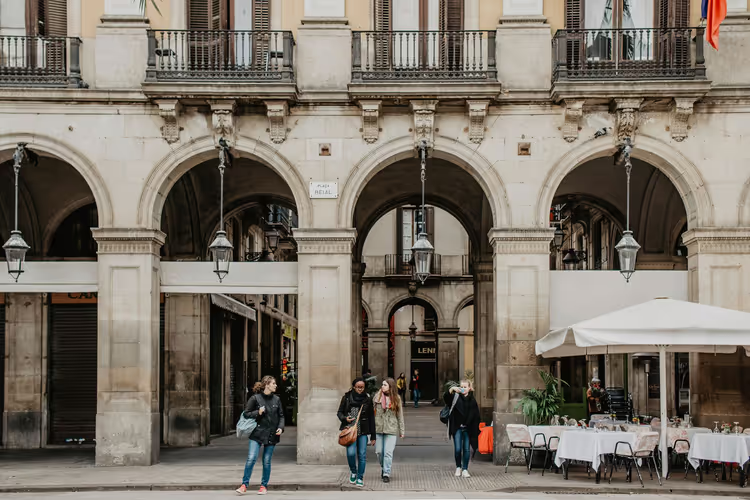
Rambla in Barcelona: route along five sections and protection from pickpockets
Barcelona starts with La Rambla. Everyone knows this boulevard, but few know that it is actually made up of five different streets. During the day, tourists and locals stroll here, and in the evening street performers come out onto the boulevard. Pickpockets keep a close eye on the pleasant walk.
We put together a practical route along La Rambla. You will learn where the boulevard begins, what to see on each section, and how to avoid losing your wallet in the crowd.
Ad: this article contains affiliate links, we earn a commission if you book through them, at no extra cost to you.
What La Rambla is and why it matters
💡 In short:
- La Rambla is divided into five sections, and each has its own name and character.
- Walk the boulevard from Plaça de Catalunya to the sea, setting aside half a day for the walk.
- Prices and opening hours: 14.09.2026, verified on the official website of La Boqueria market
La Rambla runs from north to south, from Plaça de Catalunya to the Old Port. As you walk along it, you gradually move from one boulevard into another. During the day it is crowded but calm, and in the evening the boulevard turns into an open-air stage.
Locals call the street simply La Rambla, in the singular. In Spanish, people sometimes say Las Ramblas, but officially the boulevard has five names. Each is tied to its own neighborhood and history.
For a tourist, La Rambla is convenient as the main axis of the old town. On both sides of it lie the Gothic Quarter and El Raval, and at the end the sea awaits you. You can walk the street from top to bottom, no transport needed.
History of the boulevard: from the Cagalell river to a promenade
In the 8th century, the bed of the Cagalell river ran where La Rambla is today. Water came down from the mountains and flowed into the Mediterranean Sea. In summer the river dried up, leaving only a ditch.
 © Enric · CC BY-SAPhoto: Enric, CC BY-SA (https://creativecommons.org/licenses/by-sa/4.0), Wikimedia Commons
Catalans called the dry riverbed "rambla," meaning a seasonal stream. That is where the street's name came from. In the 14th century, a fortress wall was built along the left bank of the river to protect the city from raids.
Later the river was diverted into an underground pipe, and the ditch was filled in. That marked the start of active development in Barcelona, and the only street leading to the sea came to be called La Rambla. Monasteries, churches, and lively trade appeared along it.
In the 18th century, the wall was demolished, and the monasteries were closed by order of the city authorities. The freed-up land was sold off, and mansions and hotels grew up along La Rambla. Military engineer Pedro Sermeño designed the street's layout in the Baroque style. Since then, plane trees along the avenue have provided shade, and the boulevard became a place for strolls and city celebrations.
Length and the five sections of the boulevard
The boulevard is about 1.2 km long (according to the Barcelona tourist office). You can walk it quickly.
Section | What to see | Admission |
|---|---|---|
Rambla de Canaletes | Font de Canaletes near Plaça de Catalunya | free |
Rambla dels Estudis | Church of Our Lady of Bethlehem, Teatre Principal | free from outside |
Rambla de les Flors | La Boqueria market, Palau de la Virreina | free |
Rambla dels Caputxins | Liceu opera house, Bruno Cuadros building | paid tours |
Rambla de Santa Mònica | Centre d'Art Santa Mònica, Columbus Monument | partly paid |
The table helps you plan the route in advance. If you are short on time, take the first two sections and the finale by the sea. See the rest along the way.
- The catch: the boulevard is very crowded, and in high season it is hard to walk at a fast pace.
What to see on La Rambla
Each section of La Rambla has its own sights and its own character. Go in order, from Plaça de Catalunya to the sea. That way you will not miss anything.
Rambla de Canaletes
The first section starts at Plaça de Catalunya. Here stands the cast-iron Font de Canaletes with drinking fountains. According to legend, if you drink from it, you will return to Barcelona again.
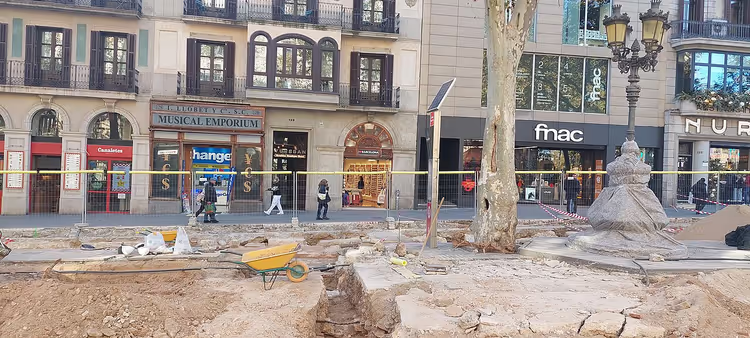
Fans of FC Barcelona gather at the fountain when the team wins. You can drink from it, the water is safe. Bring a bottle with you: in the heat, the fountains are a lifesaver.
Rambla dels Estudis
The second section is named after Barcelona's first university from the 16th century. The university building was dismantled in the 19th century, but the memory remains in the street's name.
 © Txllxt TxllxT · CC BY-SAPhoto: Txllxt TxllxT, CC BY-SA (https://creativecommons.org/licenses/by-sa/4.0), Wikimedia Commons
See the Baroque Church of Our Lady of Bethlehem (Església de Betlem). Its side facade faces directly onto the boulevard and is reinforced with buttresses. Inside there is a single nave, ten chapels, and an arched gallery. The historic Teatre Principal operates nearby.
Rambla de les Flors
The third section is called the flower Rambla. Since the 19th century, people have come here for bouquets and seeds, and it always smells of flowers. Hidden among the stalls is Palau de la Virreina, a palace from the second half of the 18th century. It now hosts contemporary art exhibitions.
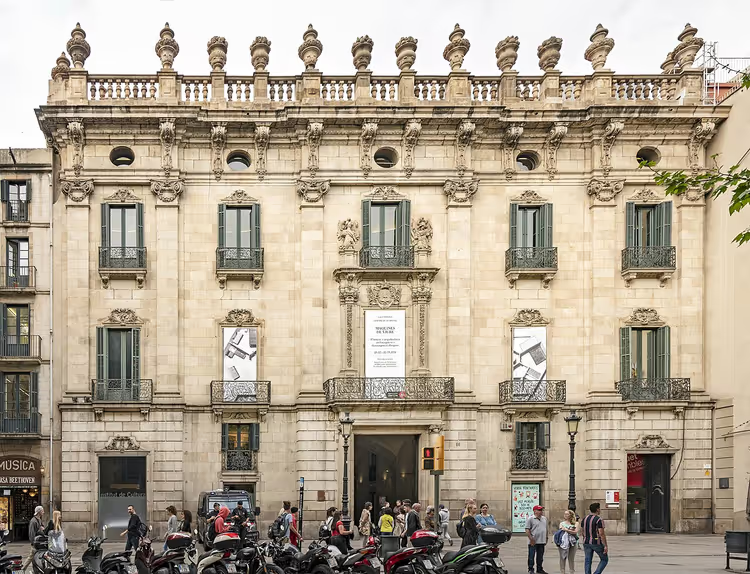 © Didier Descouens · CC BY-SAPhoto: Didier Descouens, CC BY-SA (https://creativecommons.org/licenses/by-sa/4.0), Wikimedia Commons
The main attraction of the area is La Boqueria Market (Mercat de la Boqueria). It has been open since 1840 and operates on weekdays and Saturdays from 8:00 AM to 8:30 PM (as of 09/2026, La Boqueria market page). Under its metal roof, hundreds of stalls sell fish, fruit, and meat.
Come before noon, while there are no lines. You can also eat on the spot at a couple of bars here.
- The catch: by lunchtime, the market's central aisles are packed with tourists.
Rambla dels Caputxins
The fourth section is named after the Capuchin monastery. Its start is marked by a tile mosaic on the pavement, which is easy to miss underfoot.
Further along stands the Bruno Cuadros building, a former umbrella shop. Its facade is decorated with a Chinese dragon, cast-iron umbrellas, and Japanese enamel prints. Nearby rises the Liceu Opera House (Gran Teatre del Liceu), one of Europe's leading opera stages.
The theater opened in 1847 and has burned down several times, but it was always rebuilt (according to the official website). Inside, you'll find crystal chandeliers, a marble staircase, and a velvet auditorium. Book tickets for performances and short tours in advance, for example Liceu Opera House tours on GetYourGuide.
Rambla de Santa Mònica
The last section bears the name of the Santa Mònica monastery. Its building now houses the Centre d'Art Santa Mònica, with contemporary art exhibitions and a library.
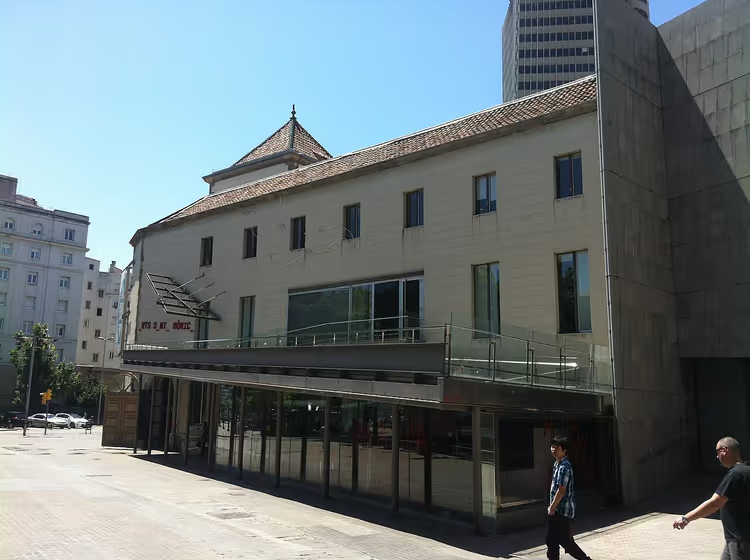 © Kippelboy · CC BYPhoto: Kippelboy, CC BY (https://creativecommons.org/licenses/by/4.0), Wikimedia Commons
In a nearby side street hides the Wax Museum (Museu de Cera). Inside are more than 150 figures in 28 scenes, from historical characters to a pirate ship (according to the official website).
The boulevard ends at the sea. In the center of the Old Port stands the Columbus Monument (Mirador de Colom) on a 60-meter column. It was unveiled for the 1888 Universal Exposition, and an elevator inside takes you up to the observation deck.
Tours and tickets in Barcelona
Guided tours, skip-the-line tickets and activities — most offers can be cancelled free of charge.
See offers on GetYourGuideThe widget loads once you give your consent.
Pickpockets on La Rambla: how to protect your wallet
La Rambla is called the busiest place in Barcelona. No wonder pickpockets operate here professionally and in organized groups.
 © Enric · CC BY-SAPhoto: Enric, CC BY-SA (https://creativecommons.org/licenses/by-sa/4.0), Wikimedia Commons
They work in teams and look no different from tourists. To avoid losing your wallet, keep your backpack and bag in front of you. Don't leave your phone in your back pocket.
Police patrol the boulevard, but thefts happen daily. Don't get distracted by street shows if your bag is hanging on your shoulder. That way you'll keep both your money and your peace of mind.
How to get to La Rambla
The most convenient way is to walk to the boulevard from Plaça de Catalunya. Plaça de Catalunya lies in the very center of the city and serves as a major transit hub. The nearest metro stations are Catalunya, Liceu, and Drassanes.
A train runs from El Prat Airport to the city center, where you transfer to the metro. Taxis and transfers are convenient, but book them in advance during high season. On foot, you can walk from Plaça de Catalunya to the sea without rushing.
In the morning it's quieter here, and photos turn out better. In the evening the boulevard is crowded but safe with ordinary caution.
La Rambla on the map and landmarks
Below is a map of the boulevard. Open it on your phone so you know where you are as you walk.
Starting landmark: Plaça de Catalunya. End of the route: the Columbus Column by the water. All five sections of the boulevard fit between them.
⁉️🤔 Frequently asked questions
How long does it take to walk La Rambla?
A leisurely walk through all five sections takes a couple of hours. With stops at La Boqueria market, the Liceu theater, and the Columbus Monument, it easily takes half a day. If you are short on time, walk the boulevard from Plaça de Catalunya straight down to the sea. That way you will see the main sights without getting tired.
When is the best time to visit La Boqueria market?
The market is closed on Sundays (as of 09/2026, official website). In the morning there are fewer people and the produce is fresh. By midday the central aisles fill up, and taking photos becomes harder. Come at opening time or closer to the evening.
Is La Rambla free?
The street itself is free and open around the clock. You only pay to enter individual attractions. Tours of the Liceu theater and the climb up the Columbus Monument cost money. La Boqueria market and viewing the facades cost you nothing.
Is it safe to walk along La Rambla in the evening?
In the evening the boulevard is crowded and well lit, but pickpockets work precisely in crowds. Keep your bag in front of you and do not leave your phone unattended. Do not get distracted by street shows if your belongings are exposed. Police patrol the street, so with ordinary caution the walk is safe.
What is there to see near La Rambla?
To the left of the boulevard lies the Gothic Quarter, to the right El Raval. Walking tours of the Gothic Quarter start at Plaça de Catalunya. At the end of La Rambla, the Old Port and the Columbus Monument await you.
In short: what is worth booking
La Rambla is great because you can walk the entire length on foot and for free. You will only need money for the theater and the column. Plan your walk for the morning, while there are few people on the street.
If you have one day: walk from Plaça de Catalunya to the sea and stop by La Boqueria along the way. If you love opera, book a tour of the Liceu theater in advance. If you are traveling with children, leave time for the wax museum.
Want to see the city with a guide or from the water? Tours and tickets for Barcelona on GetYourGuide are collected in one place.

A small editorial team writing guides for independent travel. We travel ourselves, but we haven’t been everywhere, so we check prices, opening hours and how to get there against official sources.