
















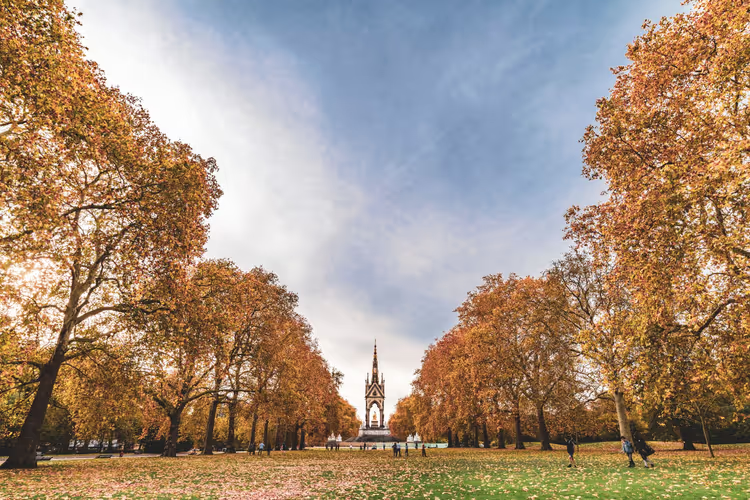
Hyde Park in London: the Serpentine lake, Speakers' Corner and the Diana fountain
The park covers 1.4 sq km in central London, between Kensington Gardens and Marble Arch (as of 09/2026, Royal Parks).
We've put together what helps on the ground: the main sights, opening hours, the route from the Tube, and honest answers to frequently asked questions.
Ad: this article contains affiliate links: we earn a commission if you book through them, at no extra cost to you.
What to know before you visit
💡 In short:
- Entry is free, the park is open from 05:00 to 24:00 year-round (as of 09/2026, Royal Parks).
- Main sights: the Serpentine lake, Speakers' Corner, the Diana fountain, and Wellington Arch.
- From Hyde Park Corner or Marble Arch Tube stations it's about a five-minute walk to the park.
- Prices and opening hours: 09/2026, verified on the official Royal Parks website.
In summer it's crowded from the morning; in winter the paths are almost empty.
Two to three hours is enough to see the park itself. With Speakers' Corner, the lake, and the memorials, allow half a day. Bring water and comfortable shoes: the paths are long, and the benches by the lake are taken.
Come at opening time or in the evening. At midday the lawns by the Serpentine are packed, and riders are out on Rotten Row. The catch is just one thing: when it rains, there's almost nowhere to take shelter.
History of Hyde Park
 © Alvesgaspar · CC BY-SAPhoto: Alvesgaspar, CC BY-SA (https://creativecommons.org/licenses/by-sa/4.0), Wikimedia Commons
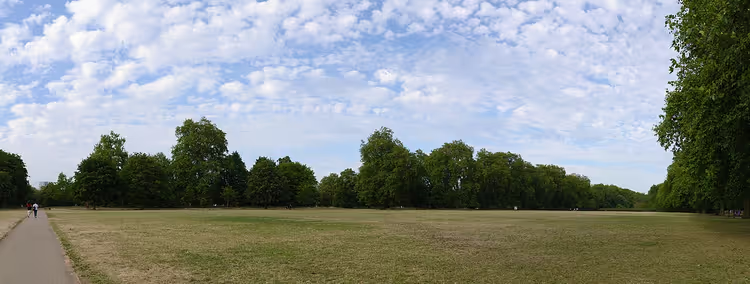
At first a dense forest stood here, owned by Westminster Abbey (as of 09/2026, Wikipedia). In 1536, King Henry VIII took the land for hunting grounds and entertainment.
The park opened to the public in 1637 under Charles I (as of 09/2026, public access). At first people came here to stroll and celebrate holidays, and gradually Londoners grew fond of the place.
Every monarch changed something. In 1690, William III ordered the construction of Rotten Row and the installation of more than three hundred oil lamps (as of 09/2026, Rotten Row). It was the first artificially lit road in England, and riders still use it today.
In 1730, Queen Caroline, wife of George II, commissioned a large lake that split the park in two (as of 09/2026, the Serpentine lake). That is how the Serpentine came to be.
In 1851, the park hosted the Great Exhibition, for which the Crystal Palace of glass and iron was built (as of 09/2026, the Great Exhibition). The pavilion held thousands of visitors. After the exhibition, it was moved to Sydenham, where it burned down in 1936.
Since the 19th century, the park has barely changed and still covers 1.4 sq km (as of 09/2026, park area). Today you will find a riding school, boat and inline skate rentals, and tennis courts on open grounds. In summer, concerts and picnics take place on the lawns, and you can easily catch one of the performances.
What to see in Hyde Park
The grounds combine a lake, memorials, and contemporary art galleries (as of 09/2026, park attractions). Below you will find the main sights worth visiting in order, each taking about half an hour.
Speakers' Corner
 © Anthony O'Neil · CC BY-SAPhoto: Anthony O'Neil, CC BY-SA (https://creativecommons.org/licenses/by-sa/2.0), Wikimedia Commons
Speakers' Corner appeared in 1872 in the northeast of the park (as of 09/2026, Speakers' Corner). People speak here on any topic, and the law does not prohibit discussing politics, religion, or even the royal family.
You will encounter both political groups and individuals seeking attention. The best debates happen on Sundays, when crowds gather.
- How to get there: Marble Arch tube station, about five minutes on foot.
- Cost: free, anyone can speak.
- The catch: on weekdays there are almost no speakers.
- Who it's for: those who want to see British freedom of speech in person.
The Serpentine lake
 © The original uploader was Jamie101 at English Wikipedia . · CC BY-SAPhoto: The original uploader was Jamie101 at English Wikipedia ., CC BY-SA (https://creativecommons.org/licenses/by-sa/2.5), Wikimedia Commons
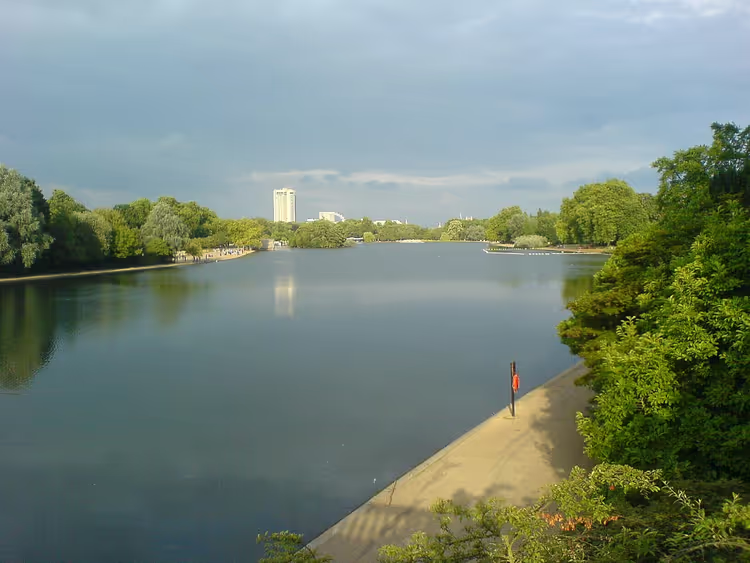
The Serpentine was dug in 1730, and its name reflects its snakelike shape (as of 09/2026, The Serpentine). The lake is about 1.2 km long, covers nearly 11 hectares, and separates Hyde Park from Kensington Gardens.
People boat, fish, and swim here. During the 2012 Olympics, the Serpentine hosted triathlon and open-water swimming events.
In summer, the Serpentine Lido bathing area is open. Bring a swimsuit if you visit in July or August.
- How to get there: Hyde Park Corner or Knightsbridge tube station, about ten minutes on foot.
- Cost: park entry is free, boat rental and the lido are paid.
- The catch: the boating station has queues on weekends.
- Who it's for: water lovers and fans of leisurely walks.
Pet cemetery
 © Matt Brown · CC BYPhoto: Matt Brown, CC BY (https://creativecommons.org/licenses/by/2.0), Wikimedia Commons
Pets began to be buried here in 1881, and the last burial dates to 1903 (as of 09/2026, pet cemetery). The first to be buried was Cherry, a Maltese terrier from the Barned family.
By 1903, nearly the entire gatekeeper's garden was taken up by graves, around three hundred in total. The headstones have survived to this day, but the area is closed to the public, so you can't get in without booking.
- How to get there: northern edge of the park, near Bayswater Road.
- Cost: free, but booking is required.
- The catch: open only on special days, a few times a year.
- Who it's for: those who love little-known and quiet places.
Monuments and memorials
 © Bill Boaden · CC BY-SAPhoto: Bill Boaden, CC BY-SA (https://creativecommons.org/licenses/by-sa/2.0), Wikimedia Commons
The statue of Achilles commemorates the victory over Napoleon and has stood here since 1822 (as of 09/2026, Achilles monument). Cannons captured by Wellington's army were melted down to cast it.
The figure of a naked warrior initially scandalized prim Londoners, but the sculpture was defended. Today it is the largest monument in the park.
Other memorials stand nearby. The 7 July Memorial honors the victims of the 2005 terrorist attacks: it consists of 52 vertical stainless steel columns (as of 09/2026, park memorials). The Animals in War Memorial, dedicated to animals that served in wars, was unveiled in 2004.
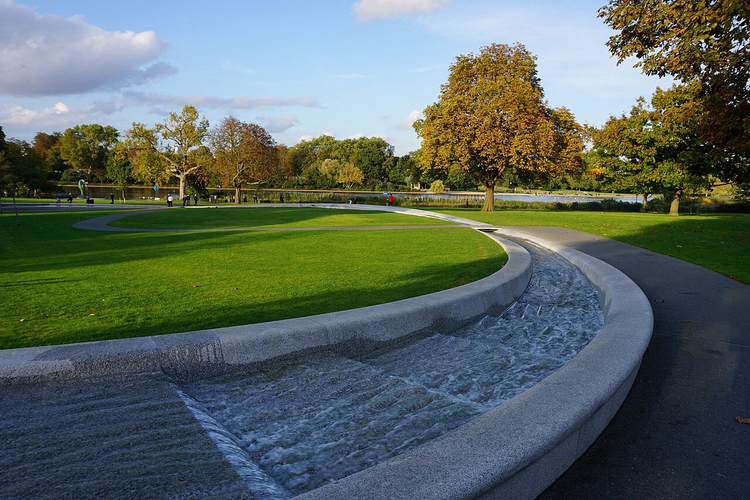
The Diana, Princess of Wales Memorial Fountain was opened by Elizabeth II in 2004 (as of 09/2026, Diana fountain). It required 545 blocks of Cornish granite.
Two channels are joined into an oval ring measuring 50 by 80 meters, and water flows through them in opposite directions. In summer, people sit on the edges and dip their feet in the water.
- How to get there: southern part of the park, near the path from the Serpentine Gallery.
- Cost: free.
- The catch: the fountain is sometimes turned off in winter.
- Who it's for: families with children and anyone who wants to rest by the water.
Wellington Arch
 © Canaan · CC BY-SAPhoto: Canaan, CC BY-SA (https://creativecommons.org/licenses/by-sa/4.0), Wikimedia Commons
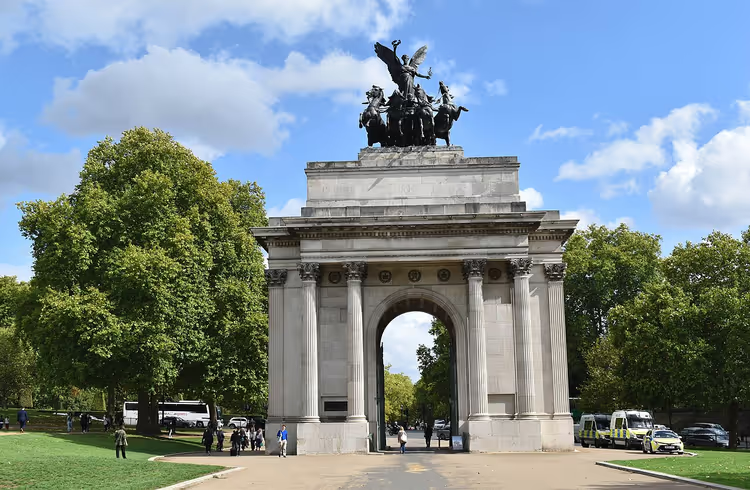
Wellington Arch was built in the 1820s to a design by architect Decimus Burton (as of 09/2026, Wellington Arch). It was originally topped with an equestrian statue of the Duke of Wellington, and in 1912 a bronze quadriga with the angel of peace was placed on top.
The arch once housed London's smallest police station, and now a museum operates across three floors. At the top there is an observation terrace with views of Hyde Park and Buckingham Palace.
- How to get there: Hyde Park Corner tube station, exit right at the arch.
- Cost: paid entry, check the price on the English Heritage website.
- The catch: on weekdays the museum is not open all day, and hours change by season.
- Who it's for: those who want to go up to the terrace and see the park from above.
Nearby attractions
From Hyde Park it's easy to walk to nearby sights. Kensington Gardens borders it to the west, and Marble Arch stands at the eastern entrance. Further down your list are other areas: the Tower of London, Tower Bridge, Westminster Abbey, and the London Eye. These are easier to reach by tube.
For one of them, get your ticket in advance so you don't have to queue at the ticket office: skip-the-line Tower of London ticket on GetYourGuide.
London tickets: what to book in advance
The park is free, but the nearby attractions are best visited with a time slot. The London Eye and Tower Bridge are half an hour by tube from Hyde Park Corner. Lines form at the ticket offices, so a fast-track ticket saves you time.
fast-track London Eye ticket on GetYourGuide
Tours and tickets in London
Guided tours, skip-the-line tickets and activities — most offers can be cancelled free of charge.
See offers on GetYourGuideThe widget loads once you give your consent.
Where Hyde Park is and how to get there
Hyde Park lies in central London between Kensington Gardens and Marble Arch (as of 09/2026, park location). The postcode for this part of west London is W2.
The park is open every day from 05:00 to 24:00 (as of 09/2026, opening hours). Entry is free from any side, and you can just walk in at no cost.
The closest Tube stations are Hyde Park Corner, Marble Arch, Lancaster Gate, and Knightsbridge (as of 09/2026, Transport for London). Each is about a five-minute walk from the park.
If you are coming from Victoria station, Hyde Park Corner is only two stops on the Tube. More than twenty bus routes pass the park; check their schedules on the TfL website.
Take the Tube: parking in central London is expensive, and entering the low emission zone is chargeable.
Hyde Park on the map
The park stretches from west to east along the Serpentine lake. Open the map and plot a route from your hotel or station. If you want to see the lake and Marble Arch in one go, walk through the middle of the park.
⁉️🤔 Frequently asked questions
How much does it cost to enter Hyde Park?
You only pay for boat rental, the Serpentine Lido swimming area, and entry to the Wellington Arch museum. Check prices and opening hours on the official websites of these attractions before your visit.
What time does the park open?
The park is open all year round, seven days a week; hours are listed in the "Where Hyde Park is and how to get there" section. In summer, mornings and evenings are cool and quiet, while at midday groups gather on the lawns. In winter the park closes at the same hours, but there are noticeably fewer people.
How do I get there from the Tube?
The closest stations are Hyde Park Corner, Marble Arch, Lancaster Gate, and Knightsbridge. If you want the lake, choose Hyde Park Corner; for Speakers' Corner, walk from Marble Arch.
What should I see first?
Start with the Serpentine lake and the Diana fountain. Then walk to Speakers' Corner and Wellington Arch. It will take three to four hours at a relaxed pace. If you are short on time, leave Wellington Arch for another day.
Can you swim and go boating?
Swimming is allowed only in the Serpentine Lido, and only during the summer season. Boats and pedalos are available for hire at the boathouse in the warmer months. Fishing is permitted in designated areas according to park rules.
Are there cafes nearby?
There are several cafes and kiosks inside the park, and plenty of restaurants near Marble Arch and Hyde Park Corner. In summer, pavilions open by the lake. It is handy to bring water and a light snack if you are spending the whole day.
In short: what to book
If you have a couple of hours, head to the Serpentine and the Diana fountain. If you want some history, add Speakers' Corner and Wellington Arch. If you are planning all of London, check out attraction tickets on GetYourGuide.
Check the opening hours on the official website and wear comfortable shoes.

A small editorial team writing guides for independent travel. We travel ourselves, but we haven’t been everywhere, so we check prices, opening hours and how to get there against official sources.