

















Lisbon in November: a three-day itinerary, budget and what to pack
In November, Lisbon gets quieter and cheaper. Daytime temperatures are around 18 °C, nighttime around 12 °C (1991-2020 climate data). There are far fewer tourists than in July, and that changes the whole trip.
We put together a practical guide to the city for the shoulder season. Below you'll find weather and clothing, the main neighborhoods, transportation, budget, day trips to Sintra and Cascais, and the honest catches. Every figure has a link to its source.
Ad: this article contains affiliate links, we earn a commission if you book through them, at no extra cost to you.
Why November works for a trip
November opens Lisbon's low season, and that's the month's main advantage. Hotels and apartments cost less than in summer, and weekday flights from Europe drop in price. Lines at the castle entrance and for the tram are noticeably shorter, so you spend your time on the city, not on waiting.
The streets of Baixa and Alfama look distinctly autumnal at this time. The sky often gives soft light for photos, and rain comes in short waves. Between two downpours you can walk comfortably and cover a neighborhood.
💡 In short:
- The best time for museums and palaces: Tuesday and Thursday mornings, lines are shorter.
- Bring a waterproof jacket and shoes with thick soles: the cobblestones get slippery.
- Buy tickets to Jerónimos Monastery and São Jorge Castle online in advance.
- Tickets and opening hours: 09/2026, verified on the official Jerónimos Monastery website.
November suits those who want to see the real city, not the crowds. Beach plans take a back seat, but culture and cuisine open up fully. That's exactly why we recommend the shoulder season.
Weather and climate in November
November in Lisbon is shoulder season. Daytime temperatures are around 18 °C, nighttime around 12 °C, and rain falls on roughly ten days of the month (1991-2020 data). About 84 mm of precipitation falls over the month, but the downpours are short. Mornings are fresh, by midday it's usually warm, and evenings are cool again.
Rainfall is unevenly distributed. One day turns out dry and sunny, and the next brings drizzle from early morning. Bring a light jacket, a waterproof shell, and spare socks. Choose shoes with thick soles, because Alfama's cobblestones quickly become slippery.
There's enough daylight in November for walking around. The day is short and the sun sets early, but sunrise and sunset give soft tones for photography. The viewpoints near São Jorge Castle and by the Tagus bridge are especially good at the end of the day. The river water is still cool, and swimming is comfortable only for the hardy.
Plan museums for the morning and the second half of the day. That way you get the best light and don't get cold. On a rainy day, move your walk to Parque das Nações, where there's more shelter by the water.
What to see in Lisbon
The city is compact, and most sights are within walking distance of each other. We've organized the sightseeing by neighborhood so you don't run across the whole city for nothing. Start with the center, then head up to Alfama, and set aside a separate morning for Belém.
 © Dudva · CC BY-SAPhoto: Dudva, CC BY-SA (https://creativecommons.org/licenses/by-sa/4.0), Wikimedia Commons
Baixa, Chiado, and Elevador de Santa Justa
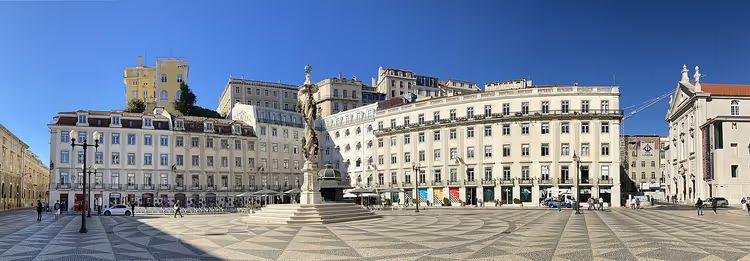
Start on foot through Baixa and Chiado. Here you'll find the Rua Augusta triumphal arch, Praça do Comércio, and old bookstores. The neighborhood is compact: from the arch to Rossio Square you'll walk in fifteen minutes.
 © David Blaikie from Hampshire, UK · CC BYPhoto: David Blaikie from Hampshire, UK, CC BY (https://creativecommons.org/licenses/by/2.0), Wikimedia Commons
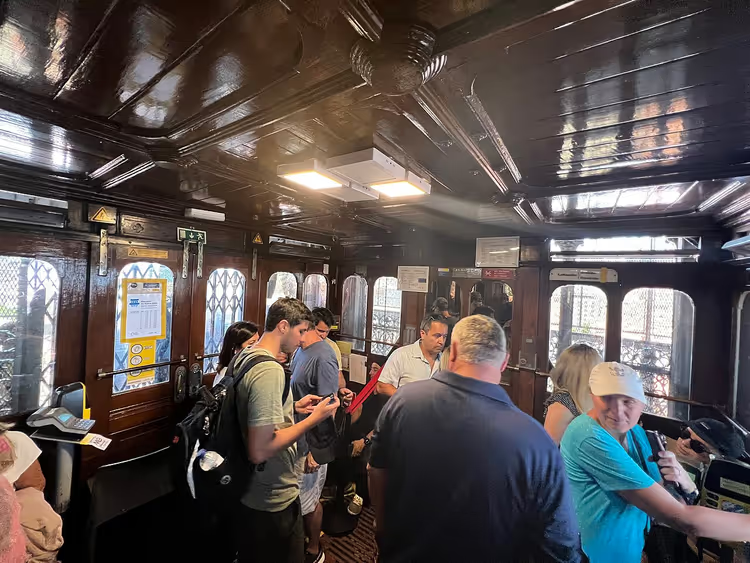
Elevador de Santa Justa takes you up to a viewpoint above the rooftops. The elevator is more packed than it looks from the outside, so come at opening or after sunset. Nearby, at Largo do Carmo, lie the ruins of Carmo Convent, admission free.
Who it's for: photographers and fans of walking tours. Not for: those who don't like climbing stairs.
Alfama and São Jorge Castle
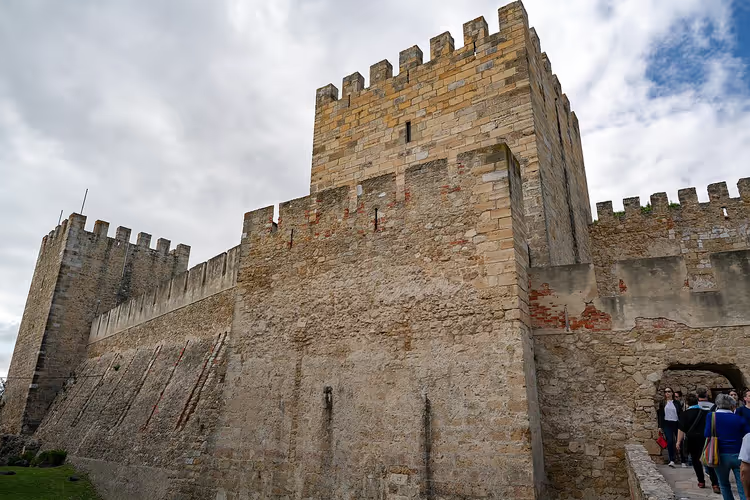
Alfama sits on a hill above the river and is considered the city's oldest neighborhood. You climb to the castle along narrow streets with steps, and from the walls you get a view over all of Lisbon and the Tagus. Buy your castle ticket online: only the official website sells tickets legally (São Jorge Castle). That way you avoid the line at the ticket office.
 © Nan Palmero from San Antonio, TX, USA · CC BYPhoto: Nan Palmero from San Antonio, TX, USA, CC BY (https://creativecommons.org/licenses/by/2.0), Wikimedia Commons
In the evening, fado is sung here. In small venues, musicians perform at arm's length, and dinner is usually included in the price. The catch: it's easy to get lost in Alfama's alleys, so keep a map handy.
Belém: Torre de Belém and Mosteiro dos Jerónimos
Belém is in the western part of the city, and you should set aside half a day for it. The tram or train gets you there from the center in about half an hour.
 © Rehman Abubakr · CC BY-SAPhoto: Rehman Abubakr, CC BY-SA (https://creativecommons.org/licenses/by-sa/4.0), Wikimedia Commons
Jerónimos Monastery is open Tuesday through Sunday, closed on Mondays. An adult ticket costs €18 (as of 09/2026, Museus e Monumentos de Portugal). The church is free to visit, while the cloister requires a ticket.
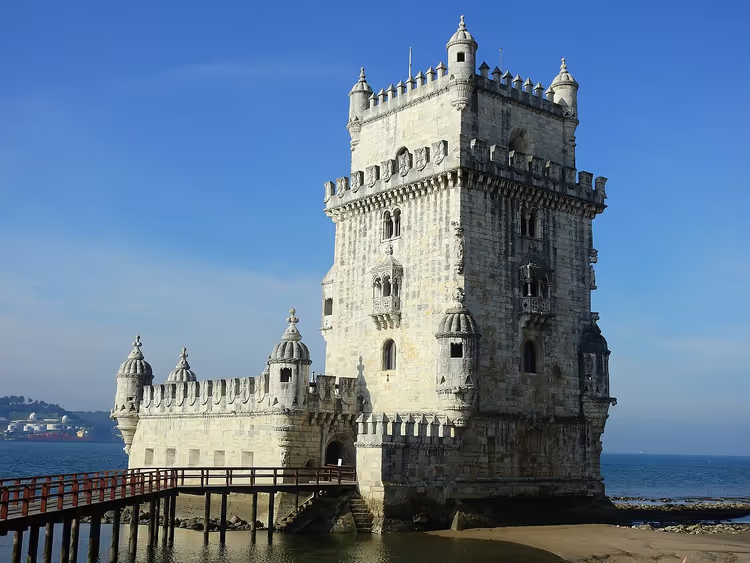
Belém Tower admits visitors by ticket, adult entry is €15 (as of 09/2026, Museus e Monumentos de Portugal). The line is long in the morning, so arrive at opening time. After your visit, grab some pastéis de nata, in Belém they're served still warm. Nearby on the waterfront stands the modern MAAT.
Tours and tickets in Lisbon
Guided tours, skip-the-line tickets and activities — most offers can be cancelled free of charge.
See offers on GetYourGuideThe widget loads once you give your consent.
Where to stay and how to get around
Accommodation in November is cheaper than summer rates, and there's more choice. Central neighborhoods for a short trip: Baixa, Chiado, and Avenida da Liberdade. For peace and quiet, head to Príncipe Real, it's close to the center and green. Budget options are in Arroios and Estrela, from there you can reach the center by metro.
Browse Lisbon hotels on Trip.com to compare prices for your dates. It's best to book two weeks ahead: November is quiet, but good options get snapped up.
Metro, tram 28, and passes
The metro connects the center, Oriente station, and the airport. A ticket is loaded onto a Viva Viagem or Navegante card, which you buy from a machine at the station (Metro Lisboa).
Tram 28 runs through Graça, Alfama, and Baixa. A single ticket from the driver costs €3.30, the same ride with a card costs €1.90, and a 24-hour pass is €7.25 (as of 01/2026, Carris).
A 24-hour pass pays for itself after three or four rides. Tram 28 is easy to combine with a walk: get off in Graça and walk downhill. In the evening, take the metro or a taxi, the old trams run less frequently.
Budget: how to save in November
November lowers the price of almost everything. Flights from Europe on weekdays cost less than on weekends, and with flexible dates you can find fares in the lower price range.
At restaurants, go for the menu do dia, the lunch menu of the day. It usually includes soup, a main course, and dessert at a fixed price, and it's noticeably cheaper than the evening menu. Look for these places in Graça and Estrela, away from the waterfront.
Free pleasures in the city exist too. The Miradouro da Graça and Miradouro de Santa Luzia viewpoints are open around the clock, and a walk along the Ribeira das Nações waterfront costs nothing. The Feira da Ladra flea market runs on Tuesdays and Saturdays, where you'll find both a bite to eat and old vinyl records.
Day trips: Sintra and Cascais
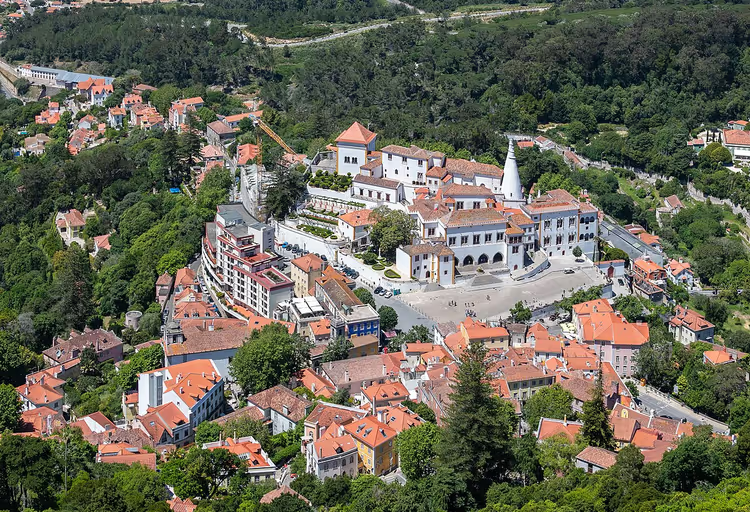
The region around Lisbon is convenient for day trips. In summer it's crowded, but in November you can explore at a relaxed pace. Trains to both towns leave from central stations.
 © Diego Delso · CC BY-SAPhoto: Diego Delso, CC BY-SA (https://creativecommons.org/licenses/by-sa/4.0), Wikimedia Commons
Sintra
Sintra is about an hour from Lisbon, with a train from Rossio station. The ride takes about forty minutes.
Pena Palace is open with a timed-entry ticket, adult admission around €20 (as of 09/2026, Parques de Sintra). In November, fog often hangs over the hill, and the palaces look especially atmospheric. Book your time slot in advance; the line is shorter in the morning.
Nearby are the Moorish castle Castelo dos Mouros and Queluz Palace. A combined ticket for several sites is cheaper than separate admissions. The catch: Sintra is colder and windier than the city, so bring a jacket.
Cascais and the coast
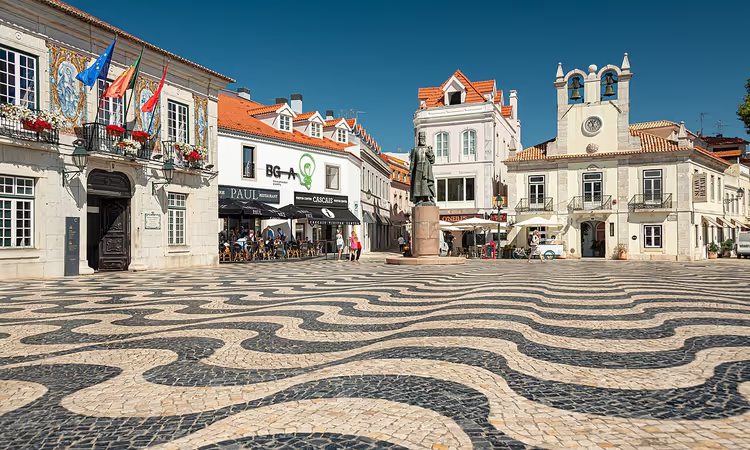
Cascais sits on the ocean, with a commuter train from Cais do Sodré station. Here you can stroll along the promenade, watch the waves, and eat fresh fish. In November the beaches are empty and the water is too cold for swimming, but the promenade is perfect for a long walk. The catch: the ocean wind is stronger than in the center.
 © Jorge Franganillo · CC BYPhoto: Jorge Franganillo, CC BY (https://creativecommons.org/licenses/by/2.0), Wikimedia Commons
Parque das Nações and the waterfront
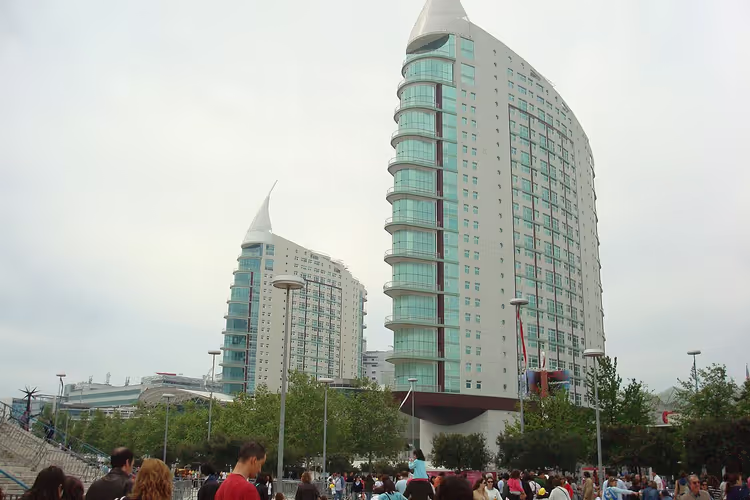
Parque das Nações was built on the site of a world expo. It's home to the oceanarium, a cable car, and modern museums. On a rainy day, it's a convenient indoor program. In the evening, it's pleasant to walk along the waterfront to the Vasco da Gama Bridge.
 © Luís Rochinha · CC BYPhoto: Luís Rochinha, CC BY (https://creativecommons.org/licenses/by/3.0), Wikimedia Commons
See Lisbon tours on GetYourGuide.
Food: what to try
Lisbon cuisine is built on fish. In November, the table features bacalhau, monkfish, and flounder. Try caldeirada, a thick fish stew, or polvo à lagareiro, baked octopus. Pair the fish with a local white wine or vinho verde.
Pastéis de nata and desserts
Pastéis de nata are baked on every corner in Lisbon, but the most famous ones are served in Belém. A warm custard tart with cinnamon is eaten standing at the counter. Besides these, try travesseiros from Sintra and local cookies with your coffee.
Cafés, markets, and street food
Lisbon loves coffee. In the morning, you order a bica, a strong espresso, at the counter and pay less for it than for tea. In the afternoon, stop by Time Out Market at Cais do Sodré: dozens of local kitchens are gathered under one roof. Another market, Feira da Ladra, operates as a flea market. On weekends, visit Mercado de Arroios for cheese and olives.
Fado, museums, and the city at night
Fado houses
Fado can be heard in Alfama and Bairro Alto. Small venues offer a concert with dinner, and the musicians sing just a couple of meters from your table. In November the audience is calmer, and the evening feels intimate. The catch: dinner at tourist venues costs more than a meal at a regular restaurant nearby. Check the program in advance; good seats get booked up.
Museums and galleries
Museums offer a program for any rainy day. The Calouste Gulbenkian Museum holds a collection spanning from antiquity to modern art, with a park right next to it. MAAT showcases contemporary art in a building on the Belém waterfront. The Berardo Collection Museum is part of the Belém cultural center.
Many museums have extended hours on certain days, so check the times on their website before heading out. On Sundays, some museums offer free admission before noon, but the line can be long.
What to pack and safety
Put together a compact first-aid kit: painkillers, band-aids, and cold medicine. Lisbon is safe, but on tram 28 and at Rossio Square, keep your phone and wallet safe from pickpockets. During the day you can walk anywhere; in the evening, stick to well-lit streets.
Dress in layers. In the morning you need a jacket, during the day it can be warm, and in the evening it gets cool again. Bring an umbrella or a rain poncho, a type F plug adapter, and a power bank.
Medical care in the city is accessible, and pharmacies are easy to find. If you're coming from the EU, bring your insurance card; everyone else should arrange a policy in advance. You can compare travel insurance options on EKTA.
⁉️🤔 Frequently asked questions
Can you swim in Lisbon in November?
The Atlantic water near Cascais is already cold in November, so regular swimming is only for the hardy. Surfers get in the water in wetsuits year-round. If you want the sea, plan for a short dip, and bring a warm towel and a jacket. For a full beach vacation, it's better to choose a different time of year.
How many days are enough for Lisbon?
Three full days are comfortably enough for the center: Baixa and Chiado, Alfama with the castle, Belém with the monastery. Set aside one more day for a trip to Sintra and half a day for Cascais. In four to five days, you can fit in museums, fado, and markets without rushing. If you have less time, skip the longer day trip, not Belém.
Do I need the Lisboa Card?
The Lisboa Card gives free transit and admission to some museums, but it only pays off if you visit many paid attractions in a row. For three days of walking the streets, it's simpler to get a Viva Viagem card and load single rides. Calculate your admissions in advance before buying the card.
Is Lisbon expensive in November?
November is low season, and accommodation prices are lower than in summer. Central hotels cost more, while apartments in Arroios and Estrela are cheaper. Breakfast is not always included, so check when booking. A meal at a regular café during the day costs less than dinner in a tourist area.
When is the best time to go to Belém?
It's best to go to Belém when the monastery opens, when the lines are shorter. The monastery and the tower are close to each other, and you can walk between them along the waterfront. While you're there, stop by MAAT and grab pastéis de nata on the way back. Tuesday mornings are quieter than weekends.
In short: what to book
If you're going to Lisbon in November, plan your trip by a simple rule. With three days and a focus on the center, book a hotel in Baixa or Chiado. With family and a need for quiet, look at Príncipe Real. If you want to visit Sintra, set aside a separate day and buy your Pena Palace time slot in advance.
For museums and palaces, buy tickets online: this saves you time in line. Check the weather forecast before heading out; rain in November comes in waves.

A small editorial team writing guides for independent travel. We travel ourselves, but we haven’t been everywhere, so we check prices, opening hours and how to get there against official sources.