
















What to see in Indonesia: 19 places worth seeing at least once
Indonesia is a country spread across 17,000 islands, and you can't cover them all in one trip. Choosing between Bromo, Borobudur, and Raja Ampat has to happen in advance, before you even buy your tickets.
We've put together 19 of the country's most interesting places: volcanoes, waterfalls, temples, beaches, and national parks. For each entry below, you'll find what sets it apart from its neighbors on the list, how to get there, and whether it's worth your time. According to Indonesia's official tourism office, only about 6,000 of these islands are inhabited, so all logistics revolve around a few key regions.
Keep the main thing in mind. The sites are scattered across different islands and archipelagos, and getting between them eats up days. If you only have 10 days, stick to Java and Bali, and save Raja Ampat and Sulawesi for a second visit.
Ad: this article contains affiliate links, we earn a commission if you book through them, at no extra cost to you.
Map of Indonesia's main attractions
💡 In short:
- Nineteen places on the list are located on Java, Bali, Lombok, Sumatra, Borneo, and Sulawesi, plus the Lesser Sunda Islands.
- Plan at least 3-4 days per region: travel between islands takes more time than the sites themselves.
- See volcanoes and national parks with a guide; some areas are closed to independent entry.
- Access, tickets, and coordinates of the sites: 09/2026, according to the official Indonesia guide.
Below, the same points are compiled into a table so you can quickly compare the region and our rating for each place.
Important: on a smartphone, swipe the table sideways to see all columns. In the last column, we've marked what's worth seeing first.
# | Place | Region | Our pick |
|---|---|---|---|
1 | Jatiluwih rice terraces | Bali | Must-see |
2 | Mount Bromo | Java | Must-see |
3 | Tumpak Sewu waterfall | Java | Must-see |
4 | Mount Ijen | Java | Must-see |
5 | Sekumpul waterfall | Bali | Worth it |
6 | Parahyangan railway | Java | Optional |
7 | Orangutans in Sumatra | Sumatra | Must-see |
8 | Tanjung Puting National Park | Borneo | Optional |
9 | Mount Rinjani | Lombok | Must-see |
10 | Kelingking Beach | Nusa Penida | Must-see |
11 | Piaynemo viewpoint | Raja Ampat | Worth it |
12 | Jellyfish Lake | Togian Islands | Optional |
13 | Pura Tirta Empul temple | Bali | Must-see |
14 | Manta Point | Nusa Penida | Worth it |
15 | Padar Island | Komodo | Worth it |
16 | Underwater sculpture park | Gili Islands | Worth it |
17 | Borobudur temple | Java | Must-see |
18 | Derawan Islands | Borneo | Optional |
19 | Tana Toraja | Sulawesi | Optional |
1. Jatiluwih rice terraces
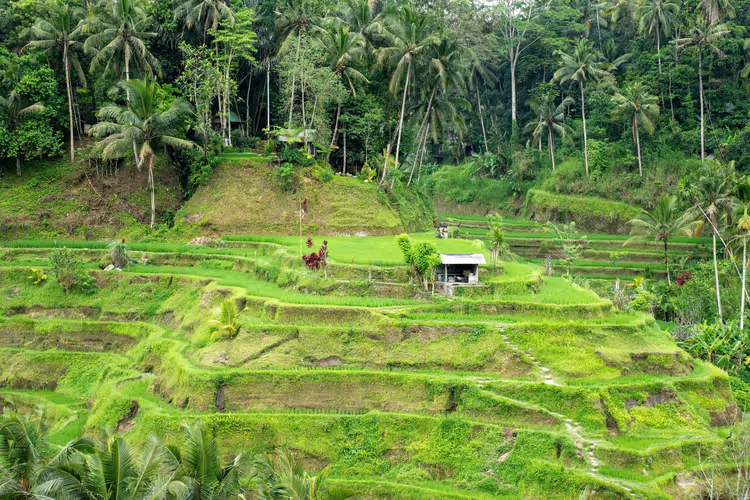
Jatiluwih is a cascade of rice fields on Bali, laid out across the hillsides. The terraces are part of the UNESCO World Heritage site "Cultural Landscape of Bali," where the traditional subak irrigation system has been preserved. Walking along the paths, you move right between the green fields and see the entire rice-growing cycle.
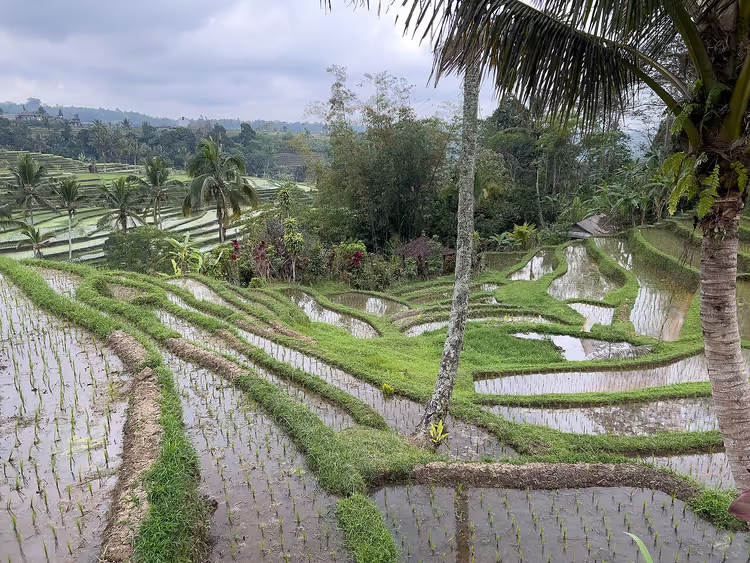 © Stefan Fussan · CC BY-SAPhoto: Stefan Fussan, CC BY-SA (https://creativecommons.org/licenses/by-sa/3.0), Wikimedia Commons
Along the route you'll come across warungs, small roadside cafes. They'll pour you a coconut and let you try the rice. The rich green color sticks in your memory more than the views themselves, and that's a rare feeling for such a heavily promoted spot on Bali.
Several trails run through the terraces, and you can walk at your own pace without a group.
- How to get there: by car or scooter along a winding mountain road; public transport barely reaches this area.
- Cost: entry is paid, you pass through a ticket booth at the entrance.
- Who it's for / Not for: suits those who want to see Bali without the beach crowds; not for you if you're only after the sea.
- The catch: there are many open stretches and little shade, so bring water.
2. Mount Bromo
Bromo in East Java is an active volcano and, for many, the main reason to visit Java. On foot, you climb right up to the crater rim and peer inside. The volcano is active, constantly releasing steam, and the rumble from within can be heard even during the day. The area is monitored by specialists, and access is closed when there's a threat of eruption.
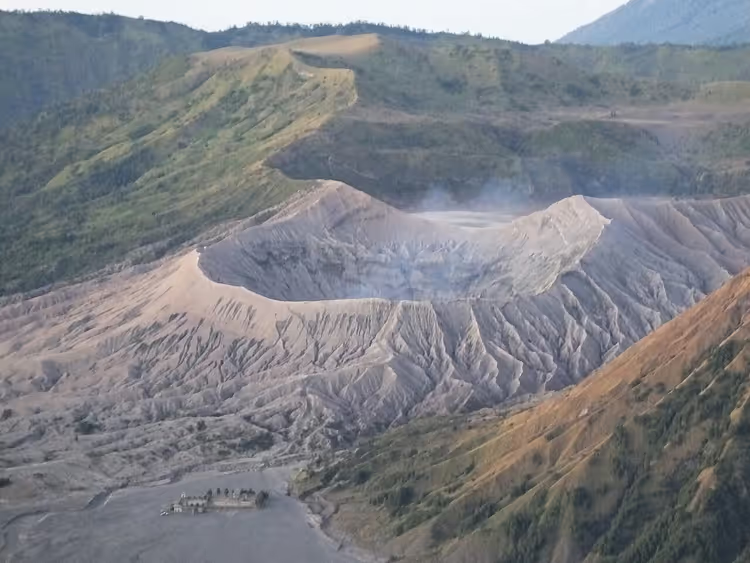 © Hugo van den Bos · CC BYPhoto: Hugo van den Bos, CC BY (https://creativecommons.org/licenses/by/2.0), Wikimedia Commons
The most beautiful view opens up from the ridge at the edge of the plateau, which is why all tours start in the dark, timed for sunrise. Private cars aren't allowed into the caldera; you transfer to a local jeep or motorbike. A private three-day East Java tour covers Bromo, Ijen, and Tumpak Sewu waterfall in one go and takes care of all transportation.
Jeeps bring groups up to the viewpoints before dawn, and the walking portion begins down in the caldera.
Guesthouses sit near the plateau, where you can watch the sunrise without joining the convoy of vehicles.
- How to get there: via Surabaya or Malang, then with a guide to the starting point.
- Cost: entry to the national park is paid; rates have been revised, so check the price on site.
- Who it's for / Not for: for those willing to get up in the dark for the sunrise; not for those who want to sleep in on vacation.
- The catch: it's cold and windy at the top, a jacket is essential.
3. Tumpak Sewu waterfall
We consider Tumpak Sewu on Java to be Indonesia's most beautiful waterfall. Water falls in a wide curtain into a semicircular gorge, with a volcano standing in the background. From the viewpoint above, you can see the entire veil of streams, but the true scale only hits you from below.
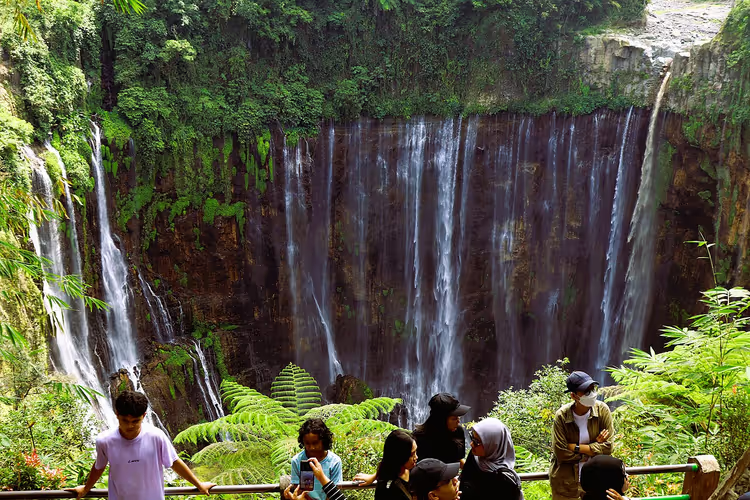 © Thank You (25 Millions ) views from Fresno, USA · CC BYPhoto: Thank You (25 Millions ) views from Fresno, USA, CC BY (https://creativecommons.org/licenses/by/2.0), Wikimedia Commons
The descent takes about twenty minutes, but you'll be walking over rocks, stairs, and wet sections. The route isn't difficult, but it does require attention. At the bottom, you can go deeper into the gorge to other streams and a small cave.
From above, the sound of the water merges into a steady roar, and the spray reaches the viewpoint.
You won't have to deal with entry logistics or haggling on site if you take an organized trip. A group tour to Tumpak Sewu waterfall includes transfer and a guide.
- How to get there: from Malang or Surabaya with a guide; independent entry is also possible.
- Cost: entry and parking are paid, cash will come in handy.
- The catch: the trail is wet and slippery, your shoes will get soaked.
4. Mount Ijen
Ijen on Java belongs on the list of places you can't skip. Its crater holds an acid lake of bright turquoise color, a shade produced by sulfur deposits. The climb to the crater takes just over an hour and doesn't require athletic training; if the gas smell is strong, put on a mask.
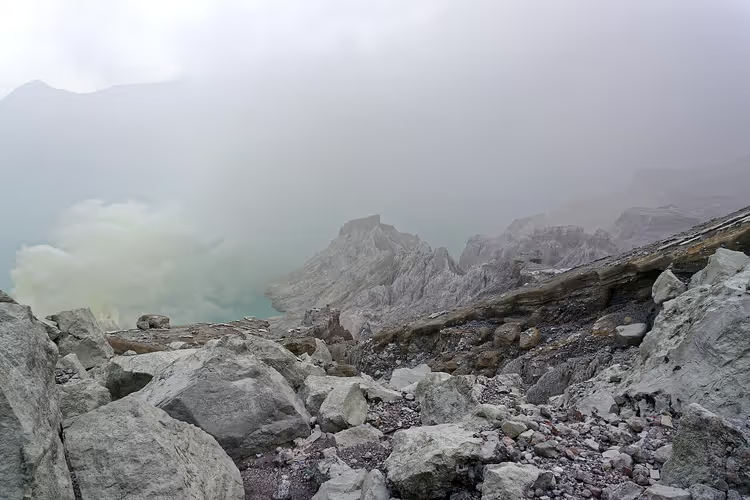 © Jakub Hałun · CC BY-SAPhoto: Jakub Hałun, CC BY-SA (https://creativecommons.org/licenses/by-sa/4.0), Wikimedia Commons
At night, people come here for the blue flame, which occurs in only a couple of places on the planet. Blue flames rise directly from the crater floor, and it's a rare sight.
Part of the trail is done in the dark to reach the flame before sunrise.
A separate reason to climb. Sulfur is still mined here by hand. Porters carry dozens of kilograms of ore up, and you see with your own eyes the labor it takes.
Entry requires a medical document from a doctor or clinic. It is usually arranged by the tour operator, and unless you have chronic respiratory conditions, there are no issues. A four-day tour of East Java's volcanoes takes you to Ijen along with Bromo.
- How to get there: from Banyuwangi or with a tour from Surabaya and Malang.
- Cost: entry is paid, and the medical certificate is issued on site.
- The catch: without a respirator, it is hard to breathe near the crater.
5. Sekumpul Waterfall
Sekumpul in northern Bali is a cluster of waterfalls in a dense forest. The spot lies away from the major resorts, so there are almost no crowds here. In return, you pay more for entry than at other waterfalls, and a guide is mandatory.
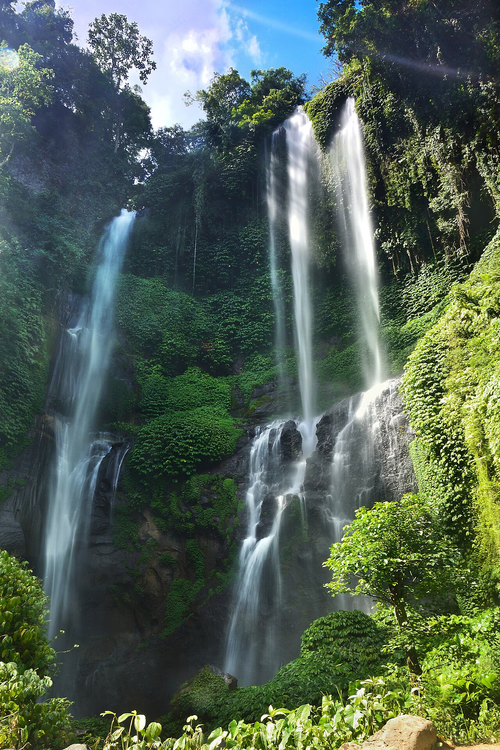 © Putu Andika Panendra · CC BY-SAPhoto: Putu Andika Panendra, CC BY-SA (https://creativecommons.org/licenses/by-sa/4.0), Wikimedia Commons
The length of the route depends on how many waterfalls you want to see. The short path leads to one, while the long one reveals three at once: Hidden Waterfall, Fiji Waterfall, and Sekumpul itself. You will be walking for two to three hours. Be prepared to get completely soaked, the water hits hard.
On the way down, new tiers keep opening up, so it is better to take photos on the way back, once you have gotten used to the water.
- How to get there: by car or scooter from the northern part of Bali.
- Cost: entry plus a mandatory guide, paid on site.
- The catch: slippery rocks right at the base.
6. Parahyangan Railway
Parahyangan is Indonesia's most scenic railway line, connecting Jakarta and Bandung. Rice terraces, green hills, and volcanoes pass by outside the window.
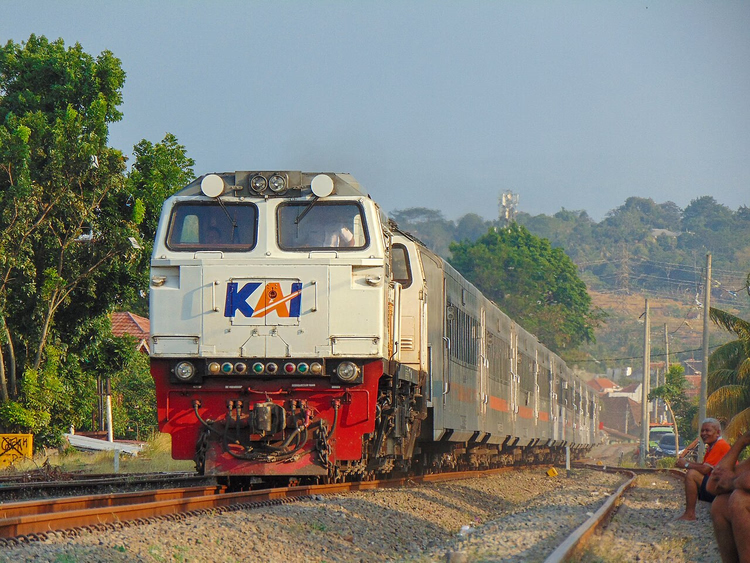 © TyewongX ( talk · contribs ) · CC BY-SAPhoto: TyewongX ( talk · contribs ), CC BY-SA (https://creativecommons.org/licenses/by-sa/4.0), Wikimedia Commons
We don't consider this trip a separate goal, but rather a pleasant bonus if you're already crossing Java by train. So plan it only if you have time to spare. When days are short, you can skip this route without missing anything, but an extra relaxed day in transit becomes one of the best experiences of the trip.
- How to get there: Jakarta-Bandung train, book tickets in advance.
- The catch: the train only runs between Jakarta and Bandung; getting to Yogyakarta requires a separate leg.
7. Orangutans in Sumatra
Orangutans in the wild are found only in Borneo and Sumatra, nowhere else. In Sumatra, people go to Bukit Lawang, a village at the entrance to Gunung Leuser National Park. Treks into the reserve start here, either day trips or multi-day hikes.
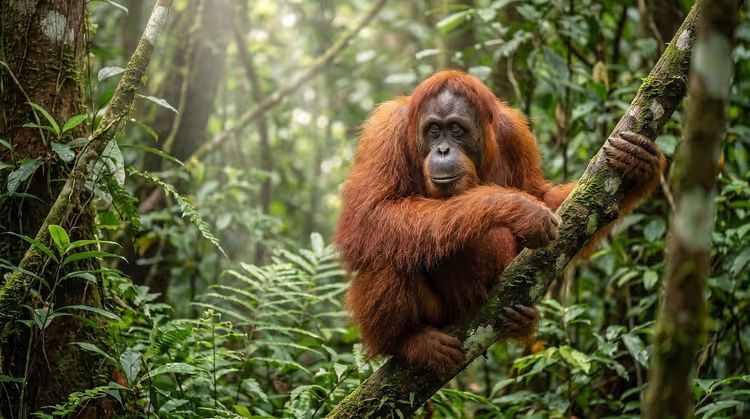
We chose a day hike and saw six orangutans; no more time was needed. Overnight stays in the jungle are basic. Many people return from the forest by tubing down the river on inflatable rings, and that's an adventure in itself.
- How to get there: to Medan, then overland to Bukit Lawang.
- Who it's for / Not for: for animal and jungle lovers; not for those expecting comfort.
- The catch: camp accommodation is basic, with minimal facilities.
8. Tanjung Puting national park
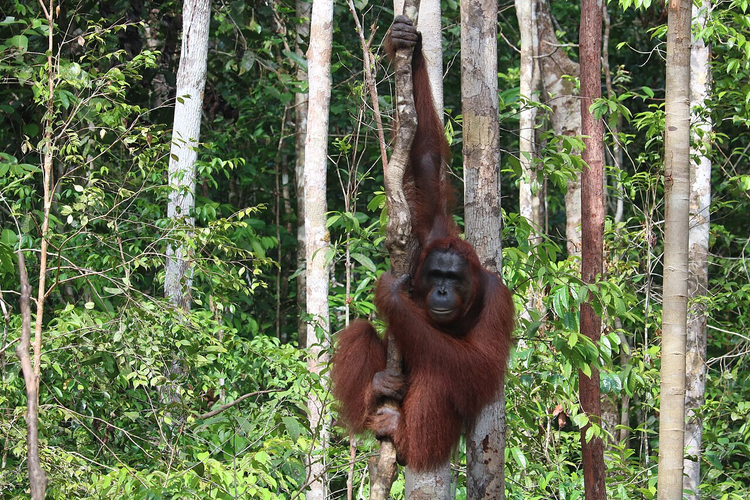
Tanjung Puting in Borneo protects one of the last forests where thousands of orangutans live. The animals stay in the canopy, and the park protects exactly that home. The only way to see them is on organized tours. The typical format is boat trips along the park's rivers with stops at feeding platforms.
 © Charlsmile · CC BY-SAPhoto: Charlsmile, CC BY-SA (https://creativecommons.org/licenses/by-sa/4.0), Wikimedia Commons
You can't get here without an experienced guide, and for many routes Borneo is a detour. If you want to see orangutans more easily and quickly, choose Sumatra and Bukit Lawang.
- How to get there: fly to Borneo, then continue by boat with a guide.
- The catch: getting there takes a lot of time, so plan several days.
9. Mount Rinjani
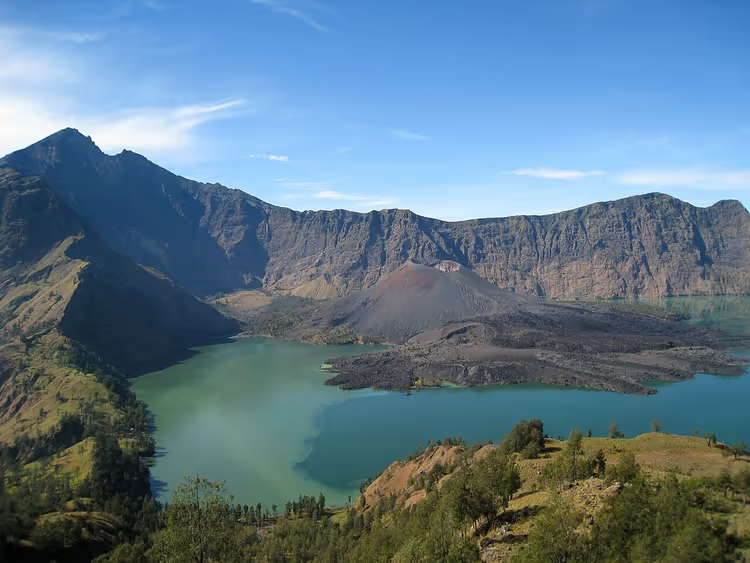
Rinjani is the highest volcano on Lombok and the second highest in Indonesia. The crater rim is only accessible as part of a two- or three-day tour, and it requires good fitness. You spend the night in a tent on the crater rim, overlooking Lake Segara Anak. A team of porters carries the gear and food.
 © Petter Lindgren · CC BY-SAPhoto: Petter Lindgren, CC BY-SA (https://creativecommons.org/licenses/by-sa/3.0), Wikimedia Commons
The most interesting thing inside is a small volcano right in the crater lake. It regularly emits smoke, and its last major eruption closed the routes for several years. The summit and lake are now open again. Guided Rinjani trekking arranges the ascent, overnight stay, and meals.
At dawn above the camp, you can see steam rising directly from the lake water.
- How to get there: start from mountain villages at the foot, then only with a guide.
- Cost: tour with porters and gear; price depends on the number of days.
- Who it's for / Not for: for those ready to sleep in a tent and walk long distances; not for beginners without preparation.
- The catch: it's cold on the crater at night, warm clothing is essential.
10. Kelingking Beach
Kelingking on Nusa Penida is one of those places in Indonesia you can't miss. The reason is a rock shaped like a dinosaur's head, plus sheer cliffs and turquoise water far below. It's less than a five-minute walk from the parking lot to the viewpoint, so you can get a great photo with almost no effort.
 © Chainwit. · CC BYPhoto: Chainwit., CC BY (https://creativecommons.org/licenses/by/4.0), Wikimedia Commons
The descent to the water takes thirty to forty-five minutes, depending on the oncoming foot traffic on the narrow trail. Fine sand and quiet await at the bottom. Swimming here is risky due to waves and currents, although many people take a dip anyway. Only go down if you're steady on your feet.
- How to get there: ferry from Bali to Nusa Penida, then by scooter.
- Who it's for / Not for: for those ready to descend a steep trail; not for those looking for calm swimming.
- The catch: the climb back up is harder than the descent.
11. Piaynemo Viewpoint
The Piaynemo viewpoint in Raja Ampat shows the region's postcard view: dozens of small green islands, turquoise lagoons, and dense tropical vegetation. A short staircase leads to the top, and the climb takes about ten minutes. Hiking boots aren't necessary; flip-flops are enough.
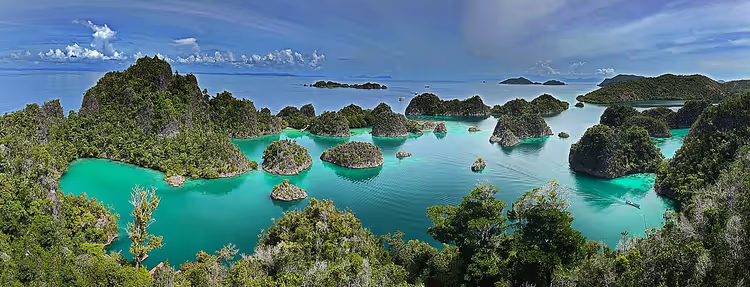
Piaynemo is only a small part of Raja Ampat, which is called the last paradise. So don't plan the viewpoint as a separate goal, but as a mandatory stop on your route if you're already traveling through the archipelago by boat. The short climb is worth it; it offers the best view of Raja Ampat's island world.
- How to get there: only by boat as part of a Raja Ampat tour.
- The catch: the journey to the archipelago is long; you can't get here without a cruise.
12. Jellyfish Lake
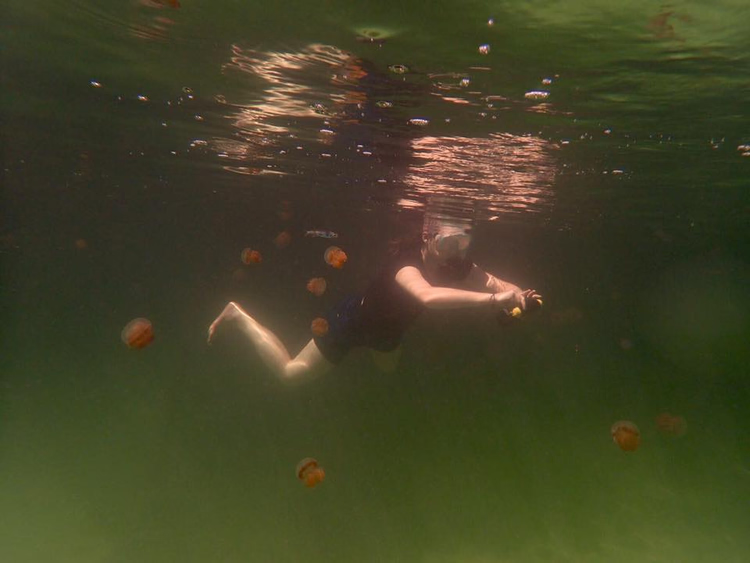
Jellyfish Lake in the Togian Islands is home to thousands of small jellyfish without stinging cells; they're harmless to humans. You simply walk into the water, and while snorkeling in the clear water, jellyfish surround you on all sides. That's exactly what makes the lake famous among those who want to see Indonesia's underwater world without coral reefs.
 © Christinefb · CC BY-SAPhoto: Christinefb, CC BY-SA (https://creativecommons.org/licenses/by-sa/4.0), Wikimedia Commons
The difficulty lies elsewhere. Getting to the Togian Islands isn't easy, and the journey takes time. So we suggest not making the lake a separate goal, but stopping here if you're already spending several days in the Togians. As a reward, you'll also get a peaceful island landscape.
- How to get there: with transfers to the Togian Islands, then with a guide.
- The catch: it's not worth coming here without several free days.
13. Pura Tirta Empul temple
Pura Tirta Empul in Bali is one of the island's most famous water temples. Sacred water has flowed from its springs for centuries, filling numerous pools. You can enter the water and take part in the ritual bathing through which believers purify themselves spiritually. Hindu shrines and statues stand among the greenery around the pools.
 © Chainwit. · CC BYPhoto: Chainwit., CC BY (https://creativecommons.org/licenses/by/4.0), Wikimedia Commons
We consider this one of those places in Bali where you don't just observe the tradition, you experience it yourself. So the temple is worth keeping on any island itinerary, and if time is short, it's better to cut something else.
- How to get there: by car or scooter with a guide through central Bali.
- Cost: paid entry, pay at the ticket counter.
- The catch: the ritual requires respect for temple rules; loud behavior is inappropriate here.
14. Manta Point
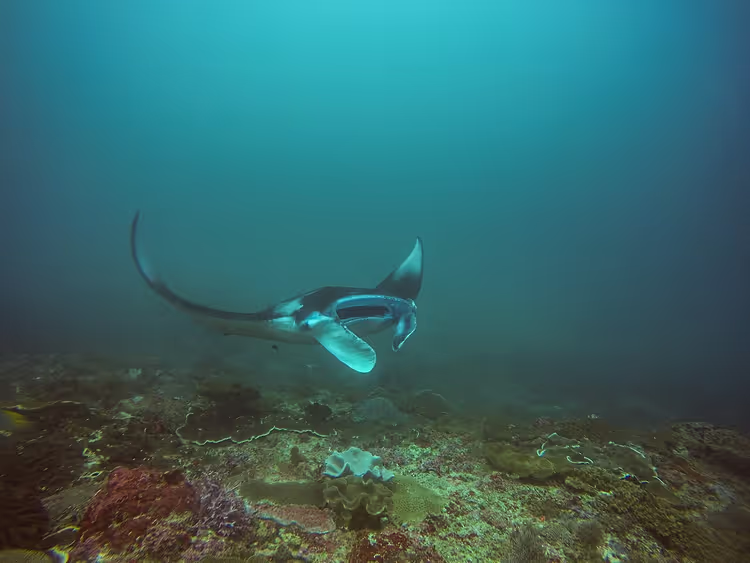
Manta Point near Nusa Penida is a place where manta rays are seen year-round; the name lives up to itself. Diving and snorkeling tours here can be booked directly on Nusa Penida or from Bali, and both options are straightforward.
 © Rilando June Lamadjido · CC BY-SAPhoto: Rilando June Lamadjido, CC BY-SA (https://creativecommons.org/licenses/by-sa/4.0), Wikimedia Commons
There are no guarantees, however. Visibility in the water is often poor, and the animals don't keep a schedule. So don't plan this for your last day; it's better to leave room for a second attempt. When everything comes together, swimming with mantas becomes one of the most powerful underwater experiences in Indonesia.
Snorkeling with manta rays at Nusa Penida should be booked in advance, spots on morning trips sell out quickly.
- How to get there: from Nusa Penida or from Bali by boat with an operator.
- The catch: the animals don't show up on a schedule, and visibility can be poor.
15. Padar Island
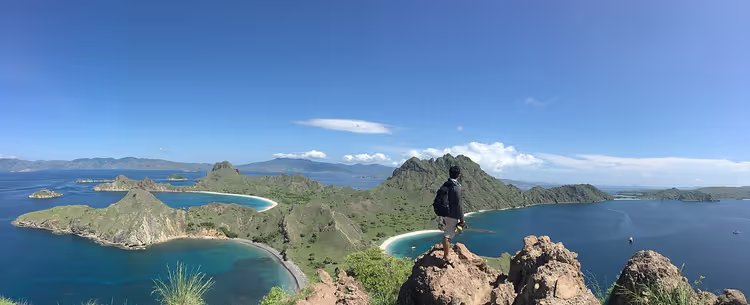
Padar Island in Komodo National Park is known for its viewpoint. From a low hill you can see several bays with beaches of different colors. White Beach, Pink Beach, and Black Beach sit right next to each other here. The climb to the top is easy, about fifteen minutes even in flip-flops.
 © Wigena · CC BY-SAPhoto: Wigena, CC BY-SA (https://creativecommons.org/licenses/by-sa/4.0), Wikimedia Commons
You can only get here on a boat tour, which lasts from one to four days depending on the operator. The park's popular spots are always crowded, so it's better to avoid weekends. As part of a cruise, Padar is worth it; making a separate trip just for it is not worth the effort.
From the top you can clearly see how the sand color changes across the neighboring bays.
- How to get there: only by boat as part of a Komodo tour.
- Who it's for / Not for: for those ready for a multi-day cruise; not for those who want to see everything in one day.
- The catch: the viewpoint is packed on weekends.
16. Underwater sculpture park
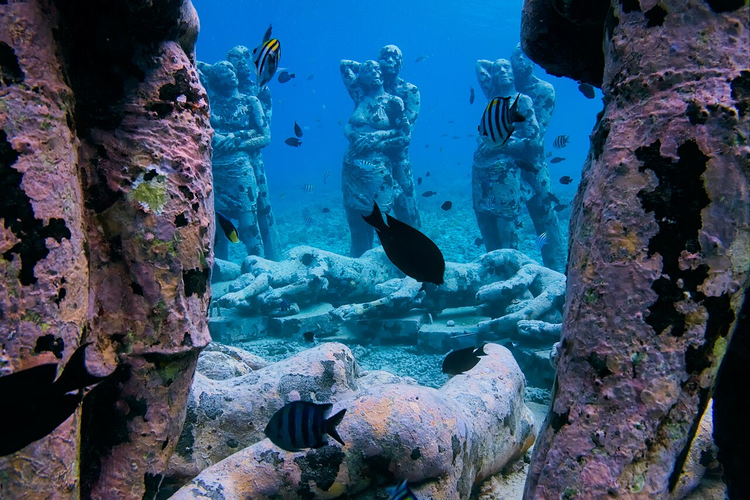
Off the Gili Islands, artificial statues lie on the seabed, together forming an underwater sculpture park. The most famous is "Bask Nest," a circle of figures that symbolizes protection of the marine environment.
 © Enrico Strocchi from Forlì, Italy · CC BY-SAPhoto: Enrico Strocchi from Forlì, Italy, CC BY-SA (https://creativecommons.org/licenses/by-sa/2.0), Wikimedia Commons
Tours to this snorkeling spot are organized from all three Gilis and from Lombok. The most convenient option is to stay on Gili Meno and snorkel straight from the shore early in the morning. That way you beat the daytime boats and see the statues almost alone. For that, the stop is worth it: all you need is a mask and snorkel.
- How to get there: by boat to Gili Meno, then swim from the shore.
- The catch: during the day there are many boats and people around the sculptures.
17. Borobudur Temple
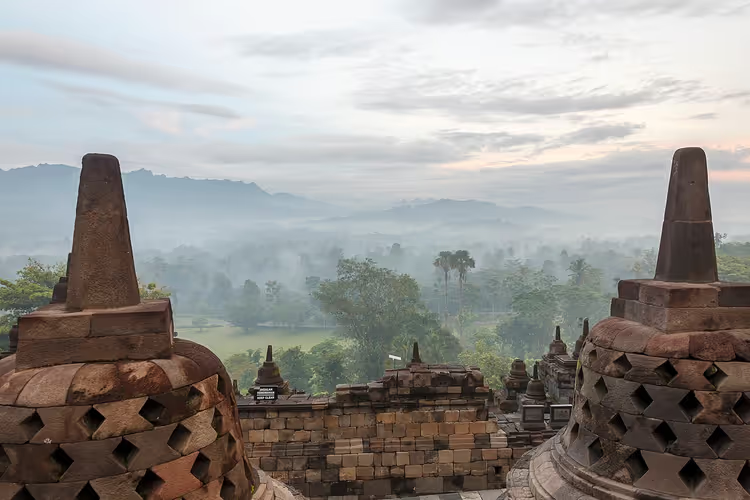
Borobudur in Central Java is Indonesia's most famous temple complex and a UNESCO World Heritage Site, according to the UNESCO list. The Buddhist complex consists of nine platforms topped with numerous stupas. Each level tells its own part of the Buddhist tradition. At the top, a panorama opens over rice fields and volcanoes.
 © CEphoto, Uwe Aranas · CC BY-SAPhoto: CEphoto, Uwe Aranas, CC BY-SA (https://creativecommons.org/licenses/by-sa/3.0), Wikimedia Commons
The temple is at its most beautiful early in the morning, before the groups arrive. Then you can walk the levels at your own pace instead of rushing to take a photo. That alone makes the trip to Central Java worthwhile. If you are already in Yogyakarta, the temple is almost next door.
- How to get there: from Yogyakarta by car or on an organized tour.
- Cost: paid entry, check the price at the ticket office.
- The catch: during the day the temple is crowded with organized groups.
18. Derawan Islands
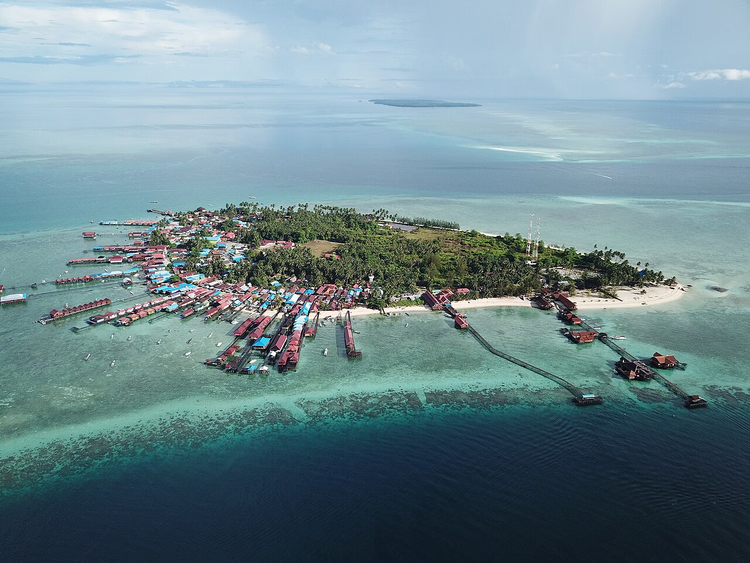
The Derawan Islands lie off the east coast of Borneo and consist of several small islands with white sand, turquoise water, and coral reefs. Underwater you will encounter sea turtles, manta rays, and plenty of tropical fish. For divers and snorkelers, this is a genuine dream.
 © consigliere ivan from Bontang, Indonesia · CC BYPhoto: consigliere ivan from Bontang, Indonesia, CC BY (https://creativecommons.org/licenses/by/2.0), Wikimedia Commons
The catch is the journey. The best route is to fly via Balikpapan in Kalimantan, then continue by plane, taxi, and boat. That is why we recommend these islands only to those who have several consecutive days. If you decide to go, book homestays on Derawan or Maratua in advance, or one of the resort islands Nabucco, Nunucan, and Virgin Cocoa.
- How to get there: via Balikpapan airport, then by several modes of transport.
- Who it's for / Not for: for divers with time to spare; not for a short two-day trip.
- The catch: logistics take a full day each way.
19. Tana Toraja
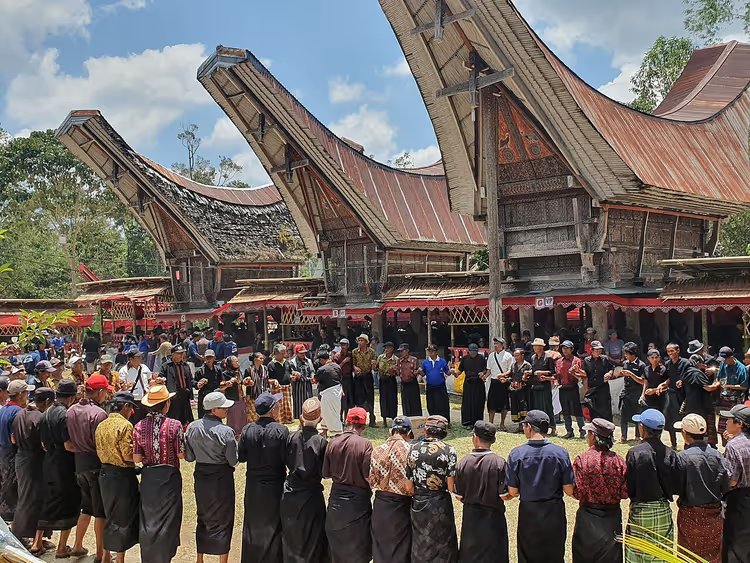
Tana Toraja in central Sulawesi is known for its traditional villages. Wooden houses on high stilts with intricate carvings are typical. Even more unusual are the region's burial sites: beside them, near the cliffs, stand life-size wooden figures called "Tau Tau," representing the deceased. Funeral rituals remain part of the culture today.
 © WiDi · CC BY-SAPhoto: WiDi, CC BY-SA (https://creativecommons.org/licenses/by-sa/4.0), Wikimedia Commons
You can get there via Makassar, then continue on your own or with a private driver. It is a considerable stretch of road, so plan Tana Toraja only as part of a detailed Sulawesi itinerary. If you have time, Kete Kesu is a good village for a first visit.
- How to get there: via Makassar, then by car with a driver.
- Who it's for / Not for: for those interested in culture and willing to travel far; not for a short trip.
- The catch: the road is long, and getting around without a car is difficult.
2-4 Week Indonesia itineraries
If you want to see one or more places from this list, keep this in mind. In separate articles we have put together Indonesia itineraries for two, three, and four weeks with day-by-day plans.
They include hotel picks, options for getting between cities and islands, what to do each day, and vetted operators for activities. Ready-made plans are a convenient base for your own route, so you don't forget anything or lose days on the ground.
⁉️🤔 Frequently asked questions
Which three places in Indonesia should you see first?
If you are visiting for the first time and have little time, build your route around Mount Bromo on Java, Borobudur Temple in Central Java, and Tumpak Sewu waterfall. All three sites are connected overland. Raja Ampat requires a separate flight, so it is better left for a second visit.
Do you need a guide to climb Mount Bromo and Ijen?
At Bromo you cannot drive your own car into the caldera; you have to take a local jeep or motorbike, so a guide is almost mandatory here. At Ijen the climb is easy, but entry requires a medical document, which is usually arranged by the operator. Both trips are easier to do as part of a single East Java tour.
Where can you actually see orangutans in the wild?
In the world, they are only found on Borneo and Sumatra. On Sumatra, people go to Bukit Lawang near Gunung Leuser National Park for this; a one-day trek is enough there. On Borneo, orangutans live in Tanjung Puting National Park, but getting there takes longer and is only possible by boat.
How difficult is it to get to Raja Ampat and the Togian Islands?
Both destinations require flights and transfers, and the journey takes a day each way. That is why we recommend not setting them aside for a short visit, but including them in a multi-week itinerary. Raja Ampat and the Togians are worth it if you can spend at least three or four days on site.
Is this kind of itinerary suitable for beginners with no trekking experience?
Some places require no preparation: the Jatiluwih rice terraces, temples, the Piaynemo and Padar viewpoints, Kelingking Beach near the viewpoint. Climbing Rinjani and descending to Tumpak Sewu waterfall are more demanding and require fitness and attention. Include as many active stops as your physical condition allows.
In short: what to book
If you have only two or three days on Java, go for Bromo and Tumpak Sewu waterfall. If you want beaches and Bali temples, look at Jatiluwih, Pura Tirta Empul, and the underwater park off the Gili Islands. If you have two weeks, add Rinjani on Lombok and a cruise around Padar Island in Komodo.
For remote destinations like Raja Ampat, the Togian Islands, and Derawan, check flights in advance: they determine the entire schedule. Book homestays and resort islands on Borneo a month ahead, as places there are limited.

A small editorial team writing guides for independent travel. We travel ourselves, but we haven’t been everywhere, so we check prices, opening hours and how to get there against official sources.