
















National gallery in London: what to see and how to get in without a ticket
Admission to the permanent collection of the National Gallery in London is free (as of 09/2026, visit planning page on the museum website). You only pay for tickets to major temporary exhibitions. The collection includes more than 2,300 Western European paintings from the 13th to the early 20th century (as of 09/2026, collection overview).
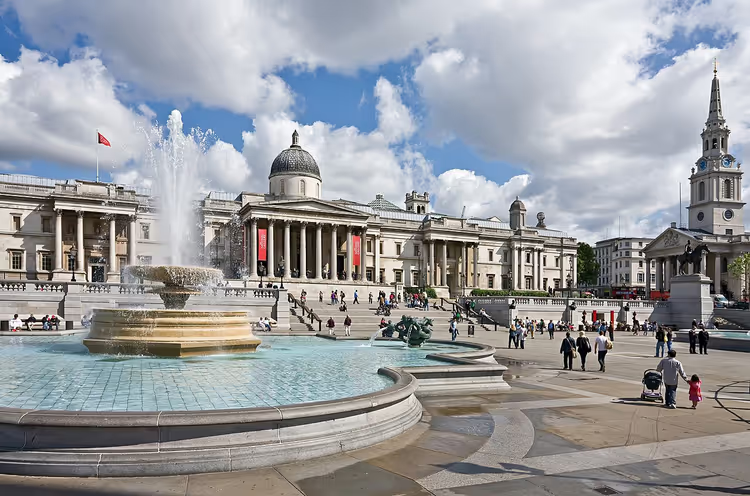
The gallery stands on the north side of Trafalgar Square. Almost every tourist in central London walks past it. But many pop in for twenty minutes, rush through two rooms, and leave without seeing Van Gogh's "Sunflowers" or Velázquez's "Rokeby Venus".
We put together a practical visit plan: what to see first, how much time to allow, where to get a timed exhibition ticket, and how to get there from the Tube. We checked the opening hours and prices against the gallery's official website (as of 09/2026).
Ad: this article contains affiliate links, we earn a commission if you book through them, at no extra cost to you.
What to see at the gallery: rooms and major paintings
💡 In short:
- The permanent collection is free; only major temporary exhibitions require tickets (as of 09/2026, verified on the museum website).
- Start with the Sainsbury Wing, where the earliest works hang.
- On Fridays the gallery is open until 9:00 PM, the only evening opening of the week (as of 09/2026, opening hours).
- Pick up a floor plan at the entrance, otherwise you will miss half the collection.
- Prices and opening hours: 09/2026, verified on the gallery's official website.
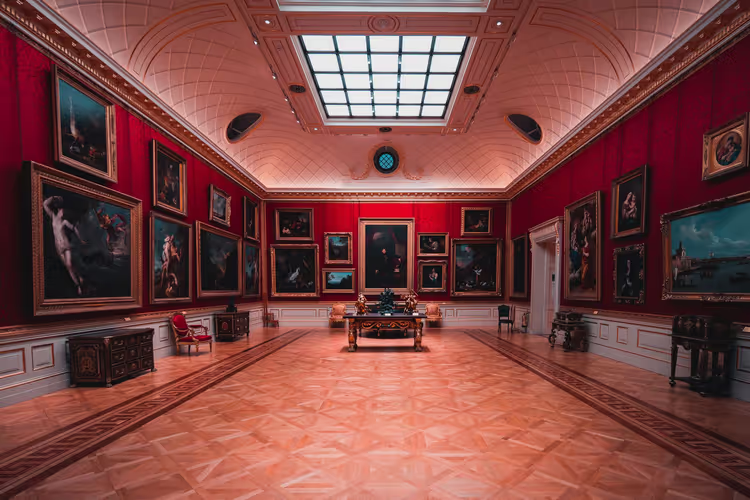
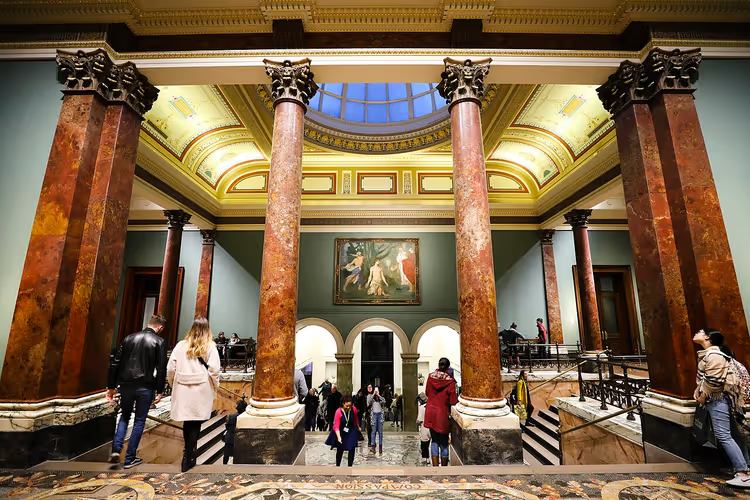
The collection is hung in chronological order, which makes touring it much easier. Start with the Sainsbury Wing: there you'll find painting from the 13th to 16th centuries, from the early Renaissance to Michelangelo. Moving through the main building's rooms, you progress to the 17th and 18th centuries, and finish with canvases from the early 20th century.
The rooms form a maze, and it's easy to get lost. Pick up a paper floor plan at the information desk or download one from the museum website in advance. That way you can build a route through the periods instead of wandering in circles between staircases.
 © https://www.flickr.com/photos/bryansjs · CC BY-SAPhoto: https://www.flickr.com/photos/bryansjs, CC BY-SA (https://creativecommons.org/licenses/by-sa/2.0), Wikimedia Commons
The Venetian painting room holds names familiar from textbooks: Bellini, Mantegna, Cima da Conegliano, Antonello da Messina. A small early Giorgione is also kept here, but it is almost never on display. Experts still dispute its attribution, so it spends months at a time in storage.
The Spanish room has fewer canvases than the Prado in Madrid, but it holds a strong selection of Velázquez works. People come specifically for one painting: the "Rokeby Venus" remains his only surviving nude.
A separate area is devoted to the golden age of the Dutch school. Rembrandt is represented here by portraits of both his wives, friends, associates, and a self-portrait. Nearby hang twenty-four paintings by Rubens, mostly from the final years of his life. The Dutch genre painters are represented by Terborch, de Hooch, van Ruisdael, and van Ostade.
French painting occupies several rooms. The academic line is held by Poussin and Claude Lorrain, the realist line by the Le Nain brothers. Look separately at the formal portraits: Cardinal Richelieu by Philippe de Champaigne and Louis XIV by Rigaud. Further on are landscapes by Corot and Daubigny, and canvases by Delacroix, Courbet, David, and Ingres.
The gallant 18th century hangs nearby: Watteau with melancholic scenes, Fragonard with mythological subjects, Chardin with still lifes. There are few Impressionists here, but the selection is strong: Monet, Renoir, Pissarro, Manet, Sisley. This room is continually enriched by gifts from private collectors.
Look for the British school in separate rooms. Stubbs painted horses from every angle, Constable painted understated landscapes of his native countryside. In the English portrait room hang court portraitists: Van Dyck, Holbein, and Lawrence.
If you're very short on time, head to three canvases: Van Gogh's "Sunflowers", Titian's "Holy Family", and "Landscape with a Castle". Mark them on the floor plan in advance so you don't search blindly. A full tour of all periods takes three to four hours, and more if you pause for coffee.
- How much time: an hour for the major paintings, three to four hours for the whole collection.
- Who it's for: for a first trip to London and for those who want to see old masters without a ticket.
- Not for: if you're after 20th and 21st century art, it isn't in the permanent collection.
- The catch: the collection is spread across several wings, and without a floor plan you'll miss some rooms.
History: from a private collection to a national museum
The gallery was founded in 1824, when the British government bought the collection of the banker John Julius Angerstein, who was born in Russia. The first thirty-eight paintings entered the collection, among them works by Rubens and Titian (according to the gallery's official history).
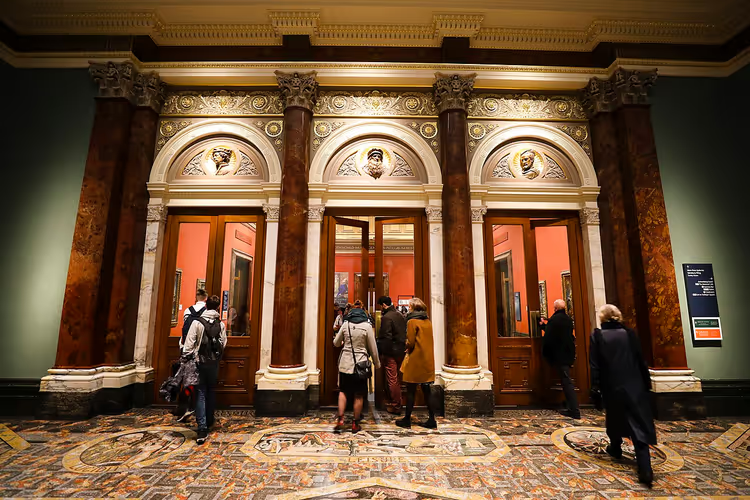
At first the paintings hung in a house on Pall Mall. When the collection grew, construction began on a building in Trafalgar Square, and in 1838 the collection moved there (according to the collection history). Architect Wilkins kept eight columns in the facade from the old royal stables that had stood on the site.
 © https://www.flickr.com/photos/bryansjs · CC BY-SAPhoto: https://www.flickr.com/photos/bryansjs, CC BY-SA (https://creativecommons.org/licenses/by-sa/2.0), Wikimedia Commons
The building was expanded many times. The Sainsbury Wing was built in 1991 with money from retail magnate Simon Sainsbury and named after him (according to the National Gallery). In 2023 it closed for renovation, and on May 10, 2025 it reopened as the main entrance (as of 09/2026, gallery press release). Now a step-free, barrier-free entrance leads from Trafalgar Square.
Attendance grew after that. In 2025 more than four million people visited the gallery in Trafalgar Square, 29% more than the year before (according to the gallery).
Formally the gallery remains a non-governmental organization. But the prime minister appoints the trustees, and the state provides annual grants for maintaining the building and the collection.
The galleries cover an area the size of several football fields, so it's easy to spend half a day there. Besides the exhibition rooms, the gallery has a lecture hall and an information desk. You can pick up a floor plan there before you enter the exhibition.
How the collection grew: gifts, purchases, and royal paintings
The gallery's first director was Charles Eastlake, a painter and art historian. For ten years he personally bought paintings from European collectors and sought them out in monasteries, old churches, and private collections.
Among his purchases are paintings people travel to London to see: "The Battle of San Romano" by Paolo Uccello and Bellini's "Madonna of the Meadow." In total Eastlake acquired more than a hundred paintings for the gallery.
After that the collection grew through gifts. Collectors George Beaumont and Holwell Carr donated their collections with works by Rubens, Canaletto, Tintoretto, and Rembrandt. The Italian section was enriched with paintings by Fra Angelico, Pisanello, and Filippo Lippi.

The opening of the Sainsbury Wing in 1991 was marked by the exhibition "The Queen's Pictures." Works by Vermeer, Rubens, Holbein, and Van Dyck were brought from the Royal Collection for it.
The collection continues to grow today. It was recently enhanced with paintings by the Gothic master Bermejo, the German classic Dürer, the French post-impressionist Seurat, and the Bavarian landscape painter Altdorfer. You'll find some of these works in the Sainsbury Wing.
Tickets and opening hours
What you need to know | As of |
|---|---|
Address | Trafalgar Square, London |
Permanent collection entry | free (as of 09/2026, visit plan) |
Opening hours | daily 10:00-18:00, Fridays until 21:00 (as of 09/2026, official website) |
Closure days | only a few days a year, the gallery is open 361 days (as of 09/2026, visiting rules) |
You can get a free timed-entry ticket in advance on the museum's website, which lets you skip the line at the turnstiles. On weekends, slots go faster, so don't leave booking until the last day.
Temporary exhibitions are paid, and tickets for them are sold separately. If you're going for a specific exhibition, book your date and time in advance: slots for popular shows sell out weeks ahead.
Tip for those visiting for a couple of days: Friday evening hours are the longest of the week, and after the gallery you'll still have time for dinner in the center. We checked the opening hours and entry rules against the museum's official website (as of 09/2026, visit page).
Timed tickets for exhibitions at the National Gallery
Tours and tickets in National Gallery London
Guided tours, skip-the-line tickets and activities — most offers can be cancelled free of charge.
See offers on TiqetsThe widget loads once you give your consent.
What else to see in London
Trafalgar Square sits right in the heart of London, so the gallery is easy to combine with other city sights. For some of them, it's also worth buying tickets in advance: ticket office lines eat up time.
 © Diliff · CC BY-SAPhoto: Diliff, CC BY-SA (https://creativecommons.org/licenses/by-sa/3.0), Wikimedia Commons
Tower of London
A ticket here includes the Crown Jewels exhibition, which is what draws many visitors to the fortress. It's one of London's most popular attractions, and a line forms at the entrance.
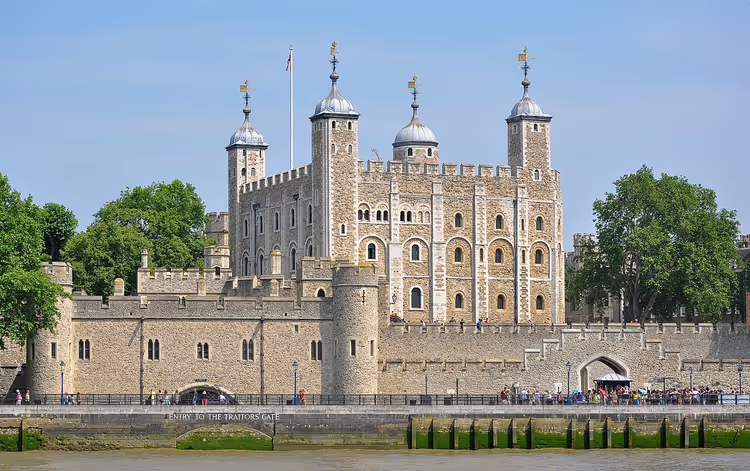 © Bob Collowan · CC BY-SAPhoto: Bob Collowan, CC BY-SA (https://creativecommons.org/licenses/by-sa/3.0), Wikimedia Commons
Buy a ticket to the Tower of London
London Eye
The Ferris wheel on the Thames gives you a view of the city from above. There's a standard ticket and a fast-track option if you don't want to stand in line.
 © Christian David · CC BY-SAPhoto: Christian David, CC BY-SA (https://creativecommons.org/licenses/by-sa/4.0), Wikimedia Commons
Tower Bridge
Inside the bridge there is an exhibition about its construction and how it works. The ticket gives you priority entry, so you don't wait with the general group.
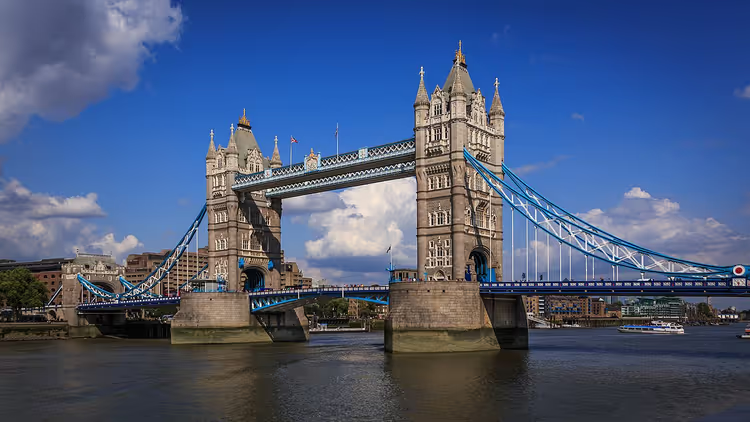 © Barcex · CC BY-SAPhoto: Barcex, CC BY-SA (https://creativecommons.org/licenses/by-sa/3.0), Wikimedia Commons
Tower Bridge priority entry ticket
Westminster Abbey
The abbey operates as both a working church and a museum. The entry ticket includes an audio guide, so you can explore at your own pace, without a group.
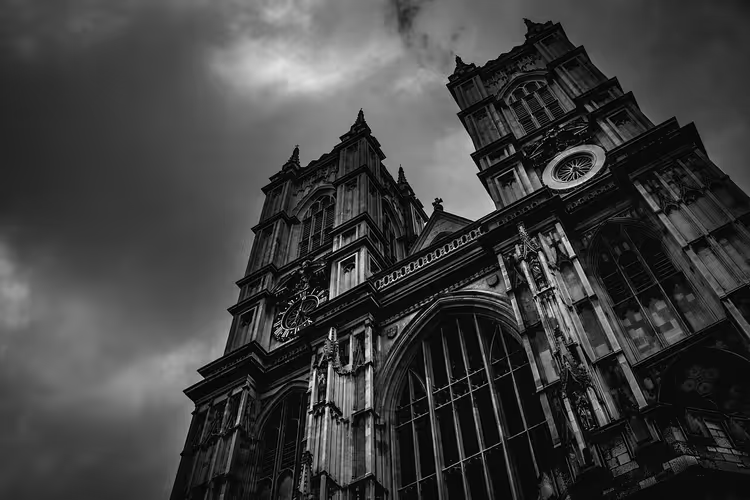 © TimothyBarkerJr · CC BY-SAPhoto: TimothyBarkerJr, CC BY-SA (https://creativecommons.org/licenses/by-sa/4.0), Wikimedia Commons
Westminster Abbey entry ticket with audio guide
St Paul's Cathedral
The cathedral's dome rises above the City, and the gallery offers a panoramic view of London. A fast-track ticket saves time in high season.
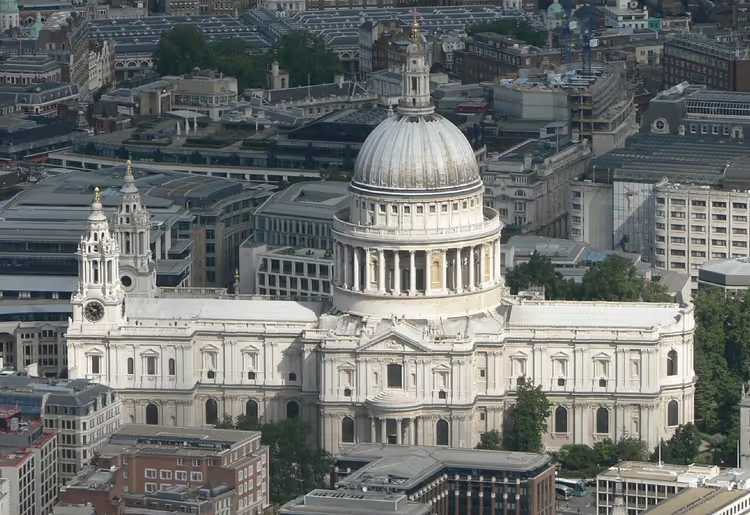 © Mark Fosh · CC BYPhoto: Mark Fosh, CC BY (https://creativecommons.org/licenses/by/2.0), Wikimedia Commons
St Paul's Cathedral fast-track ticket
National Gallery on the map and how to get there
The gallery stands on the north side of Trafalgar Square, between Charing Cross and Leicester Square. The nearest tube stations are Charing Cross, Leicester Square, and Embankment. From each of them you can walk there in a few minutes (according to the museum's official website).
Buses stop right on the square, so the no-tube option works too. If you're driving, leave your car in a paid car park in the center: parking around the gallery is limited.
⁉️🤔 Frequently asked questions
Do I need to pay to enter the National Gallery?
No, the permanent collection is free, and it always has been (as of 09/2026, visiting terms). You only pay for tickets to major temporary exhibitions. You can book a free timed entry ticket in advance on the museum's website to skip the line. Time slots aren't mandatory, but on weekends they help save time.
How much time do I need to see it?
An hour is enough for the main paintings. A full tour of the entire collection from the 13th to the early 20th century takes three to four hours, and that's without coffee breaks. If you're going with children, plan for two hours and mark three or four rooms on the map in advance.
When is the gallery less crowded?
It's quietest right after opening and after 4 pm. On Fridays the gallery is open until 9 pm, but evening hours are popular, so the crowd lingers longer. On weekends, arrive at opening time: by midday the rooms with the major paintings fill up with groups.
What if I don't know much about painting?
Start with the chronological route through the Sainsbury Wing, where you'll find paintings from the 13th to 16th centuries and a clear layout. Pick up a floor plan at the entrance and you won't wander between staircases. For a first visit, five rooms and the three paintings we highlighted above are enough.
How do I get to the gallery from the tube?
The nearest stations are Charing Cross, Leicester Square, and Embankment. From each of them you can walk there in a few minutes (according to the visit plan).
Video about the National Gallery
If you want to see the rooms in advance, watch the video below. It will help you get a sense of the scale of the collection before your trip.
In short: what's worth booking
If you have only one day in London, grab a free entry slot for the gallery in advance and arrive at opening time. If you're going for a specific exhibition, check the dates first and buy a timed ticket, then plan the rest of your itinerary around it.
The decision matrix is simple. If your goal is the collection's major paintings, an hour and a free entry slot will be enough. If you want to combine the gallery with other London attractions, book tickets for the Tower or Westminster Abbey in advance so you don't have to wait at the ticket office. If you want an evening visit, keep Friday free and come after four o'clock.
exhibition tickets at the National Gallery · London tours
For hotels in central London, a couple of minutes from Trafalgar Square, check Trip.com.

A small editorial team writing guides for independent travel. We travel ourselves, but we haven’t been everywhere, so we check prices, opening hours and how to get there against official sources.