
















Tower of London: how much entry costs and what to see in half a day
Tickets to the Tower of London are sold for a specific time slot. In summer, morning slots go first, so you either arrive at opening time or stand in line at the gates.
The fortress on the banks of the Thames has been a palace, a prison, a mint, and a menagerie. Today it houses the Crown Jewels, and seven ravens, according to legend, guard the kingdom.
Half a day at the Tower will fly by: first the walls and towers, then the Crown Jewels. Below you'll find opening hours by season, this year's prices, and a route that lets you explore the fortress without rushing.
Ad: this article contains affiliate links, we earn a commission if you book through them, at no extra cost to you.
What to see at the Tower of London
💡 In short:
- An adult ticket costs from £37, a child ticket for ages 5-15 costs £18.50, and visitors under five enter free (as of 09/2026, tickets and prices at hrp.org.uk).
- Allow two to three hours for your visit: the Crown Jewels, the White Tower, and the walls take up almost all of that time.
- Prices and opening hours: 09/2026, verified on the official website
 © Ilya Grigorik · CC BY-SAPhoto: Ilya Grigorik, CC BY-SA (https://creativecommons.org/licenses/by-sa/3.0), Wikimedia Commons
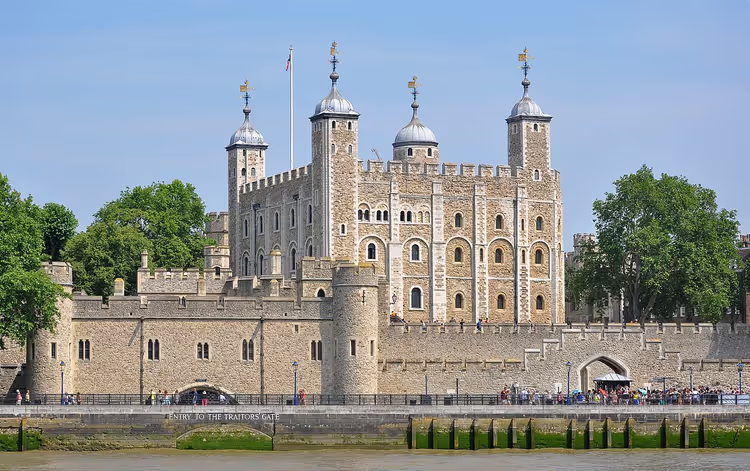
Behind two rows of walls lies not just a museum but an entire town: barracks, a chapel, an armory, and walls with towers. You'll walk along the galleries where archers once stood and see the same gates through which prisoners were brought into the fortress.
The Crown Jewels are kept in the Jewel House in the Waterloo Barracks, on the north side of the fortress. The White Tower holds the "Line of Kings" and a collection of armor, and between them lies the parade ground where the ravens live.
What to see | How long it takes |
|---|---|
Crown Jewels | about an hour |
White Tower and the "Line of Kings" | an hour or more |
Walls, towers, and Traitors' Gate | about half an hour |
Chapel of St Peter ad Vincula | fifteen minutes |
The best route is this: start with the Crown Jewels while the line is short, then the White Tower, and leave the walls and chapel for the second half of your visit. That way you'll cover the busiest spots before the tour groups arrive.
History of the Tower: from fortress to prison
Foundation after the Norman Conquest
William the Conqueror began building the fortress on the Thames immediately after the Battle of Hastings in 1066 (as of 09/2026, Wikipedia). The site was chosen by the old Roman walls of London: the river protected the Tower from the south, and the city wall from the north.
The White Tower rose at the center of the fortification and remains the main building of the fortress. Its walls stood higher than the neighboring structures, so from the gallery you could see the entire course of the Thames and the approaches to the city. You'll enter it first if you head left from the main entrance.
The first prisoner and the first escape
The fortress quickly became a prison for noble captives. The first was Ranulf Flambard, a bishop and treasurer accused of embezzlement.
The escape made his name: friends sent the clergyman a barrel of wine with a rope hidden inside. Ranulf climbed down the wall and reached a ship waiting below. His contemporaries decided that dark forces must have been involved.
Expansion under Richard the Lionheart
The king spent almost his entire reign on crusade and then in captivity, so the construction was managed by his vice-chancellor William Longchamp. He expanded the area around the White Tower and dug a moat around the perimeter.
The updated walls did not hold out long under the first siege. The vice-chancellor surrendered the fortress after three days, and the rebels entered without a serious assault.
Henry III and nine new towers
The 13th century was quiet for the Tower, and King Henry III turned to rebuilding. Under him, nine towers were erected and enclosed by a stone wall, and each tower was given its own job.
The Bell Tower held a watch bell that woke the garrison. The Lantern Tower served as a beacon: its fire guided ships sailing the Thames at night. You'll walk along this wall during your visit and see the city from above.
Edward I and the outer ward
Edward I completed the outer ward and put into practice everything he knew about fortification. Under him, a new line of walls appeared, along with two bastions to the north and another moat up to fifty meters wide.
Inside, the Lion Tower was built for the royal lions, Traitors' Gate for boats carrying prisoners, and the Royal Mint. Two watermills made the fortress almost independent of the city, and you'll notice how densely the buildings filled every spare meter.
The Wars of the Roses
The 15th century brought sieges, captures, and destruction to the Tower. Both dynasties took the fortress in turn, and then its owners began thinking about modernizing it for artillery.
The most notorious crime of that era involves the princes Richard and Edward. They were declared bastards and locked in the tower, their uncle Richard of Gloucester took power, and the boys never left the fortress. Thomas More and William Shakespeare wrote about this, and you'll find their versions in any London guidebook.
From castle to prison
 © Bob Collowan · CC BY-SAPhoto: Bob Collowan, CC BY-SA (https://creativecommons.org/licenses/by-sa/3.0), Wikimedia Commons
By the end of the 16th century, the Tudors had moved their residence to Westminster, and the fortress began to decay. Converting it for artillery cost enormous sums, so the Tower was used less and less, mainly for ceremonies.
Its reputation as a torture chamber came later, largely from 17th-century pamphlets and novels whose authors liked to exaggerate. Noble prisoners were held without chains, and executions more often took place not inside the walls but on the hill behind the palace.
Five women were executed within the fortress grounds: Anne Boleyn and Catherine Howard, wives of Henry VIII, Jane Boleyn, Margaret Pole, and Lady Jane Grey, who sat on the throne for nine days. A public execution of these women could have provoked too loud a public outcry.
Later, the Hanoverian dynasty tried to restore the fortress's status: the moat was cleaned, fortifications were added, and then the Waterloo Barracks were built. The Tower last served as a prison during World War II, when Nazi officials and spies were held here. You'll see the barracks to the left of the entrance; they are still occupied by the garrison today.
From prison to museum
The Tower's tourist history began long before our time. As early as the reign of Elizabeth I, a menagerie was opened here and shown to visitors for a fee.
New interest in the fortress was sparked by William Ainsworth's novel about the Tower's prisoners, published in the 19th century. After that, admission became paid and organized, and visitors' attention turned to the rooms of the Beauchamp Tower.
On the walls of the Beauchamp Tower, names and dates scratched by prisoners have survived. By the 21st century, the fortress had fully become a museum and one of the country's main attractions. You'll feel the difference between the ceremonial palace and the prison cells within the first hour of your walk.
Treasures and coronation regalia
In the Middle Ages, the royal regalia gave the monarch not only the right to the crown, but also money. In times of need, the treasures could be pawned to raise the required sum.
 © Matt Brown · CC BYPhoto: Matt Brown, CC BY (https://creativecommons.org/licenses/by/2.0), Wikimedia Commons
The collection was carefully guarded until the 17th century, when Oliver Cromwell ordered everything to be melted down. Three swords and one spoon survived, so the collection had to be rebuilt from scratch. Today the regalia are kept in the west wing of the Waterloo Barracks, in the Jewel House.
Row of kings: the oldest exhibition
 © Oleg Yunakov · CC BY-SAPhoto: Oleg Yunakov, CC BY-SA (https://creativecommons.org/licenses/by-sa/4.0), Wikimedia Commons
The "Row of Kings" is considered the oldest permanent exhibition in the world: the first version of the collection was shown to the public in the late 17th century. Ten full-length equestrian statues of kings were carved by the finest masters of the time, including Grinling Gibbons.
The statues were meant to boost the popularity of the Stuart dynasty, so "bad" kings were left out of the row. Today the exhibition occupies the oldest part of the fortress, the White Tower, and adorns the Royal Armouries. Here you will also see the collection of armor.
Armor and weapons
In the same hall stand suits of armor from different eras, and the most prominent ones belonged to Henry VIII. He commissioned armor several times, and you can see how his figure changed over the years.
Nearby are displayed the child's armor of Henry Stuart and the armor of James I, which was given to him in Japan and made in the local style. Here the artistry of the decoration matters more than the protection itself.
A separate display case is devoted to weapons: swords, rapiers, sabers, bows, and the first examples of firearms. Each item belongs to its own era, so the collection reads like a chronology, and you can easily trace it by year.
Royal menagerie
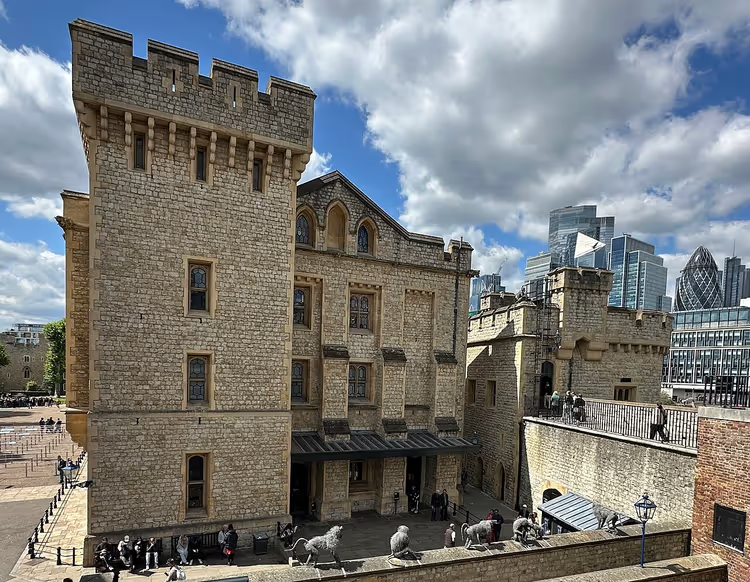
The menagerie was a passion of English monarchs from the 13th century, and the "Royal Beasts" exhibition tells the story of its inhabitants. It is housed in the Brick Tower, and some of the animals have been given life-size sculptures.
 © APK · CC BYPhoto: APK, CC BY (https://creativecommons.org/licenses/by/4.0), Wikimedia Commons
The polar bear was a gift to the crown from the King of Norway, and the treasury issued four pence a day for its upkeep. The bear was let out to swim in the Thames, where it caught fish. Later the menagerie was joined by three leopards from Frederick II and an elephant from Louis IX.
By the 18th century, anyone could visit the menagerie. A ticket cost money, but instead of payment they accepted a cat or a dog to feed the predators. You will find the animal sculptures by the walls and towers, and they stand out well in photographs.
Tower ravens
Seven ravens live in the fortress: six main ones and one reserve, as the legend requires. If the birds leave the Tower, the kingdom will fall, so their wings are clipped.
The ravens are looked after by a keeper from the Yeoman body. In 2024 the post was taken up by Yeoman Barney Chandler (as of 09/2026, hrp.org.uk). Every morning he goes to the market and personally selects meat for the birds.
Feeding the ravens or touching them is not allowed. You watch them by the walls, where the birds sit in their places, and listen as the Beefeater tells you about them.
Yeomen and Beefeaters
The Yeomen emerged as a guard that protected the monarch during his stays in the fortress. Gradually they became keepers of the regalia and overseers, and today they work as guides.
The corps consists of army veterans, and the uniform has barely changed since Stuart times. You will easily recognize the blue-and-red tunics: they are swapped for purple and gold ones during a monarch's visit.
A Beefeater will lead you around the grounds and tell you the history of the fortress, and also show you where the queues form. Tours are included in the ticket, no separate payment is needed, and one hour is enough for a guided walk.
Ceremony of the Keys
 © wasd42 · CC BY-SAPhoto: wasd42, CC BY-SA (https://creativecommons.org/licenses/by-sa/4.0), Wikimedia Commons
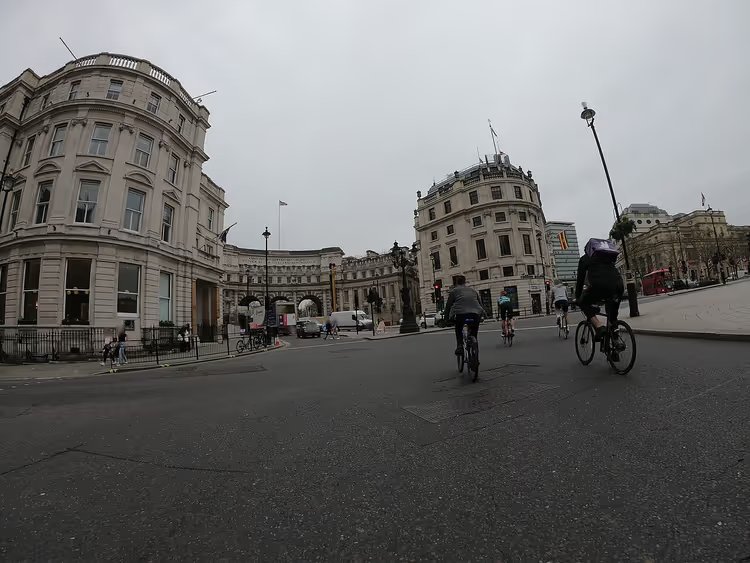
The Ceremony of the Keys has been held every day for seven centuries. The Chief Yeoman Warder hands the keys of the fortress to the head of another unit that guards the Tower at night.
Outwardly it is a modest affair: a few figures with a lantern and a short dialogue. That is precisely why the ceremony is considered a living piece of history rather than a show for tourists.
You can attend it only with a separate ticket, which must be booked in advance. The evening ceremony begins after closing, at half past nine, so you will have to plan a whole evening in the area.
Chapel of St Peter ad Vincula
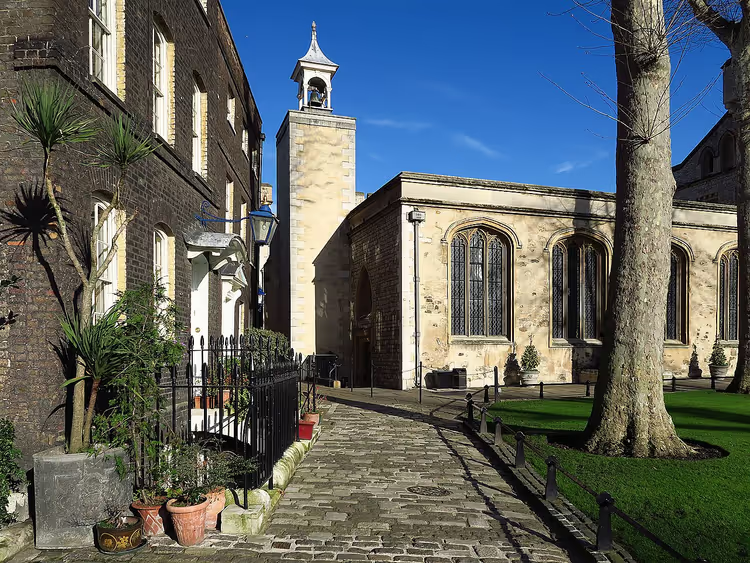
The chapel was built in the 12th century, but it has only partly kept its original appearance: four centuries later it was substantially rebuilt.
 © Michael Coppins · CC BY-SAPhoto: Michael Coppins, CC BY-SA (https://creativecommons.org/licenses/by-sa/4.0), Wikimedia Commons
The chapel went down in history as the place where prisoners were buried and their funeral services held. Three executed queens are buried here, as well as John Fisher and Thomas More, who stood up for the rights of the Catholic Church.
The 17th-century organ still sounds clear today, and Grinling Gibbons worked on the sculptures. Directly opposite the chapel is the execution site, and you will see it on your way to the White Tower.
Fusilier Museum
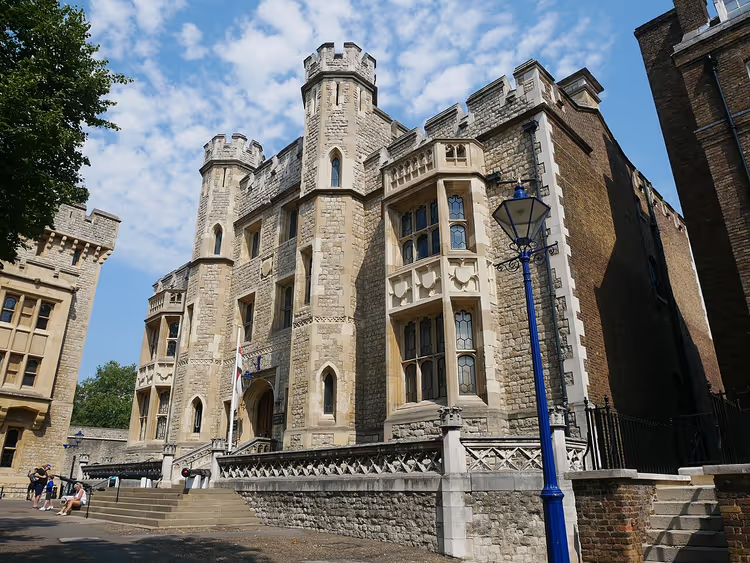
The fortress was defended not only by Beefeaters, but also by fusiliers, whose main weapon was the flintlock musket. The first regiment was formed in the 17th century, and it went on to take part in all of England's major wars.
 © Ethan Doyle White · CC BY-SAPhoto: Ethan Doyle White, CC BY-SA (https://creativecommons.org/licenses/by-sa/4.0), Wikimedia Commons
The museum houses orders, medals, uniform samples, and war trophies. The exhibition occupies small rooms, and you can walk through them in a quarter of an hour.
Medieval palace rooms
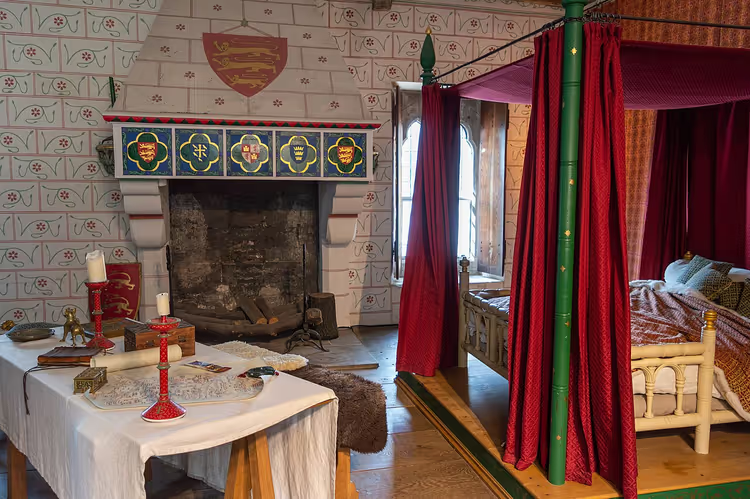 © Tristan Surtel · CC BY-SAPhoto: Tristan Surtel, CC BY-SA (https://creativecommons.org/licenses/by-sa/4.0), Wikimedia Commons
The Tower was a royal residence, and the stone has preserved traces of palace life. The royal palace was built mainly in the 13th century, the monarch's living quarters occupied the White Tower, and the Queen's House stood nearby.
The Queen's House could not be saved, but fragments of rooms and furnishings have been recreated in other parts of the fortress. Visitors see the throne, a fireplace, a council chamber, and a throne room, and you will walk through the same halls where ambassadors were received.
Here too is a collection of rare objects from medieval daily life. Among them is a lead figurine of a knight, which was once the toy of a young aristocrat.
Tickets and opening hours
In summer (March 1 to October 31), the Tower is open Tuesday to Saturday from 9:00 to 17:30, and on Sunday and Monday one hour later (as of 09/2026, opening hours on hrp.org.uk). In winter (November 1 to February 28), the doors close earlier.
Season | Tuesday-Saturday | Sunday-Monday |
|---|---|---|
Summer, March 1 to October 31 | 9:00-17:30 | 10:00-17:30 |
Winter, November 1 to February 28 | 9:00-16:30 | 10:00-16:30 |
Season schedule: 09/2026, opening hours on the official website. Last entry is one hour before closing, so it is better to come in the morning or just after midday. The fortress is closed on December 24, 25, and 26 and January 1.
An adult ticket costs from £37 (as of 09/2026, prices on the official website). A child ticket for visitors aged 5-15 costs £18.50, visitors under five enter free, and a concession ticket for visitors with disabilities costs £29.50 (as of 09/2026, ticket prices on hrp.org.uk). A carer enters free, and the audio guide is paid for separately.
Tickets are sold for a specific entry time. In summer, morning slots sell out several days in advance, so you should lock in your date early and calmly compare available times.
Tower of London tickets with time slots on Tiqets
The Crown Jewels are included in the regular ticket, so you do not need to buy a separate pass. The line to the display cases moves slowest in the middle of the day, so start your visit at the Waterloo Barracks on the north side.
Tours and tickets in Tower of London
Guided tours, skip-the-line tickets and activities — most offers can be cancelled free of charge.
See offers on TiqetsThe widget loads once you give your consent.
Tours and audio guide
Yeoman Warder tours are included in the ticket and start several times an hour. A guide walks you around the grounds and tells you about executions, ravens, and the regalia, and after the walk you choose what to see next yourself.
The audio guide costs extra, but it helps in areas where there are no signs. An app with a map is enough: the fortress is compact, and you can walk around it in a loop in a couple of hours.
Guided Tower of London tour on GetYourGuide
How to get to the Tower
The nearest Underground station is called Tower Hill, and it is about a five-minute walk from there to the entrance (on the map). Trains run on the Circle and District lines, and signs inside the station lead you straight to the fortress.
The second option is Tower Gateway station on the DLR line, which is even closer to the Tower. Buses stop in the square in front of the fortress, and Thames Clippers river boats arrive at Tower Pier.
Entry is through the old moat, and bags are checked at the entrance. A heavy suitcase will be inconvenient, so leave your luggage at the hotel.
Tower of London on the map
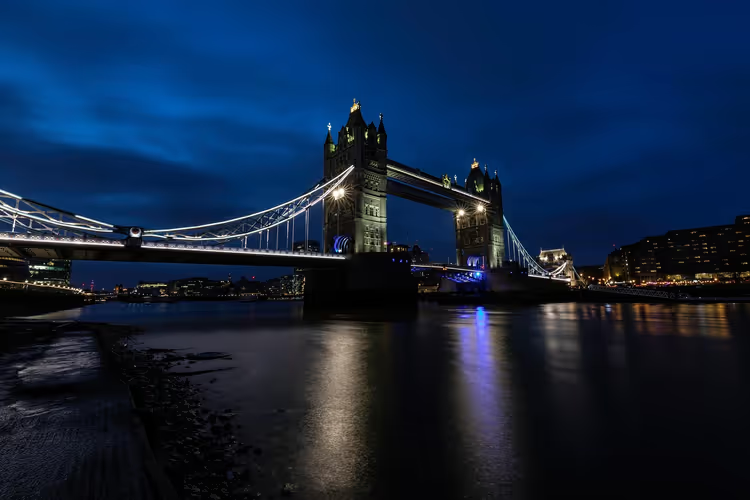
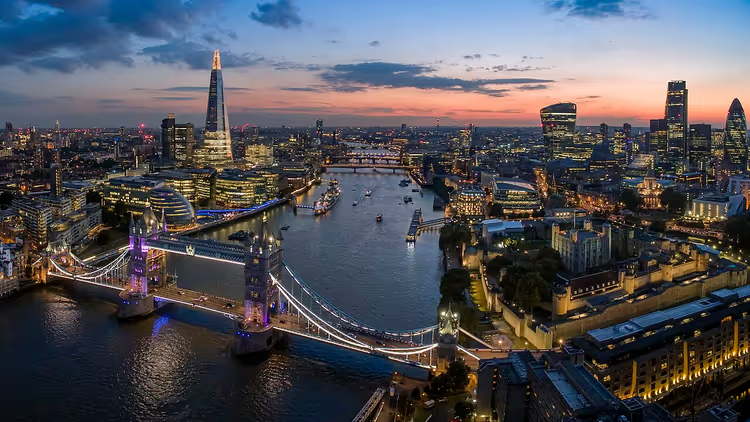
The point on the map below shows where the fortress stands relative to the Thames and Tower Hill station. From the Underground you can walk there in a few minutes, and from the nearby embankment you can see Tower Bridge.
London Eye tickets
The observation wheel stands on the south bank of the Thames, a half-hour walk from the fortress. From the top you will see the Tower itself and the whole course of the river all the way to the center.
 © Christian David · CC BY-SAPhoto: Christian David, CC BY-SA (https://creativecommons.org/licenses/by-sa/4.0), Wikimedia Commons
London Eye tickets with time slots on GetYourGuide
Tower Bridge tickets
The bridge is a five-minute walk from the fortress (on the map), and inside there is an exhibition with a walk across the glass floor. The ticket is tied to a time slot, so the visit is easy to combine with the Tower.
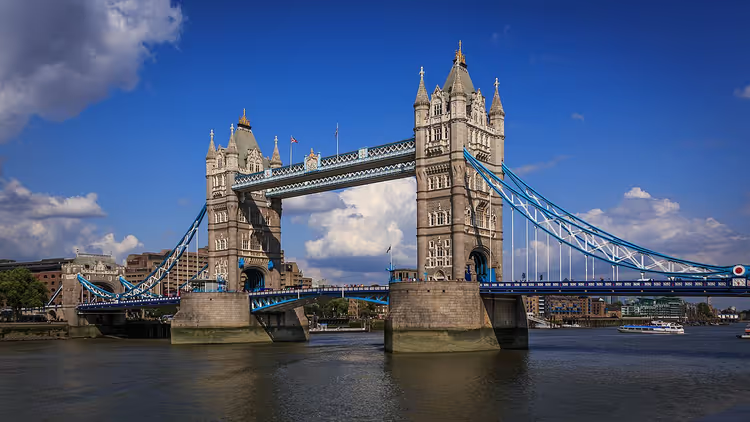 © Barcex · CC BY-SAPhoto: Barcex, CC BY-SA (https://creativecommons.org/licenses/by-sa/3.0), Wikimedia Commons
Tower Bridge tickets on GetYourGuide
Westminster Abbey tickets
The abbey serves as the coronation site for English monarchs and is a half-hour walk from the Tower. The audio guide helps you make sense of the tombs and chapels, where it is otherwise easy to lose half an hour.
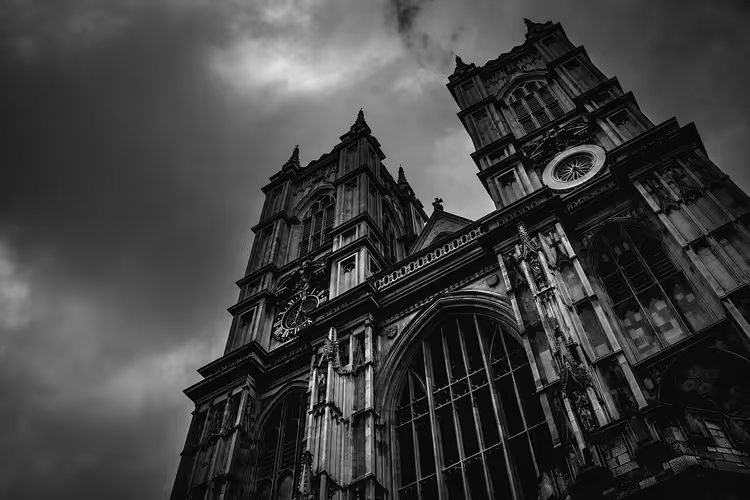 © TimothyBarkerJr · CC BY-SAPhoto: TimothyBarkerJr, CC BY-SA (https://creativecommons.org/licenses/by-sa/4.0), Wikimedia Commons
Westminster Abbey tickets with audio guide
St Paul's Cathedral tickets
The cathedral's dome is visible from the Thames embankment, and admirals and artists lie in the crypt. A fast-track ticket saves you time at the entrance in high season.
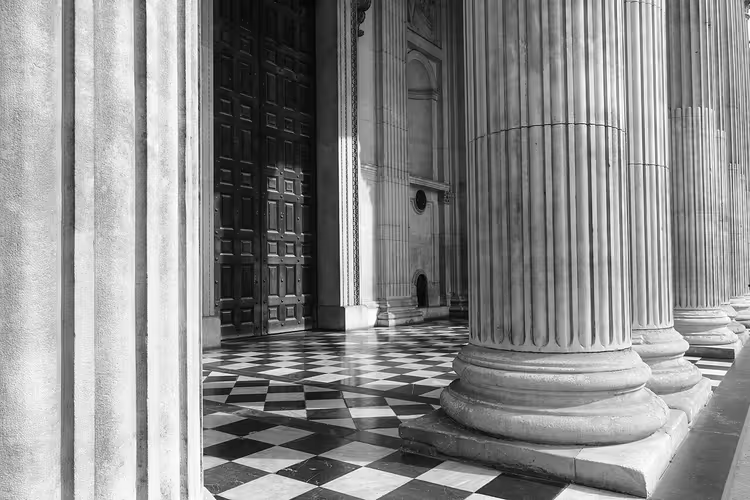 © Valentin Poleac · CC BY-SAPhoto: Valentin Poleac, CC BY-SA (https://creativecommons.org/licenses/by-sa/4.0), Wikimedia Commons
St Paul's Cathedral tickets with fast-track entry
Madame Tussauds tickets
The wax museum is located near Baker Street station. You will spend an hour or more here if you take photos with almost every exhibit.
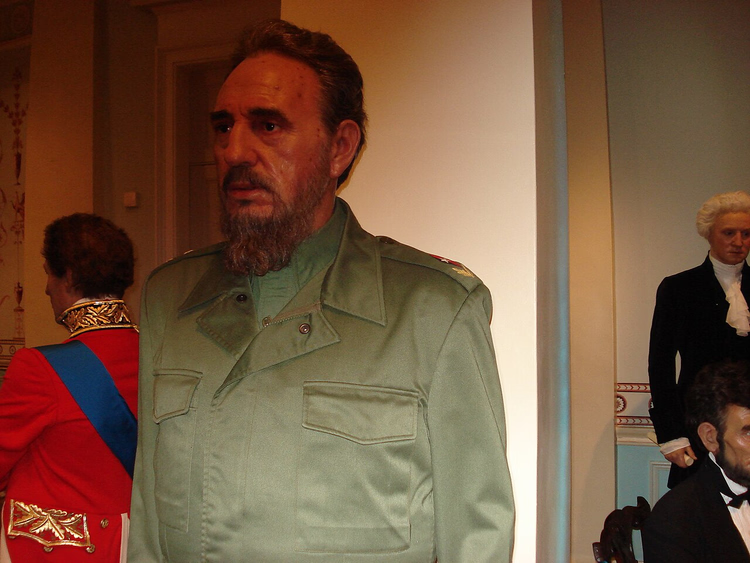 © mwanasimba from La Réunion · CC BY-SAPhoto: mwanasimba from La Réunion, CC BY-SA (https://creativecommons.org/licenses/by-sa/2.0), Wikimedia Commons
Madame Tussauds tickets on GetYourGuide
Tickets for The Shard viewing platform
The Shard skyscraper has an open viewing platform on the south bank of the Thames. The view of the Tower from here is one of the best, and the ticket is tied to an entry time.
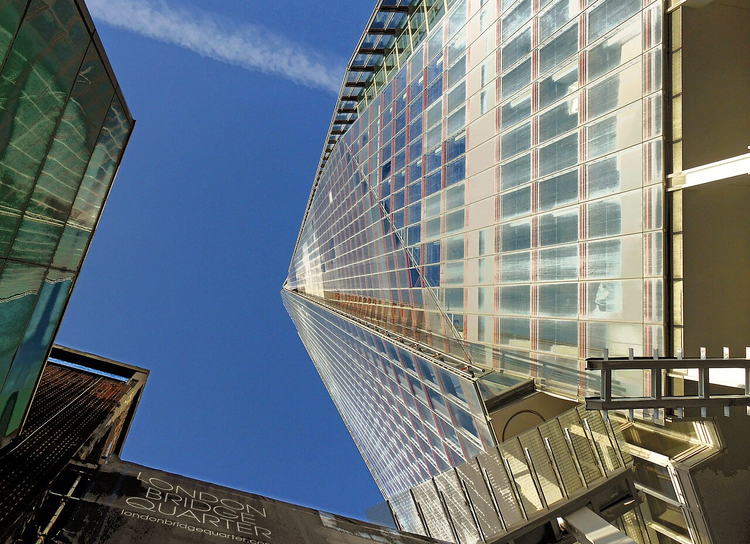 © Duncan Harris from Nottingham, UK · CC BYPhoto: Duncan Harris from Nottingham, UK, CC BY (https://creativecommons.org/licenses/by/2.0), Wikimedia Commons
Tickets for The View from The Shard
⁉️🤔 Frequently asked questions
How much does a ticket to the Tower of London cost?
An adult ticket costs from £37, a child ticket for visitors aged 5-15 costs £18.50, and visitors under five enter for free (as of 09/2026, current ticket prices). Tickets are tied to an entry time, so it is better to book a slot in advance.
When is the Tower closed to visitors?
The fortress is closed on December 24, 25, and 26 and January 1 (as of 09/2026, opening hours). On other days in winter the doors close at 4:30 PM, in summer at 5:30 PM, and the last entry is one hour before closing.
How much time do you need for a visit?
Allow two to three hours (as of 09/2026, official website). The Crown Jewels and the White Tower take up more than half of that time, while you will see the walls and the chapel more quickly.
Are the Crown Jewels included in the ticket?
Yes, the displays with the regalia are included in the regular ticket, and you do not need a separate ticket. The halls are located in the Jewel House in the Waterloo Barracks on the north side, and in the morning the line to them is noticeably shorter than during the day.
How to get to the Tower from central London?
The easiest way is by tube: you need Tower Hill station on the Circle and District lines, about a five-minute walk from there (on the map). Buses stop at the square nearby, and Thames Clippers bring you to Tower Pier by water.
In short: what is worth booking
The Tower is easy to combine with a walk along the embankment. Tickets are sold for a specific time, and lines grow toward midday in summer, so you should lock in your date in advance.
- If you have one day: do the Tower in the morning, and leave the Thames walk for the evening.
- If you are traveling with children: the Crown Jewels and the ravens will keep them engaged more than the walls.
- If you want to see the city from above: add The Shard or the London Eye.
Book your Tower time slot in advance: tickets on Tiqets.

A small editorial team writing guides for independent travel. We travel ourselves, but we haven’t been everywhere, so we check prices, opening hours and how to get there against official sources.