
















Michelin restaurants: what three stars mean and how to book a table
A table at a three-star restaurant gets booked months in advance, sometimes six months out. An evening for two costs as much as a short vacation. And yet seats only open up when someone cancels their reservation.
We looked into how the Michelin star system works and picked five starred restaurants. Four of them have three stars, and Masa currently has two. Among them are a sushi bar in New York, a restaurant with a snake-shaped table in Hamburg, and mountain cuisine in the Italian Dolomites.
This is not a "best of all time" ranking. These are five different culinary experiences, and in each case you can see exactly why it earned its stars. We checked all facts and current statuses against the official Michelin guide (as of 09/2026).
Ad: this article contains affiliate links, we earn a commission if you book through them, at no extra cost to you.
How Michelin stars work
💡 In short:
- One star: good cuisine and an above-average bill.
- Two stars: cuisine worth making a detour for.
- Three stars: a trip in itself, a reservation months ahead, and an evening lasting several hours.
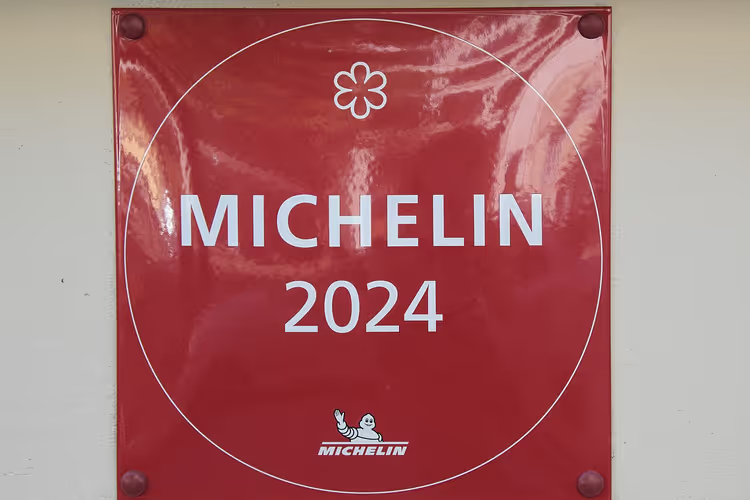
A Michelin star does not tell you whether you will enjoy the food. Inspectors personally and anonymously assess the level of technique, ingredients, and service, arriving at the restaurant unannounced.
 © GFreihalter · CC BY-SAPhoto: GFreihalter, CC BY-SA (https://creativecommons.org/licenses/by-sa/4.0), Wikimedia Commons
Stars | What it means | Who it suits |
|---|---|---|
One | A high level of cuisine and service | Those already near the restaurant |
Two | Cuisine worth going out of your way for | Those building a trip around dinner |
Three | Exceptional cuisine and a special experience | Those willing to book months ahead |
The difference between levels is huge in terms of price. Dinner at a one-star place is realistic for many travelers, while an evening at a three-star spot is something you plan well in advance and separately from the rest of your itinerary.
The red and green guides serve different purposes. The red guide covers restaurants, while the green guide leads you to sights and routes. For a gastronomic trip, you need the red one.
A bit of history: from tires to restaurants
Michelin is known as a tire manufacturer. More than a century ago, its founder André Michelin published a guide for motorists with gas stations, cafes, repair shops, and hotels.
The guide was refined over decades, and a restaurant section appeared in it. At first, stars marked establishments with high prices; later the symbol evolved into a quality rating. Today a Michelin star is a prestigious award that both restaurants and chefs strive for.
Masa, New York
The Japanese restaurant Masa on Columbus Circle held three Michelin stars from 2009, but in the 2026 guide it lost one and is now listed as a two-star restaurant. This barely affected its reputation: Masa remains one of the most expensive restaurants in the US.
 © Ryanckulp · CC BY-SAPhoto: Ryanckulp, CC BY-SA (https://creativecommons.org/licenses/by-sa/4.0), Wikimedia Commons
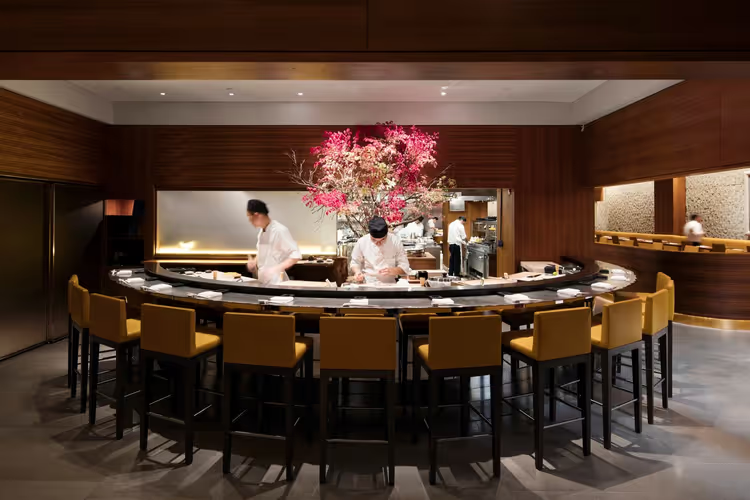
The dining room seats about twenty, so tables are booked well in advance. Chef Masayoshi Takayama greets guests personally and asks about their preferences. There is no menu as such: here you order omakase, which means "I leave it up to you."
Dinner stretches over several hours, and dishes are brought out gradually, with short pauses between courses. The chef himself advises dressing comfortably, because you will be sitting and eating for a long time. Alcohol is paid for separately and is not cheap.
- Not for: those who are used to choosing dishes from a menu and don't want to hand the decision over to the chef.
The Table Kevin Fehling, Hamburg
Kevin Fehling's restaurant in Hamburg has held three stars since 2016.
The main feature of the dining room is a long curved table for twenty guests, resembling a snake. The meal lasts several hours, and the team of chefs serves one new dish after another in sync under the master's supervision.
The menu features seven signature dishes, but they are built from more than a hundred ingredients. The chef combines culinary classics with Asian, Middle Eastern, and South American products. The fixed lunch price starts at €230 (as of 09/2026, The Table menu).
- Who it's for: those who love surprises from the chef and don't want to choose dishes themselves.
St. Hubertus, San Cassiano
The small restaurant St. Hubertus operates in the mountain village of San Cassiano in the Italian Dolomites. The team led by chef Norbert Niederkofler cooks Alpine cuisine, and Michelin awards the restaurant three stars plus an additional green star.
The Michelin green star was introduced in 2020. It is awarded for sustainable gastronomy: seasonal products, short supply chains, and minimal kitchen waste.
The restaurant's concept is called "Cook the Mountain." All ingredients are sourced locally, and the menu states how many kilometers each ingredient traveled to your plate. Usually the numbers are in the single digits.
The dishes are seasonal. In summer it's berries, in spring herbs, in autumn mushrooms, in winter beets. Each dish is made from no more than three components. There are two menus here: seasonal and archive, both at a fixed price.
- Who it's for: those who appreciate local products and mountain cuisine.
Geranium, Copenhagen
Geranium, on the eighth floor of Copenhagen's Parken Stadium, holds three Michelin stars. In 2022, the restaurant topped the world's top-50 list, and its tasting menu consists of roughly fifteen courses.
 © City Foodsters · CC BYPhoto: City Foodsters, CC BY (https://creativecommons.org/licenses/by/2.0), Wikimedia Commons
Chef Rasmus Kofoed doesn't eat meat, so the menu is built around seafood and vegetables from biodynamic farms in Denmark and Scandinavia. Tables are booked months in advance, and skipping meat doesn't make the bill any smaller.
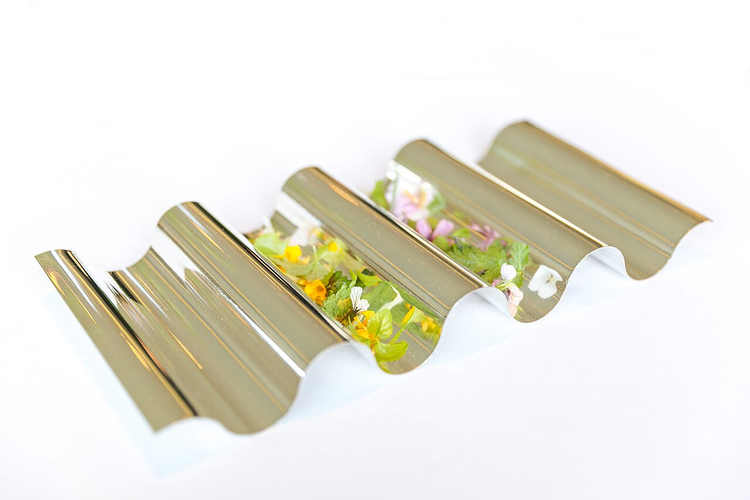
One of the signature dishes is a shellfish tartare in an edible "shell." The shell is replaced by a crispy wheat-flour base tinted with seaweed and charcoal. Twists like this are what make the dinner feel unlike conventional fine dining.
Wine is served separately, and a bottle can cost more than the menu itself. If you don't drink alcohol, you can genuinely save money here.
- Who it's for: people who don't eat meat but still want a full gastronomic evening.
DiverXO, Madrid
DiverXO in Madrid is unlike any other fine-dining restaurant. The decor features chrome ants, hundreds of butterflies, and winged piglets on every table. The official website looks just as provocative as the dining room itself.
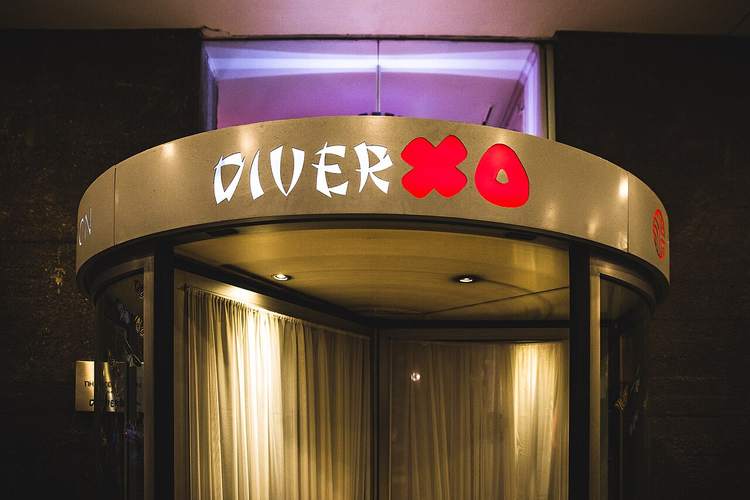 © City Foodsters · CC BYPhoto: City Foodsters, CC BY (https://creativecommons.org/licenses/by/2.0), Wikimedia Commons
Chef Dabiz Muñoz earned Michelin's highest award at 34 and has been collecting global prizes ever since. His dishes look like paintings: you want to study each plate before eating it. Michelin confirms the three stars.
The tasting consists of twelve courses, and each one builds on the previous. The chef loves experimenting with herbs and spices, so they show up in places where logic says they shouldn't.
Dinner with drinks is expensive. The average check here is one of the highest in Madrid, so the evening should be planned as a standalone event of the trip.
- Who it's for: people looking for an unusual experience rather than a classic dinner.
⁉️🤔 Frequently asked questions
How much does dinner at a starred restaurant cost?
It all depends on the country and the drinks. Lunch at The Table starts at €230 (as of 09/2026, The Table menu page), while prices in New York are several times higher. Wine often costs as much as half the check, so the total rises noticeably if you order a pairing.
How far in advance do you need to book a table?
At Masa and Geranium, reservations open ahead of time, and popular slots are taken months in advance. Check the restaurants' websites for exact booking opening dates, as they change. If your trip is tied to specific dates, plan dinner before booking your flight.
Will they let you in with children?
Some places don't impose strict restrictions, but the evening lasts several hours and is designed for an adult party. Check the rules with the specific restaurant, as they vary. For a family meal, it's easier to pick a simpler spot.
Are there vegetarian menus?
Geranium doesn't use meat at all; the menu is built around seafood and vegetables. At other restaurants, the selection changes with the season, and the omakase at Masa is built around fish. Mention your dietary needs when booking, and most kitchens will adjust the menu in advance.
Can you get in without a reservation?
Almost never. Three-star restaurants operate by reservation only, and open seats rarely appear. If you're just passing through the city, check the restaurant's website a couple of days ahead: sometimes reservations get canceled and a slot opens up.
In short: what's worth booking
A star-studded dinner takes money and planning, but each of the five restaurants delivers its own experience. Pick the one that fits your trip.
- If you're in New York and you love sushi: book Masa, but keep in mind its two-star status in this year's guide.
- If you're in Hamburg: go for lunch at The Table, the most affordable way into the three-star club from our five.
- If you're in the Dolomites: stop by St. Hubertus for mountain cuisine and a green star.
- If you're in Copenhagen and you don't eat meat: Geranium suits you better than the others.
- If you're in Madrid and want a memorable night: DiverXO will be the highlight of your trip.
Food tours and tasting excursions in European cities are easy to find in advance: find a food tour on GetYourGuide.

A small editorial team writing guides for independent travel. We travel ourselves, but we haven’t been everywhere, so we check prices, opening hours and how to get there against official sources.