














Madrid in a weekend: where to eat tapas, drink gin, and when museums are free
Planning a weekend in Madrid and don’t want to stand in lines? The Spanish capital is compact, and you can walk to half of the main sights in one day.
In that time you can realistically see the Royal Palace, Almudena Cathedral, the three museums of the "golden triangle," and have dinner at a bar where Madrid locals themselves go. The Prado offers free admission in the evenings, and the Thyssen Museum has free entry on Mondays (as of 09/2026, official website). Lines are shorter in the evening, and not all tourists know this.
We’ve put together a practical guide to Madrid: what to see, where to eat tapas, which bars pour the best gin, and how to save on museum tickets. Everything here can be checked before your trip: bar addresses, museum hours, and free entry windows.
Ad: this article contains affiliate links, we earn a commission if you book through them, at no extra cost to you.
What to see in Madrid first
💡 In short:
- Start with Puerta del Sol and the Royal Palace: they’re about a 15-minute walk apart.
- The three main museums stand along Paseo del Prado, and each ticket is paid separately.
- Prices and hours: 09/2026, verified on the official Prado website
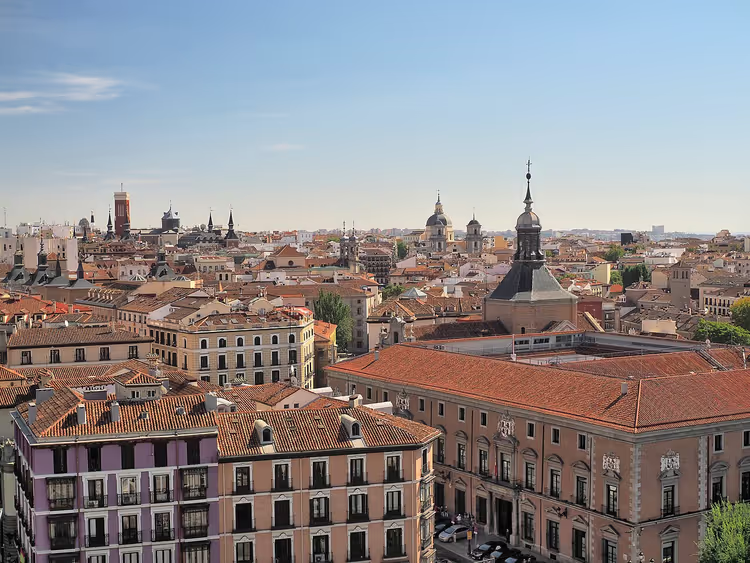 © Dmitry Dzhus from London · CC BYPhoto: Dmitry Dzhus from London, CC BY (https://creativecommons.org/licenses/by/2.0), Wikimedia Commons
Madrid is often called a city of palaces and fountains. At every step you’ll find grand buildings, wide avenues, and cozy squares where it’s simply pleasant to sit with a coffee.
To avoid rushing around the city, keep a few anchor points in mind: Plaza de Cibeles, Puerta del Sol, the Royal Palace, and Paseo del Prado. They’re all in the center, and you can easily connect them on foot.
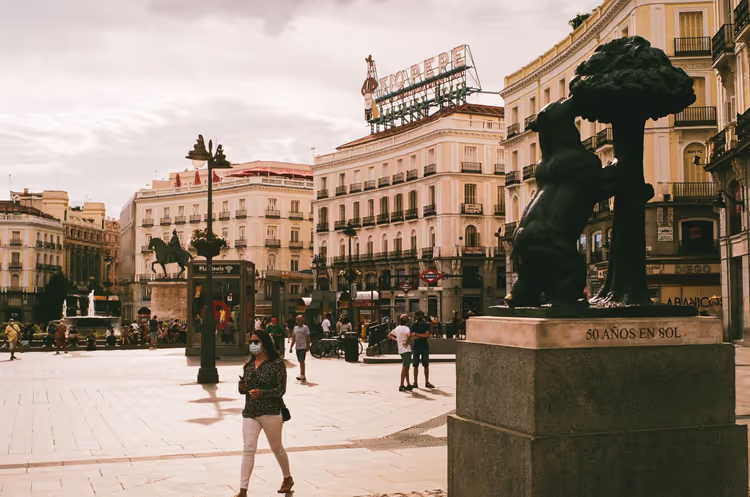
Below is a brief look at each place: what to see and what to pay attention to first.
Plaza de Cibeles and the palace of communication
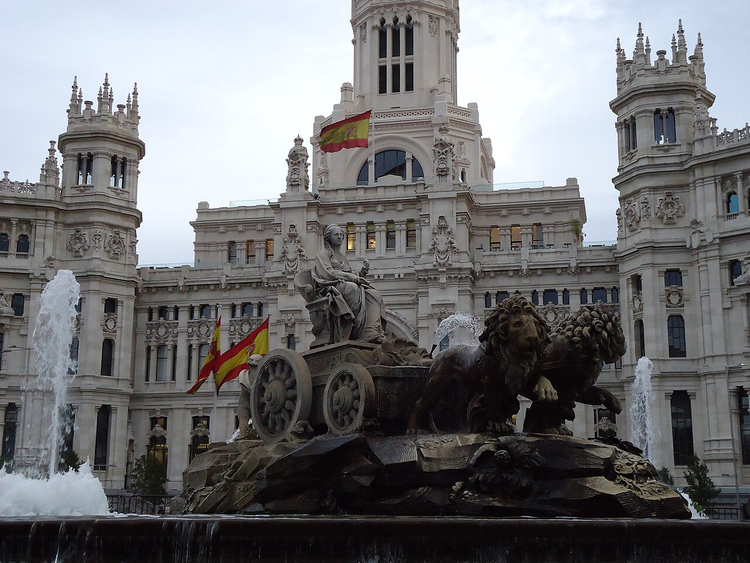
The main symbol of Plaza de Cibeles is visible from afar. In the center stands a fountain with the goddess Cybele on a chariot pulled by two lions. Soccer fans recognize the square instantly: this is where Real Madrid celebrates its victories.
 © hyuse · CC BY-SAPhoto: hyuse, CC BY-SA (https://creativecommons.org/licenses/by-sa/3.0), Wikimedia Commons
Right behind the fountain is the Palace of Communication (Palacio de Cibeles), the city’s former main post office. From here you get a view of Paseo de la Castellana. Stop for a couple of minutes: this is one of the most photogenic corners of the center.
Puerta del Sol
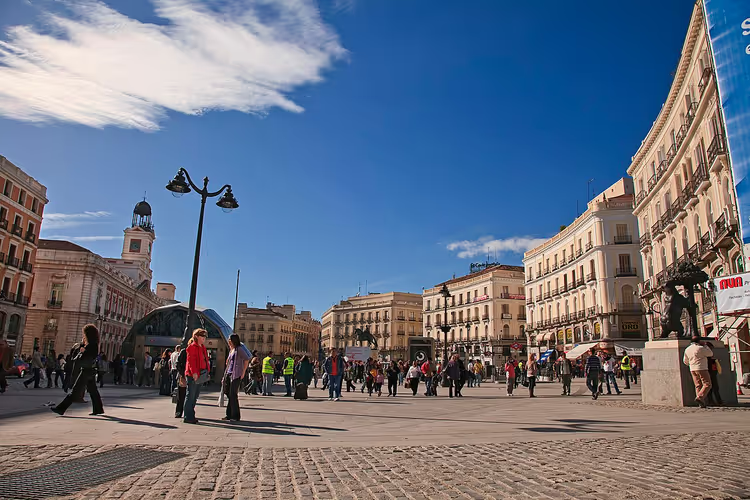
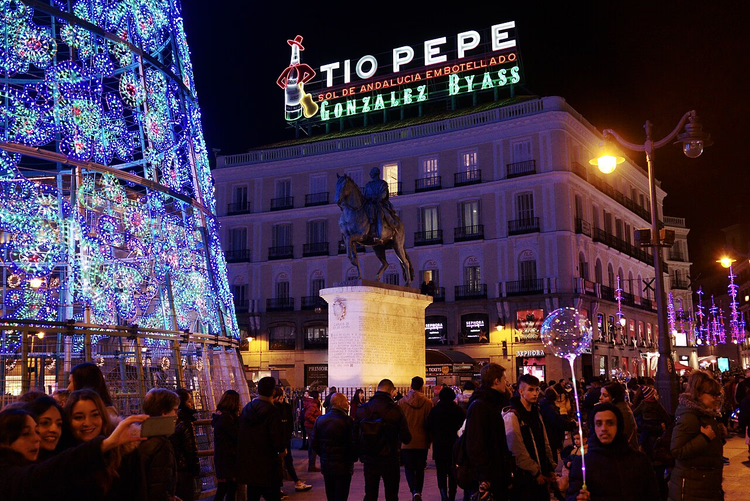
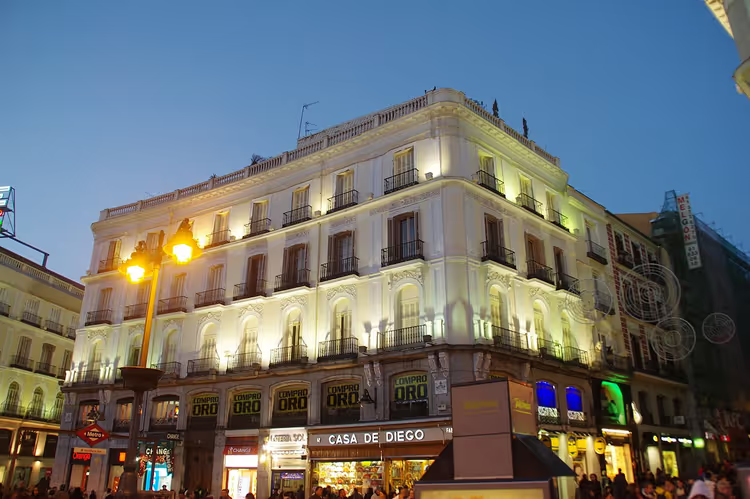
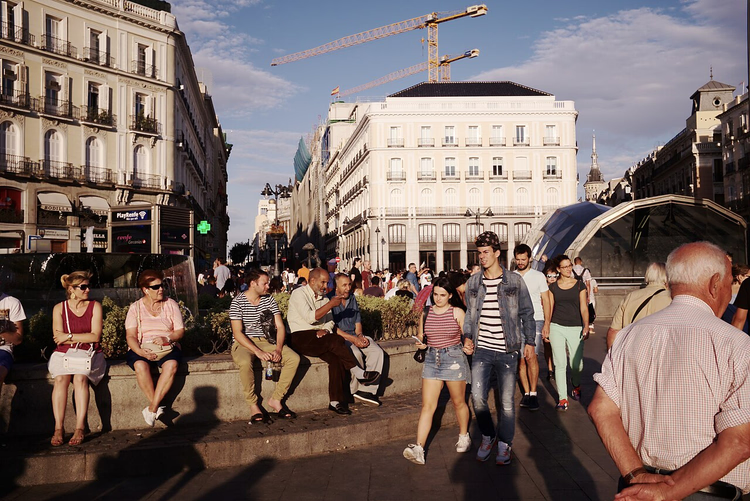
Puerta del Sol is considered the heart of Madrid. Six main streets fan out from here, leading across all of Spain.
 © Tomás Fano · CC BY-SAPhoto: Tomás Fano, CC BY-SA (https://creativecommons.org/licenses/by-sa/2.0), Wikimedia Commons
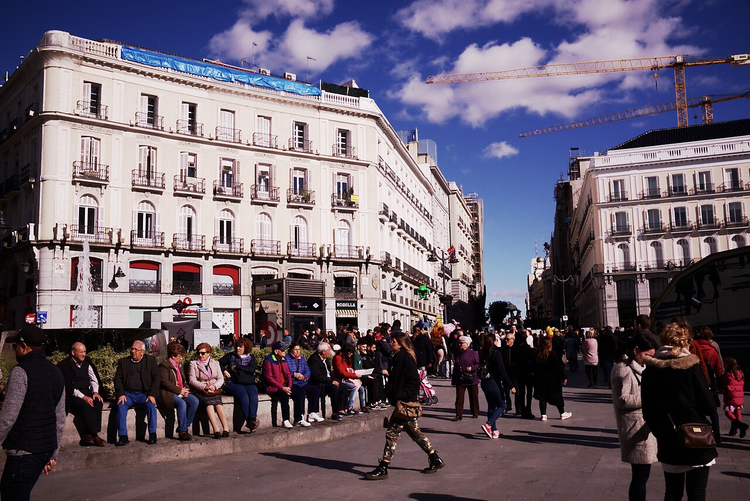
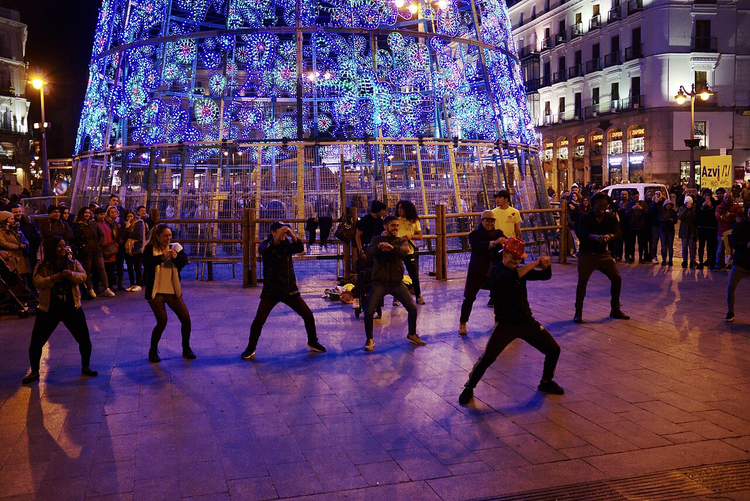
In the evening the square gradually empties out and becomes calm. Grab a beer, sit on the steps, and listen to the street musicians. Tourists and locals meet here, and it’s a convenient starting point for moving on.
Royal palace and Almudena cathedral
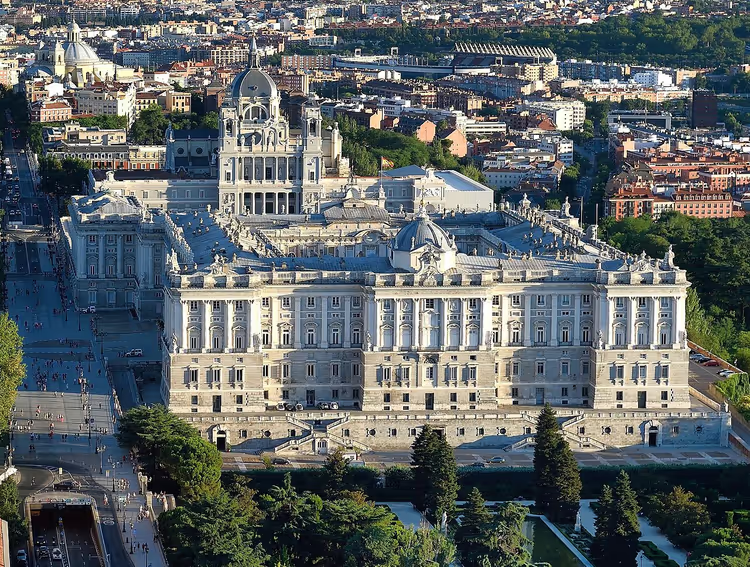
The Royal Palace (Palacio Real) serves as the official residence of the Spanish royal family. The building is enormous and lavish, and it’s worth seeing at least from the outside.
For EU citizens, admission is free during the last two opening hours on several days a week (as of 09/2026, Patrimonio Nacional). A regular ticket includes the state rooms. Go in the morning or during the free window to spend less time in line.
 © Tim Adams · CC BY-SAPhoto: Tim Adams, CC BY-SA (https://creativecommons.org/licenses/by-sa/4.0), Wikimedia Commons
The palace facade faces Plaza de Oriente, with gardens laid out nearby. In summer, street musicians play there, and it’s pleasant to sit in the shade before going in.
The Almudena Cathedral stands right next to it. Inside, it looks unusual for a Catholic church: the ceiling is made up of many patterns, and the murals are very bright against the white stone. Entry to the cathedral is free (as of 09/2026, official website).
The cathedral museum is small and densely packed with exhibits. If time is limited, you can easily skip it. The church itself is free, and you only pay to go up to the observation deck.
Set aside one relaxed block of time for the palace and the cathedral. Together they take up half a day if you go inside.
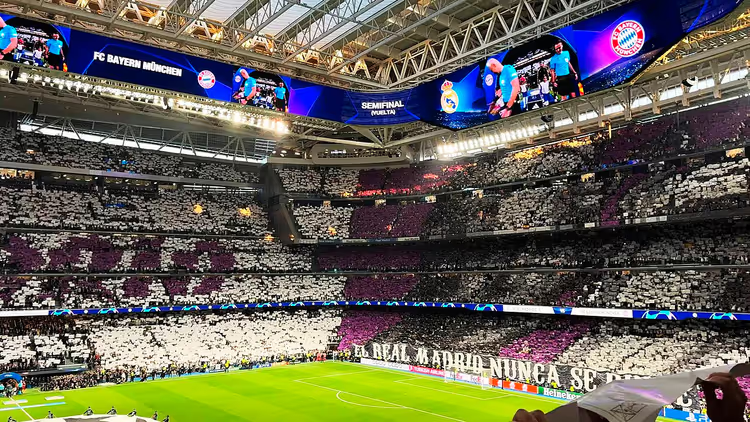
Santiago Bernabeu Stadium
The home arena of Real Madrid is open for tours on non-match days. If you are a football fan, check match tickets in advance: demand is high, and prices rise closer to the date.
 © Zoser · CC BYPhoto: Zoser, CC BY (https://creativecommons.org/licenses/by/4.0), Wikimedia Commons
If you cannot catch a match, take the stadium tour. You will walk through the stands, see the locker rooms and the trophy room. It impresses even those who are far from football.
The golden triangle of art
The city's three main museums stand next to each other along Paseo del Prado: the Prado, the Reina Sofia and the Thyssen-Bornemisza. Read about each museum and tickets in detail in a separate section below.
Madrid tours: what to choose
Madrid is big, and it is easy to feel lost in the first hours. Many tourists cover the main sights on a sightseeing walk at the very beginning, and then explore on their own at a relaxed pace.
The simplest option is a walking tour of the historic center. The group is usually small, the route takes about three and a half hours, and the guide tells the city's history on the main streets and in the alleys of the old center.
If you want to take photos without rushing and linger in interesting places, book a private tour with a personal guide. You set the pace and the route yourself.
A separate format is an evening walk with a stop at a bar and a flamenco show. At night, Madrid looks different, and you will see the city through the eyes of locals. You can view and compare options on GetYourGuide.
Where to drink gin in Madrid
Gin has long been a cult drink in Madrid. It is served almost everywhere here: in bars, cafes, and even regular supermarkets sell ready-made sets with gin, tonic and spices.
Ordering here is not quick. First you choose one of several dozen gin varieties, then a tonic, and then a garnish: an orange slice, a bit of mint or a strawberry. Bartenders will suggest a pairing if you ask. The bar counter in small bars is often busy, so people look for a spot in advance, and the first glass sometimes takes longer than usual to prepare, but the garnish and presentation here are part of the ritual.

Here are a few addresses where gin is served especially well.
Bar Cock
At Bar Cock (Calle de la Reina, 16), bartenders work with herbs and quality spirits and make complex gin cocktails. The place is small and popular, so come before the evening rush to get a spot at the bar.
Dubliners
Dubliners (Calle de Espoz y Mina, 7) is almost in the center, and the crowd here is mixed: tourists and locals. Good drinks, live music and video on the screens. You can easily combine a visit with a walk through Puerta del Sol.
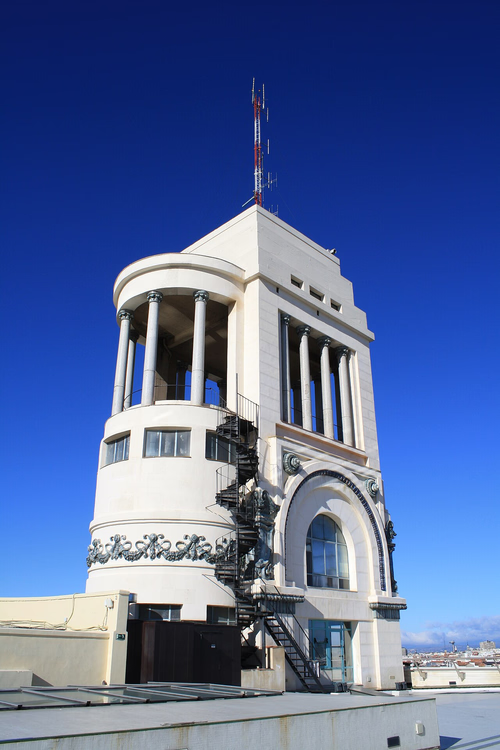
La azotea roof top terrace
The La azotea terrace (Calle del Marques de Casa Riera, 2) offers a wide view of Madrid. Entry is paid, but the amount is credited as a minimum drink order. Lounge music plays, and you can eat at the restaurant next door. The sunset from here is the best in the center, so free tables are scarce.
 © M.Peinado from Alcalá de Henares, España · CC BYPhoto: M.Peinado from Alcalá de Henares, España, CC BY (https://creativecommons.org/licenses/by/2.0), Wikimedia Commons
Only You hotel bar
The Only You hotel bar (Calle del Barquillo, 21) opened in a former bookstore and has become a popular spot for a glass of gin. It also has more than thirty gin varieties, and there is a lounge with a fireplace and soft armchairs nearby. Stop by here if you want a quiet evening without the crowd.
 © PENTAXDIGITGRAFOS · CC BYPhoto: PENTAXDIGITGRAFOS, CC BY (https://creativecommons.org/licenses/by/3.0), Wikimedia Commons
Where to find tapas: tried and tested addresses
A lunch in Madrid used to last two hours. Each tavern had its own specialty: some made the best shrimp, others were known for their mushrooms. Guests moved from tavern to tavern, ordering a portion with a glass of beer or wine at each stop.
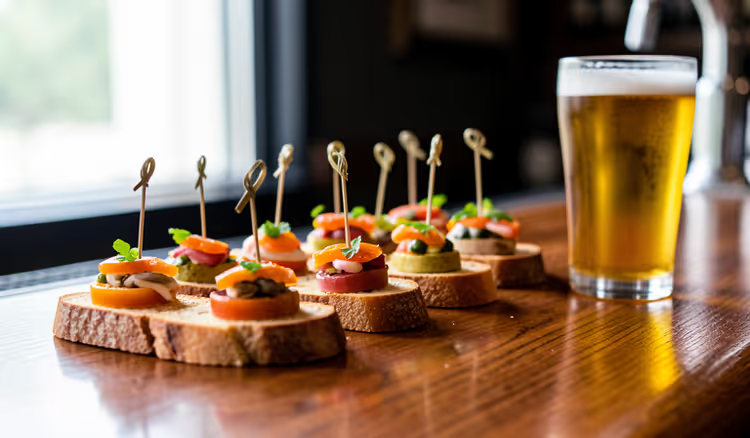
Today, that kind of long, leisurely meal only happens on Sundays. Then everything is ordered on large plates and shared with the whole group. Classic tapas are served on a plate, and when they come on bread they are called "ponchos".
 AIIllustrative image: AI-generated
There is a tradition in taverns: ask the waiter for a recommendation that is not on the menu. That dish is usually the freshest, and you will not regret it. Tapas are eaten standing up and in small portions, so in one evening you can realistically try the food at several places.
La Casa del Abuelo
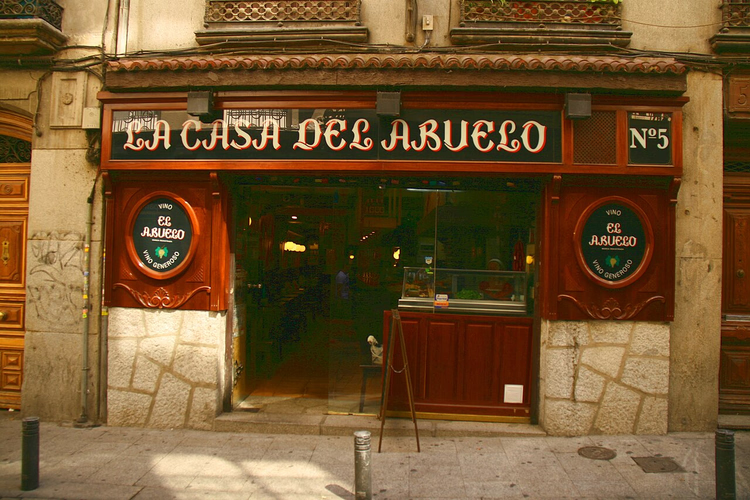
Do not be alarmed if you see shrimp shells on the floor at La Casa del Abuelo (Calle de Goya, 57A). They used to be a sign of quality: the more shells, the more guests. The tavern specializes in shrimp: they serve them with garlic and parsley, grilled, and in croquettes.
 © Tamorlan · CC BYPhoto: Tamorlan, CC BY (https://creativecommons.org/licenses/by/3.0), Wikimedia Commons
Cervecería El Barrio
Cervecería El Barrio (Pl. de Manuel Becerra, 16) is a good fit for those who like an informal atmosphere. The tables here are at different heights, some made from wine barrels, and football is shown in the evenings. After dinner, you can easily move on to the neighborhood's nightlife.
Street-Xo
Street-Xo on the top floor of El Corte Inglés (Calle Serrano, 52) makes unusual tapas and gives you a view of the city from the roof. It is a good way to combine dinner and a viewing platform in one evening.
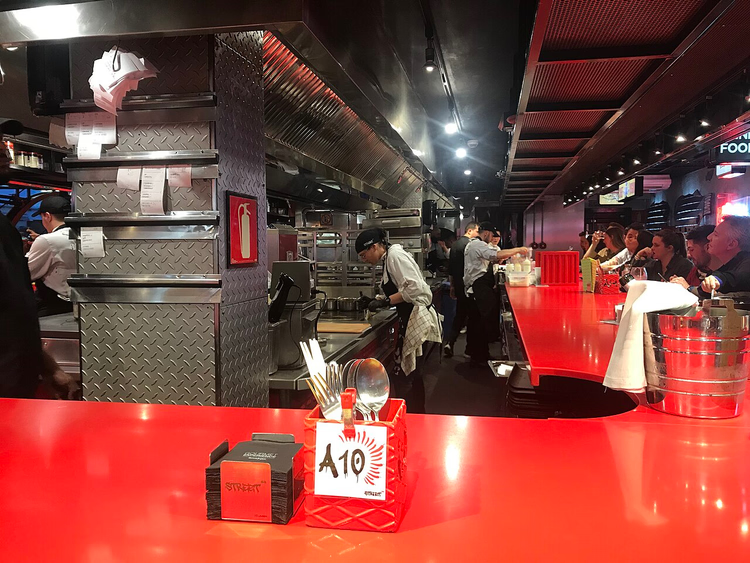 © Triplecaña · CC BY-SAPhoto: Triplecaña, CC BY-SA (https://creativecommons.org/licenses/by-sa/4.0), Wikimedia Commons
Casa del abuelo on Núñez de Arce
The second Casa del Abuelo (Calle de Núñez de Arce, 5) makes the best vegetarian tapas in a classic style. Order the Pimientos de Padrón, baked mushrooms in garlic, and Patatas Bravas. At the end, ask for the violet ice cream, which has been served here for a long time.
Mercado de San Miguel
At the San Miguel market (Plaza de San Miguel, 5) you will find a dish for every taste. Tourists and Madrileños meet here, grab a plate in the center of the hall, and sample food from all the stalls.
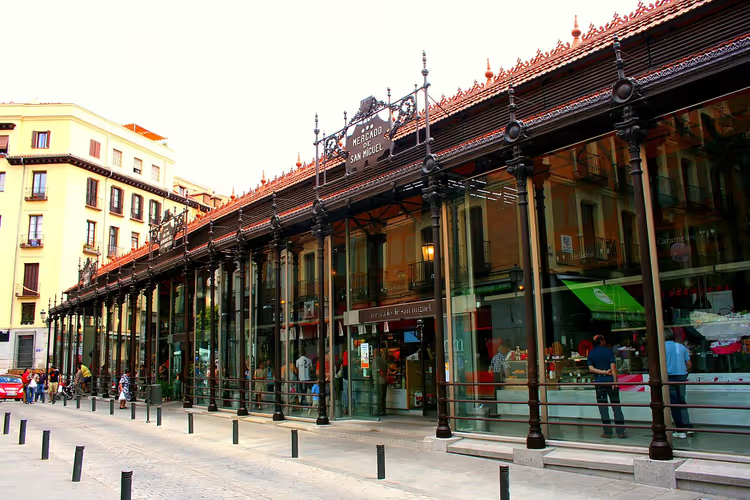 © Juan Antonio Flores Segal from Madrid ( Spain ) · CC BYPhoto: Juan Antonio Flores Segal from Madrid ( Spain ), CC BY (https://creativecommons.org/licenses/by/2.0), Wikimedia Commons
The place is touristy and not the cheapest, but in one evening you can try everything at once: jamón, paella, cheese, oysters, and desserts.
All the addresses in this section are handy to keep close by. The map below shows the market and the bars we talked about.
Want to do more than just eat, and actually understand the city's cuisine? Take a food tour with a local guide: they take you to small bars that tourists usually never reach. With a guide, the walk takes a few hours and covers several bars where the menu has barely changed in years. You also start to understand how the local cuisine differs from the usual Mediterranean fare, and what to order on your own next time. Find options on GetYourGuide.
Madrid museums: Prado, Reina Sofía, and Thyssen
Visiting a museum is a good way to break up a walk around the city. In Madrid, three major museums stand almost next to each other, so it is more practical to pick one or two rather than try to cover everything in a day.
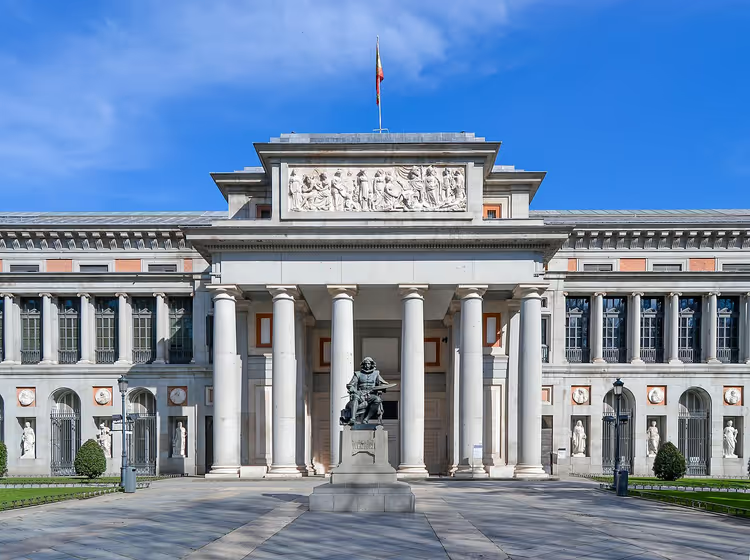 © Emilio J. Rodríguez Posada · CC BY-SAPhoto: Emilio J. Rodríguez Posada, CC BY-SA (https://creativecommons.org/licenses/by-sa/2.0), Wikimedia Commons
Below is a short table with prices and hours. You can check each row against the museum's official website.
Museum | Admission | Hours | Closed |
|---|---|---|---|
about €15, free in the evening (Mon-Sat 6:00 PM-8:00 PM, Sun 5:00 PM-7:00 PM) | Mon-Sat 10:00 AM-8:00 PM, Sun 10:00 AM-7:00 PM | none | |
€12, free time slots available (as of 09/2026, official website) | Mon and Wed-Sat 10:00 AM-9:00 PM, Sun 10:00 AM-2:30 PM | Tuesday | |
€14, free on Monday, Sat 9:00 PM-11:00 PM free (as of 09/2026, official website) | Tue-Sun 10:00 AM-7:00 PM, Mon 12:00 PM-4:00 PM | none |
Museo del Prado
The Prado is considered Spain's national museum. It houses works by Velázquez, Goya, and Bosch, and you need at least half a day to see it. Buy your ticket in advance and allow plenty of time: the collection is enormous.
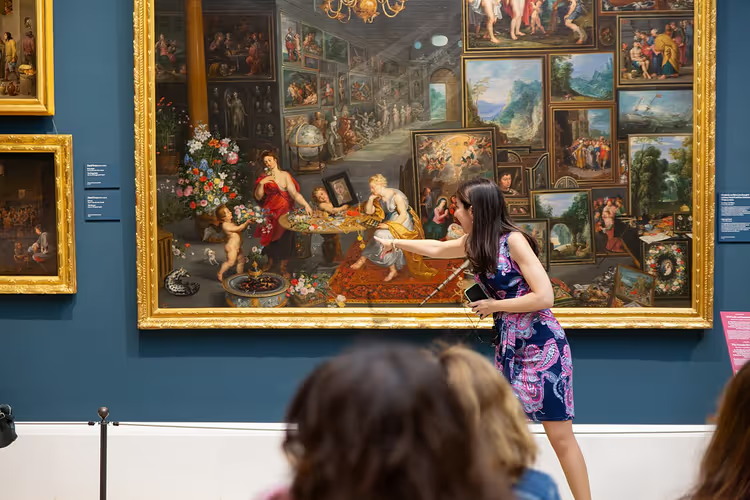 © Barcex · CC BY-SAPhoto: Barcex, CC BY-SA (https://creativecommons.org/licenses/by-sa/4.0), Wikimedia Commons
If you're on a budget, come during the free evening window. Just be prepared for a line, because locals take advantage of that window too.
Museo Reina Sofía
The Reina Sofía showcases 20th-century art. The main draw here is Picasso's Guernica, and there's almost always a group standing in front of it. Tuesday is the closing day, so plan your visit accordingly.
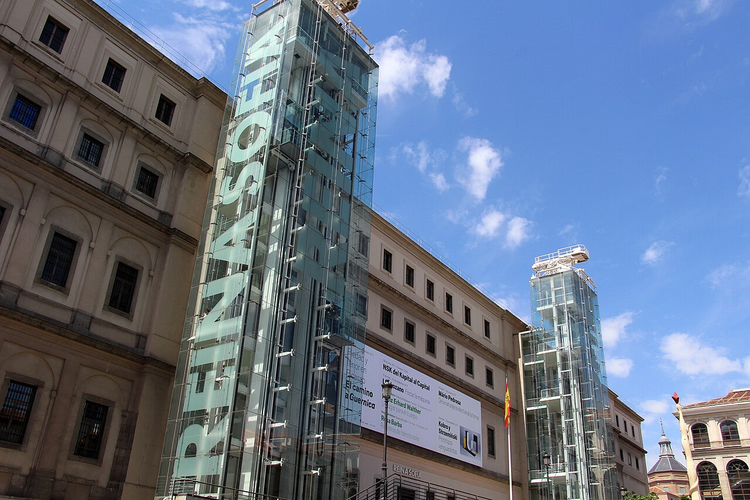 © Fred Romero from Paris, France · CC BYPhoto: Fred Romero from Paris, France, CC BY (https://creativecommons.org/licenses/by/2.0), Wikimedia Commons
Museo Thyssen-Bornemisza
The Thyssen-Bornemisza Museum covers art from all periods: from the old masters to the 20th century. Admission is free on Monday, and you won't find a better day to visit if you're not in a hurry. There's also a free window late on Saturday evening.
Fundación Mapfre
The Mapfre Foundation (Paseo de Recoletos, 23) is always free. It shows Impressionists and hosts temporary exhibitions, sometimes unexpected ones. A good option if you have an hour to spare and you're near the boulevard.
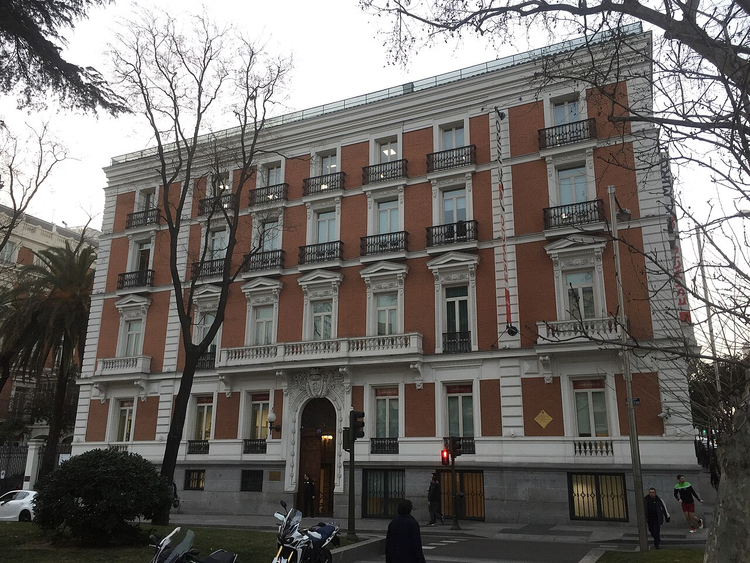 © Triplecaña · CC BY-SAPhoto: Triplecaña, CC BY-SA (https://creativecommons.org/licenses/by-sa/4.0), Wikimedia Commons
Museo Sorolla
The Sorolla Museum (Paseo del General Martínez Campos, 37) showcases Post-Impressionism and the Valencia coast: bright sea and lots of light. The museum is small, and an hour is enough for it.
The main museum tip: buy skip-the-line Prado tickets in advance, especially in summer. Without a time slot you'll stand in line for over an hour, but with a ticket you walk in at your scheduled time.
Tours and tickets in Madrid
Guided tours, skip-the-line tickets and activities — most offers can be cancelled free of charge.
See offers on TiqetsThe widget loads once you give your consent.
Allow at least two hours for each museum, otherwise the visit turns into a sprint through the galleries. The most convenient approach is to do one museum in the morning and leave the second for the evening. At the Prado, start with the old masters' rooms and save modern art for the Reina Sofía. The Thyssen-Bornemisza works well as a finale: it brings together works from different periods, and after two big museums it's a nice way to wind down. Don't try to cover all three in one day, or by evening the impressions will blur together.
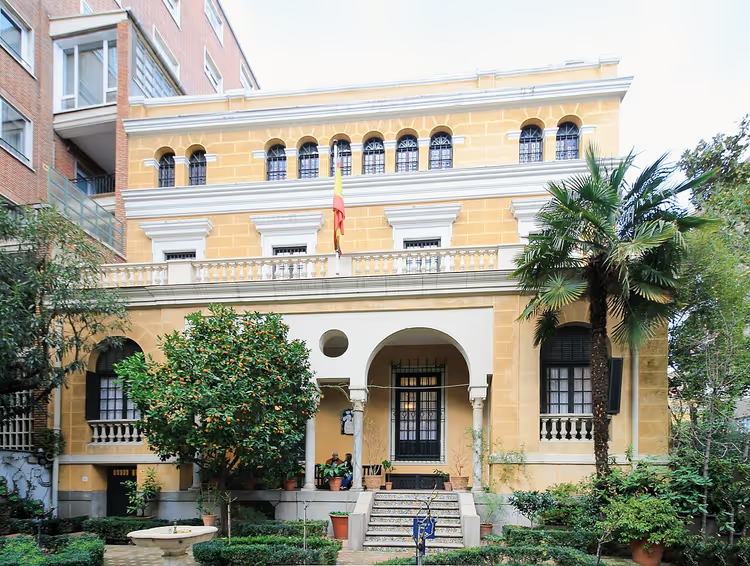 © Luis García ( Zaqarbal ) · CC BY-SAPhoto: Luis García ( Zaqarbal ), CC BY-SA (https://creativecommons.org/licenses/by-sa/3.0/es/deed.en), Wikimedia Commons
Squares and parks: where to cool off in the heat
Madrid has many small squares where it is pleasant to wait out the heat. Some look for shade, others sit with a glass and watch the city. We picked places you can reach on foot from the center.
 © pictures Jettcom · CC BYPhoto: pictures Jettcom, CC BY (https://creativecommons.org/licenses/by/3.0), Wikimedia Commons
Jardín del Campo del Moro
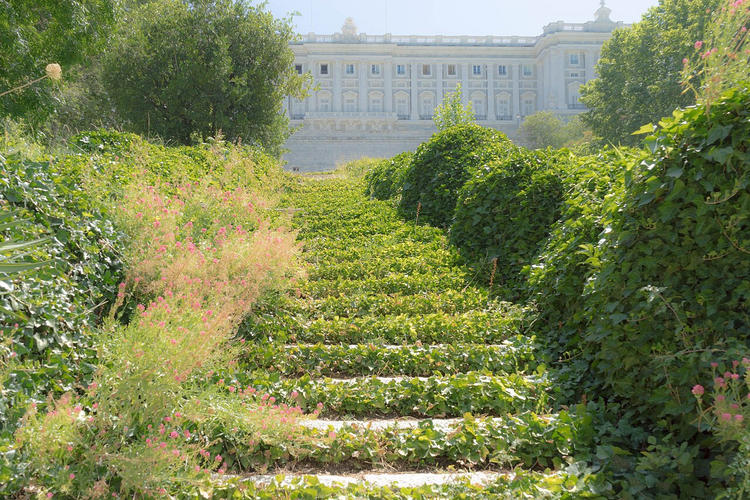
The Campo del Moro garden lies right in front of the Royal Palace. Many tourists cannot find the entrance because it is on the side, not opposite the palace. It is quiet and peaceful here, and the spot is well suited for a break.
 © Carlos Ramón Bonilla… · CC BY-SAPhoto: Carlos Ramón Bonilla…, CC BY-SA (https://creativecommons.org/licenses/by-sa/3.0), Wikimedia Commons
Plaza de la Cruz Verde
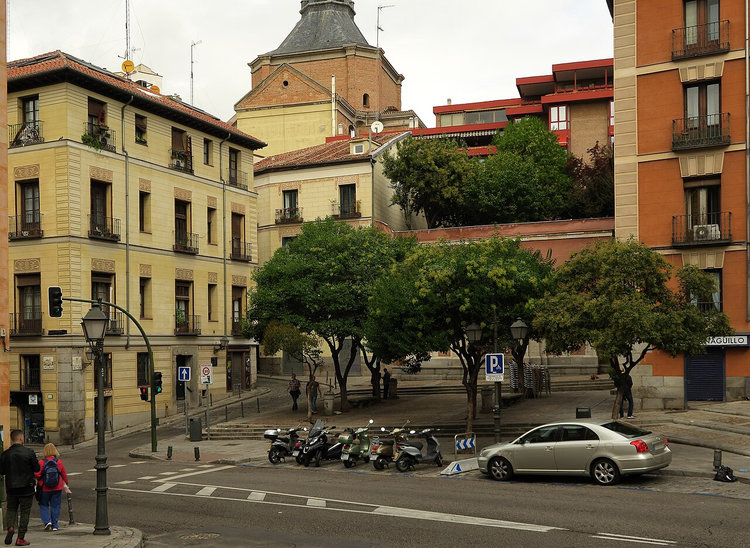
Plaza de la Cruz Verde has wide stone steps that are comfortable to sit on at lunchtime. The plan is simple: first tapas, then coffee on the steps. There used to be a scaffold here, but today nobody thinks about that anymore.
 © Malopez 21 · CC BY-SAPhoto: Malopez 21, CC BY-SA (https://creativecommons.org/licenses/by-sa/4.0), Wikimedia Commons
Plaza de San Martín
Plaza de San Martín is considered a small quiet corner in the center. There are almost no cars, and stone benches line the square. A great option if you need to rest between museums.
Retiro
Retiro Park lies in the very center, and locals love it. Head to the rectangular Estanque pond: people go boating there, musicians play, and large groups gather. It is especially crowded on Sundays.
Plaza de Santa Ana
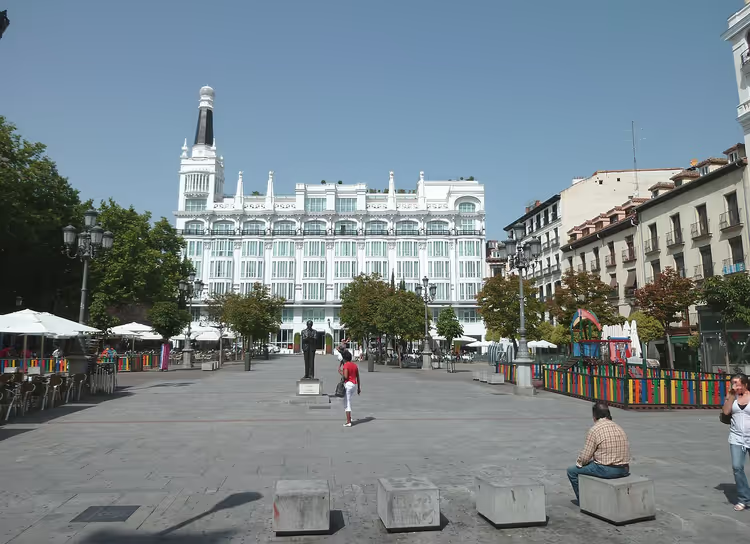
Plaza de Santa Ana looks so elegant that it seems like a movie set. The buildings resemble Viennese palaces, the street lamps add French charm, and the Spanish temperament is in the air.
All these places are in the center, and together they make for a relaxed two-hour walk. It is convenient to plan the route so that by midday you are near water or in the shade, and leave the most open squares for the evening.
 © Luis García ( Zaqarbal ) · CC BY-SAPhoto: Luis García ( Zaqarbal ), CC BY-SA (https://creativecommons.org/licenses/by-sa/3.0), Wikimedia Commons
Shopping in Madrid: streets and small stores
A short trip is a good chance to refresh your style. Besides well-known chains, Madrid has many small stores with "Made in Spain" items. If you love shoes and vintage, there is plenty to see here.
Calle de Argensola
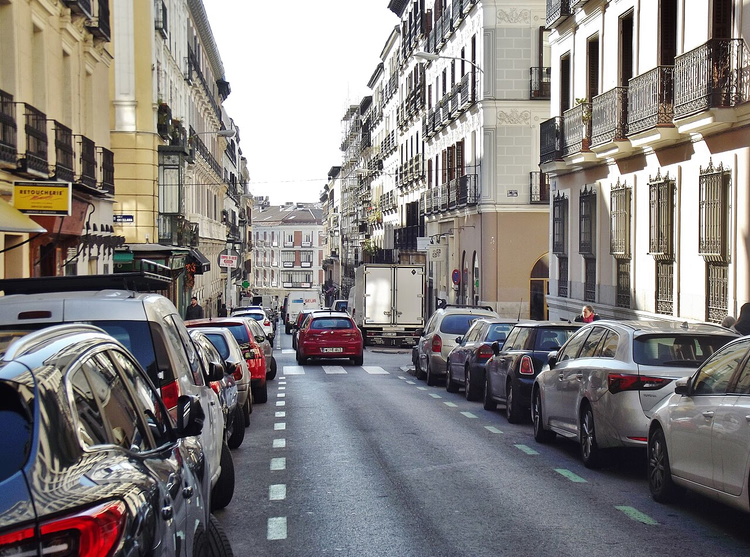
On Argensola Street, one small shop follows another. Stop by amalié for baking goods and Divisa for clothing (Calle de Hortaleza, 102). Here you will find items you won't see in chain stores.
 © Asqueladd · CC BY-SAPhoto: Asqueladd, CC BY-SA (https://creativecommons.org/licenses/by-sa/3.0), Wikimedia Commons
Hoss Intropia
Hoss Intropia (Calle Serrano 47) keeps a recognizable style: calm but not boring. You can easily find a dress in your size, and the fit here is precise.
 © movimentomoda.com · CC BYPhoto: movimentomoda.com, CC BY (https://creativecommons.org/licenses/by/2.0/), Flickr
Calle Fuencarral
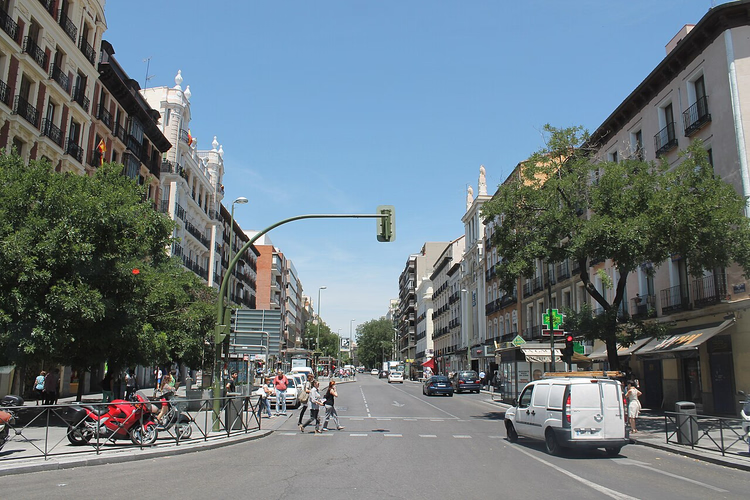
Fuencarral Street is calmer than other shopping streets. Pepe Jeans, Brandy Melville, and Quiksilver are here, and you won't get tired of the crowds. It's easy to combine with a walk through the Tribunal neighborhood.
 © Luis García ( Zaqarbal ) · CC BY-SAPhoto: Luis García ( Zaqarbal ), CC BY-SA (https://creativecommons.org/licenses/by-sa/3.0), Wikimedia Commons
Barrio Tribunal
You don't have to pick a specific store. The Tribunal neighborhood has many beautiful cafes and vintage shops, and it's simply pleasant to wander around. It's easy to find an inexpensive gift here.
Kimono Gion
Kimono Gion (Calle del Barquillo, 18) sells vintage dresses from Tokyo and decor from Kyoto. You'll want to buy everything at once, and this store is worth adding to your city route.
What else to fit in while in Madrid
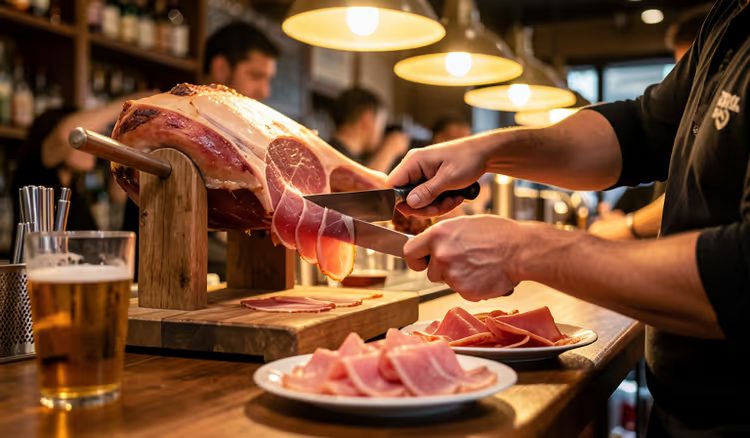
We didn't start with food by accident. Jamón is sliced into thin pieces in almost every bar, and it's a good way to begin getting to know the city. Order a portion with a glass of cold beer, and you'll understand why Madrileños are so unhurried.
 AIIllustrative image: AI-generated
In Madrid, it's good to simply walk without a plan. Cozy side streets with tapas bars are everywhere, and in the evening even weekday spots fill up with guests. Food here is inexpensive, and you can see it in the bills.
If you want very cheap tapas or bocadillos, go to the Cervecería La Sureña or 100 Montaditos chains. It's simple and tasty. A more colorful option: bocadillos de calamares at Bar La Ideal.
A simple rule also works. Sit down where there are many people and where locals go. The food is usually good there, and you can easily spot tourist places in the center by their menus with photos. Another important point: don't schedule every hour. In Madrid, pleasant places are found by chance, and the best evening often comes from a spontaneous turn into an unfamiliar side street. Plan ahead to leave time for such discoveries.
Churros, coffee, and sweets the Madrid way
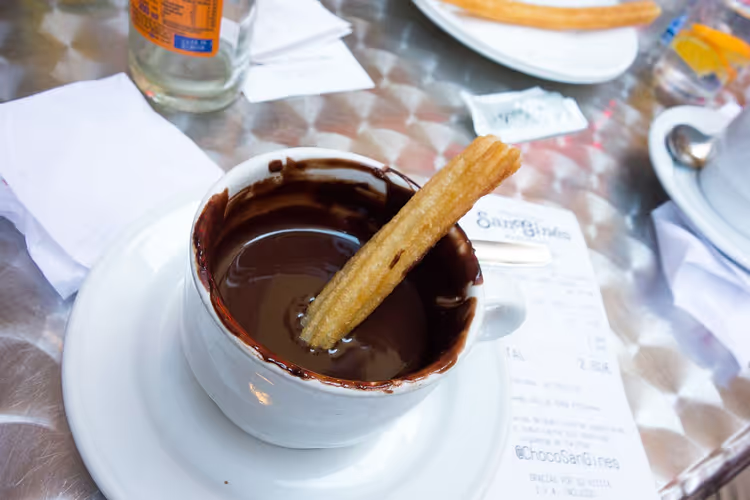
You can start your breakfast in Madrid with something sweet. Chocolatería San Ginés has been operating since 1894 and is one of the oldest churrerías in the city. They serve almost only churros with hot chocolate, but they are worth it.
 © christopher_brown from San Antonio, USA · CC BYPhoto: christopher_brown from San Antonio, USA, CC BY (https://creativecommons.org/licenses/by/2.0), Wikimedia Commons
The chocolate is made with milk or water, and you choose the version yourself. The room can't be called cozy, but it has character: the walls are covered with photos of celebrities who have eaten churros here.
Many people come here after a night out because the place is open almost around the clock. The portion is small, so order two at once if you're hungry.
Sunday in Madrid: Retiro and El Rastro
Sunday in Madrid is worth splitting into two parts. In the morning you go to the park, in the afternoon to the flea market, and in the evening you return to the center for dinner.
In good weather, both tourists and locals go to Retiro: to read, eat ice cream, rollerblade. The grounds are huge, and after a long walk through the city, the park's shade is a relief.
El Rastro
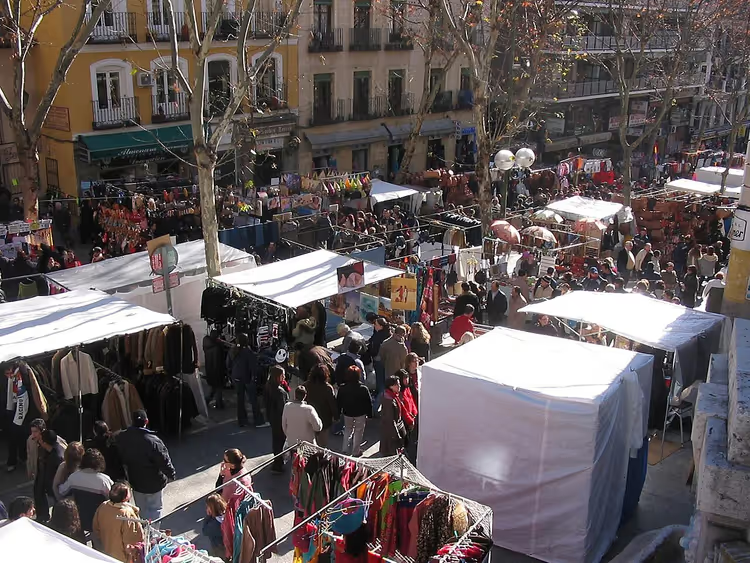
Every Sunday in the La Latina neighborhood, the huge El Rastro flea market takes place. There are many people and lots of odds and ends, but the atmosphere is its own. Sometimes you find good things: handmade earrings, for example.
By local tradition, before diving into the crowd, people grab a glass of beer for strength. Nobody is bothered that it's not yet noon. The market runs in the first half of the day, so come in the morning.
 © Unknown author · CC BY-SAPhoto: Unknown author, CC BY-SA (http://creativecommons.org/licenses/by-sa/3.0/), Wikimedia Commons
Nightlife and neighborhoods: Malasaña and La Latina
After dinner, Madrid is just waking up. Bars and clubs stay open late, and you'll easily find company for a walk through the streets.
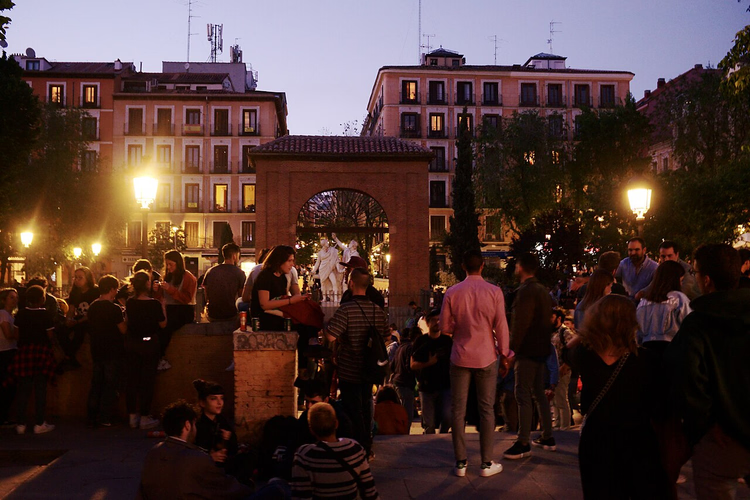
For flamenco, go to Cardamomo: the dancers give it their all, and the show captivates even those seeing this dance for the first time. The ticket price usually includes a drink, but check the exact price on site. For rooftop cocktails, head to Ramses and Ice Bar, where the entrance fee is often applied as a minimum order.
On Calle Cava Baja there are dozens of old taverns. You move from one to another, and the evening slips away unnoticed. For shopping in the center, there is Calle Serrano, the city's largest shopping street, and in the nearby alleys you'll find shaded courtyards with benches.
The Malasaña neighborhood is called Madrid's little Berlin. Bar after bar, restaurant after restaurant, and the nightlife here is the densest. Chueca is right next door, and it also has many bars and hotels.
How to get from Barajas Airport
Adolfo Suárez Madrid-Barajas Airport lies east of the center. You can reach the city by taxi, express bus, metro, or commuter train.
 © Charles from Port Chester, New York · CC BYPhoto: Charles from Port Chester, New York, CC BY (https://creativecommons.org/licenses/by/2.0), Wikimedia Commons
A taxi from the airport operates on a fixed fare to the center, so the bill is predictable. The express bus runs around the clock and costs less, while the metro is the cheapest, but it's inconvenient with suitcases at rush hour. The Cercanías train takes you to Atocha station and Sol station.
Below you can see a transfer from the airport to the center and meet a car at the terminal exit.
Tours and tickets in Madrid
Guided tours, skip-the-line tickets and activities — most offers can be cancelled free of charge.
See offers on KiwitaxiThe widget loads once you give your consent.
Flight tickets to Madrid are convenient to compare in advance: compare flight prices. In summer and during holidays, prices rise quickly, so book your tickets early.
Where to stay in Madrid
For a short trip, the neighborhoods around the center are convenient: Sol, Chueca, Malasaña, and La Latina. From there you can walk to the main sights and get back in the evening without a taxi.
A good example of a boutique hotel in these areas is Only You Hotel Madrid in Chueca. It is small, with its own atmosphere, and we mentioned its bar above. Prices depend on the season, so it is better to check Madrid hotel rooms in advance.
If you are traveling with family or by car, look at hotels near Paseo del Prado. The museums and Retiro Park are nearby, and you can walk to Mercado de San Miguel in twenty minutes. In central Madrid, you barely need transport: most of the main sights lie within walking distance. A hotel in Sol, Chueca, or Malasaña saves you travel time and taxi money, even if the nightly rate is higher. On a short trip, that time saving matters more.
Two-day Madrid itinerary
If you do not want to plan everything yourself, here is a simple outline. Day one: in the morning, the Royal Palace and Almudena Cathedral; in the afternoon, a tapas lunch in the center; in the evening, Puerta del Sol and a gin bar.
Day two: in the morning, one museum of the Golden Triangle; after midday, a walk through the squares and Retiro Park; toward evening, Mercado de San Miguel and dinner in La Latina. On Sunday, it makes more sense to swap the market for El Rastro.
If you have three days, add a separate day for shopping and the Malasaña neighborhood. This pace leaves time to rest and does not turn the trip into a race through the sights.
In the hot months, the plan works in reverse: museums and palaces move to the hottest part of the day, while streets and squares stay for the morning and evening. That way you get less tired and manage to see more.
Related articles about traveling in Spain
Madrid, of course, is only one view of the country. The editorial team also has articles about other regions, and they are easy to compare by season.
A road trip through northern Spain and France shows a different country: the ocean, green mountains, and small towns. The Costa Cálida region is known for its strong cuisine and relaxed pace, while Mallorca in the off-season suits those who do not like the heat.
The island of El Hierro has seven viewpoints and is considered the smallest of the Canary Islands. Gran Canaria suits those who want to combine beaches with a wellness-focused vacation. You can choose a destination by season and budget.
⁉️🤔 Frequently asked questions
How many days do you need for Madrid?
For a first visit, two or three days is enough. On the first day, take in the Royal Palace, Almudena, and Puerta del Sol. Dedicate the second to the museums and Paseo del Prado. Leave the third for Mercado de San Miguel, Retiro, and El Rastro on Sunday. If you are in a hurry, one day is enough for a sightseeing tour and one museum.
When is admission to Madrid museums free?
The Prado offers free entry in the evenings, Reina Sofía has free time slots several days a week, and the Thyssen-Bornemisza is free on Mondays and late on Saturdays (as of 09/2026, official museum websites). Check the exact windows before your trip, because museums change their schedules.
Where can you find real tapas in Madrid?
For the classics, go to La Casa del Abuelo, for vegetarian tapas head to Calle de Núñez de Arce, and for atmosphere try Cervecería El Barrio. Mercado de San Miguel is convenient for trying everything at once, but it is touristy. Pick bars where locals go and ask the waiter for a dish that is not on the menu.
Is it safe to walk around Madrid in the evening?
The center and tourist areas are crowded and calm in the evening. Take the usual precautions: do not leave your bag unattended and keep an eye on your phone in the crowds at El Rastro. Night buses and the metro run, but after midnight a taxi is more convenient. Locals stay out late, and the atmosphere in the bars is friendly.
How to get from the airport to the center?
From Barajas to the center you can take a taxi at a fixed rate, the express bus, the metro, or the Cercanías commuter train. A taxi costs more, but it is faster and more convenient with suitcases. The express bus runs around the clock and costs less. The metro is the cheapest, but at rush hour it is hard with luggage. You can book a transfer in advance and have a car meet you at the exit.
In short: what is worth booking
Madrid fits well into two or three days: one day for palaces and museums, one for markets and tapas, one for Retiro and El Rastro. After that, choose based on your own pace.
- If you are visiting for the first time: book the Prado in advance and do not miss Mercado de San Miguel.
- If you love food: plan an evening around the bars of La Latina and Calle Cava Baja.
- If you are traveling with kids: set aside half a day for Retiro and boat rides.
- If you are short on time: take a sightseeing tour in the morning and leave the museum for the evening.
Skip-the-line tickets save you an hour or more, so Madrid museum tickets are worth buying before your trip.

A small editorial team writing guides for independent travel. We travel ourselves, but we haven’t been everywhere, so we check prices, opening hours and how to get there against official sources.