
















How to pay for the subway in New York: OMNY, turnstile and transfers without mistakes
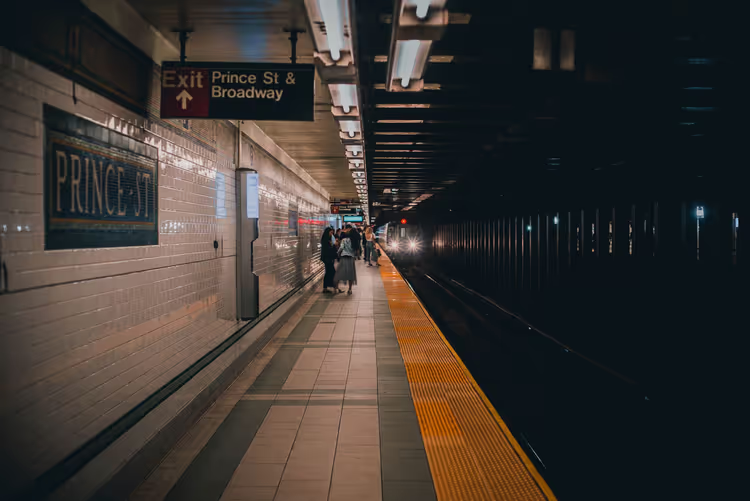
The New York City subway runs 24/7 and carries millions of passengers every day. For a tourist, it is the fastest way to cross the city: the subway avoids traffic, and a ride costs several times less than a taxi.
The main challenge here is not the distances, but the unfamiliar payment system and trains labeled with letters instead of numbers. You can figure it out during your first ride if you know a few rules in advance. After that, you just walk up to the turnstile and tap your card.
Below we have gathered everything a beginner needs: payment and cards, entering through the turnstile, reading routes, transfers, and subway operating hours. Start with the first sections and you will stop being intimidated by this subway system.
Ad: this article contains affiliate links, we earn a commission if you book through them, at no extra cost to you.
Fare rules and payment specifics
💡 In short:
- Figure out the fare in advance: in the New York City subway, the ride price does not depend on distance.
- Decide on a payment method: bank card, smartphone, or OMNY card.
- Keep a backup card or cash handy in case the terminal does not accept yours.
- For current fares and payment rules, see the MTA fares and rules section (as of 09/2026).
The New York City subway uses a single flat fare. You pay once when entering the station, and there are no turnstiles at the exit. The scheme does not depend on distance, so a short ride and a trip across the entire city cost the same.
For active tourists, an unlimited pass is more cost-effective. Since February 28, 2022, the OMNY system automatically counts your rides and activates an unlimited weekly mode after a certain number of trips (source on OMNY, as of 09/2026). You do not need to guess in advance how many times you will ride: the fare adjusts to you. This is convenient when plans change mid-trip.
The old magnetic MetroCard cards are being phased out. MetroCard sales and issuance stopped on December 31, 2025 (Wikipedia: OMNY, as of 09/2026), so new rides are better paid through OMNY. Tap your bank card, phone, or OMNY card on the validator and go through.
Buying a card: OMNY instead of MetroCard
 © Metropolitan Transportation Authority · CC BYPhoto: Metropolitan Transportation Authority, CC BY (https://creativecommons.org/licenses/by/4.0), Wikimedia Commons
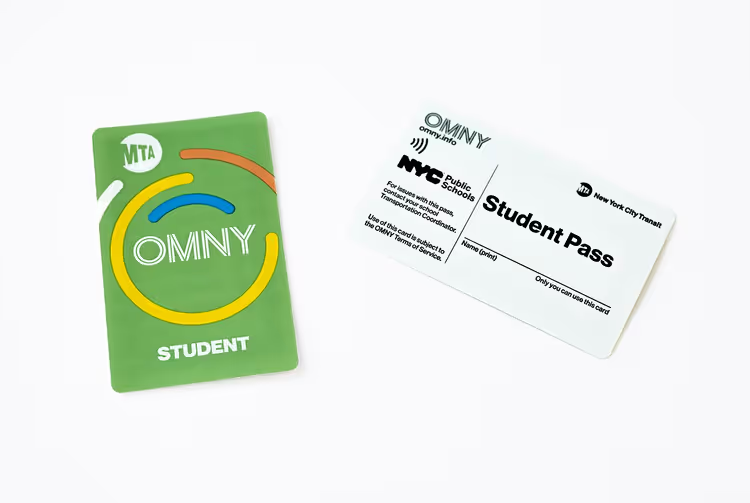
You can pay for your ride in two ways. First: tap a contactless bank card or a phone with Apple Pay or Google Pay on the validator. Second: buy a physical OMNY card from a vending machine at a station or at a regular store. You carry your bank card with you anyway, so the first method is usually enough.
The OMNY card has been on sale since October 1, 2021 (according to OMNY data). The minimum online top-up is $5.80, and you can store up to $315 on the card (as of 09/2026, MTA on OMNY). The balance is valid for seven years, so the card is convenient to keep for future trips to the city.
You need to top up a regular card yourself: you add any amount and spend it in parts. Foreign cards sometimes fail at the terminal, in which case cash or a second card will help.
Going through the turnstile
 © Metropolitan Transportation Authority from United States of America · CC BYPhoto: Metropolitan Transportation Authority from United States of America, CC BY (https://creativecommons.org/licenses/by/2.0), Wikimedia Commons
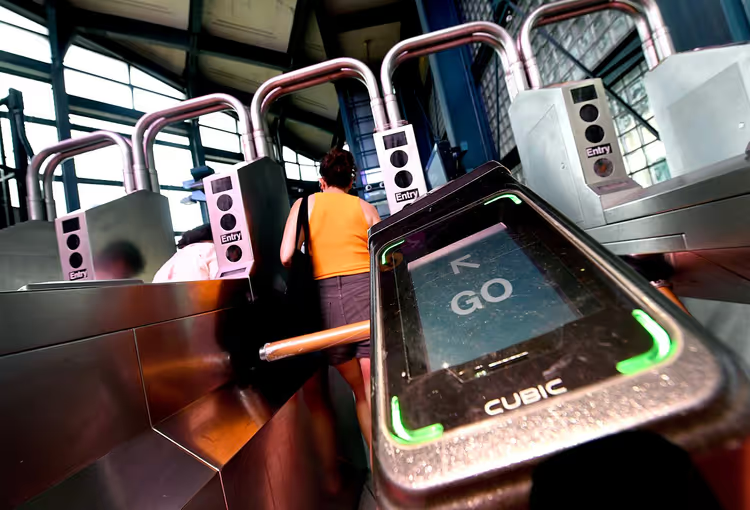
To go through, tap your card on the reader and wait for the green signal with the word "Go". If the light does not come on, the mechanism will not let you through. In that case, calmly tap your card again.
First attempts often fail. Hold your card flat against the reader and do not pull your hand away before the signal. If the payment is still blocked, go to the station booth: a subway employee will explain the situation and refund the fare. That way you will not lose money because of one awkward attempt.
How to read routes and tell trains apart
 © Error46146 at English Wikipedia · CC BYPhoto: Error46146 at English Wikipedia, CC BY (https://creativecommons.org/licenses/by/3.0), Wikimedia Commons
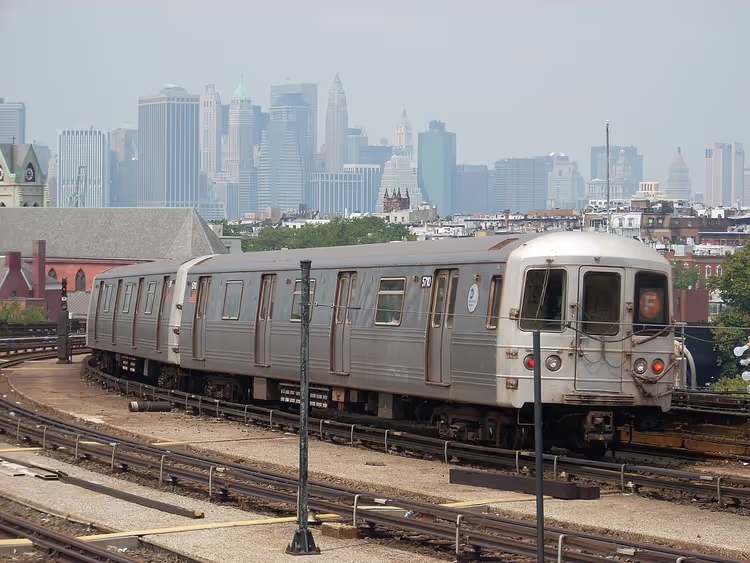
Trains from different routes stop at the same platform. You need to pay close attention to the train number or letter, otherwise you can easily end up going the wrong way. Trains are marked with numbers and Latin letters, such as 1, A, or Q. Some lines run north, while others take passengers to the opposite end of the city.
A map helps you figure it out. A paper map is available for free at subway booths and station exits, and you can install an app on your smartphone. Study the map once and you will quickly memorize the transfers you need. The first few minutes take some getting used to, and after that you will navigate confidently.
On the map, some stations are marked with white circles and others with black ones. White circles show stops served by both express and local trains. Black circles mark stops served only by local trains. The express is faster but skips stations you may need. Before boarding, check the map so you do not miss your stop.
Transfers between lines and buses
 © Tdorante10 · CC BY-SAPhoto: Tdorante10, CC BY-SA (https://creativecommons.org/licenses/by-sa/4.0), Wikimedia Commons
Within the system, you can transfer from one line to another for free and without restrictions. Between the subway and the bus, a free transfer is valid within two hours (according to MTA transfer rules, as of 09/2026). That means you exit the subway, get on a bus, and do not pay a second time. This saves a noticeable amount on long routes.
The second nuance concerns using the same payment method. It is convenient to use one card for the entire trip, so transfers are counted automatically. If you pay with a new card each time, the system will not link the rides together. Keep one payment method for the whole day and the benefit will work.
Subway operating hours and crowding
 © Tdorante10 · CC BY-SAPhoto: Tdorante10, CC BY-SA (https://creativecommons.org/licenses/by-sa/4.0), Wikimedia Commons
The New York City subway runs around the clock, so you can get to your hotel at night too. However, some routes change their schedule: certain lines do not run at night or on weekends. Check the current schedule for a specific station on the MTA station schedules page, because maintenance changes routes almost every week. That way you will not end up on a closed platform late in the evening.
Millions of people use the subway every day. During rush hour, cars are packed tight and transfers create lines. In the morning and evening, allow more time for travel, and move your city trips to the middle of the day. During the day you ride more comfortably and more often find a free seat.
Interesting facts about the New York City subway
The New York City subway is considered one of the largest in the world. It has thousands of cars, and each train is assembled from several cars of different lengths. Such a flow requires a huge staff and constant investment in maintenance.
For fare evasion, you risk a fine of up to $100 (as of 09/2026, MTA on fines). The amount is incomparable to the cost of a single ride, so it is better to pay the fare right away.
Musicians, magicians, and performers play in the cars. Watching a show, it is easy to miss your stop. Look at the display between acts and keep your route in mind. That way you will see the show and get off where you need to.
⁉️🤔 Frequently asked questions
How much does a New York City subway ride cost?
The fare is flat and does not depend on distance, so one ride costs a fixed amount. For the exact price and current payment rules, see the current ride cost section. Check the amount before your trip so you do not have to do mental math.
Can I pay with a foreign card?
Yes, a contactless bank card or a phone with Apple Pay or Google Pay works for entry. Tap them on the validator just like a regular OMNY card. If the terminal does not accept your card, buy an OMNY card from a vending machine and load the amount you need onto it.
Does the subway run at night?
Yes, the subway runs around the clock. However, some lines do change their schedule: certain routes do not run at night or on weekends. Before a night trip, open the MTA line status page and check your line.
How do I avoid getting on the wrong train at the platform?
Look at the train letter or number before boarding. Trains from different routes stop at the same platform, and they go to opposite parts of the city. Tell the express apart from the local train: the express skips most stations. Check the map and the display, and you will get on the right train.
Is it worth buying an unlimited pass?
With the OMNY system, you do not need a separate unlimited pass. After a certain number of rides in a week, the system stops charging you until the end of the week, meaning the unlimited mode activates automatically. You simply pay for each ride with one payment method. That way you will not overpay if you ride less than planned.
In short: what to book
Choose a payment method that fits your route. If you ride around the city every day, keep one bank card or phone for all your subway trips: that way the free transfer and the OMNY unlimited mode will work.
If you only have a couple of rides, just pay for each one at the flat fare. If you are planning a packed itinerary with museums and observation decks, think about connectivity in advance. For navigation and the OMNY app, you need a stable internet connection, so order an eSIM for the USA ahead of time.
Check your line on the MTA website before a long trip and keep your card handy. Then the New York City subway will become ordinary transportation for you, not a separate ordeal.

A small editorial team writing guides for independent travel. We travel ourselves, but we haven’t been everywhere, so we check prices, opening hours and how to get there against official sources.