
















Bastei bridge over the Elbe: rock castle and the route from Dresden
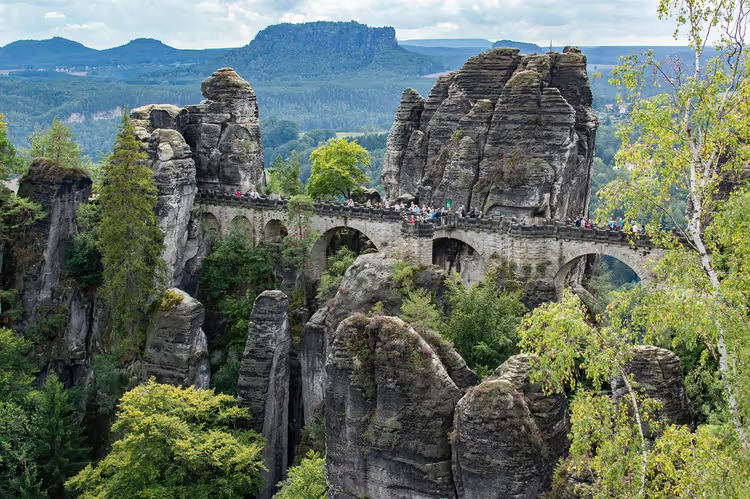
The Elbe narrows here into a tight gorge with sheer walls. The sandstone cliffs of Bastei rise above it. A stone bridge spans the deep fissure between them, long a symbol of Saxon Switzerland. You can easily get here for a half-day trip straight from Dresden.
Bastei is called the sandstone bastion above the Elbe. The viewing platforms are open year-round and free, while the ruins of Neurathen rock castle have been closed since 2023 (official Saxony tourism). For a first visit, three things matter: how to get up, when to go, and what to see at the top.
Ad: this article contains affiliate links, we earn a commission if you book through them, at no extra cost to you.
What Bastei is and where it is located
💡 In short:
- The S1 suburban train runs from Dresden to Kurort Rathen station, then you cross the Elbe by ferry (S1 schedule).
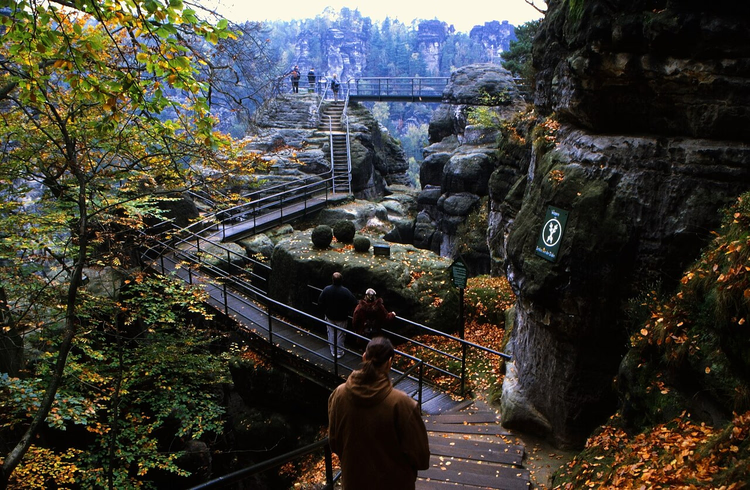
- Stairs cut directly into the sandstone lead up to the bridge.
- Admission and opening hours: open 24/7 and free (as of 09/2026, Saxony tourism website).
 © Thomas Wolf , www.foto-tw.de · CC BY-SAPhoto: Thomas Wolf , www.foto-tw.de, CC BY-SA (https://creativecommons.org/licenses/by-sa/3.0/de/deed.en), Wikimedia Commons
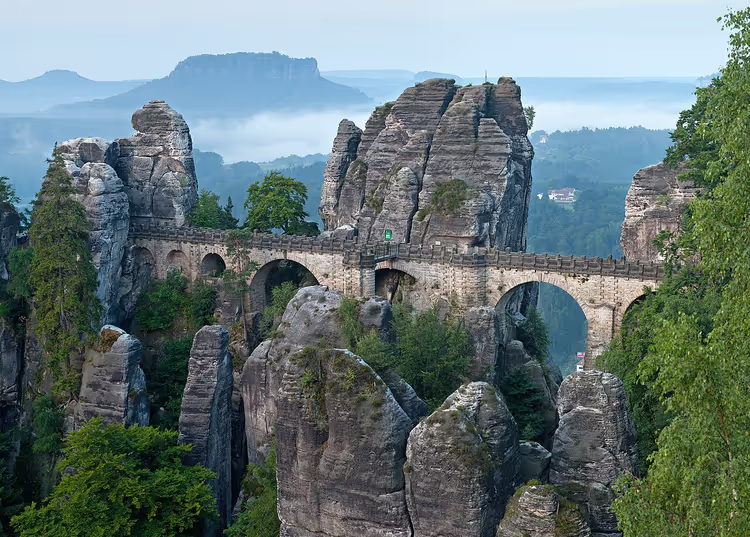
Bastei occupies the edge of a sandstone massif on the right bank of the Elbe. Between the resort of Rathen and the town of Stadt Wehlen, the cliffs drop to the river in a wall nearly two hundred meters high. Viewing platforms are set up at the top, and a bridge crosses the gorge. The panorama from these platforms is exactly why people come here. From them, the entire bend of the river opens up before you.
The name "Bastei" means "bastion." The cliffs really do resemble a fortress wall with projections and fissures. The first fortifications appeared here back in the Middle Ages, so it makes sense to start with the history.
History of the rock castle
Neurathen rock castle appeared at Bastei in the Middle Ages, in the thirteenth century. It protected the trade route along the Elbe and was considered the largest rock castle in Saxony. From the heights, sentries could see the river and the approaches to it for many kilometers ahead.
 © Rüdiger Stehn from Kiel, Deutschland · CC BY-SAPhoto: Rüdiger Stehn from Kiel, Deutschland, CC BY-SA (https://creativecommons.org/licenses/by-sa/2.0), Wikimedia Commons
The fortifications held out for about three centuries. In the sixteenth century, the garrison left the fortress: no serious attacks were expected here, and the cliffs themselves reliably blocked the approaches. Without people, the structures began to decay, and only in the twentieth century did preservation efforts begin.
What remains of the castle are rooms cut into the sandstone, slots for wooden beams, and a water cistern. Today the ruins are closed due to rock movement, so you can only view them from the outside. The bridge and nearby platforms remain open to everyone.
How Bastei became a place for artists
In the early nineteenth century, travelers discovered the cliffs. They came in small groups to see the gorge and the panorama with their own eyes. Following them, the first shops and inns opened in Rathen.
 © Bybbisch94, Christian Gebhardt · CC BY-SAPhoto: Bybbisch94, Christian Gebhardt, CC BY-SA (https://creativecommons.org/licenses/by-sa/4.0), Wikimedia Commons
Artists played a special role. They came with easels and painted the cliffs, and so the "artists' trail" gradually took shape. Caspar David Friedrich spent long periods walking these places: he depicted the local cliffs in several paintings.
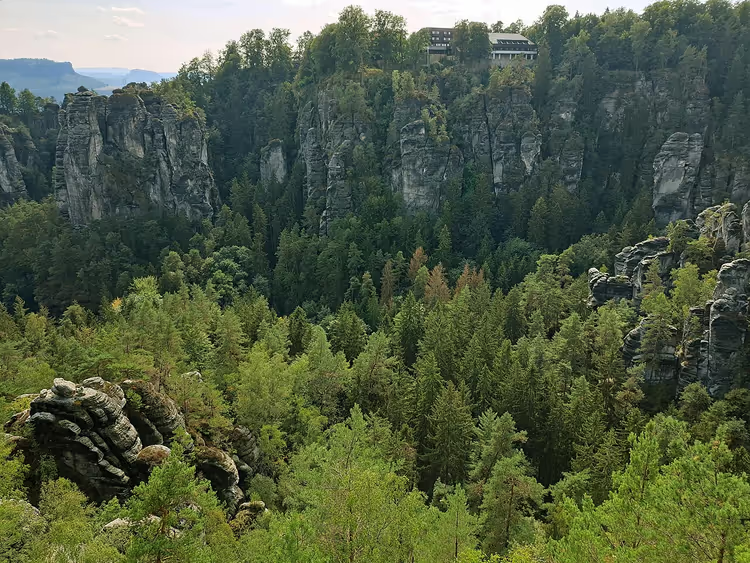
Today the "artists' trail" has become one of the main routes in the national park. It passes by Bastei and connects dozens of viewpoints. You will walk part of this trail already on the way up to the bridge.
Bastei Bridge: from wood to sandstone
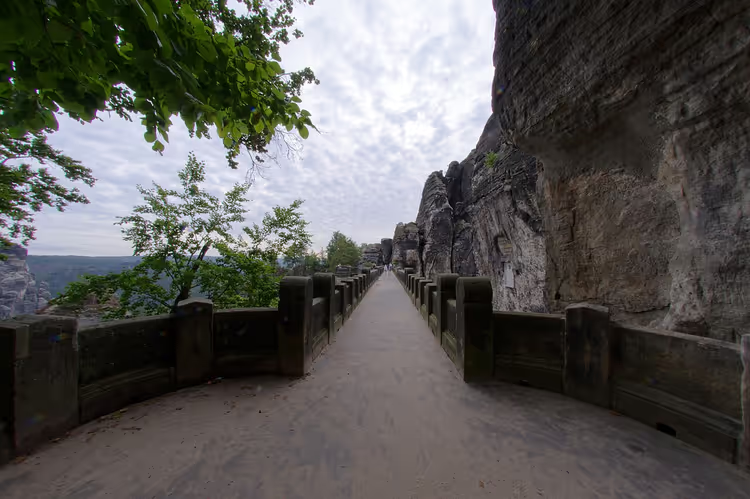
The first bridge across the gorge was built in 1824. It was wooden and wore out quickly: wind and damp destroyed the planks, and they had to be replaced almost every year. A few decades later, the wood was replaced with sandstone (history of the bridge).
 © VSchagow · CC BY-SAPhoto: VSchagow, CC BY-SA (https://creativecommons.org/licenses/by-sa/4.0), Wikimedia Commons
The current stone bridge appeared in 1851 and still stands today (page about the bridge). It is short, but you walk across it between two cliffs. From the bridge you will see the gorge below and the rocks on either side.
The bridge has long been recognized as an architectural and historical monument of Germany. In the past, people climbed to the rocks along steep slopes, but now the ascent takes only a few minutes. The bridge is what made Bastei accessible to ordinary tourists.
Saxon Switzerland: where the name comes from
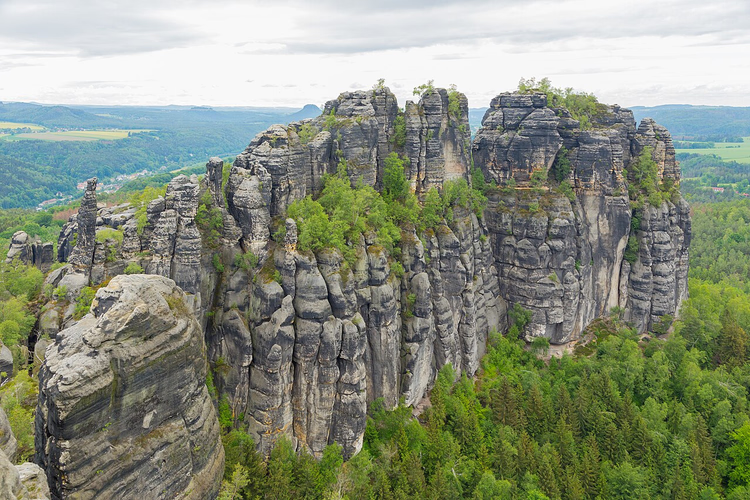
The region around Bastei is called Saxon Switzerland. The name was coined not by geographers, but by students from Switzerland. In the late eighteenth century, they studied at the Dresden Academy of Fine Arts and missed their native mountains.
 © J.-H. Janßen · CC BY-SAPhoto: J.-H. Janßen, CC BY-SA (https://creativecommons.org/licenses/by-sa/4.0), Wikimedia Commons
In letters home, the students called the local rocks "their Switzerland." Later, the writer Wilhelm Leberecht Götzinger picked up the comparison. From his books, the name spread across Germany and stuck to the region.
Bastei became the main attraction of the region. Both tourists and locals come here, and if you are into rock climbing, you will find practice routes here. Among the rocks, the Mönch peak stands out: its outline resembles two hands folded in prayer.
How to get there from Dresden on your own
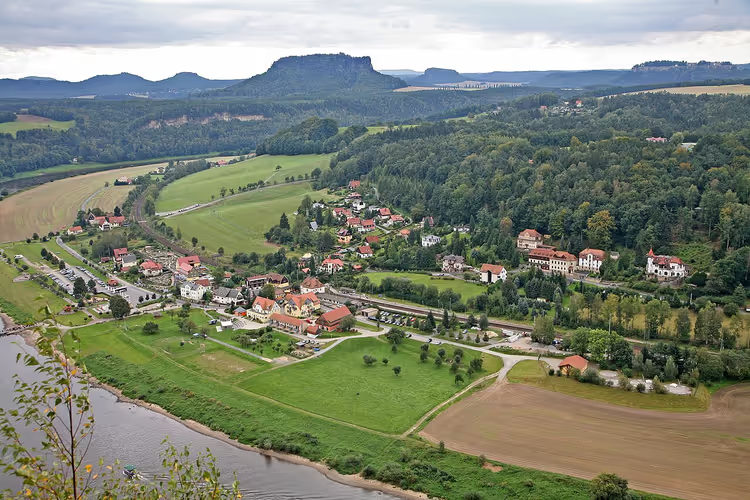
The most convenient way is to take the S-Bahn from Dresden. Line S1 runs from the main station to Kurort Rathen station, and the trip takes about forty minutes (official Rathen tourist office). The station is on the left bank of the Elbe, while the resort and Bastei are on the right bank.
From there, you cross the river by ferry. The crossing operates year-round, including early morning and late evening (Saxon Switzerland tourism). From the dock, a climb up stairs cut into the sandstone leads to the bridge.
 © W. Bulach · CC BY-SAPhoto: W. Bulach, CC BY-SA (https://creativecommons.org/licenses/by-sa/4.0), Wikimedia Commons
The walk is not far, but the climb is steep, so wear comfortable shoes. At the top there is a cafe and restrooms, and the bridge is almost always crowded. Arrive early in the morning if you want calm photos without the crowds.
You can also go by car: on the left bank near Rathen there are parking lots, and the same ferry runs from there (access information).
You can see where Bastei is located on the map below.
Bastei in Germany
Places on the map
- Bastei Bridge Stone bridge from 1851 over the Elbe, viewpoints free year-round
Tickets, opening hours, and the best time to visit
Admission to Bastei is free. You do not need to pay for the bridge or the viewing platforms. The area is open year-round and at any time of day (entrance information). The cafe and restrooms at the top operate on their own schedule.
The best time to visit: a weekday morning. On weekdays before ten o'clock, there are noticeably fewer people than on weekends. In autumn, fog hangs over the Elbe, and the views become especially soft. In winter, the steps can be icy, so you need shoes with good tread.
Guided tours of Saxon Switzerland are listed below.
Tours and tickets in Dresden
Guided tours, skip-the-line tickets and activities — most offers can be cancelled free of charge.
See offers on GetYourGuideThe widget loads once you give your consent.
⁉️🤔 Frequently asked questions
How much does it cost to enter Bastei?
Entry is free. You don't have to pay for the bridge, the viewing platforms, or the stair climbs. The area is open year-round (verified against official data).
How to get to Bastei without a car?
From Dresden, take the S1 suburban train and get off at Kurort Rathen station (travel time and transfers). Then take the ferry across the Elbe and climb the stairs to the bridge. You don't need a car, the entire route is walkable.
How much time do you need for Bastei?
Two to three hours is enough for the platforms and the bridge, including the walk from the station. If you want to hike part of the "artists' trail", allow half a day. Many people combine Bastei with a walk through the surrounding forests of the national park.
When is the best time to visit Bastei?
On weekdays in the morning there are the fewest people. In summer, a photo line forms at the bridge by midday. In autumn, fog hangs over the Elbe, and in winter the steps can be icy. Sturdy footwear matters in any season.
Can you enter the Neurathen rock castle?
No, the ruins have been closed since 2023 due to sandstone movement (current status). The bridge and viewing platforms remain open. You can only see the rooms carved into the rock and the beam slots from outside.
In short: what to see at Bastei
Bastei combines an old stone bridge, sheer cliffs, and a panorama of the Elbe in one place. Entry is free, and the trip from Dresden takes less than an hour. It's a convenient half-day outing in any season.
- If you have half a day and no car: take the S1 train to Kurort Rathen station and the ferry.
- If you're traveling with kids: leave the car at the Bastei parking lot on the Lohmen side, a level path leads from there to the bridge.
- If you want fewer people: come on a weekday early in the morning.

A small editorial team writing guides for independent travel. We travel ourselves, but we haven’t been everywhere, so we check prices, opening hours and how to get there against official sources.