
















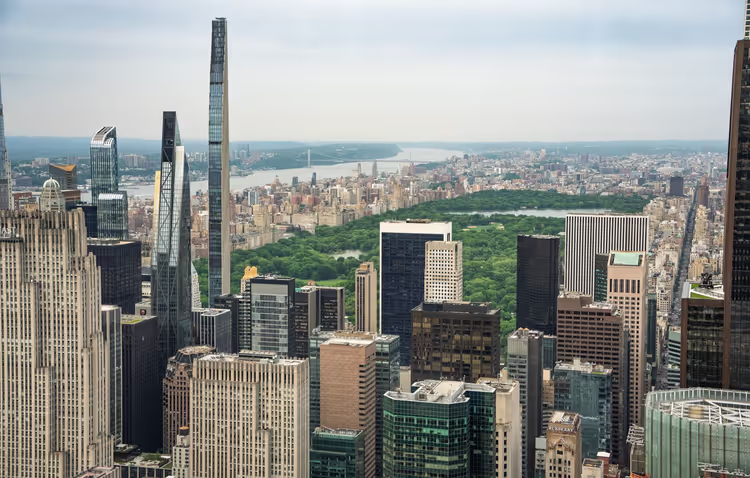
Three days in New York: a route through neighborhoods with tickets and sightseeing time
Three days in New York fly by fast. If you don't map out your stops by neighborhood in advance, half your time will go to getting between Downtown, Midtown, and the museums near Central Park. We put together a three-day itinerary with photos, prices, and the order to see things in.
Observation deck tickets are sold for a specific time slot. In high season, buying one saves you an hour of standing in line at the ticket office.
The days below go in order, from the Statue of Liberty to the Chrysler Building. For each stop, we've noted how to get there and how much time it will take.
Ad: this article contains affiliate links, we earn a commission if you book through them, at no extra cost to you.
Day 1: Statue of Liberty and Downtown
💡 In short:
- Start with the ferry to the Statue of Liberty and Ellis Island; that will take half a day.
- You can walk to the rest of the Downtown sights: Battery Park, Castle Clinton, the 9/11 Memorial, and Wall Street.
- Save the Brooklyn Bridge for dusk, when the lights come on. Then take the subway to Midtown for the Empire State Building, Top of the Rock, Broadway, and Times Square.
- Prices and hours: 09/2026, according to the US Park Service and the Metropolitan Museum.
Statue of Liberty and Ellis Island
 © Christian David · CC BY-SAPhoto: Christian David, CC BY-SA (https://creativecommons.org/licenses/by-sa/4.0), Wikimedia Commons
The Statue of Liberty stands on Liberty Island in New York Harbor, and the only way to get there is by ferry from Battery Park. France gave the monument to mark the centennial of the Declaration of Independence, and together with its pedestal it rises 93 meters (according to the National Park Service). The goddess holds a torch in her right hand and a tablet in her left.
Ellis Island lies nearby. Until 1954 this was the main immigrant reception center, and today the building with its four copper domes houses an immigration museum. You will see the registration halls and the passenger lists through which millions of people passed.
- How to get there: the ferry leaves from the pier in Battery Park; tickets are sold by the official operator, Statue City Cruises.
- Cost: the price depends on the access level; you pay extra for the pedestal and the crown.
- Tip: the first ferry saves you time in the security line before boarding.
Battery Park
 © Gryffindor · CC BY-SAPhoto: Gryffindor, CC BY-SA (https://creativecommons.org/licenses/by-sa/3.0), Wikimedia Commons
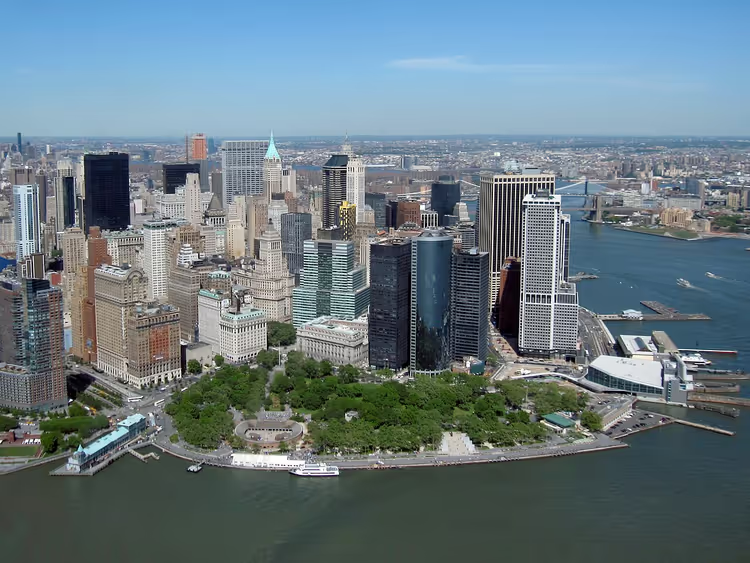
Battery Park occupies the southern tip of Manhattan, between the harbor and the skyscrapers of the Financial District. The green space covers 10 hectares (according to NYC Parks), making it one of the city's oldest recreation areas. The park got its name from the artillery batteries that defended the city from the sea.
Here you will find veterans' memorials, walking paths with benches, and a small working farm with garden beds set against the high-rises. Ferries to Ellis Island and the Statue of Liberty depart from the park's pier.
- Location: southern Manhattan; from here you walk on to Wall Street.
- Cost: admission is free, and the park is open around the clock.
Castle Clinton
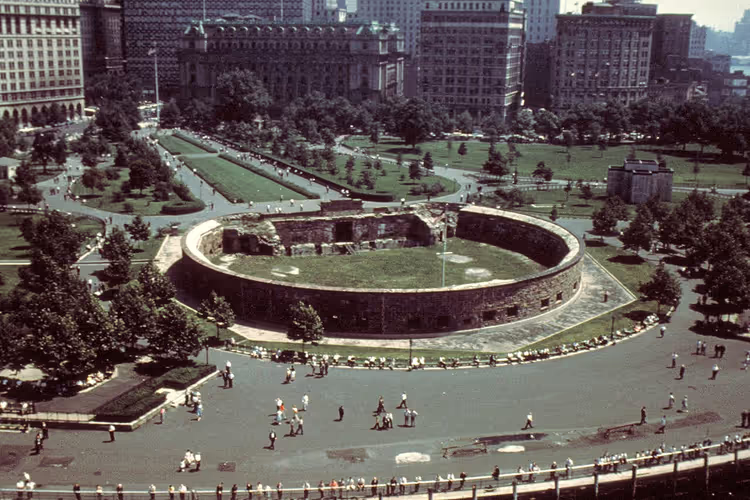
Battery Park is home to a round brick building with narrow slit windows. This is Castle Clinton, an early 19th-century fort named after Governor DeWitt Clinton. The British never attacked the harbor, so the fortress never saw battle.
Later its walls housed a beer hall, a concert venue, and a museum, and from 1855 to 1890 the fort served as the first immigration center. Around 10 million newcomers passed through it (according to the National Park Service). Today you see it surrounded by the glass towers of Downtown.
- Getting there: the fort stands a short walk from the pier where ferries depart for the Statue of Liberty.
- Cost: ferry tickets are sold right at the fort's walls.
9/11 Memorial
 © Paul Sableman · CC BYPhoto: Paul Sableman, CC BY (https://creativecommons.org/licenses/by/2.0), Wikimedia Commons
On the site of the Twin Towers of the World Trade Center, destroyed on September 11, 2001, a memorial complex now stands. It consists of two square black pools, with water cascading down the inner walls. The names of nearly three thousand victims are engraved on the bronze parapets.
The memorial opened on the tenth anniversary of the attack, and today it is one of the most visited places in the city (according to the memorial). A museum with artifacts recovered from the site operates nearby, so plan at least two hours for the visit. One World Trade Center rises above the memorial, and the route to its observation deck is on day three.
- Getting there: walk from Battery Park or take the subway to the World Trade Center stations.
- Cost: admission to the memorial plaza is free; the museum requires tickets.
Brooklyn Bridge
 © Taken by Jeffrey Bary, uploaded by CPacker · CC BYPhoto: Taken by Jeffrey Bary, uploaded by CPacker, CC BY (https://creativecommons.org/licenses/by/2.0), Wikimedia Commons
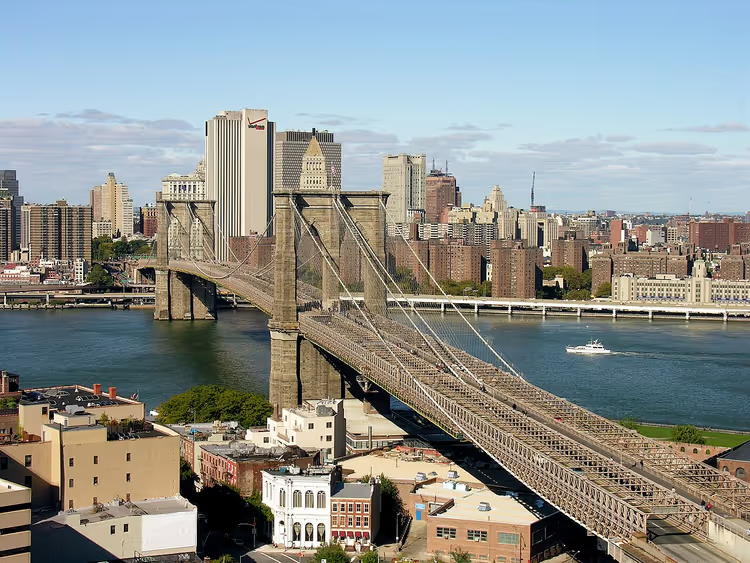
The Brooklyn Bridge spans the East River and connects Manhattan with Brooklyn. It opened in 1883, and the structure reaches 1,825 meters in length (according to Wikipedia). Two Gothic granite towers rise 80 meters above the water.
A pedestrian and bicycle path runs above the roadway. Walk across it toward Brooklyn: from there you get a panorama of Manhattan, and at dusk the lights come on. You can easily return by subway.
- Getting there: walk from the 9/11 Memorial or take the subway to stations near Brooklyn.
- Cost: crossing the bridge is free.
Wall street and the charging bull
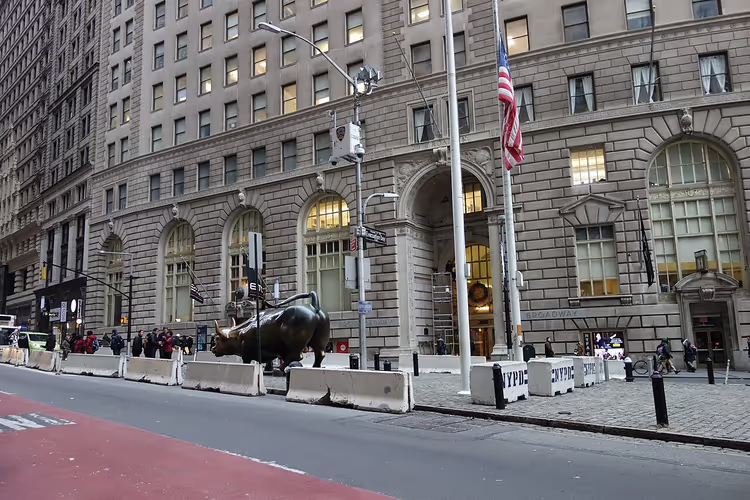 © Tdorante10 · CC BY-SAPhoto: Tdorante10, CC BY-SA (https://creativecommons.org/licenses/by-sa/4.0), Wikimedia Commons
Wall Street remains the city's business center: stock exchanges, banks, and offices stand here, and tall buildings press in on the street. Walking along it, you will reach the exchange building with its columns and a pediment with sculptures.
The main photo spot here is not the exchange but the bronze bull. The sculpture was installed in 1989 (according to Wikipedia), it stands three meters tall, and tourists line up for a photo with the bull.
- Location: the Financial District, a walk from the 9/11 Memorial.
- Cost: the street and the sculpture are accessible at any time.
Empire State Building
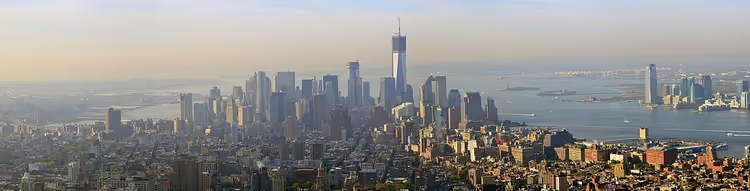 © Gzzz · CC BY-SAPhoto: Gzzz, CC BY-SA (https://creativecommons.org/licenses/by-sa/3.0), Wikimedia Commons
The Empire State Building was built in 1931 on Fifth Avenue. The tower stands 443 meters tall (according to the official website), and it was the first building in the world with more than a hundred floors. Observation decks operate on the 86th and 102nd floors.
From the top you will see the blocks of Midtown, Central Park, and the bridges over the East River. In the evening the facade is lit in different colors for holidays and city events, so a shot from below is also worth taking.
- Cost: tickets are sold for specific time slots; evening slots cost more than daytime ones.
- Tip: book a slot around sunset, and you will get both a daytime and a nighttime panorama.
Top of the Rock observation deck
 © Rhododendrites · CC BY-SAPhoto: Rhododendrites, CC BY-SA (https://creativecommons.org/licenses/by-sa/4.0), Wikimedia Commons
Top of the Rock occupies three levels on the 67th, 69th, and 70th floors of Rockefeller Center, including two open-air terraces. From a height of 266 meters, you look out at the Empire State Building, Central Park, and the harbor (according to Rockefeller Center). The indoor observation deck with glass barriers is a lifesaver in windy weather.
This spot is convenient because you can see the Empire State Building itself from here. You can't get that shot from that tower's own observation deck.
- Cost: tickets are time-specific; check current prices on the tickets page.
- Tip: arrive an hour before sunset so you can calmly claim a spot by the glass.
Broadway and the Theater District
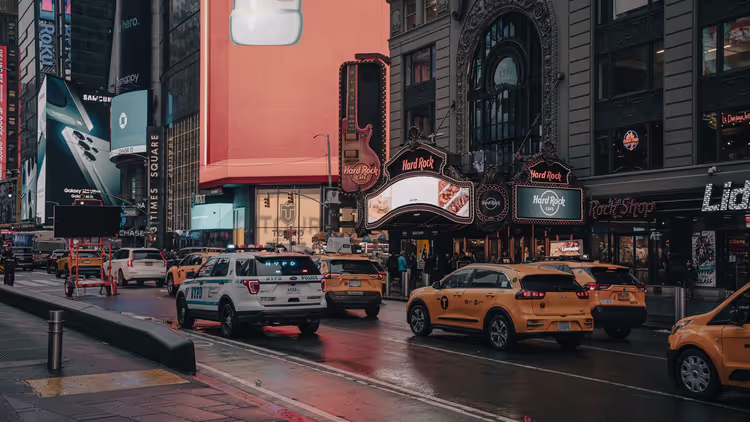
Broadway runs the length of Manhattan and breaks the perpendicular street grid. Before Europeans arrived, a Native American trail ran along this route, and the street got its current name back in the 17th century.
Today Broadway is known for its Theater District: musicals and plays run on its stages, and theater facades are covered with posters. Nearby you'll find bars and restaurants where you can grab a bite between shows.
- Getting there: walk from Times Square; the whole district takes about half an hour to cover.
- Cost: walking along the street is free; show tickets should be bought in advance.
Times Square
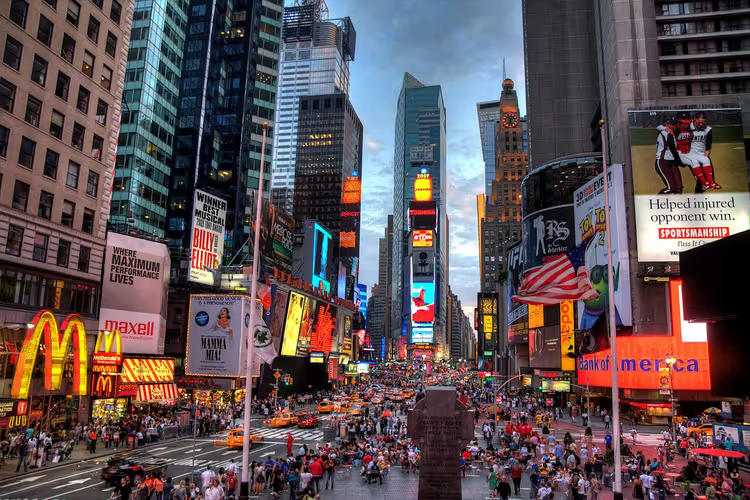 © Terabass · CC BY-SAPhoto: Terabass, CC BY-SA (https://creativecommons.org/licenses/by-sa/3.0), Wikimedia Commons
Times Square lies at the intersection of Broadway and Seventh Avenue. The square consists of two elongated triangles, and its main attraction is the advertising screens and neon signs.
It gets especially crowded here in the evening: the square remains one of the most visited places in the city (according to the Times Square alliance), and it's where New Yorkers ring in the New Year. During the day, you'll see the same area without the crowds and can take your time photographing the storefronts.
- Getting there: several subway lines converge at the Times Square station.
- Cost: the square itself is open 24/7.
Day 2: Central Park and museums
Central Park
 © Ed Yourdon from New York City, USA · CC BY-SAPhoto: Ed Yourdon from New York City, USA, CC BY-SA (https://creativecommons.org/licenses/by-sa/2.0), Wikimedia Commons
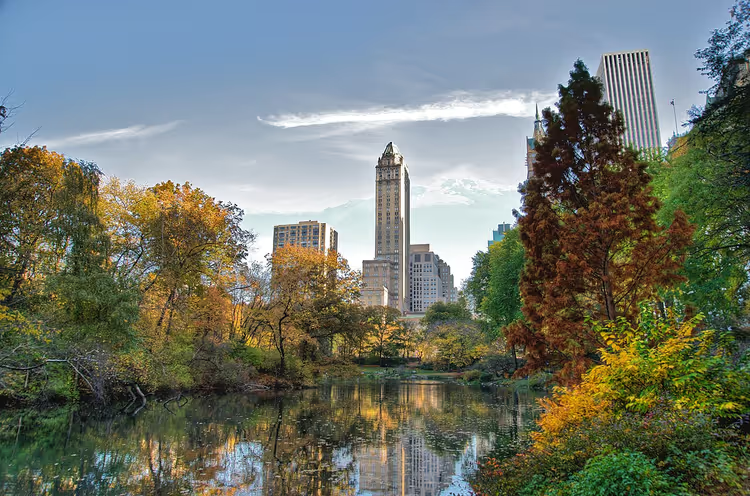
Central Park occupies a rectangle in the very center of Manhattan and has been open since 1857 (according to the Central Park Conservancy). The green space covers 3.4 square kilometers, and within it you will find seven lakes and ponds, running paths, wooded areas, and spacious lawns.
Start from the southern end: the density of landmarks is higher there. On a rocky rise near the turtle pond stands the stone Belvedere Castle with its weather observatory, and next to it lies a large green field where New Yorkers picnic in warm weather.
The park has a zoo and carousels, a theater venue opens in summer, and along the paths you pass sculptures and memorials.
In the southern part of the park there is a terrace with an arched arcade and fountains, and a flower garden is laid out nearby. If you are visiting with children, allow an hour for the zoo and carousels.
- Getting there: take the subway to the stations near 59th Street, then walk.
- Cost: park admission is free.
The metropolitan museum of art
 © Hugo Schneider · CC BY-SAPhoto: Hugo Schneider, CC BY-SA (https://creativecommons.org/licenses/by-sa/2.0), Wikimedia Commons
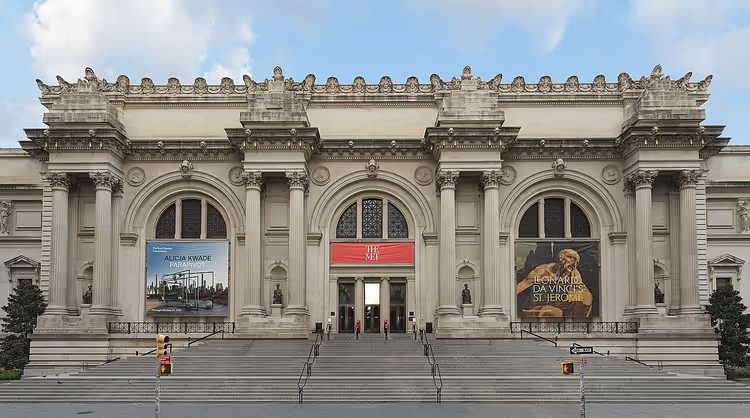
The metropolitan museum of art holds the largest art collection in North America. The exhibition is organized by continent and era: paintings and sculptures, arms and armor, musical instruments, furniture, jewelry, and clothing.
The ticket is valid at both museum buildings (as of 09/2026, official website). The Egyptian hall with sarcophagi, mummies, and fragments of tombs is best viewed first, while you still have energy. The halls of the Roman and Greek collections, as well as recreated interiors of 19th-century French mansions, occupy an entire floor.
Ready-made tickets help you cover several of the city's museums with one purchase: New York museum tickets on GetYourGuide.
- Cost: $30 for adults, children under 12 enter free (as of 09/2026, official museum website).
- Tip: allow at least three hours, otherwise you will only manage to see two halls.
American museum of natural history
 © Photograph by Mike Peel ( www.mikepeel.net ). · CC BY-SAPhoto: Photograph by Mike Peel ( www.mikepeel.net )., CC BY-SA (https://creativecommons.org/licenses/by-sa/4.0), Wikimedia Commons
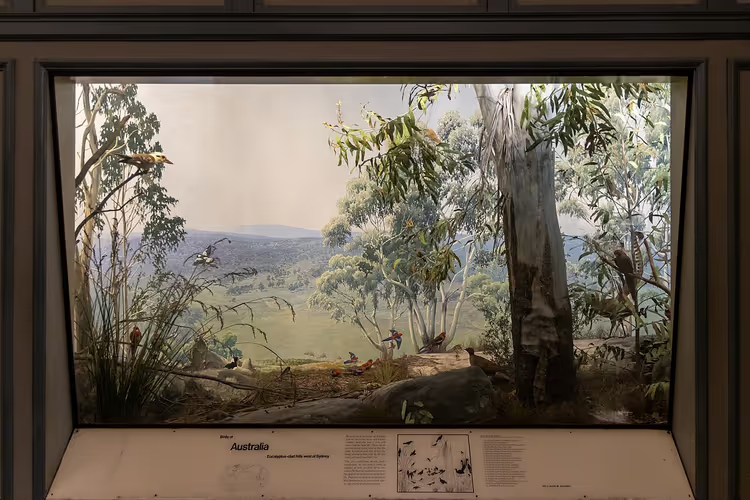
The American museum of natural history tells the story of life on Earth. The paleontology collection is spread across four halls: dinosaur skeletons stand there, including a Tyrannosaurus rex, and a life-size blue whale figure hangs overhead.
Dioramas show different ecosystems of the planet. A separate hall houses the mineral collection with emeralds, sapphires, diamonds, and rubies, and nearby are displayed rock specimens and meteorites (according to the official website).
Separate halls are devoted to human origins, and among the exhibits you will see a Native American war canoe about 20 meters long (according to the museum), taxidermied mammals and birds, and in the halls about Indigenous peoples the daily life of tribal communities of North and South America is shown.
After two museums in a row you will need a break, and Central Park is the best place for it: it is just steps from the entrance.
- Getting there: the museum buildings face Central Park West, with the entrance on the park side.
- Cost: tickets are sold at the entrance and online; children's tickets are cheaper.
Day 3: Hudson river waterfront and midtown
Hudson River waterfront
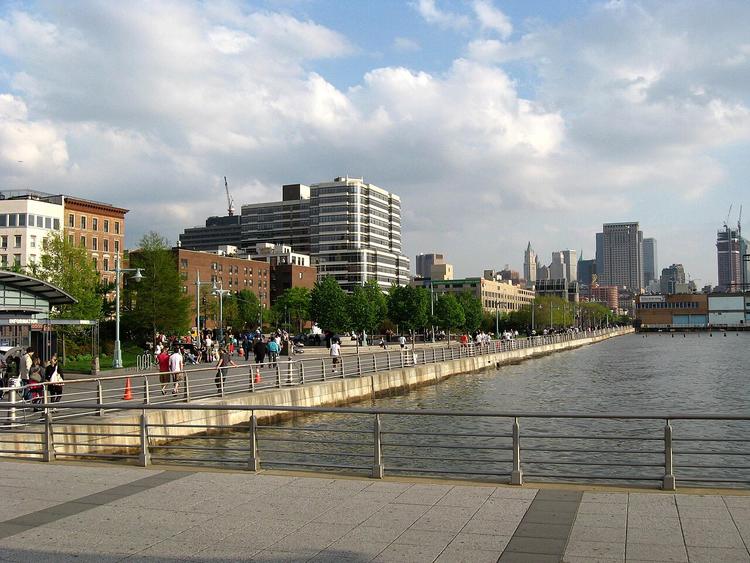
The Hudson River promenade offers a break from the dense cityscape. It's a landscaped park area with walkways, lawns, and sprawling trees where you can escape the urban noise.
During the walk, you'll see views of the water, the Statue of Liberty, and Jersey City. For active visitors, there are bike paths and sports facilities along the trail, and benches and lamps are placed along the entire route (according to Hudson River Park).
- Getting there: walk from the World Trade Center along the water.
- Cost: free entry.
World Financial Center
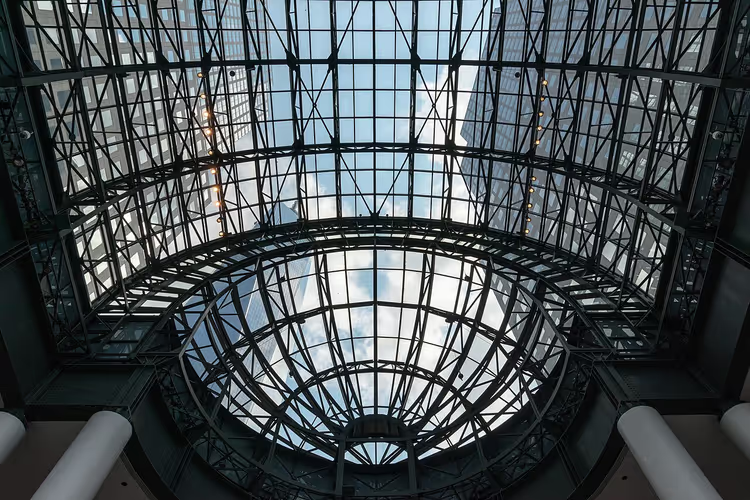 © Giorgio Galeotti · CC BYPhoto: Giorgio Galeotti, CC BY (https://creativecommons.org/licenses/by/3.0), Wikimedia Commons
The World Financial Center stands on the Hudson River and consists of three prismatic towers of varying heights. The facades are clad in dark glass and polished granite, and the protruding wall slabs evoke fortress architecture.
You can enter freely: the atrium and gallery with a greenhouse connect two towers. Rows of tropical palms grow under steel ceilings, making it the warmest spot on the route in winter.
- Getting there: a five-minute walk from the subway stations near the World Trade Center.
- Cost: free entry to the winter garden.
World Trade Center
One World Trade Center rises 541 meters and remains the tallest building in the Western Hemisphere (according to the official website). It has 104 floors, and the facade is made of glass blocks set at different angles, so the building sparkles in the sun all day.
The observation deck occupies the 100th, 101st, and 102nd floors. From a height of 382 meters, you can see the Statue of Liberty, Manhattan skyscrapers, bridges, and bays, and tickets are sold for specific times.
- Cost: buy observation deck tickets in advance; evening slots are more expensive than daytime ones.
- Tip: go up on a clear day, otherwise in cloudy weather you simply won't see the panorama.
Flatiron Building
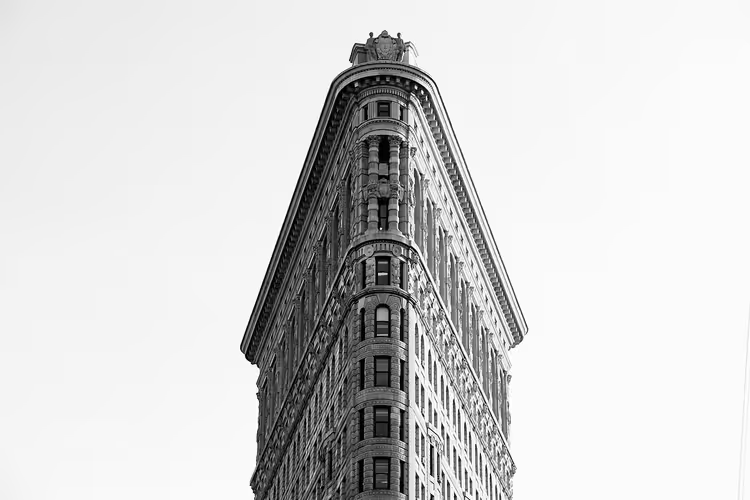
On a narrow plot between Broadway and Fifth Avenue stands a triangular building. The Flatiron Building was built in 1902, is 82 meters tall, and its structural stability is ensured by a strong steel frame (according to Wikipedia).
The facade is made of light brick and clad in terracotta tiles, over which run ornaments, bas-reliefs, and a molded cornice. Its twenty-two floors attract artists and photographers, and today the interior houses offices.
- Getting there: take the subway to stations around Madison Square; the building is visible from the intersection.
- Cost: viewing from outside is free; tourists are not allowed inside.
Madison Square Park
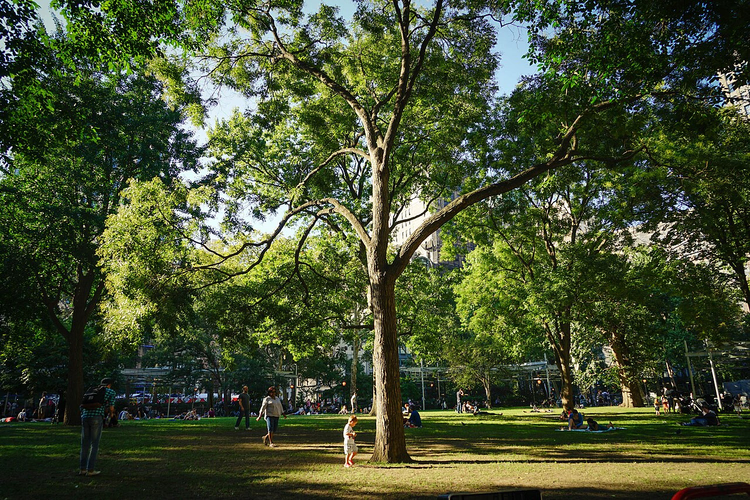
Madison Square Park spreads out next to the Flatiron Building. This green oasis among business districts is a relief after a long walk: paths wind between lawns and flower beds, and the park features monuments to US statesmen.
 © Jeffrey Zeldman · CC BYPhoto: Jeffrey Zeldman, CC BY (https://creativecommons.org/licenses/by/2.0), Wikimedia Commons
From 1876 to 1882, the arm of the Statue of Liberty holding the torch was displayed here to raise money for the pedestal (according to Madison Square Park Conservancy). Today, the park is home to Shake Shack, one of the city's most famous burger joints.
- Getting there: a five-minute walk from the Flatiron Building.
- Cost: free entry.
Pennsylvania Station
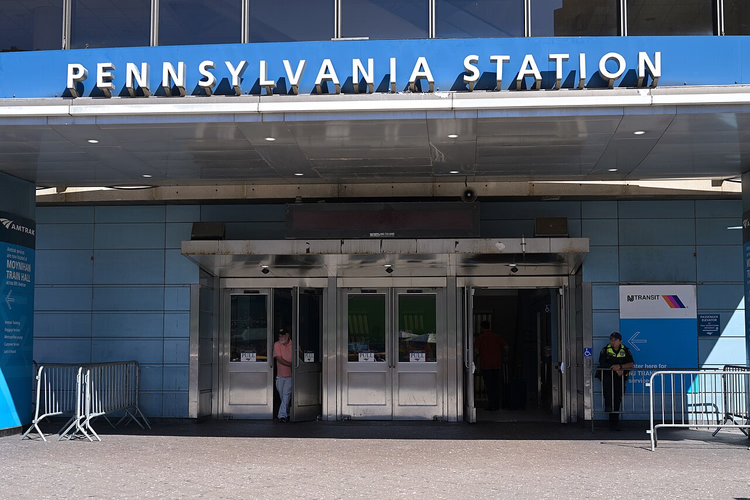
Pennsylvania Station serves intercity and commuter trains and remains one of the busiest stations in the country. Platforms, ticket offices, and waiting rooms are underground, beneath the Pennsylvania Plaza office complex.
 © 4300streetcar · CC BYPhoto: 4300streetcar, CC BY (https://creativecommons.org/licenses/by/4.0), Wikimedia Commons
The historic station building with columns, bright halls, and glass ceilings was demolished, leaving only the underground platforms. Travelers still discuss this loss, as the station was among the finest architectural monuments in the US.
- Cost: entry to the station is free; tickets are sold for specific routes.
- The catch: the above-ground part looks ordinary; you won't see beautiful interiors here.
New York public library
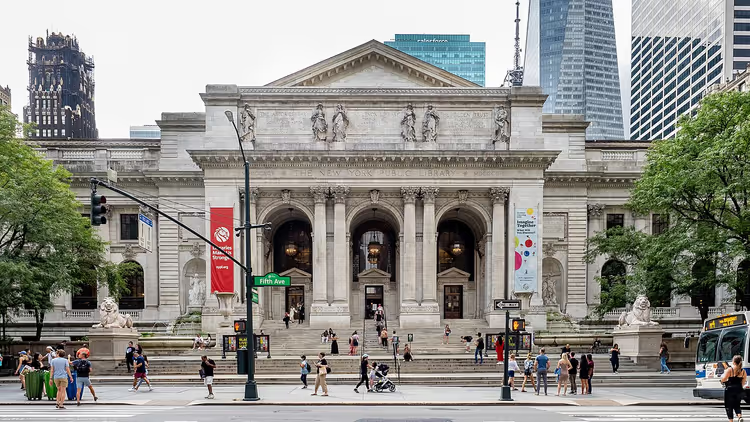 © ajay_suresh · CC BYPhoto: ajay_suresh, CC BY (https://creativecommons.org/licenses/by/2.0), Wikimedia Commons
The public library on Fifth Avenue is open to everyone, and it is worth going inside just for the interiors. The early 20th-century building is made of white marble and brick, and its facade is decorated with three arched entrances with columns and six statues.
The front steps are guarded by two marble lions, Patience and Fortitude. The main reading room, covering more than 2,000 square meters, is lined with wooden panels featuring painted decorations and murals (according to the library). At the reading tables you will see open shelves holding hundreds of thousands of volumes.
- Getting there: between 40th and 42nd Streets, next to Bryant Park.
- Cost: admission is free, and the exhibition halls are also free.
Grand Central Terminal
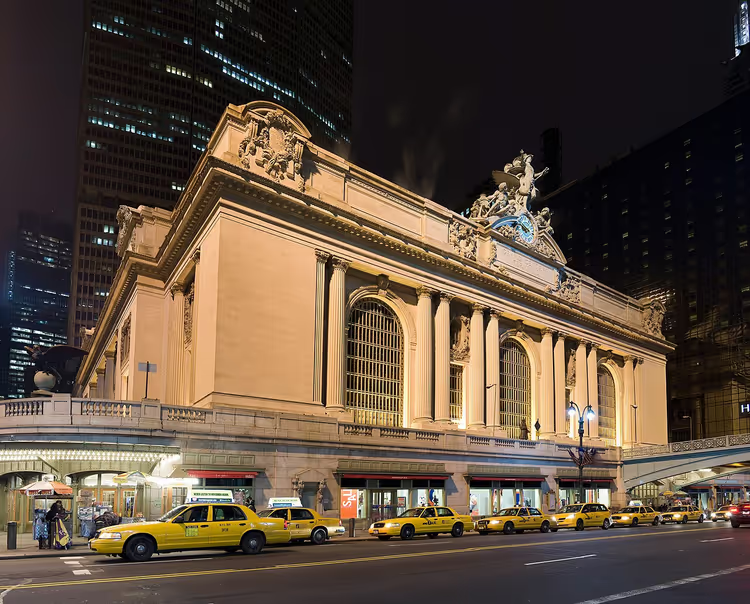 © Fcb981 ; Eric Baetscher (attribution required) · CC BY-SAPhoto: Fcb981 ; Eric Baetscher (attribution required), CC BY-SA (http://creativecommons.org/licenses/by-sa/3.0/), Wikimedia Commons
Grand Central Terminal Grand Central Terminal handles about 750,000 passengers every day and holds the world record for the number of platforms: 44 platforms and 67 tracks (according to the terminal).
Inside, you will find a vaulted ceiling with a mural of the starry sky, arched windows with grilles, and a golden clock above the information booth. The building, with its moldings and sculptures, stands among the Midtown skyscrapers and remains an early 20th-century architectural landmark.
- Getting there: Grand Central station on several subway lines.
- Cost: admission to the terminal is free.
Chrysler Building
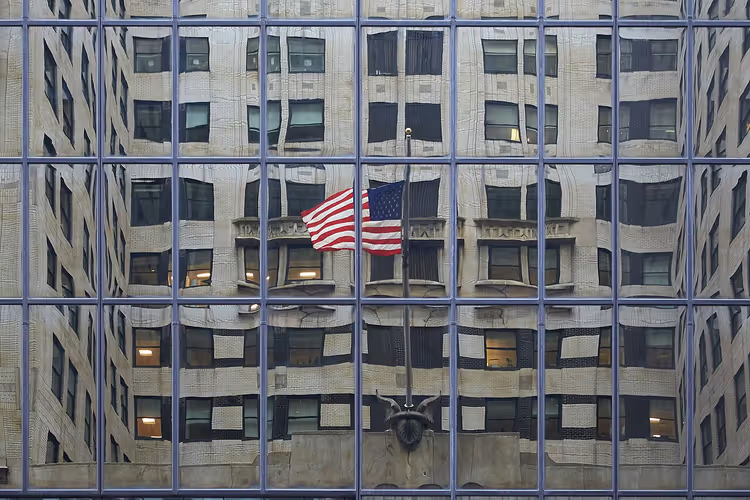 © Axel Tschentscher · CC BY-SAPhoto: Axel Tschentscher, CC BY-SA (https://creativecommons.org/licenses/by-sa/4.0), Wikimedia Commons
The Chrysler Building rose on the east side of Midtown in the early 1930s. The tower stands 320 meters tall (according to Wikipedia), and its facade is clad in light-colored masonry with narrow window openings.
At the corners you will find gargoyle sculptures and stylized metal wings. The building's signature feature is a crown of seven semicircular segments with stainless steel plates that tapers into a slender spire.
The skyscraper's interiors were finished with precious woods, but you won't see them from the street.
- Getting there: Turtle Bay neighborhood near 42nd Street, within walking distance of Grand Central Terminal.
- Cost: viewing from outside is free; only employees are allowed inside.
Columbus Circle
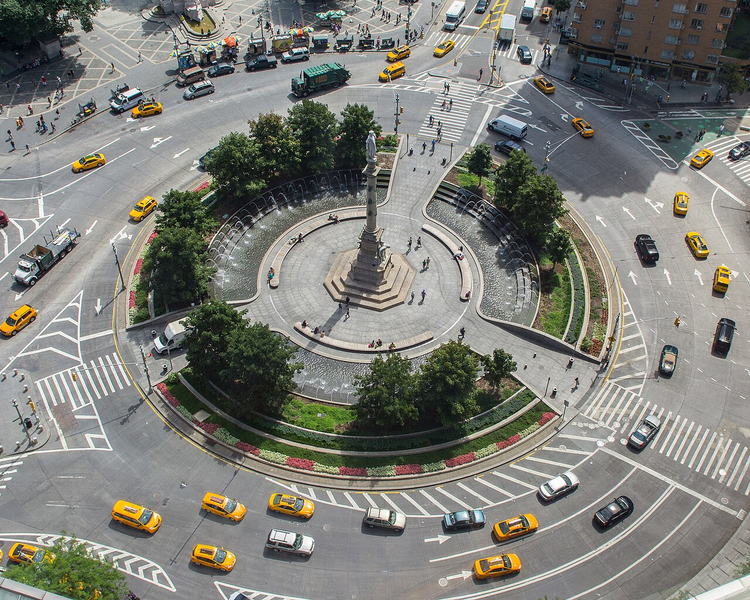 © TarHeel4793 · CC BY-SAPhoto: TarHeel4793, CC BY-SA (https://creativecommons.org/licenses/by-sa/4.0), Wikimedia Commons
Columbus Circle serves as a traffic circle connecting Broadway with the thoroughfares along Central Park. A marble monument to Christopher Columbus stands on the round island.
The figure of the explorer tops a 21-meter granite column, and the pedestal is decorated with bronze reliefs of ships (according to Wikipedia). Around the square you will see fountains, benches, and flower beds set against a backdrop of high-rise towers.
- Getting there: corner of Central Park, subway stations at Columbus Circle.
- Cost: admission is free.
Tours and tickets in New York
Guided tours, skip-the-line tickets and activities — most offers can be cancelled free of charge.
See offers on GetYourGuideThe widget loads once you give your consent.
3-Day New York itinerary on a map
All the itinerary stops are collected on one map. The order of days matches the text above, so you can open the map on your phone and follow it without any printouts.
A 3-day New York itinerary
Places on the map
- 1Statue of Liberty and Ellis Island 93-metre monument on a pedestal, with an immigration museum on the neighbouring island
- 2Battery Park Ten hectares of greenery at the southern tip of Manhattan, ferries depart from here
- 3Castle Clinton Round brick fort from the early 19th century, the city's first immigration centre
- 49/11 Memorial Two black reflecting pools where the Twin Towers stood, museum nearby, allow at least two hours
- 5Brooklyn Bridge A bridge from 1883, 1,825 metres long, a walkway and lights at dusk
- 6Wall Street and Charging Bull The city's business hub with the stock exchange building and a three-metre bronze bull
- 7Empire State Building A 1931 tower 443 metres tall, observation decks on the 86th and 102nd floors
- 8Top of the Rock Three levels of Rockefeller Center at 266 metres, with views of the Empire State Building
- 9Broadway and the Theater District A street of theatres, posters, bars and restaurants, the district takes half an hour to walk
- 10Times Square Junction of Broadway and Seventh Avenue with ad screens and neon signs
- 11Central Park A 3.4 square kilometre park with seven lakes, a zoo and Belvedere Castle
- 12Metropolitan Museum of Art North America's largest art collection, adult admission 30 dollars
- 13American Museum of Natural History Dinosaur skeletons, a life-size blue whale and the mineral hall
- 14Hudson River Greenway A promenade with paths and bike lanes, views of the water, the Statue of Liberty and Jersey City
- 15World Financial Center Three prism-shaped towers on the Hudson bank, a winter garden with tropical palms inside
- 16One World Trade Center The tallest building in the Western Hemisphere, 541 metres, observation deck on floors 100-102
- 17Flatiron Building The triangular Flatiron Building from 1902, 82 metres tall, closed to visitors inside
- 18Madison Square Park A green oasis among the business blocks, home to a Shake Shack burger stand
- 19Penn Station Intercity and commuter trains, platforms and ticket halls hidden underground
- 20New York Public Library Marble building with the lions Patience and Fortitude, painted reading room, free entry
- 21Grand Central Terminal Grand Central with 44 platforms, vaulted ceiling with a starry-sky mural
- 22Chrysler Building A 320-metre tower with gargoyles and a crown of seven arched steel segments
- 23Columbus Circle The geographic centre of Manhattan, a monument to Columbus atop a 21-metre granite column
Day | Area | Main sights | Tickets in advance |
|---|---|---|---|
Day 1 | Downtown and evening Midtown | Statue of Liberty and Ellis Island, Battery Park, 9/11 Memorial, Brooklyn Bridge, Empire State Building, Top of the Rock, Broadway, Times Square | ferry and observation decks |
Day 2 | Midtown near the park | Central Park, Metropolitan Museum of Art, American Museum of Natural History | museum tickets |
Day 3 | Downtown and Midtown | Hudson River waterfront, One World Trade Center, Flatiron Building, Madison Square, train stations, Chrysler Building | observation deck tickets |
⁉️🤔 Frequently asked questions
How much time do you need to cover the three-day route?
Sightseeing takes two full days in Downtown and Midtown, plus one more day for the museums near Central Park. The Statue of Liberty and Ellis Island take up half of the first day, each museum takes about three hours, and you leave the evening for observation decks and Broadway.
Can you walk the entire route?
You cover Downtown entirely on foot: the distance from Battery Park to the Brooklyn Bridge is short. You also explore Midtown on foot, where the library, both train stations, and the Chrysler Building are located. For the stretches between Downtown and the museums by the park, take the subway, otherwise you will lose an hour.
Do you need to buy tickets in advance?
Observation deck tickets are sold for specific time slots, so it is better to get them before you go. The ferry to the Statue of Liberty is also easier to book online. Museums, however, accept walk-up visitors too, although on weekends you risk standing in line at the entrance for forty minutes.
What to do on a rainy day?
Swap your days around. Indoors you have the Metropolitan Museum of Art, the Museum of Natural History, the public library, both train stations, and the Winter Garden at the World Financial Center with its tropical palm trees. Central Park and the Hudson River waterfront can easily be moved to another day.
Where to eat between route stops?
Shake Shack operates in Madison Square, and along Broadway and Times Square there are bars and restaurants for any budget. Near Central Park there are cafes and street food carts. Schedule lunch as a break between two museums: at a table you will rest and avoid losing time on travel.
In short: what to book
- If you have two days: keep Downtown and Midtown, and move the museums to your next visit.
- If you are traveling with kids: choose the Museum of Natural History instead of the Metropolitan Museum of Art.
- If you are visiting in high season: get ferry and observation deck tickets for specific time slots.
- If the view matters to you: go up to Top of the Rock at sunset, and visit One World Trade Center in the morning.
Look for accommodation near a subway line in Midtown, from there you can walk to half of the route stops: New York hotels on Trip.com.

A small editorial team writing guides for independent travel. We travel ourselves, but we haven’t been everywhere, so we check prices, opening hours and how to get there against official sources.