

















Paris in 3 days: what to fit in, how much it costs and when to go
Three days in Paris fly by quickly. If you don't plan the trip in advance, time gets eaten up by lines and tickets.
A Louvre ticket costs €22 for EEA residents and €32 for other visitors (as of 14.01.2026, official website). This figure is a convenient baseline for budgeting the whole trip.
Ad: this article contains affiliate links, we earn a commission if you book through them, at no extra cost to you.
Planning a trip to Paris on a budget
💡 In short:
- Book the Louvre and the Eiffel Tower in advance: tickets are valid for your selected entry time.
- Choose a hotel on a metro line outside the center: you'll reach the museums in 20-30 minutes.
- Prices and opening hours: 09/2026, verified on the official Louvre website.
The biggest expenses in Paris are accommodation and museum tickets. A hotel in the center costs noticeably more than one near the end stations of metro lines. Stay near a metro line, not near the Eiffel Tower. You'll pay less and still reach the main museums in 20-30 minutes.
A single Bus-Tram ticket for buses and trams costs €2.05, and a Métro-Train-RER ticket for the metro and RER within Paris costs €2.55 (as of 2026, Île-de-France Mobilités). Each is valid for one trip and doesn't depend on the number of zones. A multi-day pass pays off if you ride more than four times a day.
 © Benh LIEU SONG · CC BY-SAPhoto: Benh LIEU SONG, CC BY-SA (https://creativecommons.org/licenses/by-sa/4.0), Wikimedia Commons
The Navigo Easy card is sold at station vending machines and replaces paper tickets. You load trips onto it and don't pay for each one separately. Free drinking fountains are available in the city center, so you can fill your own water and skip buying bottles.
Dining at restaurants on tourist streets is expensive. Breakfast at the hotel or a croissant with coffee at a bakery will cost several times less. Go for the "formule du midi" lunch deal: a two- or three-course set menu costs less than evening dishes from the à la carte menu. If your room has a kitchen, buy groceries at the supermarket and make breakfast and dinner yourself.
Don't buy souvenirs near the Eiffel Tower or on the Champs-Élysées. Shops in residential neighborhoods and the Saint-Ouen flea market offer the same items for less. Bargaining is expected at flea markets, so don't hesitate to negotiate the price down.
Hotels on the outskirts and near metro stations outside the center cost less than central ones. Look at options near lines 1, 4, and 14: they get you to the center quickly. Find a hotel in Paris on Trip.com
Flights: direct or with connections
Paris is served by two main airports: Charles de Gaulle (CDG) and Orly (ORY). Budget airlines also fly into Beauvais, which is far from the city. Check the arrival airport before buying your ticket.
A direct flight saves you half a day but usually costs more than a connecting one. A connection lowers the price but adds several hours to your journey. Leave enough buffer time between flights, otherwise you risk missing the second leg.
Buy the ticket for the entire route at once, not as two separate bookings. If the first flight is delayed, the carrier is not obligated to rebook you on the second, separately ticketed flight. A single ticket protects you from that situation. If no direct flights are available, choose one connection at a major hub: two connections stretch out the trip and increase the risk of missed flights.
It's easier to compare options on an aggregator: find tickets on Kiwi.com. Look not only at the price but also at the total travel time including connections.
How to get from the airport to the center
From Charles de Gaulle, the RER B train, shuttles, and taxis with a fixed fare go to the center. The RER B is the cheapest, a taxi is faster, and at night a car is your best option. The fixed taxi fare means the meter won't surprise you even in traffic.
From Orly, the automated Orlyval train with a transfer to the RER B and the tram will get you there. Within the city, a Métro-Train-RER ticket works on the metro and RER, while buses and trams require a Bus-Tram ticket. An airport ticket costs more than a city trip and is purchased separately (as of 2026, Île-de-France Mobilités fare information).
Decide in advance how you'll travel with your luggage so you don't have to figure it out on the spot. With a group or with children, it's more practical to book a transfer and avoid waiting in the taxi line.
How much a 3-day trip to Paris costs
The cost of the trip breaks down into four parts: flights, accommodation, museum tickets, and food. Flights and hotels get more expensive in high season and during school holidays. Museum tickets are easiest to compare in a single table.
Site | Ticket | Closed |
|---|---|---|
Louvre | €22 for EEA residents, €32 for everyone else (website) | Tuesday |
Eiffel Tower | from €14.80, depends on how you go up (website) | none |
Versailles | Passport ticket for the whole complex (website) | Monday |
The Paris Museum Pass pays off if you visit three or more museums over three days. It covers entry and saves you time at ticket offices, but you still need a timed reservation for the Louvre.
Versailles is best saved for a separate day, because getting there from the center takes time. Disneyland also takes a full day and suits families with children. The park is large, so arrive at opening time and buy a dated ticket. You add either option in place of one museum day.
Day 1: Palais Garnier, Place Vendôme, and the Seine
Palais Garnier
The Palais Garnier stands at the end of Avenue de l'Opéra. You can take in the facade with its columns and statues even without attending a performance. Inside, entry is by timed ticket.
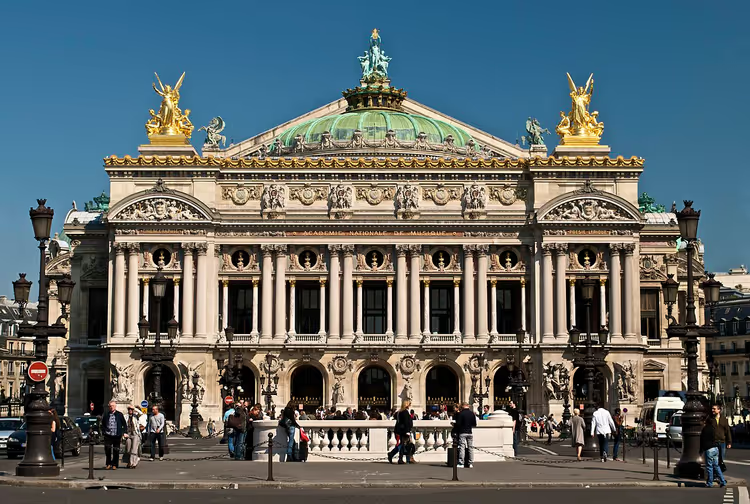 © Peter Rivera · CC BYPhoto: Peter Rivera, CC BY (https://creativecommons.org/licenses/by/2.0), Wikimedia Commons
Place Vendôme
From the Opera to Place Vendôme is about a 10-minute walk (on the map). The square is home to jewelry boutiques and the Ritz hotel, where Coco Chanel lived. Take a look at the shop windows and continue on toward the garden.
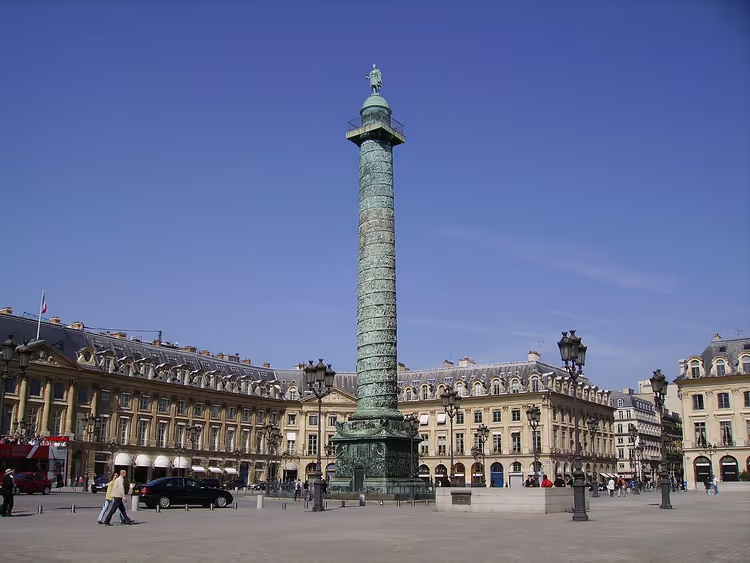 © Yair Haklai · CC BY-SAPhoto: Yair Haklai, CC BY-SA (https://creativecommons.org/licenses/by-sa/3.0), Wikimedia Commons
Tuileries Garden
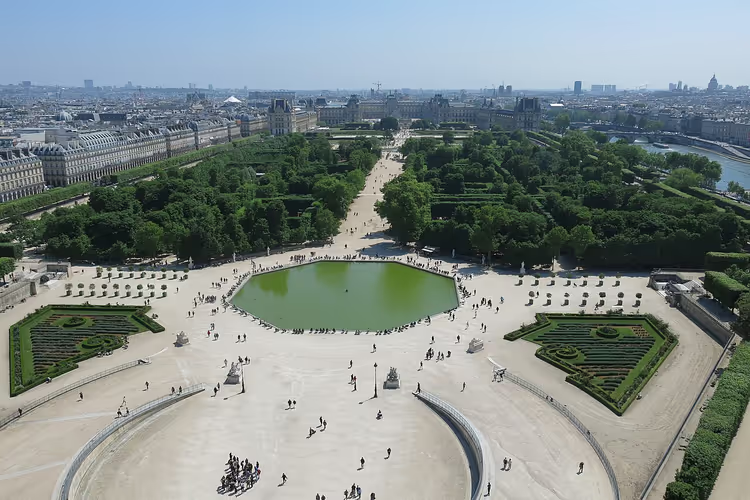
The Tuileries Garden stretches from Place de la Concorde to the Louvre, about a 15-minute walk (on the map). Entry is free, and it is a good place to escape the city noise. Sculptures stand among the flower beds, and the paths are easy to walk with children.
Evening Seine cruise
In the evening, hop on a river shuttle or take a one-hour cruise. From the water you will see the Eiffel Tower and the Louvre lit up. Get a spot on the open deck: inside the cabin you will miss the best views. Evening Seine cruise on GetYourGuide
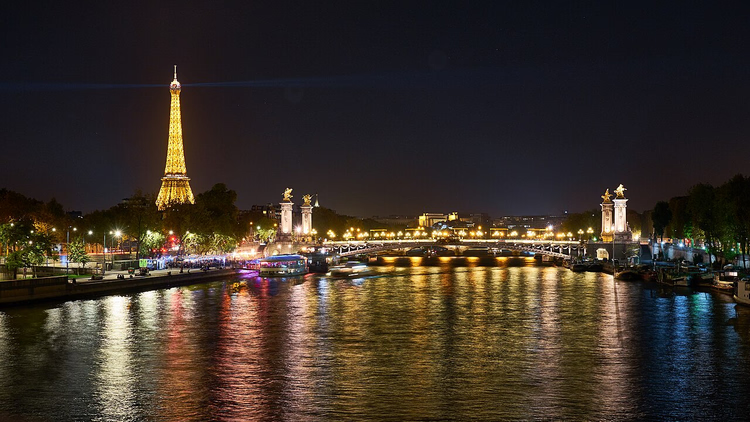 © Radek Kucharski from Warsaw, Poland · CC BYPhoto: Radek Kucharski from Warsaw, Poland, CC BY (https://creativecommons.org/licenses/by/2.0), Wikimedia Commons
Day 2: Louvre, Conciergerie, Notre-Dame, and the Marais
Louvre
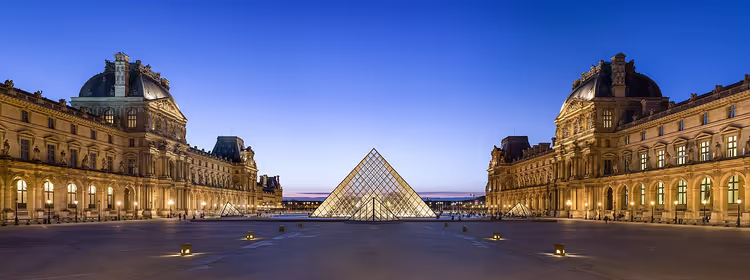
The Louvre is open from 9:00 to 18:00 on Monday, Thursday, Saturday, and Sunday, and on Wednesday and Friday you can stay until 21:00 (as of 14.01.2026, Louvre tickets and opening hours). Last entry is one hour before closing, Tuesday is closed. Children under 18 enter free, so a family pays only for the adults.
 © Benh LIEU SONG ( Flickr ) · CC BY-SAPhoto: Benh LIEU SONG ( Flickr ), CC BY-SA (https://creativecommons.org/licenses/by-sa/4.0), Wikimedia Commons
On the first Friday evening of the month, admission is free for everyone after 6:00 PM, except in July and August. Come at opening time or for the evening slot: at midday the galleries are at their busiest. Timed-entry Louvre ticket
Conciergerie
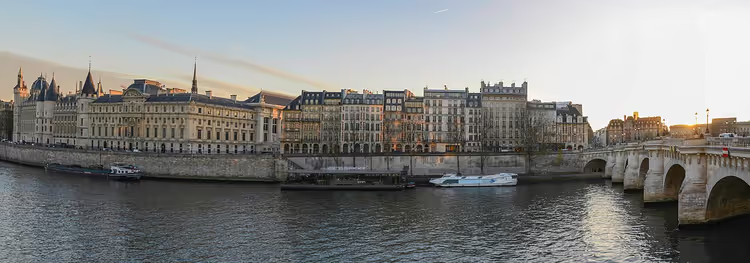
The Conciergerie stands on the Île de la Cité, next to the cathedral. It first served as a royal residence and later became a prison. Marie Antoinette was held here before her execution.
 © Jorge Láscar from Melbourne, Australia · CC BYPhoto: Jorge Láscar from Melbourne, Australia, CC BY (https://creativecommons.org/licenses/by/2.0), Wikimedia Commons
Notre-Dame Cathedral
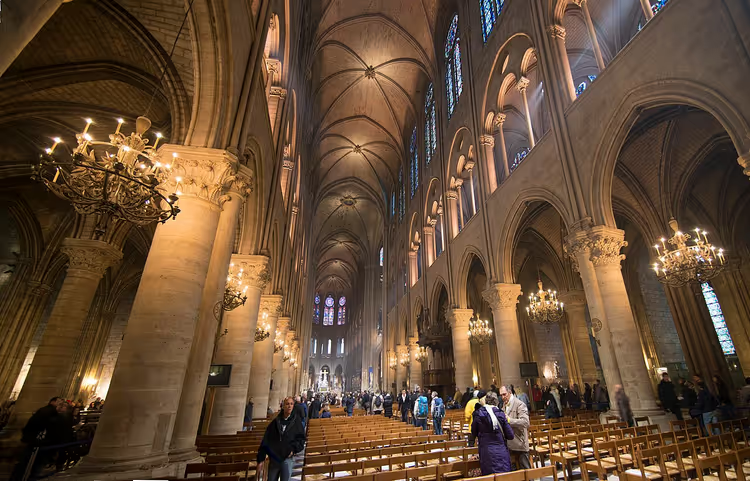
Notre-Dame is open after restoration, and admission is free. Mornings are less crowded, so come at opening time. Inside you can take in the stained glass and the nave, and the organ can be heard along the full length of the nave.
 © Jorge Láscar from Melbourne, Australia · CC BYPhoto: Jorge Láscar from Melbourne, Australia, CC BY (https://creativecommons.org/licenses/by/2.0), Wikimedia Commons
The Marais
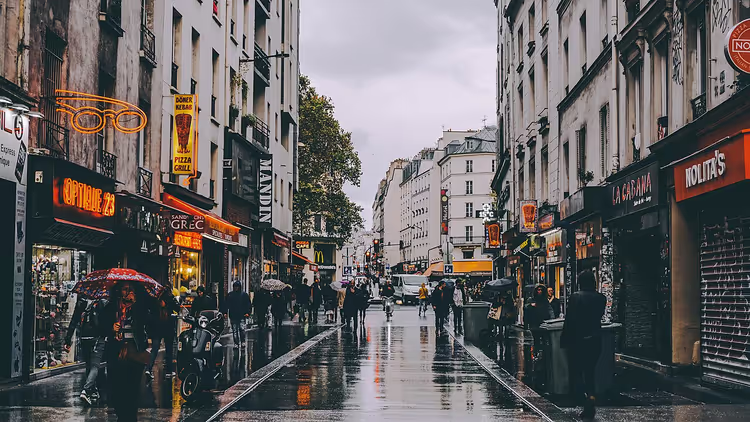
The Marais has kept its narrow streets and the oldest square in Paris. On Place des Vosges stand 17th-century houses with arcades. Nearby, small cafes serve lunch without tourist prices.
Day 3: Les Invalides, the Panthéon, the Eiffel Tower, and Montmartre
Les Invalides
Les Invalides is home to Napoleon's tomb and the Musée de l'Armée. The complex was founded in the 17th century as a home for veterans. Exploring the museum takes several hours, so pick the main halls.
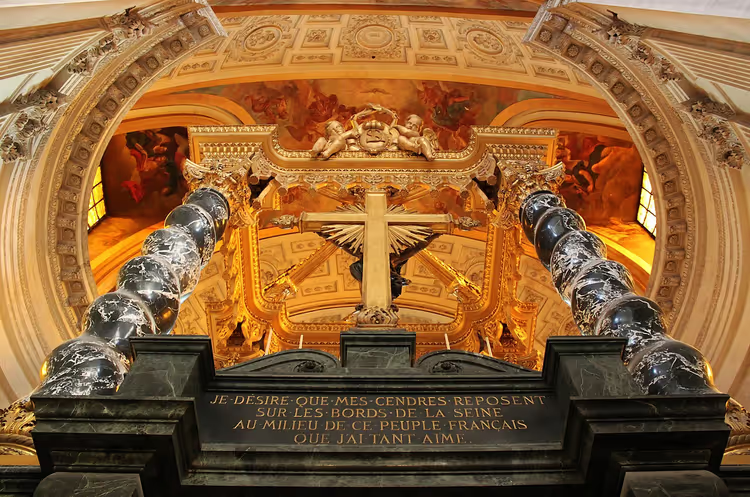 © NonOmnisMoriar · CC BY-SAPhoto: NonOmnisMoriar, CC BY-SA (https://creativecommons.org/licenses/by-sa/3.0), Wikimedia Commons
The Panthéon
The Panthéon serves as the burial place of great figures of France. Voltaire, Rousseau, Victor Hugo, and Marie Curie are buried here. You'll see the dome from the square, and a long staircase leads inside.
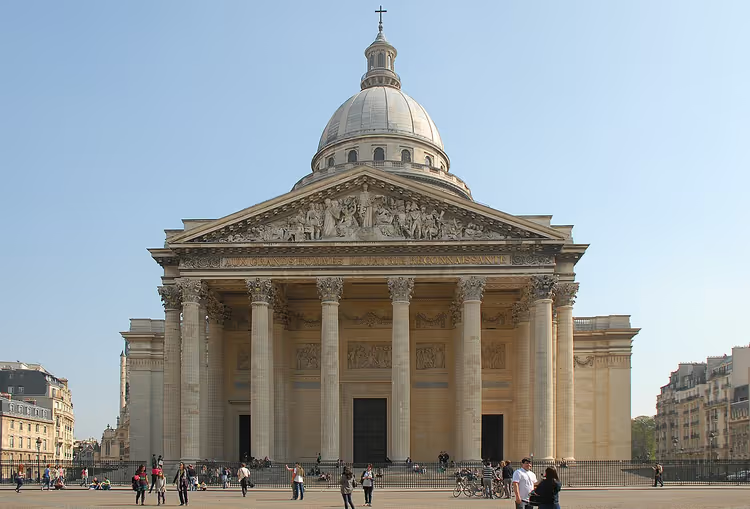 © Camille Gévaudan · CC BY-SAPhoto: Camille Gévaudan, CC BY-SA (https://creativecommons.org/licenses/by-sa/3.0), Wikimedia Commons
The Eiffel Tower
You can reach the top of the Eiffel Tower by stairs or elevator. Tickets in 2026 start at €14.80 and depend on how you go up (as of 2026, official website). Get a ticket to the second floor: that's enough for the panorama, and at the summit clouds get in the way of the view.
 © Yann Caradec from Paris, France · CC BY-SAPhoto: Yann Caradec from Paris, France, CC BY-SA (https://creativecommons.org/licenses/by-sa/2.0), Wikimedia Commons
Skip-the-line Eiffel Tower tickets
Montmartre
In the evening, head up to Montmartre and the Sacré-Cœur Basilica. From here you'll see the whole city, and street musicians play on the steps. Come at sunset, but keep your bags close: the stairs get crowded.
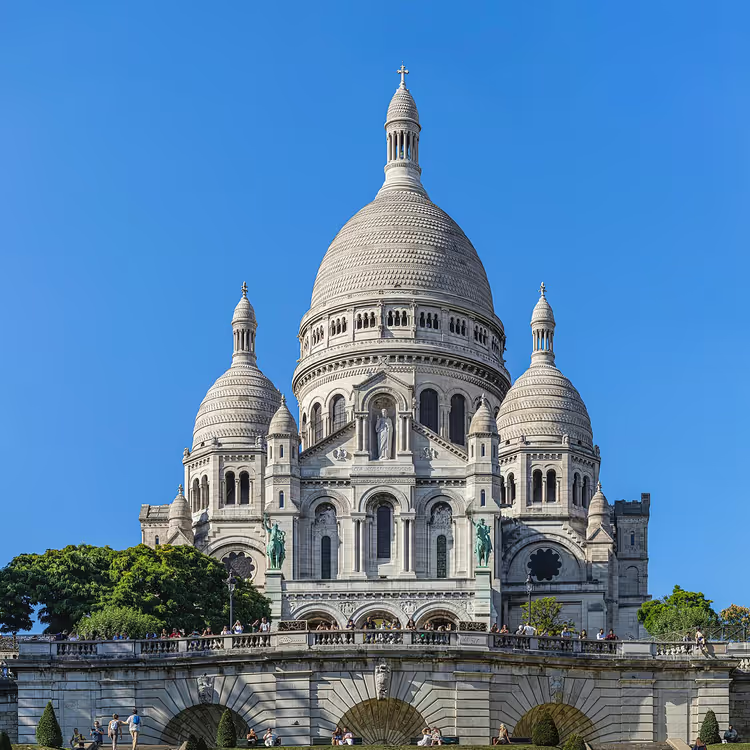 © Terragio67 · CC BY-SAPhoto: Terragio67, CC BY-SA (https://creativecommons.org/licenses/by-sa/4.0), Wikimedia Commons
Tours and tickets in Paris
Guided tours, skip-the-line tickets and activities — most offers can be cancelled free of charge.
See offers on GetYourGuideThe widget loads once you give your consent.
When to visit Paris
Summer and the New Year holidays are high season in Paris: hotels get more expensive and lines get longer. November and February have the fewest tourists. April, May, September, and October are good for walking around: the weather is mild and there are fewer people.
If you want to catch the sales, plan your trip for January or late June. The winter and summer soldes run on fixed dates, so check the calendar in advance. In autumn Paris often gets rain, so bring a jacket and an umbrella.
Useful tips for a trip to Paris
Get to museums at opening time: lines at the Louvre and Notre-Dame grow by midday. Wear comfortable shoes from the start: the pavements in the center are old and uneven.
Move your dinners to neighborhoods away from the tourist streets. Get your coffee at a bakery, not on the square by the Eiffel Tower.
Paris on the map
Below is a map of central Paris with the route points marked. Open it in a separate tab and plan your walking route between museums in advance.
⁉️🤔 Frequently asked questions
How many days do you need to see Paris?
Three days is enough for the main sights. In that time you'll see the Louvre, Notre-Dame, the Eiffel Tower, and a couple of neighborhoods. If you want to add Versailles or Disneyland, plan a fourth day. Lines and getting around eat up a lot of time, so don't rush.
Is the Paris Museum Pass worth buying?
Get it if you'll visit three or more museums in three days. You still need a timed reservation at the Louvre even with the Pass.
When is the best time to visit Paris for the first time?
A first trip is best planned for April, May, September, or October. In these months the weather is mild and lines are shorter than in summer. November and February are the quietest but rainy. In summer and during the New Year holidays, be prepared for high prices.
How to get from the airport to central Paris?
From Charles de Gaulle, the RER B train, a fixed-rate taxi, or a shuttle will get you into the city. From Orly, the easiest option is the automated Orlyval train with a transfer to RER B. An airport ticket costs more than a regular city ticket and is purchased separately. At night or with a lot of luggage, take a car.
How much does a 3-day trip to Paris cost?
The total depends on the season, your departure city, and your hotel class. Museum tickets start at €22 for the Louvre and €14.80 for the Eiffel Tower. The cheapest option is to stay outside the center and have lunch on a set menu. Calculate your exact budget based on your dates.
In short: what to book
If you only have three days, sort out three things in advance: accommodation, museum tickets, and flights. That way, in Paris you'll be walking around instead of standing in lines.
- If you're traveling with family: book a hotel near the metro outside the center and Louvre tickets and Eiffel Tower tickets with a time slot.
- If you love museums: get the Paris Museum Pass and set aside one day for Versailles.
- If it's your first time flying: compare flights in advance and book a hotel near line 1 or 4.
check hotel prices in Paris and Paris museum pass on GetYourGuide. Flights are easiest to compare on Kiwi.com.

A small editorial team writing guides for independent travel. We travel ourselves, but we haven’t been everywhere, so we check prices, opening hours and how to get there against official sources.