
















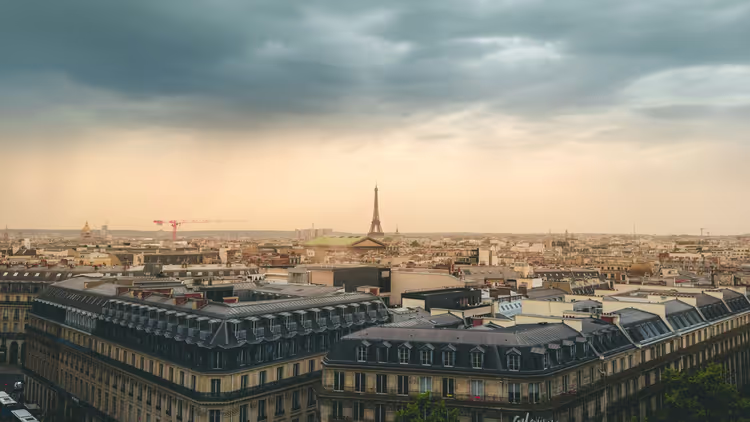
Paris in one day on foot: eight stops from the cathedral to the Eiffel Tower
Paris can be walked in one day. The route from Notre-Dame Cathedral to the Eiffel Tower is about seven kilometers. Eight stops: the cathedral, the Seine embankment, the Sorbonne, the Luxembourg Garden, the Montparnasse Tower, the Champ de Mars, the Eiffel Tower, and the Trocadéro.
Head out by 9:00. Notre-Dame Cathedral reopened after the 2019 fire: restoration was completed and the doors opened in December 2024 (as of the cathedral's official website, 09/2026). Over the course of a day you will walk through the Île de la Cité, the Latin Quarter, and three gardens, finishing at the foot of the Eiffel Tower.
The route suits those who want to see Paris without bus tours. Bring comfortable shoes, water, and extra time for lines in summer. Almost the entire route goes in one direction. Only from the Pont des Arts to the Sorbonne will you backtrack slightly.
Start from the Cité metro station by the cathedral. The finish is at the Trocadéro, next to the Trocadéro metro station: from there you can get back to your hotel in a few stops. If you run out of energy earlier, there is a metro entrance on any segment.
Ad: this article contains affiliate links: we earn a commission if you book through them, at no extra cost to you.
Notre-Dame Cathedral
💡 In short:
- Start from the Île de la Cité: by 9:00 the line at the entrance is shorter.
- Keep to one direction, from the cathedral to the tower, so you don't have to backtrack.
- Prices and opening hours: 09/2026, verified on the cathedral's official website.
The Gothic cathedral has stood on the Île de la Cité since the Middle Ages. Inside, the organ sounds and sunlight passes through the rose stained-glass windows. It houses the main relics of Christianity, including the Crown of Thorns. Entry is free (as of 09/2026, official website), but bags are checked at the entrance.
 © Dietmar Rabich · CC BY-SAPhoto: Dietmar Rabich, CC BY-SA (https://creativecommons.org/licenses/by-sa/4.0), Wikimedia Commons
Pause at the western facade: two towers, three portals, and the gallery of kings above them. If you plan to visit more museums during your trip, get a Paris museum pass for 2, 4, or 6 days. It pays for itself from the third museum onward.
At peak hours the line at the entrance stretches along the square. Take in the three rose windows, the western, northern, and southern ones, which survived the fire. A separate climb up a spiral staircase leads to the cathedral towers; book a ticket for it in advance on the cathedral's website.
Seine embankment
 © Savani1987 · CC BY-SAPhoto: Savani1987, CC BY-SA (https://creativecommons.org/licenses/by-sa/3.0), Wikimedia Commons
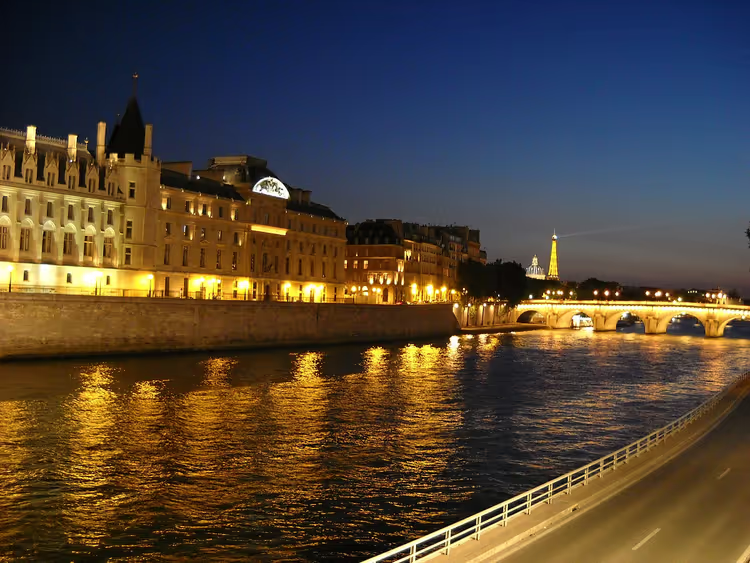
From the cathedral, walk along the Seine on the embankment. Here you will see the green boxes of the bouquinistes: postcards, old books, pins. In summer, artists and street musicians sit on the parapets. This is the easiest stretch of the route, you barely get tired.
Along the way you will pass the Pont Neuf, the oldest bridge in Paris, and the pedestrian Pont des Arts. The bridges offer the best view of the Île de la Cité. If you get tired, go down to the lower embankment: it is quieter there and there are almost no cars.
In the evening, the same Seine is shown from the water. Take an evening one-hour Seine cruise around sunset, when the bridge lights come on.
Sorbonne
 © Libriothecaire · CC BY-SAPhoto: Libriothecaire, CC BY-SA (https://creativecommons.org/licenses/by-sa/3.0), Wikimedia Commons
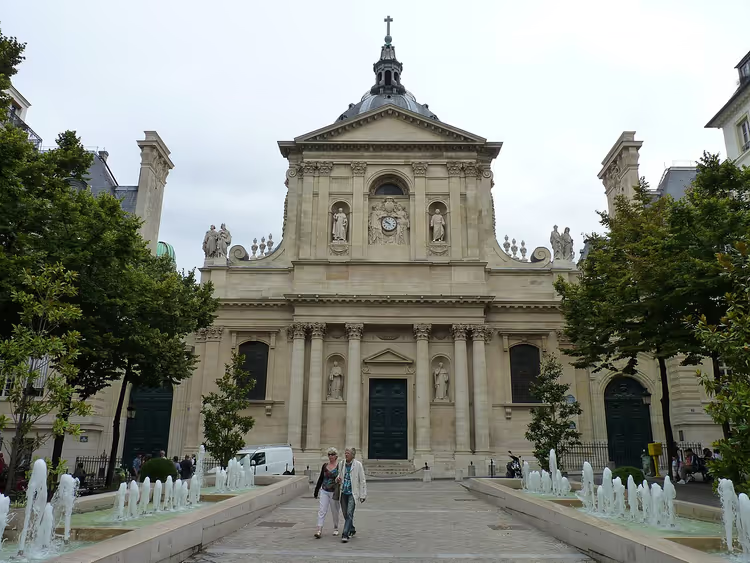
The Sorbonne opened as a theological school in the Middle Ages. Lavoisier, Pasteur, and the Curies studied within its walls. The square in front of the entrance is filled with students holding coffee and notes. Tourists are not allowed inside the university, but the chapel and the inner courtyard are visible from the street. The Latin Quarter begins nearby: students eat there, and prices are lower than near the embankment.
Luxembourg Gardens
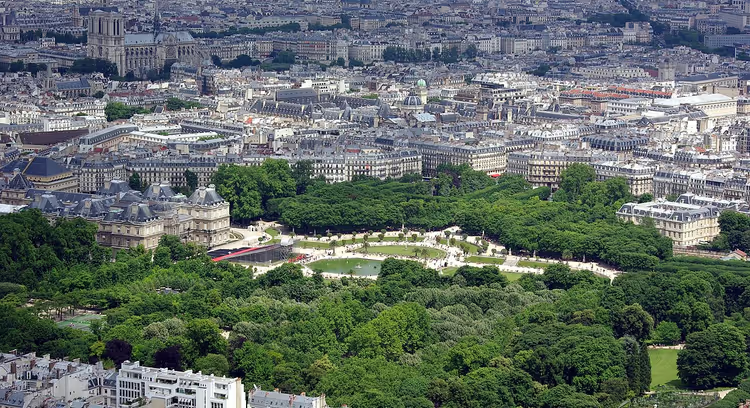
Parisians themselves love the Luxembourg Gardens. Retirees stroll here, teenagers jog, and children sail model boats in the pond. In the center stands the Luxembourg Palace, where the Senate of France meets, and next to it is a basin with stone statues of the queens of France and famous women. The garden was laid out by Queen Marie de' Medici and was later redesigned as a French formal garden with straight alleys and the Medici Fountain. Admission is free, as are the chairs by the pond, so you can sit wherever you like.
Tour Montparnasse
 © Yann Caradec from Paris, France · CC BY-SAPhoto: Yann Caradec from Paris, France, CC BY-SA (https://creativecommons.org/licenses/by-sa/2.0), Wikimedia Commons
The Tour Montparnasse was built in 1973 and is 210 meters tall. The observation deck on the 56th floor has been closed since March 31, 2026 for several years: the facade and interiors are being renovated (according to the official website, 09/2026). Before the renovation, the rooftop terrace was considered one of the best viewpoints in Paris. So you will get your panoramic view of the city later, from the Eiffel Tower. At the foot of the tower, on Place Montparnasse, there are cafes and shops where you can rest before the push to the Champ de Mars.
Champ de Mars
At the foot of the Eiffel Tower begins a large park, the Champ de Mars. There are lawns, wide alleys, and running paths here. People lie on the grass, have picnics, and play with their children. In summer, people play pétanque and soccer on the lawns, and it gets lively on weekends. Sit on the lawn facing the tower: the best shot is from below, right at the base. To the south, the park ends at the École Militaire, which offers another view of the tower.
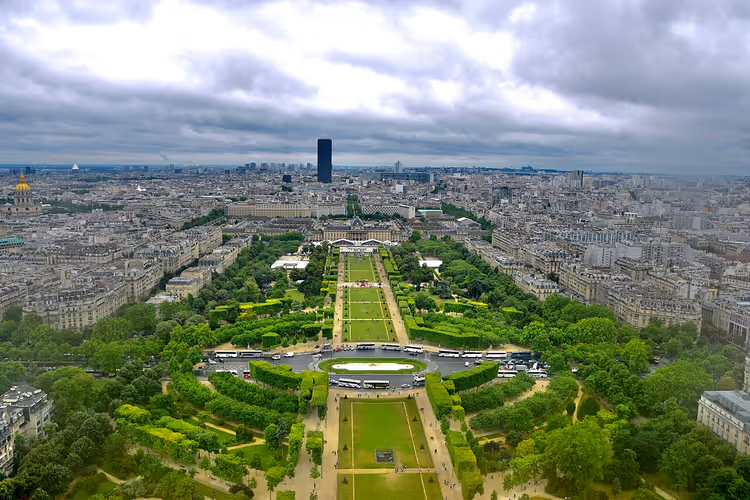 © Ank Kumar · CC BY-SAPhoto: Ank Kumar, CC BY-SA (https://creativecommons.org/licenses/by-sa/4.0), Wikimedia Commons
Eiffel Tower
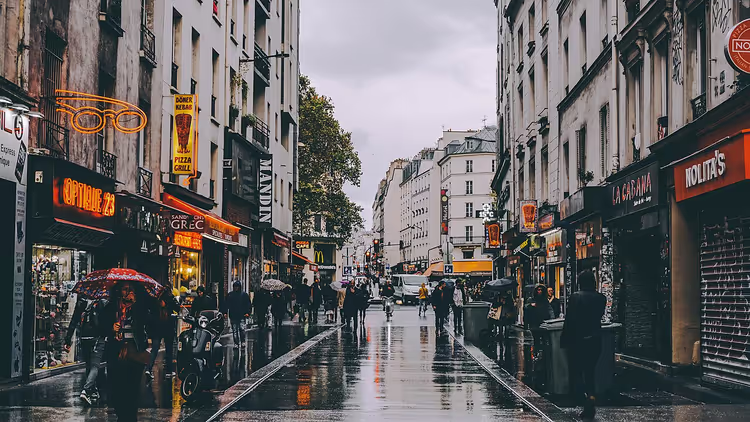
The Eiffel Tower was built for the 1889 World's Fair and is 330 meters tall (according to the official website, 09/2026). Tickets are sold for the first, second, and third levels. In summer, the line at the entrance is long, so book a time slot online: a ticket to the second floor of the Eiffel Tower lets you skip the line. At night, the tower is illuminated, and at the beginning of every hour it sparkles for a few minutes. From the Champ de Mars, this light show is best seen.
Trocadéro
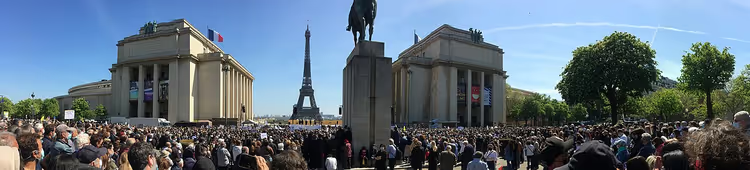 © Olevy · CC BY-SAPhoto: Olevy, CC BY-SA (https://creativecommons.org/licenses/by-sa/4.0), Wikimedia Commons
Place du Trocadéro sits across the Seine from the Eiffel Tower. The hill offers a postcard view: the cascade of fountains, the tower, and the Champ de Mars behind it. The Palais de Chaillot, with its museums and theater, is here too. During the day the fountains are crowded, and at sunset there are even more people. Come at sunset to close out the day with the best shot.
Tours and tickets in Paris
Guided tours, skip-the-line tickets and activities — most offers can be cancelled free of charge.
See offers on GetYourGuideThe widget loads once you give your consent.
⁉️🤔 Frequently asked questions
How long does the route take?
The entire walk from Notre-Dame Cathedral to Trocadéro is about seven kilometers and takes six to seven hours with stops. With lunch and going up the Eiffel Tower, you will fit it into daylight hours. Allow time for lines at the cathedral and the tower; in summer that is the main time drain.
Can you go up the Montparnasse Tower right now?
No, the observation deck is closed for renovation. You will see the tower itself along the way, but for a panorama of Paris, go up the Eiffel Tower. No exact reopening date has been announced.
Do I need to buy tickets in advance?
In summer the lines are long, so book time slots online in advance, especially for the Eiffel Tower. Entry to the cathedral is free, and in the morning you get through faster. A museum pass pays off if you plan to visit at least three museums during your trip. A Seine cruise is also cheaper to book in advance.
Where should I have lunch along the route?
The cheapest option is the Latin Quarter: it has student cafes and street pastries. Prices are higher near the Seine embankment. Grab a sandwich and sit in the Luxembourg Gardens or on the Champ de Mars, where there are plenty of free chairs and lawns. For dinner, book a table in advance.
Should I go on my own or take a tour?
This route is easy to do on your own: it runs through the center. A tour helps if you want skip-the-line tickets and a guide's commentary on the spot. For a first visit, a walk and an audio guide on your phone are enough. Take a group tour only for a specific site.
One-day Paris route on the map
What to see in Paris in one day
Places on the map
- 1Notre-Dame de Paris Gothic cathedral on the Île de la Cité, free entry
- 2Seine Embankment Booksellers, Pont Neuf and Pont des Arts on the way to the Sorbonne
- 3Sorbonne Medieval theological school, next to the Latin Quarter
- 4Luxembourg Gardens Park with the Senate Palace and the Medici Fountain
- 5Montparnasse Tower 210 metres tall, observation deck closed for renovation from 2026
- 6Champ de Mars Park at the foot of the Eiffel Tower, lawns and picnics
- 7Eiffel Tower Built for the 1889 exhibition, 330 metres tall
- 8Trocadéro Postcard view of the tower and Champ de Mars across the Seine
In short: what to book
The route is realistic to complete in a day if you start in the morning and keep up the pace. The main thing is to book in advance: Eiffel Tower time slots sell out quickly.
If you want skip-the-line tickets and a guide's commentary: take a Paris sightseeing tour.
If you are looking for a place to stay in the center: check out Paris hotels on Trip.com.
Paris gives back more when you do not rush. Start at the cathedral, finish at the tower, and the city will open up on its own.

A small editorial team writing guides for independent travel. We travel ourselves, but we haven’t been everywhere, so we check prices, opening hours and how to get there against official sources.