
















What to see in Paris: 30 main places with tickets and opening hours
Paris looks compact only on a map. In reality, between the Eiffel Tower, the Louvre, and Versailles you lose half a day at each stop, and the ticket line eats up the whole morning. We put together 30 places that most often end up on a first-trip itinerary and organized them by arrondissement, opening hours, and how to get there. That way you can see right away what you can fit into three days and what is better left for a second trip.
Most sights are in the center, within a couple of kilometers of each other, and they are easy to combine into walking blocks. Versailles and Disneyland are outside the old city and require a separate day. For the most popular museums, it is recommended to book a timed entry ticket: otherwise you risk standing in line for over an hour.
Ad: this article contains affiliate links, we earn a commission if you book through them, at no extra cost to you.
1. Arc de Triomphe
💡 In short:
- The main symbols of Paris: the Arc de Triomphe, Notre-Dame, the Eiffel Tower, and Montmartre.
- Museums and tickets with online booking: the Louvre, Orsay, Rodin, the Panthéon, Versailles.
- In the center you can cover several sights in a day; Versailles and Disneyland require a separate trip.
- Prices and opening hours: as of 09/2026, verified on the official Louvre website.
 © ZeusUpsistos · CC BY-SAPhoto: ZeusUpsistos, CC BY-SA (https://creativecommons.org/licenses/by-sa/4.0), Wikimedia Commons
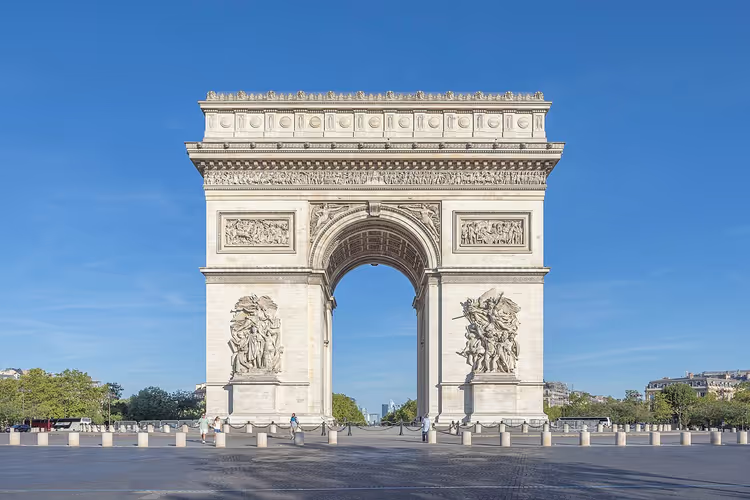
The Arc de Triomphe stands in the center of Place Charles de Gaulle, where twelve avenues converge. Napoleon laid the first stone on his birthday, but he never saw the finished monument: construction dragged on for decades.
Key pages of French history are tied to the arch. In December 1840, the coffin with Napoleon's body, brought from the island of Saint Helena, was carried under its vaults. In 1885, Parisians said farewell to the writer Victor Hugo here. Twice a year, on May 10 and August 1, at sunset the sun's disk aligns exactly in the arch's opening.
A spiral staircase leads up to the observation deck. A ticket to the roof costs in the low double digits, with a reduced price for teenagers. A weekday morning means shorter lines; by sunset there are noticeably more people.
- How to get there: metro Charles de Gaulle - Étoile, lines 1, 2, and 6, exit directly onto the square.
- Observation deck: access to the roof by ticket, preferably with a timed slot.
- Who it's for: those who want one panoramic view of all twelve avenues radiating from the square.
2. Notre-Dame Cathedral
 © Jorge Láscar from Melbourne, Australia · CC BYPhoto: Jorge Láscar from Melbourne, Australia, CC BY (https://creativecommons.org/licenses/by/2.0), Wikimedia Commons
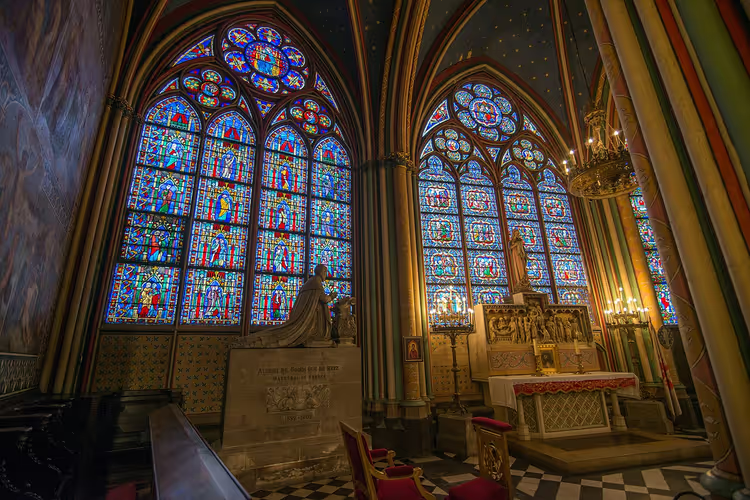
The cathedral on the Île de la Cité is considered the heart of Paris and the main landmark on Parvis Notre-Dame. The square in front of the facade is always crowded: street musicians, jugglers, and artists draw a crowd. The building itself is older than most of its neighbors; its Gothic appearance took shape over centuries.
During the French Revolution, the cathedral suffered heavy damage: statues were torn down, bells were sent to be melted down, and the altar was desecrated. Interest in the monument was revived by Victor Hugo's 1831 novel, after which a royal decree ordered its restoration. The restoration was led by the architect Eugène Viollet-le-Duc, who returned the cathedral to its original appearance.
After the 2019 fire, the cathedral was closed for a large-scale restoration and has since reopened to visitors. Admission is free, but at peak hours you are advised to book a free timed slot on the official website to avoid standing in a long line.
- How to get there: metro Cité (line 4) or RER B, Saint-Michel - Notre-Dame station.
- Cost: admission is free; book your visiting slot in advance.
- The catch: the square and the entrance are almost always packed with tourists.
3. Eiffel Tower
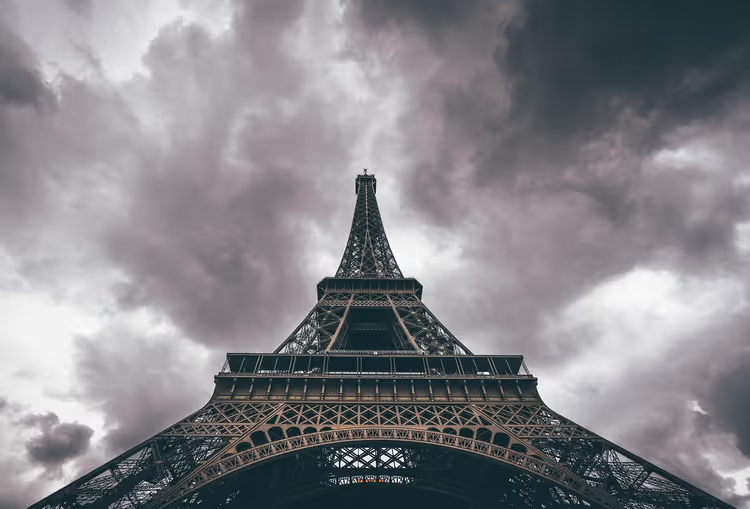
The Eiffel Tower was built for the 1889 World's Fair, held to mark the centennial of the French Revolution. Gustave Eiffel assembled the metal structure in about two years. At the time, it was the tallest structure in the world.
 © Yann Caradec from Paris, France · CC BY-SAPhoto: Yann Caradec from Paris, France, CC BY-SA (https://creativecommons.org/licenses/by-sa/2.0), Wikimedia Commons
The public did not accept the project right away. Prominent cultural figures spoke out against it, including Guy de Maupassant and Alexandre Dumas fils, who considered the industrial tower alien to the old city. Over time it became the main symbol of France, and Eiffel had to spend a long time proving its technical value.
The structure withstands wind and temperature swings with almost no sway. Elevator tickets are sold with a timed slot, and in high season without a booking you risk standing at the entrance for over an hour. Eiffel Tower tickets with access to the 2nd floor
- How to get there: metro Bir-Hakeim (line 6) or RER C, Champ de Mars - Tour Eiffel station.
- Cost: ticket to the second floor; access to the Champ de Mars is free.
- Who it's for: those who go up for the panorama; in the evening the tower lights up.
4. Montmartre
 © John Martinez Pavliga from San Pablo, USA · CC BYPhoto: John Martinez Pavliga from San Pablo, USA, CC BY (https://creativecommons.org/licenses/by/2.0), Wikimedia Commons
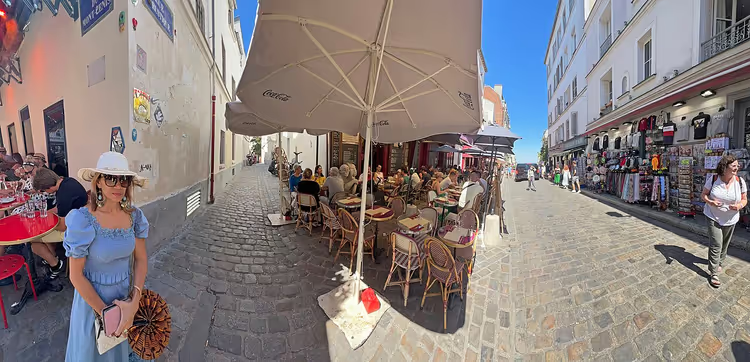
Montmartre has preserved the atmosphere of old Paris with its windmills and artists' studios. Here stands the Moulin de la Galette, painted by Renoir, Vincent van Gogh, and Pablo Picasso. Nearby there is a monument to the writer Marcel Aymé: according to local belief, touching his left hand makes wishes come true.
The bohemian hill was home to the Au Lapin Agile cabaret, frequented by Paul Verlaine, Camille Pissarro, and Amedeo Modigliani. On Place Blanche stands the Moulin Rouge variety theater, where the famous La Goulue performed in the late 19th century. A little to the side lies the Montmartre Cemetery with the graves of Émile Zola, Stendhal, Alexandre Dumas fils, and Hector Berlioz.
Walk up to the Sacré-Cœur Basilica by the stairs rather than the funicular if you want to see the streets with studios and cafés. A weekend morning here is quieter; by midday you will feel crowded on Place du Tertre.
- How to get there: metro Anvers (line 2) or Lamarck - Caulaincourt (line 12).
- Cost: walking the streets is free; separate tickets are needed only for museums.
- Who it's for: those who want to see Paris without the grand facades.
5. Palais Garnier
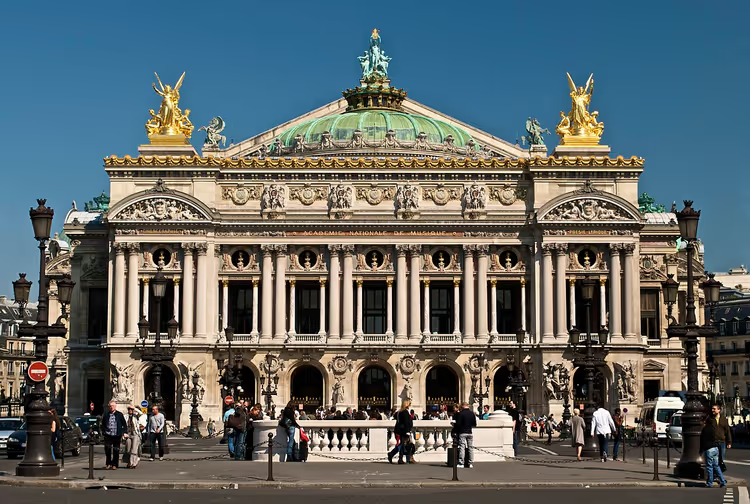 © Peter Rivera · CC BYPhoto: Peter Rivera, CC BY (https://creativecommons.org/licenses/by/2.0), Wikimedia Commons
The Palais Garnier is considered the center of French theater life. The first theater on this site opened back in 1669, and the current building was designed by Charles Garnier and opened in 1875. It stands next to the Café de la Paix, at the end of Avenue de l'Opéra.
There are two ways to get inside. During the day, guided tours cover the grand staircase, the foyers, and the auditorium with Marc Chagall's ceiling. In the evening, tickets are sold for opera or ballet performances, and prices start in the triple digits, so you are better off planning your visit several weeks ahead.
- How to get there: metro Opéra, lines 3, 7, and 8, or RER A, Auber station.
- Cost: a daytime tour ticket costs within the first ten euros; check hours on the official website.
- The catch: during rehearsals, some rooms are closed to visitors.
6. Les Invalides
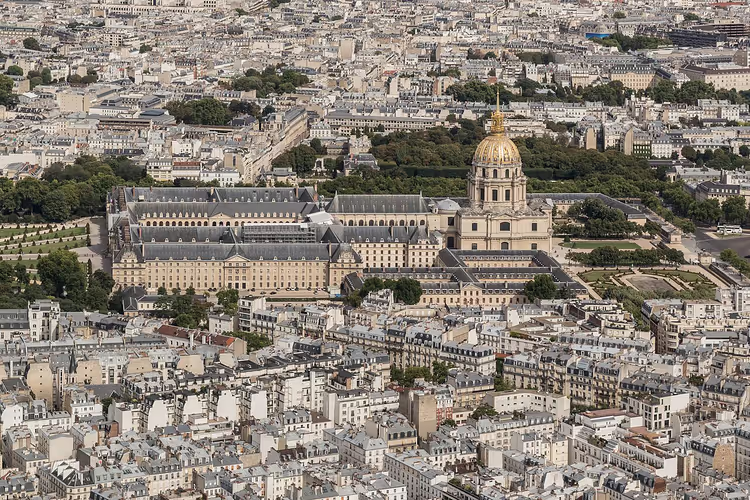 © Another one of my pictures: This photograph was taken by Medium69 (William Crochot) and released under the license state · CC BY-SAPhoto: Another one of my pictures: This photograph was taken by Medium69 (William Crochot) and released under the license state, CC BY-SA (https://creativecommons.org/licenses/by-sa/4.0), Wikimedia Commons
The Hôtel des Invalides in the seventh arrondissement was conceived under Louis XIV as a home for wounded and elderly soldiers. Over time the complex grew and became a center of French military history. Today it houses the Army Museum and the Museum of Plans and Reliefs, while marshals and generals rest in its inner courtyards.
Most visitors come for Napoleon's tomb. The emperor was first buried on the island of Saint Helena, and later his remains were moved to Paris. The museum is open every day except Monday; admission is in the low double digits, and visitors under 18 enter free.
- Getting there: Boulevard des Invalides, metro Varenne (line 13) or Invalides (lines 8 and 13).
- Cost: ticket to the Army Museum and the tomb, check opening hours on the official website.
- Who it's for: anyone interested in military history and the Napoleonic era.
7. Champs-Élysées
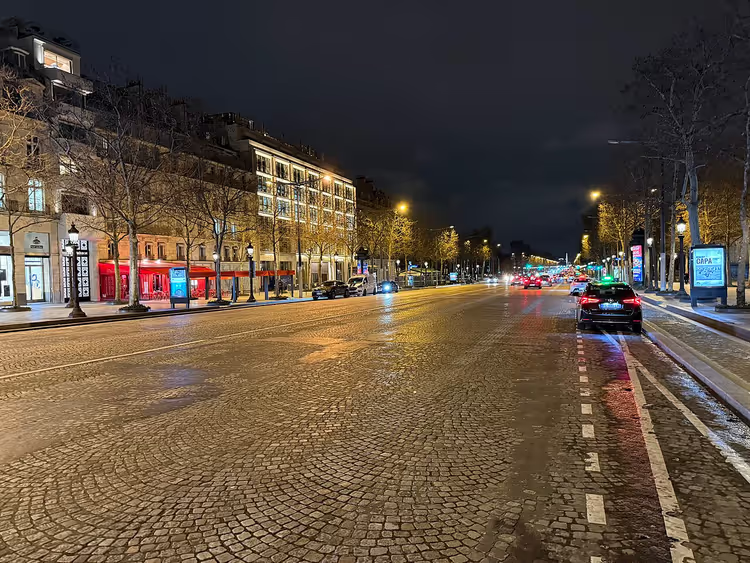 © Chabe01 · CC BY-SAPhoto: Chabe01, CC BY-SA (https://creativecommons.org/licenses/by-sa/4.0), Wikimedia Commons
The Champs-Élysées stretches from Place de la Concorde to the Arc de Triomphe and is considered the capital's main avenue. Parades and festive processions take place here, and along the avenue you'll find boutiques of world brands, souvenir shops, and cafes. The promenade began to be developed back in 1616 at the initiative of Marie de' Medici, and the project is attributed to the architect André Le Nôtre.
The lower part of the avenue is occupied by a park and museums, while the upper part has turned into a shopping street. Stop by the garden with fountains and sculptures, then walk to the arch at sunset. In the evening you'll see the monument illuminated, and access to the avenue itself remains free: you only pay in the shops and museums.
- Getting there: metro Concorde, Charles de Gaulle - Étoile, or Franklin D. Roosevelt.
- Cost: walking along the avenue is free.
- Who it's for: those who want to combine shopping with the city's grandest views.
8. Latin Quarter
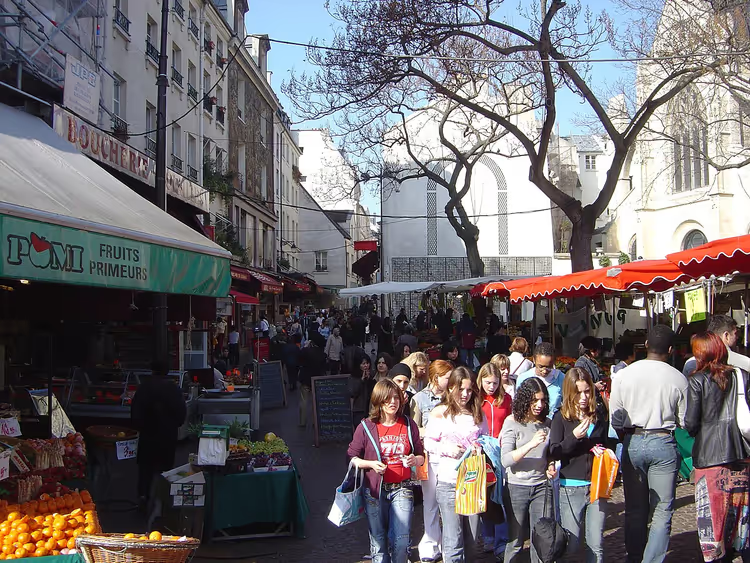 © David Monniaux · CC BY-SAPhoto: David Monniaux, CC BY-SA (http://creativecommons.org/licenses/by-sa/3.0/), Wikimedia Commons
The Latin Quarter occupies the fifth and sixth arrondissements on the left bank of the Seine and is known for its student life. It got its name not from Latin America, but from the Latin language in which teaching was conducted for centuries. At the heart of the quarter stands the Sorbonne, and nearby rises the hill with the Panthéon.
The quarter is home to museums, including the impressive collection of the Natural History Museum, and cafes where writers and philosophers once gathered. A convenient way to start your walk is from the Luxembourg Garden and head down toward the Seine embankment. It's best to explore on foot: the streets are narrow and the sights are close together.
- Getting there: metro Cluny - La Sorbonne (line 10) or Odeon (lines 4 and 10).
- Cost: entry to the quarter is free; tickets are needed for museums and the Panthéon.
- Who it's for: those who want to see university Paris and old courtyards.
9. Louvre
 © Benh LIEU SONG ( Flickr ) · CC BY-SAPhoto: Benh LIEU SONG ( Flickr ), CC BY-SA (https://creativecommons.org/licenses/by-sa/4.0), Wikimedia Commons
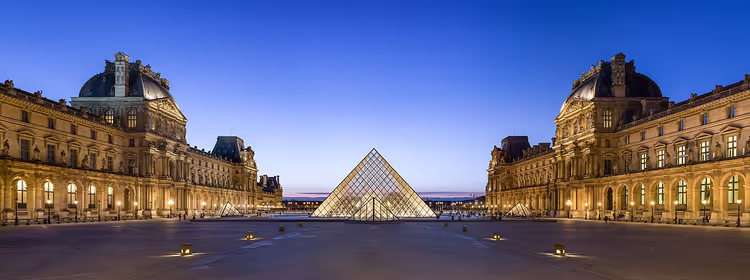
The Louvre occupies a former royal palace and is considered one of the most visited museums in the world. Its halls house ancient Egyptian sarcophagi, classical Greek and Roman sculpture, frescoes, and collections from the ancient Near East. The biggest crowd-puller is Leonardo da Vinci's "Mona Lisa," which always has its own separate line.
The museum is enormous, so plan ahead and pick two or three wings based on your interests. If it's your first visit, start with the Italian paintings and the antiquities hall, and leave the rest for next time. The glass pyramid in the Cour Napoléon serves as the main entrance, but you can also enter through the Carrousel underground shopping center.
Check opening hours before your trip: the museum is closed on Tuesdays and open late on Wednesdays and Fridays. An adult ticket for visitors from EEA countries costs €22, and for other visitors €32 (as of 09/2026, official Louvre website). Visitors under 18 and EEA residents under 26 enter free, and on the first Friday of each month after 6:00 PM admission is open to everyone, except in July and August.
A combined ticket gives access to both the permanent collection and temporary exhibitions. To avoid standing in line at the pyramid, book a timed entry slot: Paris museum pass for 2-6 days.
- Getting there: metro Palais Royal - Musée du Louvre (lines 1 and 7) or Pyramides.
- Cost: €22 for EEA visitors and €32 for others (as of 09/2026, source), free for under 18s.
- The catch: the rooms near the "Mona Lisa" are packed from early morning.
10. Luxembourg Garden
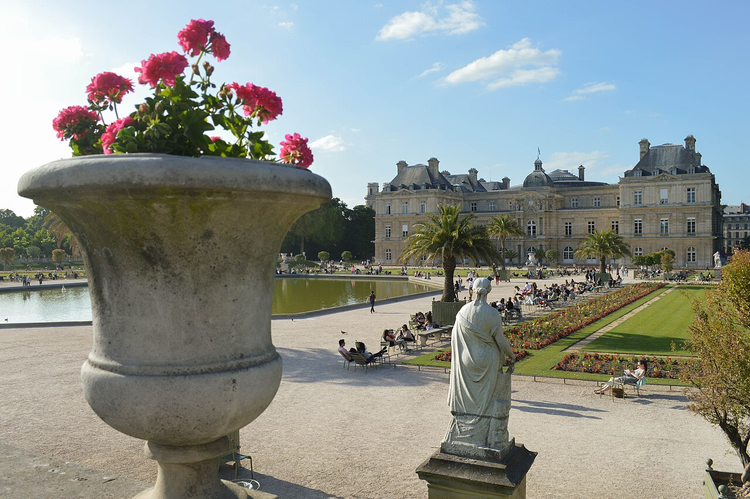
The Luxembourg Garden (Jardin du Luxembourg) lies at the end of Boulevard Saint-Michel and is considered the main park of the Latin Quarter. At its center stands the Luxembourg Palace, where the French Senate now meets. In front of the palace stretches a large fountain, where children sail model boats across the water.
 © Francisco Anzola · CC BYPhoto: Francisco Anzola, CC BY (https://creativecommons.org/licenses/by/2.0), Wikimedia Commons
Tucked away to the side is the atmospheric 17th-century Medici Fountain, clad in marble and overgrown with moss. For visitors, it's a true cultural playground: near the entrance there's a stage with concerts, and scattered across the grounds are play areas and a puppet theater. Entry won't cost you a cent.
Metro lines approach the garden from several sides. In summer the park stays open late; in winter it closes at dusk, so it's best to plan a morning visit in advance. If you want quiet, come on a weekday before noon.
- Getting there: metro Odeon (lines 4 and 10), Notre-Dame-des-Champs (line 12), or RER B, Luxembourg station.
- Cost: entry is free, and chairs by the fountain are free.
- Who it's for: those who want to relax in the shade and see the Senate palace.
11. Pont Alexandre III

Pont Alexandre III spans the Seine between Les Invalides and the Grand Palais and Petit Palais. It is decorated with dozens of sculptures of angels, nymphs, and pegasi, as well as tall lampposts and gilded details. The idea for the bridge is linked to Russian Emperor Nicholas II, who wanted to honor the memory of his father, Alexander III.
The single-span structure was designed so as not to block the view of the Champs-Élysées. The bridge opened for the 1900 World's Fair. You can walk across it at any time of day, and in the evening the lighting makes the sculptures especially striking.
- Getting there: Invalides metro (lines 8 and 13) or Champs-Élysées - Clemenceau (lines 1 and 13).
- Cost: crossing the bridge is free.
- Who it's for: anyone who wants a photo with the Seine and the golden sculptures in the background.
12. Musée d'Orsay
 © Sanchezn · CC BY-SAPhoto: Sanchezn, CC BY-SA (http://creativecommons.org/licenses/by-sa/3.0/), Wikimedia Commons
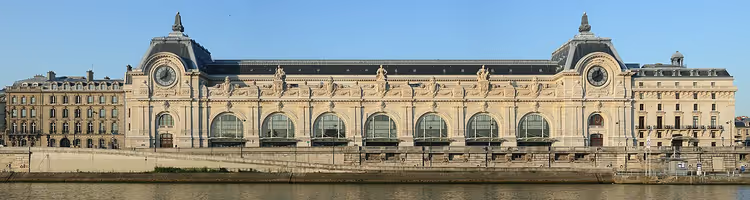
The Musée d'Orsay occupies a former railway station on the left bank of the Seine. It houses one of the finest collections of Impressionism: Manet, Monet, Degas, Renoir, Toulouse-Lautrec, and Gauguin. In addition to painting, the galleries feature architecture, decorative arts, and applied arts.
The museum is closed on Mondays, and on the first Sunday of the month admission is free. A weekday morning is quieter than a weekend. If you want to see Van Gogh's canvases without the crowds, arrive right at opening time.
- Getting there: Solférino metro (line 12) or RER C, Musée d'Orsay station.
- Cost: check ticket prices and free admission days on the official website.
- Who it's for: those who came for the Impressionists and Post-Impressionists.
13. Musée Rodin
 © Jean-Pierre Dalbéra · CC BYPhoto: Jean-Pierre Dalbéra, CC BY (https://creativecommons.org/licenses/by/2.0), Wikimedia Commons
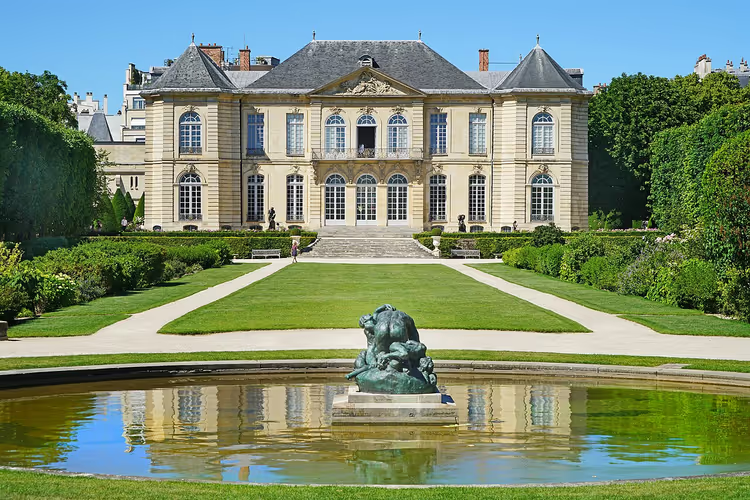
The Musée Rodin occupies the Hôtel Biron, an 18th-century mansion later owned by the sculptor himself. The museum opened its doors to visitors in 1919, two years after the death of Auguste Rodin. The collection includes The Thinker, The Burghers of Calais, The Gates of Hell, and the portrait Beethoven, and the full collection spans dozens of rooms.
Rodin also collected paintings by Van Gogh and Manet, which passed to the city along with his own works. Half the pleasure here is in the garden: sculptures stand among roses and hedges, for a small supplement. You can buy a combined ticket for the collection and the garden, and visitors under 18 enter free.
- Getting there: Varenne metro (line 13) or Invalides (lines 8 and 13).
- Cost: combined ticket for the museum and garden, check details on the official website.
- Who it's for: those who love sculpture and quiet inner courtyards.
14. Île de la Cité
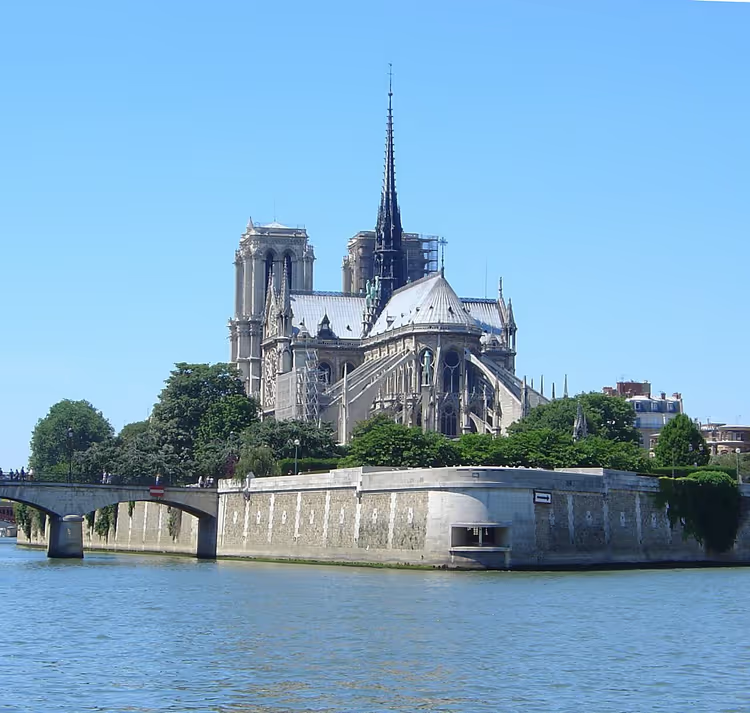 © David Monniaux · CC BY-SAPhoto: David Monniaux, CC BY-SA (http://creativecommons.org/licenses/by-sa/3.0/), Wikimedia Commons
The Île de la Cité in the middle of the Seine is considered the historic heart of Paris. Nine bridges lead here, so you can reach it from any part of the city. A royal residence once stood here, and today the island has almost no residents: it is occupied by cathedrals, museums, and palaces.
Set aside a full day to explore the island. It is home to Notre-Dame Cathedral, the former Conciergerie prison with its museum, the Palais de Justice, and the Sainte-Chapelle chapel. Some sites require tickets, while the island itself is open around the clock and free.
In the evening, sightseeing boats depart from the island's embankments, and from the water you will see the illuminated bridges and facades. one-hour Seine cruise "Paris Lights".
- Getting there: Cité metro (line 4) or Châtelet (lines 1, 4, 7, 11, 14).
- Cost: access to the island is free, museums require tickets.
- Who it's for: those who want to see old Paris in one compact spot.
15. Palais-Royal
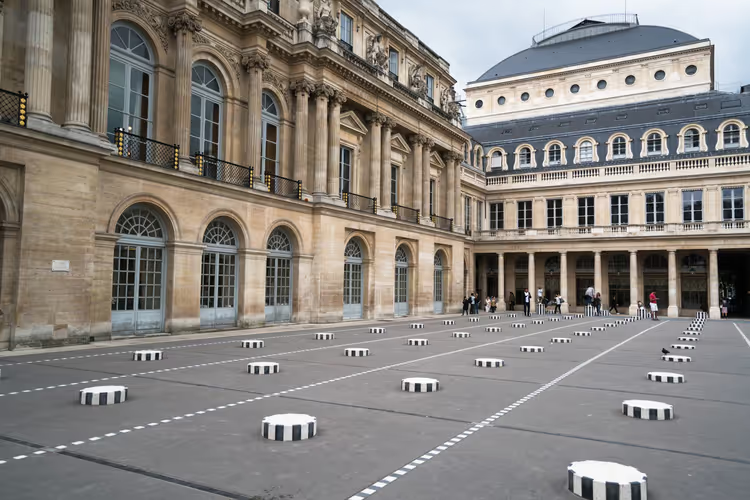
The Palais-Royal stands in the very center of the city and includes the palace itself, a square, and a park area. It was built for Cardinal Richelieu, who loved art, so the palace came to include a library, a picture gallery, and a theater. The complex received its current name under its new owner, Anne of Austria, who took over the residence after the cardinal's death.
The courtyard features Buren's black-and-white columns, which have become a popular backdrop for photos. Parisians are always strolling in the park with its fountain and tree-lined paths. Entry to the courtyard and garden is free, while the palace itself is closed to tourists.
- How to get there: metro Palais Royal - Musée du Louvre (lines 1 and 7) or Pyramides (line 7).
- Cost: entry to the park and inner courtyard is free.
- Who it's for: anyone who wants to take photos against the backdrop of Buren's columns.
16. Panthéon
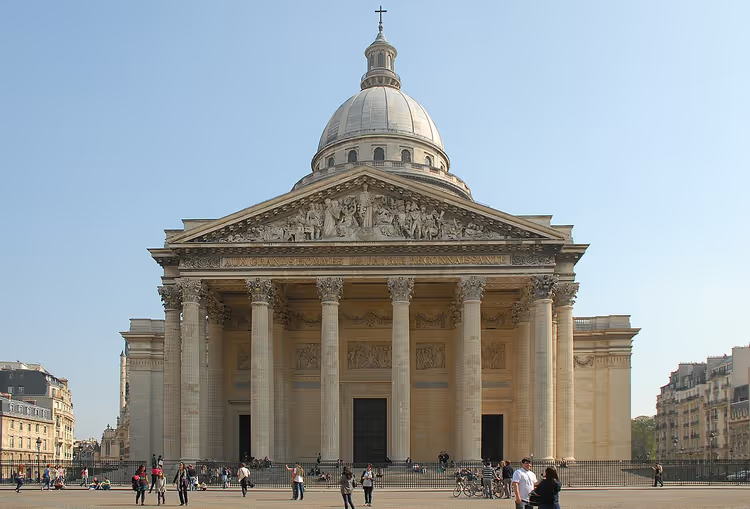 © Camille Gévaudan · CC BY-SAPhoto: Camille Gévaudan, CC BY-SA (https://creativecommons.org/licenses/by-sa/3.0), Wikimedia Commons
The Panthéon stands on the hill of Sainte-Geneviève and was originally conceived as a church in her honor. According to legend, King Louis built the structure in gratitude to the patron saint of Paris, to whom he prayed during an illness. The architect Soufflot combined the achievements of several generations of builders in his design, and its dome was later replicated in the Washington Capitol.
Today the Panthéon serves as the burial place of distinguished French figures. Voltaire, Rousseau, Victor Hugo, Émile Zola, and the Curies rest in the crypt, and in the center of the hall you will see Foucault's pendulum. The Panthéon is open daily, closes a bit earlier in winter, admission is by ticket, and children enter free.
- How to get there: metro Cardinal Lemoine (line 10) or Luxembourg (RER B).
- Cost: ticket to the crypt; check hours and prices on the official website.
- Who it's for: anyone interested in the history of France and its great names.
17. Place de la Concorde
 © Cristian Bortes from Cluj-Napoca, Romania · CC BYPhoto: Cristian Bortes from Cluj-Napoca, Romania, CC BY (https://creativecommons.org/licenses/by/2.0), Wikimedia Commons
Place de la Concorde was built in the shape of a regular octagon, with statues symbolizing major French cities standing at its corners. In the center rises an ancient Egyptian obelisk from Luxor, installed here in the 19th century. The square is considered one of the main ones in the capital and opens up a view of the Champs-Élysées.
A dark page of history is tied to the square. During the revolutionary years, a guillotine stood here, and King Louis XVI, Queen Marie Antoinette, and many others were executed on it. Today the space is filled with fountains and passersby, and in the evenings people come here for the panorama of the city lights.
- How to get there: metro Concorde, lines 1, 8, and 12.
- Cost: entry is free, and the Seine embankment nearby is also free.
- Who it's for: anyone who wants to combine a walk along the Champs-Élysées with a view of the river.
18. Disneyland
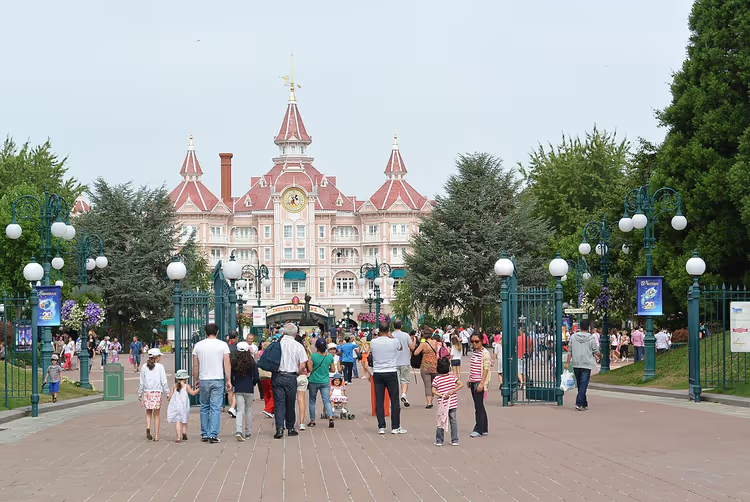 © flightlog · CC BYPhoto: flightlog, CC BY (https://creativecommons.org/licenses/by/2.0), Wikimedia Commons
Disneyland is considered a must-do for families with children. The park lies outside the old city, and the most convenient way to reach it is by RER A train to Marne-la-Vallée - Chessy station. The grounds are divided into five themed zones, each designed around a well-known fairy tale or animated film.
Main Street is styled after American towns of the late 19th century, with houses, shops, and cafés. The road leads to the park's main symbol, Sleeping Beauty Castle. The attractions are suited to different ages, and in high season you should plan for a full day.
It's better to buy tickets in advance and for a specific date: 1-day Disneyland Paris ticket.
- How to get there: RER A to Marne-la-Vallée - Chessy station, exit to the parks.
- Cost: a ticket for one or several days, with an option that includes return transfer.
- Who it's for: families with children and anyone who loves amusement parks.
19. Sacré-Cœur Basilica
 © Chabe01 · CC BY-SAPhoto: Chabe01, CC BY-SA (https://creativecommons.org/licenses/by-sa/4.0), Wikimedia Commons
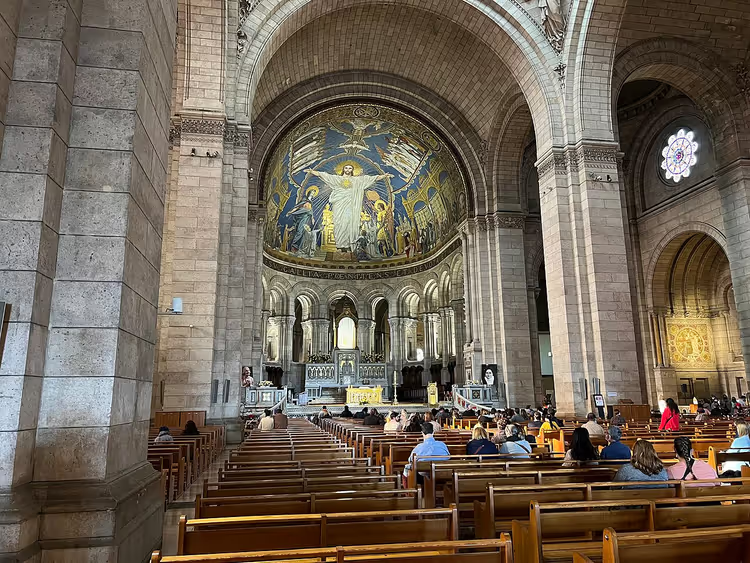
The white-stone Sacré-Cœur Basilica was built on the top of Montmartre after France's defeat in the war with Prussia. The idea was that the new church would atone for the misfortunes that had befallen the country. Construction in the Byzantine style stretched over several decades and was completed only just before World War I.
A wide staircase with green lawns, where people are always relaxing, leads up to the church. Five domes rise above the basilica, the central one taller than the rest. The façade is decorated with a portico of arches, and at the top stand equestrian statues of Saint Louis and Joan of Arc. Entry to the basilica itself is free; you pay only to climb the dome.
- How to get there: metro Anvers (line 2) or Abbesses (line 12).
- Cost: entry to the basilica is free, climbing the dome is by ticket.
- The catch: the stairs and the entrance are almost always crowded.
20. Palace of Versailles
The Palace of Versailles was built under Louis XIV as a royal residence outside the city. The best architects of the time created a center of classical architecture that became a symbol of the king's absolute power. Around the palace lies a park with avenues, trimmed plantings, a pond, and sculptures.
The palace is open daily except Monday, and entry to the park and gardens themselves is free in the cold season (as of 09/2026, official Versailles website). In summer, on musical fountain days, there is a charge to enter the gardens. For viewing the residence and the Trianon, you should set aside a full day, otherwise you will only see the state rooms.
A skip-the-line ticket with an audio guide is best booked in advance: Versailles ticket with audio guide.
- Getting there: RER C to Versailles Château - Rive Gauche station, then walk.
- Cost: park entry is free in winter, check palace ticket prices on the official website.
- The catch: the palace and Trianon are closed on Mondays.
21. Cathedral of Saint-Louis at Les Invalides
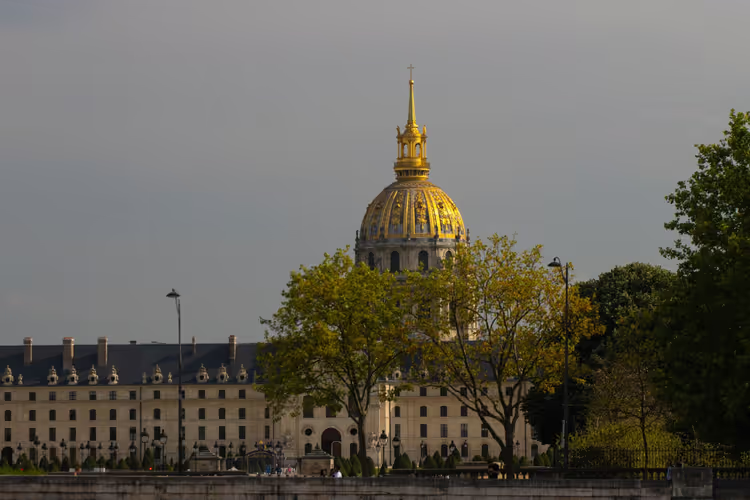
Inside the Les Invalides complex stands the Cathedral of Saint-Louis. Adjacent to it is the Dôme des Invalides church, whose gilded dome dominates the center of Paris. The church was built as part of a veterans' home and over time became the burial place of French military leaders from different eras. Today it houses a museum of military glory.
The sarcophagus with the remains of Napoleon I is not in the cathedral itself, but under the dome of the Dôme des Invalides church. Cathedral access is included in the museum complex ticket, so plan your visit together with the Musée de l'Armée.
- Getting there: Invalides metro station (lines 8 and 13), entrance from the square.
- Cost: included in the combined ticket with the Musée de l'Armée.
- Who it's for: those who want to see Napoleon's tomb under the golden dome.
22. Tour Montparnasse
Tour Montparnasse is a glass-and-concrete skyscraper on the left bank of the Seine. The building was constructed in the 1970s and has stood out against the historic cityscape ever since. It houses offices and restaurants, and the top floor has an observation deck.
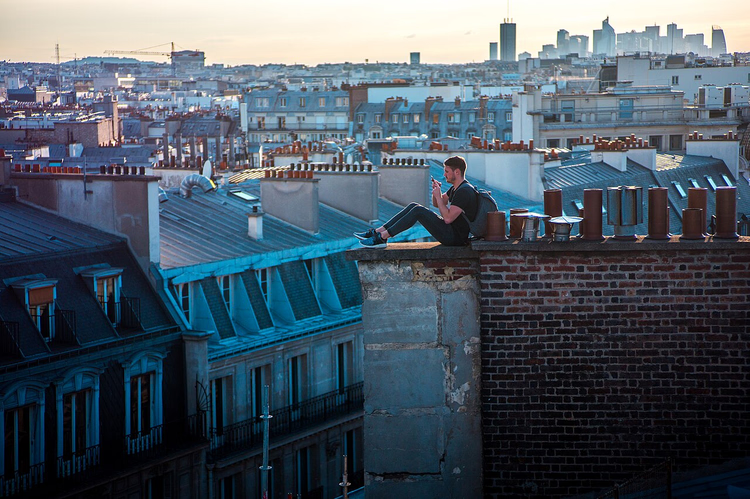
A high-speed elevator takes you to the 56th floor, where a panorama of the entire city center opens up. From the open-air terrace you can see the Eiffel Tower, the Louvre, and Montmartre, with chairs and telescopes arranged along the perimeter. In the evening you'll see the illuminated city without the lines that form at the tower itself.
ticket to the Tour Montparnasse observation deck
- Getting there: Montparnasse - Bienvenüe metro station, lines 4, 6, 12, and 13.
- Cost: ticket to the top floor, check hours on the tower's official website.
- Who it's for: those who want to see the Eiffel Tower in full from a distance.
23. Sorbonne
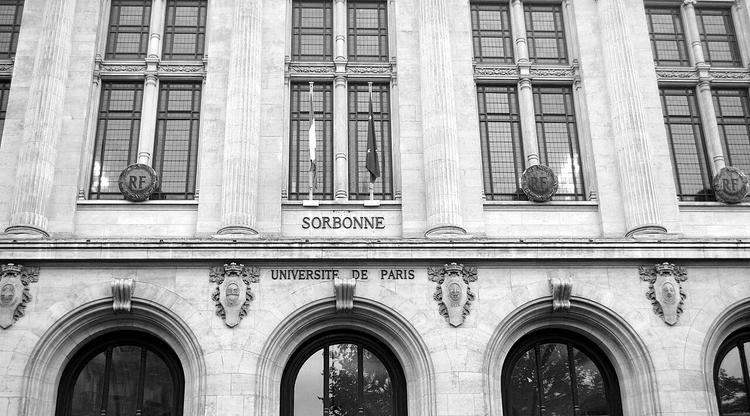 © Carl Campbell from Querétaro, Mexico · CC BY-SAPhoto: Carl Campbell from Querétaro, Mexico, CC BY-SA (https://creativecommons.org/licenses/by-sa/2.0), Wikimedia Commons
The Sorbonne is considered France's leading university and one of the oldest educational institutions in the world. The school was founded in the 13th century and named after the clergyman Robert de Sorbon. Over the centuries it has educated generation after generation of France's intellectual elite.
The main building stands in the Latin Quarter and is of historical value. The facade features statues symbolizing different sciences, and nearby rises the Baroque Chapel of Saint Ursula with its tall dome and four bell towers. Tourists are generally not allowed inside the university, but you can view the courtyards and facade from outside.
- Getting there: Cluny - La Sorbonne metro station (line 10) or Luxembourg (RER B).
- Cost: viewing from outside is free, access to the buildings is restricted.
- Who it's for: those who want to see the heart of student Paris.
24. Centre Pompidou
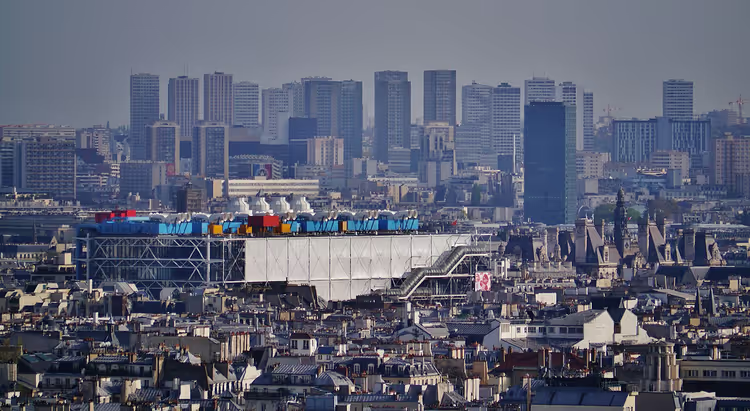 © Zairon · CC BY-SAPhoto: Zairon, CC BY-SA (https://creativecommons.org/licenses/by-sa/4.0), Wikimedia Commons
The Centre Pompidou is known as France's national museum of modern art, founded in 1977. The building defies classical conventions: all the pipes, wires, and metal structures are on the outside, so at first glance it looks like the building is still under construction. The escalators in transparent tubes offer views over the city center.
Inside you'll find paintings, sculptures, and installations by 20th-century avant-garde artists. Visitors are free to interpret modern art in their own way, there is no single narrative here. Since fall 2025, the center has been closed for renovation until around 2030. For now, you can only see the building from the outside.
- Getting there: Rambuteau metro (line 11) or Châtelet - Les Halles (lines 1, 4, 7, 11, 14).
- Cost: the museum is closed for renovation, check the official website for reopening dates.
- Who it's for: anyone interested in modern art and architecture.
25. Moulin Rouge
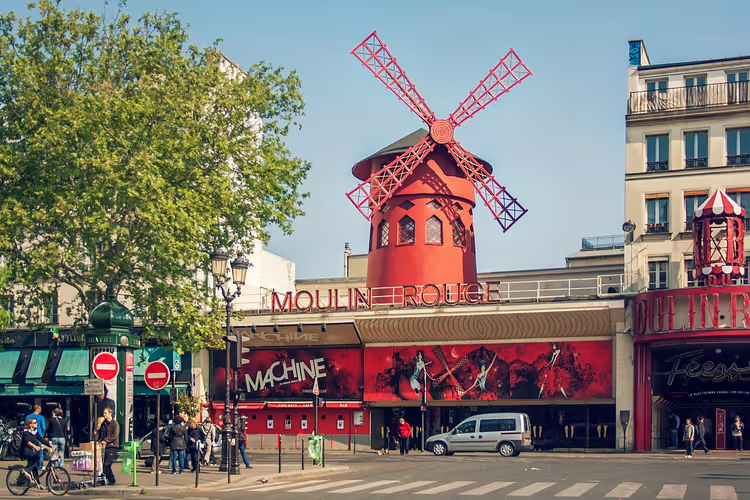 © Juanedc from Zaragoza, España · CC BYPhoto: Juanedc from Zaragoza, España, CC BY (https://creativecommons.org/licenses/by/2.0), Wikimedia Commons
Moulin Rouge is considered the most famous cabaret in Paris and a symbol of Montmartre's nightlife. The building with the red windmill on its roof is recognizable even to people who have never been to the city. This is where the famous can-can revue was born in the late 19th century.
Shows run in the evening and include dance, music, and acrobatic numbers. The costumes are covered in rhinestones, feathers, and sequins, and part of the program is performed topless, which is why the cabaret is considered an adults-only venue. Tickets for prime slots sell out in advance, so it's best to book several weeks ahead.
show at Moulin Rouge with champagne
- Getting there: Blanche metro (line 2), entrance right on Boulevard de Clichy.
- Cost: tickets for the evening show, seating depends on the section of the hall.
- Who it's for: anyone who wants to see a classic Parisian revue.
26. Père Lachaise Cemetery
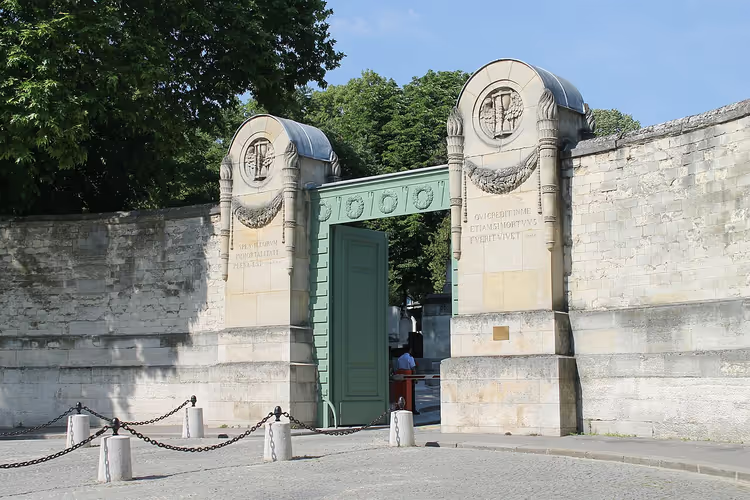 © Connie Ma from Chicago, United States of America · CC BY-SAPhoto: Connie Ma from Chicago, United States of America, CC BY-SA (https://creativecommons.org/licenses/by-sa/2.0), Wikimedia Commons
Père Lachaise Cemetery is known as an open-air museum: the stone vaults and gravestones here are decorated with sculptural compositions. Hundreds of thousands of people are buried across its hilly grounds, including many famous cultural figures. Entry is free, and many people come here for a walk, not just to visit graves.
Composer Frédéric Chopin, singer Yves Montand, dancer Isadora Duncan, singer Édith Piaf, playwright Oscar Wilde, and writer Honoré de Balzac are buried here. A separate section is dedicated to memorials for victims of Nazism.
- Getting there: Père Lachaise metro (lines 2 and 3) or Gambetta.
- Cost: entry is free, maps of the sections are available at the gates.
- Who it's for: anyone interested in sculpture and cultural history.
27. The Catacombs
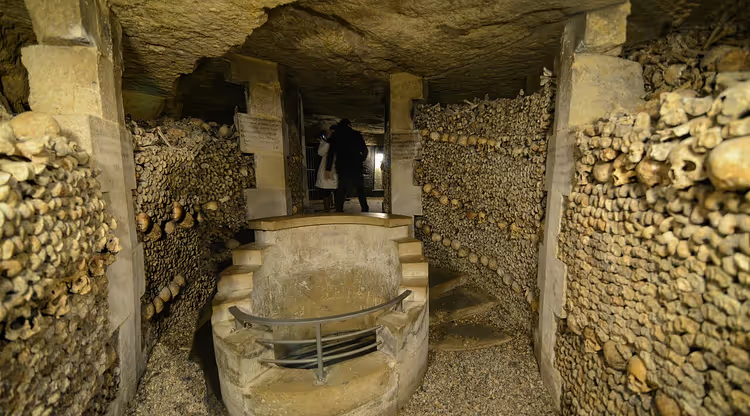 © Jorge Láscar from Melbourne, Australia · CC BYPhoto: Jorge Láscar from Melbourne, Australia, CC BY (https://creativecommons.org/licenses/by/2.0), Wikimedia Commons
The Paris Catacombs are a network of underground tunnels and corridors beneath the city, holding the remains of millions of people. Bones and skulls are arranged along the walls of long galleries, and the atmosphere here is definitely not for the faint of heart. The total length of the underground passages is enormous, and the depth reaches dozens of meters.
The Catacombs were created in the 18th century, when the city faced a shortage of burial space. Remains were moved from overcrowded cemeteries into former quarries to free up space within the city limits. Entry is paid, a guided tour is optional, and visitor numbers are limited, so it's recommended to buy tickets in advance.
- Getting there: Denfert-Rochereau metro, lines 4 and 6, entrance near the square.
- Cost: ticket with a time slot, check hours on the official website.
- The catch: the galleries are cramped and damp, and people with claustrophobia may find it difficult here.
28. Tuileries Garden
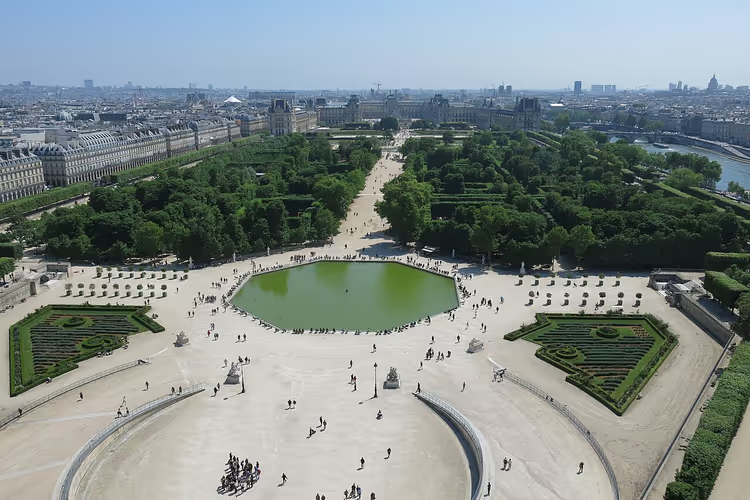
Tuileries Garden occupies a large area between the Louvre and Place de la Concorde. The park was laid out in the 16th century on the site of a clay quarry, and the entrance from the Louvre side is the Arc de Triomphe du Carrousel, built to commemorate Napoleon's victories. Today Parisians love to stroll here and relax by the fountains.
Neat flowerbeds and tall trees line the straight paths, and metal chairs are placed on the lawns, free to move around. The park is open year-round and free of charge, until late evening in summer and until dark in winter (as of 09/2026, garden visiting rules). There are kiosks selling coffee and ice cream, as well as playgrounds.
- Getting there: Tuileries metro (line 1) or Palais Royal - Musée du Louvre (lines 1 and 7).
- Cost: entry is free, chairs in the park are free.
- Who it's for: anyone who wants to walk from the Louvre to Place de la Concorde through the park.
29. Galeries Lafayette
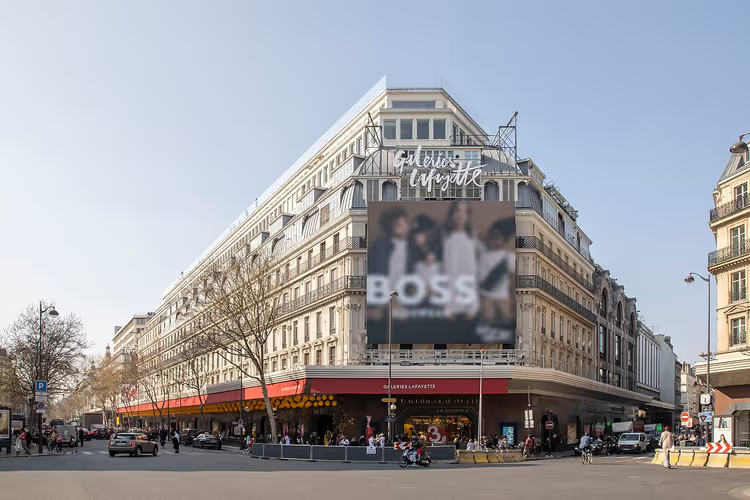 © Arthur Weidmann · CC BY-SAPhoto: Arthur Weidmann, CC BY-SA (https://creativecommons.org/licenses/by-sa/4.0), Wikimedia Commons
Galeries Lafayette is considered the largest department store in Paris and attracts shopping lovers from all over the world. The shopping center was founded in 1893, and today its floors are home to brand boutiques with large display windows. It sells clothing, shoes, electronics, perfumes, jewelry, and gourmet food.
The building's atrium is covered by a high stained-glass dome. The interior halls are decorated with stucco moldings in the form of floral ornaments. On the upper floors there are restaurants and cafes, as well as a free observation deck with a panorama of Paris, worth going up to if only for the view of the Opera Garnier.
- How to get there: Chaussee d'Antin - La Fayette metro station (lines 7 and 9) or Opera.
- Cost: admission is free, access to the terrace is free.
- Who it's for: those who want to combine shopping with an observation deck.
30. Place de la Bastille
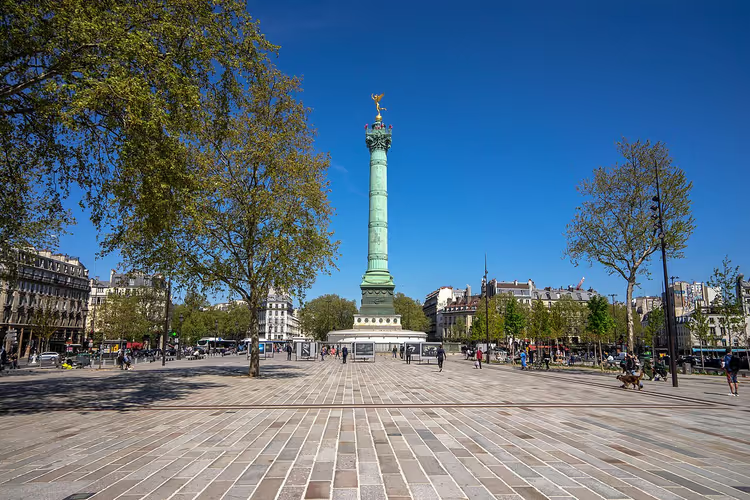 © Guillaume Flament · CC BY-SAPhoto: Guillaume Flament, CC BY-SA (https://creativecommons.org/licenses/by-sa/4.0), Wikimedia Commons
Place de la Bastille occupies the site of the demolished fortress-prison that was taken by the rebellious people on July 14, 1789. For the French, this day became a symbol of freedom, and today the square is considered an iconic place in the country. All that remains of the fortress itself are its outlines, laid out in paving stones right on the roadway.
The history of the site began in the 14th century, when King Charles V built a fortress with eight towers here. It was later turned into a prison where both criminals and innocent victims of royal power were thrown. In the center of the square rises the July Column with a golden figure on top. Today it is a busy traffic hub where dozens of streets converge, and the new opera house stands nearby.
- How to get there: Bastille metro station, lines 1, 5, and 8.
- Cost: admission to the square is free.
- Who it's for: those who want to see the place where the French Revolution began.
Paris attractions on the map
All 30 points are easy to keep on one map: the center is compact, and in a day you can walk to several sites at once. Distant trips, such as Versailles or Disneyland, are better set aside for separate days and not mixed with the center.
Sights of Paris
Places on the map
- 1Arc de Triomphe Monument in the centre of Place Charles de Gaulle, stairs to the viewing platform
- 2Notre-Dame Cathedral The main cathedral of Île de la Cité, restored after the 2019 fire
- 3Eiffel Tower Built for the 1889 World's Fair, lift access by timed ticket
- 4Montmartre Bohemian hill with windmills, cabarets and the Sacré-Cœur basilica
- 5Opéra Garnier 1875 opera house with Chagall's ceiling, daytime tours and evening tickets
- 6Les Invalides Complex with the Army Museum and Napoleon's tomb
- 7Champs-Élysées The main avenue from Place de la Concorde to the Arc de Triomphe
- 8Latin Quarter Student quarter with the Sorbonne and the Panthéon
- 9Louvre One of the world's most visited museums, timed-entry ticket
- 10Luxembourg Gardens Park with the Senate palace and the Medici fountain
- 11Pont Alexandre III Bridge with angel sculptures and gilded details
- 12Musée d'Orsay Impressionist collection in a former railway station
- 13Rodin Museum Mansion with Rodin's works and a sculpture garden
- 14Île de la Cité Historic heart of Paris with Notre-Dame and Sainte-Chapelle
- 15Palais-Royal Palace with a courtyard, square and Buren's columns
- 16Panthéon Resting place of Voltaire, Hugo, Zola and the Curies
- 17Place de la Concorde Octagonal square with an Egyptian obelisk
- 18Sacré-Cœur Basilica White-stone basilica atop Montmartre
- 19Palace of Versailles Royal residence of Louis XIV with its park
- 20Cathedral of Saint-Louis-des-Invalides Cathedral with a gilded dome and Napoleon's tomb within Les Invalides
- 21Tour Montparnasse Skyscraper with an observation deck on the 56th floor
- 22Sorbonne France's main university in the Latin Quarter
- 23Centre Pompidou Modern art museum with pipes and escalators on the outside
- 24Moulin Rouge Famous cabaret with cancan on Place Blanche
- 25Père Lachaise Cemetery Open-air museum, graves of Chopin, Piaf, Wilde
- 26Catacombs Underground tunnels with the bones of millions of Parisians
- 27Tuileries Garden Park between the Louvre and Place de la Concorde
- 28Galeries Lafayette The largest department store with a dome and free rooftop terrace
- 29Place de la Bastille Square on the site of a demolished fortress, with the July Column
If you don't want to plan the route yourself, a Hop-on Hop-off bus tour of Paris will come in handy: the bus stops at the main sights, and you get off wherever you're interested.
From the airport, it's more convenient to arrive by a pre-booked Kiwitaxi transfer, where you'll be met in the arrivals hall.
Tours and tickets in Paris
Guided tours, skip-the-line tickets and activities — most offers can be cancelled free of charge.
See offers on TiqetsThe widget loads once you give your consent.
⁉️🤔 Frequently asked questions
How many days do you need for Paris?
For a first visit, plan on three to four days. That gives you enough time to cover the center on foot at a relaxed pace: the Louvre, Notre-Dame, the Champs-Élysées, and Montmartre. Versailles or Disneyland takes a full day on its own, so on a short trip pick one or the other.
Do I need a museum pass?
If you're planning to visit three or more museums, the pass pays for itself through the ticket price difference. The Louvre, Musée d'Orsay, the Panthéon, and Versailles are usually included. Get the 2, 4, or 6 day format if you want flexibility without being tied to a single date.
How to get from the airport to the center?
From Charles de Gaulle, the RER B train and buses take you into the city; from Orly it's easier to go with a transfer to a tram or bus. Official taxis operate on a fixed fare. A pre-booked transfer meets you with a sign at the arrivals hall exit.
What can you see for free?
The Tuileries Garden, Luxembourg Gardens, the entrance to Île de la Cité, the Champs-Élysées, Place de la Concorde, and the viewing terrace at Galeries Lafayette are all free. Entry to Notre-Dame is also free, but it's better to book a time slot in advance. Museums, climbs to viewing platforms, and evening shows remain paid.
When is the best time to visit Paris?
The most comfortable time for walking around is spring and early fall: less heat and shorter museum lines. Summer brings lots of tourists, and in July and August accommodation is more expensive. Winter is calmer and cheaper, but gardens close earlier and some attractions run on reduced hours.
In short: what's worth booking
Paris is genuinely doable in three packed days if you split the center, Versailles, and Disneyland across different dates. A single pass pays off from the third museum onward, and a time slot for the Louvre or the Eiffel Tower saves you an hour at the entrance. If you're short on time, it's better to get one Louvre ticket and one Seine cruise than to chase five museums in a row.
- If you have three days: spend two thirds of your time in the center, and leave the third day for Versailles or Disneyland.
- If you're traveling with kids: get a full-day Disneyland Paris ticket.
- If it's a short trip: add a Paris museum pass for 2-6 days.

A small editorial team writing guides for independent travel. We travel ourselves, but we haven’t been everywhere, so we check prices, opening hours and how to get there against official sources.