







 AIIllustrative image: AI-generated
Passover in Israel: what awaits you during the holiday week
Passover changes Israel more than any other holiday. Resort hotels sell out months in advance, and prices for that week shoot up.
If your trip falls in late March or April, you will almost certainly run into this. The holiday lasts a week, and during those days the whole country runs on holiday time, from supermarkets to gas stations.
How serious it gets is clear from Ein Avdat National Park in the Negev. Last entry to the long trail there is at 2:30 PM, to the short trail at 3:30 PM, and the site closes at 5:00 PM, an hour earlier on Fridays (as of 09/2026, official website of the Israel Nature and Parks Authority). During Passover, places like this fill up well before noon.
Below we will go through it in order: what this holiday is, how it hits prices, and where you will get stuck in traffic.
Ad: this article contains affiliate links, we earn a commission if you book through them, at no extra cost to you.
What Passover is
💡 In short:
- Passover lasts a week and marks the exodus of the Jews from Egypt.
- Hotels, restaurants, and supermarkets switch to holiday mode.
- Available rooms run out early, and prices go up.
- National park hours and reservations: 09/2026, verified on the official website of the Israel Nature and Parks Authority.
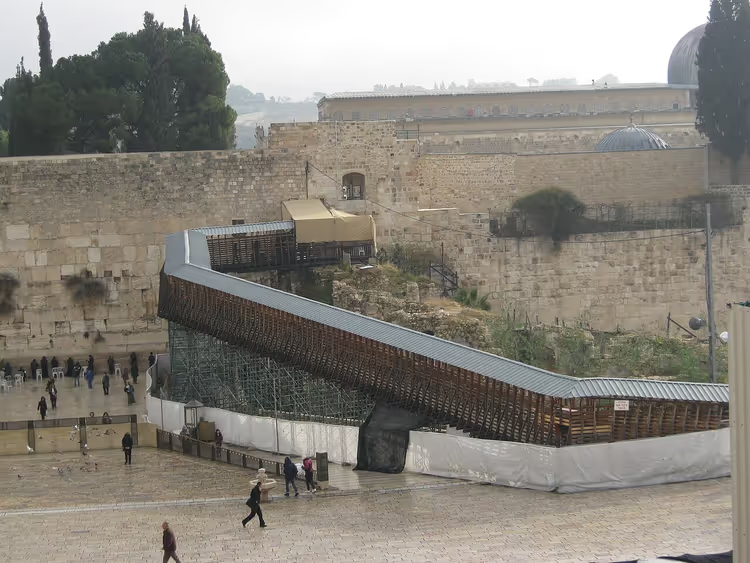
Passover marks the exodus of the Jews from Egypt and their return to the Land of Israel. The holiday begins in the evening, like Shabbat, and lasts a week, until the final sunset.
The dates change every year: they follow the Hebrew calendar, not the standard one. That is why Passover sometimes falls in late March, sometimes in April, and often coincides with Easter and school breaks.
During these days the country runs on a special schedule. Hotels, restaurants, and supermarkets observe Passover rules, and there is no opting out. The holiday applies to everyone, whether you are religious or not.
What Passover means for a tourist
The main thing to know in advance: there are almost no public festivities during Passover. The holiday is family-oriented and fairly private, with no city-wide celebrations. As a tourist, you will get little out of it.
All the inconvenience comes down to two things: money and crowds. Resort hotels sell out months ahead, and roads during the holiday week are overloaded. You have to plan your route around the country with extra buffer time.
What changes | Regular days | Passover |
|---|---|---|
Hotels | regular price | expensive, booked months ahead |
Parks and beaches | open in the morning | reservations and lines |
Bread and baked goods | usual selection | matzah and nothing leavened |
Cafes | regular hours | some closed on the 1st and 7th days |
Passover prices: why everything gets more expensive
During Passover, Israel vacations within its own borders. School breaks and public holidays overlap, so half the country leaves for a week. Demand for hotels in Eilat, at the Dead Sea, and in the north spikes sharply.
There are not enough hotels for everyone, and what is left is expensive. On certain dates in Eilat only a handful of options remain, and there is almost nothing to choose from. Even modest places on those dates cost as much as a good hotel in a regular month.
The selection shrinks every week, so booking late hits your wallet twice: higher price and worse location. It is better to check prices in advance rather than at the last minute: see hotel prices in Eilat on Trip.com.
Crowds: Eilat, the Red Sea, and parks
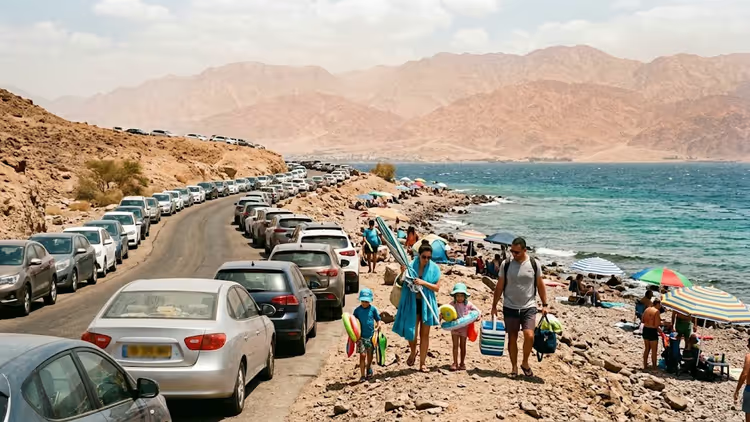
During the holiday week, the south of the country is packed. The highway from Eilat to the Egyptian border at Taba runs along the coast, and along its entire length cars park in several rows. Getting to snorkeling spots is nearly impossible, and leaving the city takes a long time. It is worst on the weekends around Passover, but even on weekdays the south is crowded.
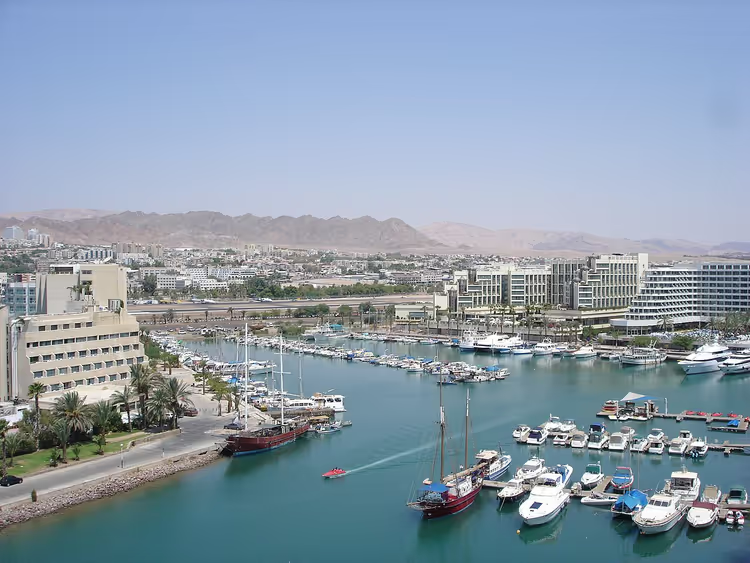
National parks in the Negev go through the same thing. Ein Avdat lies at the foot of Midreshet Ben-Gurion: the Zin Stream has cut a narrow canyon here, and three springs feed it year-round. On a regular weekday it is quiet; during Passover, cars line up the hill to the neighboring town.
Park visits are reserved in advance through the booking system (according to the Israel Nature and Parks Authority). During the holiday week, a reservation is mandatory: without one, you risk being turned away at the gate.
Menus change: bread and chametz
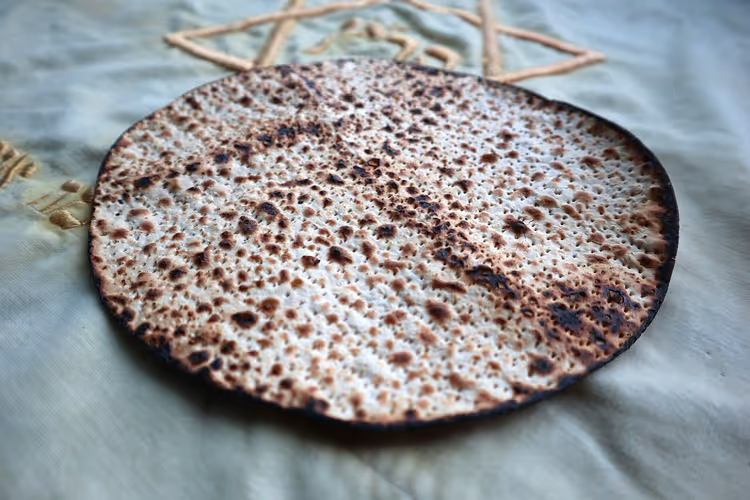
The cuisine during Passover changes as noticeably as the prices. "Chametz" disappears from menus and shelves: leavened bread, pita, pasta, and anything made from risen dough. Matzah takes the place of bread.
If you are traveling on a budget, you feel this the most. Cheap food on the go relied on pita and buns, and now they are gone. Only the first and seventh days count as holidays (yom tov), and on those days some cafes are closed. The intermediate days (chol hamoed) are working days, but it is still better to plan food ahead during the holiday.
When the holiday ends, regular bread returns to the shelves. Until then, you will have to make do with matzah.
 © Jacek Proszyk · CC BY-SAPhoto: Jacek Proszyk, CC BY-SA (https://creativecommons.org/licenses/by-sa/4.0), Wikimedia Commons
How to plan a trip around these dates
If Passover overlaps with your dates, three strategies work.
Book accommodation and parks in advance, not on the spot: by spring there are almost no available options left. Arrive at parks at opening time, while parking is still free and there is no line for the trail. Plan travel days for weekdays: the weekends around Passover are the hardest.
Also check separately what is open on Shabbat. Some shops and cafes are closed from Friday evening to Saturday evening, and during the holiday week this overlaps with the Passover schedule.
Tours in the south also sell out in advance, so choose them before your trip: see tours on GetYourGuide.
⁉️🤔 Frequently asked questions
When does Passover start and how do I find the dates for the year I am traveling?
The holiday always falls in spring, but the exact dates shift every year. Before booking, check the dates on a calendar for the year you need.
Is it worth going to Israel specifically for Passover?
If your goal is a regular vacation, it is better to shift your trip. During Passover, hotels are expensive and the south and Red Sea beaches are very crowded. Plus prices are higher than usual for the entire holiday week, and the holiday itself is family-oriented and gives a tourist almost nothing.
Is it true there is nowhere to eat during Passover?
There is food, but the menu is different: matzah replaces bread for the week. It is hardest on the 1st and 7th days of the holiday, so it is better to buy food for those days in advance.
How much have hotel prices gone up?
There are no exact figures: they depend on the city and the booking date. The general rule is this: the later you book, the higher the price and the worse the selection.
Can I get into national parks without a reservation?
Ein Avdat and other parks run by the Nature and Parks Authority have a booking system. During the holiday week, spots run out quickly, and without a reservation you may not be let in. Arrive with time to spare: last entry to the long trail is at 2:30 PM (as of 09/2026, official website).
In short: what to book
If you are traveling during Passover, start with two things: a hotel room and park reservations. Without the first, you will overpay; without the second, you will be left at the gate.
If you are going to Eilat or the Dead Sea: book your hotel several months ahead, it will not get cheaper later.
If you want national parks in the Negev: reservation first, then the route.
If your plan includes tours: choose them before the holiday week.
Passover does not shut Israel down, but it changes the schedule and the cost of your trip. Plan for it in advance, and you will save both time and money. find a hotel on Trip.com

A small editorial team writing guides for independent travel. We travel ourselves, but we haven’t been everywhere, so we check prices, opening hours and how to get there against official sources.