



How to pay in the Netherlands: cards, cash and tips
In the Netherlands, almost everything is paid by card. Cash hasn't disappeared yet, but a card-only establishment is more common than a currency exchange office. If you're visiting Amsterdam for a weekend, you'll find an ATM, but without knowing the local rules it's easy to get confused. Below we'll go through each payment method in order.
How payments work in the Netherlands
💡 In short:
- Cards are accepted almost everywhere, cash is needed as a backup.
- Payment terms, ATMs, and tips: 09/2026, according to the country's tourism portal.
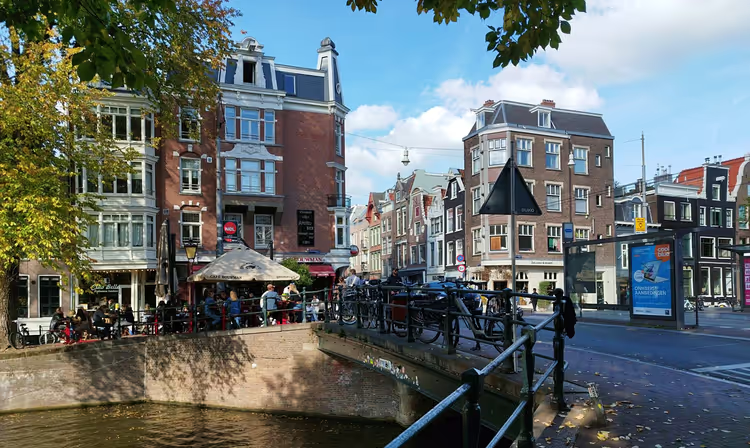
The country has long lived in a cashless rhythm. Besides a bank card, you can pay with your smartphone via NFC, Apple Pay, or Google Wallet. For VAT refunds for buyers from outside the EU, there's a separate customs app. In short: digital payments are the norm here, not the exception.
 © Donald Trung Quoc Don (Chữ Hán: 徵國單) - Wikimedia Commons - © CC BY-SA 4.0 International . ( Want to use this image? ) Or · CC BY-SAPhoto: Donald Trung Quoc Don (Chữ Hán: 徵國單) - Wikimedia Commons - © CC BY-SA 4.0 International . ( Want to use this image? ) Or, CC BY-SA (https://creativecommons.org/licenses/by-sa/4.0), Wikimedia Commons
We rely on the rules of the country's official tourism portal and bank data. Below we explain where cash is accepted, how ATMs work, why you need a credit card, and how tips are calculated.
Cash: where it's still accepted
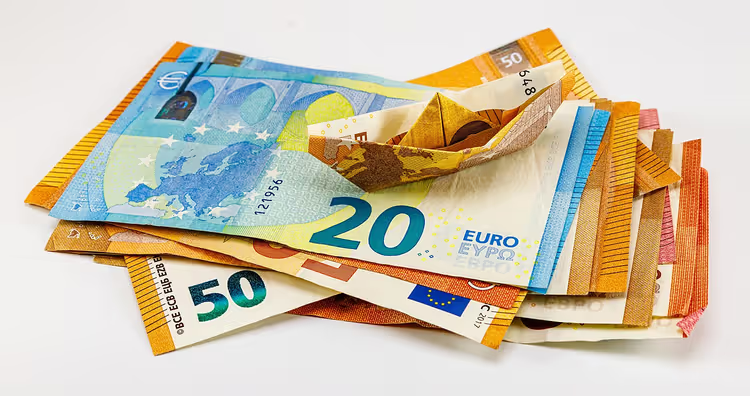
Cash is accepted in the Netherlands, but not everywhere anymore. According to the portal, you can pay with banknotes at roughly three quarters of shops, bars, and hotels (Netherlands tourism portal). Many small cafes and modern shops operate on a "card only" (pin-only) basis. For the owner, it's convenient: revenue goes straight to the account, and there's no need to take money to the bank.
 © Friedrich Haag · CC BY-SAPhoto: Friedrich Haag, CC BY-SA (https://creativecommons.org/licenses/by-sa/4.0), Wikimedia Commons
There's no universal rule. Chain supermarkets and major museums take cash, but a small cafe by the canal may refuse. If in doubt, ask at the entrance or look for a sticker on the door near the register.
Be careful with banknotes. 500-euro notes are accepted by only a few places, and 100- and 200-euro notes are not always taken by small shops and supermarkets (Netherlands tourism portal). Keep small and medium bills handy, and you'll hear "no" less often.
One local detail concerns rounding. When paying in cash, the amount is rounded to 5 cents. 1- and 2-cent coins are almost out of circulation, so a bill of 12.83 euros will cost you 12.85 (tourism portal page). Rounding doesn't apply to cashless payments, where the exact amount is charged.
Need to exchange currency? Major banks offer exchange, but the easiest option is GWK Travelex offices at train stations and airports. Check the rate online in advance so you don't lose on the difference.
Bank cards and ATMs
With a foreign debit or credit card in the Netherlands, there are usually no problems. You either pay with it directly or withdraw cash from an ATM. ATMs are visible from afar: major banks jointly installed yellow Geldmaten machines that accept all common cards.
 © Donald Trung Quoc Don (Chữ Hán: 徵國單) - Wikimedia Commons - © CC BY-SA 4.0 International . ( Want to use this image? ) Or · CC BY-SAPhoto: Donald Trung Quoc Don (Chữ Hán: 徵國單) - Wikimedia Commons - © CC BY-SA 4.0 International . ( Want to use this image? ) Or, CC BY-SA (https://creativecommons.org/licenses/by-sa/4.0), Wikimedia Commons
But the number of machines is decreasing. Due to the growth of contactless payments, banks are closing branches and reducing the ATM network, so it's better to check the nearest location online in advance. It's also important that Geldmaten are not tied to a specific bank branch: you don't need to look for a nearby office.
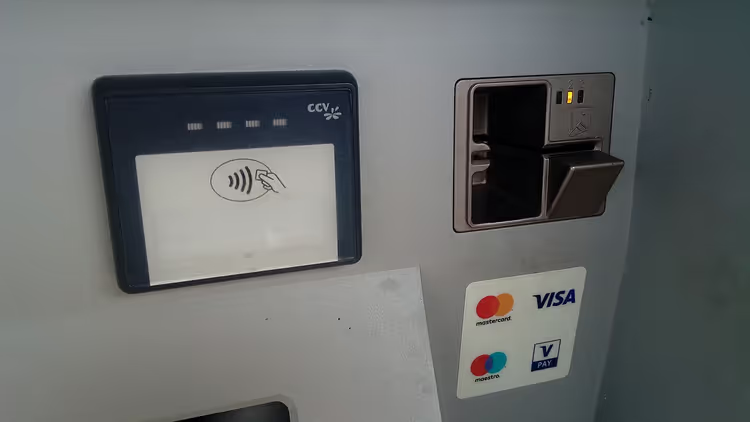
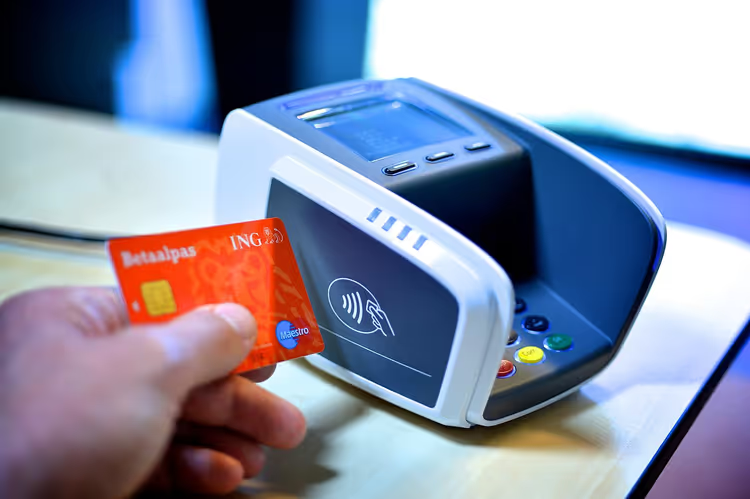
Even without cash, you can almost always pay by card. Modern terminals work contactlessly: tap your debit card or smartphone on the sensor, and the amount is deducted from your account. On some terminals, you can add a tip to the bill right away. A PIN code is mainly requested for larger payments.
Many train stations have shops with self-checkout counters. You scan the items yourself and pay by card, while staff assist and verify the payment.
Major supermarkets Albert Heijn and Jumbo use self-scanning technology. The shopper scans items as they go and pays by card, so the checkout line barely exists. If you're rushing to catch a train, this saves time.
On public transport, you can also pay contactlessly. The OV-chipkaart isn't mandatory: tap your debit or credit card on the validator in a bus, tram, or train to register entry. Don't forget to tap out, otherwise the system will charge the maximum fare.
Paying by credit card
Credit cards play a secondary role in the Netherlands. Locals more often use a regular bank card and pay with it even for small purchases. For car rental, hotel booking, and airline tickets, a credit card works best.
 © ING Nederland · CC BY-SAPhoto: ING Nederland, CC BY-SA (https://creativecommons.org/licenses/by-sa/2.0), Wikimedia Commons
Not all cards are accepted everywhere. Look for stickers at the register or on the entrance door. If you're not sure your card will be accepted, ask in advance. Shops that take American Express, Mastercard, and Visa usually also accept prepaid cards. The same applies to GWK offices.
Tikkie: transfers from your smartphone
There's another payment method you'll encounter at festivals, fairs, and markets. Tikkie is owned by ABN AMRO bank and helps quickly transfer small amounts. It was originally created to pay back friends, and today it's used to pay for purchases and bills.
 © Donald Trung Quoc Don (Chữ Hán: 徵國單) - Wikimedia Commons - © CC BY-SA 4.0 International . ( Want to use this image? ) Or · CC BY-SAPhoto: Donald Trung Quoc Don (Chữ Hán: 徵國單) - Wikimedia Commons - © CC BY-SA 4.0 International . ( Want to use this image? ) Or, CC BY-SA (https://creativecommons.org/licenses/by-sa/4.0), Wikimedia Commons
The app works closely with messengers, primarily WhatsApp. According to the official Tikkie website, about 10 million people use it, and roughly 300,000 payments go through per day. For a tourist, the main limitation is clear even without the numbers: Tikkie requires a Dutch bank account and a European phone number.
Some shops, cafes, and restaurants display their own QR codes that lead directly to Tikkie. The payment goes through iDEAL, and the bill is settled in a couple of seconds. At events and markets, it's convenient: no cash needed, and the banking app stays at hand.
In restaurants, there's a "order and pay by QR code" system. You scan the code, choose dishes, and pay online. After dinner, you can simply get up and leave without waiting for the bill. It sounds complicated, but you'll figure it out in a minute.
Tips: how much to leave
If almost everything is paid by card, how do you leave a tip? In the Netherlands, it's simple, and the rules are relaxed. In a restaurant, people usually leave about 10% (Netherlands tourist office data). It's not an obligation, but a sign of appreciation for good service.
Waiters in the Netherlands don't live on tips like in the US. Tips are considered a pleasant extra. If you liked the food and service, you give more. If the service let you down, nobody forces you to pay extra.
With a card, just add the tip to the bill on the terminal. The owner deducts the tip amount from the revenue and distributes it among the staff. In a bar, people often simply round the bill up and leave the change.
⁉️🤔 Frequently asked questions
Can I pay with a foreign card in the Netherlands?
Mastercard and Visa debit and credit cards are accepted almost everywhere there's a terminal. Not all cards work abroad, so before your trip check with your bank whether your card is valid in the EU. If in doubt, take a little cash for the first day.
How much cash should I bring to the Netherlands?
A little, as a backup. Cash will come in handy at markets, small cafes, and for tips, but you'll cover most expenses by card. Bring smaller bills: 100-, 200-, and 500-euro notes are not accepted by many establishments (Netherlands tourism portal).
What is Tikkie and does a tourist need it?
Tikkie is owned by ABN AMRO bank and is used for transferring small amounts via QR code or link. It requires a Dutch bank account, so it's usually unavailable to tourists. It's useful to know about it: if someone at a market asks you to "do a Tikkie," you can calmly offer a card or cash instead.
How much should I tip in a restaurant?
On average, about 10% of the bill (Netherlands tourism portal). Tips are not mandatory; they're paid for good service. If you pay by card, add the amount on the terminal. In a bar, rounding the bill up is enough.
Can I pay by card on public transport?
Yes. Contactless payment works on buses, trams, and trains: tap your debit or credit card on the validator when entering and be sure to tap out. If you don't register your exit, the maximum fare for the trip will be charged.
Do ATMs work with foreign cards?
Usually yes. The yellow Geldmaten machines accept common cards, but their network is shrinking. Withdraw cash in advance and check your bank's fees: abroad, a separate percentage is often charged for withdrawals.
In short: what to prepare before your trip
In the Netherlands, almost everything is paid by card, and cash is needed only as a safety net. Bring a Mastercard or Visa card, a little cash for markets and tips, and keep your smartphone charged for contactless payments.
If you're traveling with cash only, keep small bills handy. If you're driving, check in advance whether the rental company accepts your card.
Before your trip, check with your bank about limits and fees for payments and cash withdrawals abroad.

A small editorial team writing guides for independent travel. We travel ourselves, but we haven’t been everywhere, so we check prices, opening hours and how to get there against official sources.