
















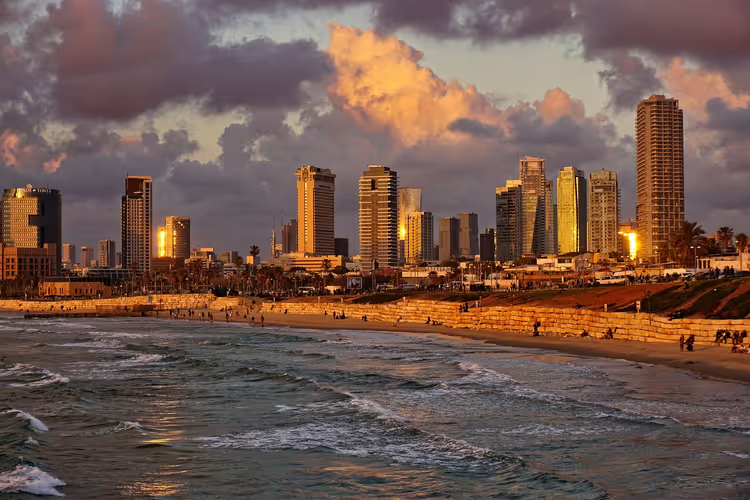
Resorts of Israel: four seas and 15 cities for vacation
The Mediterranean, the Red Sea, the Dead Sea, and the Sea of Galilee all fit within one small country. Each zone sets its own type of vacation: beaches and parties, corals and diving, therapeutic mud, pilgrimage routes. Between them, you'll drive just a couple of hours.
That's why choosing a single resort here is harder than it seems. One city lives on parties, another is geared toward families with young kids, a third focuses on joint treatment. In the record year of 2019, the country welcomed 4.55 million tourists (tourism statistics).
Below is a breakdown of 15 resorts in Israel across four zones. For each one, we've noted who it's for, what to see nearby, and what budget to plan for.
Ad: this article contains affiliate links, we earn a commission if you book through them, at no extra cost to you.
Advantages of a vacation here
💡 In short:
- A vacation in Israel is divided into four zones: the Mediterranean Sea, the Red Sea, the Dead Sea, and the Sea of Galilee.
- Public beaches are free for everyone, and you can swim in the Red Sea year-round.
- Weather, season, and entry rules for tourists: 09/2026, verified on the Israel tourism portal
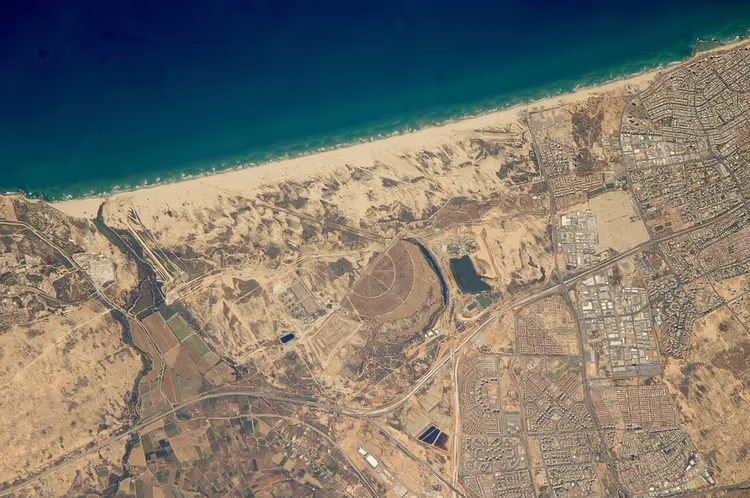
The country's strength is its size. In a single day, you can swim in the Mediterranean Sea and by evening watch the sunset over the Judean Desert. This density of different landscapes in such a small area is almost unheard of, and it saves your vacation from long transfers.
The Dead Sea deserves a separate discussion. Its salt content is several times thicker than ocean water (data on the body of water), the water itself pushes your body to the surface, and the air is rich in minerals. People come to its shores to improve their skin, joints, and breathing, not just to sunbathe.
History adds weight. Jerusalem, Acre, Masada, and Caesarea offer so many ancient sites that the trip turns into a walk through a textbook. You combine the beach with excursions to fortresses and national parks, and you don't need long flights between cities to do it.
Mediterranean resorts
Mediterranean resorts set the tone for the entire vacation in the country. The coast stretches for hundreds of kilometers, lined with Tel Aviv, Netanya, Herzliya, Haifa, and a dozen other cities. Here people combine the beach with nightlife, so the promenades stay busy until morning.
Further south begins a calmer stretch. Ashkelon, Ashdod, and Bat Yam keep prices low and draw fewer tourists. To the north lie Acre and Nahariya with fortresses, grottoes, and ancient walls.
The swimming season on this coast runs from April to November, and in winter the water stays brisk but not freezing.
1. Tel Aviv
 © Ynhockey · CC BY-SAPhoto: Ynhockey, CC BY-SA (https://creativecommons.org/licenses/by-sa/4.0), Wikimedia Commons
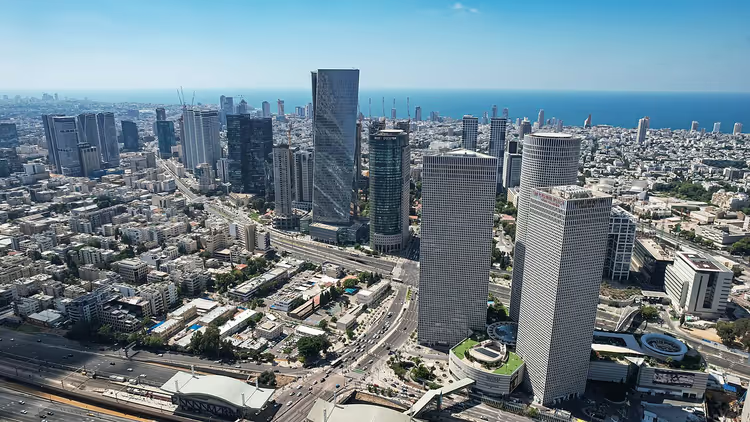
Tel Aviv sets the bar for the entire coast. The city is young, but its white-and-yellow Bauhaus buildings are listed by UNESCO, and walking among them is a pleasure. Add year-round warmth, and you get a resort with no dead season.
Tel Aviv beaches are state-owned and free. Atzmaut Beach has its own regular crowd, while Nordau Beach is divided into men's and women's sections. Everywhere you'll find loungers, children's slides, and water sports centers.
For a cultural program, choose the modern art museums, the safari park in Ramat Gan, and Carmel Market for sweets. The city gets a lot of visitors, so hotels keep prices above the national average.
The swimming season in Tel Aviv runs from April to November, and the air stays warm almost all year. Diving, windsurfing, and kayaking schools operate right by the shore, so beginners have a place to try their hand. You don't need to go far for food: eateries and restaurants will feed you in any neighborhood at a reasonable price. The main travel budget goes to the hotel rather than entertainment, and the beaches are open around the clock.
- Who it's for: active couples and those who want a beach next to nightlife.
- Not for: those seeking quiet and uncrowded shores.
- The catch: expensive hotels and noisy promenades until morning.
- Hotels: Hotels in Tel Aviv on Trip.com
2. Jaffa
 © Godot13 · CC BY-SAPhoto: Godot13, CC BY-SA (https://creativecommons.org/licenses/by-sa/4.0), Wikimedia Commons
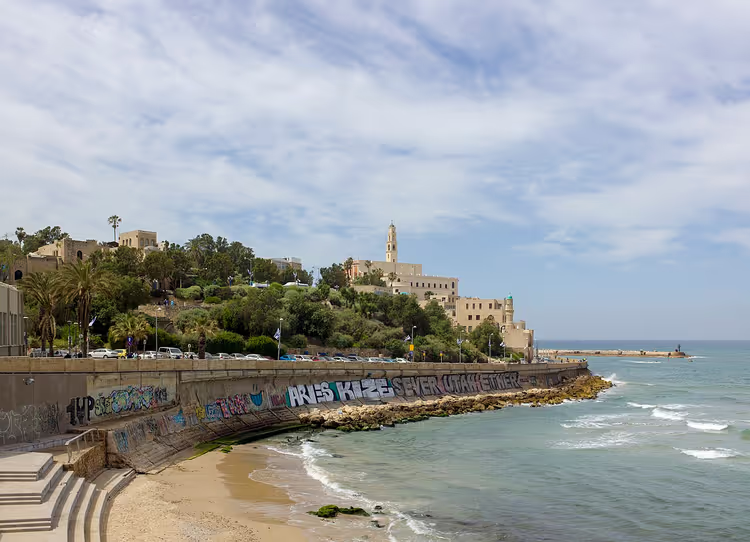
Jaffa borders Tel Aviv and is considered its historic heart. The old part sits on a hill and opens up views of cliffs and bays, while galleries where artists sell their work operate in the narrow lanes.
The city is tied to legends of Noah's Ark, Cleopatra, and Napoleon. There's no solid evidence for these stories, but you'll see the fortress walls, Kedumim Square, and traces of different peoples with your own eyes.
Romantics love Zodiac Street: touch your zodiac sign and make a wish. Dinner at a fish restaurant with the obligatory hummus won't cost much by Israeli standards, and nightly rates depend on the season.
The old part is compact, and seeing it will take you half a day. After that you can stay for dinner by the port or return to Tel Aviv, which is a couple of kilometers away on the map. Many people combine both spots in one trip, staying in Tel Aviv and coming to Jaffa at sunset.
- Who it's for: lovers of old cities and short walks.
- Not for: those expecting a wide sandy beach right outside their window.
- The catch: there's no beach in the old part; you'll have to go to Tel Aviv to swim.
- Hotels: Hotels in Jaffa on Trip.com
3. Netanya
 © אין מידע · CC BYPhoto: אין מידע, CC BY (https://creativecommons.org/licenses/by/2.5), Wikimedia Commons
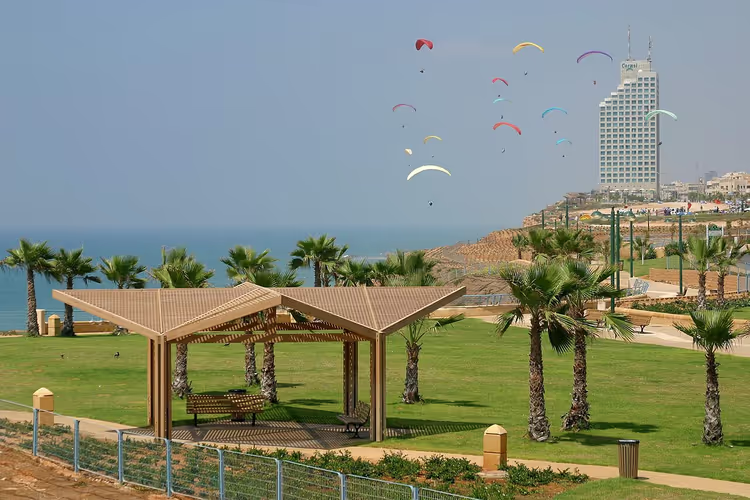
Netanya is a budget option for a Mediterranean vacation. Young people come here for clubs and bars that operate almost around the clock, and party entry is inexpensive. Hotels here are mostly up to three stars, which keeps prices down.
The beach strip is divided into equipped zones with loungers, changing rooms, and drinking fountains. Blue Bay Beach and Sironit Beach are considered among the cleanest in the country.
If you want variety, nature and archaeology museums, nature reserves, fortresses, and even a parrot farm with a butterfly garden are nearby. For active visitors there's hang gliding, jeep safaris, and water sports.
Netanya's beach line is one of the longest on the coast, and almost every zone is set up for families with children. In summer, lifeguards are on duty, cafes and equipment rentals are open, so there's no chance to get bored. In the evening, life moves to the promenade, where bars and restaurants operate. For above-average comfort, you'll have to search. But the city is conveniently connected to Tel Aviv, and the trip takes less than half an hour.
- Who it's for: young people and those watching their budget.
- Not for: those seeking premium hotels and complete quiet.
- The catch: club music is audible in the center until morning.
- Hotels: Hotels in Netanya on Trip.com
4. Herzliya
 © Mar Garina · CC BY-SAPhoto: Mar Garina, CC BY-SA (https://creativecommons.org/licenses/by-sa/3.0), Wikimedia Commons
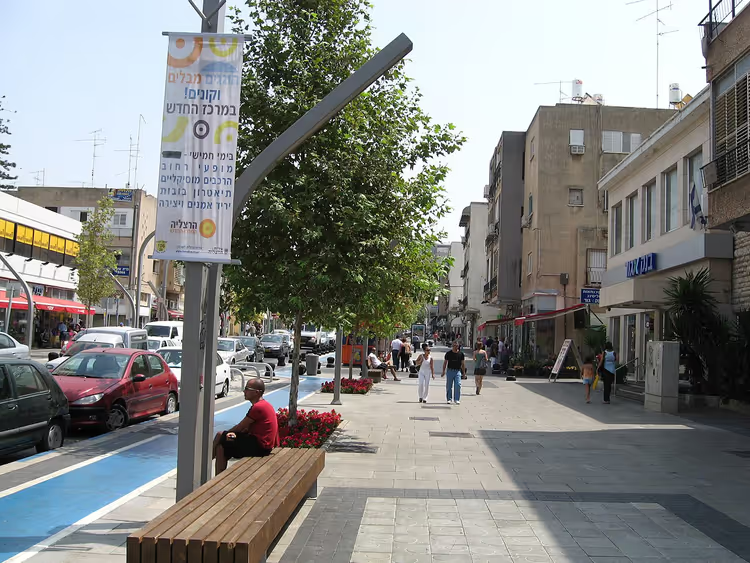
Herzliya is called Tel Aviv's wealthy sister. The neighborhoods are built up with villas and mansions, a marina with yacht berths runs along the sea, and there are private aircraft facilities nearby. The infrastructure here has reached the level of expensive world resorts.
History is present too. The ruins of Machmish date back several thousand years, and the remains of a Crusader fortress are attributed to the 13th century. Inside the fortress there's a cave with a "Dinosaur House" that families love.
For nature and walks, the Apollonia and Herzliya Park national parks fit the bill. By the sea, diving, kayaking, and fishing are offered. Keep in mind that a night at a local hotel costs noticeably more than in the center of the country.
- Who it's for: those willing to pay for a quiet, respectable vacation.
- Not for: those seeking budget hotels and club life.
- The catch: accommodation prices are among the highest on the coast.
- Hotels: Hotels in Herzliya on Trip.com
5. Ashkelon
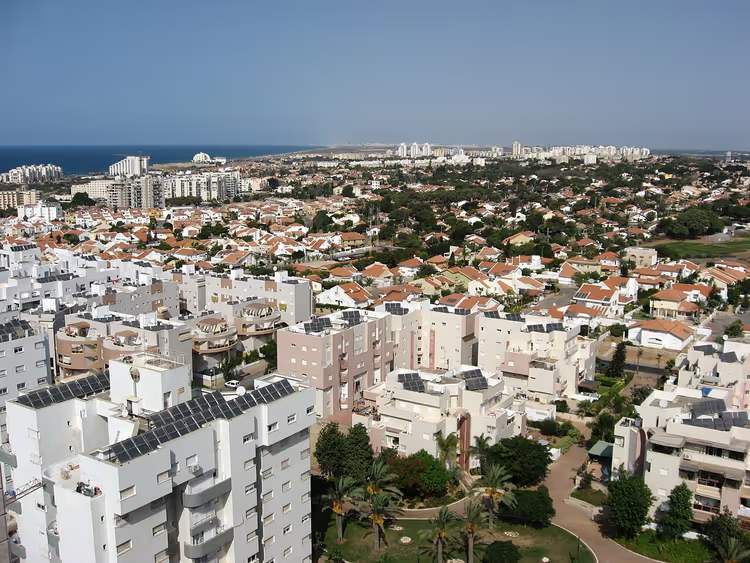
Ashkelon is the greenest city on the Mediterranean coast, with a history of five thousand years. It's cheaper than Herzliya, and the living infrastructure is just as developed. The Migdal area is dedicated to shopping, while the Afridar zone by the sea offers clean sand.
The main draw for tourists is the national park with colonnades from the time of King Herod, a statue of the goddess Nike, and a Roman amphitheater. It's also worth a separate trip to the caves with ancient tombs and the ruins of Byzantine churches.
Ashkelon's beaches are half-empty most of the year. Surfers can be found at Delilah Beach and Bar Kochba Beach, while the rest of the shore is left almost without neighbors.
- Who it's for: those who want a quiet beach and moderate prices.
- Not for: those who need a lively nightlife.
- The catch: some historic sites are located in remote areas.
- Hotels: Hotels in Ashkelon on Trip.com
6. Bat Yam
 © Ynhockey · CC BY-SAPhoto: Ynhockey, CC BY-SA (https://creativecommons.org/licenses/by-sa/4.0), Wikimedia Commons
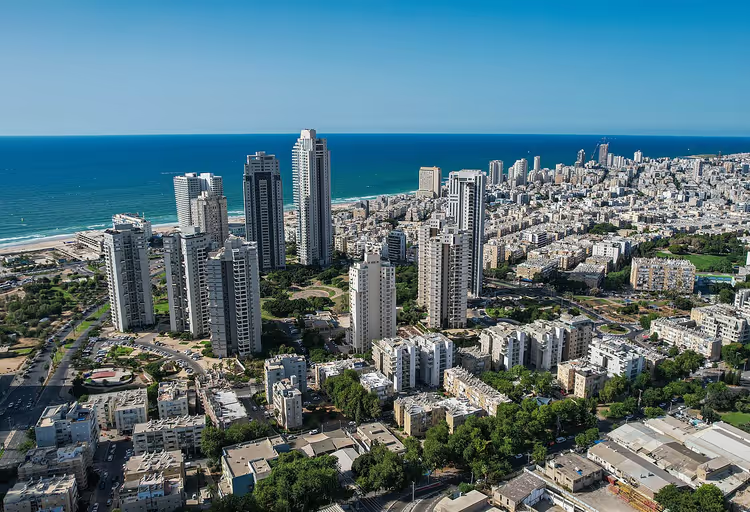
Bat Yam is more compact than its neighbors: the coastline here is short, but the sea is calm and quiet. That is why families and those tired of noisy Tel Aviv appreciate this place. The city bets on art rather than clubs.
Art exhibitions and street theater festivals take place here regularly. The MoBY and Ben Ari museums have assembled works by local and international artists, and kids will enjoy the interactive Havayedda center.
Gifts and national food can be found on Rothschild and Balfour streets. Hotels in Bat Yam are cheaper than those in Tel Aviv, and with early booking a week's vacation works out noticeably more affordable.
- Who it's for: families with children and lovers of a calm sea.
- Not for: those expecting a long beach strip and nightclubs.
- The catch: the shore is short, and in season there may not be enough loungers.
- Hotels: Hotels in Bat Yam on Trip.com
7. Haifa
 © אהוד הלפרין · CC BY-SAPhoto: אהוד הלפרין, CC BY-SA (https://creativecommons.org/licenses/by-sa/4.0), Wikimedia Commons
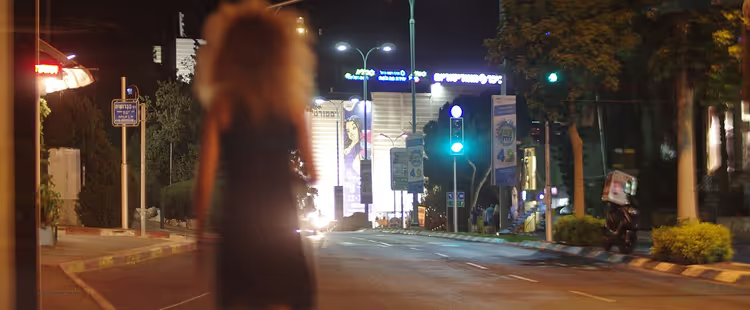
Haifa sits on Mount Carmel and is important to Jews, Christians, and Muslims alike. People come here for the Bahá'í Gardens and the Shrine of the Báb, listed as a UNESCO site, as well as the Carmelite monastery. Haifa is the only city in the country where Shabbat does not bring life to a halt.
Central Haifa has gathered museums of science and space, archaeology, and Japanese art. The upper part is home to prestigious villas and the Panorama shopping center, while the lower part is known for the Rambam Medical Center clinic.
With kids, head to XPark with its climbing wall and rope descent, or to the zoo. Souvenirs can be found at the flea market on Kibbutz Galuyot Street and at Talpiot Market. In summer, local beaches are uncrowded because of the heat.
Haifa's cuisine blends Mediterranean and Asian traditions, and local sweets and savory pastries have become a city ritual. A filling lunch for two will cost little, while hotels keep prices at the national average. In the evening, it is worth going up to the upper city for the panorama of the port and bay: the view from here is one of the best on the entire coast. During the day, it is convenient to walk through the Bahá'í Gardens, which are open to visitors on a schedule.
- Who it's for: those who value religious and urban attractions.
- Not for: those who come only for the beach and swimming.
- The catch: in summer, the coast is too hot for long walks.
- Hotels: Hotels in Haifa on Trip.com
8. Ashdod
 © Amos Meron · CC BY-SAPhoto: Amos Meron, CC BY-SA (https://creativecommons.org/licenses/by-sa/3.0), Wikimedia Commons
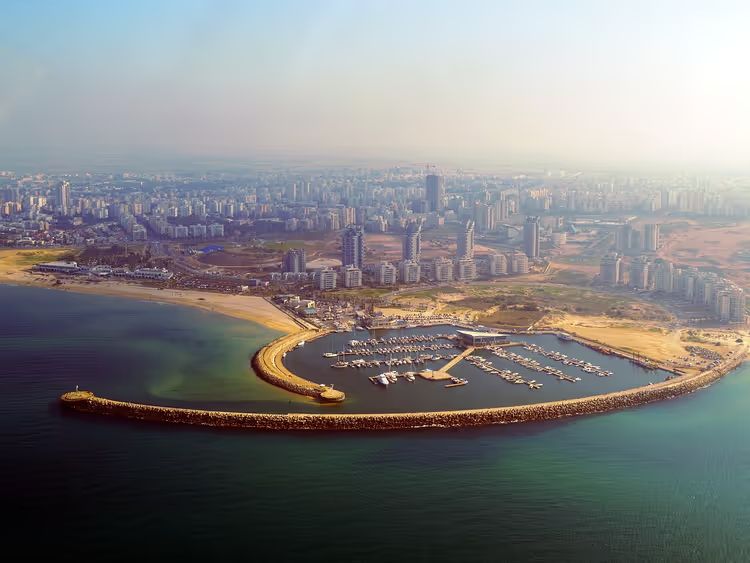
Ashdod lies half an hour from Tel Aviv and combines the roles of a cultural center and the country's main port. The city is several thousand years old, although it has carried its modern name only since the middle of the last century.
Tourists head to the sand dune park and Lachish Park for clean surroundings and a natural corner. The panorama of the city opens up from Giv'at Jonah hill, and contemporary Israeli art is shown in the pyramid-shaped MonArt Centre.
For local brand clothing, people go to shopping complexes, and for sweets and fruit to the market near Lido Beach. Dinner with drinks here costs noticeably less than in Tel Aviv.
- Who it's for: those who want an affordable seaside city near Tel Aviv.
- Not for: those looking for a long resort promenade.
- The catch: some attractions are scattered across the city.
- Hotels: Hotels in Ashdod on Trip.com
9. Acre
 © . Ray in Manila · CC BYPhoto: . Ray in Manila, CC BY (https://creativecommons.org/licenses/by/2.0), Wikimedia Commons
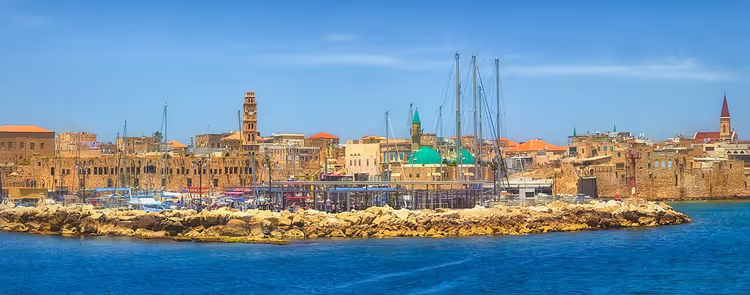
Acre is one of the oldest cities in the world, having survived Egyptians, Byzantines, Turks, and Crusaders over four thousand years. From that era remains a defensive fortress overlooking the bay. Narrow streets, Arab merchant shops, and fish markets create an atmosphere of antiquity.
Here it is worth visiting the White Mosque and the Or HaTorah synagogue, while the Turkish baths of Hammam al-Basha were built by order of Jazzar Pasha. This is one of the most affordable Mediterranean resorts with warm weather but without exhausting sun.
During the day you walk through the fortress and port, and in the evening you dine on hummus and baklava in small eateries.
- Who it's for: history lovers and those seeking an affordable, colorful vacation.
- Not for: those who want modern beach services.
- The catch: the narrow streets of the old city are noisy and crowded.
- Hotels: Hotels in Acre on Trip.com
10. Caesarea
 © Godot13 · CC BY-SAPhoto: Godot13, CC BY-SA (https://creativecommons.org/licenses/by-sa/4.0), Wikimedia Commons
Caesarea is better known as a business center than as a resort. High-tech companies and research institutes operate here, and the fast pace of life is balanced by time at the sea. The city is considered one of the most prestigious in the country.
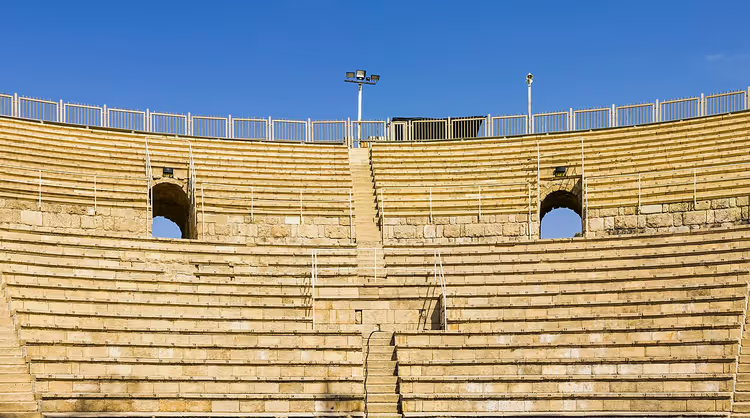
Caesarea's history was shaped by the Romans. Among the ruins of the ancient city, Herod's amphitheater and the "Palace on the Reef" have survived, and nearby there are national parks and the Ralli Museum. Many sites are free to enter.
The waterfront restaurants serve fish and seafood.
- Who it's for: those who want to combine the beach with history and a relaxed pace.
- Not for: those looking for developed resort infrastructure.
- The catch: the city is expensive, and there are fewer evening entertainment options than in Tel Aviv.
- Hotels: Hotels in Caesarea on Trip.com
11. Nahariya
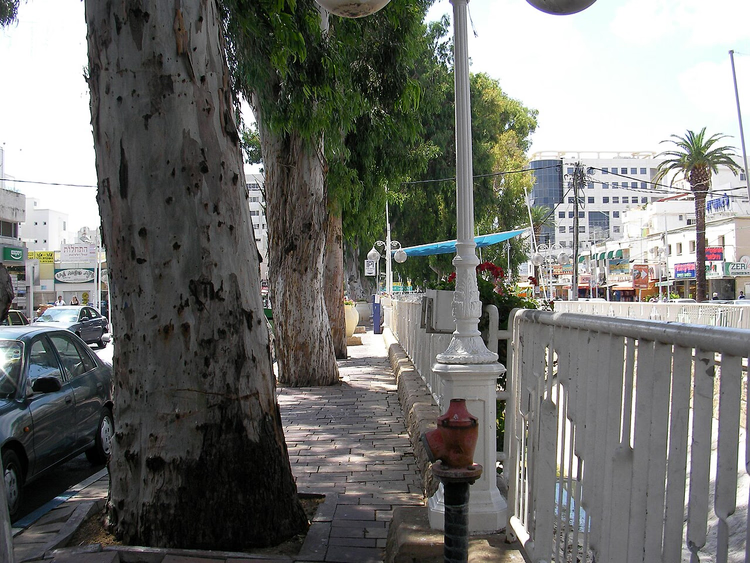 © yfrimer · CC BY-SAPhoto: yfrimer, CC BY-SA (https://creativecommons.org/licenses/by-sa/3.0), Wikimedia Commons
Nahariya is a resort for a leisurely vacation. The mild climate and man-made sandy beaches have made it a favorite spot for those who love peace and quiet. There are almost no loud bars or nightclubs here, but in the evening you can calmly watch the sunset over the sea.
Nahariya's beaches are clean and free, but other leisure activities cost more than in other cities in the country. The waterfront has amusement rides and children's cafes, and the botanical garden includes a small zoo.
For wild nature, people head to the Rosh HaNikra grottoes, reached by cable car. Along the way, you can visit the Montfort and Yehiam crusader fortresses. Lunch at a cafe will cost several times more than street food.
- Who it's for: couples and families who need a quiet shoreline.
- Not for: those coming for nightlife and parties.
- The catch: leisure activities beyond the beach cost more than in neighboring cities.
- Hotels: Hotels in Nahariya on Trip.com
Red Sea resorts
The Red Sea welcomes you with coral reefs and clear water. The best sandy beaches are concentrated in the northern part of the gulf, which is why most hotels are located there. Further south the shore is covered with large pebbles and rocks, and this area suits those looking for seclusion.
The main resort in the area is Eilat, right at the country's southern border. Desert stretches for miles around it, so the sun shines here almost year-round.
12. Eilat
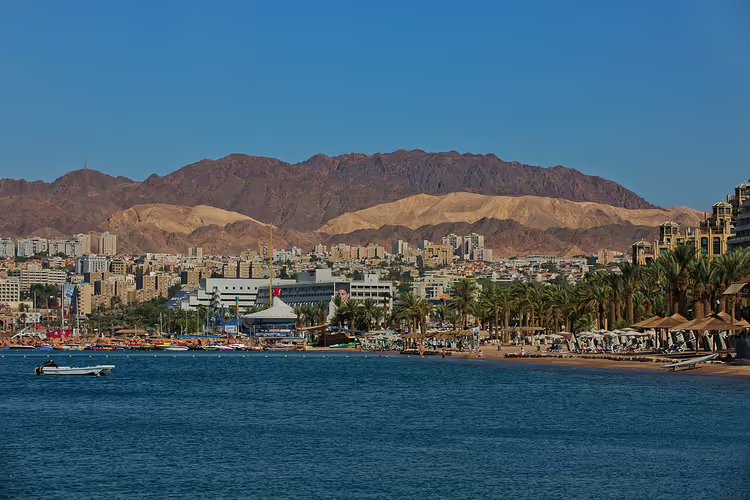 © israeltourism from Israel · CC BY-SAPhoto: israeltourism from Israel, CC BY-SA (https://creativecommons.org/licenses/by-sa/2.0), Wikimedia Commons
Eilat is Israel's southernmost city and the main Red Sea resort. The sun shines here about 360 days a year, and the water stays between 20 and 26 °C (data on Eilat). You can swim almost year-round, and that's the main argument for a winter trip.
Nature reserves surround the city: coral beaches, the Eilat Mountains, and the Red Canyon. The northern shore is chosen for its fine sand and easy water entry, while Migdalor Beach is known for perfectly clear water with a rocky bottom.
Divers from around the world come for the local reefs, and for those who don't want to dive, the Coral World Underwater Observatory is open. With kids, the aquarium, boat rides, and Ice Mall with its ice rink come in handy.
For families, Eilat is convenient because all the entertainment is compactly located. The observatory's aquarium is directly connected to the sea, so the fish live in natural water and regularly breed. During the day you can take a boat ride or snorkel right off the shore, and in the evening walk to the marina with its restaurants and shops. The city operates as a free trade zone, so electronics and brand-name items are cheaper here than in the center of the country.
- Who it's for: divers, families, and anyone who wants the sea in the middle of winter.
- Not for: those who can't handle heat and dry air well.
- The catch: in summer the air gets scorching, and walking around during the day is tough.
- Hotels: Hotels in Eilat on Trip.com
Dead Sea resorts
The Dead Sea is the country's therapeutic zone. The salty water and mineral-rich air help with skin and joint issues, so people come here not for swimming but for treatments. The best sandy promenades are concentrated in the Ein Bokek area in the southern part.
Here you get quiet and the country's best spa complexes.
13. Ein Bokek
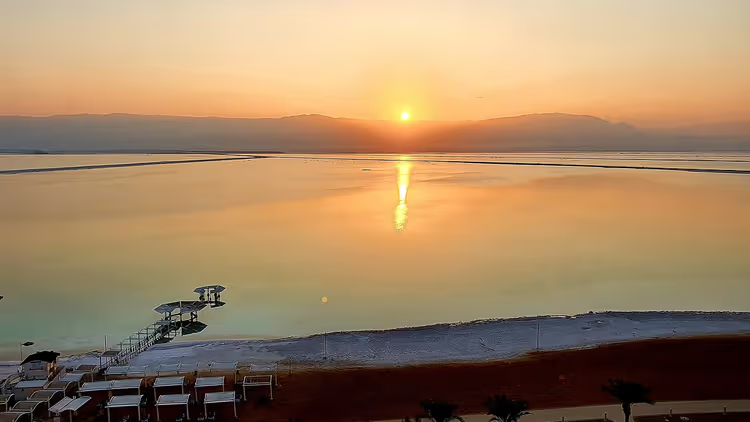 © Anagoria · CC BY-SAPhoto: Anagoria, CC BY-SA (https://creativecommons.org/licenses/by-sa/4.0), Wikimedia Commons
Ein Bokek is a health resort on the shores of the Dead Sea. Almost every hotel has a spa complex with massages, inhalation treatments, and sulfur baths, and the hotels employ medical staff offering wellness programs. People come here to treat respiratory, nervous, and cardiovascular conditions.
Nearby, it's worth seeing the Qumran archaeological park, the ruins of the Masada fortress, and Mount Sodom made of rock salt. Masada is a UNESCO World Heritage Site and remains one of the main stops on any route through the region.
Local shops sell cosmetics with Dead Sea salts and mud. Prices here are inflated, and the same jars cost less in other cities across the country.
- Who it's for: those coming for treatment and spa, not for the beach.
- Not for: families with small children and nightlife lovers.
- The catch: cosmetics on site are more expensive than in the rest of Israel.
- Hotels: Hotels in Ein Bokek on Trip.com
Resorts on Lake Kinneret
Lake Kinneret lies below sea level and attracts pilgrims and fans of thermal springs. The shores have been inhabited since ancient times, so it's easy to combine swimming with history here. The two main resorts in the area are Hamat Gader and Tiberias.
14. Hamat Gader
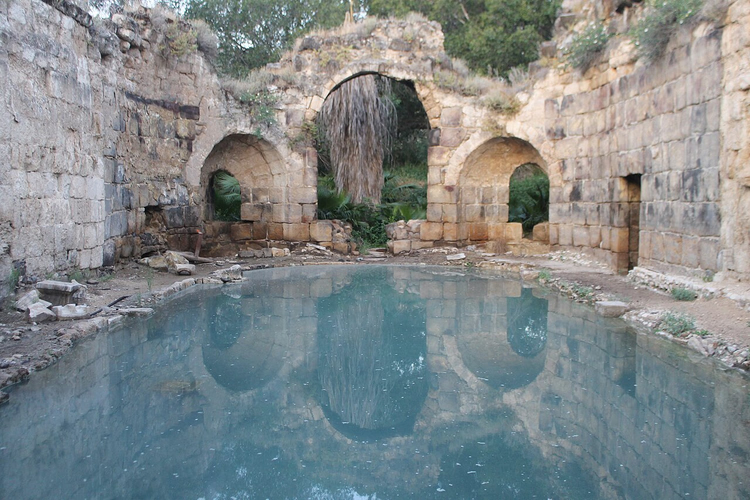 © Yitzhak Marmelstein · CC BY-SAPhoto: Yitzhak Marmelstein, CC BY-SA (https://creativecommons.org/licenses/by-sa/4.0), Wikimedia Commons
Hamat Gader is a therapeutic resort on the Sea of Galilee, known for its thermal mineral springs. Pools, jacuzzis, and sulfur waterfalls have a beneficial effect on the skin and immune system. The medical centers have physiotherapy offices with specialized practitioners.
Nearby, Roman baths over 1,500 years old have been preserved, although they can no longer be used. Entry to the resort grounds is paid once.
Individual rooms here are rarely booked; most people buy package tours. That works out cheaper than putting the trip together piece by piece.
- Who it's for: those who want to combine treatment with a lakeside vacation.
- Not for: those looking for a sea beach and evening entertainment.
- The catch: the resort's own beach is small, and getting there without a car is harder.
- Hotels: Hotels near the Kinneret on Trip.com
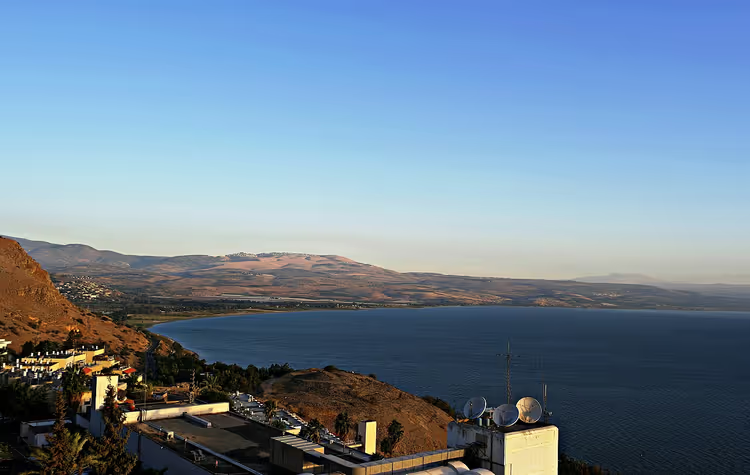
15. Tiberias
 © Theengine777 · CC BY-SAPhoto: Theengine777, CC BY-SA (https://creativecommons.org/licenses/by-sa/4.0), Wikimedia Commons
Tiberias is one of Israel's holy cities. Pilgrims come here to visit the tombs of Jewish sages, and the city itself was once recaptured from the Romans. Since then it has grown with synagogues, although it was named after a Roman emperor.
Tiberias has preserved the 18th-century Daher el-Omar fortress, a Franciscan church, and remnants of the city wall. A full view of the city opens from Mount Berenice, and Hamat Tiberias National Park is known for its mineral baths.
Today families vacation at Lake Kinneret: the water is warm, and the shore is set up for swimming. Hotels in Tiberias cost less than those on the Mediterranean.
- Who it's for: pilgrims and those who want a quiet lakeside vacation.
- Not for: those coming for the sea, beaches, and clubs.
- The catch: infrastructure is more modest than on the Mediterranean.
- Hotels: Hotels in Tiberias on Trip.com
Which one to choose for a family vacation
A vacation with a child requires a warm sea and a well-developed shoreline. Cross Dead Sea resorts off your list right away: the salty water is not recommended for children, and some hotels ask for age confirmation at check-in.
Eilat takes the best care of children. The Red Sea water there stays between 20 and 26 °C (water temperature in Eilat), and there are enough activities for any age: a water park, an amusement park, a dolphinarium, and educational museums. Many hotels offer baby food, nannies, and kids' club staff.
For a quiet vacation, Tel Aviv, Netanya, Haifa, and Herzliya work well. The catch: hotel prices are high. Look for offers where young children stay free.
Among the country's top beaches, Coral Beach in Eilat, Achziv Beach in Nahariya, and Poleg Beach in Netanya lead the list. Families should consider the city beaches of Tel Aviv and Netanya with breakwaters: you can swim there in almost any weather.
Best time to visit

The weather in Israel stays warm all year round, so tourists appear as early as spring. For swimming, the spring water is still cool, but in the south, in Eilat, the season opens in April. The Red Sea warms up faster than other waters.
The best season for long walks is autumn. In summer, the heat becomes oppressive, and tours are moved to the morning or evening. In autumn, temperatures stay in a comfortable range, and hotels lower their prices. In winter, the country empties out, and you see more pilgrims than tourists on the streets.
Plan your trip like this: April and May for the sea, September and October for cities and routes, winter for Eilat and the Dead Sea.
Israel resorts on the map
All 15 resorts from this selection are marked on one map. Open it to sketch out a route and see the distances between areas.
Resorts of Israel
Places on the map
- 1Tel Aviv Free beaches, Bauhaus architecture, nightlife
- 2Jaffa Historic heart of Tel Aviv, old port and galleries
- 3Netanya Budget resort with clubs, Blue Bay and Sironit Beach
- 4Herzliya Marina for yachts, Crusader ruins, expensive villas
- 5Ashkelon National park with Herod's colonnades, quiet beaches
- 6Bat Yam Calm sea, MoBY and Ben Ari museums
- 7Haifa UNESCO Bahá'í Gardens, Mount Carmel, museums
- 8Ashdod Sand dune park, Giv'at Jonah hill, the country's main port
- 9Acre Ancient Crusader fortress, Hammam al-Basha Turkish baths
- 10Caesarea Herod's Roman amphitheater and the "Palace on the Reef"
- 11Nahariya Quiet beaches, Rosh HaNikra grottoes, Montfort and Yehiam fortresses
- 12Eilat Main Red Sea resort, diving, underwater observatory
- 13Ein Bokek Dead Sea health resort, near Masada
- 14Hamat Gader Thermal mineral springs and Roman baths near the Sea of Galilee
- 15Tiberias Holy city on the Sea of Galilee, Daher el-Omar fortress
⁉️🤔 Frequently asked questions
Which Israel resort should I choose for a first visit?
For a first trip, go with the Mediterranean coast. Tel Aviv gives you a beach and nightlife, Netanya costs less, and Jaffa adds history. From here it's easy to travel around the country, and the swimming season runs from April to November.
Where in Israel should I vacation with children?
Eilat is the best choice. The Red Sea water is warm almost all year round, and the area has a water park, a dolphinarium, and an aquarium. Quiet options for families are Tel Aviv, Netanya, Haifa, and Herzliya.
Is it worth going to the Dead Sea with a young child?
No. For adults, this destination works for treating skin, joints, and respiratory issues, but not for children's swimming.
When is the best time to go to Israel?
For the sea, choose April and May; for cities and routes, September and October. In summer, the heat is oppressive, and tours are moved to the morning. In winter, the country empties out, and that's the best time for Eilat and the Dead Sea.
How much does a vacation at Israeli resorts cost?
Prices depend heavily on the city and season. Netanya, Ashdod, and Bat Yam are cheaper, while Herzliya and Tel Aviv are more expensive. A hotel night at the Dead Sea costs more because of the spa facilities. Look for offers in advance, and you'll pay less.
In short: what to book
Israel's 15 resorts fall into four clear zones, and the choice here depends on what you want from your vacation. Here's a simple matrix by trip type.
- If you want beach and nightlife: go with Tel Aviv or Netanya.
- If you're traveling with kids: look at Eilat.
- If you're going for treatment: choose Ein Bokek or Hamat Gader.
- If you want quiet and history: Acre, Caesarea, or Tiberias will work.

A small editorial team writing guides for independent travel. We travel ourselves, but we haven’t been everywhere, so we check prices, opening hours and how to get there against official sources.