

















Phuket by month: dry season, downpours and best dates for the beach
Phuket welcomes visitors year-round, but the months here differ from each other far more than people usually assume. One season brings calm seas and clear skies, the other runs on the monsoon schedule.
Almost everything depends on the month you travel: flat water or red flags, an empty beach or dense crowds, an affordable hotel rate or the peak of high season. Below we break down the island's climate month by month and explain when to go to Phuket for the beach, and when to go for quiet, greenery, and low prices.
We checked the weather data in September 2026 against the meteorological service of Thailand and long-term observations.
Ad: this article contains affiliate links, we earn a commission if you book through them, at no extra cost to you.
Best time to visit Phuket: the short answer
💡 In short:
- The dry season runs from December to April: maximum sun and calm seas.
- The rainy season runs from May to October, with the heaviest rain in September (according to Phuket climate summaries, 09/2026).
- It stays warm year-round, rarely dropping below 22 °C at night (according to long-term measurements).
- Rain showers in the rainy season are short: heavy rain lasts less than an hour, then the sun returns.
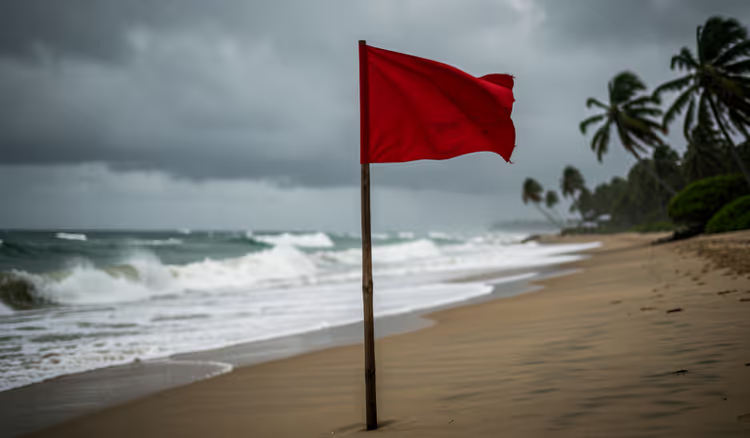
- Swimming is not allowed when a red flag is up: strong rip currents occur off Phuket's shores.
Phuket: an island in the Andaman Sea
Phuket, Thailand's largest island, lies in the Andaman Sea. A bridge connects it to the mainland, so it's easy to get here by car or bus from Phang Nga province.
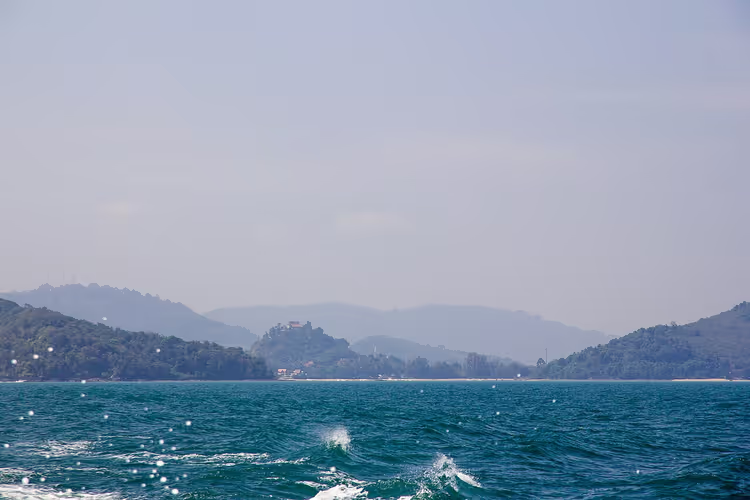 © Alexey Komarov · CC BYPhoto: Alexey Komarov, CC BY (https://creativecommons.org/licenses/by/3.0), Wikimedia Commons
The island is large, and the weather on different ends of it often doesn't match. The drive from the international airport to the southern beaches takes about an hour, and the terrain itself shifts from mangrove forests in the east to sandy bays in the west.
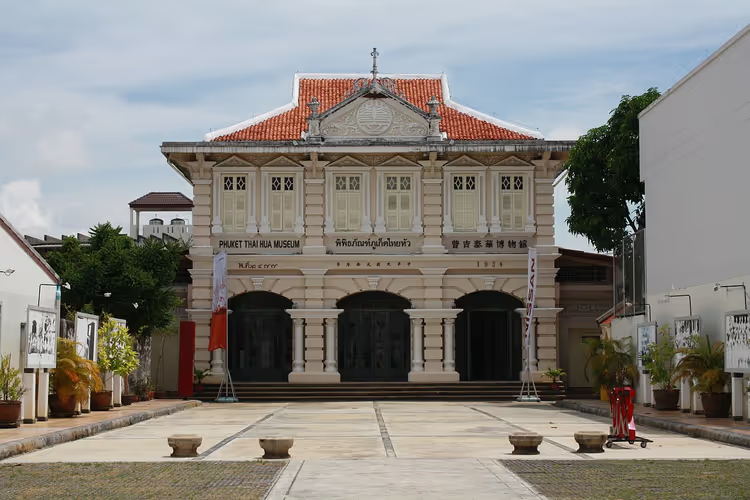
Phuket's main beaches are concentrated in the west: Patong, Karon, Kata, and Nai Harn. In the center is the old town with Sino-Portuguese style buildings, and in the south, viewpoints open up views of the sea.
The varied terrain explains the main local quirk: hills and bays create separate zones with their own cloud cover. That's exactly why rain in Patong doesn't mean it's raining in Kata too.
For planning purposes, what matters is that the infrastructure operates year-round. The island has hotels at every level, hospitals, car rental, and ATMs, so Phuket works for both a short beach vacation and a long winter in a warm climate.
Unlike small islands such as Phi Phi, there's plenty to do here when it rains. Shopping malls, museums, cooking classes, and evening shows come to the rescue in any weather, and we'll cover those below.
Climate and weather in Phuket
Phuket's climate is tropical, so the temperature barely changes from month to month. During the day the air warms up to an average of thirty degrees, and at night it rarely gets cooler than twenty-two (according to island climate averages, 09/2026).

The sea is also warm year-round, so swimming is comfortable in any month. That means seasonality here is determined not by air temperature, but by the amount of rain and wind strength.
Humidity stays high all the time, especially near the coast. In the first few days, drink more water and move long walks to the morning or evening.
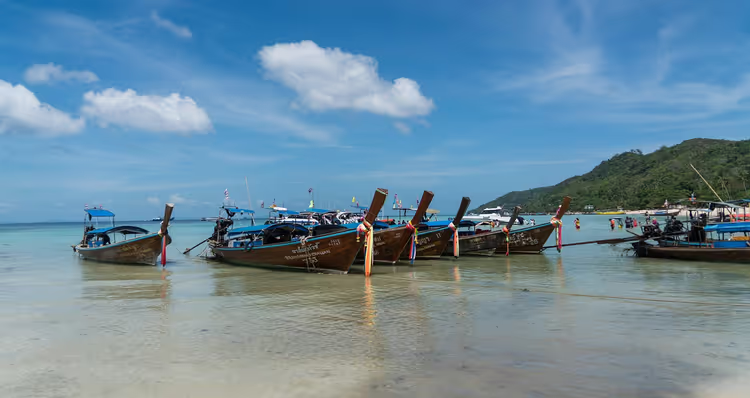
The year is divided into two seasons: the dry season, which runs from December to April, and the rainy season, which falls on May through October. The boundaries are blurred: downpours happen in December too, and sunny days occur in August.
The takeaway for you is simple. Choose your month based on your tolerance for rain; Phuket always has warmth.
Two seasons in Phuket
The island's weather is driven by the monsoon. In summer the wind blows from the southwest and brings moist air from the ocean; in winter the direction shifts to the northeast. This shift in wind is what divides the year into two major seasons.
 © Полина Славянская · CC BYPhoto: Полина Славянская, CC BY (https://creativecommons.org/licenses/by/3.0), Wikimedia Commons
Dry season: December to April
From December to April, clear weather prevails in Phuket. Rain is rare and brief, the sea is calm, and underwater visibility is excellent. These months are the peak for diving, boat trips, and excursions to neighboring islands.
December and January are considered the most comfortable. The heat is milder, evenings are cooler, and humidity is lower. This is exactly when the most tourists arrive on the island, and hotel prices rise noticeably.
February and March remain dry, but the air gradually heats up. Days get hotter, but the sea stays calm and the sky stays clear.
April closes out the dry season and is considered the hottest month. Nights are warm too, so it's best to plan excursions for the morning. In mid-April, Phuket celebrates Songkran, the Thai New Year: it's observed across the country on April 13-15 (according to the Thailand holiday calendar, 2026).
Rainy season: May-October
The rainy season is opened by the southwest monsoon. Rain falls more often, the air gets heavier, and the sea on the west coast is frequently rough.
Downpours are usually short and intense. An hour after a downpour the sun is out again, so the whole day isn't lost.

September and October are considered the wettest months. During this time the wind picks up, and swimming at open beaches may be restricted.
On the plus side, nature looks more vivid in the rainy season. The hills turn fresh green, waterfalls gain strength, and beaches and hotels empty out. For you, it's a chance to see the island calm and save on accommodation.
Phuket's microclimate quirks
Phuket often surprises with local weather differences. Patong can be sunny while Kata, just a few kilometers away, is getting a downpour.
The reason is the terrain. Hills and differently shaped coastlines affect clouds and wind, so the picture changes literally within a single drive.
For you, this means you shouldn't get upset about rain at your hotel. Often it's enough to drive to another beach to find dry weather.
For the same reason, long-term forecasts for the whole island are unreliable. Weather apps show an averaged picture and don't account for local quirks, so check conditions on the ground.
Phuket climate table by month
Below are monthly averages so you can compare travel options by the numbers. Pay attention to the number of rainy days: that's what sets the dry season apart from the rainy season.
Metric | Jan | Feb | Mar | Apr | May | Jun | Jul | Aug | Sep | Oct | Nov | Dec |
|---|---|---|---|---|---|---|---|---|---|---|---|---|
High, °C | 31 | 32 | 33 | 34 | 33 | 32 | 31 | 31 | 31 | 31 | 31 | 31 |
Low, °C | 22 | 23 | 24 | 25 | 25 | 25 | 25 | 25 | 24 | 24 | 23 | 24 |
Sunny hours per day | 8 | 8 | 8 | 8 | 7 | 6 | 5 | 5 | 5 | 6 | 6 | 7 |
Rainy days | 6 | 4 | 6 | 12 | 22 | 20 | 20 | 20 | 24 | 24 | 17 | 8 |
Water, °C | 27 | 28 | 29 | 29 | 30 | 29 | 29 | 29 | 28 | 28 | 28 | 27 |
Values are based on long-term averages for 1990-2020 (30-year observations). Weather can differ from the averages, so the table works as a guide, not an exact forecast.
Dry months fall at the start of the year, wet ones in the fall. The sharpest shift comes between April and May: the number of rainy days jumps suddenly.
Current forecast and weather warnings
Weather changes, so check fresh data before your trip. Fresh updates and storm warnings are published by the Thai Meteorological Department and local services.
 AIIllustrative image: AI-generated
Check the forecast before boat excursions. When a storm warning is in effect, trips to the islands are canceled, and that's a matter of safety, not convenience.
Phuket by month: January to December
Below is a short breakdown of each month. If your travel dates are already set, find your month and see what to expect from the sea, rain, and prices.
Phuket in January
January is one of the best months for a vacation on the island. Rain is rare, there is plenty of sun, and the sea is calm and clear. Underwater visibility is excellent, which is why divers and snorkelers choose this period. Hotels and beaches are busy, prices stay at their peak, so it's better to book accommodation in advance. If you want quiet, choose beaches away from Patong. Evenings are comfortable, without stuffiness.
Phuket in February
February continues the dry season and is considered one of the most pleasant months. It's hot during the day, comfortable at night, and rain hardly interferes with plans. The sea remains calm, which is convenient for snorkeling and trips to nearby islands. Demand for hotels is high, but the weather almost never lets you down. Book excursions for the morning: before noon the heat is milder. Light clothing and sun protection will be enough.
Phuket in March
March gets hotter, but the weather stays clear. Rain is rare and short, the water is transparent, and the beaches are full. Demand for hotels and excursions is high, so popular tours should be booked in advance. After noon it's better to stay in the shade or by the pool. If you don't handle heat well, plan your trip for February or December. In the evening it's pleasant to walk along the waterfront.
Phuket in April
April ends the dry season and brings peak heat. At night there is almost no coolness, so excursions are better scheduled for early morning. The sea remains calm and rain stays rare. In the middle of the month Songkran takes place: the streets turn into one big water festival, and that alone is a reason to come. Keep in mind that during the holiday hotels get more expensive and transport is busy.
Phuket in May
May is a transitional month. It's still hot and often sunny during the day, but rain comes more often and the sea starts getting rough. For you, this is a month of flexible plans and lower prices: hotels get cheaper and beaches empty out. Check the forecast in the morning and leave room to change plans. A good idea for this period: short trips around the island between downpours.
Phuket in June
In June the monsoon gains strength. The sun still appears, but downpours come every other day and the sea sometimes gets rough. Watch the flags on the beach and lifeguard warnings, swimming may be restricted. On the plus side, the greenery around is fresh and there are almost no lines. Bring a raincoat and a change of dry clothes. Evening shows and restaurants operate as usual.
Phuket in July
July is typical of the rainy season: warm, humid, with short but heavy rain. The sea is often rough, so swimming and water sports depend on the weather. During clear hours, get to the beach, and during a downpour plan a museum or a cafe. Prices remain low and there are fewer tourists. For you, this is a calm Phuket without crowds at the viewpoints.
Phuket in August
August remains rainy, and the sea is often rough. On such days the hotel pool saves you, so when choosing accommodation, check for a pool and spa. Beaches and attractions are less crowded than in high season. For a quiet vacation without crowds, this is a good option. Check the forecast twice a day, the weather here changes quickly.
Phuket in September
September is considered the rainiest month. Downpours come often, sometimes with thunderstorms, and boat trips depend on the weather. For a pure beach vacation, this month is less suitable. On the plus side, nature looks vivid, waterfalls are full, and prices are at their lowest. If you're ready for a flexible schedule, the trip will be inexpensive. Plan museums, spas, and evening shows in advance.
Phuket in October
October still lives in the rainy season. Rainfall is frequent and sometimes prolonged, the sun appears less often, and the sea remains rough. For a classic beach vacation, this month is weak, but hotel and ticket prices are noticeably lower. Plan backup options for every day. Trips around the old town and cooking classes work well.
Phuket in November
In November the weather gradually improves. There is more sun, but rain is still possible and the sea sometimes gets rough. For the beach, the month is only partially suitable, swimming in a pool is more reliable. However, on November 25, 2026, Loy Krathong, the festival of lights and water, is celebrated (according to Chiang Rai Times, 2026). Prices are still moderate and there are fewer tourists than in December.
Phuket in December
December opens the dry season. The sky is more often clear, the temperature is comfortable, but occasional downpours still happen. From the middle of the month, high season begins, prices rise, and hotels are booked in advance. For many, the December holidays in Phuket become the main trip of the year. If you want to save money, look at the first half of the month.
That's what a full year in Phuket looks like. The most consistent weather awaits you from December to March, and the rainiest stretch falls on September and October. Between them lie transitional months with changeable days. For you, that means one thing: compare not only the temperature but also the number of rainy days in the table above.
Restrictions during the rainy season
During the rainy season, there are several restrictions to keep in mind. The sea gets rough, and swimming on open beaches of the west coast is sometimes prohibited.
On the windiest days, boat trips to nearby islands, such as Phi Phi or James Bond Island, are canceled. Services resume as soon as the wind dies down.
After a storm, trash and branches wash ashore, so the beach may look unappealing. Usually municipal services clean it up within a day. Plan beach days with some buffer, and a downpour won't ruin your vacation.
Sometimes individual sections of beaches are also closed due to waves. On such days it's better to choose a pool, a spa, or a trip inland. On the plus side, after rain nature is especially fresh and waterfalls are full.
Don't ignore warnings on Phuket beaches
The power of the sea in Phuket is underestimated. Rip currents form off the island's shores and carry even confident swimmers far from the coast, especially during the monsoon season.
A red flag on the beach means swimming is prohibited, and you need to respect it. Lifeguards warn: considering yourself a strong swimmer is not enough, the current moves faster than any person (according to Thailand News, 08/2026).
Statistics confirm the seriousness of the risk. According to Phuket News, Karon Beach is considered the most dangerous on the island: 20 drowning deaths were recorded here between 2024 and 2026.
In the rain, the water gets murky, and it's harder to spot rocks or debris under the surface. A sudden change in weather raises waves that behave unpredictably.
If you see a prohibition, stay on shore. You can admire the island from a safe distance, and move your swim to a day without warnings.
Swim only in permitted areas and where lifeguards are on duty. Children must be supervised even in shallow water, because waves and currents change within minutes. If you're being carried away, don't fight the current: move along the shore and call for help.
What to do during the rainy season in Phuket
Even in the rainy months, Phuket has plenty to keep you busy. The island's infrastructure makes it easy to wait out a downpour in a museum, shopping mall, or cooking class, so you won't be bored.
Evening shows bring Thai culture to the big stage. The most famous production, Siam Niramit, welcomes guests in the eastern part of the island and opens its gates early so you can explore the craft village. Nearby, the Simon Cabaret performs with music, dancing, and dazzling costumes.
Art lovers should check out the Phuket Trickeye Museum with its interactive 3D paintings, or the Thai Hua Museum, which tells the story of Chinese immigrants. The old town is worth exploring even in the rain: Sino-Portuguese facades and street art on the walls.
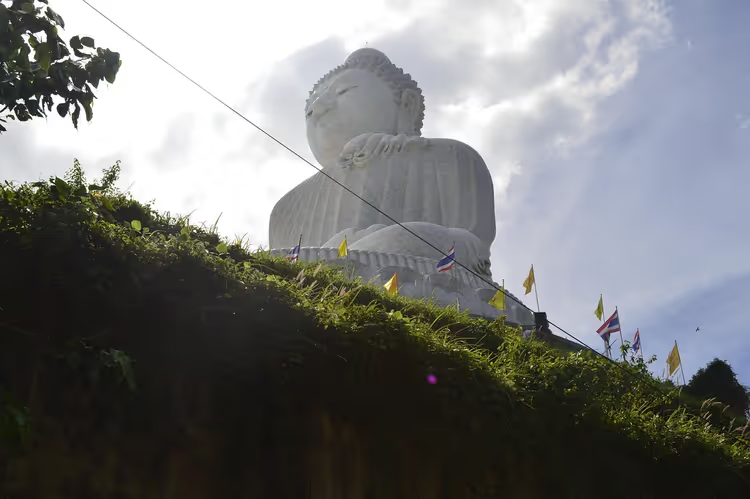
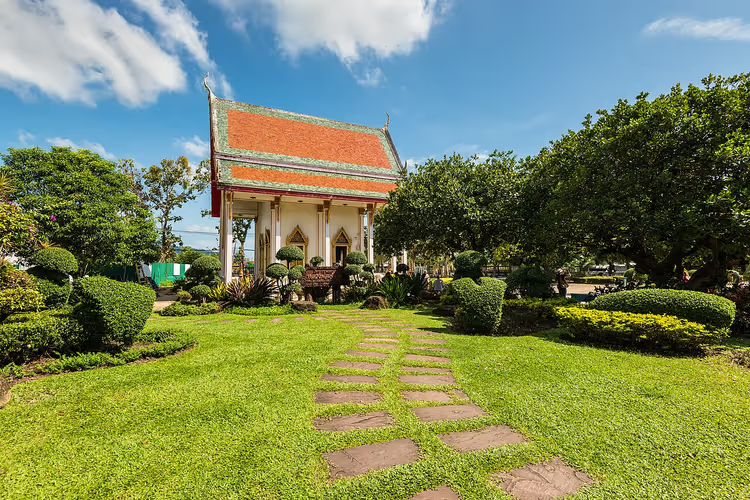
The island's temples, including Wat Chalong and Big Buddha, are impressive even in cloudy weather. Bring an umbrella and respect the dress code: shoulders and knees covered.
For rest and recovery, Phuket has hundreds of spas and massage salons. Thai massage and spa treatments are a great way to wait out the rain, and many hotels have their own spa center where you can book a session without stepping outside.
Foodies should take a cooking class or simply explore the street food. The Central Festival and Jungceylon malls in Patong have cinemas, bowling, and game zones, so a rainy day won't go to waste.
Families will enjoy the Phuket Aquarium with its Andaman Sea inhabitants and the Upside Down House Phuket with its inverted rooms. The Kathu Mining Museum covers the island's tin mining history, and the Phuket Elephant Sanctuary cares for rescued elephants.
On clearer days, head to the waterfalls inland, such as Kathu Waterfall or Bang Pae Waterfall. Closed-toe shoes and insect repellent will come in handy here. Tours and shows are best booked in advance, especially in high season: show tickets and tours in Phuket.
Where to stay in Phuket
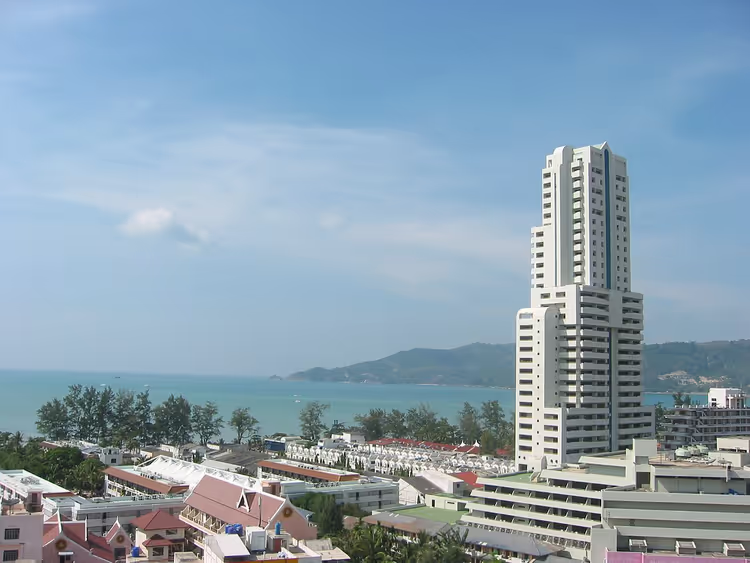
Choosing the right area matters more than the hotel's star rating. Patong suits those who want nightlife, restaurants, and shopping within walking distance.
Karon and Kata are quieter. They have long beaches, family-friendly hotels, and less noise in the evenings, but during the monsoon the currents near the shore are stronger.
In the south, near Nai Harn and Rawai, it's quiet and green, but you'll need to drive to reach entertainment. Northern areas near the airport are convenient for short stops before a flight.
 © Thorfinn Stainforth · CC BY-SAPhoto: Thorfinn Stainforth, CC BY-SA (http://creativecommons.org/licenses/by-sa/3.0/), Wikimedia Commons
In high season, from December to March, hotels are booked months in advance. In the rainy season, prices are lower and availability is wider, so you can afford a higher level of accommodation for the same money.
- Who it's for: families with children and couples who value a hotel pool.
- Not for: those who want loud parties until dawn; they're better off in Patong.
- The catch: in high season, prices at beachfront hotels are noticeably higher.
It's worth checking whether the hotel has a pool and shuttle service: on rainy days, the pool becomes the main place to relax. You can browse options and prices on Trip.com.
Beaches and viewpoints in Phuket
Phuket's beaches each have their own character. Patong is the liveliest: water sports, cafes along the shore, and a long promenade for strolling.
Karon and Kata are good for relaxed swimming, but during the monsoon the currents here are strong. Pay attention to flags and lifeguard warnings.
At the southern cape of Promthep, viewpoints offer sunset views. From here you get a wide panorama of the Andaman Sea and the bays, and in the evening people come to take photos.
Another sea view awaits you at Big Buddha on Nakkerd Hill. The drive takes about half an hour from Patong, along a winding road.
For quiet beaches, head to the north of the island, near Nai Thon and Mai Khao. There's less infrastructure here, but the water is calmer and the air is cleaner. For evening walks, the beach near your hotel works well.
Bottom line: the best time to visit Phuket
Phuket is open to visitors year-round, but everyone has different goals. Below we've put together quick takeaways by season so you can pick dates that work for you.
Ideal time: December to March
If you want sun, calm seas, and minimal rain, choose the months from December to March. These are the best months for the beach, snorkeling, and boat trips. Keep in mind that this is high season: prices are higher and beaches are more crowded.
Be cautious in September and October
For a pure beach vacation, September and October are the least suitable months. Heavy rains are frequent during this time, and the sea remains rough. If you're only coming for the beach, consider other destinations or shift your dates.
Phuket at any time of year
The island wins thanks to its infrastructure. Even in a rainy month, you'll find museums, spas, shows, and restaurants, and between downpours you'll have time for the beach and viewpoints.
 © Navigator334 · CC BY-SAPhoto: Navigator334, CC BY-SA (https://creativecommons.org/licenses/by-sa/4.0), Wikimedia Commons
In the rainy season, you get green hills, empty beaches, and low prices. In the dry season, calm seas and reliable sunshine.
Choose your month based on your priorities: quiet and savings in summer, sun and full service in winter.
Best time to visit Thailand
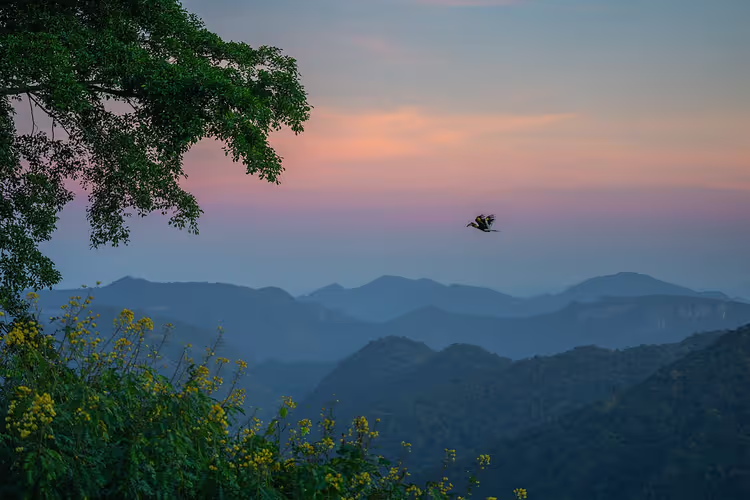
Phuket's seasons don't match the seasons in the rest of Thailand. The Andaman coast, where Phuket and Krabi are located, is dry from December to April.
 © PonlawatThai · CC BY-SAPhoto: PonlawatThai, CC BY-SA (https://creativecommons.org/licenses/by-sa/4.0), Wikimedia Commons
In the Gulf of Thailand, around Samui and the islands of Tao and Phangan, it's the opposite: rains come at the end of the year, and the dry season shifts toward spring. So it's best to plan a route through the country with both coasts in mind.
In the north, in Chiang Mai and Chiang Rai, the rainy season lasts from May to October, and winters are cooler than in the south. For mountain areas, bring warm clothing and plan day trips.
If you want to compare options, read our guides on the best time for Thailand, for the islands of Samui, Phangan and Tao, and for Koh Chang.
⁉️🤔 Frequently asked questions
When is the best time to visit Phuket for a beach vacation?
From December to March, when rainfall is lowest, the sea is calm, and underwater visibility is at its best. December and January are more comfortable temperature-wise, while February and March are warmer but still dry. Keep in mind that this is high season: prices are higher and beaches are busy, so book your hotel in advance.
Is it okay to visit Phuket during the rainy season?
Yes. Rains are usually short, and the sun shines between downpours. The upsides: fewer tourists, lower prices, lush nature, and full waterfalls. The catch: the sea is often rough, and swimming at open beaches is sometimes prohibited due to rip currents. Plan your days flexibly.
Are Phuket's beaches dangerous?
The island's shores have strong rip currents. When the red flag is up, swimming is prohibited, and the warning must be followed. The statistics confirm this: Karon Beach is considered the most dangerous on the island by number of drowning incidents (according to the beach safety report, 2026).
What to do in Phuket when it rains?
Museums, shopping malls, spas, cooking classes, and evening shows operate regardless of the weather. Good options include the Phuket Trickeye Museum, Thai Hua Museum, Phuket Aquarium, and the Siam Niramit show. During clear breaks, head to waterfalls or the viewpoints at Promthep.
When are prices lowest in Phuket?
In the rainy season, especially in autumn. Hotels and tickets are cheaper than in high season, and availability is wider, so you can book higher-level accommodation. If you're okay with short downpours, autumn works well for a budget trip.
In short: what to book
Phuket welcomes guests in any season, but preparation depends on the month. If you're going in December or January, book your hotel and tours in advance: this is the busiest period.
- If you're traveling in the dry season: book a beachfront hotel and plan boat trips.
- If you're traveling in the rainy season: choose a hotel with a pool and spa, and keep tours for flexible days.
- If you're traveling with children: look at Patong and Kata, where there's more infrastructure and entertainment.
Before your trip, compare insurance options to cover flight cancellations and medical expenses. And check the current forecast on the Thai meteorological department's website.

A small editorial team writing guides for independent travel. We travel ourselves, but we haven’t been everywhere, so we check prices, opening hours and how to get there against official sources.