
















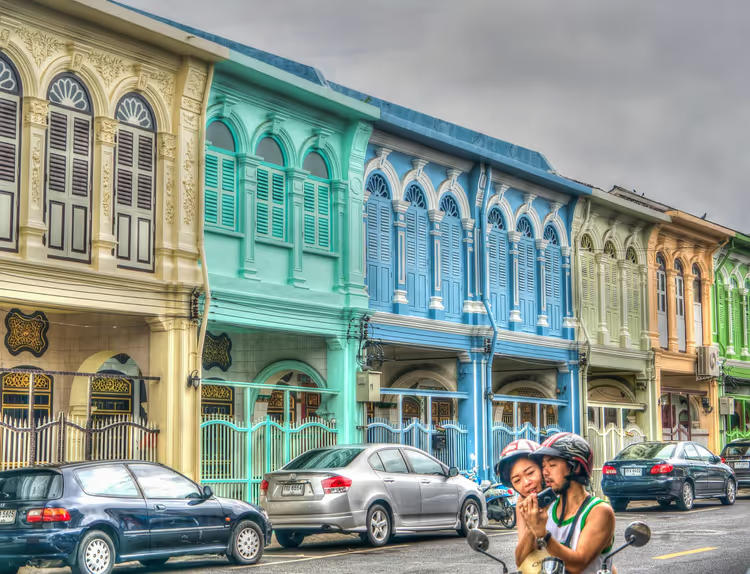
Phuket Town street food: two days of roti, curry and late night noodles
Phuket is known for its beaches, but its cuisine is worth a trip on its own. The island's street food blends three traditions: Hokkien, Thai-Muslim, and Peranakan.
You spend the first half of the day eating roti right by a charcoal stove, the second half working through southern curries, and you finish with late-night noodles. Some places open at six in the morning, others stay open until almost two at night, so you'll need to plan your day tightly. Below is a day-by-day route: where each spot is, when it opens, and what to order.
Ad: this article contains affiliate links, we earn a commission if you book through them, at no extra cost to you.
How the route works
💡 In short:
- Day one: Old Town, a roti spot, southern curries and cocktails, finishing with late-night noodles.
- Day two: a pre-dawn market, donuts, curry, and dinner at a floating restaurant.
- The route is walkable through Phuket Town, but you'll need a car or motorbike to get to Thalang and Karon.
- Opening hours and route landmarks: 09/2026, verified against Michelin food guide materials.
Phuket Town's street food scene runs on family-run spots that have been operating for decades. Their menus are short: a handful of items that locals come specifically for. The selection depends on the time of day, so roti and donuts sell out in the morning, curries are served at lunch, and noodles and snacks live on until night.
Plan your day so you arrive at opening time: by midday some spots close, and by evening others open. The Old Town is walkable and compact, and distances here are measured in blocks.
Day 1: Old Town and late-night snacks
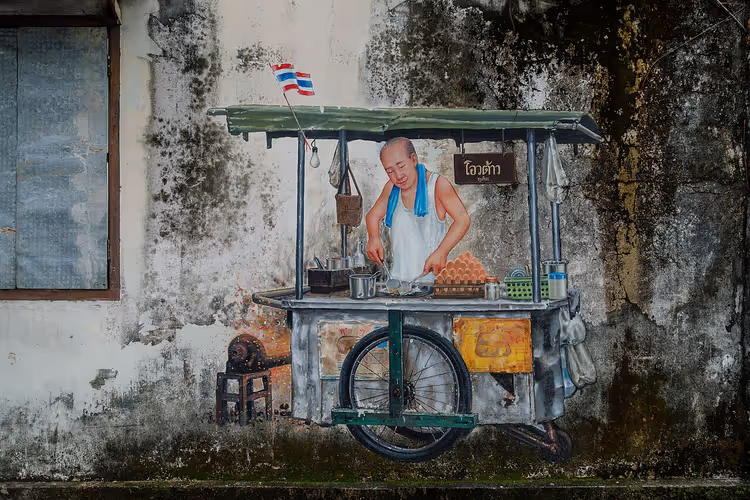 © CEphoto, Uwe Aranas · CC BY-SAPhoto: CEphoto, Uwe Aranas, CC BY-SA (https://creativecommons.org/licenses/by-sa/4.0), Wikimedia Commons
Hotel: Noku Phuket
The first night makes sense to spend in Chalong: Noku Phuket is a short drive from Phuket Town, so your morning roti circuit starts without rushing. The hotel is listed in the Michelin guide. Noku Phuket rates on Trip.com
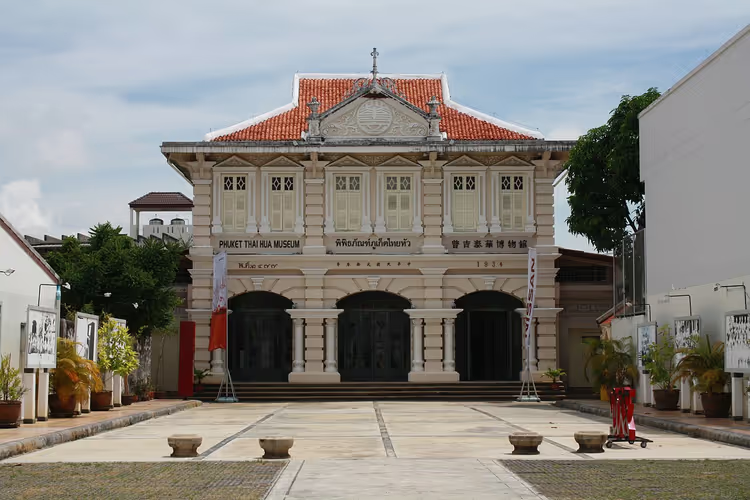 © Полина Славянская · CC BYPhoto: Полина Славянская, CC BY (https://creativecommons.org/licenses/by/3.0), Wikimedia Commons
Breakfast: Roti thaew nam
Roti Thaew Nam has been operating in Phuket Town for about seventy years. From morning until noon they fry roti over charcoal and serve it with beef or chicken in curry, or with a fried egg. The spot is halal. They cook fast, but there can still be a line, so come at opening time (per the Michelin Phuket guide, 09/2026).
Coffee: Campus Coffee Roasters and Graph
After roti, it's worth grabbing coffee on Krabi Road at Campus Coffee Roasters, where they brew local third-wave roasts. If one latte isn't enough, head to Graph on Phang Nga Road. The chain originated in Chiang Mai; here they make coffee mocktails and roast their own beans.
Old Town: Jui Tui Shrine and A Pong Mae Sunee
The route then continues through the Old Town to Jui Tui Shrine, a temple over a century old. It sits at the center of the annual vegetarian festival held in October (per the Michelin review, 09/2026). Nearby, A Pong Mae Sunee makes khanom a pong, coconut crepes cooked in mini woks: crispy at the edge and soft inside.
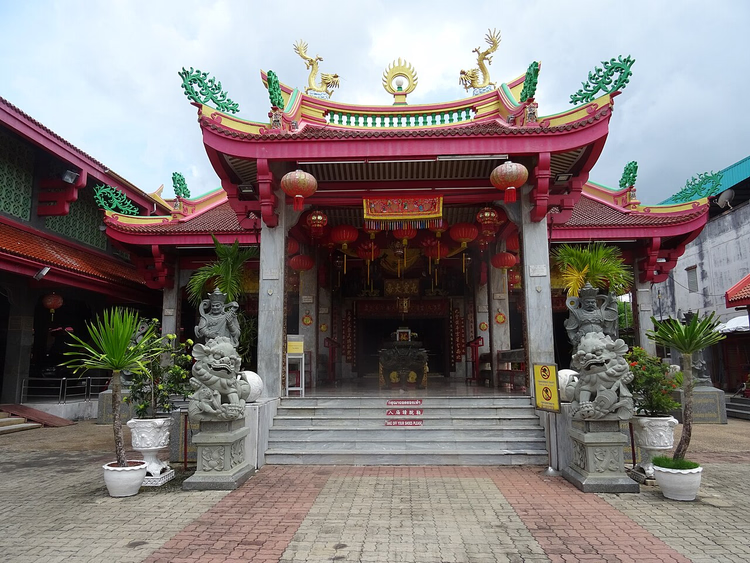 © Christophe95 · CC BY-SAPhoto: Christophe95, CC BY-SA (https://creativecommons.org/licenses/by-sa/4.0), Wikimedia Commons
Lunch in Thalang: Krua Baan Platong
For lunch, the route heads north to Thalang, to Krua Baan Platong. This is a three-table spot: southern Thai cuisine at its most intense. Order the fried banana stem with shrimp and shrimp paste, bai liang (melinjo leaves) with egg and dried shrimp, and pork belly with nam budu. Book a table in advance.
Dinner: O Tao Bang Niao
For dinner, go for o tao, a dish found only in Phuket. Since 1982, the family at O Tao Bang Niao has been frying seafood and taro pieces over charcoal, producing a soft base with crispy edges (per the Michelin guide, 09/2026). This is only the first course of the evening, so save room.
Cocktails in the Old Town
The evening continues at the cocktail bars of Phuket Town. Dibuk House, with its low lighting and signature drinks, would fit right in in Bangkok. Newer spots add variety: Coolies Club, designed by Bill Bensley, references the Soi Romanee era, while The Fool pours drinks inspired by tarot cards.
Late-night snack: Go Benz
Before bed, head back into town for guay jab. Go Benz stays open until almost 2 a.m., and guests order pork in a peppery broth with rolled rice noodles (per the Michelin selection, 09/2026). The portion is small, so dinner ends up feeling easy rather than drawn out.
Day 2: markets, curry, and dinner on the water
Hotel: Hotel IKON Phuket
For the second night, Karon is a convenient base: Hotel IKON Phuket sits on a wooded slope above the beach, so you come back to the sea in the evening. In the morning, you'll need to drive or take a motorbike to the market in Phuket Town. Hotel IKON Phuket rates on Trip.com
Market on Ranong Road
Day two starts before dawn. The central market on Ranong Road and Talad Kaset opens earlier than anywhere else: this is where people buy fruit, ready-made curry pastes, and prepared dishes. The stalls are at their busiest in these early hours. The market helps you understand what local cuisine is built from: compare the curry paste here with what restaurants serve.
Doughnuts: Pathong Ko Mae Pranee
For doughnuts, head to Pathong Ko Mae Pranee: the line starts forming at 6 a.m. People come for the crispy patongko and fresh salapao, which are good even without the pandan condensed milk.
Khao tom: Khao Tom Thanon Di Buk
The next stop, Khao Tom Thanon Di Buk, runs like a family canteen. Here you order khao tom, rice porridge, choosing your own rice, noodles, toppings, and broth. Try the nam dam, a Chinese dark soup made from a family recipe. On weekends they add braised pork ribs and chicken with fermented soybeans.
Lunch: Roti Chaofa and Krua Kao Kuk
For lunch, it is worth heading to a second roti specialist, Roti Chaofa. For more than thirty-five years, locals have come here for Thai-Muslim breakfasts, curries, and biryani with flaky roti, and the standout dish here is beef massaman (according to the Michelin restaurant guide, 09/2026). If you want something heartier, there is Krua Kao Kuk: rice with fish, fried meatballs made from a family recipe, and a crab omelet.
Hokkien noodles: Go La
The evening starts at Go La, one of the best spots for Hokkien noodles. Three generations of the family stir-fry mee Hokkien over charcoal with squid, shrimp, and egg. An extra egg makes the flavor richer, and locals order a second one (according to Michelin notes, 09/2026).
Home cooking: Gorjan
Less than eight hundred meters away is Gorjan, a simple family-run eatery. Here you should try southern specialties: kaeng som (sour curry) and moo hong (pork belly braised with Chinese spices).
Dinner on the water: Kruvit Raft
The route ends at Kruvit Raft (Ban Laem Hin) near Ko Maphrao island. Guests are taken to the floating restaurant by boat for about five minutes, and the menu features grouper soup with Chinese soybean paste and tiger prawns with salt and chili.
How to get there and get around the island
Phuket Airport is in the north of the island. The Smart Bus takes you to the west coast: it goes to Patong, Karon, Kata, and Rawai (according to the carrier, 09/2026). If you are staying in Phuket Town, it is more convenient to get from the airport by taxi or a pre-booked transfer.
Within the city, you walk: the Old Town is compact, and the stops on the route are only a few blocks apart. To get to Thalang and Karon, take a taxi or a rented scooter; buses between these areas run infrequently.
Tours and tickets in Phuket
Guided tours, skip-the-line tickets and activities — most offers can be cancelled free of charge.
See offers on KiwitaxiThe widget loads once you give your consent.
⁉️🤔 Frequently asked questions
How many days do you need for Phuket Town street food?
Two days is enough to cover the main stops on the route. On the first day you walk through the Old Town, roti, and dinner with o tao; on the second you head to the market, for curry, and to the floating restaurant. If you have less time, take the first day: it is more packed. You walk through the town, but for lunch in Thalang you need a car or a motorbike.
When is the best time to go to catch the vegetarian festival?
The festival takes place in October and lasts nine days, with Jui Tui Shrine remaining the main venue. Street stalls switch to a vegetarian menu during these days, and the town hosts processions. The dates shift with the Chinese lunar calendar, so check them against the festival calendar before you travel.
What should you definitely try in Phuket?
O tao, which is made only on the island, khanom a pong from mini woks, massaman beef at Roti Chaofa, and guay jab at Go Benz. If you like soups, add khao tom with the dark nam dam broth at Khao Tom Thanon Di Buk.
Where should you stay to fit the route in?
In Chalong if you are planning the first day in Phuket Town: Noku Phuket is not far from the Old Town. For the second day, Karon works well, where Hotel IKON Phuket is located: in the evening you return to the sea. In the morning you drive or ride to the market.
Do you need a car to do the route?
Yes, for part of the route. You walk through Phuket Town; the first day's town stops are within a few blocks of each other. A car or motorbike is needed for Thalang, Karon, and Ban Laem Hin Pier.
In short: what to book
The route is put together so that in two days you try both the morning and the nighttime spots of Phuket Town. If you have one day, take the first: the Old Town, roti, lunch in Thalang, and o tao. You will need a car or motorbike for Thalang. If you have two, add the pre-dawn market and dinner on the water. For two nights, it is convenient to split your base between Chalong and Karon.
Before you travel, check the opening hours: some places close by midday. There are no entry tickets on the route; you pay only for food. hotels in Phuket Town on Trip.com

A small editorial team writing guides for independent travel. We travel ourselves, but we haven’t been everywhere, so we check prices, opening hours and how to get there against official sources.