















What to see in Israel: 16 places from Eilat to the Jordan river
Eilat sits on the Red Sea, and Rosh HaNikra runs right up to the border with Lebanon.
Israel only looks small on a map. In the south you'll find a desert with a coral reef, in the north Crusader fortresses and sea grottoes, and in between there's Jerusalem, Tel Aviv and the Dead Sea. Eilat and Rosh HaNikra are about 500 km apart on the map. That's the whole country from edge to edge.
We've put together 16 places worth adding to your itinerary: from the underwater reef near Eilat to the baptism site on the Jordan River. For each one you'll find how to get there, whether you need a car, and where to buy tickets in advance. We checked prices, opening hours and closure dates against official websites in September 2026.
Ad: this article contains affiliate links, we earn a commission if you book through them; at no extra cost to you.
Planning: transport, money and route
💡 In short:
- Israel is compact: Eilat to Rosh HaNikra is about 500 km on the map.
- In the center of the country, trains and buses are enough. For the north and the desert, get a car.
- Buy national park tickets online. In season, entry is by time slot.
- Prices and opening hours: 09/2026, checked on the official website of the Israel Nature and Parks Authority.
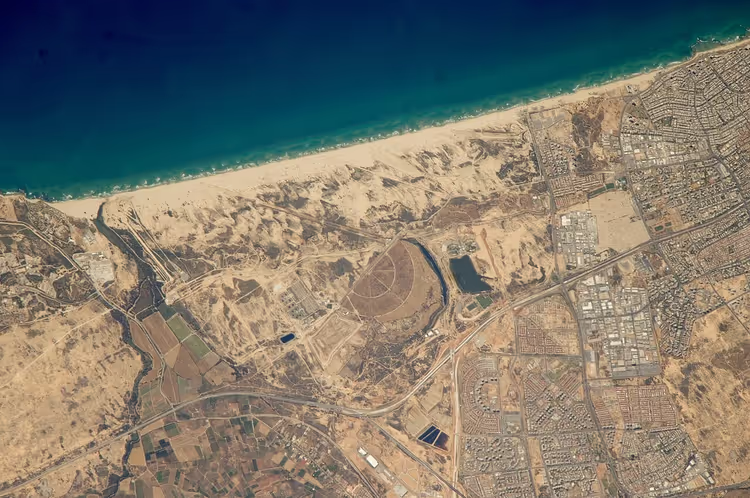
The country is conveniently divided into four parts. The south is Eilat and the Negev desert. The north is Haifa, Akko and the Galilee. The center is Jerusalem, Tel Aviv and the Dead Sea. The West Bank stands apart: you enter it with your passport and on a different transport schedule. Eilat and Tel Aviv are about 300 km apart on the map, and the train from Tel Aviv to Jerusalem takes under an hour.
Get a car if you're heading north or into the desert. Rosh HaNikra, Timna Park, Masada and Ein Gedi all sit away from the railway. Without a car you'll lose half a day on connections. Within cities, buses and the tram will do. But remember: from Friday evening to Saturday evening the schedule thins out, and some routes don't run at all.
Keep your money in shekels. Eilat is a VAT-free zone, so electronics, clothing and jewelry are cheaper there than in Tel Aviv. It's the only city in the country with that discount. Cards are accepted almost everywhere, but keep cash for markets, shared taxis and small cafes.
You enter the West Bank through checkpoints; between Jerusalem and Bethlehem it's about 10 km on the map. Bring your passport, water and extra time. The return check sometimes takes half an hour. On Shabbat, Palestinian transport runs, so weekends are convenient days for Bethlehem and Jericho.
South: Eilat, reefs and the Red Canyon
Eilat sits at the very south of the country, on the Red Sea, next to the borders with Egypt and Jordan. It's a resort town with hotels, a promenade and a small public beach that's mostly taken over by vacationers. Eilat has no historical sites. As a standalone attraction, it's a bit weak.
But as a base, Eilat is excellent. From here you can cover the coral reef, the canyon and Timna Park in a couple of days. Evenings you'll spend dining on the promenade. A car isn't essential for these trips, but you'll fit in more with one.
1. Coral beach and dolphin reef
South of the city the shore changes: the urban sand ends and the coral reef begins. Coral Beach and Dolphin Reef are a 10-minute drive from the center on the map, and both operate as separate complexes with an entrance fee. The water here is clear, and you can see the bottom from the pontoon. Snorkeling is genuinely good.
The catch is the entrance fee and equipment rental. But there are noticeably fewer people here than on the city beach. You can easily spend half a day in the water. If you've never tried snorkeling, start here.
- How to get there: by bus from central Eilat, then on foot; no need to take a car.
- Who it's for: for snorkeling and a first introduction to the reef.
- Not for: those looking for a free beach with loungers.
- The catch: entrance and rental are paid, and the pontoon gets busy on weekends.
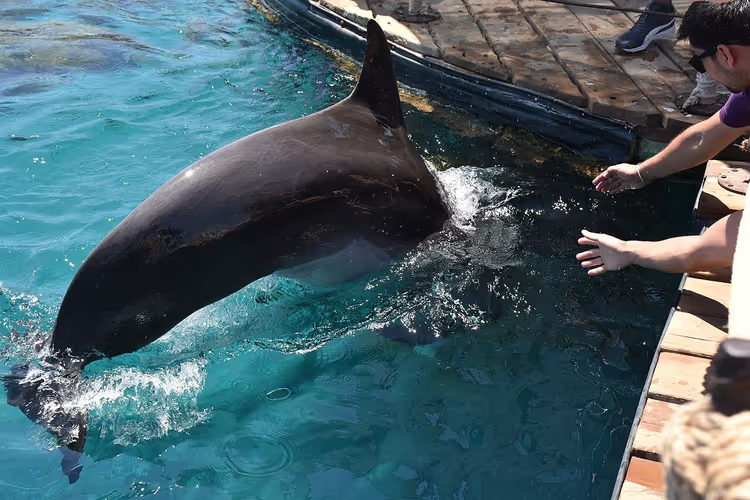 © Mohammad Shad Siddiqui · CC BY-SAPhoto: Mohammad Shad Siddiqui, CC BY-SA (https://creativecommons.org/licenses/by-sa/4.0), Wikimedia Commons
2. Red canyon and Timna park
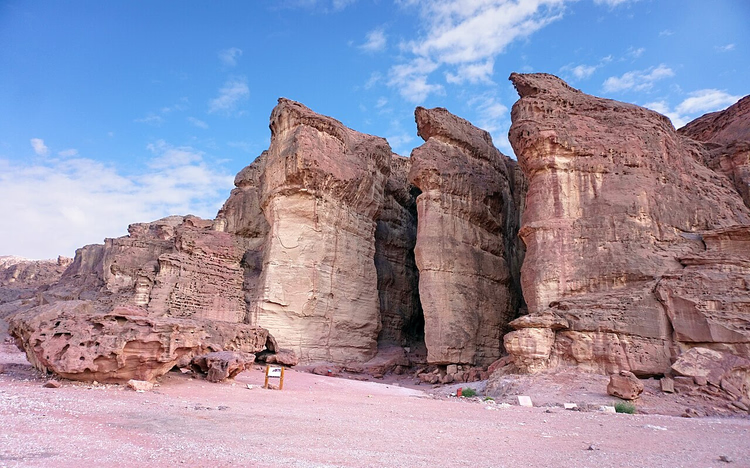
You walk through the Red Canyon on foot along the bottom of the gorge. It lies about half an hour's drive from Eilat, and entry is free. From the bus stop to the start of the trail is about a 15-minute walk on the map. Narrow walls, red sandstone and shade in the heat make this the most convenient short trek in the south.
Timna Park is a different story. It's a huge national park with mushroom-shaped rocks, arches and views over the Arava desert. Entry is paid, and the area is so large that on foot you'll only cover a small part. It's more practical to take a car or rent a bicycle.
- How to get there: bus from Eilat to the stop near the canyon, then a 15-minute walk on the map.
- Car: more convenient for Timna Park; there's a cycling route through it.
- The catch: Timna has a paid entrance, and without a car you'll only see part of it.
 © Tiia Monto · CC BY-SAPhoto: Tiia Monto, CC BY-SA (https://creativecommons.org/licenses/by-sa/3.0), Wikimedia Commons
Where to stay in Eilat. There are dozens of budget hostels in the city. Almost all of them welcome guests year-round, and almost every one has both private rooms and dorm beds.
- Sunset Inn: prices and availability on Trip.com. Has both private rooms and bunks.
- Ahla Plus: accommodation options on Trip.com. The courtyard sits away from the promenade.
The third option is Corinne Hostel: availability and reviews on Trip.com. It has a shared kitchen and double rooms.
The north: Haifa, Akko and Galilee
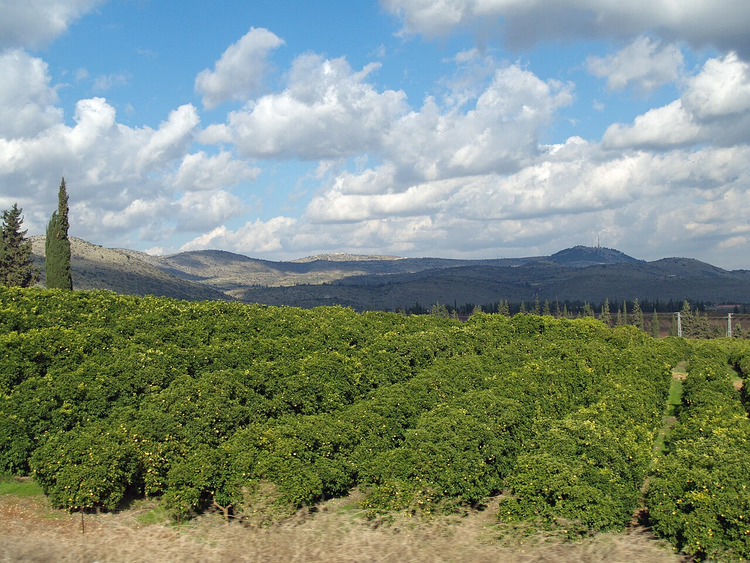
The north of Israel is denser than the south. Haifa, Akko, Rosh HaNikra and Nazareth are all within 50 km of each other on the map. If you're coming here from Tel Aviv by train, make Haifa or Akko your base. Rent a car for one day for the grottoes and Galilee.
 © David Shankbone · CC BY-SAPhoto: David Shankbone, CC BY-SA (http://creativecommons.org/licenses/by-sa/3.0/), Wikimedia Commons
3. Haifa and the Bahá'í Gardens
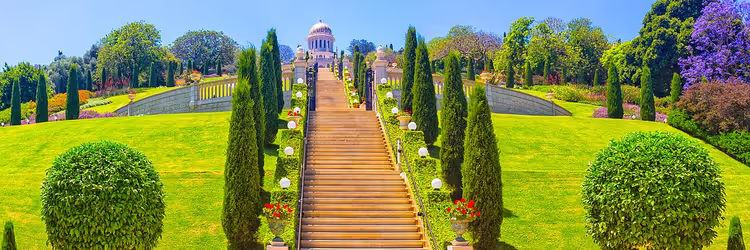
Haifa spreads across the slope of Mount Carmel. Its main attraction is the Bahá'í Gardens. The terraces descend the slope in broad tiers, with stairways between them. From the top you get a view of the port and the bay. It's better to go from top to bottom, so you walk down through the tiers rather than uphill.
Besides the gardens, the city has museums, synagogues, churches and mosques. The German Colony is a pleasant area for a walk. Tours of the terraces run on a schedule, so check the times on site or on the official website.
- How to get there: train to Haifa Center HaShmona station, then walk or take the Carmelit subway.
- Who it's for: anyone who wants a view of the bay and port without a long climb.
- Car: not needed, the city is compact and connected by train.
- Nightly rates in Haifa: see on Trip.com.
 © . Ray in Manila · CC BYPhoto: . Ray in Manila, CC BY (https://creativecommons.org/licenses/by/2.0), Wikimedia Commons
©. Ray in Manila · CC BYFoto:. Ray in Manila, CC BY (https://creativecommons.org/licenses/by/2.0), Wikimedia Commons©. Ray in Manila · CC BYFoto:. Ray in Manila, CC BY (https://creativecommons.org/licenses/by/2.0), Wikimedia Commons©. Ray in Manila · CC BYFoto:. Ray in Manila, CC BY (https://creativecommons.org/licenses/by/2.0), Wikimedia Commons
4. Akko and the Crusader underground city
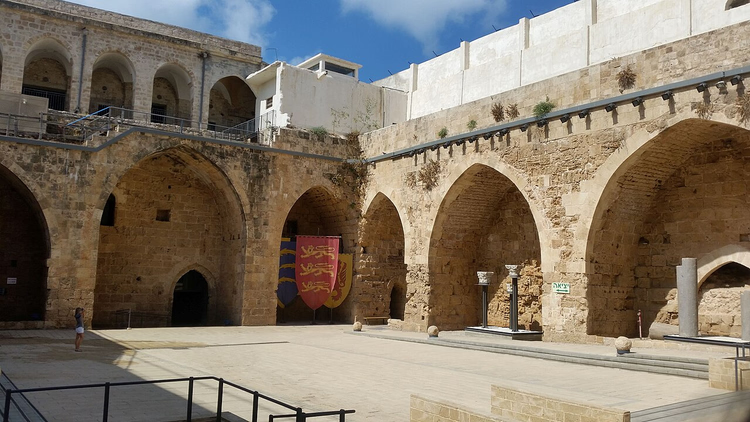
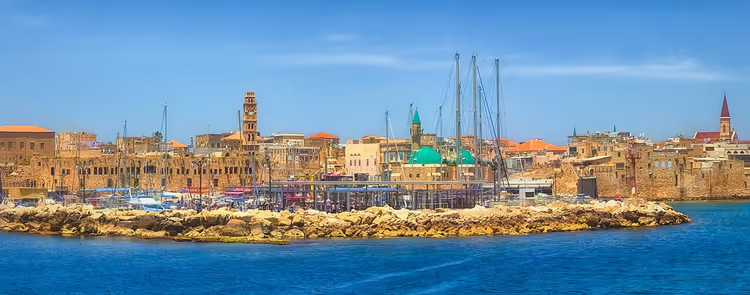
Akko is an old Crusader fortress with a city wall and a maze of alleyways. Inside the wall you step into a different city: stone arches, a market, a hammam and a port. The Crusader underground city requires a separate ticket. It includes halls, tunnels and knights' halls, and the ticket comes with an audio guide covering the history of the Crusades.
 © אריאל מנור · CC BYPhoto: אריאל מנור, CC BY (https://creativecommons.org/licenses/by/2.5), Wikimedia Commons
Allow an hour to an hour and a half for the underground route. After that, go for a walk along the waterfront and eat fish at the port. The city doesn't empty out in the evening, so staying overnight in Akko is convenient.
- How to get there: train to Akko station, from the station to the Old City is about 1.5 km, roughly a 15-minute walk on the map.
- Who it's for: anyone who loves fortresses and stone alleyways.
- Not for: anyone who finds stairs and uneven stone surfaces difficult.
- Hostel in Akko: Eco Akko on Trip.com.
 © . Ray in Manila · CC BYPhoto: . Ray in Manila, CC BY (https://creativecommons.org/licenses/by/2.0), Wikimedia Commons
©. Ray in Manila · CC BYFoto:. Ray in Manila, CC BY (https://creativecommons.org/licenses/by/2.0), Wikimedia Commons©. Ray in Manila · CC BYFoto:. Ray in Manila, CC BY (https://creativecommons.org/licenses/by/2.0), Wikimedia Commons©. Ray in Manila · CC BYFoto:. Ray in Manila, CC BY (https://creativecommons.org/licenses/by/2.0), Wikimedia Commons
5. Rosh HaNikra
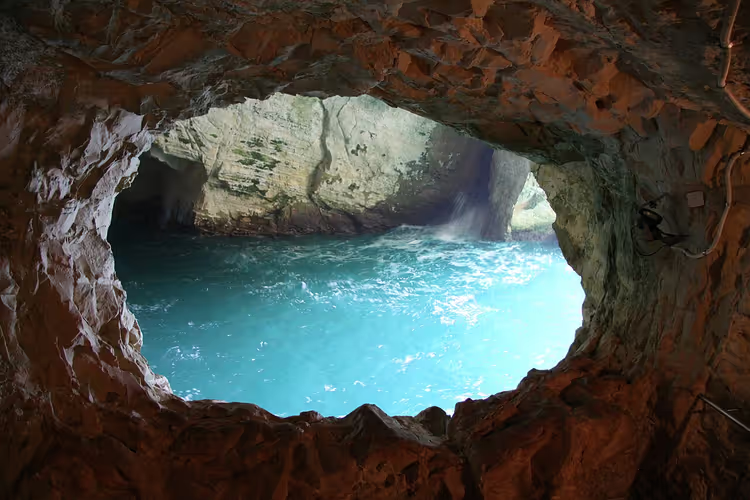
Rosh HaNikra is a series of sea grottoes right on the border with Lebanon. Waves have carved tunnels into the cliff, and you descend to them by cable car down the steep shore. Inside the grottoes it's loud and dark, with water pounding against the walls. It's the most unusual natural site in the north.
Important: as of 12.09.2026 the complex is closed for renovation, and the reopening date will be announced on their page (checked 12.09.2026, official website). When it's open, entry runs from 9:00 to 16:00 according to the same source. Plan the north with some flexibility. If the grottoes are closed, swap in Haifa or Nazareth instead.
- Getting there: bus 31 from Nahariya central station, 10 minutes north of the city (according to the official website).
- Who it's for: those driving or taking the bus along the northern coast.
- The catch: closed for renovation, tickets are not currently on sale.
 © Chmee2 · CC BYPhoto: Chmee2, CC BY (https://creativecommons.org/licenses/by/3.0), Wikimedia Commons
6. Tiberias and the Sea of Galilee
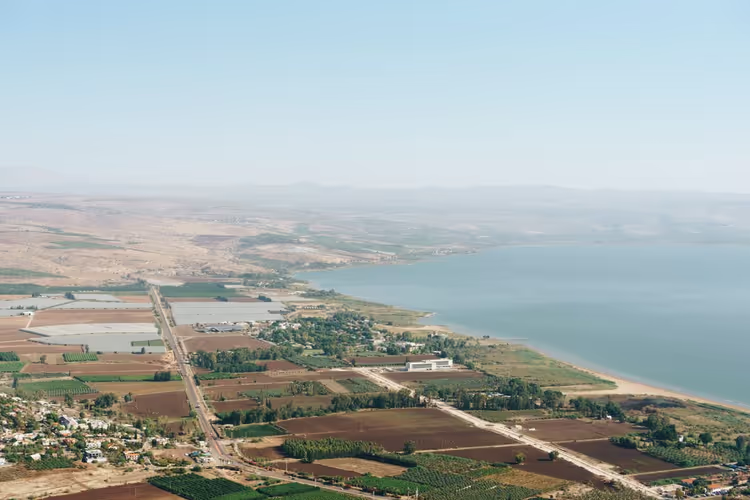
Tiberias sits on the western shore of the Sea of Galilee, in the heart of the Galilee region. It's a working city, not a resort. The center is noisy, the promenade is plain, and the beaches lack infrastructure. As a standalone attraction, Tiberias can be skipped, but it works well as a base.
From here you can reach the Christian holy sites of Galilee, Capernaum, and the hot springs at the southern end of the lake. You can swim in the Sea of Galilee year-round. The water is soft, and cafes and docks line the shore.
- Who it's for: those who need a base in Galilee for a couple of nights.
- Getting there: by bus from Haifa to Tiberias and the docks on the lake.
- The catch: the city center is built up and noisy, with few old quarters.
7. Nazareth and the Basilica of the Annunciation
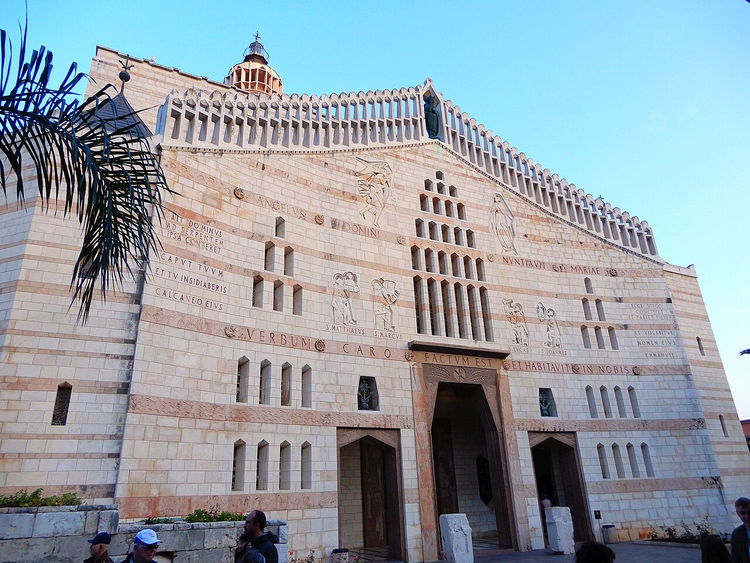
Nazareth is known from the Bible. The main site here is the Basilica of the Annunciation. It stands over a grotto believed to be Mary's home. Inside you'll see the grotto itself and churches from different eras under one roof. Nearby is the Church of St. Gabriel with a spring where pilgrims go.
The city center, however, doesn't look ancient. The narrow streets are jammed with cars, and almost no old quarters remain. If you're going to Nazareth for history, don't expect quiet. If you're going for pilgrimage, it's worth it.
- Getting there: by bus from Haifa or by car, less than an hour from Acre according to the map.
- Who it's for: pilgrims and those touring the Christian sites of Galilee.
- Not for: those looking for a quiet old town.
- Where to stay in Nazareth: Fauzi Azar Abraham Hostel on Trip.com.
 © Dobroš · CC BY-SAPhoto: Dobroš, CC BY-SA (https://creativecommons.org/licenses/by-sa/4.0), Wikimedia Commons
Center: Jerusalem, Tel Aviv and the Dead Sea
The center of the country is what people come here for. Jerusalem sits on hills 60 km by map from Tel Aviv, and Tel Aviv lies on the Mediterranean. The Dead Sea begins south of Jerusalem, about 100 km by map. You can connect Jerusalem and Tel Aviv by train without a car. For the Dead Sea, Masada and Ein Gedi, driving is more convenient.
 © askii · CC BY-SAPhoto: askii, CC BY-SA (https://creativecommons.org/licenses/by-sa/2.0), Wikimedia Commons
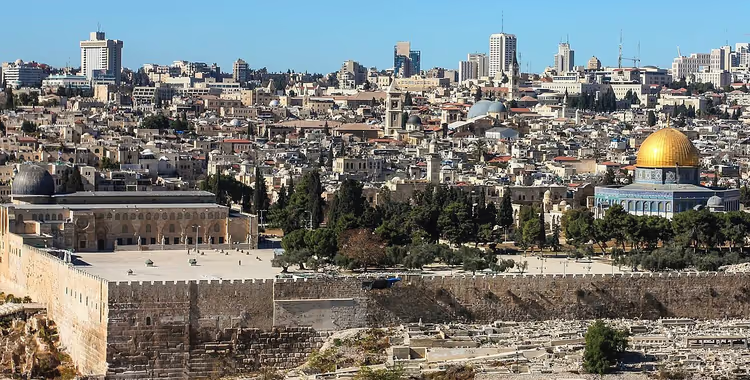
8. Jerusalem
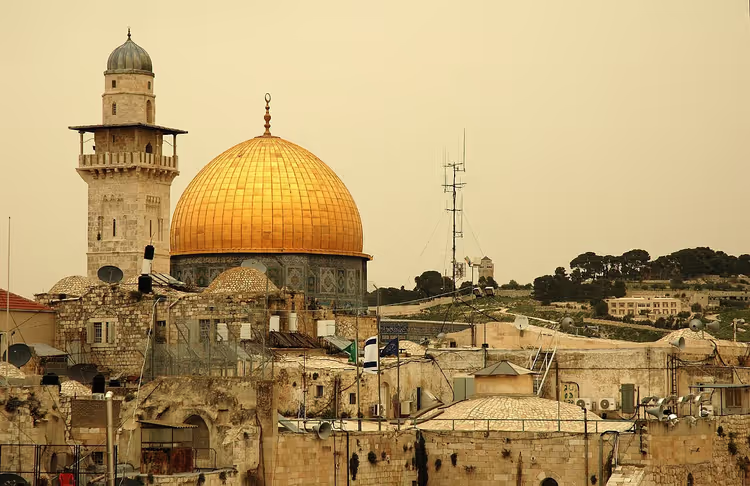
Jerusalem is the main point of the route. You need at least two full days for it. The city center is the Old City with its four quarters, the Western Wall and the Temple Mount with the Dome of the Rock. The Ramparts Walk runs along the Old City walls. A good view of the rooftops opens from the terrace of the Austrian Hospice.
Leave the second day for the Mount of Olives. That's where the Garden of Gethsemane, the Church of All Nations and the Tomb of the Virgin Mary are. The history of the city is unpacked in the City of David, with Mount Zion right next to it. In the evening you go to Mahane Yehuda Market. Before closing it's a food market, after closing the area turns into a bar district.
For a walk without crowds, the Yemin Moshe quarter next to Jaffa Gate works well. In the evening it's worth checking out Ben Yehuda Street, which has plenty of bars and cafes. Look for accommodation near the tram or by Jaffa Gate.
- How to get there: train from Tel Aviv to Jerusalem Yitzhak Navon station, then tram to the Old City.
- Where to go in the morning: first the Temple Mount, then the Western Wall. By midday the line is longer, and access to the Mount closes earlier.
- Who it's for: for everyone visiting Israel for the first time.
- The catch: in the Old City it's easy to lose half a day in tourist shops.
 © Peter Mulligan · CC BYPhoto: Peter Mulligan, CC BY (https://creativecommons.org/licenses/by/2.0), Wikimedia Commons
Plan two full days, not one and a half. In one day you'll only manage the Western Wall and the market. The Mount of Olives and the City of David will have to wait for next time.
9. Tel Aviv and Jaffa
Tel Aviv is younger than Jerusalem and lives by the sea. There are fewer sights here, but there's a long promenade, beaches and Carmel Market with cheap street food. A walk along the promenade gives you a sense of the local rhythm: runners in the morning, surfers during the day, groups of friends on the sand in the evening.
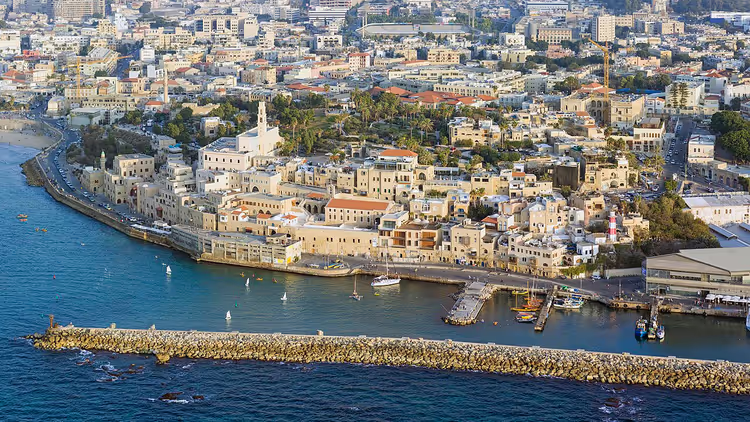
You'll find the old city of Jaffa in the south, within walking distance of the promenade. There's a port, narrow alleys and a flea market selling just about everything. In the evening the city shifts into bar and club mode. Almost every hostel gathers guests for a group night out.
- How to get there: train to Tel Aviv HaHagana or Tel Aviv Savidor Center station, then on foot or by bus.
- Who it's for: for those who want sea, food and nightlife in one place.
- Not for: those who are only coming for history.
- The catch: prices in bars and clubs are higher than in the rest of the country.
 © Godot13 · CC BY-SAPhoto: Godot13, CC BY-SA (https://creativecommons.org/licenses/by-sa/4.0), Wikimedia Commons
10. Masada, Ein Gedi and the Dead Sea
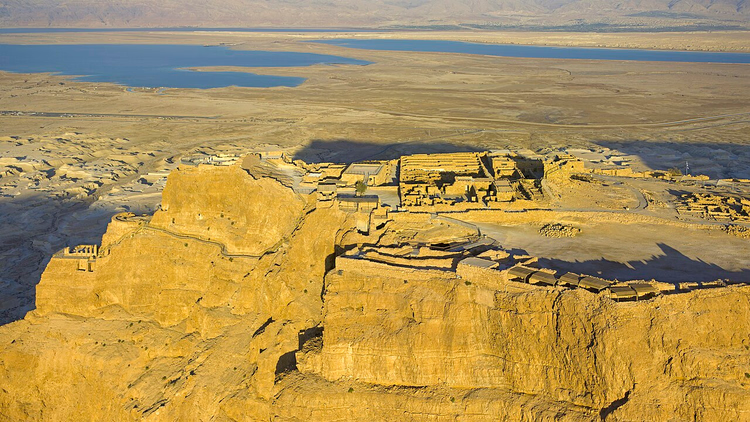
These three points make sense to cover in one day. Masada is a fortress on top of a cliff in the Judean Desert, with views of the Dead Sea and the mountains of Jordan. You can climb on foot via the Snake Path or take the cable car. The entrance opens very early, so people gather here in crowds for the sunrise.
Book national park entry in advance through the Israel Nature and Parks Authority online system. In high season entry is by time slot (as of 09/2026, official Masada park website). In winter and spring months, flash floods can occur in the canyons. Check the weather on the day of your visit.
- Masada: climb on foot or take the cable car, early entry, book online.
- Ein Gedi: a nature reserve with waterfalls and streams in the desert, marked trails.
- Dead Sea: beaches in the Ein Bokek area, the water keeps your body on the surface.
- Who it's for: for those willing to get up at four in the morning for a sunrise over the sea.
 © Godot13 · CC BY-SAPhoto: Godot13, CC BY-SA (https://creativecommons.org/licenses/by-sa/4.0), Wikimedia Commons
The Ein Gedi Nature Reserve (En Gedi) is considered an oasis in the desert. The Nahal David and Nahal Arugot streams form waterfalls among the rocks, and you can hike the trails for half a day (according to the official reserve website). The reserve closes early because of darkness, so arrive in the morning.
Tours and tickets in Masada
Guided tours, skip-the-line tickets and activities — most offers can be cancelled free of charge.
See offers on TiqetsThe widget loads once you give your consent.
The end of the day is the Dead Sea. The shore here isn't the most beautiful, but the water is so salty that you float on the surface without any effort. Enter the water without any scrapes and don't take off your glasses. The water stings your eyes, and a shower after swimming is a must.
West Bank: Jenin, Nablus, and Bethlehem
The West Bank is worth a separate day or two in your itinerary. Tourist routes here are open, but some roads pass through checkpoints where your passport is checked. Keep your document handy and plan to return before dark. Exchange money in advance, as there are few ATMs on the routes out.
 © Bahnfrend · CC BY-SAPhoto: Bahnfrend, CC BY-SA (https://creativecommons.org/licenses/by-sa/4.0), Wikimedia Commons
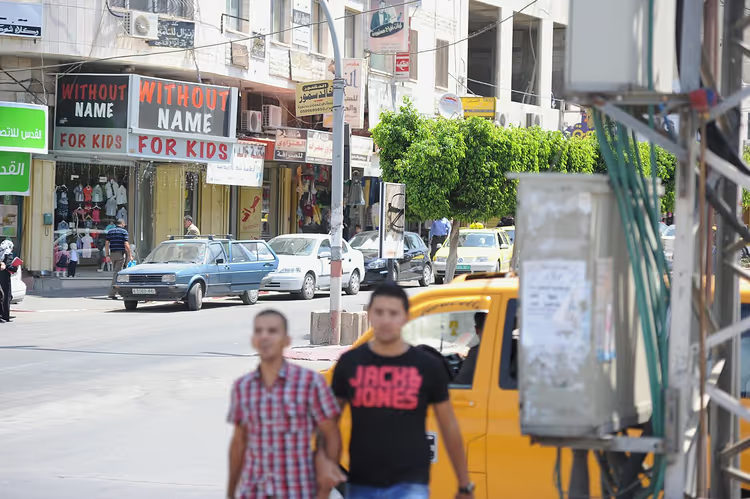
11. Jenin
Jenin lies in the northern West Bank. As a city, it offers almost nothing to a tourist: there are no sights here. The only reason to stop by is the Palestinian refugee camp, which grew up back in the middle of the last century and lives as a separate city within the city.
If you only travel for views and architecture, you can skip this stop. The road here takes time, and transport between cities is scarce.
 © Guillaume Paumier · CC BYPhoto: Guillaume Paumier, CC BY (https://creativecommons.org/licenses/by/3.0), Wikimedia Commons
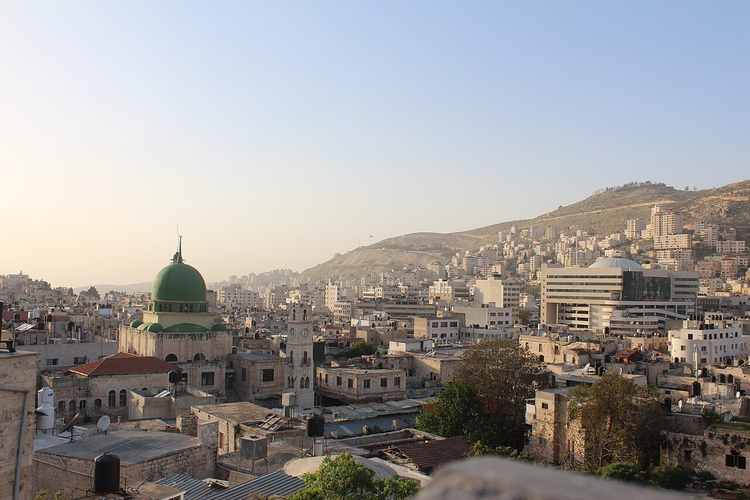
12. Nablus
Nablus is a typical Palestinian city without a tourist facade. The center lives around the market: narrow streets, shops with spices and sweets, noise and honking. The Great Mosque also stands here, and visitors are allowed in between prayers.
The second site is Mount Gerizim above the city, where a small Samaritan community lives. They keep to themselves and speak their own language. It's easier to go up by taxi; on foot it's a long climb.
- How to get there: by bus from Ramallah or Jerusalem, then walk through the center.
- Who it's for: for those who want to see an eastern city without tour groups.
- The catch: it's hard to find a hotel in the center; it's easier to come from Ramallah.
 © Hadi Hijjawi · CC BY-SAPhoto: Hadi Hijjawi, CC BY-SA (https://creativecommons.org/licenses/by-sa/4.0), Wikimedia Commons
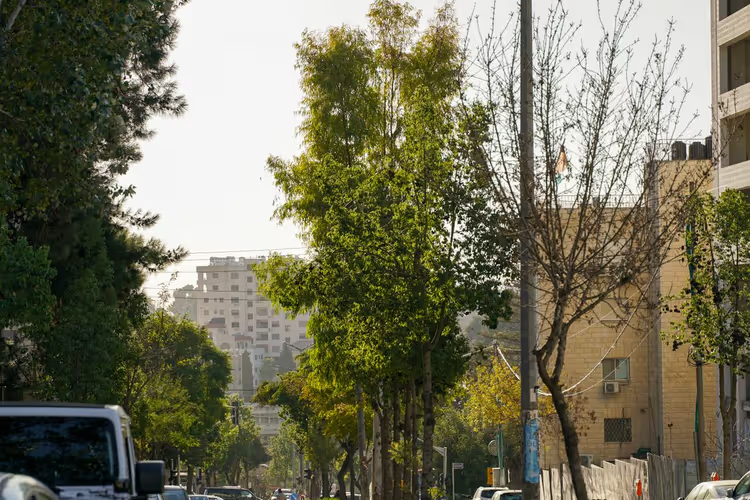
13. Ramallah
Ramallah is the de facto capital of the Palestinian Authority and the most convenient city in the West Bank for logistics. From here it's easy to reach Nablus, Jenin, and Hebron, and the road to Jerusalem is short. The city has many cafes, bookshops, and cultural centers. Life moves noticeably faster than in other cities.
Outside the city is the Arafat Mausoleum, considered the most famous site in Ramallah. Nearby there's a square where official ceremonies are held.
14. Jericho
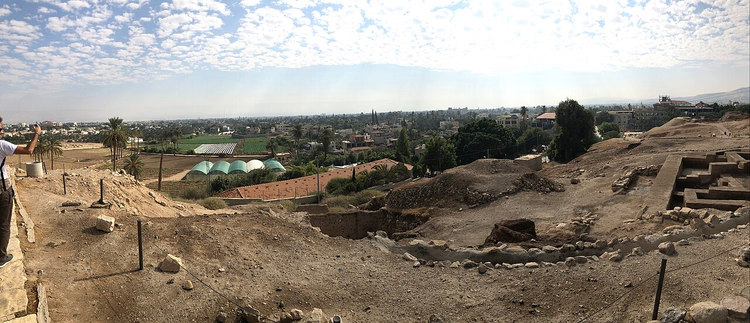
Jericho is considered one of the oldest cities in the world. It's attributed an age of more than ten thousand years. In the city, visitors see the ruins of ancient layers on a hill, the winter palace, and the remains of a synagogue. Little remains of historical Jericho, so go with a guide or read the descriptions on site.
Above the city stands the Mount of Temptation with a monastery, reached by cable car. From Jericho it's convenient to head out to the Jordan River and the baptism site. That's why this stop is often combined with the last item on the list.
- How to get there: by bus from Jerusalem or Ramallah, about 30 km on the map.
- Who it's for: for those traveling to biblical sites.
- The catch: without a guide, the ruins just look like layers of stone.
 © Davide Mauro · CC BY-SAPhoto: Davide Mauro, CC BY-SA (https://creativecommons.org/licenses/by-sa/4.0), Wikimedia Commons
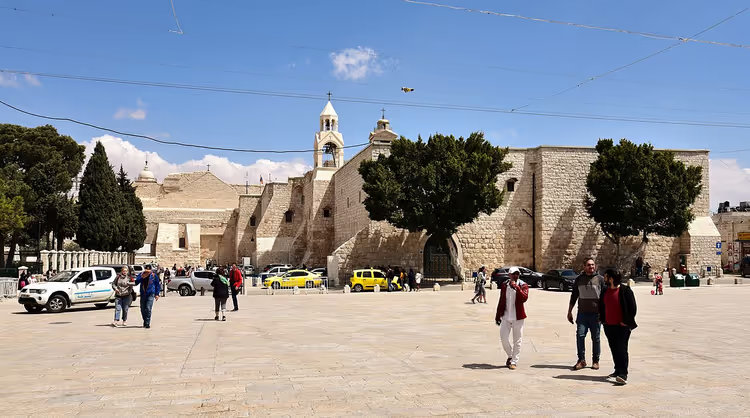
15. Bethlehem
Bethlehem is the second most important pilgrimage site after Jerusalem. The main site here is the Church of the Nativity, built over the grotto where, according to tradition, Jesus was born. Under the basilica you descend into a cave and see the star that marks the birthplace.
Nearby is the Separation Wall with graffiti and political inscriptions. The wall has become a site in its own right. Artists from around the world have left drawings on it, and viewing takes about half an hour. Bethlehem is best visited in the morning, before pilgrim groups fill the basilica.
- How to get there: by bus from the central bus station in Jerusalem, about 10 km on the map.
- Who it's for: for pilgrims and for those who want to see the wall with graffiti.
- The catch: there's always a line at the basilica, especially during holidays.
Morning in Bethlehem works better than evening. By midday, buses with groups pull up to the basilica. The entrance to the grotto turns into an hour-long line.
16. Jordan River and Qasr el-Yahud
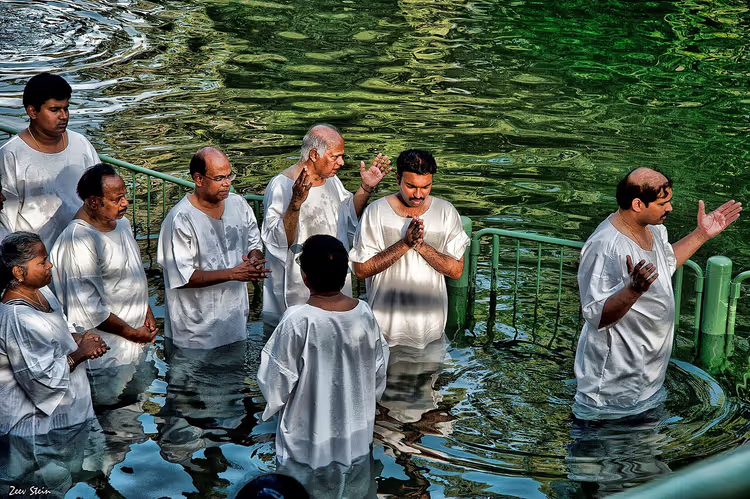
The Jordan River divides Israel and Jordan, and there are baptism sites on both banks. Qasr el-Yahud is a closed military perimeter a few kilometers from Jericho.
Pilgrims come here to immerse themselves in the river, and the ceremonies look solemn. If you're planning Jordan as a separate trip, the connection is convenient via the Allenby Bridge. It's close to Jericho, but the border line can take several hours.
- How to get there: only by car or with a tour; there is no public transport.
- Who it's for: for pilgrims and for those combining Israel with Jordan.
- The catch: entry is by permit and during limited hours; the schedule changes.
 © זאב שטיין · CC BYPhoto: זאב שטיין, CC BY (https://creativecommons.org/licenses/by/2.5), Wikimedia Commons
⁉️🤔 Frequently asked questions
How many days do you need for Israel?
For a basic itinerary, allow seven to ten days. Two full days go to Jerusalem, one day each to Tel Aviv and the Dead Sea, another day to the West Bank, and one to the south with Eilat. Add the north as a separate block with an overnight in Haifa or Acre, otherwise you'll spend more time on the road than at the sites.
Do you need a car in Israel?
For the center, you don't: Tel Aviv, Jerusalem, and the airport are connected by train, and the tram takes you to the Old City. A car is needed in the north, where the grottoes are away from the railway. In the south, it's useful for Timna Park and the Judean Desert. Rent a car for one or two days, not for the whole trip.
Is it safe to go to the West Bank?
Tourist routes are open, but you pass through checkpoints and show your passport. Keep your document handy, don't photograph military installations, and plan to return before dark. Before the trip, check the current situation: transport schedules and site hours change more often here than in the center of the country.
When is the best time to visit Israel?
The most comfortable time is from March to May and from September to November: the coast is warm, and the Judean Desert is bearable. In summer, Eilat and the Dead Sea have intense heat, so sites are best seen in the morning. In February and March, rain is possible, and desert canyons can experience flash floods, causing parks to close.
Can you combine Israel with Jordan?
Yes, the land border works through the Allenby Bridge and through crossings in the south. From Jericho the crossing is close, so Israel and Jordan are easy to link into one route. Keep in mind that there can be lines at the border, and you need to pay a departure fee.
In short: what's worth booking
If you have a short trip, choose by interest rather than the entire list.
- If you have three days: base yourself in Tel Aviv or Jerusalem, one day for the Old City, one day for Jaffa and the sea, one day for the Dead Sea.
- If you have a week: add the south with Eilat and the West Bank with Bethlehem and Jericho.
- If you're traveling for nature: the Red Canyon, Timna Park, and the Ein Gedi Nature Reserve cover the entire nature program.
Book hotels in Israel in advance, because during holidays and Shabbat there are almost no available rooms left.
If you're heading north or into the desert, a car will save you half a day: compare car rental prices in Israel.

A small editorial team writing guides for independent travel. We travel ourselves, but we haven’t been everywhere, so we check prices, opening hours and how to get there against official sources.