
















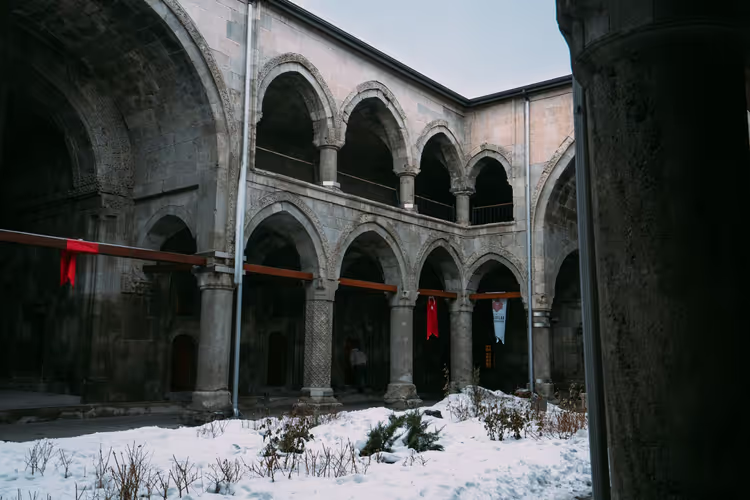
Picasso museum in Barcelona: tickets, opening hours and the Meninas series
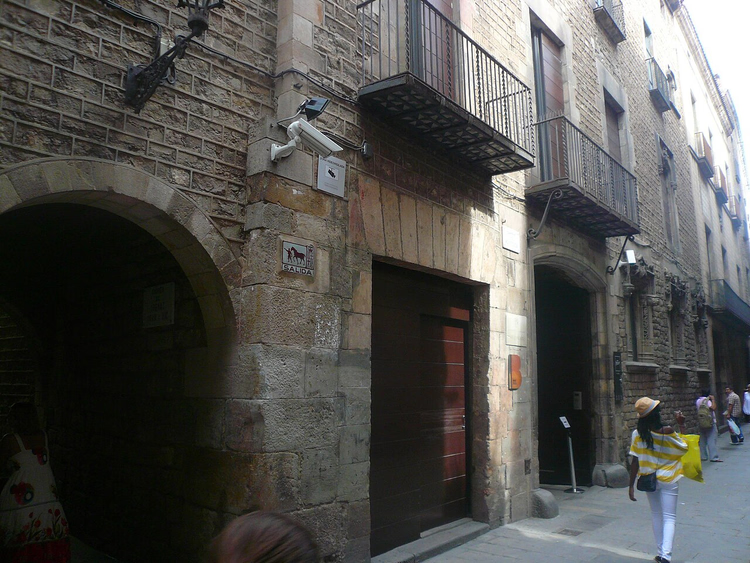
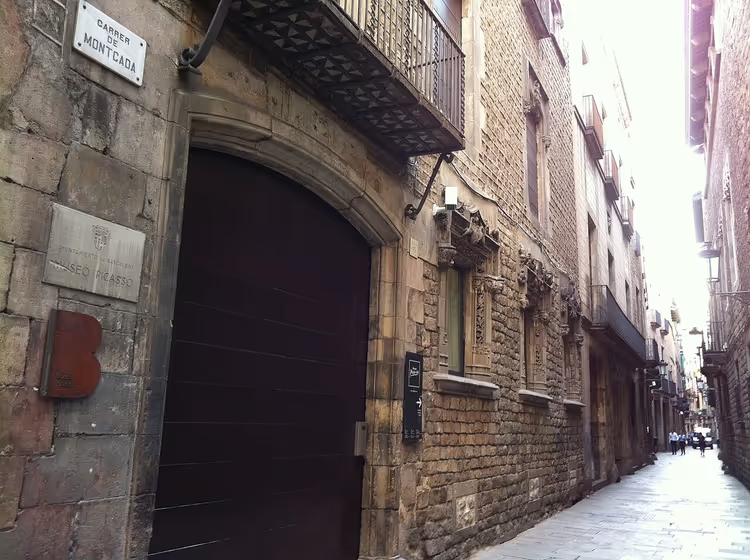
The Picasso Museum in Barcelona hides thousands of works across five Gothic palaces. The entrance is tucked away on narrow Carrer Montcada, and not everyone finds it on the first try.
The collection was expanded by the artist himself. You will see early sketches, ceramics, and the large "Las Meninas" series. Below is the practical information: prices, opening hours, directions, and what to know before your visit.
Ad: this article contains affiliate links, we earn a commission if you book through them, at no extra cost to you.
History of the Picasso Museum
💡 In short:
- What it is: the largest collection of Pablo Picasso's works in Spain.
- Prices and opening hours: 09/2026, verified on the official website.
The museum grew out of the friendship between the city and the artist. Picasso's Barcelona friends reconnected with him after a long separation. The central figure was Jaume Sabartés, his friend and personal secretary. He dreamed of a gallery in the master's hometown of Malaga, but Picasso was against it.
The maestro believed that Barcelona was where he truly entered the art world. The dispute was settled in favor of Catalonia, and the gallery opened in March 1963. Its foundation was Sabartés's personal collection. Later the collection grew through donations: Salvador Dalí contributed a book of illustrations for Ovid's "Metamorphoses," and Picasso himself donated his schoolbooks and early sketches in 1970 (as of 09/2026, museum history).
 © Pere López · CC BY-SAPhoto: Pere López, CC BY-SA (https://creativecommons.org/licenses/by-sa/3.0), Wikimedia Commons
The artist's widow Jacqueline Roque gave the ceramics collection, and the Louise Leiris gallery in Paris added dozens of engravings. The last major renovation of the galleries was completed in the early 2000s. Since then, the museum has ranked among the most visited galleries in the world.
Pablo Picasso and Barcelona
Pablo Picasso was born in Malaga to a drawing teacher's family. The future artist's first word was "pencil." He started drawing before he could read, and his talent showed very early.
As a teenager, he passed the entrance exams for the Barcelona art school, then left to study in Madrid. From there Picasso moved to Paris, but he never lost his connection to the city.
Barcelona is where his youth unfolded. It was here that the circle of friends formed who later helped open the museum. The artist was married twice: his first wife was ballerina Olga Khokhlova, and his second, in his later years, was Jacqueline Roque.
 © Xavier Badia Castellà · CC BY-SAPhoto: Xavier Badia Castellà, CC BY-SA (https://creativecommons.org/licenses/by-sa/3.0), Wikimedia Commons
The Barcelona collection primarily showcases the early periods. You see how a student transformed into a master of the avant-garde. That is why the museum is considered key to understanding his painting.
Museum buildings on Montcada
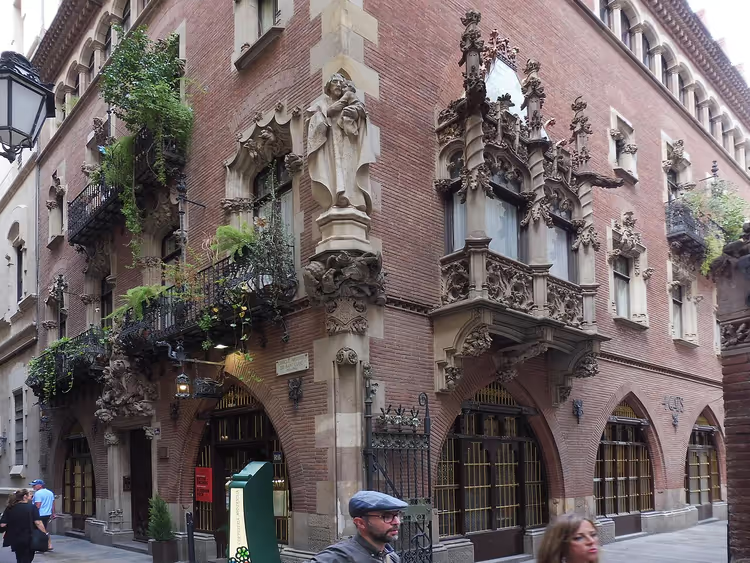
The museum occupies five Gothic palaces on Carrer Montcada, in the El Born district. The street is considered one of the oldest in the city, with origins dating back to the 12th century. The palaces stand side by side, and you do not immediately notice the passages between them.
Palau Berenguer d'Aguilar
The main building of the complex. Construction of the mansion began in the 13th century, and it was rebuilt several times later, so the facade shows both Gothic and Renaissance features. In the middle of the last century, the city bought the house from its heirs, and during restoration an ancient fresco was discovered on a wall.
 © Kippelboy · CC BY-SAPhoto: Kippelboy, CC BY-SA (https://creativecommons.org/licenses/by-sa/3.0/es/deed.en), Wikimedia Commons
Palau del Baró de Castellet
Each new owner rebuilt the mansion to suit their own tastes. As a result, the ground floor received a neoclassical drawing room with marble finishes. Since the middle of the last century, the building has belonged to the state.
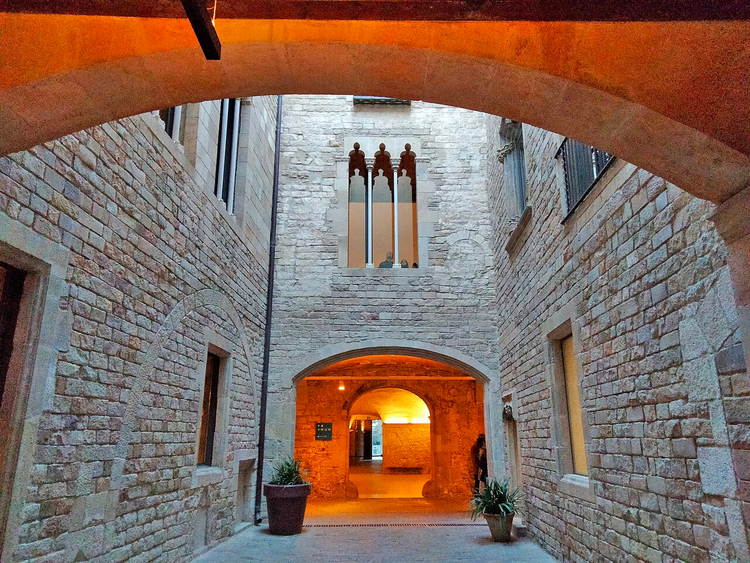 © Enric · CC BY-SAPhoto: Enric, CC BY-SA (https://creativecommons.org/licenses/by-sa/4.0), Wikimedia Commons
Palau Meca
 © MARIA ROSA FERRE ✿ from Vilafranca del penedes, Catalunya · CC BY-SAPhoto: MARIA ROSA FERRE ✿ from Vilafranca del penedes, Catalunya, CC BY-SA (https://creativecommons.org/licenses/by-sa/2.0), Wikimedia Commons
The exact construction date is unknown. It is believed the mansion was built in the 14th century for city councilor Jaume Cavaller. The house later passed to the Meca family, who added Baroque elements: wrought-iron staircases and balcony balustrades.
Palau Finestres
The 13th-century mansion stands on the remains of a Roman necropolis. Through Baroque arches you enter the palace's formal section. The house was rebuilt many times, but the medieval inner courtyard has survived. Today the spacious halls host temporary exhibitions.
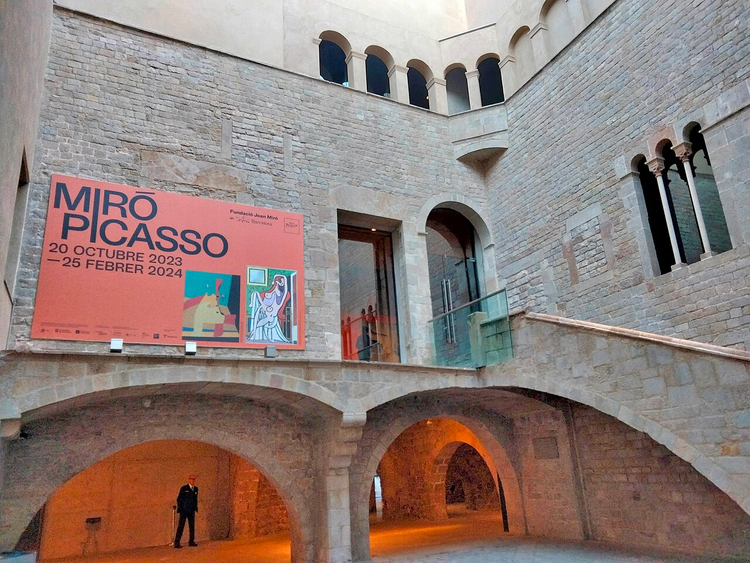 © Enric · CC BY-SAPhoto: Enric, CC BY-SA (https://creativecommons.org/licenses/by-sa/4.0), Wikimedia Commons
Casa Mauri
Behind the 18th-century facade lies a foundation dating back to the Roman era. The wooden window lattice on the facade is the only one of its kind in Barcelona. The house got its name from the Mauri pastry shop, which operated here in the 1940s. The building was added to the museum in the late 1990s.
 © Enric · CC BY-SAPhoto: Enric, CC BY-SA (https://creativecommons.org/licenses/by-sa/4.0), Wikimedia Commons
The palaces are connected into a single route. You walk through a series of rooms and interior courtyards with open staircases and arches. These details have become attractions in their own right.
The collection: what to see
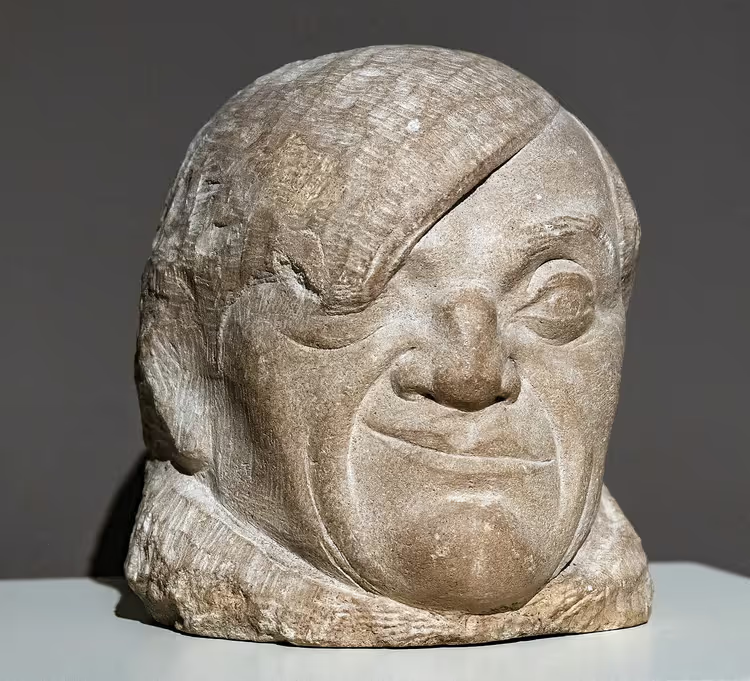
The museum holds the largest collection of Picasso's work in Spain. It includes paintings, drawings, lithographs, ceramics, engravings, etchings, and archival documents. A relaxed visit takes two to three hours. If you want to see all the rooms without rushing, set aside half a day.
The exhibits are arranged strictly chronologically. You start with childhood drawings and early works, and end with the later periods. This makes it easier to see how the master's style evolved.
The rooms feature both the permanent collection and temporary exhibitions. Most of the paintings belong to the early period. Temporary projects are dedicated to Picasso and his contemporaries, so a visit never feels like seeing the same thing over and over.
Las Meninas: the highlight of the collection
The museum's main pride is the Las Meninas series. Picasso paid tribute to Diego Velazquez, who painted the original in 1656, and the artist created his own version in 1957, three centuries later (as of 09/2026, the museum on Las Meninas).
While working on the series, Picasso secluded himself in Cannes and produced dozens of variations over several months. He played with color and form, taking the composition apart and putting it back together.
Sometimes the artist removed certain figures and replaced them with new ones. In one of the paintings, Jacqueline appears in place of the king and queen. The series occupies several rooms, with landscapes and compositions featuring doves hanging nearby.
Opening hours and ticket prices
The schedule depends on the season. From September 29 to March 29, the museum is open Tuesday through Sunday, from 10:00 to 19:00 (as of 09/2026, schedule on the museum website).
In summer, from March 31 to September 27, the hours are longer. Tuesday, Wednesday, and Sunday it is open from 9:00 to 20:00. Thursday, Friday, and Saturday it stays open until 21:00 (as of 09/2026, opening hours on the official website).
Monday is closed year-round. The museum is closed on January 1, May 1, June 24, and December 25. On December 24 and 31 it closes earlier, at 14:00 (as of 09/2026, museum holiday calendar).
A ticket to the main collection and temporary exhibitions costs 14 EUR online and 15 EUR at the ticket office. The reduced rate for young people aged 18-25, students, and seniors over 65 is 7.50 EUR (as of 09/2026, museum ticket page).
Children under 18 and accredited guides enter free of charge. There are regular free hours: the first Sunday of the month and open doors on February 12, May 17, and September 24. You need to book a free slot in advance (as of 09/2026, free hours on the museum website).
For art lovers, the Articket BCN at 38 € is a good deal. One card gives you entry to six Barcelona museums within 12 months. The list includes CCCB, MACBA, MNAC, the Antoni Tàpies and Joan Miró foundations, and the Picasso Museum itself (as of 09/2026, Articket BCN terms).
A multimedia audio guide is available for self-guided visits; check the price and availability at the ticket office.
- The catch: there is always a long line at the ticket office on Carrer Montcada.
To avoid it, book a time slot online. You can compare options and buy tickets on Tiqets with time slots.
Tours and tickets in Museu Picasso Barcelona
Guided tours, skip-the-line tickets and activities — most offers can be cancelled free of charge.
See offers on TiqetsThe widget loads once you give your consent.
How to get there and what to keep in mind
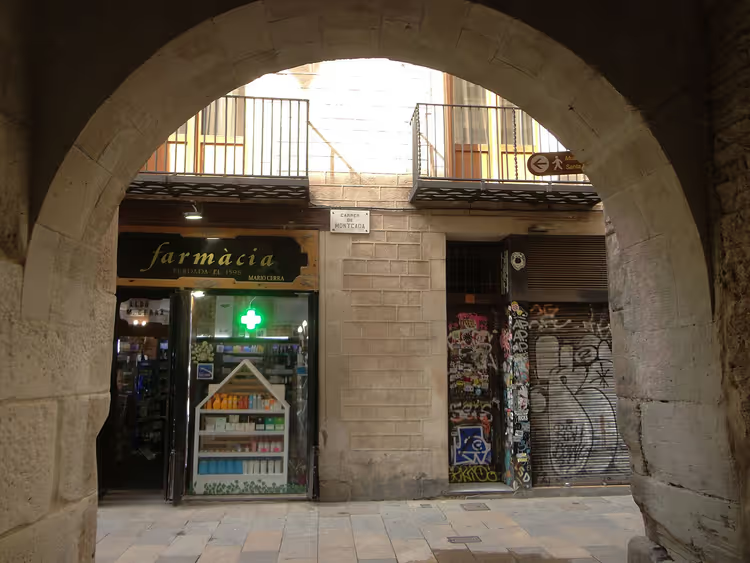 © Xavier Badia Castellà · CC BY-SAPhoto: Xavier Badia Castellà, CC BY-SA (https://creativecommons.org/licenses/by-sa/3.0), Wikimedia Commons
The museum is in the center, in the El Born district, at Carrer Montcada 15-23. The nearest metro: L4 to Jaume I and L1 to Arc de Triomf. From both stations it is about a five-minute walk to the entrance (as of 09/2026, how to get there on the museum website).
There are parking lots nearby on Avinguda Cambó, Carrer Princesa, and Via Laietana. If you are driving, allow time to find a spot: the area is busy during the day.
What to keep in mind before your visit: the avant-garde artist's works can be puzzling at first. If you are new to art, read up on Picasso's life beforehand. That makes the galleries much easier to appreciate.
⁉️🤔 Frequently asked questions
How much does a ticket to the Picasso Museum cost?
A full-price ticket costs €14 online and €15 at the ticket office. Discounts and free hours are described in the prices section above (as of 09/2026, rates on the official website).
When is the museum closed?
Monday is closed year-round. Holiday closures are listed in the opening hours section. Plan your visit ahead, because slots sell out quickly before holidays (as of 09/2026, museum opening hours).
How to get to the museum?
The nearest metro stations are Jaume I and Arc de Triomf, about a five-minute walk from either station. Details on routes and parking are in the section above (as of 09/2026, directions on the museum website).
What should you definitely see?
The main highlight is the "Las Meninas" series. Early works, ceramics, and landscapes hang nearby. Temporary exhibitions change every season, so some rooms look different each time.
How much time should you allow for the visit?
The collection is large, and the "Las Meninas" rooms alone take up several galleries. A relaxed visit takes two to three hours. If you want to see everything without rushing, get a morning ticket and set aside half a day. On weekends, add extra time for the line.
Picasso Museum on the Barcelona map
In short: what to book
The Picasso Museum is on almost every Barcelona visitor's list. Plan your visit ahead and don't leave tickets for the last day.
- If you're short on time: buy a ticket online and head straight to the "Las Meninas" rooms.
- If you're with kids: arrive at opening time, it gets crowded by midday.
- If you're serious about art: get Articket BCN and add the Joan Miró and Antoni Tàpies collections.
Guided tours and timed-entry tickets are easy to browse on GetYourGuide.

A small editorial team writing guides for independent travel. We travel ourselves, but we haven’t been everywhere, so we check prices, opening hours and how to get there against official sources.