
















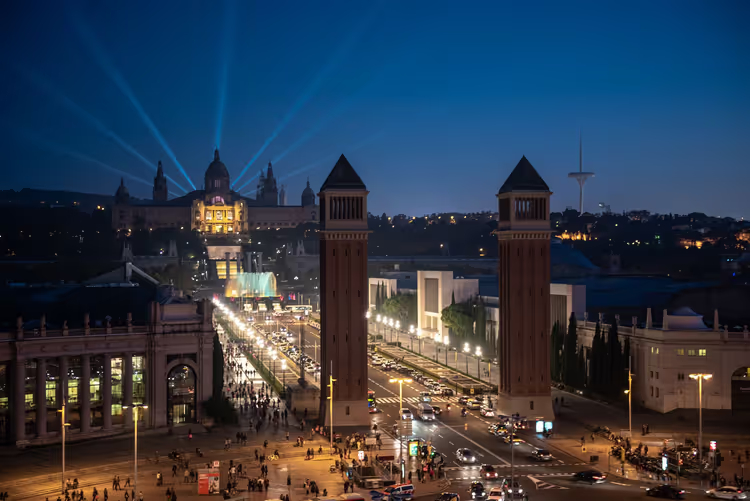
National Art Museum of Catalonia: tickets, hours and Romanesque frescoes
The National Art Museum of Catalonia stands on Montjuïc hill in Barcelona. It is one of the major collections of Catalan art, from Romanesque frescoes to paintings from the turn of the 19th and 20th centuries.
Many people make it to the National Palace and turn around at the ticket office: admission is paid, and on Mondays the doors are closed. We have put together the prices, opening hours, free days, and the route from Plaça d'Espanya.
A general ticket costs €12 (as of 09/2026, museum's official website). It is valid for two days within a month from the date of purchase. The museum lets you in for free on Saturdays from 3:00 PM and on the first Sunday of the month.
Ad: this article contains affiliate links, we earn a commission if you book through them, at no extra cost to you.
History of the National Palace
💡 In short:
- The National Palace on Montjuïc was built for the 1929 World's Fair (as of 09/2026, palace history page).
- A general ticket costs €12, a basic ticket without the collection costs €2 (as of 09/2026, museum rates).
- Free admission on Saturdays from 3:00 PM and on the first Sunday of the month (as of 09/2026, free admission terms).
- Prices and opening hours: 09/2026, verified on the official website.
The palace was built for the World's Fair held in Barcelona in 1929. The building, designed in academic classicism, was named Palau Nacional, meaning National Palace (as of 09/2026, on the museum's website). You will see a massive facade with a colonnade and a dome that is recognizable from Plaça d'Espanya.
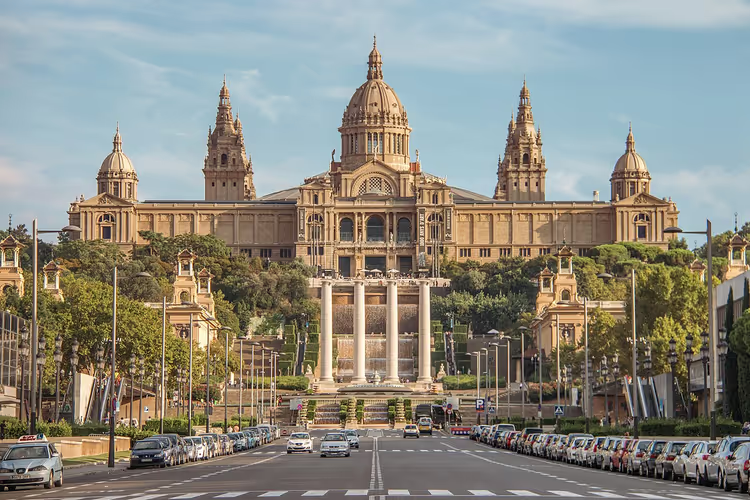 © Juanedc from Zaragoza, España · CC BYPhoto: Juanedc from Zaragoza, España, CC BY (https://creativecommons.org/licenses/by/2.0), Wikimedia Commons
After the fair, the Museum of Catalan Art operated here, and from 1934 the palace became home to what would become MNAC. From 1990 to 2004, the palace was renovated and rebuilt to accommodate large exhibition halls. The museum officially opened on December 16, 2004. Today it houses hundreds of thousands of exhibits.
Collections of the National Museum
The permanent exhibition spans nearly a millennium. You will see Romanesque painting, Gothic altarpieces, Renaissance and Baroque canvases, as well as modernisme from the turn of the 19th and 20th centuries. The collection includes painting, sculpture, wood and bone carving, ceramics, prints, coins, and medals.
 © MARIA ROSA FERRE ✿ from Vilafranca del penedes, Catalunya · CC BY-SAPhoto: MARIA ROSA FERRE ✿ from Vilafranca del penedes, Catalunya, CC BY-SA (https://creativecommons.org/licenses/by-sa/2.0), Wikimedia Commons
The museum's Romanesque section is considered one of the largest in the world. It is the reason even people who usually avoid art museums come here.
Romanesque exhibition
The core of the Romanesque section consists of 11th to 13th century wall paintings from cathedrals and chapels in the Pyrenees. Many frescoes were removed from walls in their entirety and transported to Barcelona when the paintings were threatened by the elements. The frescoes from the church of Sant Climent de Taüll have their own room: Christ Pantocrator, the Virgin Mary, and the apostles.
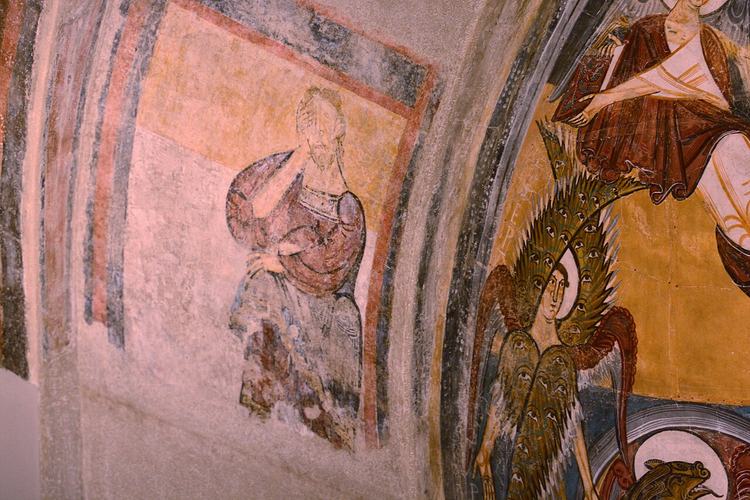
Stone and wooden sculptures from the 11th and 12th centuries are displayed nearby, along with gold and silver church objects, altars, and liturgical items. If you want to see the frescoes without the crowds, come on a weekday at opening time.
Gothic collection
The Gothic period spans from the mid-12th to the 15th century. Here you will find works by Spanish, French, and Italian masters. A standout piece is the altarpiece by the Valencian artist Gonzalo Pérez: scenes from the life of Saint Barbara are painted in tempera on wood and framed with gold plates.
From the late Gothic period, the "Virgin of the Councillors" by the Catalan painter Lluís Dalmau stands out. The painting shows a shift toward volumetric figures and spatial depth.
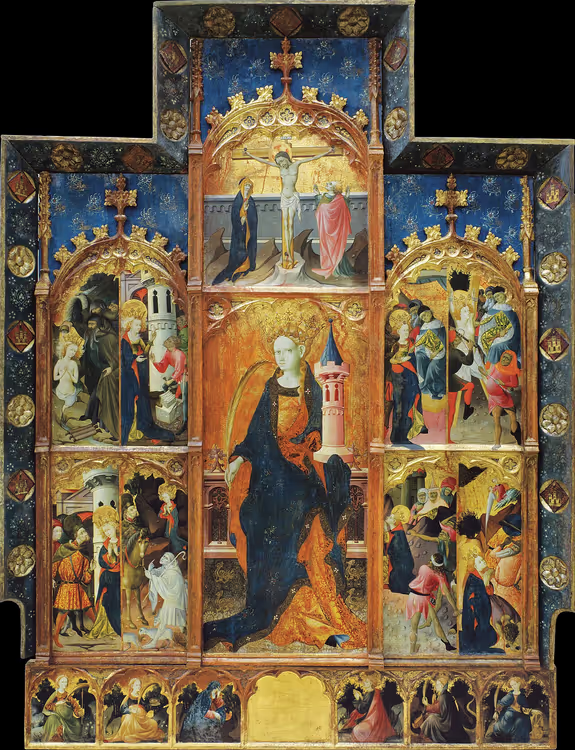
The rooms contain a great deal of carved furniture, bone work, stained glass, and wrought metal. Take your time here, because the Gothic section is usually less crowded than the Romanesque one.
Renaissance and Baroque painting
The Renaissance and Baroque section was assembled in 2000 from private donations. Its core is the collection of the Catalan patron Francesc Cambó. The walls display paintings by Spanish, Flemish, and Venetian masters of the 16th to 18th centuries: Titian, El Greco, Rubens, Velázquez, Goya.
This painting is characterized by dark backgrounds and strong light contrast. You will find "Saint Paul" by Velázquez, "Allegory of Love" by Goya, and "Saint Peter and Saint Paul" by El Greco.
Thyssen-Bornemisza collection
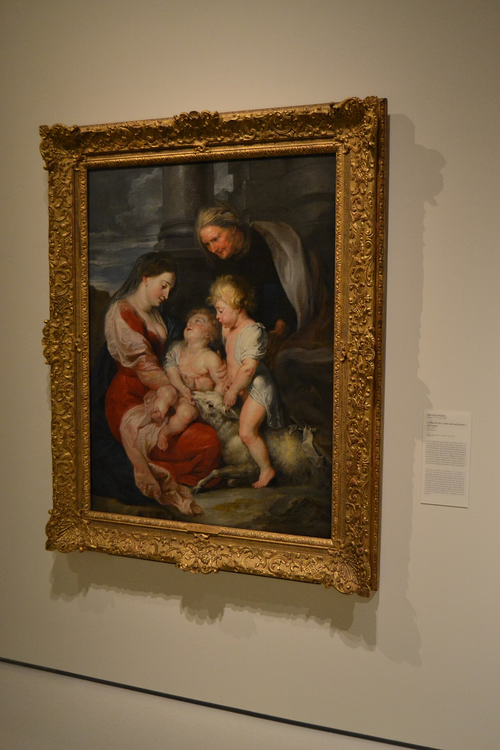
A separate room houses the collection of Baron Hans Thyssen-Bornemisza. Most of it is on display in Madrid, while the part that came to Barcelona was donated by the baron's widow, Carmen Cervera, a native of Catalonia.
 © Emilio J. Rodríguez Posada · CC BY-SAPhoto: Emilio J. Rodríguez Posada, CC BY-SA (https://creativecommons.org/licenses/by-sa/2.0), Wikimedia Commons
Italian painting of the Venetian Rococo and Renaissance predominates here. Among the canvases are "The Annunciation" by Veronese, "Virgin and Child" by Titian, and works by Rubens. A 17th-century Dutch landscape hangs nearby.
Modern art
 © Didier Descouens · CC BY-SAPhoto: Didier Descouens, CC BY-SA (https://creativecommons.org/licenses/by-sa/4.0), Wikimedia Commons
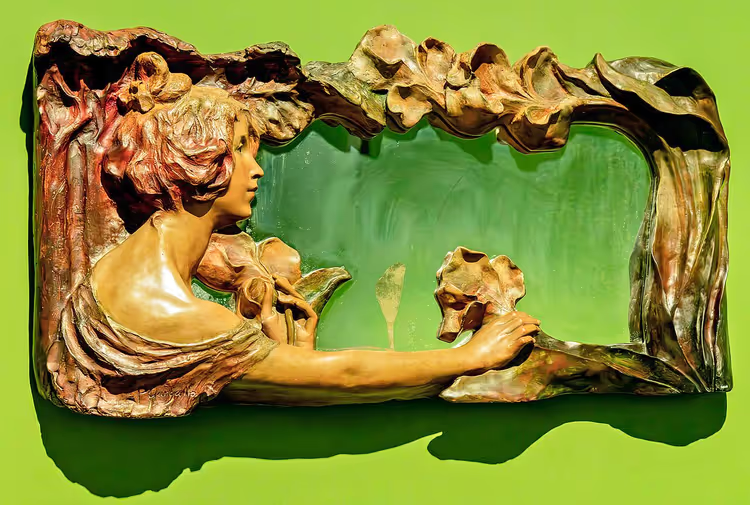
The collection of 19th and 20th-century Catalan art showcases modernism, the avant-garde, and cubism. Barcelona was a center of modernism, and this is evident in the works of Santiago Rusiñol and the decorative art of Antoni Gaudí. You will encounter paintings by Picasso and Joan Miró, as well as sculptures by Gargallo.
Department of drawings and prints
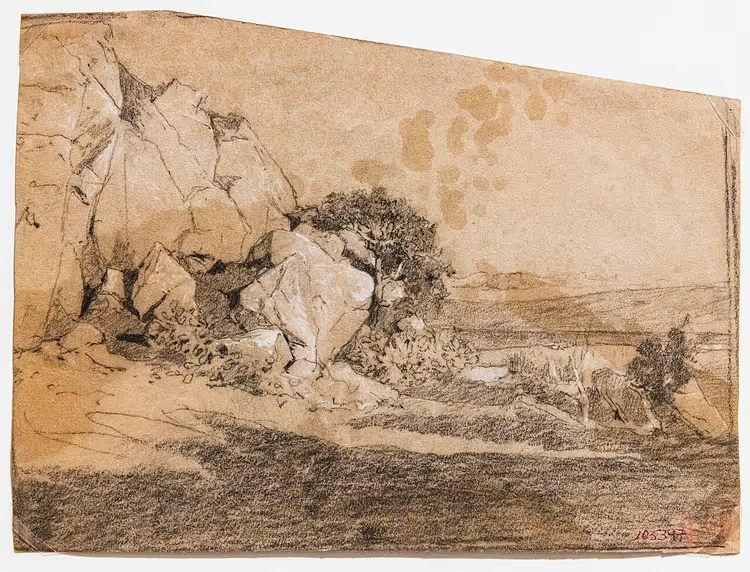
The department of drawings and prints holds tens of thousands of sheets: sketches, studies, caricatures, illustrations for books, and posters. It includes works by Mariano Fortuny, Théophile-Alexandre Steinlen, Antoni Clavé, and Eugène Grasset.
Photography collection
The photography collection covers the 19th and 20th centuries and traces the path of photography from its origins to the present day. Considerable space is devoted to pictorialism, where a photograph is hard to distinguish from a painted canvas. A separate section is dedicated to photojournalism.
Numismatics department

The numismatics department displays tens of thousands of coins: from antiquity to the present day. It also includes medals, orders, and decorations from the 15th to the 20th centuries. The staff are especially proud of the Catalan coin collection.
Tickets and opening hours
A general ticket costs €12 and gives access to the permanent collection, temporary exhibitions, and the rooftop viewing terrace (as of 09/2026, museum price list). A basic ticket for €2 gives access to the building and the rooftop, but not the collection. Children under 16 and visitors over 65 enter free of charge.
Ticket or option | Price | What it includes |
|---|---|---|
General | €12 | Permanent collection, exhibitions, rooftop |
Basic | €2 | Building and viewing terrace |
MNAC and Poble Espanyol | €20 | Both museums |
Articket BCN | €38 | Six Barcelona museums, one year |
Prices: 09/2026, pricing page.
 © Year of the dragon · CC BY-SAPhoto: Year of the dragon, CC BY-SA (http://creativecommons.org/licenses/by-sa/3.0/), Wikimedia Commons
From October through April, the museum is open Tuesday through Saturday from 10:00 to 18:00, and on Sundays and public holidays from 10:00 to 15:00 (as of 09/2026, museum schedule). From May through September, weekday hours extend to 20:00. Sundays close at 15:00 year-round, so you won't get in on a Sunday evening.
The museum is closed on Mondays, except public holidays. It is closed annually on January 1, May 1, and December 25. Ticket offices close 30 minutes before closing time, and visitors are asked to leave the galleries 15 minutes before closing.
Tours and tickets in MNAC Barcelona
Guided tours, skip-the-line tickets and activities — most offers can be cancelled free of charge.
See offers on TiqetsThe widget loads once you give your consent.
How to get to the museum
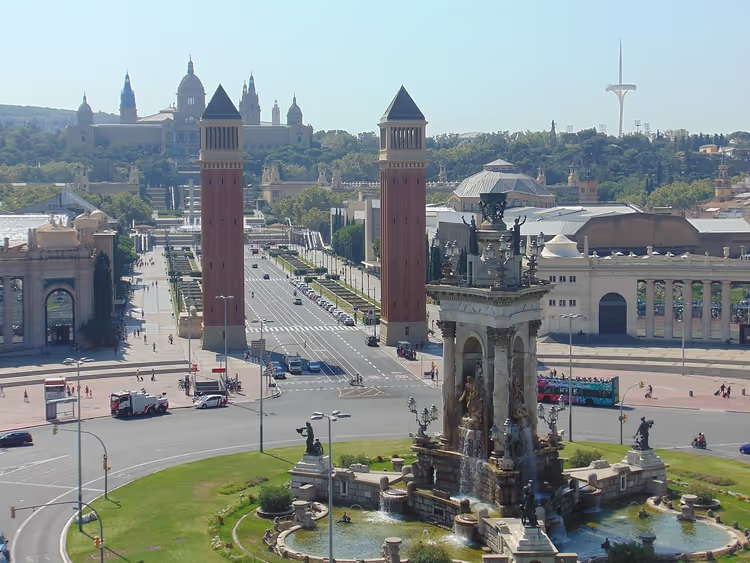
The easiest way is by metro: the museum is right next to Pl. Espanya station on lines L1 and L3 (as of 09/2026, directions map). From Plaça d'Espanya to the palace it's about one kilometer along Avinguda Maria Cristina, a 15-minute walk.
 © Nicholas Gemini · CC BY-SAPhoto: Nicholas Gemini, CC BY-SA (https://creativecommons.org/licenses/by-sa/4.0), Wikimedia Commons
Bus 55 stops closest, right at the museum. Route 150 goes to the Piscines Picornell stop, and 13 runs along Poble Espanyol (as of 09/2026, stops near the museum). From Plaça d'Espanya you can also take 65, 79, 109, 165, D20, D40, H12, and V7.
If you're driving, there's paid parking near the palace. If you're cycling, you can leave your bike at the Bicing station on Plaça d'Espanya.
Museum on the map
The address is simple: Palau Nacional, Parc de Montjuïc. If you're planning your route in advance, open the museum on the map and get directions from your hotel.
⁉️🤔 Frequently asked questions
How much does a ticket to the National Art Museum of Catalonia cost?
A general ticket costs 12 € and includes the permanent collection, temporary exhibitions, and the rooftop viewpoint (as of 09/2026, tickets and discounts). A basic ticket costs 2 €, but it does not include the collection. The museum is free on Saturdays from 3:00 PM and on the first Sunday of the month.
When is the museum closed?
It is closed on Mondays, except public holidays. The museum is closed annually on January 1, May 1, and December 25 (as of 09/2026, opening hours). Ticket offices close 30 minutes before closing time, and visitors are asked to leave the galleries 15 minutes before.
What should you see first?
Start with the Romanesque section and the frescoes from the church of Sant Climent de Taüll. Then move on to the Gothic altarpieces and the Renaissance hall, where Goya, El Greco, and Velázquez hang. The Thyssen-Bornemisza collection also deserves half an hour.
How much time do you need for a visit?
Allow two to three hours for the permanent collection, and about an hour for the Romanesque section. If you want to see everything at a relaxed pace, set aside half a day. Leave the rooftop viewpoint for the end and take in the view of Barcelona from there. Come on a weekday: you will have fewer people around you in the galleries.
How do you get there from Plaça d'Espanya?
From Plaça d'Espanya to the palace it is about a kilometer on foot along Avinguda Maria Cristina (as of 09/2026, how to get there). The walk takes about 15 minutes, and there are escalators on the way up to the palace. If you do not feel like walking, take bus 55: it stops right at the museum.
In short: what is worth booking
MNAC is a museum with one must-see section: the Romanesque frescoes. Everything else is a pleasant bonus. If you are short on time, get the general ticket for 12 € and head straight to the frescoes from the church of Sant Climent de Taüll.
- If you have two to three hours: the Romanesque section and the Gothic altarpieces.
- If you are with children: the rooftop viewpoint and the numismatics department.
- If you want to save money: come on the first Sunday of the month, admission is free.
- If you need a skip-the-line ticket: tours and tickets on GetYourGuide.

A small editorial team writing guides for independent travel. We travel ourselves, but we haven’t been everywhere, so we check prices, opening hours and how to get there against official sources.