



Public holidays in Italy 2026: 13 dates and what is closed
Planning a trip to Italy blind is expensive. During Ferragosto, hotel prices at the seaside spike, and in late December almost everything in central Milan is closed. It is better to know the public holiday dates before buying tickets.
In 2026, Italy has 13 public holidays when banks, government offices, and most shops are closed (as of 09/2026, official calendar). Easter falls on April 5, and Easter Monday on April 6. These are the busiest days of spring: trains and highways are packed, and accommodation is booked months in advance.
Below are all the official 2026 dates, local holidays in individual cities, and the practical part: what is open, what is closed, and when to book your hotel.
Public holiday calendar 2026
💡 In short:
- In 2026, Italy has 13 public holidays, from New Year's Day to St. Stephen's Day.
- The busiest dates: Ferragosto and the Easter weekend.
- Dates and rules: 09/2026, verified against Law No. 260/1949.
Date 2026 | Holiday | What is closed |
|---|---|---|
January 1, Thursday | New Year's Day (Capodanno) | banks, government offices, some shops |
January 6, Tuesday | Epiphany (Epifania) | government offices, some shops |
April 5, Sunday | Easter (Pasqua) | most shops, some museums |
April 6, Monday | Easter Monday (Pasquetta) | shops, some museums and restaurants |
April 25, Saturday | Liberation Day (Festa della Liberazione) | banks, offices, some shops |
May 1, Friday | Labor Day (Festa dei Lavoratori) | banks, offices, some shops |
June 2, Tuesday | Republic Day (Festa della Repubblica) | government offices, banks |
August 15, Saturday | Ferragosto and the Assumption (Ferragosto) | shops, some restaurants, many places for 1-2 weeks |
October 4, Sunday | Feast of St. Francis (San Francesco) | government offices, banks |
November 1, Sunday | All Saints' Day (Ognissanti) | shops, government offices |
December 8, Tuesday | Immaculate Conception (Immacolata) | some shops, banks |
December 25, Friday | Christmas (Natale) | almost everything |
December 26, Saturday | St. Stephen's Day (Santo Stefano) | shops, some restaurants |
As of 09/2026, holiday calendar.
1. New year's day (Capodanno)
New Year's Day closes banks, offices, and most shops. Restaurants in central Rome and Milan are open, but tables for New Year's dinner are booked as early as November. State museums are closed, but the streets are empty: you will enjoy a morning walk.
2. Epiphany (Epifania)
On Epiphany, Italy welcomes Befana, who brings sweets to children. Banks and government offices are closed. Winter sales (saldi) are also underway: shops are full, lines are longer than usual, and hotels in these weeks are cheaper than in spring.
3. Easter (Pasqua)
On Easter, Italian families gather at home. Small towns close almost everything, and some state museums operate on a Sunday schedule. You should plan walks and meals rather than museum visits.
4. Easter Monday (Pasquetta)
On Easter Monday, Italy heads outdoors. Parks, beaches, and country roads are packed, and bookings at agriturismo farms sell out a month ahead. If you want to avoid traffic, stay in the city and do not head out into the countryside.
5. Liberation day (Festa della Liberazione)
Liberation Day is marked with parades and rallies. In the morning, city centers are partially closed to traffic, but museums are open and many shops are open.
6. Labor day (Festa dei Lavoratori)
Labor Day closes offices, banks, and most shops. Rome hosts a large May Day concert that draws tens of thousands of people. Museums operate on their regular schedule, and it is best to be at the Colosseum when it opens.
7. Republic day (Festa della Repubblica)
Republic Day is marked with a military parade in central Rome. In the morning, the streets around the ancient forums are closed to cars, and the metro is overloaded. Government offices and banks are off, while shops in tourist areas are open. Check the parade schedule the day before.
8. Ferragosto and the Assumption (Ferragosto)
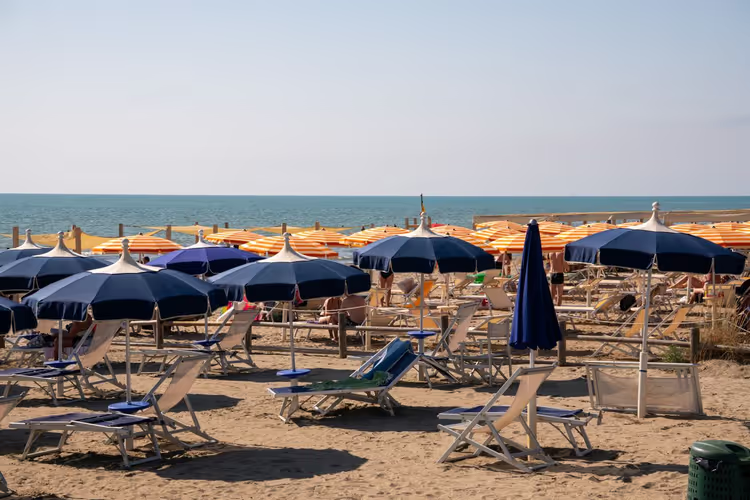
Ferragosto sends Italy on vacation. City restaurants, bakeries, and shops close for one to two weeks, while the beaches of the Amalfi Coast and Tuscany are packed. Museums are open, but there is no free entry on Ferragosto itself: you pay the regular rate (as of 09/2026, Il Plurale Quotidiano). Book accommodation and beach loungers in spring.
9. All saints' day (Ognissanti)
All Saints' Day in Italy is quiet and family-oriented. Italians visit the graves of relatives, so the suburbs are busy while tourist areas are empty. Museums are often open, shops and banks are closed. For you, this is a good time for a city walk without crowds.
10. Immaculate Conception (Immacolata)
Immaculate Conception opens the Christmas season. Holiday markets open in cities, many shops are open, while banks and offices are off. From this day, hotel prices in Rome, Milan, and Venice start to rise, so book in advance.
11. Christmas (Natale)
Christmas closes almost everything: museums, shops, most restaurants. In large cities, hotels and their on-site venues are open, but holiday dinner costs more than usual. Plan food and tickets in advance, otherwise you will spend the day with a sandwich.
12. St. Stephen's day (Santo Stefano)
St. Stephen's Day is another day off, with shops and some restaurants closed. Winter sales (saldi) start only in January. Trains and flights at this time of year are the most expensive, so buy tickets several months ahead.
What is open on holidays
The rule is simple: the larger the city, the more is open. Keep four categories in mind.
Shops. Supermarkets are closed or operate on reduced hours, while small grocery shops (alimentari) are often open in the morning. Train stations and airports are a separate case: shops there are open all day.
Restaurants and cafes. Most are open and packed. On Ferragosto and during the Easter weekend, a table at a popular spot is booked several days in advance.
Museums. State museums are open on most holidays, and on the first Sunday of the month entry is free under the "Domenica al museo" initiative (as of 09/2026, free museums in Italy). On Ferragosto itself, entry is paid.
Transport. City transport runs on a Sunday schedule. Intercity Trenitalia and Italo trains run on their regular schedule, but cars are more crowded. Buy tickets for holiday dates in advance.
Local holidays: when one city is closed
Besides national dates, every city has a patron saint's day. On that day, local services and some shops are closed, and museums may change their hours.
- April 25: San Marco, Venice.
- June 24: San Giovanni Battista, Florence, Genoa, and Turin.
- June 29: Santi Pietro e Paolo, Rome.
- September 19: San Gennaro, Naples.
- December 7: Sant'Ambrogio, Milan.
If your trip falls on such a date, check museum hours in advance. In Venice, the patron saint's day coincides with a public holiday, so they celebrate twice.
How to plan a trip around holidays
The most expensive stretch of summer starts two weeks before Ferragosto. Hotels and beach loungers get pricier, especially on the Amalfi Coast and in Tuscany. In Rome and Milan, August is calmer: residents have left, and hotels offer discounts.
Book hotels for Ferragosto and the Easter weekend several months in advance. Get Colosseum tickets, Uffizi Gallery tickets, and Vatican Museums tickets online with a time slot: on holidays there are no free slots left. Check museum schedules the day before, because some of them are closed one day a week, most often Monday.
⁉️🤔 Frequently asked questions
Are shops open in Italy on holidays?
It depends on the city and the date. Large supermarkets at train stations and airports are open, while neighborhood ones are closed or open until midday. Small grocery shops (alimentari) often trade in the morning. On Christmas and Ferragosto almost everything is closed, while on Republic Day shops in tourist areas are waiting for you.
What is Ferragosto and why is so much closed?
Ferragosto is tied to the Assumption, the main holiday of the Italian summer. Cities empty out, restaurants and bakeries close for one to two weeks, and beaches are packed. For a trip, this means one thing: book your hotel and beach lounger in spring, otherwise prices will rise and options will run out.
Is it worth going to Italy for Easter?
Yes, if you book in advance. Hotels in Rome and Milan get more expensive for Easter, and accommodation is snapped up months ahead. Some state museums operate on a Sunday schedule. Beaches and country parks are packed on Easter Monday. Plan your meals: small restaurants in the provinces close for family lunch.
In short: what to book in advance
Holidays change prices and schedules, but they do not ruin a trip if you are prepared. If you are traveling over Ferragosto, book your hotel and beach loungers in spring. If you are traveling over the Easter weekend, choose a large city and buy timed tickets in advance. In late December, plan your meals: on Christmas and St. Stephen's Day almost everything is closed. Work from your dates and book accommodation before prices go up.

A small editorial team writing guides for independent travel. We travel ourselves, but we haven’t been everywhere, so we check prices, opening hours and how to get there against official sources.