
















10 Tourist traps in Rome: how not to overpay on vacation
Rome greets you with postcard views and very skilled salespeople. In one piazza they will sell you the "best" gelato, on another "friends" will stop you with a bracelet. We have collected ten of the most common traps and explain how to avoid them.
Start with tickets. Buy Colosseum tickets online, not from resellers at the entrance (the Colosseum ticket office). In high season the ticket office line takes all morning.
Below are ten situations where the bill grows unnoticed, and the exact steps that eliminate them.
Ad: this article contains affiliate links, we earn a commission if you book through them, at no extra cost to you.
What traps await in Rome and how they work
💡 In short:
- Transport and tickets hit your budget hardest: online you get them without the line and without reseller markups.
- The most risk is in piazzas, lines, and train stations: that is where costumed characters, bracelets, and "petitions" operate.
- Keep your phone and wallet in an inside pocket, and your bag in front of you in crowds.
- Ticket prices and booking rules: 09/2026, verified on the official Colosseum ticket office.
 © Luigi Guerrieri4 · CC BY-SAPhoto: Luigi Guerrieri4, CC BY-SA (https://creativecommons.org/licenses/by-sa/4.0), Wikimedia Commons
Almost all of these tricks follow the same pattern. First they give you something free or promise a good price, and they ask you to pay later, when it is awkward to argue. So the rule is simple: confirm the price and terms before you agree.
Trap | What you lose | How to avoid it |
|---|---|---|
Tourist menus | Half the dinner bill | Walk two blocks away from the piazza |
Ticket resellers | Time in line and a markup | Buy a time slot on the official website |
Illegal taxis | Several times the normal fare | A white car with a meter or a transfer |
Costumed characters and bracelets | Money for a forced photo | Do not take things from strangers' hands |
Pickpockets in crowds | Phone and wallet | Keep your bag in front of you |
Extra charges on the bill | A few euros on top | Check coperto and drink coffee standing |
1. Tourist menus near the main piazzas
Near the Pantheon, Piazza Navona, and the Colosseum, almost every other restaurant lures guests with a tourist menu featuring photos of the dishes. It looks tempting, but the quality here is often lower and the price higher than two blocks away. If someone stands at the entrance with a menu in hand and invites you inside, that is the first warning sign: good Roman trattorias do not chase guests on the street.
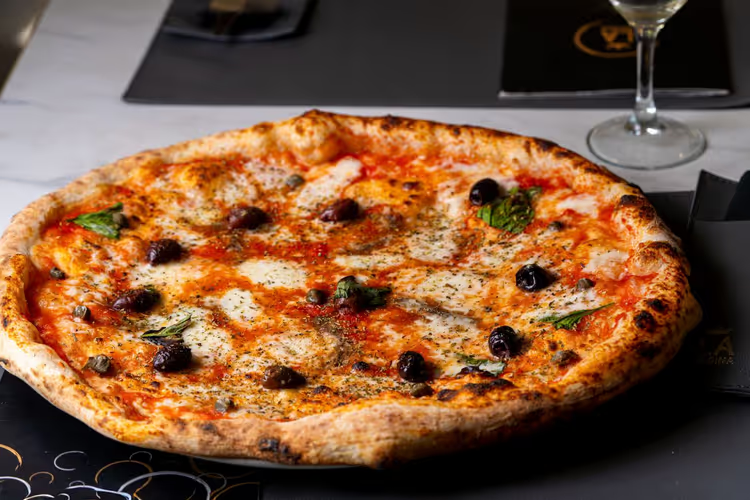
Walk a couple of blocks away from the piazza and lunch becomes noticeably cheaper. Check that the menu is in Italian: where locals eat, they cook from fresh ingredients rather than reheating prepared food. Also look at whether Italian families are sitting at the tables.
- The catch: the bill comes out noticeably higher, and the dishes are often assembled from frozen prepared food.
- How to avoid it: choose a place two or three blocks from the piazza with a menu in Italian.
2. Buy Colosseum and Vatican tickets online
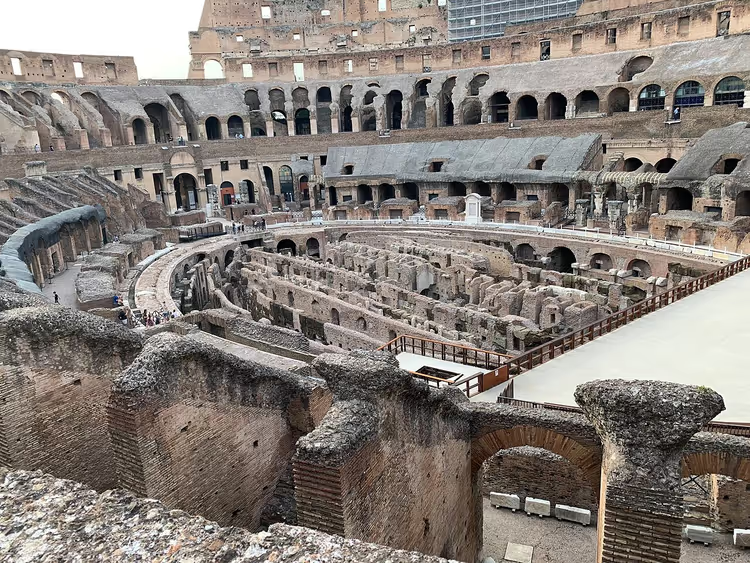
At the entrance to the Colosseum, the Vatican Museums, and the Roman Forum, illegal ticket sellers are always on duty. They pull you out of the line and offer a ticket above the official price, often without a specific time slot. Online you pay the official price and choose your entry time yourself.
 © Robot8A · CC BY-SAPhoto: Robot8A, CC BY-SA (https://creativecommons.org/licenses/by-sa/4.0), Wikimedia Commons
A standard Colosseum ticket costs 18 € (as of 09/2026, timed-entry tickets), while the Vatican Museums cost 20 € at the ticket office and around 25 € with online booking (as of 09/2026, Vatican Museums). Take a morning slot: by midday the line at the entrance stretches for hours.
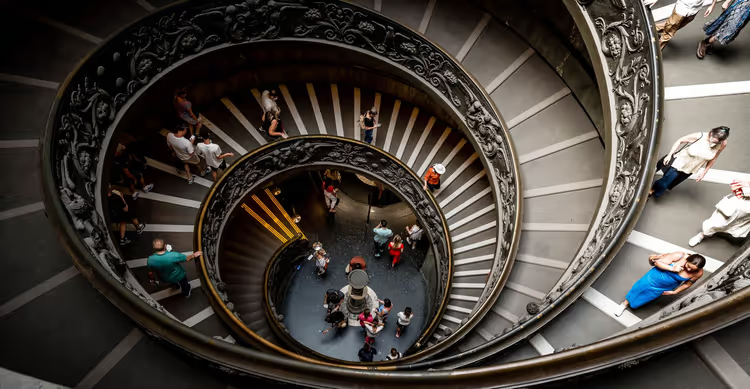
Official tickets are sold on the websites and at ticket offices, so at street stands you are simply overpaying. A guided tour is also easier to book in advance than to find a guide in the crowd: Colosseum tours on GetYourGuide.
If you already know your date, buy tickets a few weeks ahead. In high season, morning slots sell out fastest, and evening windows are less suitable for a first trip.
Tours and tickets in Colosseum
Guided tours, skip-the-line tickets and activities — most offers can be cancelled free of charge.
See offers on TiqetsThe widget loads once you give your consent.
- The catch: at the entrance they will sell you a more expensive ticket without a time slot, and you lose half a day in line.
- How to avoid it: buy on the official website and choose a morning entry time.
3. Dress code at the Vatican and St. Peter's Basilica
At St. Peter's Basilica and throughout the Vatican, a dress code applies: shoulders and knees must be covered. In shorts, a tank top, or a short skirt, you may simply not be allowed inside. Street vendors take advantage of this: at the entrance they offer scarves and wraps at prices several times higher than normal.
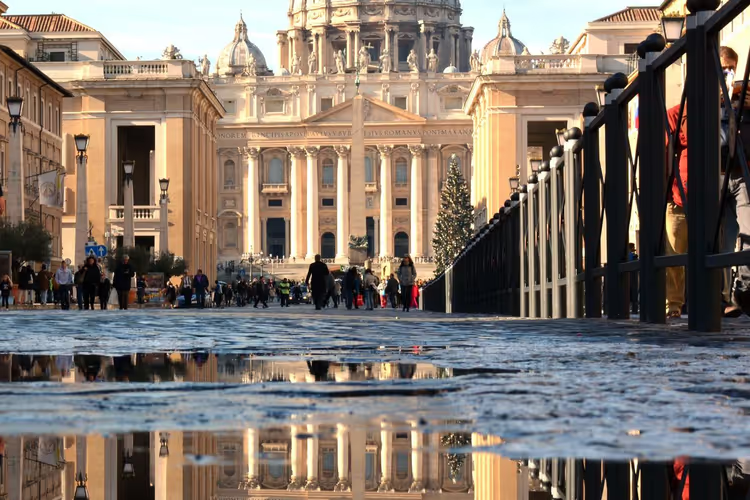
Bring a light scarf with you in the morning, and the issue solves itself. Covered clothing will also come in handy in other churches in Rome that you stop into along the way.
- The catch: without covered shoulders and knees you will be turned away, and a scarf at the entrance will cost a lot.
- How to avoid it: put a scarf or light wrap in your bag in advance.
4. Illegal taxis and inflated fares
In Rome, as in any tourist city, there are plenty of illegal taxis. At Termini station, at the airports, and near major attractions, unlicensed drivers quote a price several times higher than normal and start pressuring you if you refuse to pay. An official taxi in Rome is white, with a meter and a license number on the door.
 © Phillip Capper from Wellington, New Zealand · CC BYPhoto: Phillip Capper from Wellington, New Zealand, CC BY (https://creativecommons.org/licenses/by/2.0), Wikimedia Commons
From Fiumicino Airport to the center, there is a fixed fare for trips inside the Aurelian Walls (according to the Rome city administration, 09/2026, Roma Mobilità). The taxi driver must turn on the meter or state the fixed amount before the trip starts. If the price is given off the top of their head, that is a reason to walk away and find another car.
- The catch: an unlicensed driver charges several times the amount, and the argument quickly turns into pressure.
- How to avoid it: only get into a white car with a meter, or book a transfer in advance.
5. "Gladiators" at the Colosseum and paid photos
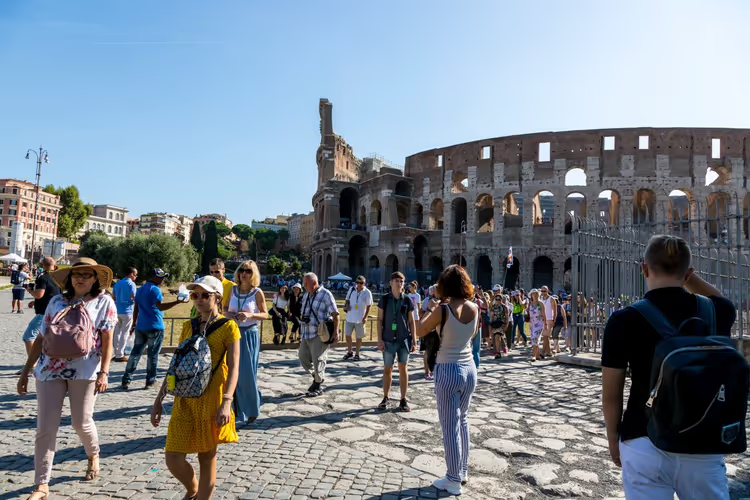
Near the Colosseum and in the square next to it, people in gladiator costumes stand around. They happily pose with you, then demand money for the shot. The amount only comes up after the photo is taken, and haggling at that point is awkward.
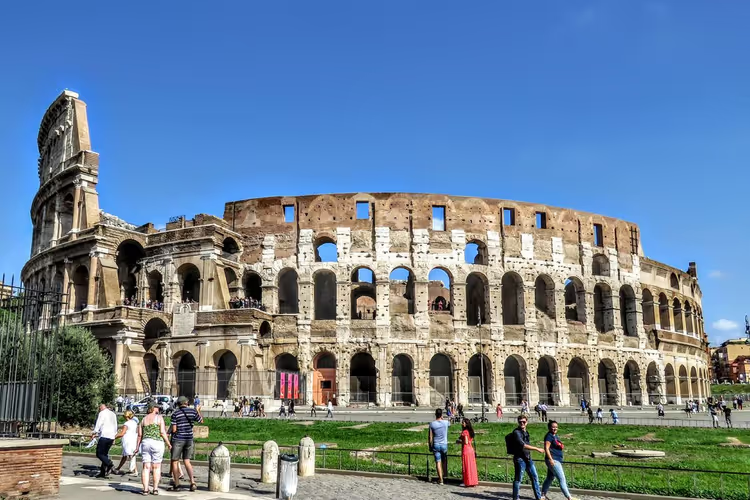
Take photos of each other yourselves, and no bill will appear unexpectedly. If you still want a shot with a costume, agree on the price in advance and have small bills ready.
- The catch: a seemingly free photo turns into a demand for money.
- How to avoid it: take photos yourself or name the price before the shot.
6. The "friendship" bracelet and the rose at the fountain
At the Trevi Fountain and the Spanish Steps, strangers offer a rose or tie a bracelet on your wrist, supposedly as a gift. A minute later, the gift turns into a demand for payment, and the bracelet is hard to take off. Sometimes people approach you "as a keepsake" and immediately ask for money for the souvenir.
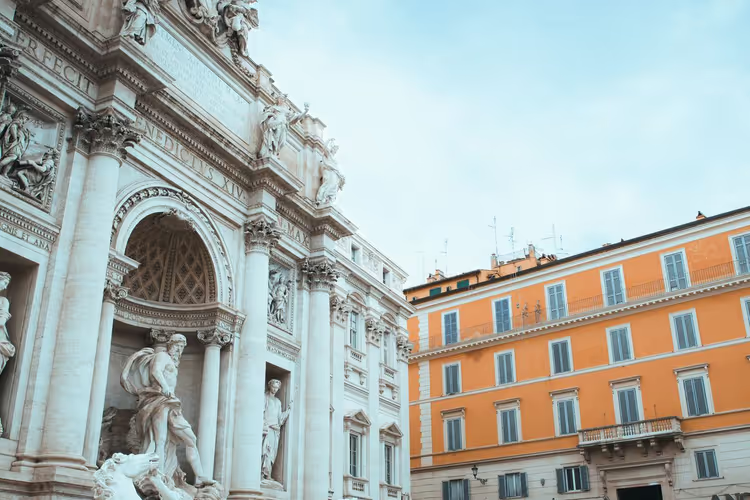
Do not take things from people's hands and do not let them tie a bracelet on you. A calm "no" and a step to the side solve the problem faster than any argument.
- The catch: the gift turns out to be paid, and removing the bracelet without scissors is difficult.
- How to avoid it: do not accept anything from strangers' hands near landmarks.
7. The fake petition in the square
On tourist streets, people often stop you with a clipboard and ask you to sign a petition in support of something. After you sign, it turns out that you supposedly promised a donation, and the amount is named on the spot. The idea is that you will hand over money just to avoid an argument.
Walk past without slowing down. Real signature collections in Rome are held in offices and online, not in a crowd by a fountain.
- The catch: a signature turns into a demand for a "donation."
- How to avoid it: do not stop and do not take the clipboard.
8. Pickpockets on the bus to the Vatican
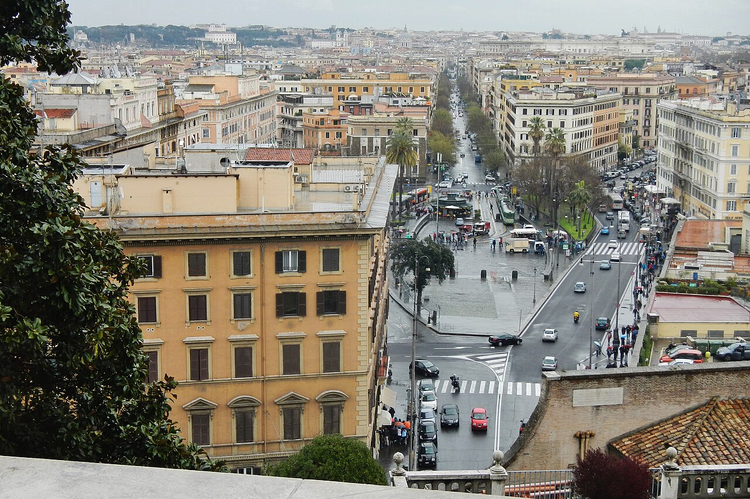
Pickpockets most often operate on the crowded bus to the Vatican and in the crowd near Termini station. In the crush by the doors, a phone and wallet disappear in seconds, and you only notice the loss at the next stop.
 © qwesy qwesy · CC BYPhoto: qwesy qwesy, CC BY (https://creativecommons.org/licenses/by/3.0), Wikimedia Commons
Keep your bag in front of you and close it. Put your phone and wallet in an inside pocket, and take off your backpack and hold it in your hands.
- The catch: in the crush, the loss is only discovered after getting off the bus.
- How to avoid it: bag in front of you, phone in a zipped inside pocket.
9. Hidden surcharges on the restaurant bill
In Roman restaurants, the bill includes coperto, a charge for table settings and bread you never ordered. Service is charged separately. Together it adds several euros on top, and the surprise only appears on the bill. At bars, coffee at the counter costs less than at a table.
 © Bert Kaufmann from Roermond, Netherlands · CC BY-SAPhoto: Bert Kaufmann from Roermond, Netherlands, CC BY-SA (https://creativecommons.org/licenses/by-sa/2.0), Wikimedia Commons
Ask about coperto before ordering and check the bread price on the menu. At a table with a view of the piazza, the surcharges are usually higher.
- The catch: you pay for bread and a seat you never ordered.
- How to avoid it: confirm coperto in advance and drink your coffee standing at the counter.
10. Gelato and coffee at postcard prices
At kiosks near the main sights, gelato is sold by weight, and the per-weight price is not shown on the display. You find out the total at the register, and a cone ends up costing more than dinner. Photo menus and English labels often signal exactly this pricing model. Honest gelaterias post the price per kilogram where you can see it.
Before ordering, find the price per kilogram or per scoop and look at the line. Where locals are standing, the price is usually fair.
- The catch: a small cone can cost as much as a full lunch.
- How to avoid it: choose places where the price is visible before you order and where locals are in line.
⁉️🤔 Frequently asked questions
Is it true that even experienced tourists get scammed in Rome?
The traps are designed for volume, not naivety. In lines, near fountains, and at train stations, the same tricks repeat every day, and even seasoned travelers fall for them. Three rules are enough: don't take things from people's hands, don't pay without a stated price, and buy tickets only on official websites or at ticket offices.
Where should I buy tickets for the Colosseum and the Vatican Museums?
On official websites or at official ticket offices: Colosseum tickets and the Vatican Museums website. For the Vatican Museums, online booking costs more than the ticket office, but it eliminates the line.
How do I tell an official Rome taxi from an illegal one?
An official taxi is white, with a meter and a license number on the door. If the driver names a price off the top of their head or refuses to turn on the meter, find another car.
What should I do if someone puts a bracelet on me or demands money for a photo?
Don't argue and don't pay. The bracelet comes off with scissors, the rose stays where it is. If the pressure continues, move to a crowded area or to a police patrol: in Rome's tourist areas, they are almost always nearby.
Is it dangerous to ride the metro and buses in Rome?
The transport itself is safe; the crowding is the danger. On a packed bus to the Vatican and near Termini station, be especially careful.
In short: what to book in advance
Rome forgives rushing in only one thing: tickets and transport are better booked ahead. An online slot for the Colosseum eliminates the line and removes scalpers, an airport transfer removes the argument about price, and the official website replaces the street kiosk.
If your trip is short: take a morning slot for the Colosseum and the Vatican Museums. If you're traveling with family: add an airport transfer. If you want a guide: book a tour in advance, not in the piazza.

A small editorial team writing guides for independent travel. We travel ourselves, but we haven’t been everywhere, so we check prices, opening hours and how to get there against official sources.