















Rainy season in the Maldives: when to go and what it changes for your vacation
The rainy season in the Maldives runs from May through October. During these months, villas cost less than in winter, and swimming is just as comfortable.
Downpours are short, often at night or in the afternoon. We have gathered verified facts on seasons, atolls, and entry requirements so you can choose your dates with confidence, without surprises.
Ad: this article contains affiliate links, we earn a commission if you book through them, at no extra cost to you.
Maldives climate: warm all year round
💡 In short:
- You can swim in the Maldives in any month: water and air temperatures barely change by season.
- The rainy monsoon runs from May through October, and the dry monsoon lasts from November through April.
- In the low season, resorts have fewer guests and villa prices are lower.
- Seasons, weather, and entry rules: 09/2026, verified on the official Maldives immigration website.
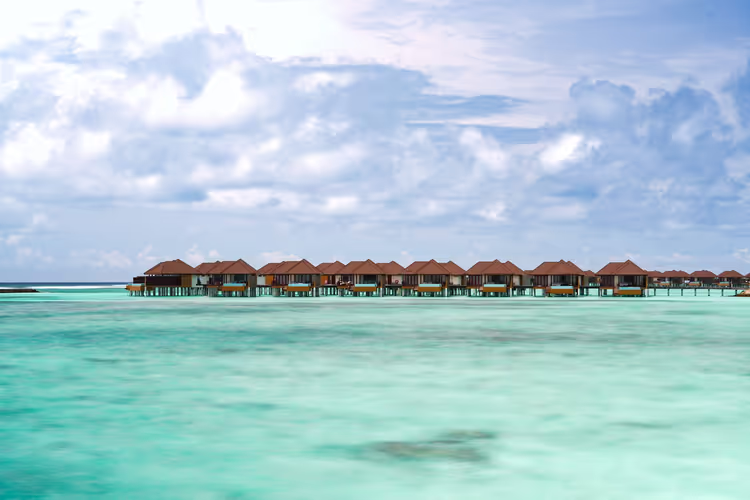
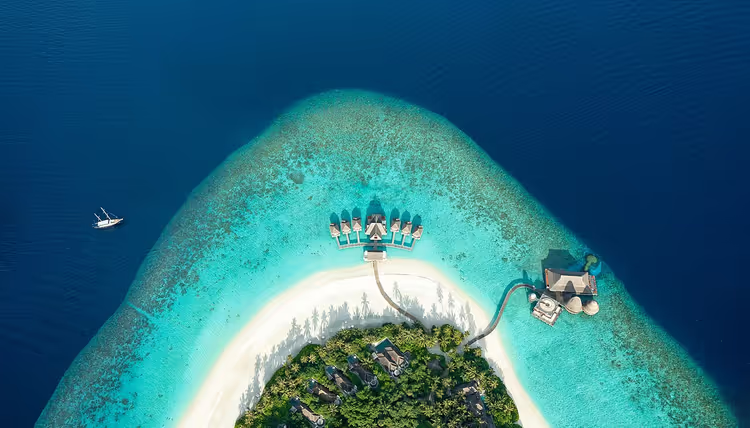
The Maldives consists of more than 1,200 islands grouped into 26 atolls (as of 09/2026, Maldives Ministry of Tourism). The chain of atolls stretches across the Indian Ocean to the southwest of Sri Lanka.
Proximity to the equator keeps the weather steady. At night, the temperature rarely drops below 25 °C, and during the day it stays around 29 °C (as of 09/2026, Maldives meteorological service). You can swim in any month of the year; there are no seasonal restrictions here.
Humidity is high all year round, so evenings feel heavier than the thermometer suggests. Bring lightweight clothes that dry quickly, and avoid long walks at midday.
The islands are unevenly populated. In Baa Atoll, only 13 of the 75 islands are inhabited, and six are set aside for resorts (as of 09/2026, UNESCO). Your vacation usually takes place within a single atoll, so transfers take little time.
The islands share a similar landscape: a narrow strip of sand, coconut palms, and an inner lagoon. The water gets deep quickly, so a mask and snorkel are useful even close to shore.
What the rainy season means in the Maldives
The islands' climate is shaped by two monsoons. The northeast monsoon blows from November through April and brings dry, sunny weather. From May through October, it is replaced by the southwest monsoon with humid air and short, heavy downpours.
According to UNESCO, in Baa Atoll the wet monsoon lasts a month longer, from May through November, while the dry period falls between January and March (as of 09/2026, Baa Atoll Biosphere Reserve). In the north and south of the archipelago, the dates shift by a few weeks, so the same month can look different depending on location.
The northeast monsoon was long considered reliable: clear skies, light winds, rare rain. The southwest monsoon brought short downpours, so for a long time European travelers did not consider the summer months suitable for a trip to the islands.
You have a choice: in winter you get stable skies, and from May through October you get quiet and low prices.
The practical takeaway is simple. If a guaranteed dry vacation matters most, book January or February and be prepared for high prices. If budget and peace matter more, choose May, June, or July: the weather in these months is milder than people tend to think.
Why the Maldives is popular even in the rainy season
The main season runs from November through February. The weather stays clear, the water is especially transparent, and the sky is almost cloudless. December and January remain the most expensive weeks of the year.
The low season spans May through October. Downpours come in short waves, usually lasting under an hour, and the sun returns between them. The swell on outer reefs is higher in summer, so for diving choose protected lagoons.
Season | Months | Weather | What it gives you |
|---|---|---|---|
High | November-February | clear, light wind, rare rain (meteorological service) | best photos, maximum prices |
Low | May-October | short downpours, swell, plenty of sun | fewer people, resort discounts for the low season |
 © Matheenfaiz · CC BY-SAPhoto: Matheenfaiz, CC BY-SA (https://creativecommons.org/licenses/by-sa/4.0), Wikimedia Commons
In 2025, the Maldives welcomed about 2.25 million tourists, up 9.8% from 2024 (As of 09/2026, Ministry of Tourism). The main flow comes during the dry months, so in winter the popular islands are noticeably crowded.
In summer, occupancy drops, and that is your main advantage. Resorts offer low-season discounts, there are fewer boats and snorkelers on the reefs, and you don't need to book restaurant tables a week in advance.
The water stays warm all year, so there are no restrictions on swimming. Your summer daily rhythm is simple: morning by the water, rain after lunch, sun again by evening.
The southwest monsoon brings plankton, which draws manta rays to the atolls: the region is known for aggregations of Manta birostris (As of 09/2026, UNESCO reserve description). Windsurfers and kitesurfers especially appreciate the summer wind.
What to do during the rainy season
Rain doesn't cancel the water. Between downpours, you can fit in snorkeling, diving in a protected lagoon, and kayaking along the shore.
Dive centers operate year-round, and the schedule changes only based on wind and visibility. Clear windows are usually in the morning, so sign up for the first trip of the day.
Spa and wellness help you wait out a couple of hours of rain. Massage, yoga, and bath rituals are available on almost every island, and schedules are adjusted to the weather.
A cooking class introduces you to local cuisine: rice, tuna, coconut, and curry. An evening like this takes two hours and works even in high humidity.
If you're traveling with kids, choose an island with a house reef. Then you can swim right by the villa, with no boat and no waiting for a group.
How to get there and what you need for entry
All flights arrive at Velana International Airport on Hulhulé Island near Malé. From there, a speedboat, seaplane, or domestic flight takes you to your atoll.
Speedboats serve resorts in North Malé Atoll, and seaplanes fly only during the day. Domestic flights are needed for distant atolls, such as Laamu.
For entry, you need a free 30-day visa. It is issued on arrival if you have a passport, a return ticket, a confirmed resort booking, and funds for the trip (As of 09/2026, Maldives Immigration). The IMUGA declaration is filled out online before departure.
JOALI Being: a wellness resort in Raa Atoll
The resort builds the experience around a holistic and personally tailored wellness concept: the program is assembled for the guest, not from a generic template. The quiet location in Raa Atoll suits you if you're coming for recovery, not for parties.
- Who it's for: guests who value a personalized wellness program
- Price: JOALI Being prices on Trip.com
Velaa Private Island: a refreshed wellness village
The island has refreshed its Eveylaa Wellbeing spa concept and expanded the Velaa Wellbeing Village. Programs are divided into therapeutic and medical, so you choose between gentle recovery and treatment.
- Who it's for: guests who need a medical format, not just relaxation
- Price: Velaa Private Island prices
Six Senses Laamu: surfing in Laamu Atoll
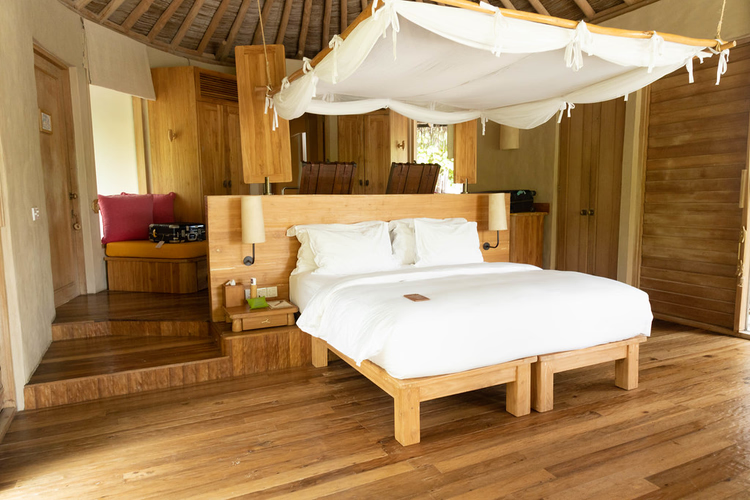 © u07ch · CC BYPhoto: u07ch, CC BY (https://creativecommons.org/licenses/by/2.0/), Flickr
You reach the island by domestic flight from Malé to Laamu Atoll, then you're driven to the property. Wind and waves here are more consistent than in the center of the archipelago, which is why windsurfers and surfers choose this resort.
- Who it's for: you value wind and waves, not just a calm lagoon
- Price: Six Senses Laamu prices
Kuda Villingili: diving and the Chickens Break surf spot
The resort is located in North Malé Atoll, with a speedboat transfer from the airport. Diving here operates even in the low season. Nearby is Chickens Break, a well-known surf spot, and from May to October manta rays stay around the reefs.
- Who it's for: divers and surfers who want an atoll close to the airport
- Price: rates at Kuda Villingili
Vakkaru: an island for families with low-season discounts
The island suits families: it has plenty of activities and strong dining. In the low season the resort offers discounts, so a week in a villa costs less than in winter.
- Who it's for: families who want activities and a wide choice of restaurants
- Price: rates at Vakkaru
Milaidhoo Island: a small island for couples
The island has few villas and a quiet atmosphere, and it lies in Baa Atoll. Couples choose it for the peace and water villas, and the low season brings noticeable discounts here. During the southwest monsoon season, manta rays come to Baa Atoll.
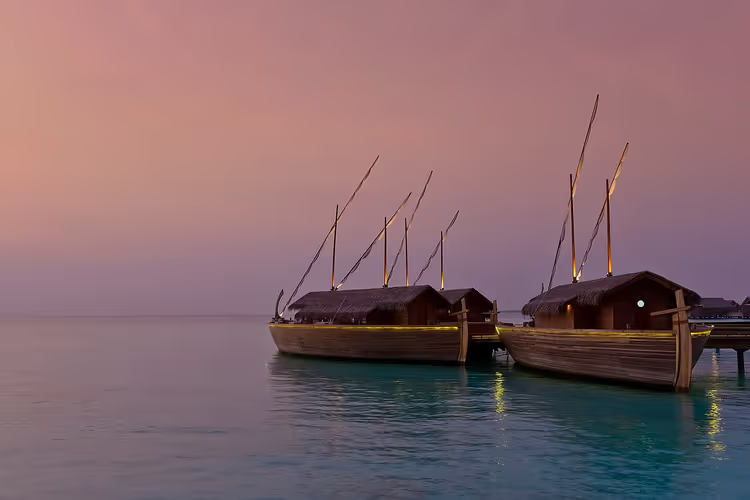 © Aantolinn1970 · CC BY-SAPhoto: Aantolinn1970, CC BY-SA (https://creativecommons.org/licenses/by-sa/4.0), Wikimedia Commons
- Who it's for: couples looking for quiet and a small island
- Price: prices at Milaidhoo Island
Find hotels in Maldives
Compare prices across booking sites and filter for rooms with free cancellation.
Compare prices on Trip.comThe widget loads once you give your consent.
⁉️🤔 Frequently asked questions
Does it rain all day in the Maldives?
No. During the southwest monsoon season, downpours come in short waves, mostly at night or in the afternoon. The sun shines in between, and the air and water temperature does not drop. Take a rain jacket instead of an umbrella: the wind breaks umbrellas, and a jacket takes up little space in your bag.
When is the best time to go if you need dry weather?
From November to April, the northeast monsoon prevails over the islands: clear skies, light wind, and rare rain. January and February are considered the most reliable months, but they are also the most expensive. Book them several months in advance, otherwise the choice of villas shrinks.
How much does a Maldives visa cost?
The 30-day visa is free and issued on arrival. The list of documents and the IMUGA form procedure are in the entry section.
How do you get from the airport to the resort?
The transfer method depends on the atoll; the options are described in the entry section. A late arrival often means a night in Male, because seaplanes fly only during the day.
What is there to do on the island when it rains?
The spa, yoga, a cooking class, and a local cuisine tasting take a couple of hours and do not depend on the sky.
In short: what to book
If you need reliably dry weather, take January or February and choose an island with a house reef: then you can snorkel right off the villa without a boat. If price and quiet matter more, look at May, June, and July.
For diving and surfing, Kuda Villingili and Six Senses Laamu work well; for a quiet getaway for two, Milaidhoo Island; for families, Vakkaru. Compare villa prices in advance: check prices on Trip.com.

A small editorial team writing guides for independent travel. We travel ourselves, but we haven’t been everywhere, so we check prices, opening hours and how to get there against official sources.