
















Montmartre in one day: route from Sacre-Coeur to Moulin Rouge
Montmartre is usually covered on foot in one day, even though the hill sits higher than any other part of Paris. The neighborhood is small but dense: the basilica, the artists' square, museums, and cabarets are all within a couple of blocks of each other.
The route doesn't require transport, but it does require patience. You get up to Sacré-Cœur by stairs or by funicular, and in summer that takes longer than it looks from the outside.
Below is the walking order from the hill down to Boulevard de Clichy, with prices, opening hours, and the honest catch of each place. Charge your phone: you'll take a lot of photos in Montmartre.
Ad: this article contains affiliate links, we earn a commission if you book through them, at no extra cost to you.
Montmartre, the artists' hill
💡 In short:
- Start at Abbesses metro station with the Wall of Love and walk up toward the basilica.
- Set aside a full day for the neighborhood, about an hour of it for the Sacré-Cœur dome.
- Get tickets for Dalí Paris and Musée de Montmartre online; lines are longer in summer.
- Prices and opening hours: 09/2026, verified on the official Sacré-Cœur website.
 © John Martinez Pavliga from San Pablo, USA · CC BYPhoto: John Martinez Pavliga from San Pablo, USA, CC BY (https://creativecommons.org/licenses/by/2.0), Wikimedia Commons
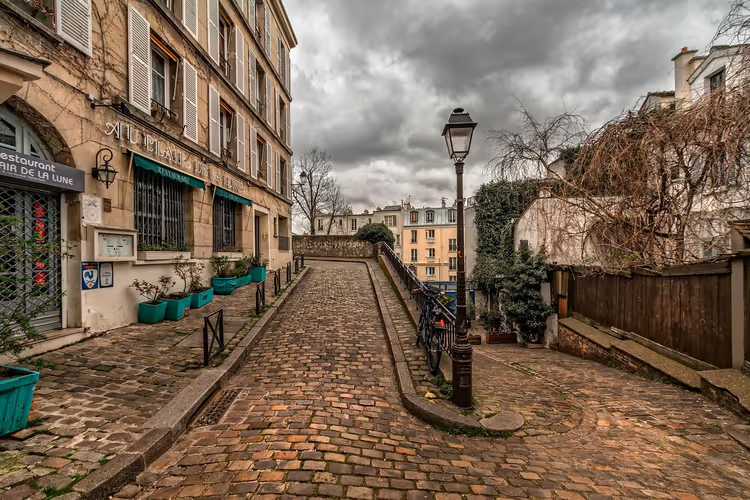
Montmartre grew up around a hill where gypsum was quarried. The quarries are gone, but the white walls of the houses remain, and the streets still wind so much that navigation apps get confused. Van Gogh, Picasso, Renoir, and Toulouse-Lautrec lived and worked here, and the streets have kept the artists' studios.
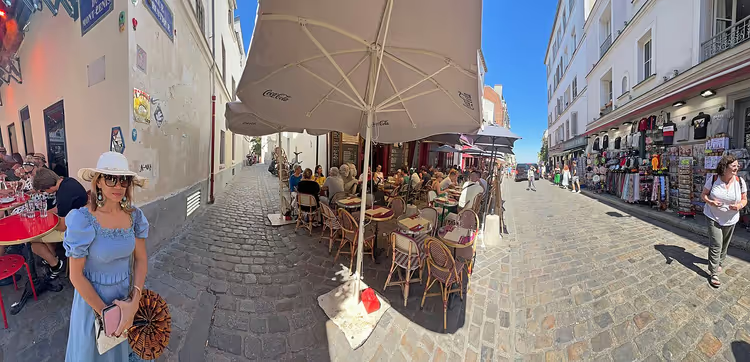
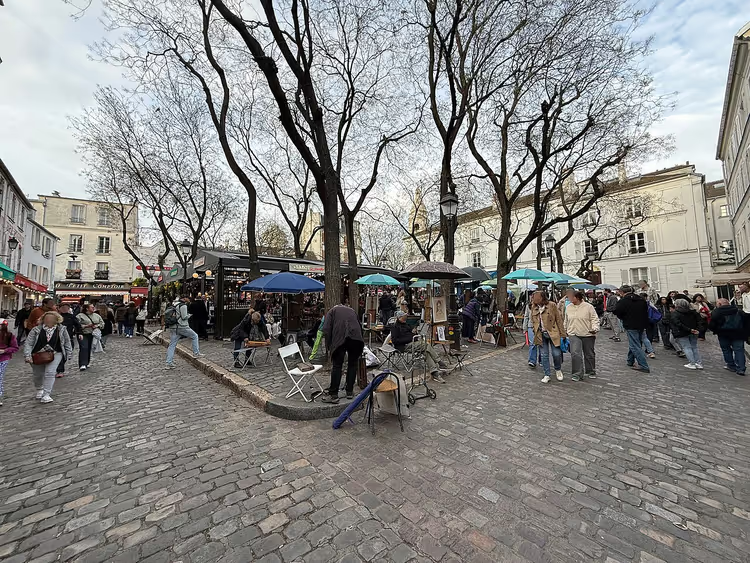
Portrait artists set up for work at Place du Tertre, and the line to see them never thins out. The neighborhood's popularity grew after the film Amélie: Café des Deux Moulins on rue Lépic, where the main character worked in the story, is still open. The upper part of the hill is built up with expensive houses, so café prices at the top are higher than down below.
Sacré-Cœur Basilica
 © Chabe01 · CC BY-SAPhoto: Chabe01, CC BY-SA (https://creativecommons.org/licenses/by-sa/4.0), Wikimedia Commons
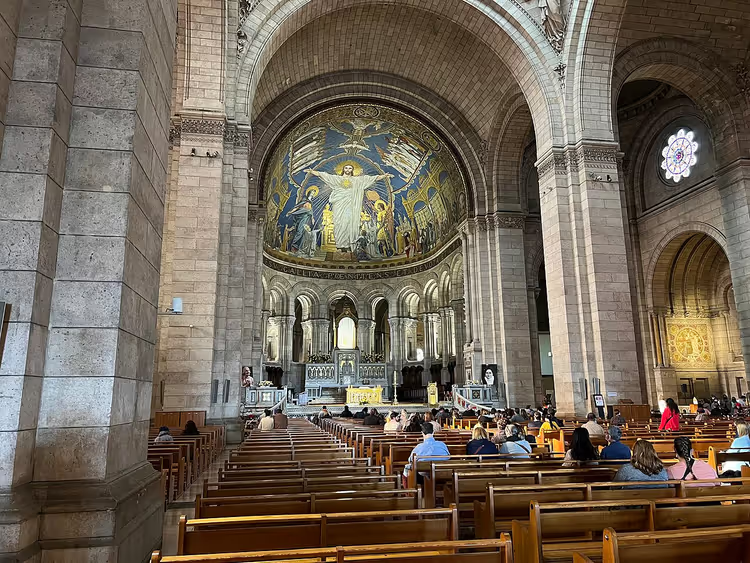
Sacré-Cœur translates as "sacred heart." The white basilica was built from 1875 to 1914 to a design by architect Paul Abadie, and construction dragged on because of the weak ground left by the old quarries. The dome rises to 83 meters, and next to it stands a bell tower with the largest bell in Paris (as of 09/2026, official basilica website).
Entry to the basilica itself is free; you only pay to climb the dome. A ticket costs 8 € for adults and 5 € for children under 15, sold at the ticket office by the entrance on the right (as of 09/2026, dome climb page). The dome is open daily from 10:30 to 20:45, last entry at 20:15, with a break in the middle of the day. There are 280 steps up to the viewing platform.
- The catch: there is no elevator, the climb goes up a narrow staircase; in the middle of the day the dome closes for a break.
- Who it's for: anyone who wants to see Paris from above and is willing to walk up.
- Not for: visitors with a stroller and anyone afraid of enclosed spaces.
To avoid standing in line at the entrance, book a morning guided tour: Montmartre tours on GetYourGuide.
Place du Tertre and the artists
 © Chabe01 · CC BY-SAPhoto: Chabe01, CC BY-SA (https://creativecommons.org/licenses/by-sa/4.0), Wikimedia Commons
Place du Tertre is a two-minute walk from the basilica and is considered the heart of Montmartre. The central spot belongs to La Mère Catherine, a restaurant that has been operating here since the late 18th century. According to one version, the word "bistro" was born right here: Russian officers hurried waiters with the word "bystro" (quickly). There is no documentary evidence for this story, but the food at the restaurant remains French.
Every café on the square remembers famous guests: Picasso and Dalí lived in neighboring houses. Today it is noisy and crowded from morning to evening, and the streets are so narrow that tables stand right up against the walls. A portrait takes about half an hour, and the artist sets the price.
- The catch: the square is always crowded and noisy, there is no quiet corner to be found here.
- Who it's for: those who want to see street portrait artists at work and have lunch in the very center of the district.
Nearby stands the Church of Saint-Pierre de Montmartre, built in the Middle Ages on the site of an old monastery. Further on, the route leads to the museums. Keep an offline map handy: in the winding alleys, navigation jumps around, and you will not find the right sign right away. A camera is a must, the best views open up between the houses.
Salvador Dalí Museum
 © Florian75018 · CC BY-SAPhoto: Florian75018, CC BY-SA (https://creativecommons.org/licenses/by-sa/4.0), Wikimedia Commons
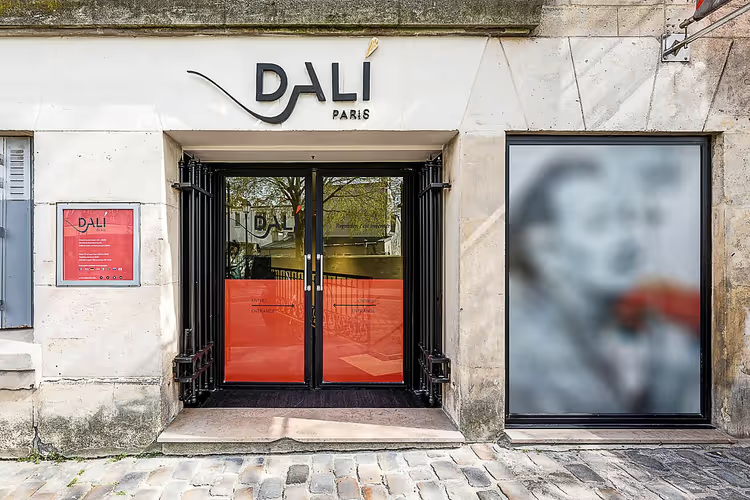
Dalí Paris, formerly Espace Dalí, occupies two levels right by Place du Tertre. It is the private collection of Beniamino Levi: more than three hundred works by Dalí, sculptures, engravings and lithographs, and the audio guide features the voice of the artist himself. The museum opened in 1991 (as of 09/2026, official Dalí Paris website).
Tickets cost 14 € for adults and 10 € for visitors aged 8 to 25 (as of 09/2026, prices and tickets). It is more convenient to book time slots in advance: Paris museum tickets on Tiqets.
- Who it's for: lovers of surrealism and those who have already seen the classic museums of Paris.
Musée de Montmartre in the Rosimond house
 © Musée de Montmartre · CC BY-SAPhoto: Musée de Montmartre, CC BY-SA (https://creativecommons.org/licenses/by-sa/3.0), Wikimedia Commons
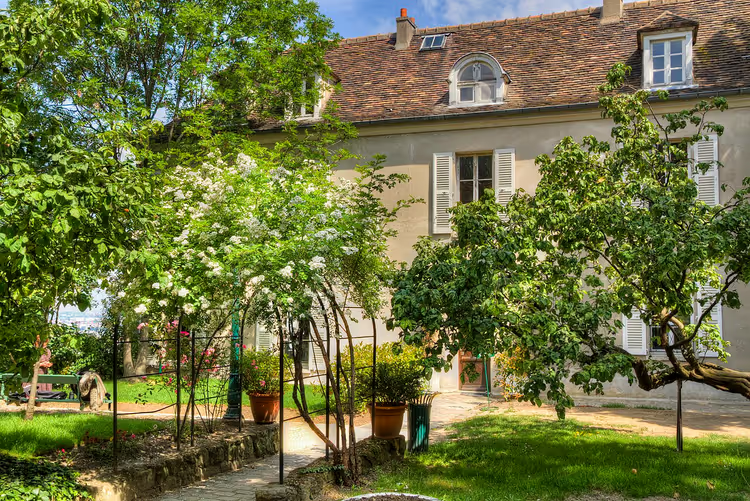
Musée de Montmartre occupies the old Rosimond house on rue Cortot and is open daily from 10:00 to 19:00, with last entry 45 minutes before closing (as of 09/2026, official website). The rooms display Degas, Renoir, Toulouse-Lautrec, Utrillo and Dufy, and nearby lie theater posters and old photographs of performers. In the courtyard, Café Renoir is open, a convenient place to rest between the hill and the Moulin Rouge.
Check the exact ticket price on the official website: it changes by season and depends on the current exhibition.
The man who walked through walls
 © Guilhem Vellut from Paris, France · CC BYPhoto: Guilhem Vellut from Paris, France, CC BY (https://creativecommons.org/licenses/by/2.0), Wikimedia Commons
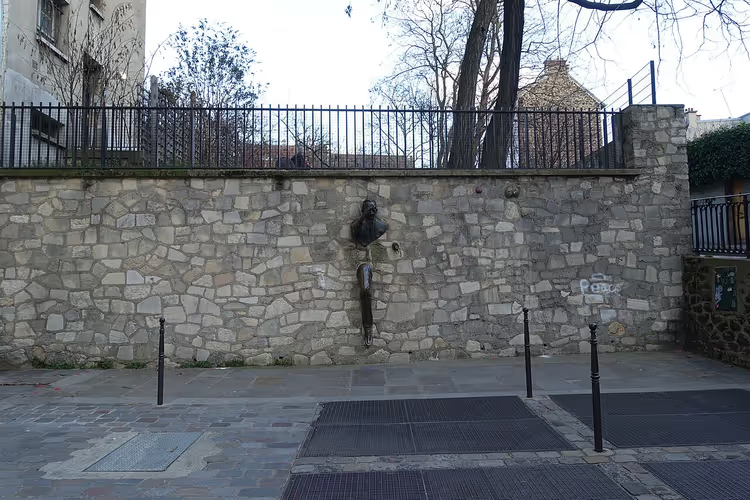
The sculpture Le Passe-Muraille on Place Marcel Aymé depicts a man emerging from a stone wall. The bronze figure stands in plain sight, but its left hand shines brighter than the rest: it has been polished by tourists' handshakes.
The sculpture was created by the actor Jean Marais himself, a friend of the writer Marcel Aymé. Aymé's short story has the same title, and its hero could walk through any walls. You will find the sculpture on the way between Place du Tertre and rue des Saules.
Wall of love at Place des Abbesses
 © Superbass · CC BY-SAPhoto: Superbass, CC BY-SA (https://creativecommons.org/licenses/by-sa/4.0), Wikimedia Commons
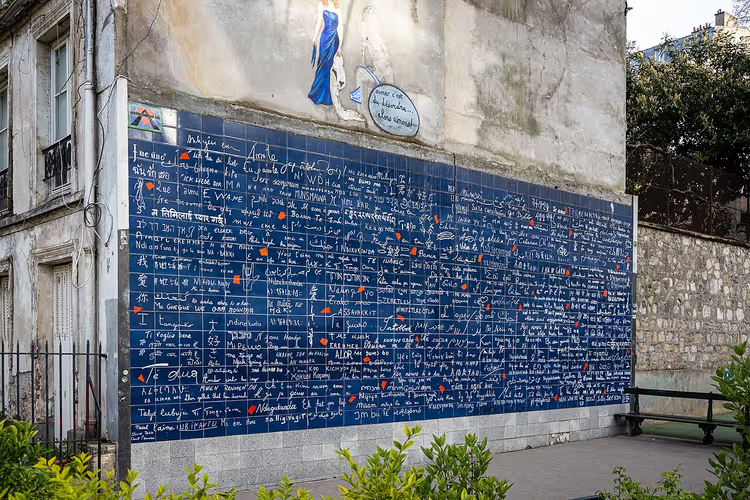
The Wall of Love (Le Mur des Je t'aime) stands in the Jehan Rictus garden near Place des Abbesses. Artists Frédéric Baron and Claire Kito laid out the words "I love you" in about 250 languages to remind people of the power of these words. They collected the translations through friends, acquaintances and letters to embassies.
There is a tradition: touch the inscription in your native language and make a wish. The wall stands near the Abbesses metro station, so it is a convenient place to start the route. During the day there is always a line for photos at the wall, so come early. You can continue your evening in the French capital on the water: evening Seine cruise on GetYourGuide.
Moulin Rouge: cancan and cabaret
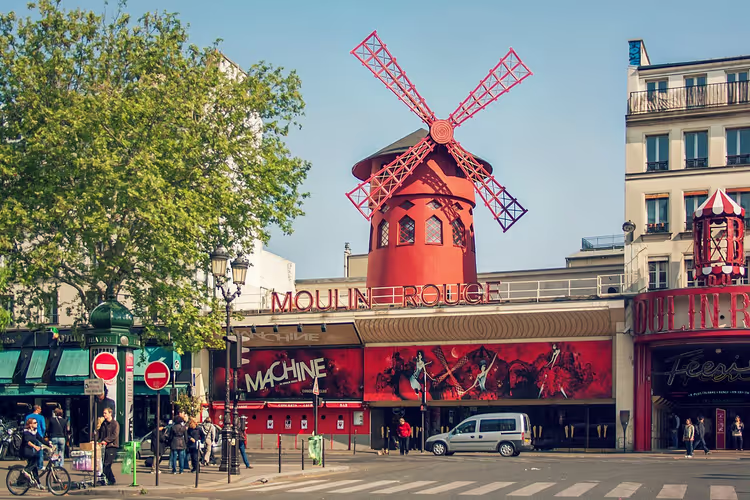 © Juanedc from Zaragoza, España · CC BYPhoto: Juanedc from Zaragoza, España, CC BY (https://creativecommons.org/licenses/by/2.0), Wikimedia Commons
Moulin Rouge opened in 1889 on the eve of the World's Fair, which is why it stands on the edge of Montmartre, near Boulevard de Clichy (as of 09/2026, cabaret history). Founder Joseph Oller chose a location away from the Élysée Montmartre cabaret, but the venue still quickly drew a crowd, from aristocrats to the Prince of Wales.
This is where the cancan took the stage, and later the first stage striptease appeared. Today the venue hosts the Féerie revue: around 1,000 costumes made of feathers and rhinestones (as of 09/2026, Féerie program).
Tickets are available for the show only, with champagne or with dinner, so book in advance and do not count on the box office on the day of your visit: show tickets with champagne on GetYourGuide.
- The catch: the venue is often packed, especially on weekend evenings.
Pigalle district on Boulevard de Clichy
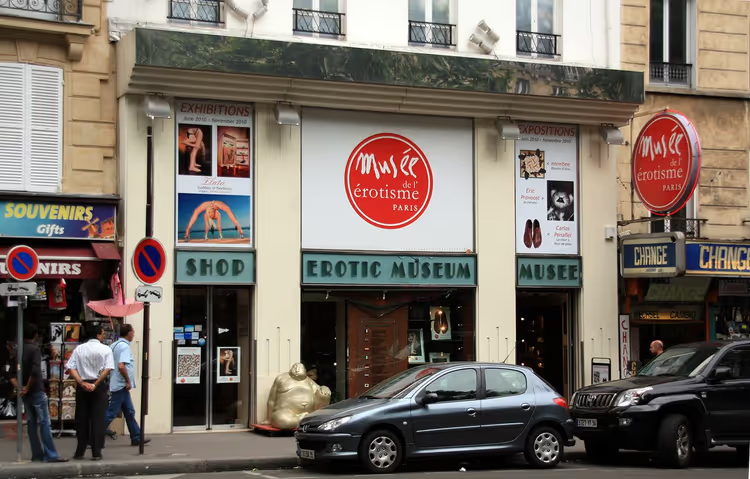 © Edal Anton Lefterov · CC BY-SAPhoto: Edal Anton Lefterov, CC BY-SA (https://creativecommons.org/licenses/by-sa/3.0), Wikimedia Commons
The Pigalle district stretches along Boulevard de Clichy near Moulin Rouge. The Musée de l'Érotisme used to operate at 72 Boulevard de Clichy: it opened in 1997 and closed on November 7, 2016. The collection of paintings, sculptures, and photographs was sold at auction (as of 09/2026, note about the museum). Today there is no museum at that address.
Before it closed, the museum displayed erotic art from France, Africa, Japan, and India. Instead of the museum, take in the Pigalle district itself: neon signs, theaters, and bars on Boulevard de Clichy. Walk this part of the route as a regular evening stroll, no tickets needed here.
Want to cover the whole route with a guide rather than a map? Below is a selection of Paris tours.
Tours and tickets
Guided tours, skip-the-line tickets and activities — most offers can be cancelled free of charge.
See offers on GetYourGuideThe widget loads once you give your consent.
Montmartre route on the map
The map shows all the route stops: the hill, the basilica, Place du Tertre, two museums, the Wall of Love, Moulin Rouge, and the Pigalle quarter. Start at the Abbesses metro station with the Wall of Love, and finish at the Blanche station next to the cabaret. A funicular from Place Suzanne-Valadon takes you up the hill, saving your energy for the long walk ahead.
Montmartre route in one day
Places on the map
- 1Montmartre Hill of the artists where Van Gogh, Picasso, Renoir and Toulouse-Lautrec lived
- 2Sacré-Cœur Basilica Free entry, dome climb 8 € and 280 steps
- 3Place du Tertre The heart of Montmartre with street portrait artists and the La Mere Catherine restaurant
- 4Saint-Pierre de Montmartre Church Medieval church next to Place du Tertre
- 5Dalí Paris Former Espace Dalí near Place du Tertre, over three hundred works, ticket 14 €
- 6Montmartre Museum Rosimond House on rue Cortot, open 10:00-19:00, Cafe Renoir in the courtyard
- 7The Walker Through Walls Bronze sculpture on Place Marcel Aymé, the hand polished by tourists
- 8Wall of Love Jehan Rictus square near Place des Abbesses, love declared in over three hundred languages
- 9Moulin Rouge Cabaret since 1889 by Boulevard de Clichy, Feerie revue with 80 performers
- 10Pigalle Quarter Neon signs, theaters and bars on Boulevard de Clichy, an evening walk
- 11Montmartre Funicular Climbs to the basilica from Place Suzanne-Valadon
⁉️🤔 Frequently asked questions
How much time do you need for Montmartre?
Set aside a full day if you want both the museums and the dome climb. You'll walk several kilometers around the hill, and the line for Sacré-Cœur adds an hour in summer. If museums don't interest you, half a day is enough: the basilica, Place du Tertre, and the cabaret are all close together.
Is entry to Sacré-Cœur free?
The basilica itself is free to enter; you only pay to climb the dome: €8 for adults and €5 for children under 15 (as of 09/2026, ticket office and climb rules). There is no elevator, and a narrow staircase leads to the dome, so the climb is not suitable with a stroller. Tickets are sold on site, no reservation needed.
How to get to Montmartre?
The closest metro stations are Abbesses and Lamarck-Caulaincourt. From Blanche you walk uphill longer, but you finish the route at Moulin Rouge. From Place Suzanne-Valadon, the Montmartre funicular takes you up to the basilica, saving your energy before walking around the hill.
Is the Salvador Dalí museum worth visiting?
Dalí Paris is a two-minute walk from Place du Tertre, and it's the only permanent Dalí exhibition in France: more than three hundred works, including sculptures and engravings. Tickets cost €14 for adults and €10 for visitors aged 8 to 25 (as of 09/2026, museum page). If surrealism speaks to you, allow an hour for the visit.
Is the Museum of Eroticism still open?
No. The Museum of Eroticism closed on November 7, 2016, and the collection was sold at auction (as of 09/2026, museum closure in 2016). Today there is no museum at 72, boulevard de Clichy. Walk this part of the route as a stroll through Pigalle, with no tickets or lines.
In short: what's worth booking
- If it's your first time in Paris: book a morning climb to the Sacré-Cœur dome, before the line forms.
- If you're traveling with kids: skip Place du Tertre and the Dalí museum, and pass on the evening show at Moulin Rouge.
- If you want an evening performance: Moulin Rouge tickets sell out in advance, and without a reservation you risk missing out on seats.
- If you're looking for a place to stay: the area is great for walking, so book hotels in advance.
Accommodation in Montmartre gets booked up quickly, so it's best to lock in your dates early: Montmartre hotels on Trip.com.

A small editorial team writing guides for independent travel. We travel ourselves, but we haven’t been everywhere, so we check prices, opening hours and how to get there against official sources.