
















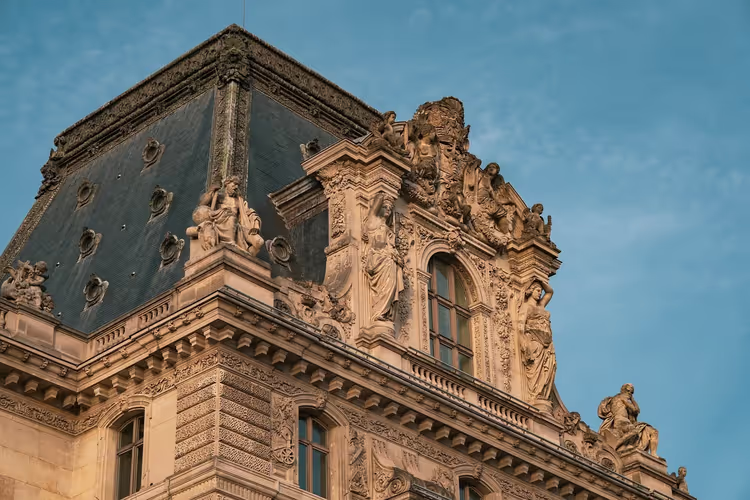
35 Museums in Paris: what to see, ticket prices and opening hours
Paris is rightly considered the museum capital of Europe. In a single trip you won't manage to see even a small fraction of what's open to visitors here. Tickets to the top museums are worth buying in advance, otherwise you'll lose an hour in line at the entrance.
We've put together 35 Paris museums, from the Louvre and Musée d'Orsay to small private collections like the Museum of Playing Cards. A ticket to the Louvre itself costs €22 for EEA citizens and residents (as of 09/2026, official Louvre website), and €32 for visitors from other countries. For each museum below, we tell you what to see inside, how much time to allow, and where to get tickets.
Ad: this article contains affiliate links, we earn a commission if you book through them, at no extra cost to you.
How to choose a museum in Paris without overpaying
💡 In short:
- Get the Paris Museum Pass if you're planning a packed itinerary of several museums.
- You need a timed entry slot for the Louvre, Musée d'Orsay, and Orangerie; smaller museums usually let you in with just a ticket.
- Split your day in half: a big museum in the morning, a small one after lunch.
- Prices and opening hours: 09/2026, verified on the Louvre tickets page.
Paris museums fall into three groups. The first includes the national giants (the Louvre, Musée d'Orsay, Orangerie), where without a timed slot you risk standing at the entrance for over an hour. The second group covers the city museums of the Paris Musées network, fourteen of them, with tickets sold on a shared website. The third includes private and niche collections: the Museum of Playing Cards, the Museum of Magic, the Perfume Museum.
Museum | What to see | Time to allow | Timed slot in advance |
|---|---|---|---|
Louvre | Mona Lisa, Winged Victory of Samothrace, Egyptian department | 3-4 hours | Yes |
Les Invalides | Napoleon's tomb, Cathedral of Saint-Louis | 2 hours | Yes |
Musée Rodin | The Thinker, The Gates of Hell, sculpture garden | 1.5-2 hours | No |
Musée d'Orsay | Monet, Van Gogh, Degas in a former train station | 2-3 hours | Yes |
Orangerie | Monet's Water Lilies in two oval rooms | 1-1.5 hours | Yes |
If you're short on time, pick two museums from the first group and one smaller one. That combination gives you a full picture of Paris without museum fatigue. Below are all 35 places in order, each with its own photo and practical details.
1. Louvre
 © Maria Eklind · CC BY-SAPhoto: Maria Eklind, CC BY-SA (https://creativecommons.org/licenses/by-sa/2.0), Wikimedia Commons
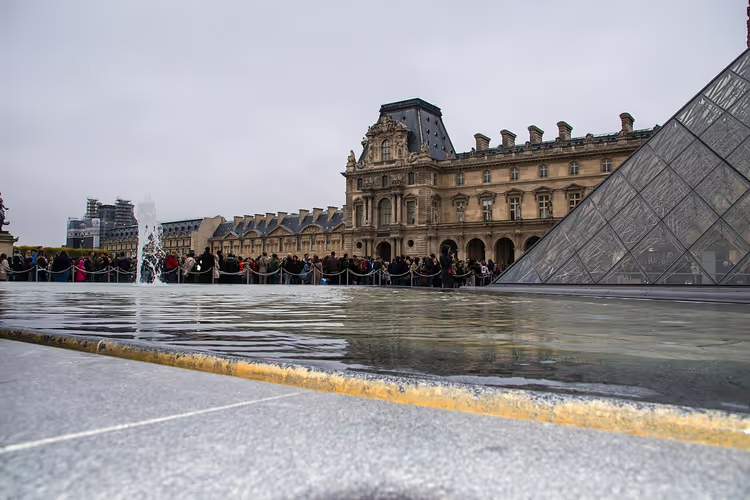
The Louvre holds first place among the world's art museums both by size and by visitor numbers. Seeing all the galleries in one day is physically impossible, so the museum is divided into departments. In the Denon wing you'll see antiquities and Italian painting, the Sully wing covers the history of the palace itself, and Richelieu houses French sculpture and decorative arts. The Mona Lisa hangs in a separate room, and there's a dedicated line for it even with a ticket.
- Tickets and hours: 9:00-18:00 on Monday, Thursday, Saturday, and Sunday, until 21:00 on Wednesday and Friday, closed Tuesday; €22 for EEA visitors and €32 for everyone else (as of 09/2026, louvre.fr).
- Getting there: Palais Royal-Musée du Louvre and Louvre-Rivoli stations, entrance through the pyramid.
- The catch: there's always a line at the pyramid, allow 20-30 minutes just to get in.
- Tip: book a 9:00 slot and head straight to the Winged Victory of Samothrace while the galleries are still empty.
2. Les Invalides
 © Делфина · CC BY-SAPhoto: Делфина, CC BY-SA (https://creativecommons.org/licenses/by-sa/4.0), Wikimedia Commons
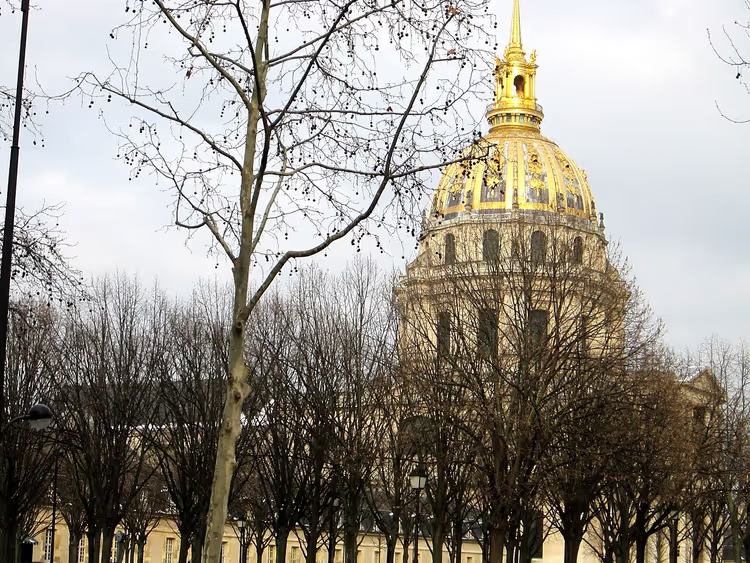
Les Invalides was built as a shelter for soldiers, but today it's a full architectural and park ensemble on the banks of the Seine. Louis XIV ordered the construction of a home for war veterans, and the complex took up ten hectares. The main building is considered to be the Cathedral of Saint-Louis with its twenty-seven-meter dome, gilded during restoration. Napoleon's tomb is also here, his coffin brought to the site in 1840. Several museums operate on the grounds, and it's hard to see everything in one visit.
- Tickets and hours: a single ticket covers the cathedral and the Army Museum; check opening hours on the official Les Invalides website (as of 09/2026).
- Getting there: Invalides station on lines 8 and 13, as well as RER C.
- The catch: a crowd gathers at Napoleon's tomb by opening time, arrive by 10:00.
3. Army Museum
 © xiquinhosilva from Cacau · CC BYPhoto: xiquinhosilva from Cacau, CC BY (https://creativecommons.org/licenses/by/2.0), Wikimedia Commons
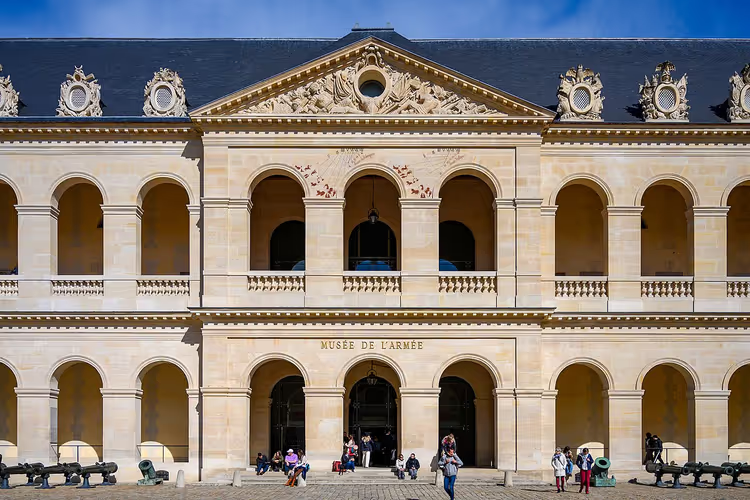
The Army Museum occupies the wings of Les Invalides and traces the history of the French military machine from the Middle Ages to the 20th century. The first section displays polearms, knight's armor, and samurai equipment. Next come Napoleon's soldiers, cuirassier armor, the emperor's campaign gear, and objects from the French colonies. The final room is dedicated to the two world wars: dioramas of the 1914 battles, vehicles, and the history of the Resistance.
- Tickets and hours: admission is included in the Les Invalides ticket; prices and hours on the museum's official website (as of 09/2026).
- Who it's for: anyone interested in the history of warfare and uniforms.
- The catch: some rooms close half an hour before the museum shuts.
4. Museum of Contemporary History
 © Yann Caradec from Paris, France · CC BY-SAPhoto: Yann Caradec from Paris, France, CC BY-SA (https://creativecommons.org/licenses/by-sa/2.0), Wikimedia Commons
This museum grew out of the private collection of entrepreneur Leblanc and the War Library of 1914. It was first housed in the Château de Vincennes, then moved to Les Invalides in 1973. Today the museum operates in Nanterre under the name La Contemporaine. It now holds tens of thousands of items: posters, newspaper archives, postcards, paintings, and sculptures that show everyday life from the late 19th century onward. Separate collections are devoted to World War II and the recent history of Europe.
- Tickets and hours: the museum operates in Nanterre; current hours are on the museum's official website (as of 09/2026).
- Tip: check the temporary exhibitions tied to commemorative dates, they change often.
- Who it's for: people who love documents and firsthand accounts of an era.
5. Musée Rodin
 © Jean-Pierre Dalbéra · CC BYPhoto: Jean-Pierre Dalbéra, CC BY (https://creativecommons.org/licenses/by/2.0), Wikimedia Commons
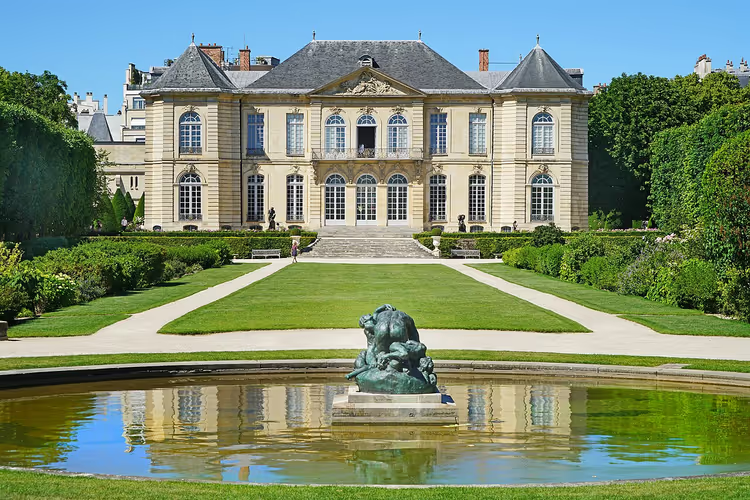
The Musée Rodin occupies the Hôtel Biron next to Les Invalides. The garden makes just as strong an impression: lawns, hedges, and bronze sculptures in the open air. The garden is home to The Thinker, The Burghers of Calais, and The Gates of Hell, on which the sculptor worked for many years. Inside the mansion you'll find Rodin's works and his personal collection, and a small chapel displays the artist's antiquities.
- Tickets and hours: the ticket covers the house and the garden; prices are on the museum's official website (as of 09/2026).
- Getting there: Varenne station on line 13.
- The catch: the garden closes earlier than the galleries, so check the outdoor entry times.
- Who it's for: anyone who wants sculpture without the stuffy museum feel.
6. Jeu de Paume
 © Jean-Pierre Dalbéra · CC BYPhoto: Jean-Pierre Dalbéra, CC BY (https://creativecommons.org/licenses/by/2.0), Wikimedia Commons
The name Jeu de Paume means "palm game": the building was constructed in 1861 for a tennis-like game in which the ball was hit with the hand. The pavilion became an art gallery later, and during the occupation it was used as a warehouse for confiscated paintings. After the war, the Impressionists from the Louvre were temporarily moved here. Since 1991 the space has hosted temporary exhibitions of contemporary art, and each change of exhibition transforms the look of the rooms.
- Tickets and hours: the schedule varies by exhibition; current conditions are on the gallery's official website (as of 09/2026).
- Who it's for: people who follow contemporary art.
- The catch: there is no permanent collection, so what's on view depends on the season.
7. Maison de Balzac
 © Thank you to indicate this credit line next to the image in case of reuse: Credit: Polymagou - CC BY-SA I'd appreciate i · CC BY-SAPhoto: Thank you to indicate this credit line next to the image in case of reuse: Credit: Polymagou - CC BY-SA I'd appreciate i, CC BY-SA (https://creativecommons.org/licenses/by-sa/4.0), Wikimedia Commons
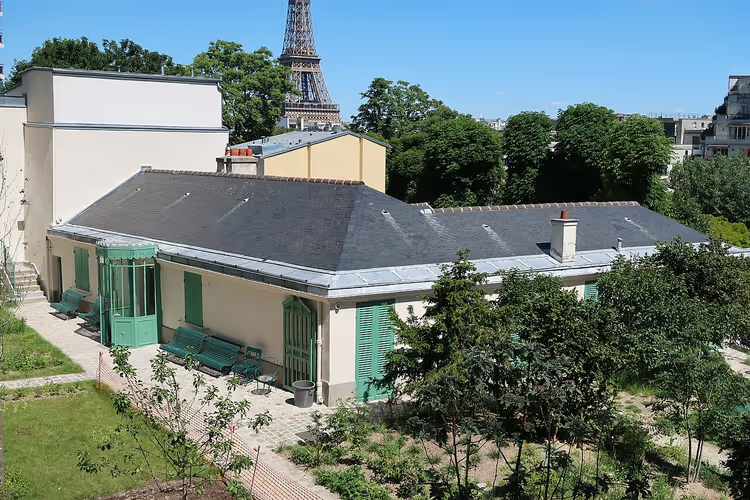
The Maison de Balzac occupies a modest three-story house on Rue Raynouard, in a former suburb of Paris. Here the author of The Human Comedy hid from creditors and worked for many hours at a stretch. The writer lived under an assumed name and spent happy months in this house with Ewelina Hańska. The exhibition is arranged in thematic rooms and displays manuscripts, personal belongings, and editions of his novels. The house is part of the network of fourteen city museums of Paris.
- Tickets and hours: check conditions and opening hours on the official website of the city museums (as of 09/2026).
- Getting there: Passy or La Muette metro station, address 49, rue Raynouard.
- The catch: the rooms are small, and it gets crowded inside on weekends.
- Who it's for: people who love literary house museums.
8. Victor Hugo House Museum
 © Frédérique PANASSAC · CC BY-SAPhoto: Frédérique PANASSAC, CC BY-SA (https://creativecommons.org/licenses/by-sa/2.0), Wikimedia Commons
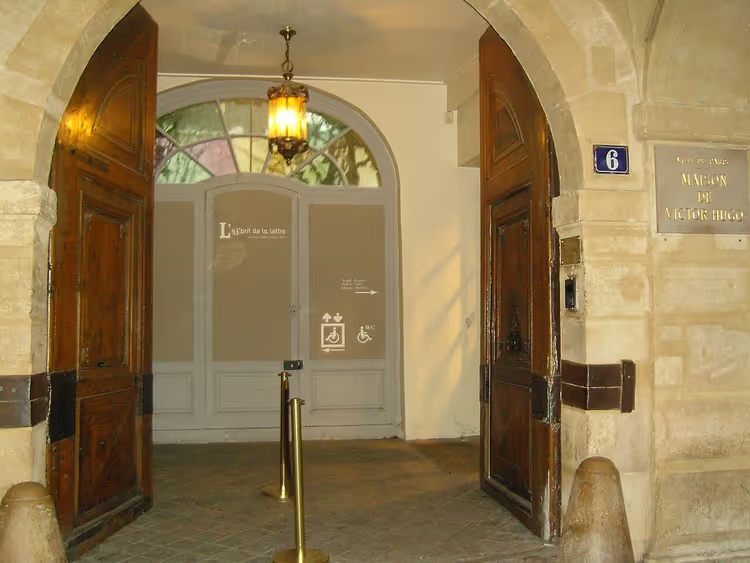
The Victor Hugo House Museum opened on Place des Vosges, in a historic building at number six. The writer's family lived here for almost sixteen years, and within these walls he created his best works. Guests of the house included Dumas, Liszt, Rossini, and Balzac. The organizers recreated the authentic setting: the red room with carved furniture, the Chinese drawing room that Hugo himself worked on, and the Gothic-style dining room. The family's portraits were painted by artist friends, so paintings hang in nearly every room.
- Tickets and hours: address 6, place des Vosges, schedule on the official city museums website (as of 09/2026).
- Getting there: Saint-Paul or Chemin Vert metro.
- Who it's for: those walking through the Marais who want a stop with history.
- The catch: there can be a line to get in on Sundays.
9. Musée Grévin
 © Chabe01 · CC BY-SAPhoto: Chabe01, CC BY-SA (https://creativecommons.org/licenses/by-sa/4.0), Wikimedia Commons
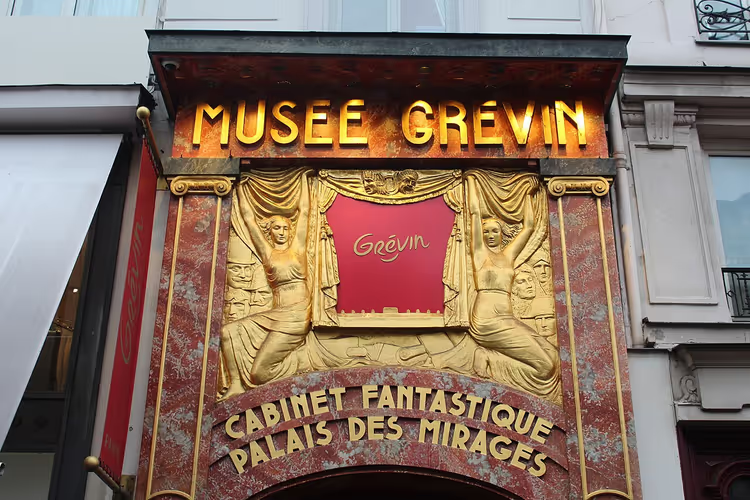
Musée Grévin is named after sculptor and caricaturist Alfred Grévin, who made wax figures of celebrities. Journalist Arthur Meyer opened the exhibition modeled on London's Madame Tussauds, and Grévin's works amazed contemporaries with their likeness to the originals. Today hundreds of figures stand here: musicians, politicians, actors, and athletes. Some of the personalities passed away long ago, while others continue working on stage and screen. Inside there are also light-filled halls where you can take photos next to the figures.
- Tickets and hours: the museum is on Boulevard Montmartre, schedule on the official website (as of 09/2026).
- Getting there: Grands Boulevards metro.
- The catch: the ticket is not cheap, and the visit takes about an hour.
- Who it's for: families with children and pop culture fans.
10. Salvador Dalí Museum
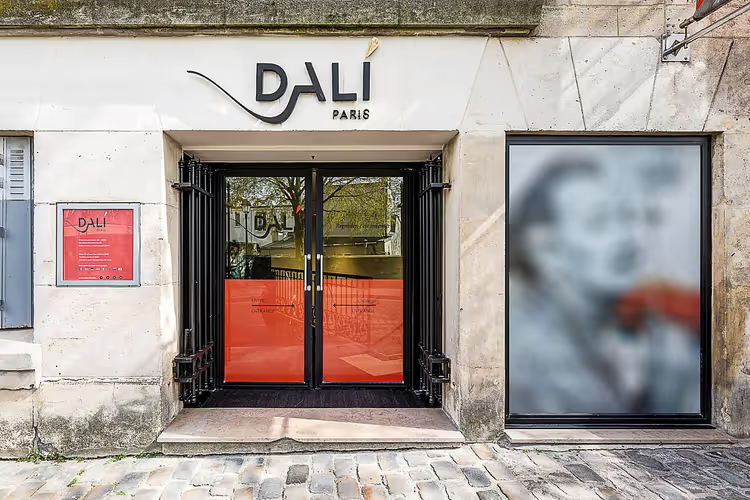 © Florian75018 · CC BY-SAPhoto: Florian75018, CC BY-SA (https://creativecommons.org/licenses/by-sa/4.0), Wikimedia Commons
The Salvador Dalí Museum is located in Montmartre, the most bohemian district of Paris. The collection includes hundreds of works by the Catalan artist: paintings, sculptures, and engravings. The artist's unconventional view of ordinary things and the mystical subtext make you linger over each work. Among the famous pieces you'll see "The Persistence of Memory" and "The Cosmic Elephant." Nearby is Place du Tertre with its artists, so the visit is easy to combine with a walk up the hill.
- Tickets and hours: schedule on the museum's official website (as of 09/2026).
- Who it's for: those who love surrealism and unusual sculptures.
- The catch: the rooms are small, and it gets crowded inside during peak season.
11. Museum of Magic
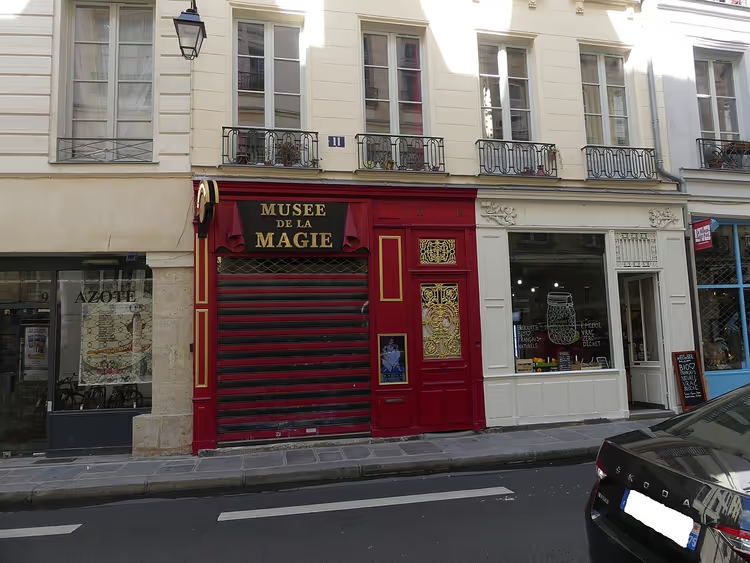 © Hadonos · CC BY-SAPhoto: Hadonos, CC BY-SA (https://creativecommons.org/licenses/by-sa/4.0), Wikimedia Commons
The Museum of Magic operates in the basement of a historic building on Rue Saint-Paul. Its founder, Georges Proust, collected magicians' props and juggling objects, and since 1993 the collection has formed the basis of the museum. The wonders begin at the threshold: at the door, a "little devil" writes an invitation to enter with a quill. Inside, a series of illusion acts awaits you, followed by a display of magical objects: a chair, a box, wands. The visit doesn't take long but leaves a strong impression.
- Tickets and hours: schedule on the museum's official website (as of 09/2026).
- Getting there: Saint-Paul metro, address 11, rue Saint-Paul.
- Who it's for: families and anyone who loves magic tricks.
- The catch: some performances are only in French.
12. Musée Marmottan Monet
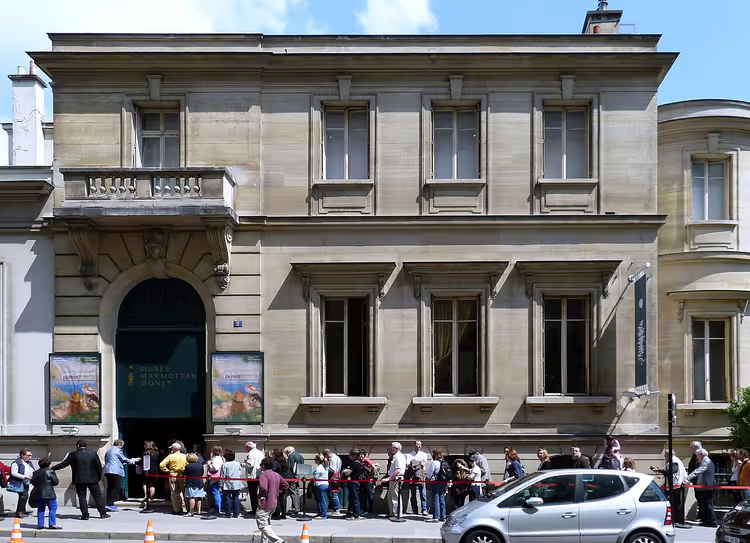 © PIERRE ANDRE LECLERCQ · CC BY-SAPhoto: PIERRE ANDRE LECLERCQ, CC BY-SA (https://creativecommons.org/licenses/by-sa/4.0), Wikimedia Commons
Musée Marmottan Monet occupies a former hunting lodge in the Bois de Boulogne. Collector Marmottan assembled paintings from the Napoleonic era, and his heir added books, paintings, and antique furniture. Later the collection grew through private donations, and the majority came to consist of works by Claude Monet. This is where "Impression, Sunrise" is kept, the painting that gave Impressionism its name. The second floor is devoted to landscapes and views of Paris, while the first floor holds Empire-style furniture, sculptures, and Persian carpets.
- Tickets and hours: schedule on the museum's official website (as of 09/2026).
- Getting there: La Muette metro, with the entrance to the Bois de Boulogne nearby.
- Who it's for: those who want to see the origins of Impressionism.
- The catch: it's a small museum, and the rooms are packed on weekends.
13. Cité des Sciences et de l'Industrie
The Cité des Sciences et de l'Industrie in Parc de la Villette presents scientific and technological achievements in an interactive format. It's engaging for people of all ages: the history of the universe and Earth, astronomers' discoveries, the mysteries of the human brain, ocean research. Instead of passive observation, visitors launch their own experiments with light, sound, and a steam engine. The complex includes the Museum of Science and Industry, the Géode spherical cinema, the Argonaute submarine, an aquarium, a planetarium, and a children's center. For schoolchildren, such visits reinforce textbook material.
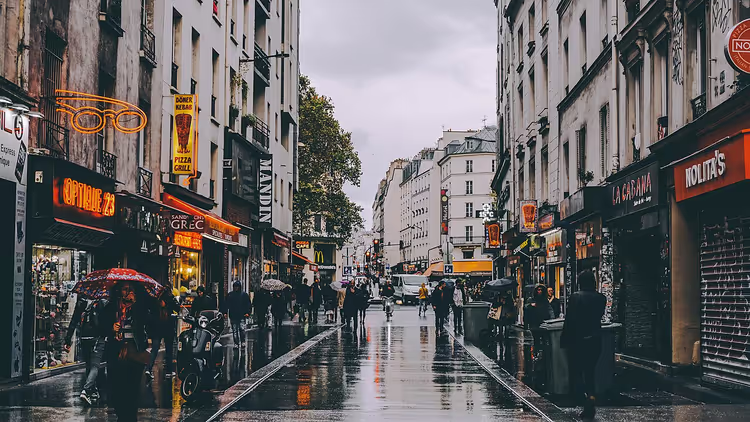
- Tickets and hours: schedule and prices on the center's official website (as of 09/2026).
- Getting there: Porte de la Villette metro, line 7.
- Who it's for: families with children and technology enthusiasts.
- The catch: the whole complex takes a full day; in a couple of hours you'll see very little.
14. Picasso Museum
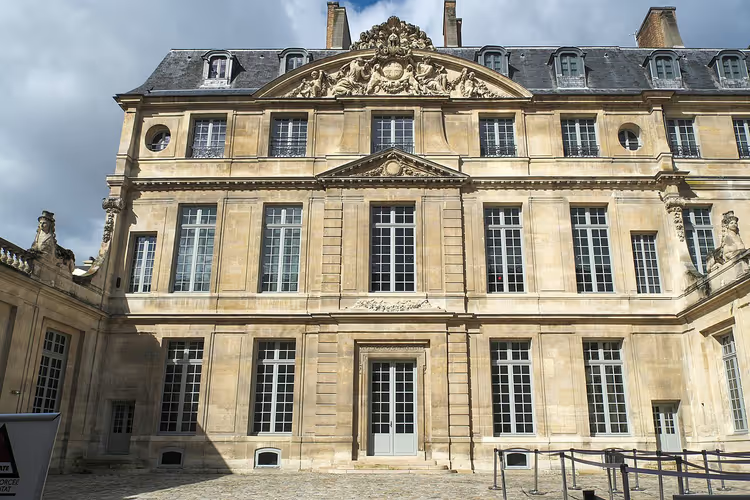 © GFreihalter · CC BY-SAPhoto: GFreihalter, CC BY-SA (https://creativecommons.org/licenses/by-sa/3.0), Wikimedia Commons
The Picasso Museum is housed in the Hôtel Salé in the Marais district. This classical building with a stone facade is a fitting home for the collection of the innovative artist and founder of Cubism. It holds one of the largest collections of Pablo Picasso's works, arranged in chronological order. You'll walk through all of the master's periods: painting, sculpture, ceramics, and engraving. In addition to canvases, the rooms display newspaper clippings, manuscripts, photographs, and the artist's personal belongings.
- Tickets and hours: prices and schedule on the museum's official website (as of 09/2026).
- Getting there: Saint-Paul metro, address 5, rue de Thorigny.
- Who it's for: those who want to see Picasso as a whole, not one painting at a time.
- The catch: entry is by time slots, and on weekends available times get booked quickly.
15. Fragonard Perfume Museum
The Fragonard Perfume Museum is dedicated to the history of perfumery and operates near the Opera. The company was founded by descendants of the artist Fragonard, and the museum quickly became popular. You can smell the fragrances as soon as you walk in. You'll sample scents from different eras, learn the history of French perfume, and hear stories about the work of "noses." Display cases hold equipment for producing fragrances and bottles of all shapes. On the way out, you can buy a bottle you liked at the brand store.
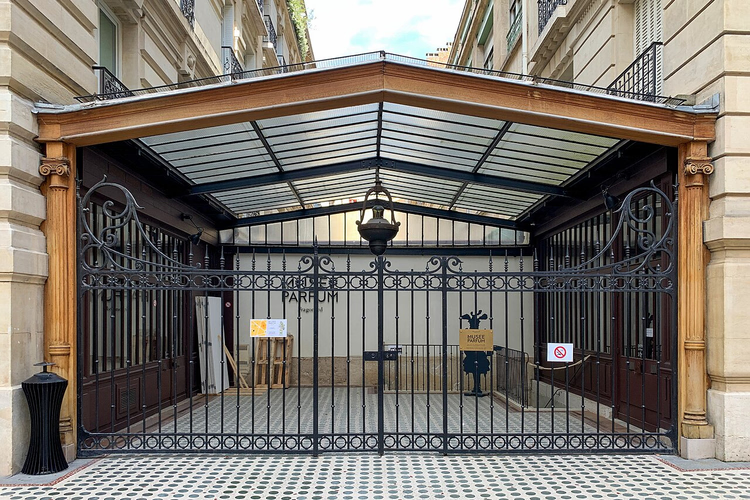 © Chabe01 · CC BY-SAPhoto: Chabe01, CC BY-SA (https://creativecommons.org/licenses/by-sa/4.0), Wikimedia Commons
- Tickets and hours: schedule on the museum's official website (as of 09/2026).
- Getting there: Opéra metro, address 9, rue Scribe.
- Who it's for: those looking for an unusual souvenir or gift.
- The catch: without a guided tour, some rooms look like a shop.
16. Musée d'Orsay
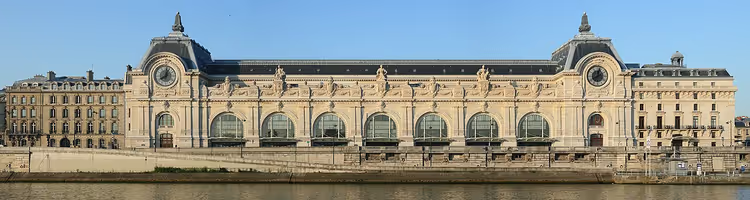 © Sanchezn · CC BY-SAPhoto: Sanchezn, CC BY-SA (http://creativecommons.org/licenses/by-sa/3.0/), Wikimedia Commons
Musée d'Orsay occupies a former railway station built for the 1900 World's Fair. It was Paris's first electrified station, but it didn't serve its original purpose for long and stood empty by the 1940s. In 1986 the building was converted into a museum, and part of the Louvre's collections were moved here. Today it houses the world's finest collection of Impressionists and Post-Impressionists: Monet and Manet, Cézanne, Van Gogh, Gauguin, Degas, Seurat, and Pissarro. Sculpture is represented by works of Rodin, Camille Claudel, and Maillol, while separate rooms are devoted to photography and decorative arts.
- Tickets and hours: prices and schedule on the official Musée d'Orsay website (as of 09/2026).
- Getting there: RER C to Musée d'Orsay station or Solférino metro.
- The catch: entrance lines are long, a morning slot saves you an hour.
- Tip: buy a Musée d'Orsay ticket with time slots in advance, at the ticket office you wait longer than it takes to see the first gallery.
17. Musée de l'Orangerie
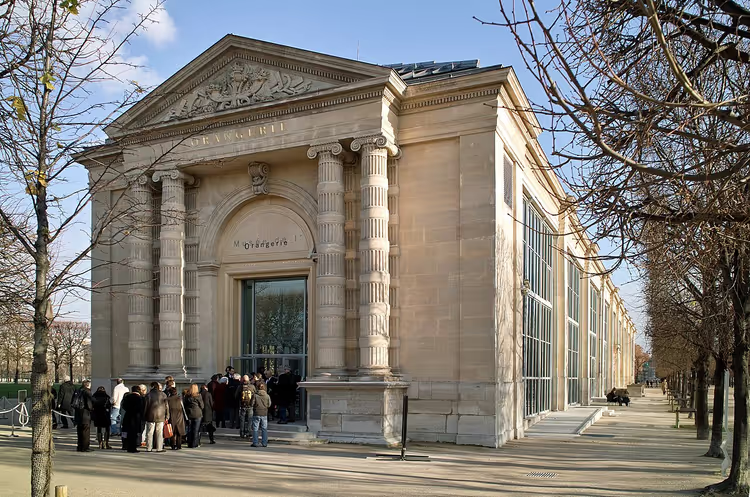 © Traktorminze · CC BY-SAPhoto: Traktorminze, CC BY-SA (https://creativecommons.org/licenses/by-sa/3.0), Wikimedia Commons
The Musée de l'Orangerie is housed in the orangery that remains from the Tuileries palace complex. The palace was destroyed during the Revolution, the garden survived, and the orangery went through stints as a warehouse and a barracks. The museum opened here in 1927. The upper floor is entirely devoted to Claude Monet's "Water Lilies": eight large canvases hang together, as the artist himself requested. In the other rooms you'll see Cézanne, Matisse, Modigliani, and Renoir. Monet painted "Water Lilies" during World War I and wanted to restore a sense of harmony to people.
- Tickets and hours: prices and schedule on the museum's official website (as of 09/2026).
- Getting there: Concorde metro, entrance from the Tuileries Garden side.
- The catch: the "Water Lilies" room is small, and at midday it's packed.
- Tip: get a timed-entry ticket for the Orangerie and arrive at opening time.
18. Centre Pompidou
 © Zairon · CC BY-SAPhoto: Zairon, CC BY-SA (https://creativecommons.org/licenses/by-sa/4.0), Wikimedia Commons
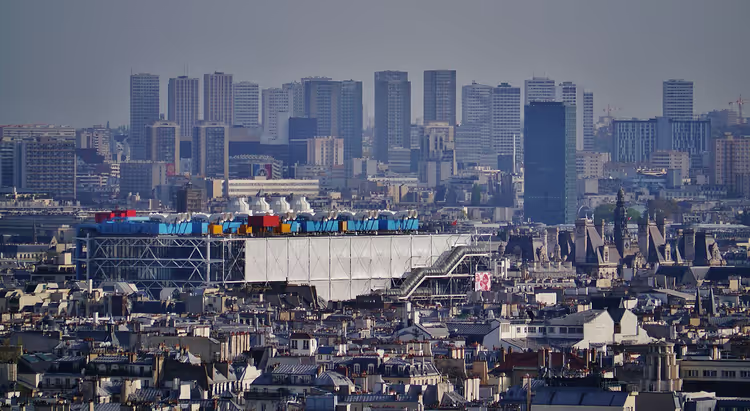
The Centre Pompidou is named after President Georges Pompidou and is one of the most visited places in Paris. The building opened in late 1977, and all of its engineering systems were moved to the exterior: elevators, wiring, ventilation, and pipes. Inside there's a cinema, a huge library, and a modern art museum. The collection begins on the third floor with works by Kandinsky, Matisse, and Picasso, while the fifth floor hosts temporary exhibitions and performances. The upper floors offer a panorama of the city, and street musicians are always performing on the square in front of the center.
- Tickets and hours: the center is fully closed for renovation starting in fall 2025; check the current status on the Pompidou website (as of 09/2026).
- Getting there: Rambuteau or Châtelet metro.
- Who it's for: anyone interested in 20th-century art and architecture.
- The catch: you can't get into the center's galleries until the renovation is finished.
19. Musée de la Carte à Jouer
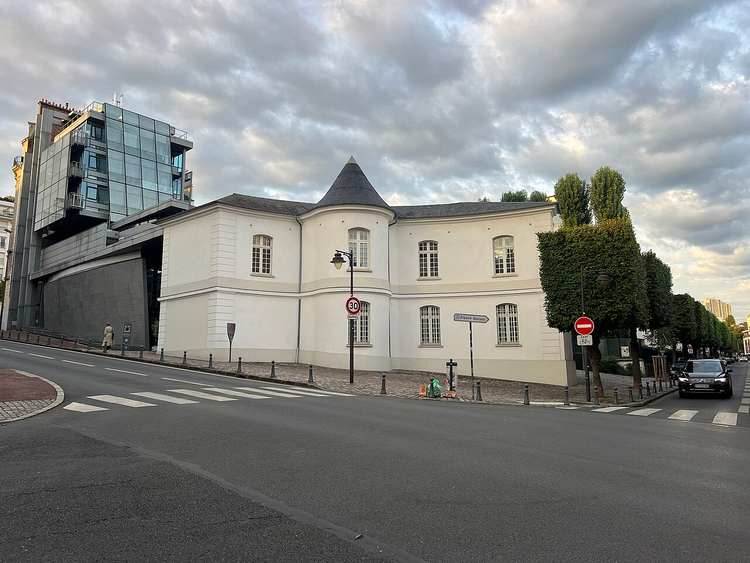
The Musée de la Carte à Jouer grew out of two private pre-war collections and opened in 1986. It initially occupied the Hôtel des Princes de Conti, but the collection expanded and a separate building was constructed for it. The mansion and the new building are now connected by a covered gallery. The collection includes thousands of cards from around the world: vivid Indian cards, Japanese cards with shells instead of suits, Renaissance-era cards, and tarot cards. The museum also displays printing presses and paintings depicting card games. The wartime cards with caricatures are of particular interest.
 © Chabe01 · CC BY-SAPhoto: Chabe01, CC BY-SA (https://creativecommons.org/licenses/by-sa/4.0), Wikimedia Commons
- Tickets and hours: schedule on the museum's official website (as of 09/2026).
- Getting there: the museum is in Issy-les-Moulineaux; check the website for the exact address and directions.
- The catch: the museum is closed in August and on public holidays.
- Who it's for: collectors and anyone who enjoys unusual collections.
20. Musée des Égouts
 © Romain91 · CC BY-SAPhoto: Romain91, CC BY-SA (https://creativecommons.org/licenses/by-sa/4.0), Wikimedia Commons
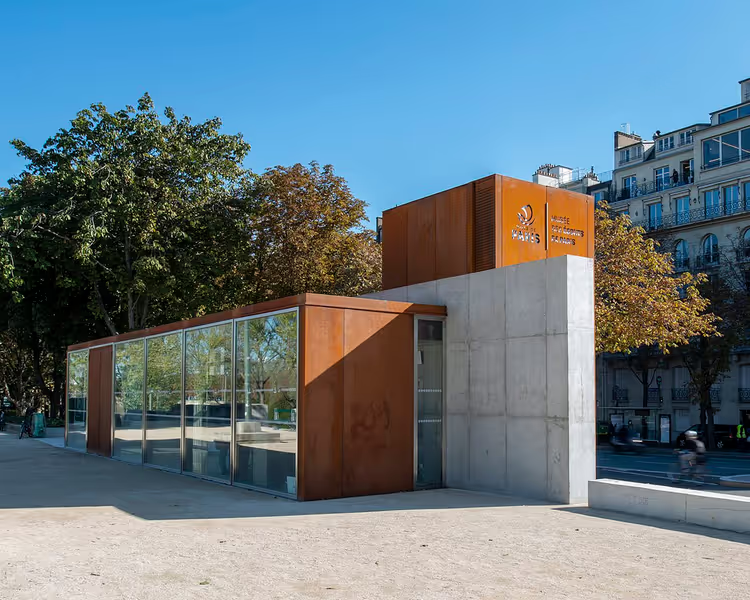
The Musée des Égouts showcases the underground system that Paris built over centuries. The Romans installed the first drains here, but in the Middle Ages the streets once again became a breeding ground for disease. It wasn't until the 19th century that engineer Belgrand designed a network of tunnels that functions as an underground twin of the city's streets. Once you descend, you'll learn the history of the sewer system, see old water-purification devices, and discover the modern methods used to protect the city from flooding. It's a short but uniquely memorable tour.
- Tickets and hours: tours run only from April through October; schedule on the museum's official website (as of 09/2026).
- Getting there: Quai d'Orsay near the Pont de l'Alma, entrance from the river side.
- The catch: the museum is closed in winter, and the tunnel is always damp.
- Who it's for: anyone who wants to see Paris from an unexpected angle.
21. Musée de Montmartre
 © Musée de Montmartre · CC BY-SAPhoto: Musée de Montmartre, CC BY-SA (https://creativecommons.org/licenses/by-sa/3.0), Wikimedia Commons
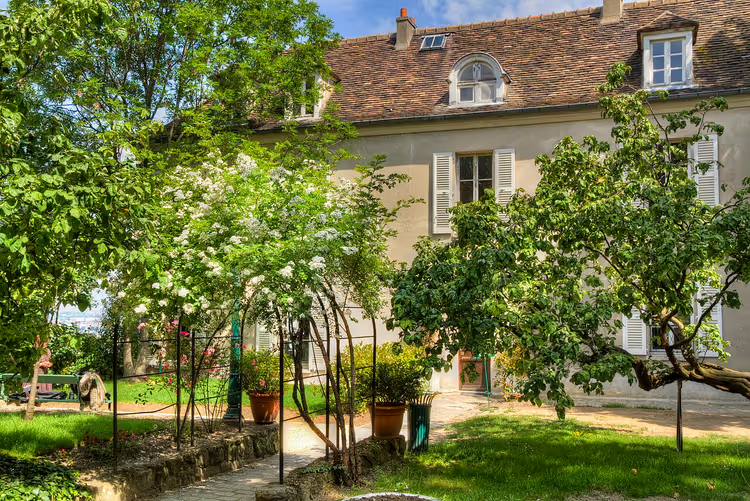
The Musée de Montmartre is housed in the Hôtel Rosimond on Rue Cortot. The house was built for the actor Claude Rose, who used the stage name Rosimond, and the name later became attached to the building. Renoir had a studio here early in his career, and other artists, actors, and composers followed. The exhibition is divided into several sections: the village of Montmartre before Paris, the era of the Paris Commune, and "Montmartre in Celebration." The rooms display Toulouse-Lautrec posters, paintings and personal belongings of Van Gogh and Degas, as well as cabaret dancers' costumes.
- Tickets and hours: schedule on the museum's official website (as of 09/2026).
- Getting there: Lamarck-Caulaincourt metro, then a climb up the hill's staircases.
- Who it's for: anyone heading to Sacré-Cœur who wants to understand the neighborhood itself.
- The catch: the museum is reached by a steep climb, which is difficult with a stroller.
22. Musée Carnavalet
The Musée Carnavalet tells the story of Paris itself. It occupies a historic mansion with a grand entrance, bas-reliefs, and the coat of arms of its first owners. The exhibition is organized by era: the Stone Age, the Middle Ages, aristocratic interiors, the Revolution, and the modern period. It features a reconstructed bedroom of Marie Antoinette and rooms from the era of Louis XV, while a separate room displays models of guillotines and the actual keys to the Bastille. Paintings, photographs, and lithographs show how the city's appearance has changed since the 18th century.
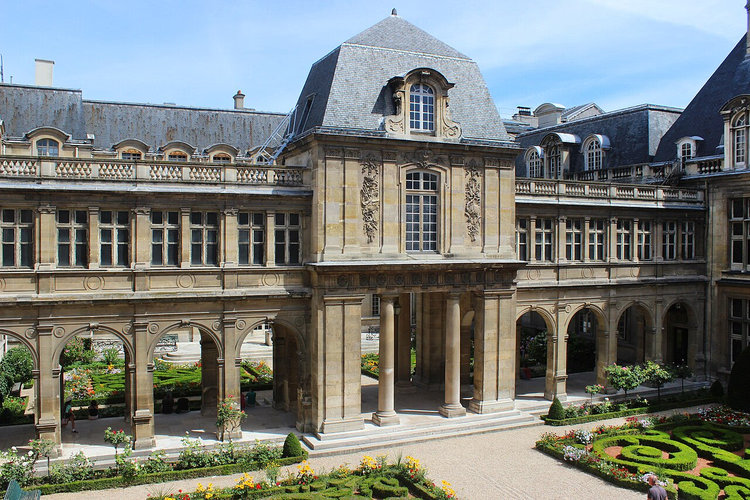 © Miguel Hermoso Cuesta · CC BY-SAPhoto: Miguel Hermoso Cuesta, CC BY-SA (https://creativecommons.org/licenses/by-sa/4.0), Wikimedia Commons
- Tickets and hours: address 23, rue de Sévigné; schedule on the official city museums website (as of 09/2026).
- Getting there: Saint-Paul or Chemin Vert metro.
- Who it's for: anyone who wants to understand Paris, not just its museums.
- The catch: the museum is large; allow at least two hours for a visit.
23. Palais Galliera
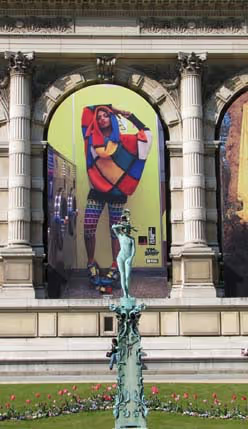 © Dottie Day · CC BYPhoto: Dottie Day, CC BY (https://creativecommons.org/licenses/by/2.0), Wikimedia Commons
The fashion museum is housed in the Palais Galliera, built in the late 19th century. The widow of General Galliera wanted to donate the family's art collection to the city, but the property was nationalized and the building stood empty for a long time. The museum opened here in 1977. The collection includes tens of thousands of items: Marie Antoinette's bodice, Josephine's dresses, and Sarah Bernhardt's costumes. 20th-century fashion is represented by works from Poiret, Schiaparelli, Dior, and Chanel. Due to conservation requirements, items are shown in temporary exhibitions.
- Tickets and hours: address 10, avenue Pierre-1er-de-Serbie; schedule on the official city museums website (as of 09/2026).
- Getting there: Iéna or Alma-Marceau metro.
- The catch: the museum is closed between exhibitions, so check the calendar in advance.
- Who it's for: anyone interested in fashion and costume.
24. Musée Delacroix
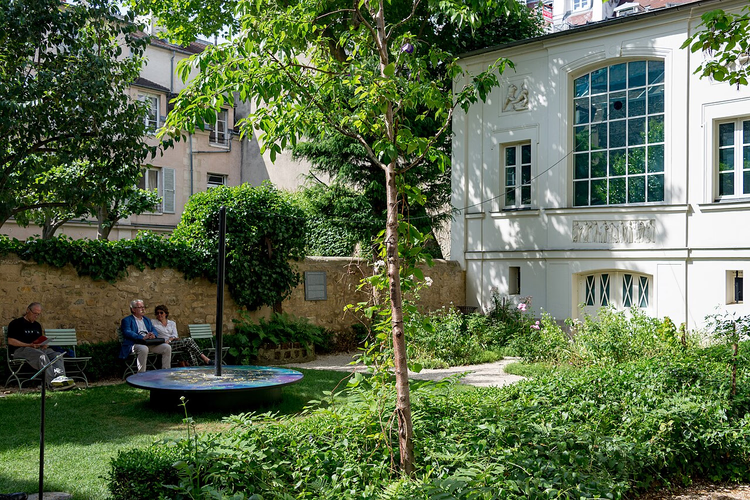 © xiquinhosilva from Cacau · CC BYPhoto: xiquinhosilva from Cacau, CC BY (https://creativecommons.org/licenses/by/2.0), Wikimedia Commons
The Musée Delacroix occupies the house and studio where the artist lived from 1857 until the end of his life. To preserve the master's legacy, the Society of Friends of Eugène Delacroix was founded in 1929; it bought the house and garden and transferred them to the state. The museum opened here in 1971. The rooms display paintings from different periods, including experiments with frescoes, as well as travel notes, souvenirs, and sketches from his trip to Morocco. Alongside Delacroix's own works, the museum also shows canvases by his artist friends.
- Tickets and hours: the museum is on Place de Furstemberg; see the schedule on the museum's official website (as of 09/2026).
- Getting there: Saint-Germain-des-Prés metro.
- Who it's for: those who want to see the artist's studio, not just the paintings.
- The catch: the museum is small, and the studio room may be closed for restoration without notice.
25. Musée Bourdelle
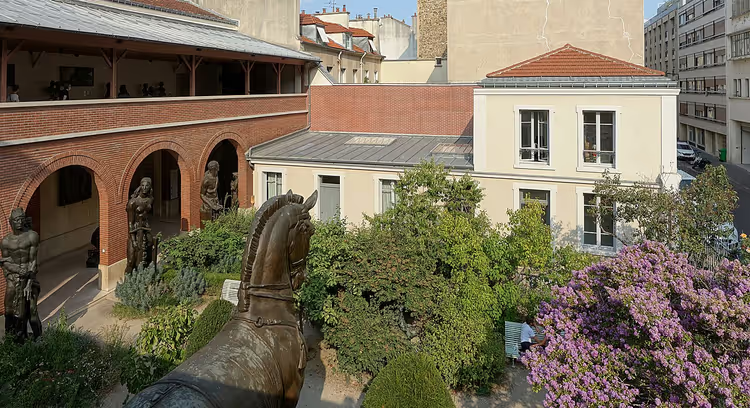 © Velvet · CC BY-SAPhoto: Velvet, CC BY-SA (https://creativecommons.org/licenses/by-sa/4.0), Wikimedia Commons
The Musée Bourdelle preserves the studio of sculptor Émile Antoine Bourdelle. After the master's death, the site was slated for development, but patrons bought the land and saved the collection. The museum opened here in 1949 in the studio and garden that his descendants transferred to the city. The core of the collection consists of works by the sculptor himself and his family: canvases, sculptures, sketches, documents, and photographs. The house retains its historic interiors, and large bronze figures stand in the garden. Some rooms are dedicated to Bourdelle's students and assistants.
- Tickets and hours: address 18, rue Antoine Bourdelle; see the schedule on the official city museums website (as of 09/2026).
- Getting there: Falguière or Pasteur metro.
- Who it's for: those who love sculpture and quiet gardens in the center.
- The catch: there are few signs pointing to the museum, and the entrance is easy to miss.
26. Musée de Cluny
 © ctj71081 · CC BY-SAPhoto: ctj71081, CC BY-SA (https://creativecommons.org/licenses/by-sa/2.0), Wikimedia Commons
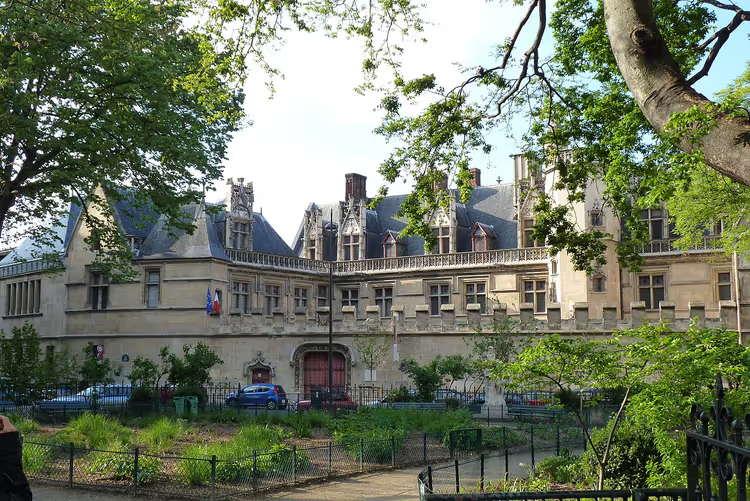
The Musée de Cluny stands on the site of Roman baths, and later this was the Paris town residence of the Abbey of Cluny. The mansion was rebuilt over time, nationalized in 1793, and for a long time the building served various purposes. The collection was donated by the family of the collector Du Sommerard. The visit begins with the Roman baths, which symbolize the link between two eras. Then come medieval sculptures, stained glass, jewelry, and tapestries, including the famous "The Lady and the Unicorn" series.
- Tickets and hours: prices and schedule on the museum's official website (as of 09/2026).
- Getting there: Cluny-La Sorbonne or Saint-Michel metro.
- Tip: with the Paris Museum Pass you skip the line and save on admission.
- The catch: the rooms are cramped, and it gets crowded on weekends.
27. Musée des Plans-Reliefs
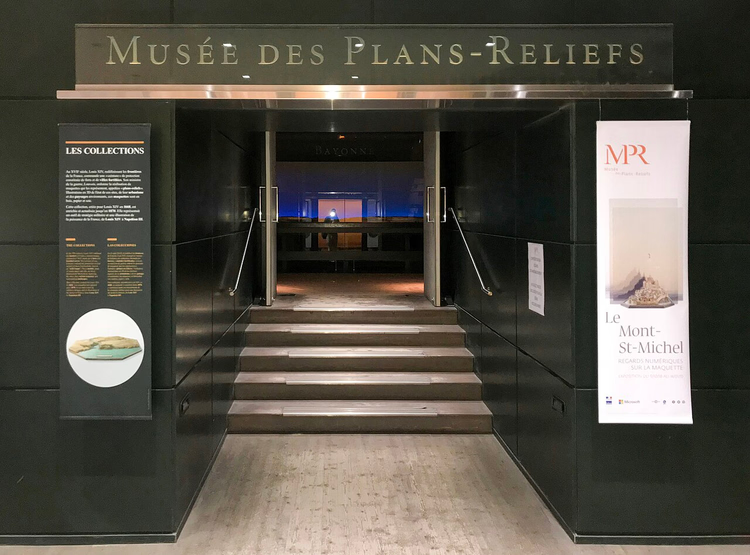
The Musée des Plans-Reliefs is located in Les Invalides and displays scale models of French fortresses. These plans were first made under Louis XIV, and dozens were created as early as the 17th century. The models were built by the best military engineers and kept under special guard as state secrets. In the 20th century, the military value of the plans disappeared, and they became historical treasures. Today the collection holds hundreds of models, but only some are on display. Among the exhibits are miniature replicas of the Château d'If and fortresses from various regions of France.
 © Mohatatou · CC BY-SAPhoto: Mohatatou, CC BY-SA (https://creativecommons.org/licenses/by-sa/4.0), Wikimedia Commons
- Tickets and hours: the museum is located in Les Invalides; hours on the museum's official website (as of 09/2026).
- Who it's for: anyone who loves maps, scale models, and military history.
- The catch: the exhibition occupies a single room, so the visit is short.
28. Musée de l'Homme
 © Andrew H · CC BYPhoto: Andrew H, CC BY (https://creativecommons.org/licenses/by/2.0), Wikimedia Commons
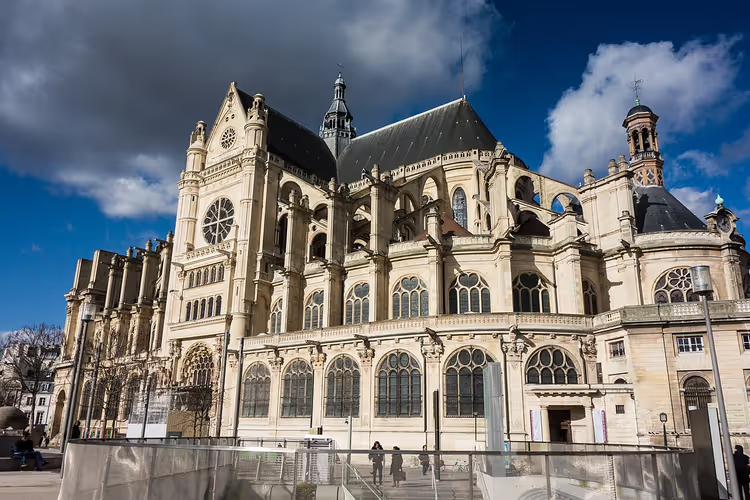
The Musée de l'Homme was founded by Paul Rivet and eventually became a research center within the National Museum of Natural History. The collections have changed over time, and today there are four permanent exhibitions. The first covers the stages of human development, the second focuses on global population growth, and the third shows genetic diversity. The fourth is devoted to the ethnography of Africa, Asia, the Americas, and the Arctic. This is not just an exhibition but a scientific center that studies how humans adapt to their environment and how they themselves affect nature.
- Tickets and hours: Palais de Chaillot, schedule on the museum's official website (as of 09/2026).
- Getting there: Trocadéro metro, lines 6 and 9.
- Who it's for: anyone interested in anthropology and ethnography.
- The catch: some of the explanatory texts are only in French.
29. Grande Galerie de l'Évolution
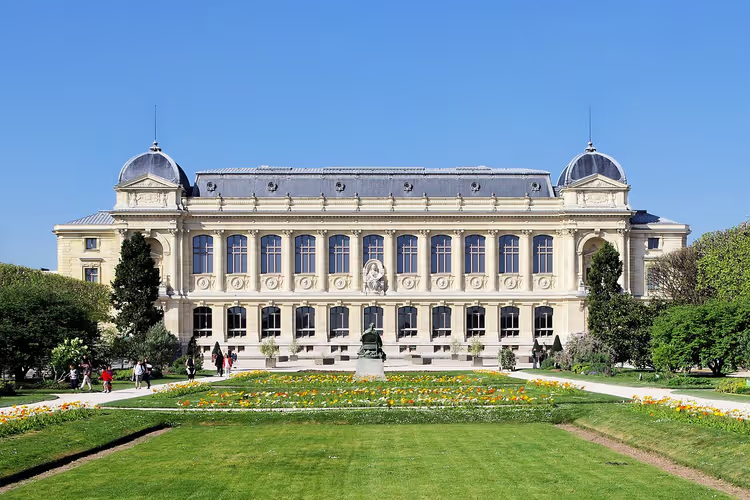
The Grande Galerie de l'Évolution is part of the National Museum of Natural History and is located in the Jardin des Plantes. Several floors show the origin and development of life on Earth, with exhibits arranged in the sequence described by Darwin. The first floor houses skeletons and stuffed marine animals; on the second, land animals are arranged by natural zones. The third floor covers human impact on nature and scientists' forecasts. The top floor is dedicated to evolution: from single-celled organisms to the diversity of modern forms.
 © Ken and Nyetta · CC BYPhoto: Ken and Nyetta, CC BY (https://creativecommons.org/licenses/by/2.0), Wikimedia Commons
- Tickets and hours: prices and schedule on the museum's official website (as of 09/2026).
- Getting there: Gare d'Austerlitz or Jussieu metro.
- Who it's for: families with children and natural science enthusiasts.
- The catch: on weekends the whale skeletons attract especially large numbers of school groups.
30. Musée de la Musique
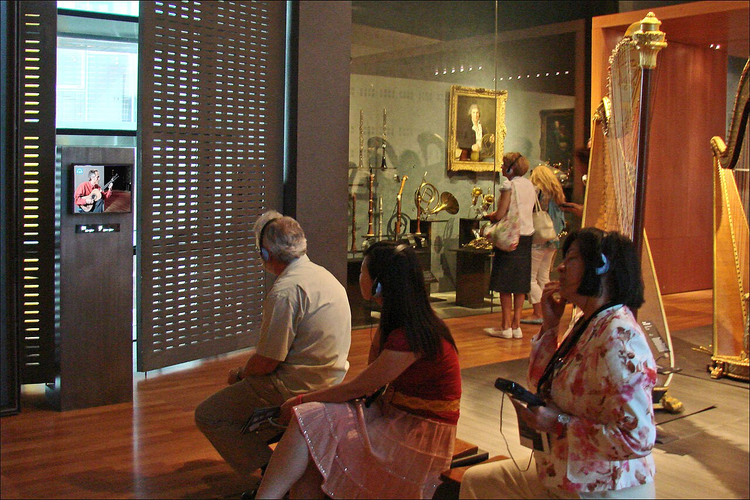 © Jean-Pierre Dalbéra from Paris, France · CC BYPhoto: Jean-Pierre Dalbéra from Paris, France, CC BY (https://creativecommons.org/licenses/by/2.0), Wikimedia Commons
The Musée de la Musique opened in Paris in 1997 at the Cité de la Musique cultural center on Place de la Villette. The core of the exhibition is a collection assembled over decades at the National Conservatory. You will see musical instruments from ancient to modern, including violins by Stradivari and Guarneri, and hear how they sound. The first room covers the birth of opera and the first balls at Versailles, followed by the Enlightenment and Romanticism. Separate sections are devoted to 20th-century music, as well as jazz and blues, which were popular in the last century.
- Tickets and hours: schedule on the museum's official website (as of 09/2026).
- Getting there: Porte de Pantin metro, line 5.
- Who it's for: anyone who loves music and is interested in the history of instruments.
- The catch: audio recordings are played on a schedule, so not everything can be heard at any given moment.
31. Musée du Vin
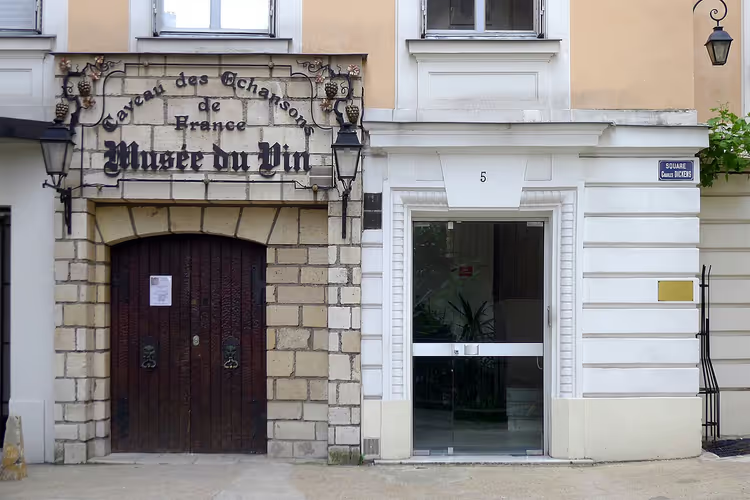 © Mbzt · CC BY-SAPhoto: Mbzt, CC BY-SA (https://creativecommons.org/licenses/by-sa/3.0), Wikimedia Commons
The Musée du Vin occupies ancient cellars in Passy, where a monastery once stood. The monks owned vineyards, made wine, and supplied it to the royal court, and Louis XIII held the drink in high regard. The monastery was later looted and destroyed, but in the 1980s a restaurateur remembered the cellars beneath his establishment. The cellars were restored, and the museum has operated here since 1984. First you learn about the history of winemaking and its traditions, then you see ancient bottles and wine vessels, and at the end you taste French varieties.
- Tickets and hours: the museum's location and hours have changed, so check the schedule before your visit (as of 09/2026).
- Getting there: Passy district; check the nearest metro stations based on the current address.
- Who it's for: anyone who wants to combine a museum visit with a tasting.
- The catch: tastings are not always available without a guided tour.
32. Musée de la Vie Romantique
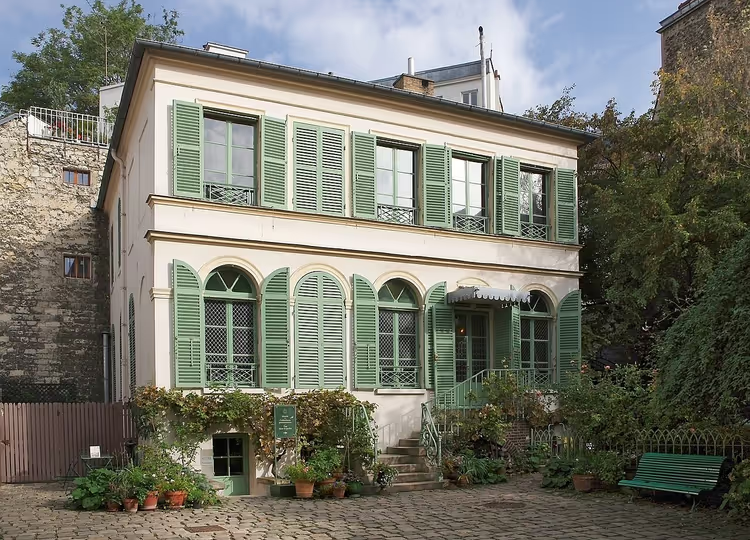 © JLPC · CC BY-SAPhoto: JLPC, CC BY-SA (https://creativecommons.org/licenses/by-sa/3.0), Wikimedia Commons
The Musée de la Vie Romantique is housed in a mansion built in 1830. Shortly after its construction, the artist Ary Scheffer, who served at the court of the Prince of Orléans, moved in. His Friday evening gatherings attracted famous musicians and writers: Chopin and Liszt played here, Pauline Viardot sang, and George Sand, Dickens, and Turgenev were guests. The museum was founded by Scheffer's descendants, and in 1983 the collection was donated to the state. One section is devoted to George Sand: the interior of her estate in Nohant has been recreated, and her belongings, portraits, and watercolors are on display.
- Tickets and hours: address 16, rue Chaptal, schedule on the official city museums website (as of 09/2026).
- Getting there: Blanche or Saint-Georges metro.
- Who it's for: anyone who loves quiet literary museums with a garden.
- The catch: the rooms are small, and guided tours run on a schedule.
33. Musée des Arts Forains
The Musée des Arts Forains was founded by the actor and antiques dealer Jean-Paul Favand, and since 1996 it has occupied the pavilions of a former market in Bercy. Restoring the exhibits took many years. The collection includes real fairground rides, tents with game machines, and performance sets that transport you to the Paris fairs of the past. The collection is divided into three sections. The Venetian room recreates a carnival city with canals, bridges, and gondolas; the Magic Theater presents "living pictures" accompanied by a mechanical orchestra; and performers appear in the Green Garden.
- Tickets and hours: museum in Bercy, schedule on the museum's official website (as of 09/2026).
- Getting there: Cour Saint-Émilion metro station, line 14.
- Who it's for: families with children and anyone who loves old carousels.
- The catch: some attractions only run on weekends.
34. Musée Jacquemart-André
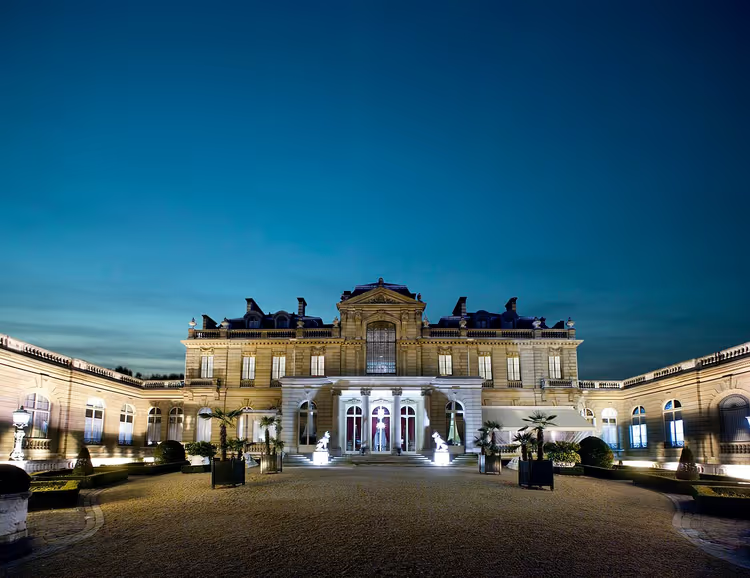 © Christophe Recoura · CC BY-SAPhoto: Christophe Recoura, CC BY-SA (http://creativecommons.org/licenses/by-sa/3.0/), Wikimedia Commons
The Musée Jacquemart-André grew out of the collection of banker Édouard André, who spent most of his fortune on art. He married the artist Nélie Jacquemart, and the couple traveled extensively, bringing back paintings and sculptures for their Parisian mansion. After their deaths, the collection was bequeathed to the Institut de France, and the museum opened here in 1913. Five rooms house works from the Italian, Flemish, and French Renaissance masters. The pride of the collection is Botticelli's "Madonna and Child," while Rembrandt and van Eyck hang in the library.
- Tickets and hours: Boulevard Haussmann, schedule on the museum's official website (as of 09/2026).
- Getting there: Saint-Philippe-du-Roule or Miromesnil metro station.
- Who it's for: those who want to see a private collection in residential rooms.
- The catch: tickets are pricier than the city average, and the rooms close early.
- Tip: get Paris museum tickets on GetYourGuide if you want to combine two museums in one day.
35. Museum of Mineralogy
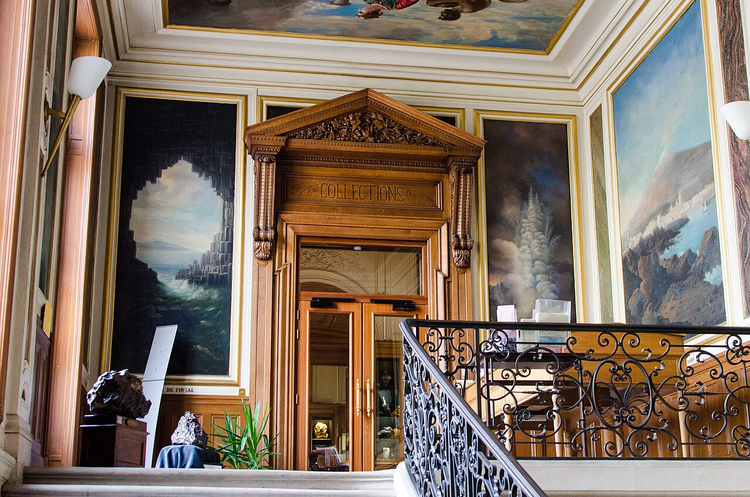 © BastienM · CC BY-SAPhoto: BastienM, CC BY-SA (https://creativecommons.org/licenses/by-sa/3.0), Wikimedia Commons
The Museum of Mineralogy opened back when the National School of Mines was still operating, and the scientist René-Just Haüy was involved in its creation. In the early 19th century, the museum moved into the Hôtel de Vendôme, and throughout the century the collection grew through private collections and specimens from geological expeditions. Today the holdings number tens of thousands of items, but only a portion is on display. The museum houses precious stones, minerals from around the world, and meteorites. Separate rooms are dedicated to the history of mineralogy, jewelry making in France, and artificial minerals. Among the exhibits is a large Martian meteorite found in the Sahara.
- Tickets and hours: the museum is in the Hôtel de Vendôme, check the schedule on the museum's official website (as of 09/2026).
- Getting there: Odéon or Mabillon metro station.
- Who it's for: anyone who loves stones, crystals, and meteorites.
- The catch: the museum is small and open on weekdays only, closed on weekends.
Paris museums on the map
Museums of Paris
Places on the map
- 1Louvre Mona Lisa, Winged Victory of Samothrace, Egyptian wing
- 2Les Invalides Cathedral of Saint-Louis, Napoleon's tomb
- 3Army Museum History of the French war machine from the Middle Ages to the 20th century
- 4Rodin Museum "The Thinker", "The Gates of Hell", sculpture garden at the Hôtel Biron
- 5Jeu de Paume Temporary contemporary art exhibitions
- 6Balzac House Mansion on Rue Raynouard where the author hid from creditors
- 7Victor Hugo House Place des Vosges, recreated interiors of the writer's home
- 8Grévin Museum Hundreds of wax figures of celebrities
- 9Dalí Museum Montmartre, hundreds of works by the Catalan artist, "Space Elephant"
- 10Museum of Magic Cellar on Rue Saint-Paul, illusion acts and conjurors' props
- 11Marmottan Monet Museum "Impression, Sunrise", the origins of Impressionism
- 12Cité des Sciences et de l'Industrie Interactive exhibits, planetarium, the submarine Argonaute
- 13Picasso Museum Hôtel Salé in Le Marais, works from every period of the master
- 14Fragonard Perfume Museum History of perfumery near the Opéra
- 15Musée d'Orsay Impressionists and post-Impressionists in a former railway station
- 16Musée de l'Orangerie Claude Monet's "Water Lilies" in two oval rooms
- 17Centre Pompidou Kandinsky, Matisse, panoramic city views from the upper floors
- 18Paris Sewer Museum Paris's underground network, history and vintage equipment
- 19Montmartre Museum Hôtel Rosimond, Toulouse-Lautrec posters, items by Van Gogh and Degas
- 20Carnavalet Museum History of Paris, Marie Antoinette's bedroom, keys to the Bastille
- 21Palais Galliera (Fashion Museum) Palais Galliera, Josephine's dresses, Dior and Chanel outfits
- 22Delacroix Museum The artist's home and studio on Place Furstenberg
- 23Bourdelle Museum The sculptor's studio, bronze figures in the garden
- 24Cluny Museum Roman baths, "The Lady and the Unicorn" tapestry
- 25Museum of Relief Maps Models of French fortresses from the reign of Louis XIV
- 26Musée de l'Homme Human development, ethnography of Africa, Asia, America and the Arctic
- 27Grand Gallery of Evolution The origin and evolution of life on Earth, animal skeletons and taxidermy
- 28Museum of Music Musical instruments from ancient to modern, Stradivarius violins
- 29Wine Museum Historic cellars in Passy, the history of winemaking and tastings
- 30Museum of Romantic Life Home of painter Ary Scheffer, the George Sand room
- 31Museum of Fairground Arts Pavilions of the Bercy market, vintage rides and carousels
- 32Jacquemart-André Museum Botticelli's "Madonna and Child", a private collection in a mansion
The map shows the museums from this list, so you can easily plan your route by day right on it. Group the points by neighborhood: the Louvre and the Orangerie are close together, the Invalides and the Rodin Museum stand almost side by side, and Montmartre and the Marais are best left for separate walks.
Online tickets open several months in advance, but free slots also appear a couple of days before your visit. Check the museum's website in the morning: canceled bookings are sometimes returned. At the Louvre and the Musée d'Orsay, the slot only indicates your entry time; once inside, you can stay as long as you like. At the Orangerie, the rooms are small, so it's best to book a slot for the first hour of opening.
Bring a light bag and water. The Louvre and the Musée d'Orsay have cloakrooms, and large backpacks and stick umbrellas are asked to be left at the entrance. An audio guide costs extra, but in most museums the labels are also in English, so they're often enough.
The most relaxed pace is this: one major museum in the morning, lunch in the area, then one smaller museum until closing. At the Louvre, head straight to the rooms with the Mona Lisa and the Winged Victory of Samothrace, then work your way up through the floors against the flow of the crowd. At the Musée d'Orsay, start on the top floor, where the Impressionists hang.
Many Paris museums are closed on Mondays or Tuesdays, so check schedules in advance. Permanent collections at city museums are shown under the unified terms of the Paris Musées network, while temporary exhibitions require a separate ticket. If you want to save money, go to the Louvre on the first Friday evening of the month: admission is free after 6:00 PM, except during the summer months (as of 09/2026, according to the Louvre).
Children tire faster than adults, so it's worth including one interactive museum in your plan. The Cité des Sciences and the Grande Galerie de l'Évolution hold attention longer than rooms full of paintings. In good weather, add a garden: at the Rodin Museum or the Museum of Romantic Life, you can take a break between exhibitions.
Buying on site is almost always more expensive in time, not in price. The ticket office works, but the line moves slowly, especially at the Louvre pyramid and at the Musée d'Orsay entrance. You show your online ticket on your phone; a paper printout is not required.
Plan your route with distances in mind. The Louvre and the Musée d'Orsay are separated by a walk along the Seine, and you can get from the Invalides to the Rodin Museum quickly. Montmartre and La Villette are off to the side, so it's better to set aside separate half-days for them. If you're staying for a week, get a metro pass and don't waste time on taxis in the center.
Before your trip, save the opening hours for the day of your visit. Schedules change due to exhibitions and holidays, and individual rooms close for restoration without notice. An extra hour in reserve helps when a museum is open for less time than you expected.
Bring a card for ticket offices and a little cash for small expenses. Cards are accepted almost everywhere in Paris, but in small museums the terminal sometimes doesn't work. Tickets and souvenirs are easier to buy by card, while coffee at a kiosk near the museum is often cash only.
⁉️🤔 Frequently asked questions
How many museums can you see in one day in Paris?
It's realistic to fit in two major museums, or one major and two smaller ones. The Louvre or the Musée d'Orsay each take half a day, while small house museums like the Balzac or Delacroix museums take about an hour. Plan breaks for food and don't schedule two giants back to back, otherwise by evening you'll stop taking in the paintings.
Do I need the Paris Museum Pass?
The pass pays off if you're visiting four or more museums and want to skip the line. It covers permanent collections at most major museums. For one or two visits, it's easier to buy individual timed tickets. Check the terms and the list of museums on the official Paris Museum Pass website.
When is admission to the Louvre free?
According to the official Louvre website, free admission applies on the first Friday evening of the month after 6:00 PM, except in July and August, and also on July 14. On other days, tickets cost €22 for EEA citizens and residents and €32 for visitors from other countries (as of 09/2026, official Louvre website).
Can you buy tickets on site?
For major museums, it's better to buy tickets in advance, online with a timed slot. On site, the ticket office works, but in summer you risk standing in line for over an hour. Smaller museums, such as the Museum of Magic or the Museum of Playing Cards, usually let you in without a prior booking, but check their opening hours.
Which day is best for museums?
Keep closing days in mind: the Louvre is closed on Tuesdays, many city museums are closed on Mondays, and the Museum of Playing Cards and the Wine Museum have their own breaks. A weekday morning is always calmer than weekends. If it's your first visit, put a major museum in the morning and leave a smaller one for the afternoon.
Tours and tickets in Paris
Guided tours, skip-the-line tickets and activities — most offers can be cancelled free of charge.
See offers on TiqetsThe widget loads once you give your consent.
In short: what's worth booking
If you're visiting Paris for the first time, book a slot at the Louvre and a ticket to the Musée d'Orsay, and choose a third museum based on your interests. Couples with children usually pick the Cité des Sciences and the Grande Galerie de l'Évolution. Those who love quiet and small collections will enjoy the Rodin Museum, the Delacroix Museum, and the Museum of Romantic Life.
- If you have two days: the Louvre, the Musée d'Orsay, and one evening at the Orangerie for the Water Lilies.
- If you have children: the Cité des Sciences, the Grande Galerie de l'Évolution, the Museum of Fairground Art.
- If you love 20th-century art: the Picasso Museum, the Marmottan Monet Museum.
- If you want to save money: the Paris museum pass covers entry without waiting in line.
Tickets to top museums sell out quickly, so book them before your trip. Start with one giant and two smaller museums: that way you'll see different sides of Paris without getting exhausted by the galleries.

A small editorial team writing guides for independent travel. We travel ourselves, but we haven’t been everywhere, so we check prices, opening hours and how to get there against official sources.