
















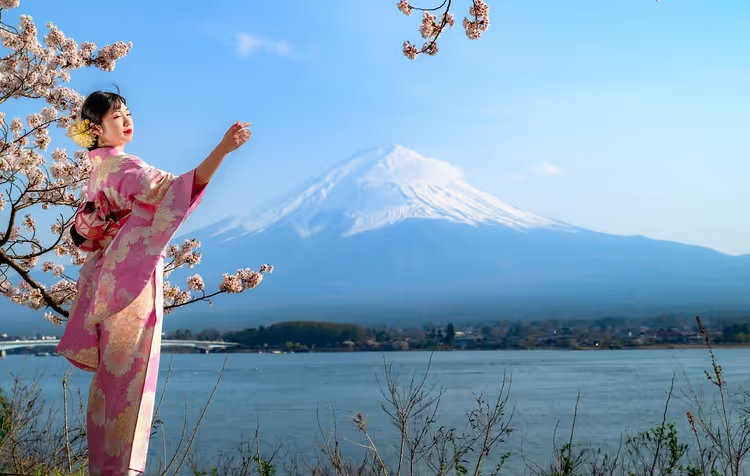
Sakura in Japan: how to catch the bloom and 5 places without crowds
In 2026, cherry blossoms in Tokyo opened on March 19. The Japan Meteorological Agency declared full bloom on March 28, which is earlier than the dates in old guidebooks (as of 03/2026, JMA report).
Planning a trip using tables from five years ago is a mistake. The dates depend on winter temperatures, and each city's bloom window is short: about ten days from the first buds to petals on the pavement. If you're off by a week, you'll see green canopies instead of pink alleys.
Below are the actual 2026 season dates by city, five spots where you can see cherry blossoms without crowds, a strategy for busy locations, and hanami etiquette.
Ad: this article contains affiliate links, we earn a commission if you book through them, at no extra cost to you.
Cherry blossom season: what the 2026 dates showed
💡 In short:
- Tokyo and Kanto: bloom from March 19 to 28 (as of 03/2026, agency data).
- Kyoto lags behind Tokyo by 2-4 days, while Sapporo only blooms in the second half of April (summary table by city).
- Five uncrowded spots: Aoyama Cemetery, the Shakujii River bank, Haradani-en Garden, Takato Castle ruins, and Mount Shiude.
- At popular locations, arrive at dawn, before tour bus groups show up.
- Prices and opening hours: 09/2026, verified using the Inside Kyoto guide and the meteorological agency report.
The agency records two dates for each city: first bloom, when five to six buds open on the reference tree, and full bloom, when roughly 80% of the flowers are open (JMA methodology). The gap between them ranges from 4 to 15 days, depending on the city.
The 2026 season opened on March 16 in Kochi and ended in late April in Hokkaido (season report). The gap between the south and north of the country is nearly a month and a half, and that's the key advantage when planning.
City | First bloom | Full bloom |
|---|---|---|
Kochi | March 16 | March 31 |
Nagoya | March 17 | March 30 |
Tokyo | March 19 | March 28 |
Hiroshima | March 19 | March 30 |
Kyoto | March 23 | March 30 |
Osaka | March 26 | April 3 |
Kanazawa | March 29 | April 3 |
Sendai | March 31 | April 4 |
Sapporo | April 18 | April 24 |
Source: nippon.com based on JMA data.
For a trip, this means something simple: for Tokyo and Kyoto, aim for late March and the first week of April; for the north of the country, mid to late April. With flexible dates, you can catch full bloom in two regions during one trip.
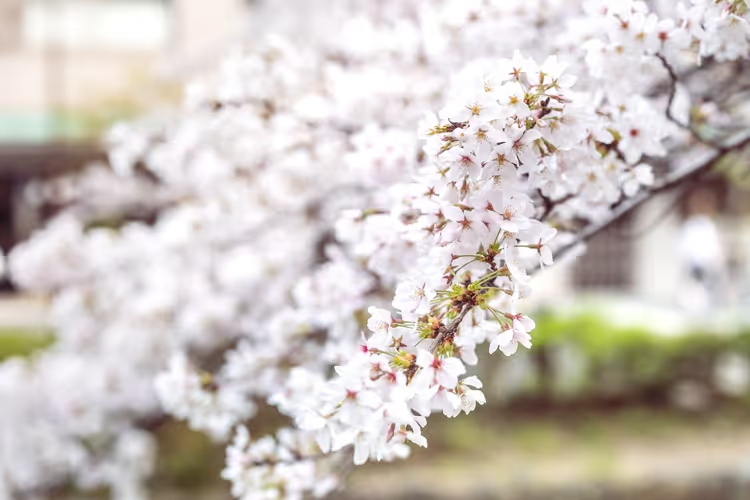
How to plan your route around the bloom
Tokyo and Kanto
Keep a week before and after the dates in the table as a buffer: a cold front delays the opening, a warm wind speeds it up by several days. Hotels in the center sell out first, so it is worth checking Tokyo options for late March on Trip.com in advance.
Kyoto and Osaka
In Kansai, Kyoto opened on March 23, Osaka on March 26, and full bloom in both cities fell within late March and the first days of April (Kansai data). The Philosopher's Path and Maruyama Park draw the biggest crowds on these days, so look for gardens away from the center. Many places turn on evening illumination, but arrive in the first half hour after the lights come on.
The north and Hokkaido
The bloom front moves from south to north, so latecomers head to Sendai (full bloom on April 4) or to Sapporo, where sakura lasts almost until the end of April (northern Japan summary). On Hokkaido, the season often coincides with Golden Week, so book tickets and accommodation in advance.
The dates in this article are checked against Japan Meteorological Agency data, not blog retellings (verified 12.09.2026, Japan Meteorological Agency report).
5 Places to see sakura without the crowds
Ueno Park and the Philosopher's Path are in every guidebook. That is exactly why we do not recommend going there during the day: tour groups stand wall to wall. We have put together five spots where the same sakura happens without the fuss.
 © Sitao Xiang · CC BY-SAPhoto: Sitao Xiang, CC BY-SA (https://creativecommons.org/licenses/by-sa/4.0), Wikimedia Commons
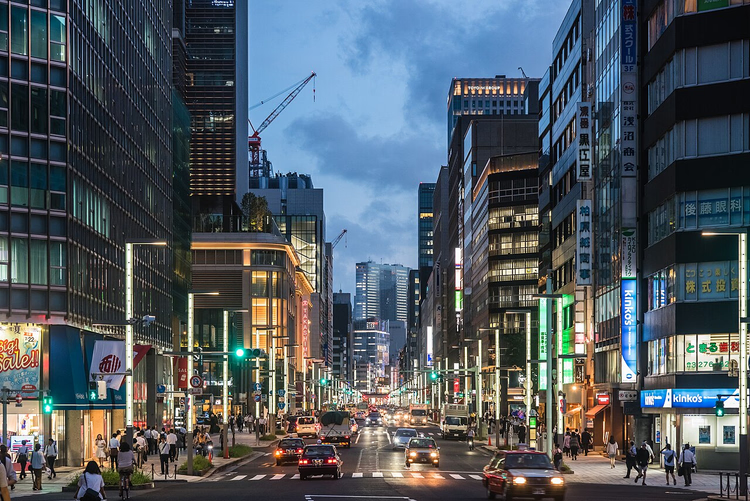
1. Aoyama Cemetery (Tokyo)
An active cemetery in the center of the city looks like an old park: wide alleys, old trees, and Roppongi Mori Tower visible between the branches. During the day, office workers from nearby buildings eat lunch here rather than tour groups walking through, so you have the alley almost to yourself.
 © Greg Schechter from San Francisco, USA · CC BYPhoto: Greg Schechter from San Francisco, USA, CC BY (https://creativecommons.org/licenses/by/2.0), Wikimedia Commons
- The catch: this is an active cemetery, so loud music and barbecue picnics are out of place here.
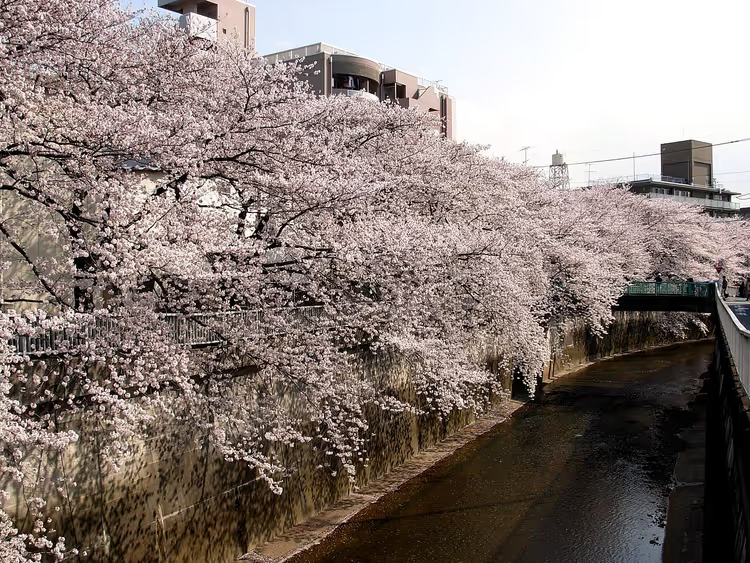
2. Shakujii river embankment (Tokyo, Nerima)
Farther from the center, in Nerima, tree branches hang low over the water. Instead of blue tarps laid out for parties, you get ordinary passersby with dogs and cyclists: nobody gets in the way of your photos.
 © Koujigenba · CC BY-SAPhoto: Koujigenba, CC BY-SA (https://creativecommons.org/licenses/by-sa/3.0), Wikimedia Commons
- The catch: the embankment is away from central districts, so you need to set aside separate time for it.
3. Haradani-en Garden (Kyoto)
The private garden in northwest Kyoto opens to the public only in spring and fall, which keeps tour bus groups away. Weeping cherry trees grow densely here, so the paths sit under a solid pink canopy (as of 09/2026, Inside Kyoto data).
- Cost and hours: admission from 500 to 1,800 yen, open 9:00 to 17:00, last entry at 16:30 (as of 09/2026, official Haradani-en website).
- Getting there: bus M1 from Kitaoji Station to the Haradani stop, then a two-minute walk (directions map).
- The catch: the garden is in northwest Kyoto, and the trip with a transfer to bus M1 takes time (Kanpai Japan).
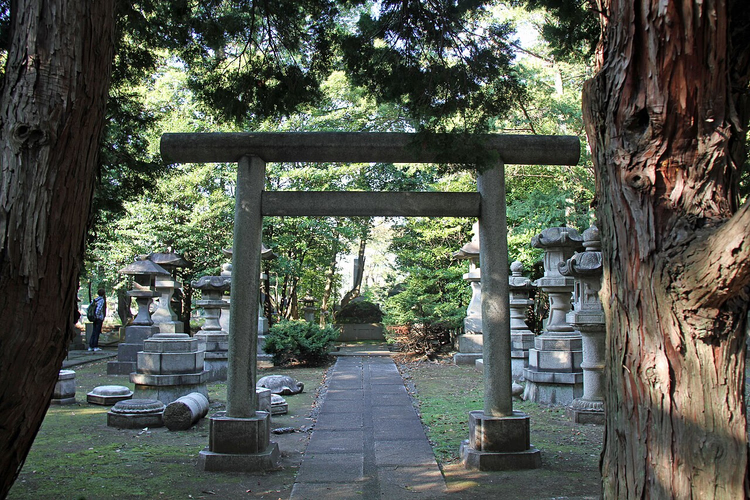
4. Takato castle ruins (Nagano)
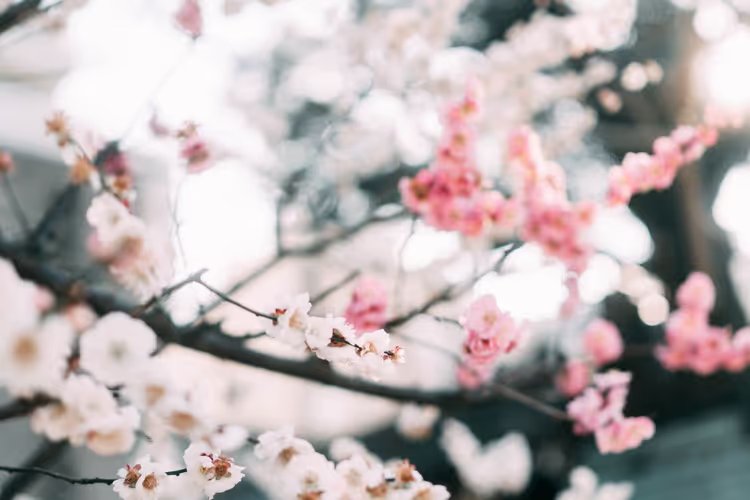
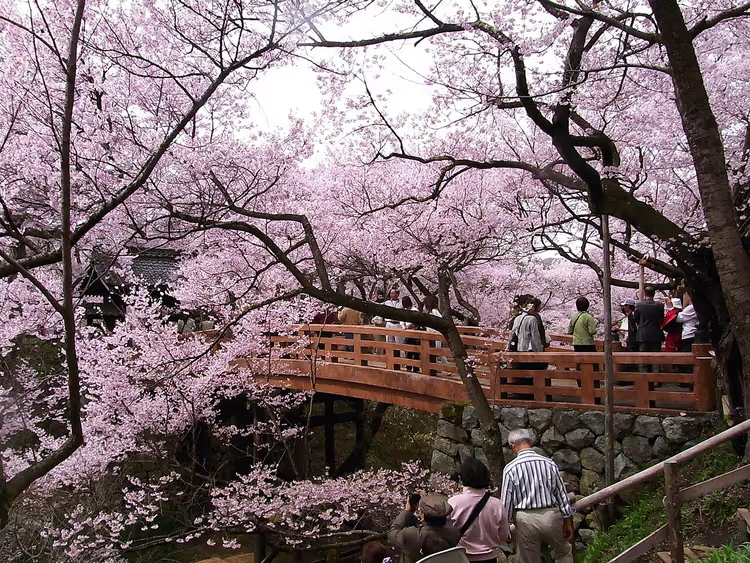
The park on the site of a destroyed fortress in the city of Ina holds about 1,500 trees of the Takato-kohigan variety, whose blossoms are smaller and darker than usual (as of 2026, Mikoro). Locals rank this spot alongside Hirosaki and Mount Yoshino, and it gives you pink canopies set against the Central Alps.
 © 江戸村のとくぞう · CC BY-SAPhoto: 江戸村のとくぞう, CC BY-SA (https://creativecommons.org/licenses/by-sa/4.0), Wikimedia Commons
- The catch: the park sits away from the shinkansen line, so getting there takes a full day.
5. Mount Shiude (Kagawa, Shikoku)
From 352 meters up, you get a view of the Seto Inland Sea with its islands, and the pink canopies in the foreground create the shot photographers come here for (as of 2026, Shikoku Guide). Parking near the summit requires advance reservation during cherry blossom season (as of 2026, Mitoyo tourism office).
 © shikabane taro · CC BYPhoto: shikabane taro, CC BY (https://creativecommons.org/licenses/by/3.0), Wikimedia Commons
- The catch: you can't get up there without a car, and parking spots need to be reserved in advance.
In April, the selection of cars on Shikoku is limited, so it's worth comparing car rental prices ahead of time.
For Kyoto, it's convenient to book a ready-made walking tour: the city is large, and the gardens are scattered across the outskirts.
Tours and tickets in Kyoto
Guided tours, skip-the-line tickets and activities — most offers can be cancelled free of charge.
See offers on GetYourGuideThe widget loads once you give your consent.
Strategies for crowded spots
Even the most famous places have quiet hours, and they coincide with tour group schedules.
- Early morning. Arrive at dawn: you'll get the light and empty paths, while buses show up later.
- Night sakura (yozakura). Many sites turn on illumination. There are more people in the evening than during the day, but the scene looks completely different.
- Monday and Wednesday. Skip weekends entirely; the difference in crowds is huge.
- Classics, mindfully. Chureito Pagoda and the Nakameguro canal are worth getting up early and arriving first.
If you want a guide and entry without the morning rush, check out tours on GetYourGuide.
Hanami etiquette: six rules
Hanami is built on respect for the trees and for your fellow park-goers.
- Don't shake the branches. Don't tug on them for a shot with falling petals: wait for the wind to blow.
- Don't break branches. Don't cut them off or take them home.
- Don't climb the trees. The trunks and roots of old cherry trees are fragile.
- Don't put your blanket over the roots. Spread it out next to the tree, not on top of the root system.
- Take your trash with you. There are almost no trash cans in Japanese parks; carry your waste back to the hotel.
- Take your shoes off on the blanket. If you're invited to a hanami picnic, the blanket works like the floor in a home.
These six rules apply equally in Tokyo, Kyoto, and Shikoku, and they're not worth breaking even for a single shot.
If you arrive at the end of the bloom
Missed the main Somei Yoshino variety? Look for yaezakura: it has double flowers and blooms later than regular cherry trees. Shinjuku Gyoen Park in Tokyo is known for late varieties that last until the end of April.
The north gives you a second chance: in Sapporo full bloom fell on April 24, in Sendai on April 4 (agency calendar). If you want to combine the bloom with a northern route, book shinkansen tickets on Trip.com in advance, trains to Hokkaido fill up quickly.
⁉️🤔 Frequently asked questions
When does sakura bloom in Tokyo?
In 2026, first bloom in Tokyo was recorded on March 19, and full bloom was announced on March 28 (2026 data). The viewing window lasts about ten days, so book your flight with a week of buffer and keep an eye on forecast updates.
Can you find out the dates in advance?
Forecasts are updated several times over the winter, and accuracy improves closer to March (observation methodology). Plan your trip around a ten to twelve day window: then a shift of a few days won't ruin your vacation.
How much does garden admission cost?
Paid garden rates depend on the bloom stage. At Haradani-en, admission costs from 500 to 1,800 yen (as of 09/2026, official Haradani-en website). Aoyama Cemetery is free to enter, and at Mount Shiude you only pay for parking at the top.
Do I need to rent a car?
For Tokyo, Kyoto, and Osaka you don't need a car: subways and trains work well there. It comes in handy on Shikoku, at Mount Shiude, and at gardens away from stations (Shikoku guide). Roads on Shikoku are narrow, so go with a compact model.
What if the bloom is over?
Switch to yaezakura and late varieties, they last until the end of April. In Tokyo, people head to Shinjuku Gyoen Park for them, and for a second bloom they travel north to Sendai and Sapporo (bloom table by city).
In short: what to book
Sakura in Japan is short-lived, so dates and accommodation get decided months ahead, not a couple of weeks before departure.
If you're going in late March and Tokyo, it's worth checking Tokyo hotels on Trip.com in advance: prices in the center rise the fastest.
If you want two regions in one trip, shinkansen tickets booked in advance take care of the travel between them.
Start with the dates: everything else will fall into place around them.

A small editorial team writing guides for independent travel. We travel ourselves, but we haven’t been everywhere, so we check prices, opening hours and how to get there against official sources.